The Design Principle
and Figma
By
Isaac Chibuzor Isaac
(Director at I-Graphics)
What is Design?
• Graphic design is the process of visual
communication and problem-solving through the
use of typography, photography and illustration.
The field is considered a subset of visual
communication and communication design, but
sometimes the term "graphic design" is used
synonymously. Graphic designers create and
combine symbols, images and text to form visual
representations of ideas and messages. They use
typography, visual arts and page layout
techniques to create visual compositions.
Elements of design
• Text (typography)
• Objects
• Images
• Space
• Color
TEXT (TYPOGRAPHY)
 Typography includes type design, modifying type glyphs and
arranging type. Type glyphs (characters) are created and
modified using illustration techniques. Type arrangement is the
selection of typefaces, point size, tracking (the space between
all characters used), kerning (the space between two specific
characters) and leading (line spacing).
OBEJECTS
 Its I graphical symbol representing something or occupying
space, its basic shapes both basic shapes or complex shape,
basically shape individually or combined form objects.
IMAGES
 An image is an artifact that depicts visual perception, for
example, a photo or a two-dimensional picture, that has a
similar appearance to some subject—usually a physical object or
a person, thus providing a depiction of it.
SPACE
 Space is the boundless three-dimensional extent in which objects
and events have relative position and direction. In design space
can either be positive or negative, where positive space is an
occupied position while negative space is an empty position, a
good balance between this two creates an optically correct
design.
COLOR
 Color is the characteristic of human visual perception described
through color categories, with names such as red, orange,
yellow, green, blue, or purple. This is an important aspect of
design as without it graphic design will not be visually
relevant. Two major color schemes in graphics design are the RGB
and CMYK and their application varies widely to intent of the
design either for print or screen.
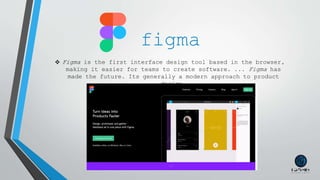
 Figma is the first interface design tool based in the browser,
making it easier for teams to create software. ... Figma has
made the future. Its generally a modern approach to product
design.
figma
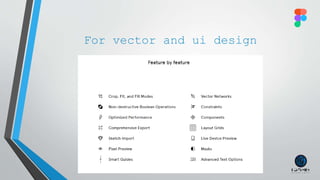
For vector and ui design
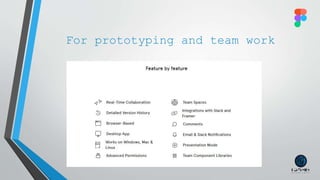
For prototyping and team work
• UI Design
• UX Design
• Prototyping
• Graphic Design
• Wireframing
• Brainstorming
General overview of what figma
can be used for
Thank you
 Info sources, Wikipedia.com, figma.com

Isaac presentation

  • 1.
    The Design Principle andFigma By Isaac Chibuzor Isaac (Director at I-Graphics)
  • 2.
    What is Design? •Graphic design is the process of visual communication and problem-solving through the use of typography, photography and illustration. The field is considered a subset of visual communication and communication design, but sometimes the term "graphic design" is used synonymously. Graphic designers create and combine symbols, images and text to form visual representations of ideas and messages. They use typography, visual arts and page layout techniques to create visual compositions.
  • 3.
    Elements of design •Text (typography) • Objects • Images • Space • Color
  • 4.
    TEXT (TYPOGRAPHY)  Typographyincludes type design, modifying type glyphs and arranging type. Type glyphs (characters) are created and modified using illustration techniques. Type arrangement is the selection of typefaces, point size, tracking (the space between all characters used), kerning (the space between two specific characters) and leading (line spacing). OBEJECTS  Its I graphical symbol representing something or occupying space, its basic shapes both basic shapes or complex shape, basically shape individually or combined form objects. IMAGES  An image is an artifact that depicts visual perception, for example, a photo or a two-dimensional picture, that has a similar appearance to some subject—usually a physical object or a person, thus providing a depiction of it.
  • 5.
    SPACE  Space isthe boundless three-dimensional extent in which objects and events have relative position and direction. In design space can either be positive or negative, where positive space is an occupied position while negative space is an empty position, a good balance between this two creates an optically correct design. COLOR  Color is the characteristic of human visual perception described through color categories, with names such as red, orange, yellow, green, blue, or purple. This is an important aspect of design as without it graphic design will not be visually relevant. Two major color schemes in graphics design are the RGB and CMYK and their application varies widely to intent of the design either for print or screen.
  • 6.
     Figma isthe first interface design tool based in the browser, making it easier for teams to create software. ... Figma has made the future. Its generally a modern approach to product design. figma
  • 7.
    For vector andui design
  • 8.
  • 9.
    • UI Design •UX Design • Prototyping • Graphic Design • Wireframing • Brainstorming General overview of what figma can be used for
  • 10.
    Thank you  Infosources, Wikipedia.com, figma.com