


Is Project Management Discipline
Relevant in an Agile World?
STEVE NUNZIATA, PMP, ACP, CSM, CSP, SAFE SPC
ENTERPRISE AGILE COACH
APRIL 25TH, 2016
About Steve…
1990 - 2005 2006 - 2016
Why are We Here?
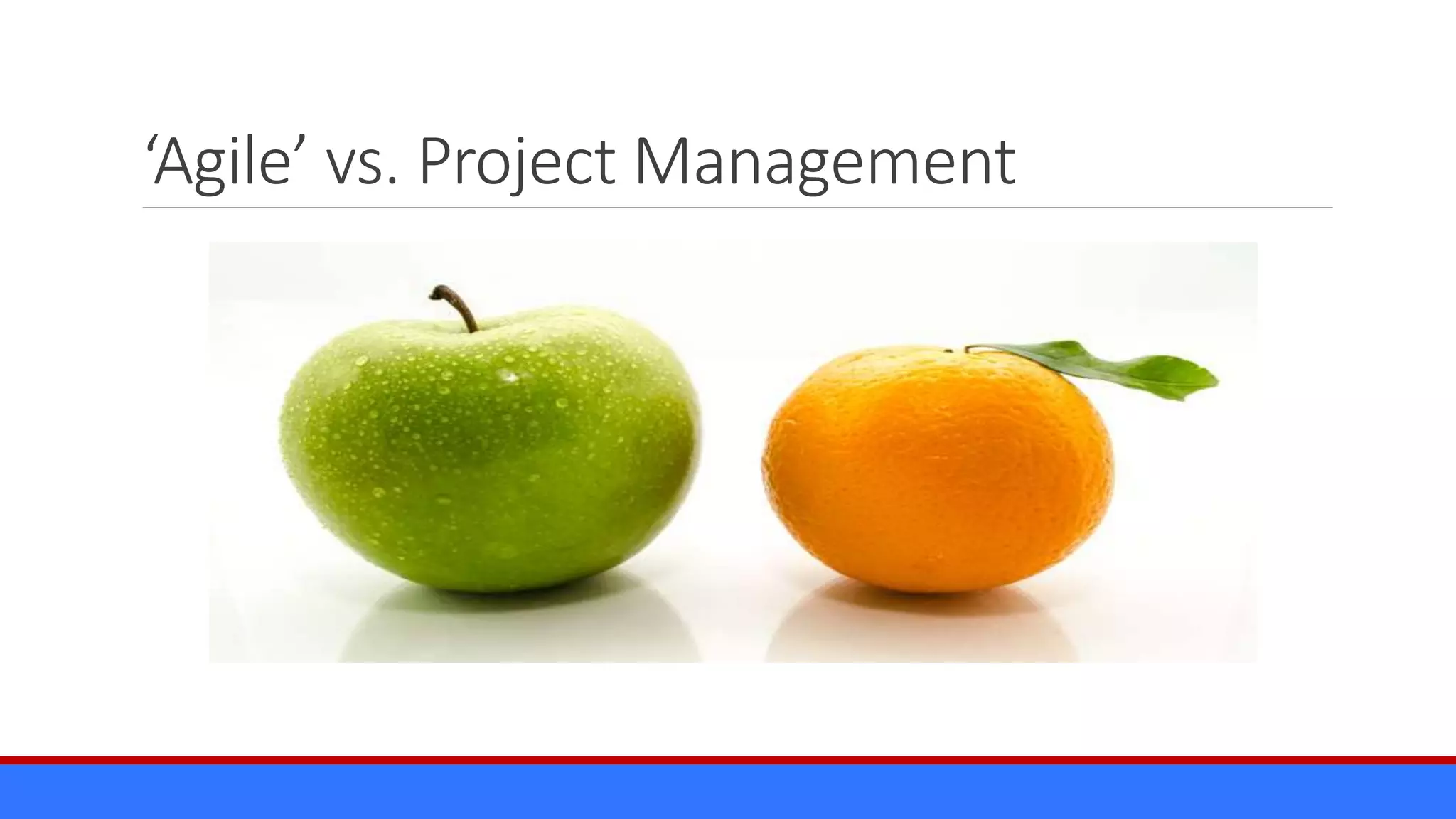
‘Agile’ vs. Project Management
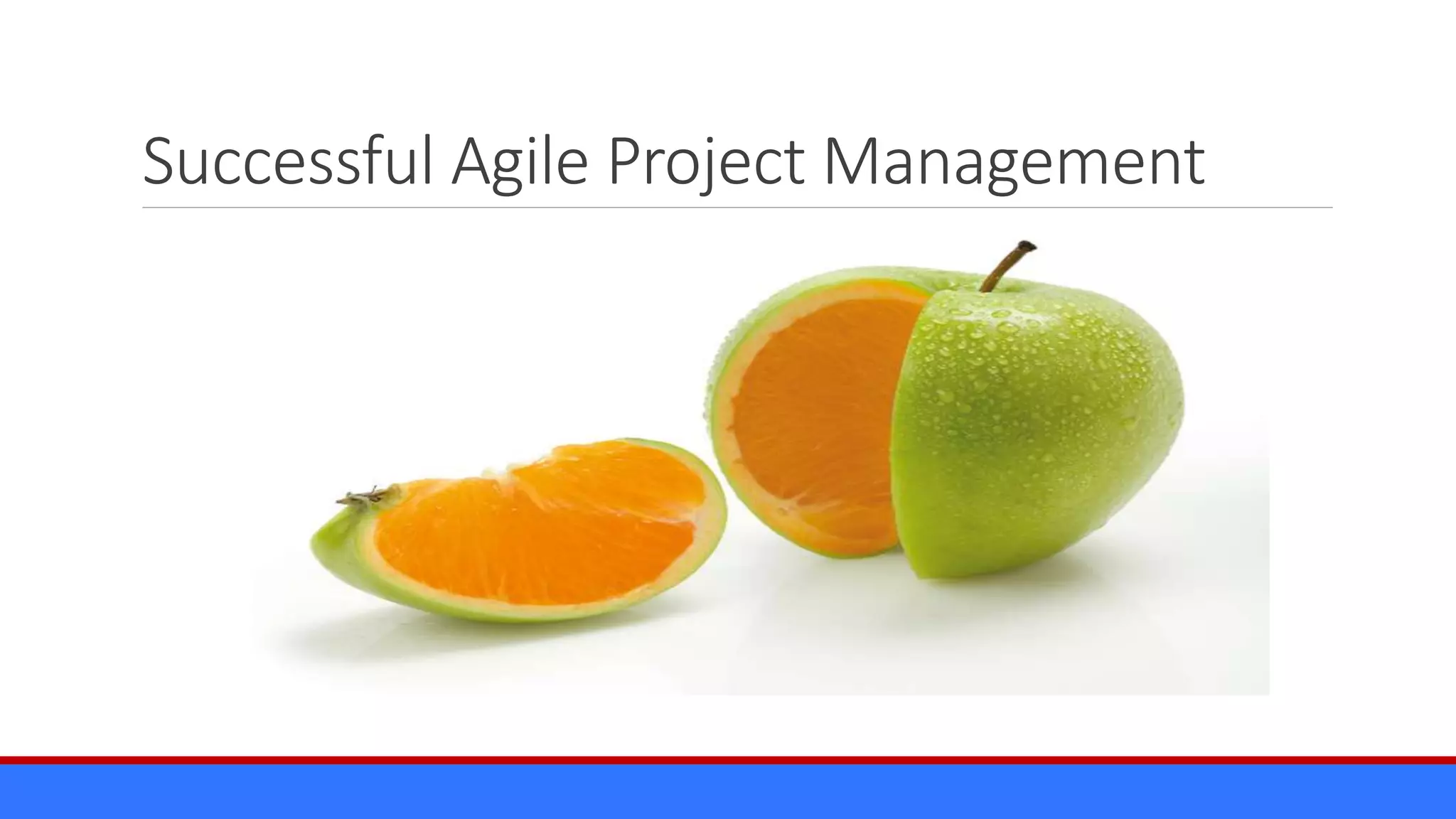
Successful Agile Project Management
Today’s Premise
Project Management
discipline is a critical
component in Agile
project execution and
Enterprise adoption.
Definition of Terms
Project Management
discipline – the intent, or
outcomes, behind PMI’s
10 knowledge areas, and
the value that they
provide.
Today’s Objective
Empower you for Success in Agile Projects:
• By understanding WHAT Agile is, and
WHY it works
• By providing real examples of Project
Management process & practice
applied in an Agile context
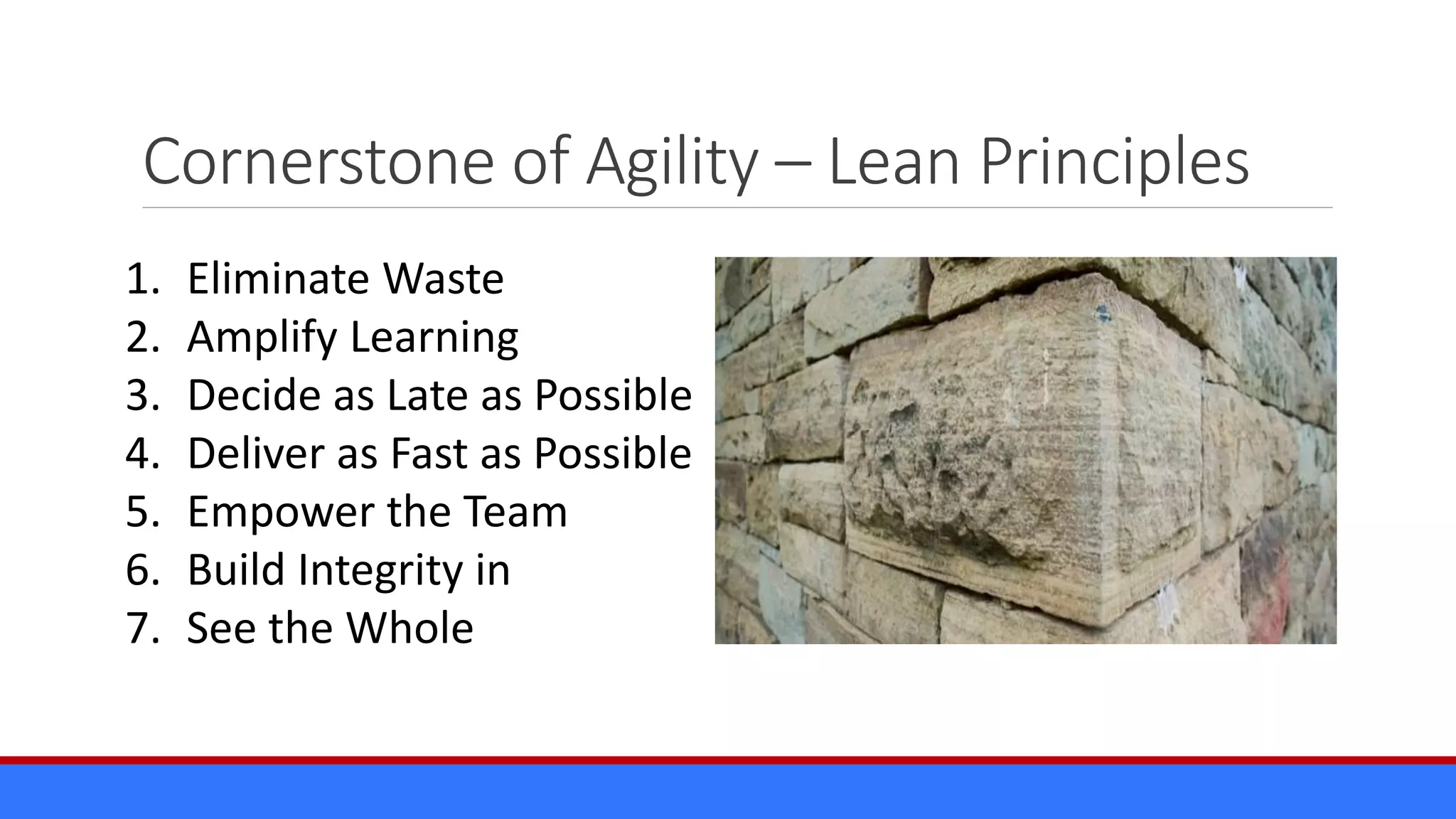
Cornerstone of Agility – Lean Principles
1. Eliminate Waste
2. Amplify Learning
3. Decide as Late as Possible
4. Deliver as Fast as Possible
5. Empower the Team
6. Build Integrity in
7. See the Whole
Core Lean Principles - Defined
Eliminate Waste
Amplify Learning
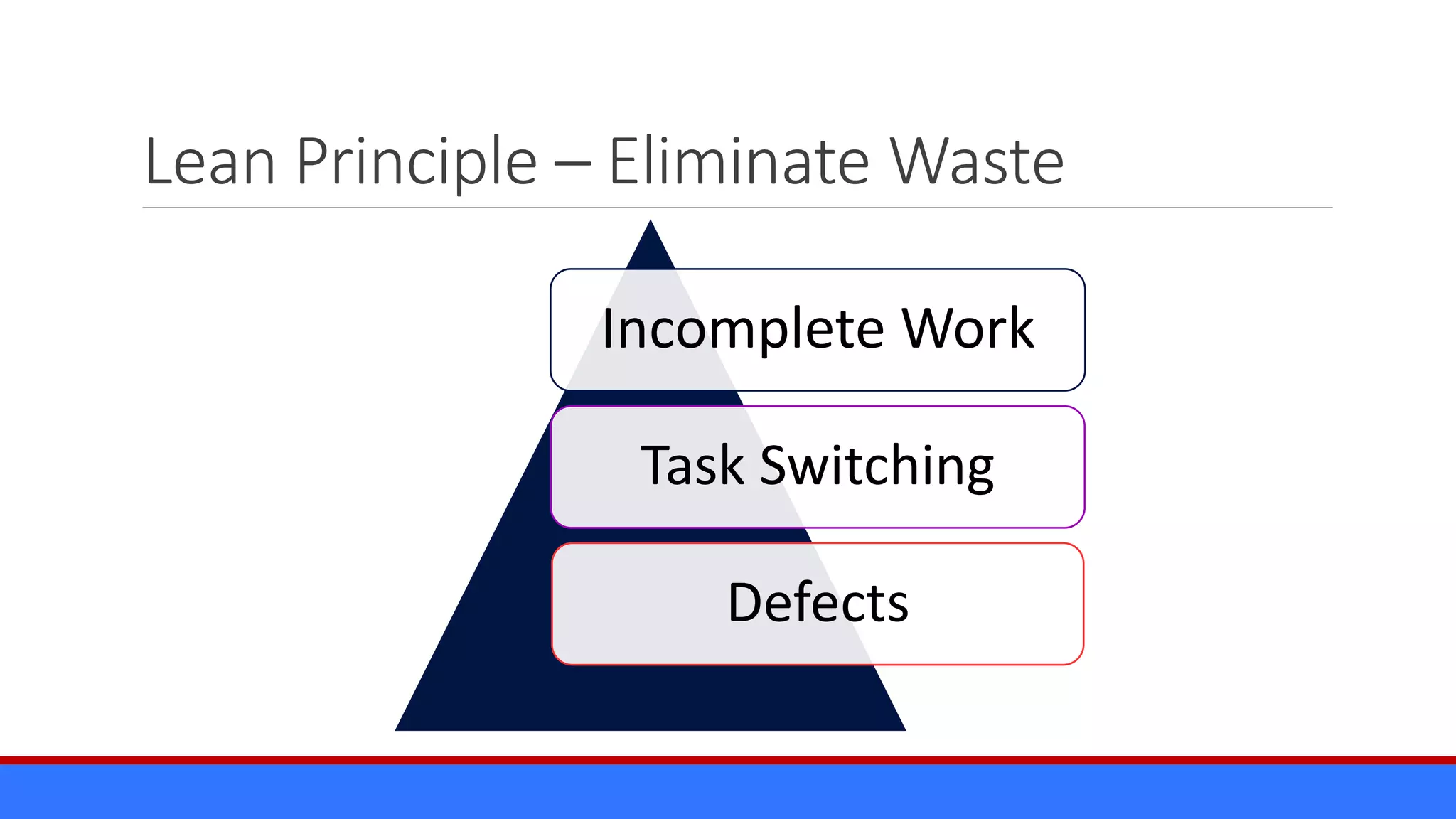
Lean Principle – Eliminate Waste
Incomplete Work
Task Switching
Defects
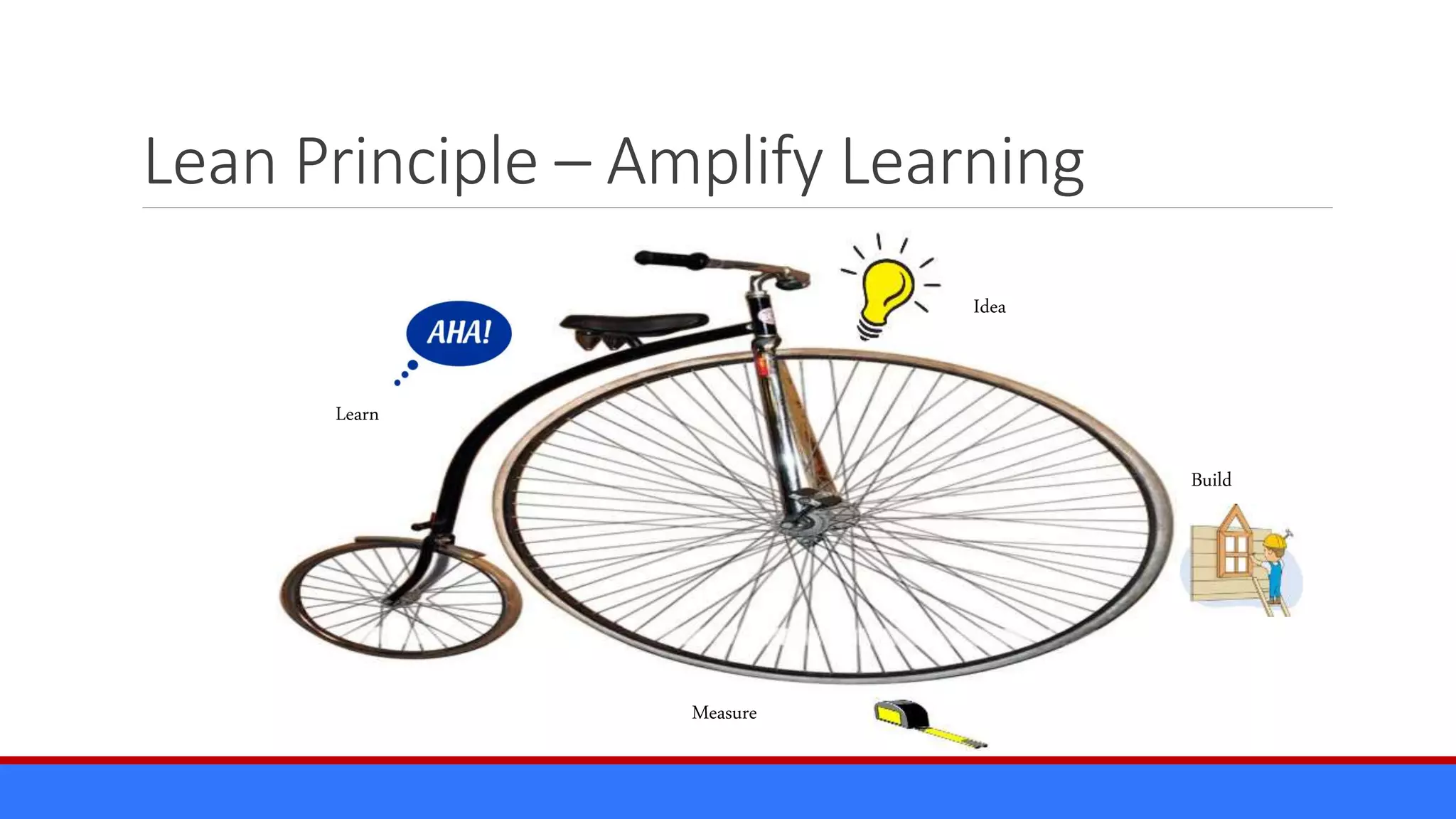
Lean Principle – Amplify Learning
Idea
Build
Measure
Learn
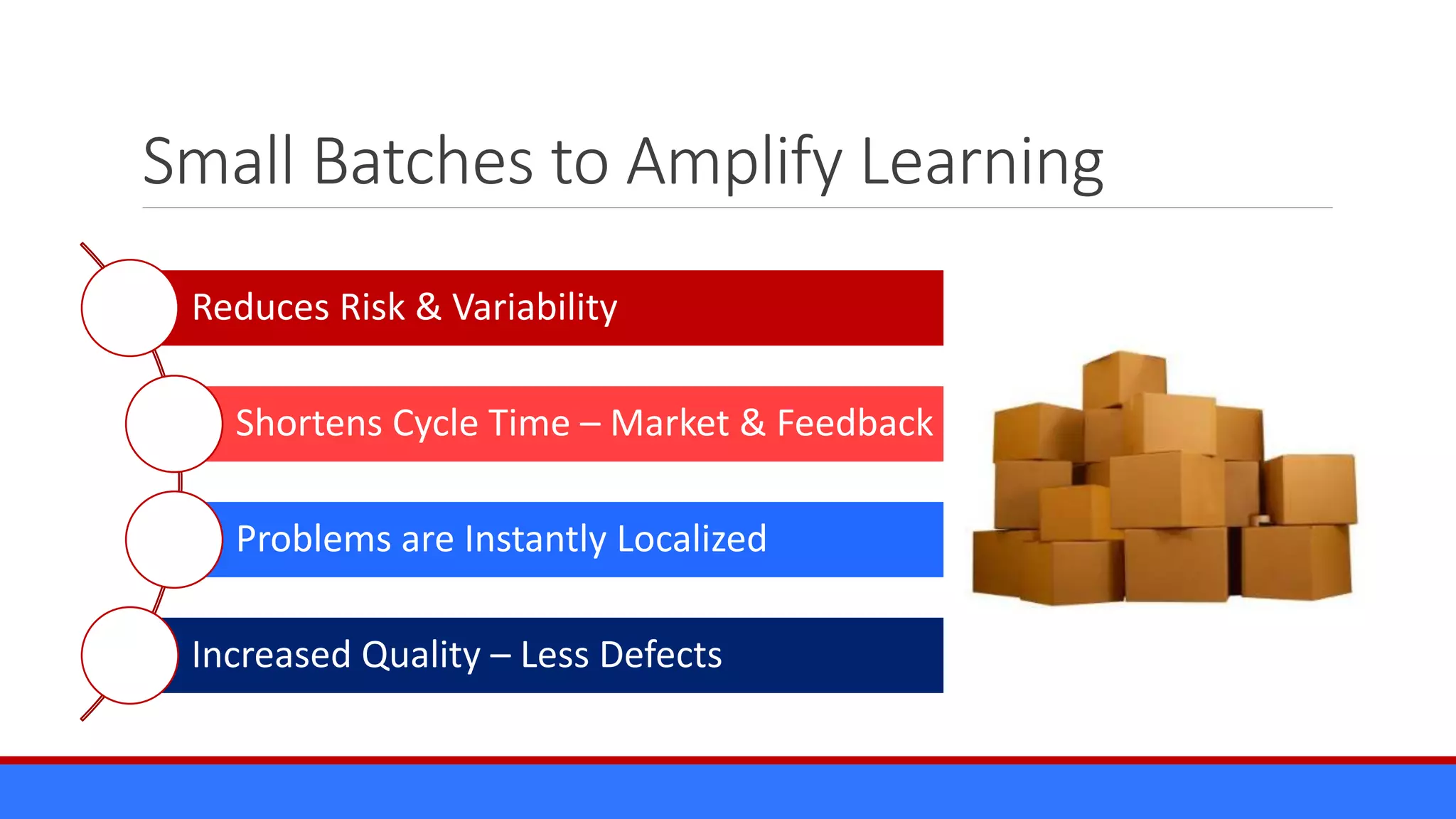
Small Batches to Amplify Learning
Reduces Risk & Variability
Shortens Cycle Time – Market & Feedback
Problems are Instantly Localized
Increased Quality – Less Defects
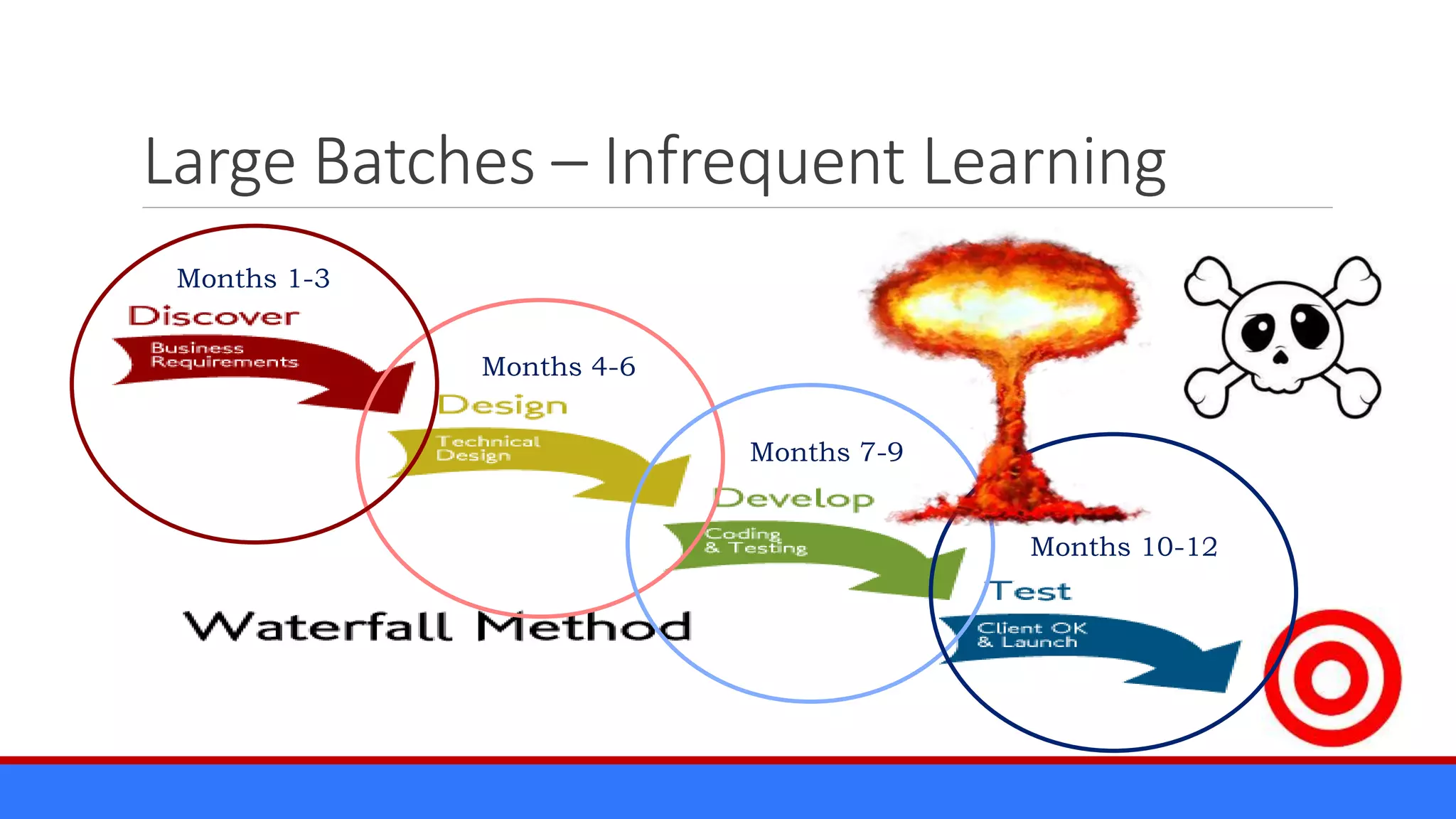
Large Batches – Infrequent Learning
Months 1-3
Months 7-9
Months 4-6
Months 10-12
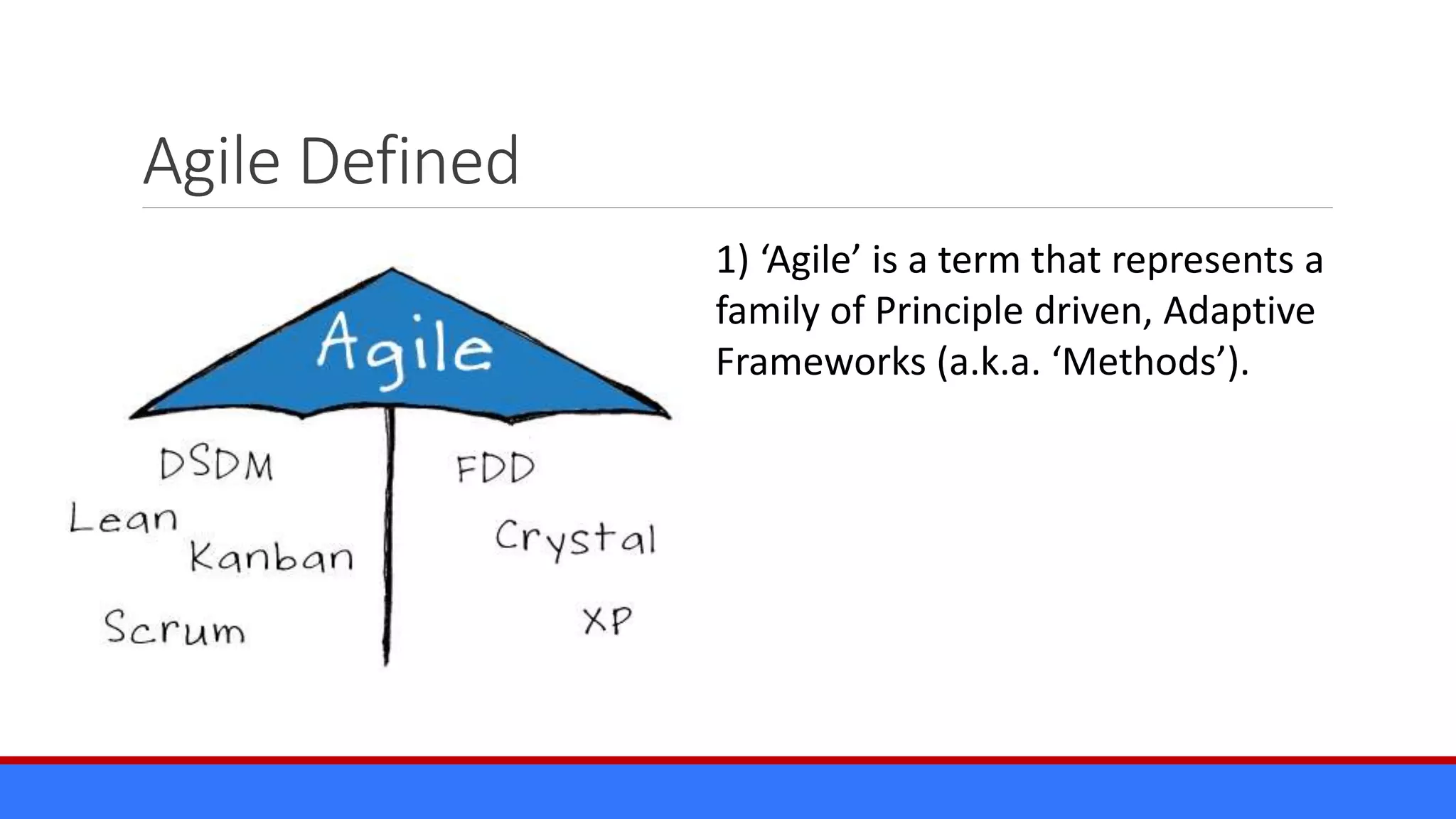
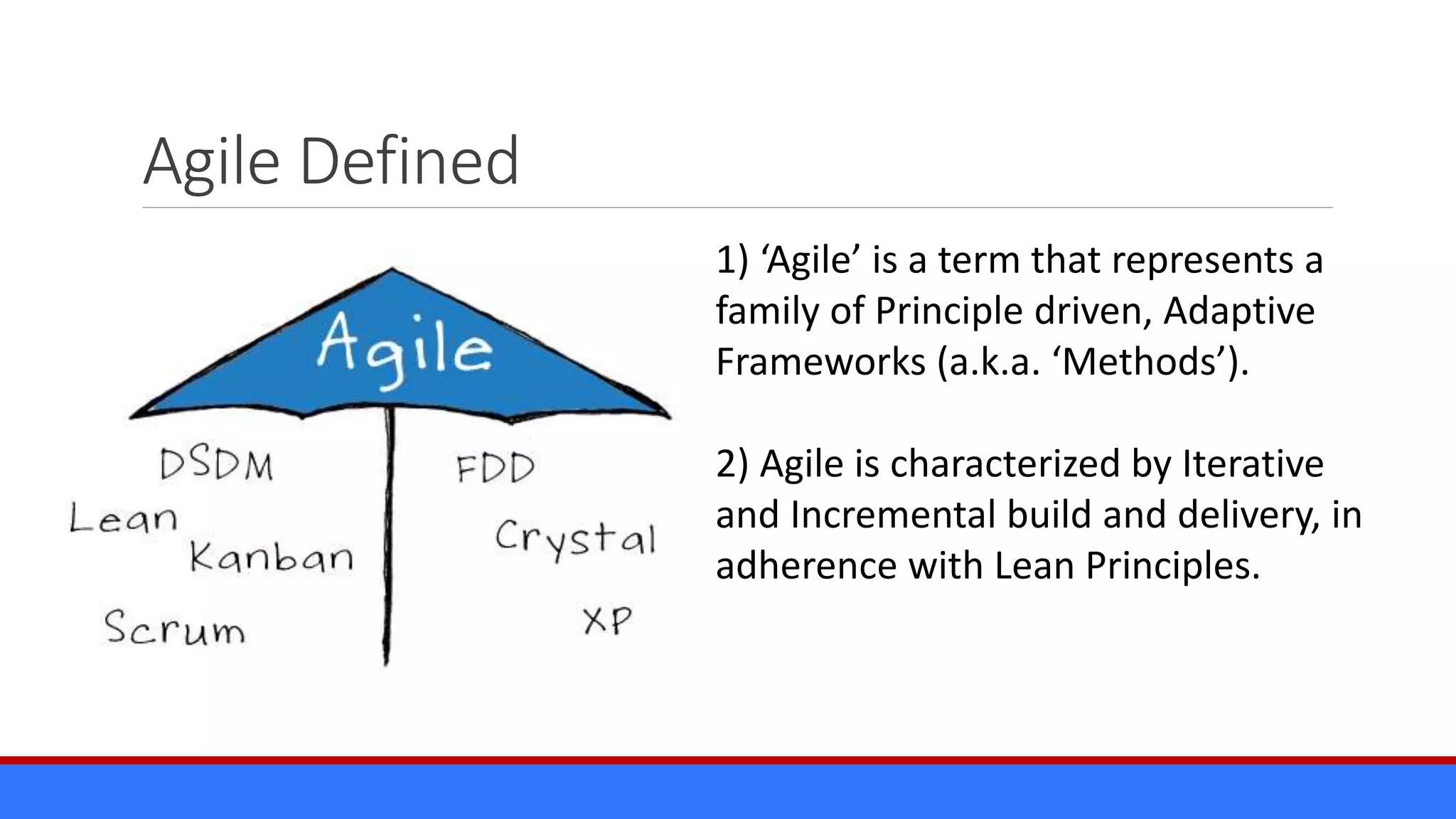
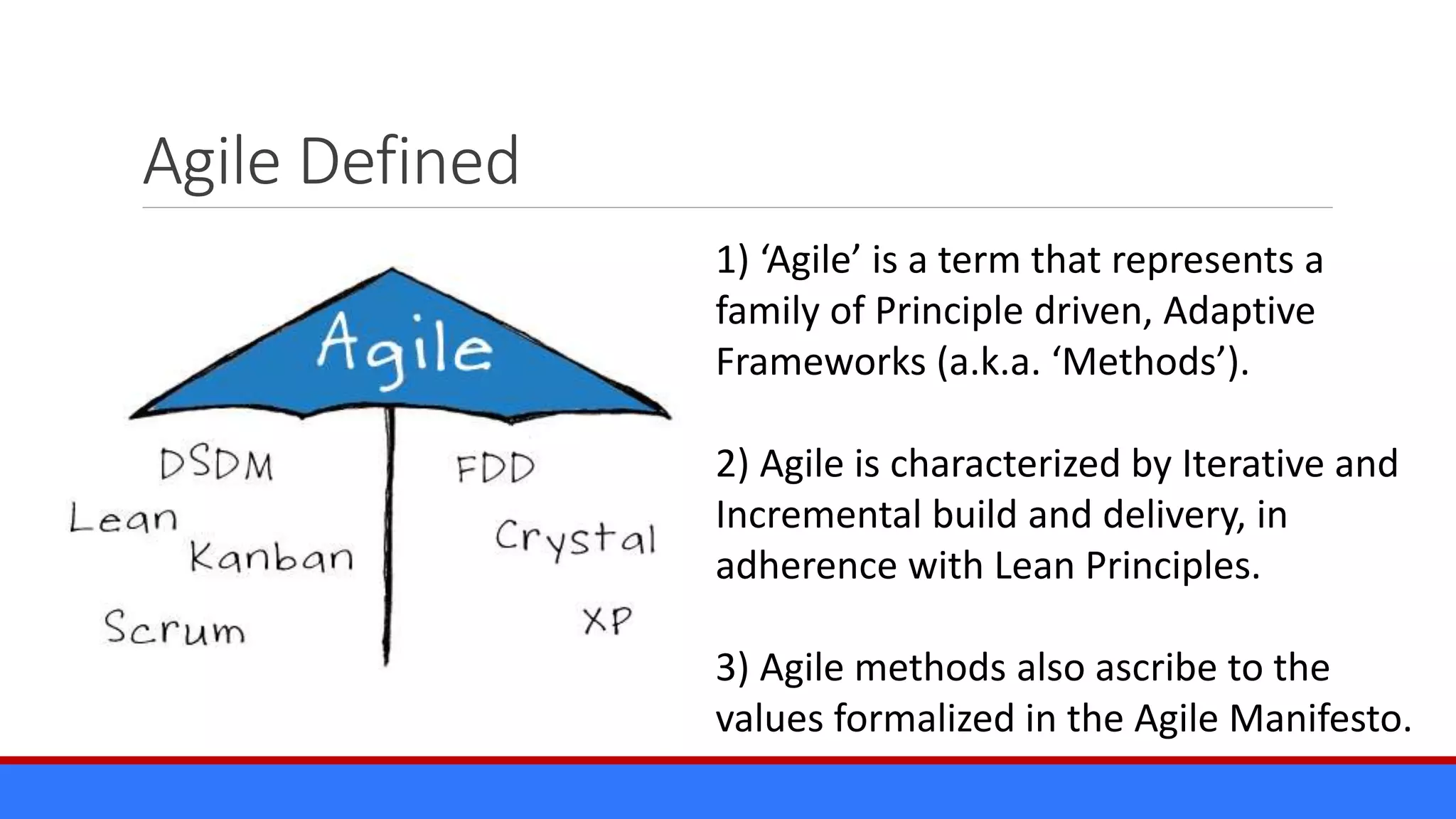
Agile Defined
1) ‘Agile’ is a term that represents a
family of Principle driven, Adaptive
Frameworks (a.k.a. ‘Methods’).
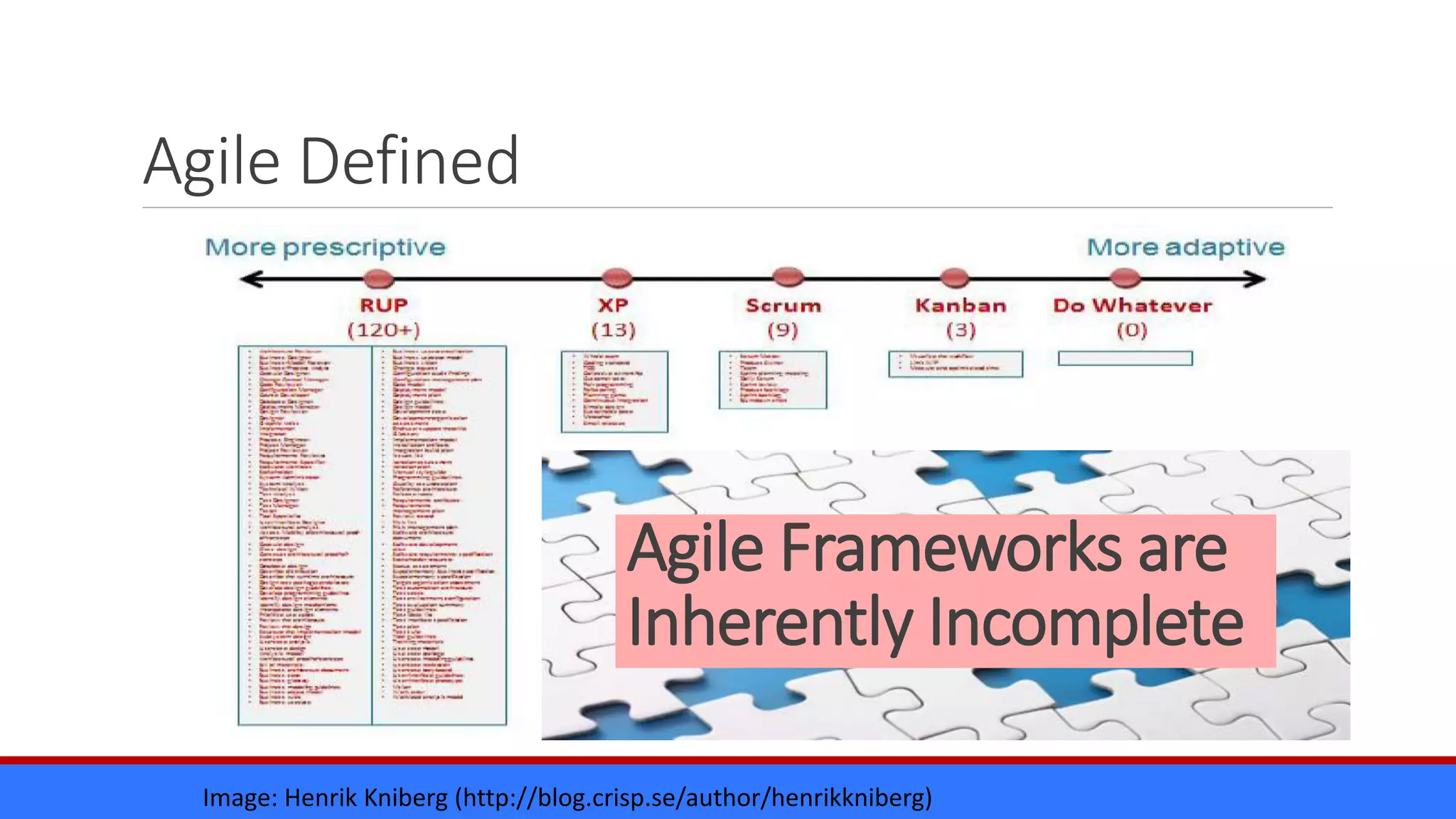
Agile Defined
Image: Henrik Kniberg (http://blog.crisp.se/author/henrikkniberg)
Agile Frameworks are
Inherently Incomplete
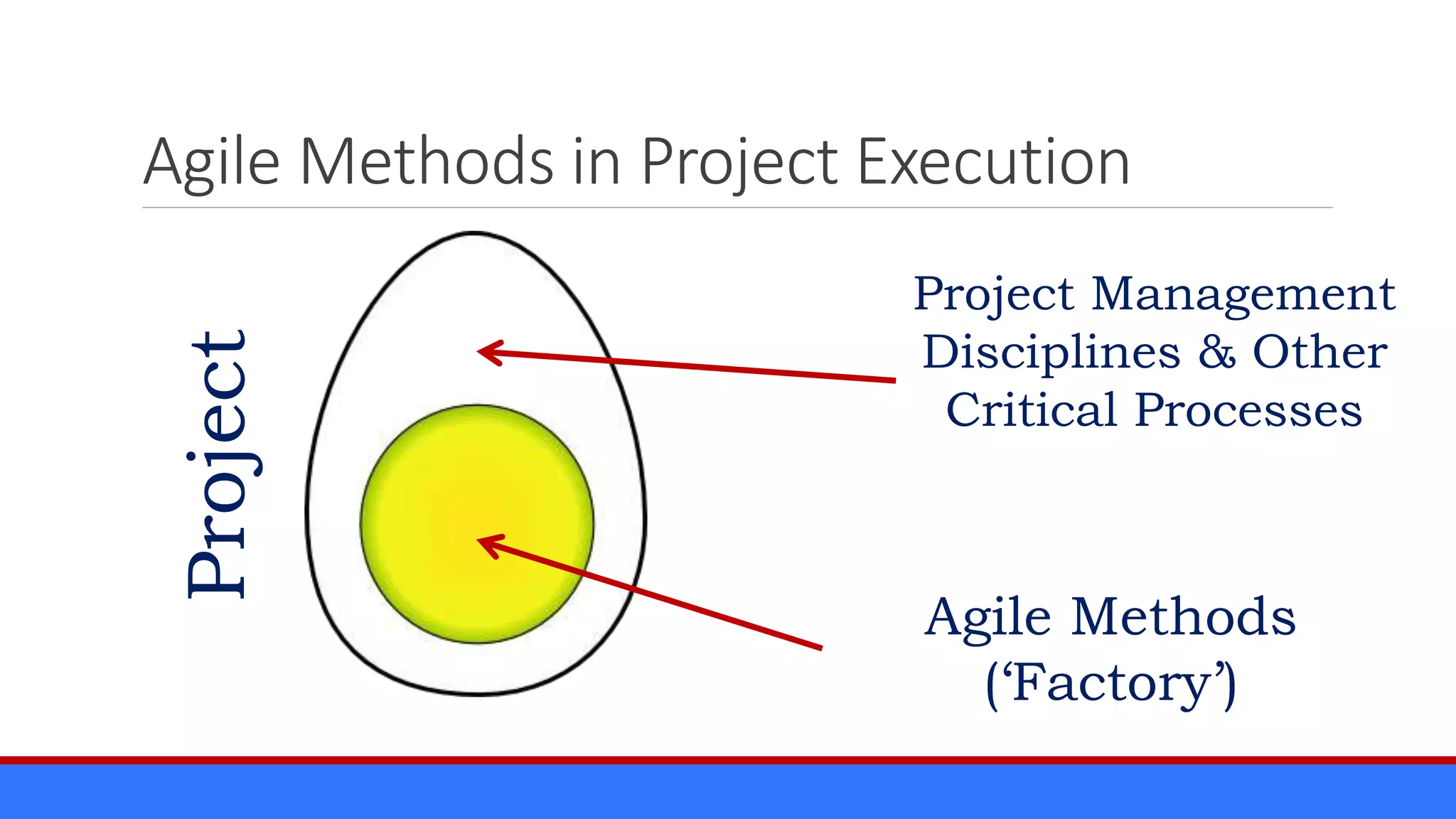
Agile Methods in Project Execution
Agile Methods
(‘Factory’)
Project Management
Disciplines & Other
Critical Processes
Project
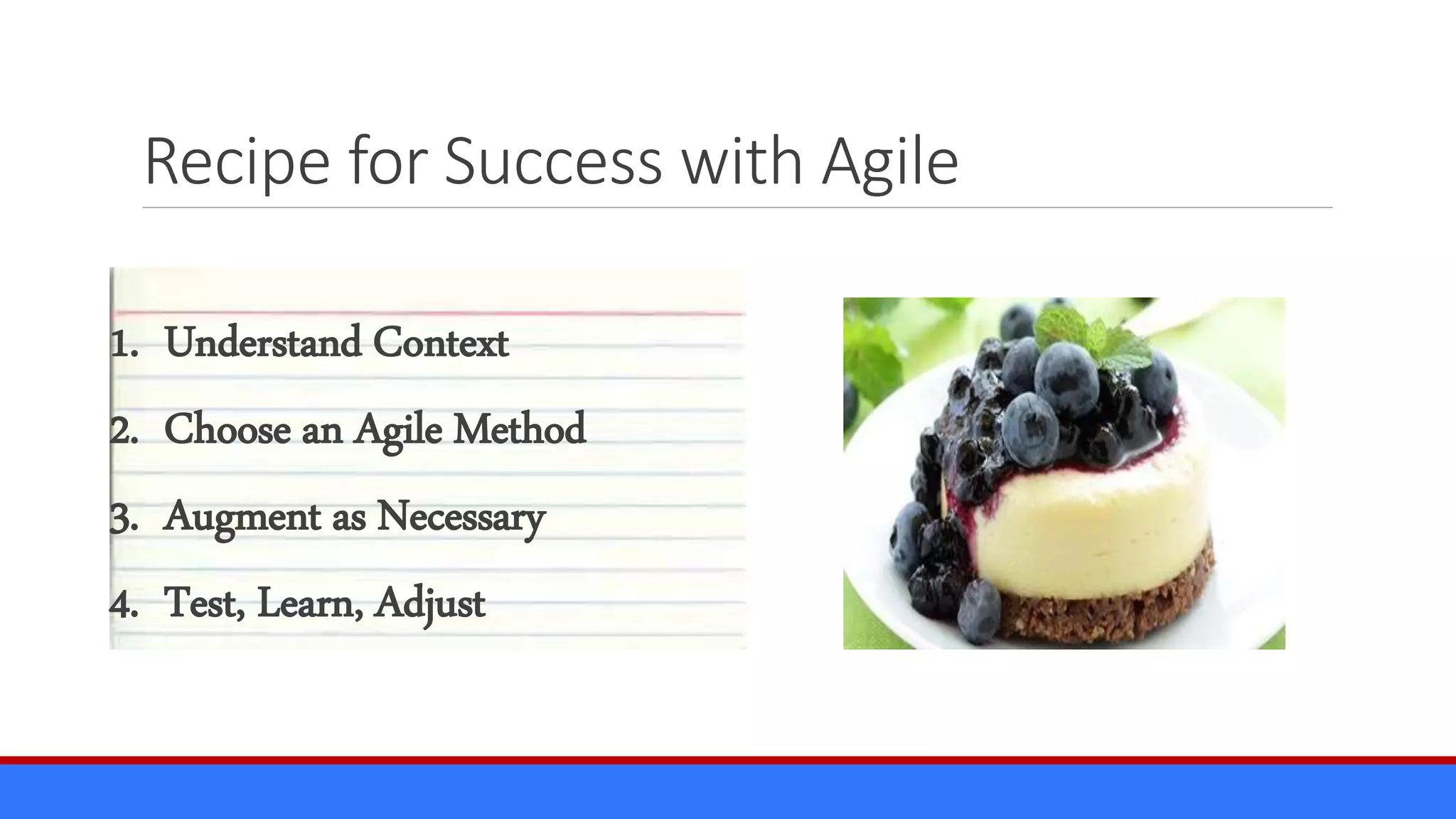
Recipe for Success with Agile
1. Understand Context
2. Choose an Agile Method
3. Augment as Necessary
4. Test, Learn, Adjust
Agile Defined
1) ‘Agile’ is a term that represents a
family of Principle driven, Adaptive
Frameworks (a.k.a. ‘Methods’).
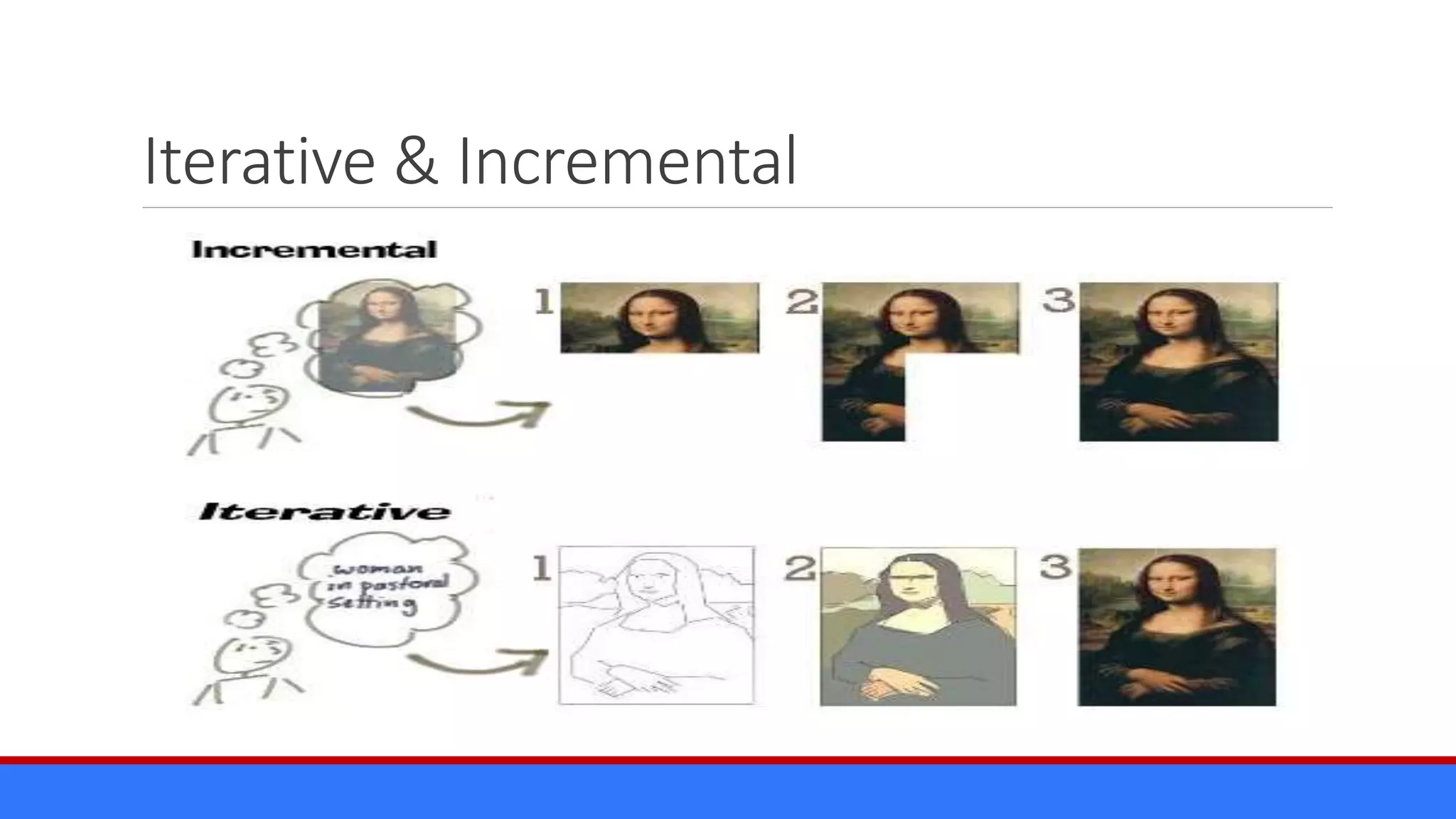
2) Agile is characterized by Iterative
and Incremental build and delivery, in
adherence with Lean Principles.
Iterative & Incremental
Agile – Lean Perspective
• Scrum, Extreme Programming (XP), Kanban, and
other Agile Methods can be considered as partial
manifestations of Lean.
• Each Agile method has constructs (ceremonies,
roles, processes) aligned closely to Lean Principles.
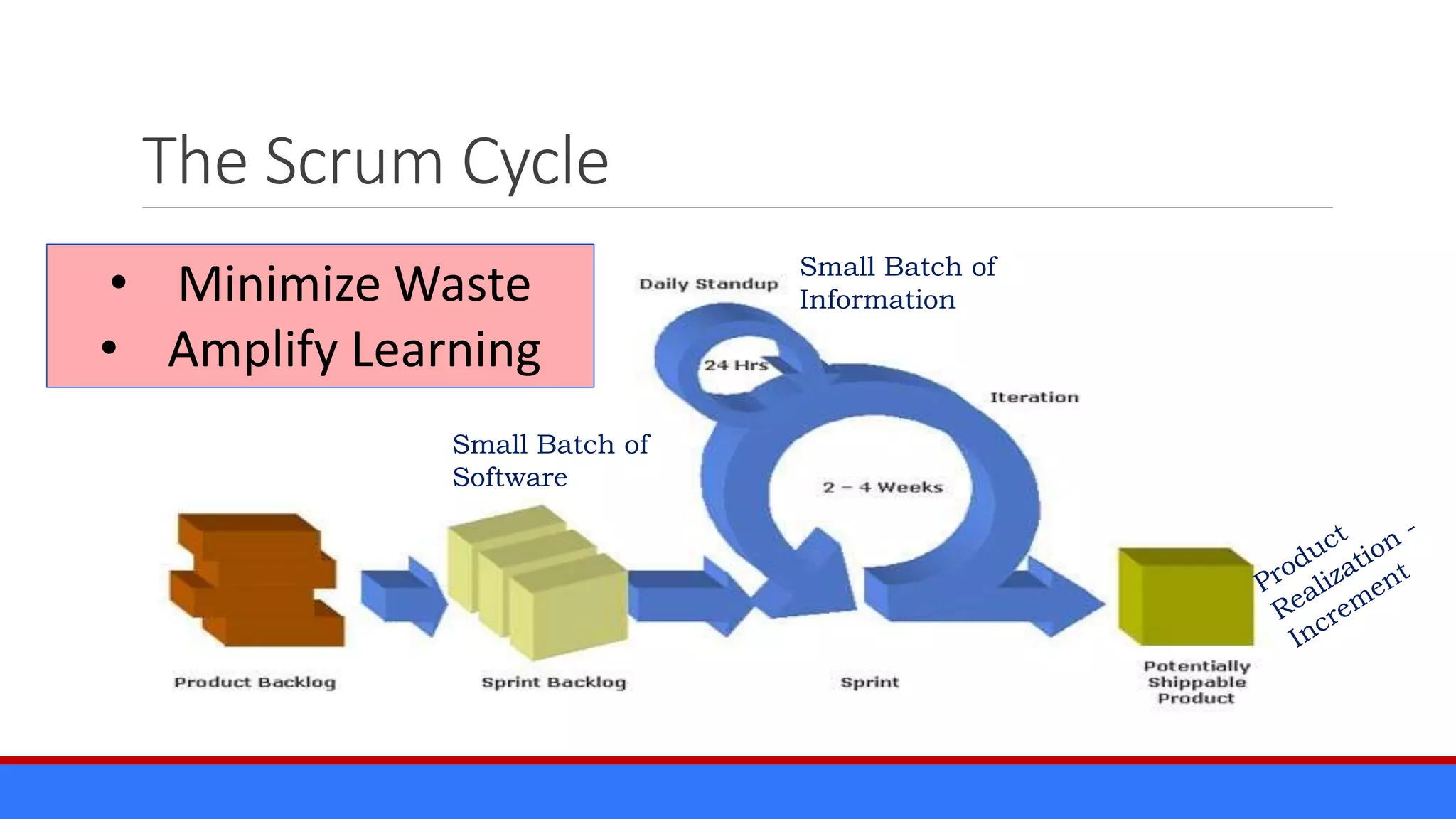
The Scrum Cycle
Small Batch of
Software
Small Batch of
Information• Minimize Waste
• Amplify Learning
Agile Defined
1) ‘Agile’ is a term that represents a
family of Principle driven, Adaptive
Frameworks (a.k.a. ‘Methods’).
2) Agile is characterized by Iterative and
Incremental build and delivery, in
adherence with Lean Principles.
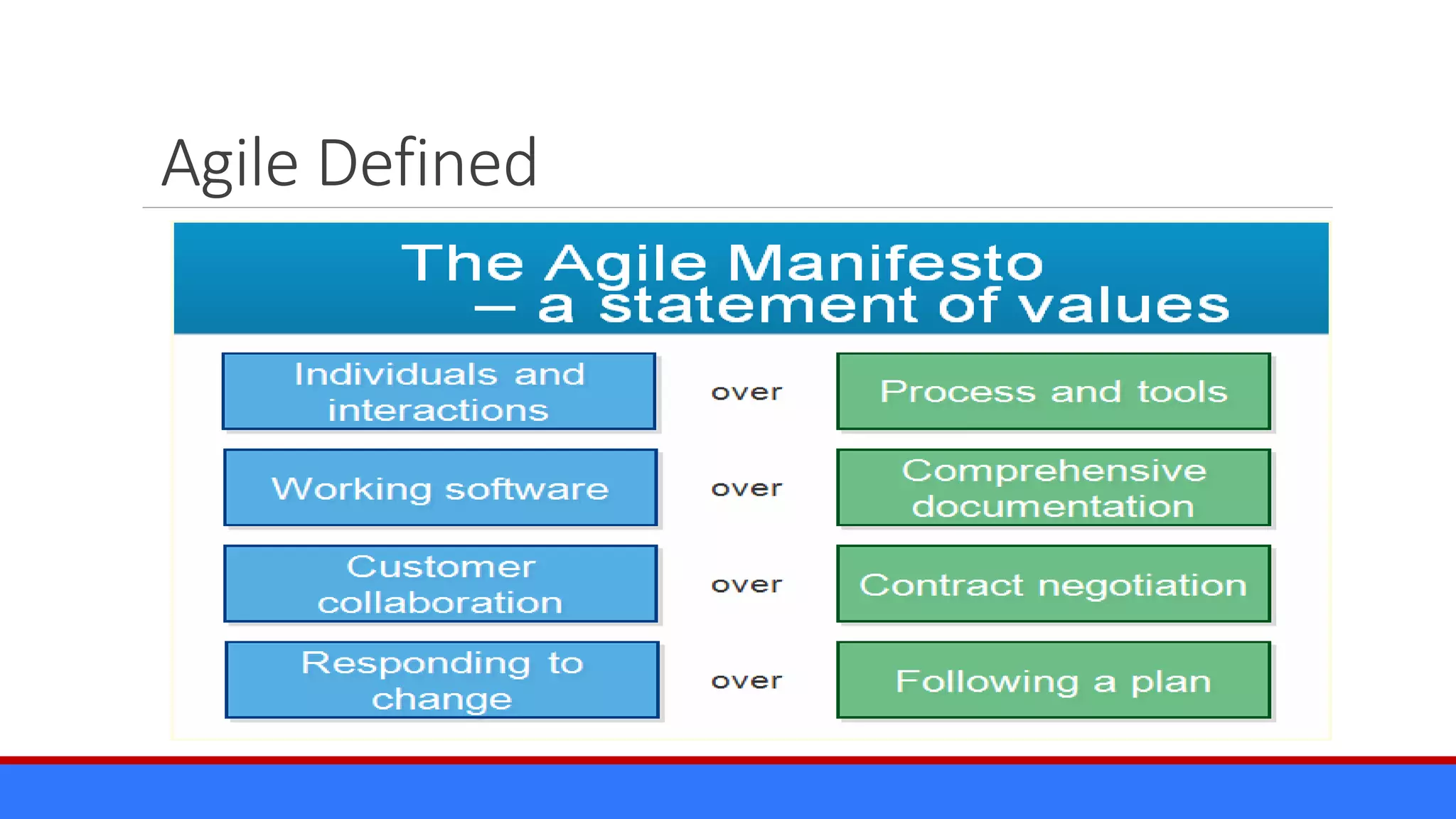
3) Agile methods also ascribe to the
values formalized in the Agile Manifesto.
Agile Defined
Quick Test - Quotes from ‘The Field’
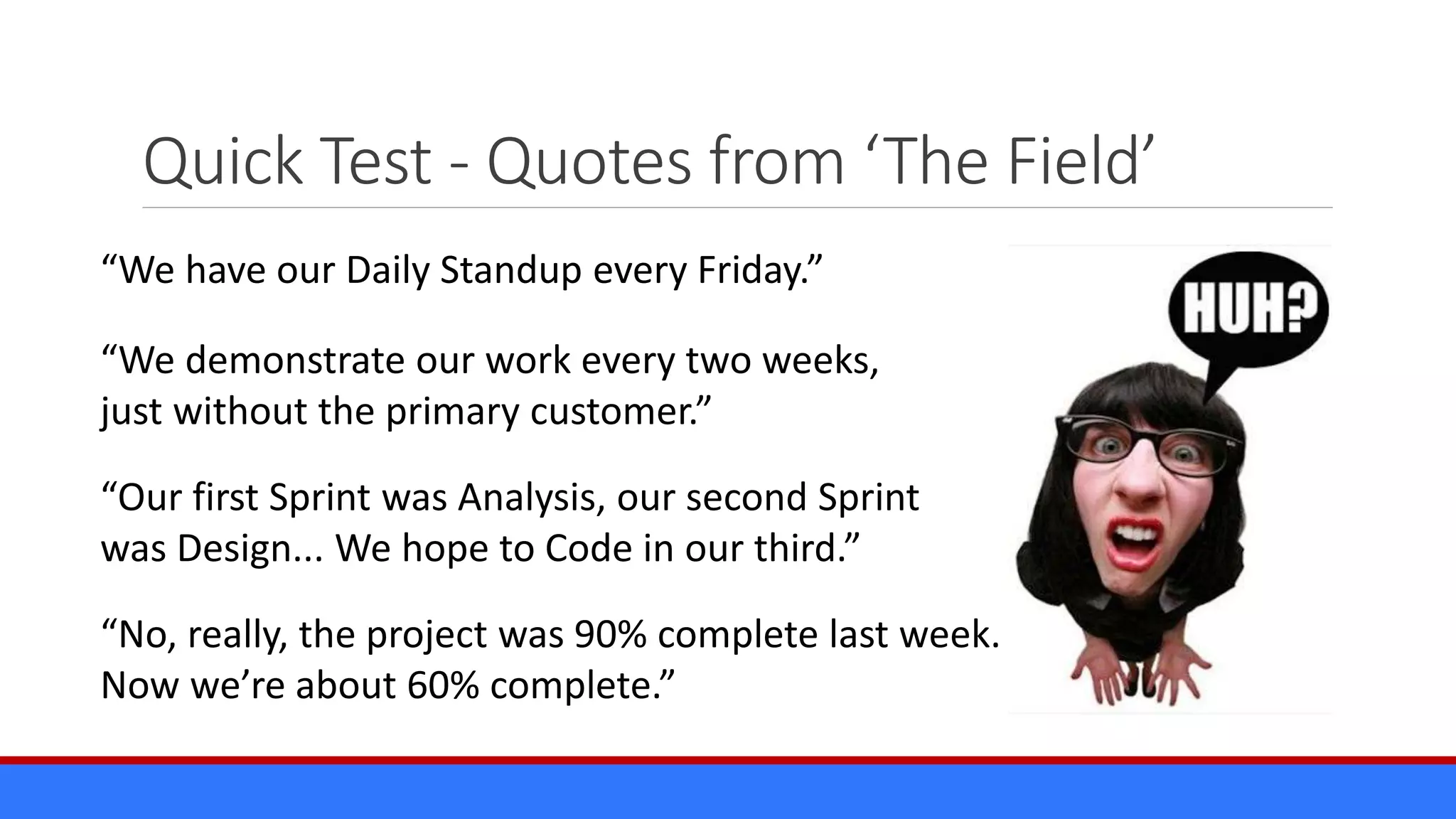
“We have our Daily Standup every Friday.”
“We demonstrate our work every two weeks,
just without the primary customer.”
“No, really, the project was 90% complete last week.
Now we’re about 60% complete.”
“Our first Sprint was Analysis, our second Sprint
was Design... We hope to Code in our third.”
Intermission
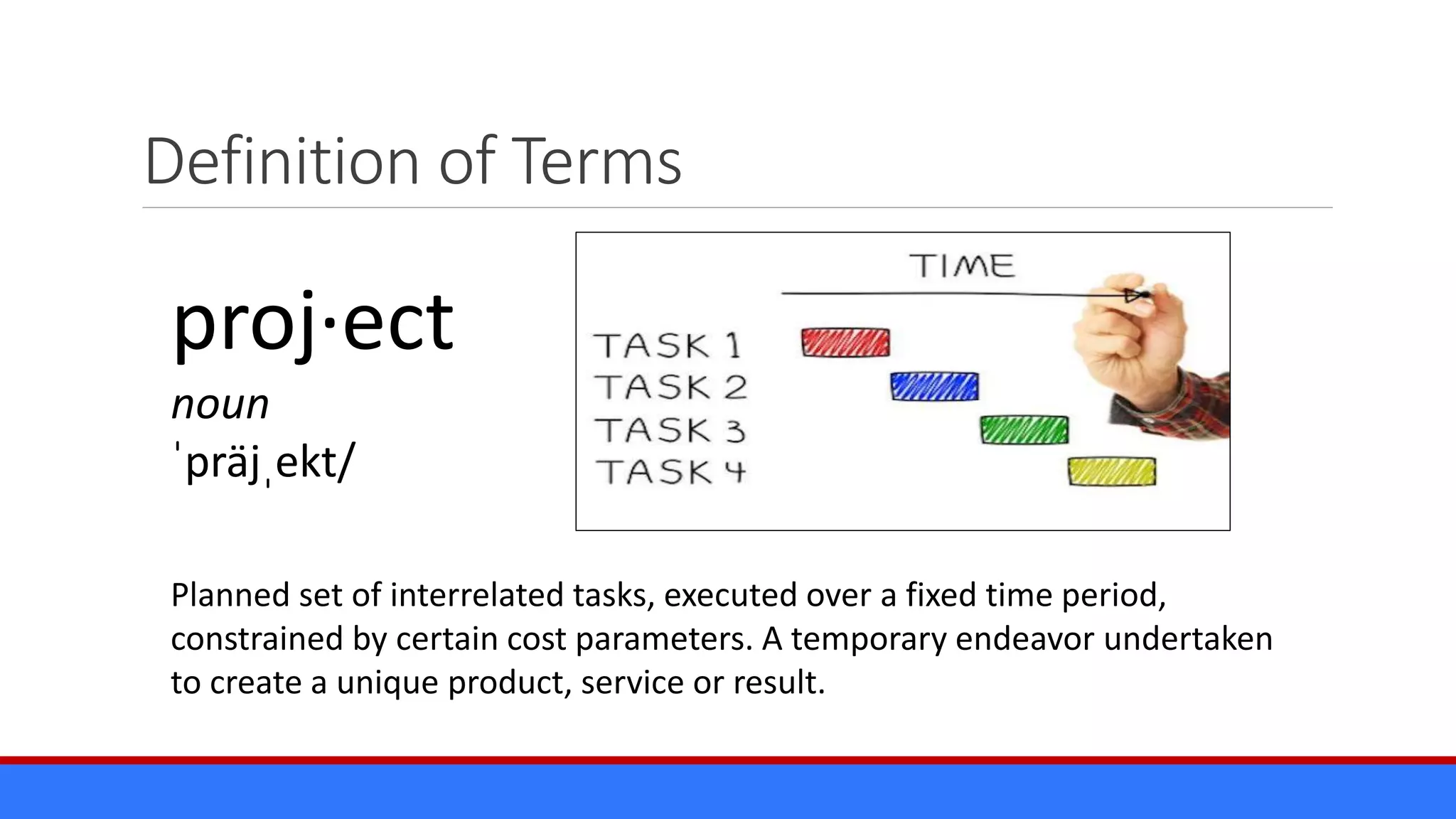
Definition of Terms
Planned set of interrelated tasks, executed over a fixed time period,
constrained by certain cost parameters. A temporary endeavor undertaken
to create a unique product, service or result.
proj·ect
noun
ˈpräjˌekt/
Observation
Project Management
processes, as defined,
inherently assume a
Waterfall execution
approach, as evidenced by
the high degree of formality
and prescriptiveness.
The Waterfall Bias in Project Management
“The Project Manager must be able to
develop a fully integrated information and
control system to plan, instruct, monitor
and control large amounts of data, quickly
and accurately to facilitate the problem-
solving and decision- making process.”
-- Rory Burke
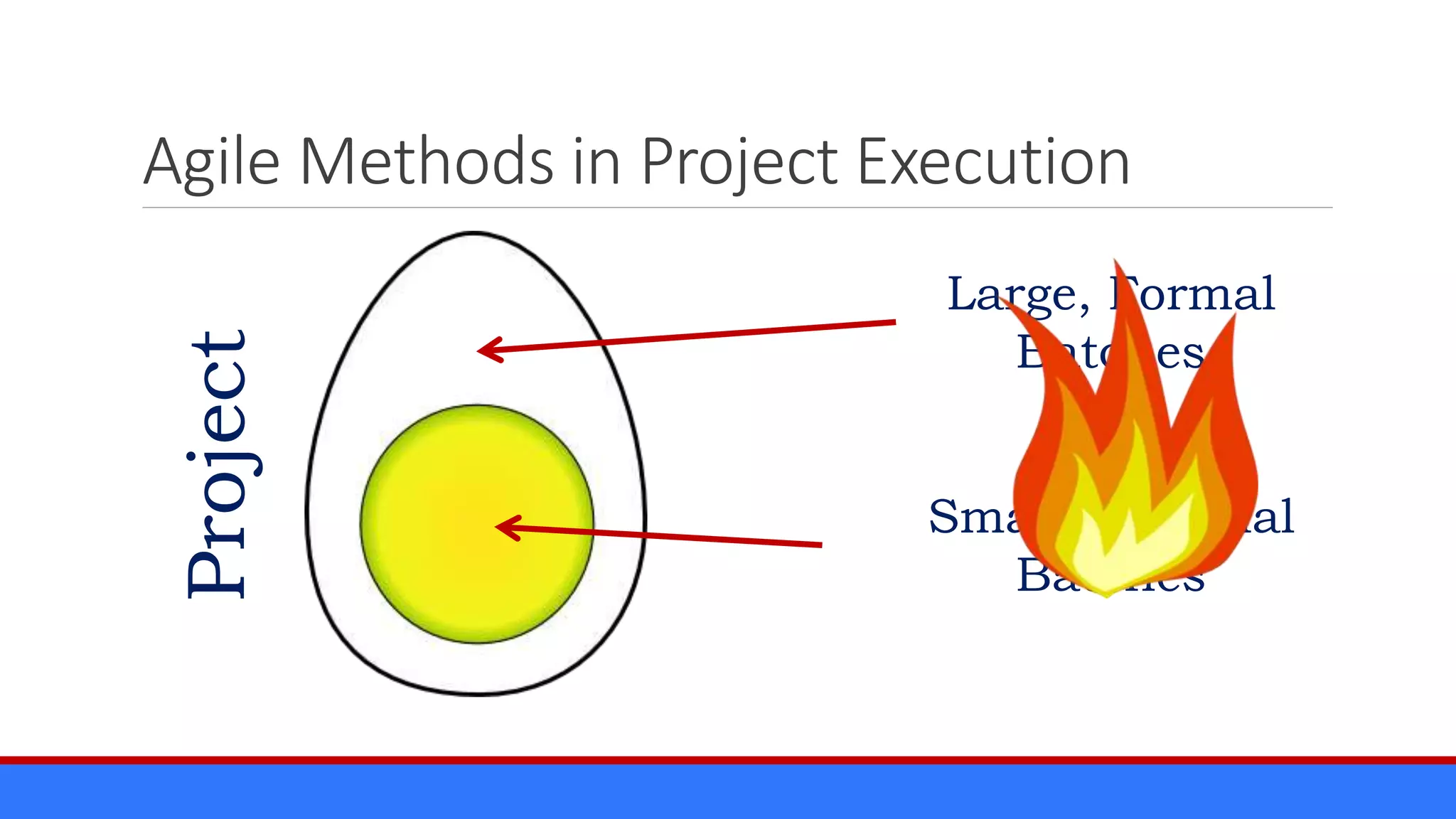
Agile Methods in Project Execution
Small, Informal
Batches
Large, Formal
Batches
Project
Resolving the Waterfall Bias in Agile
In Agile… What
can a Project
Manager bring
to the table?
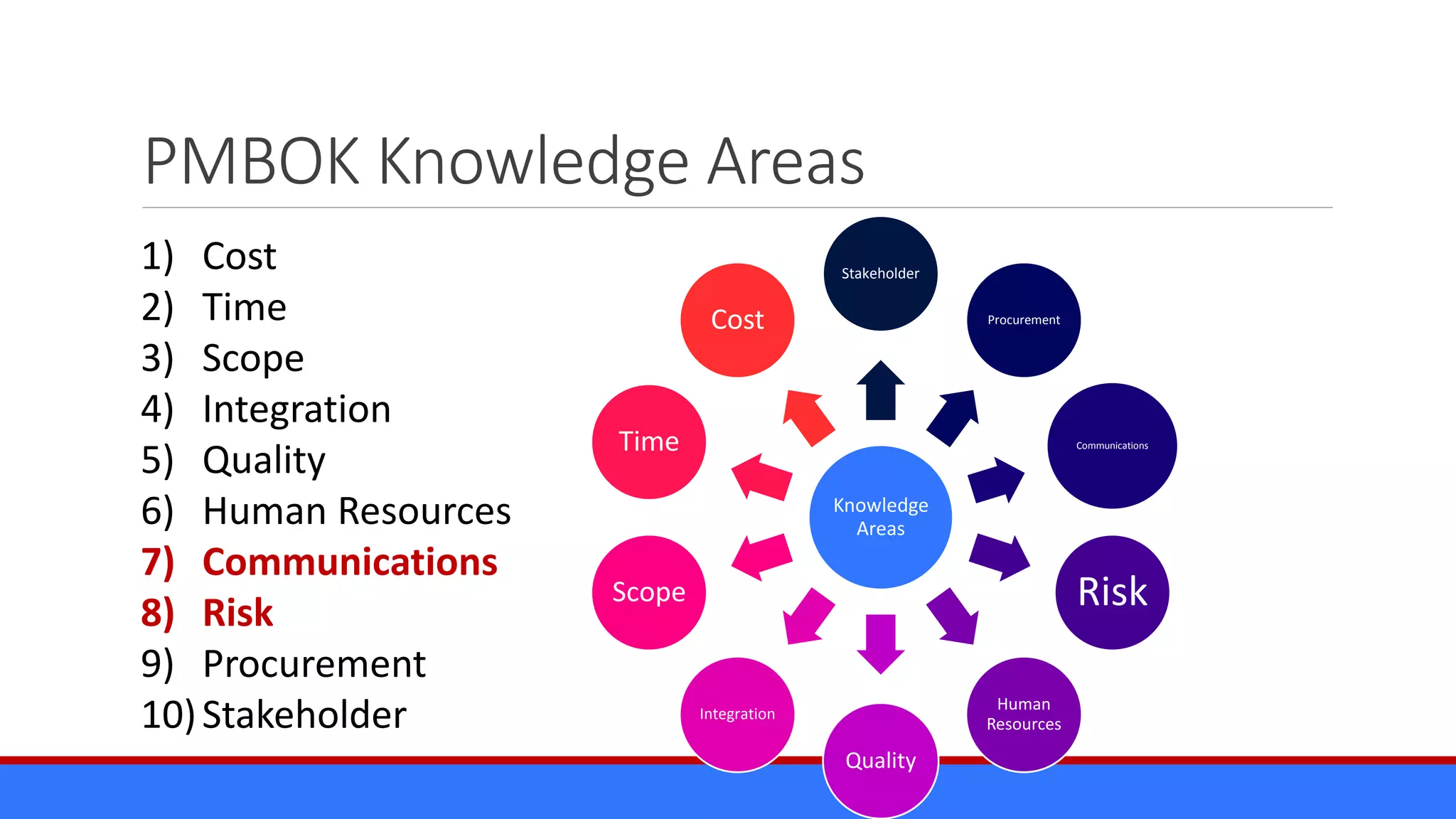
PMBOK Knowledge Areas
Knowledge
Areas
Stakeholder
Procurement
Communications
Risk
Human
Resources
Quality
Integration
Scope
Time
Cost
1) Cost
2) Time
3) Scope
4) Integration
5) Quality
6) Human Resources
7) Communications
8) Risk
9) Procurement
10)Stakeholder
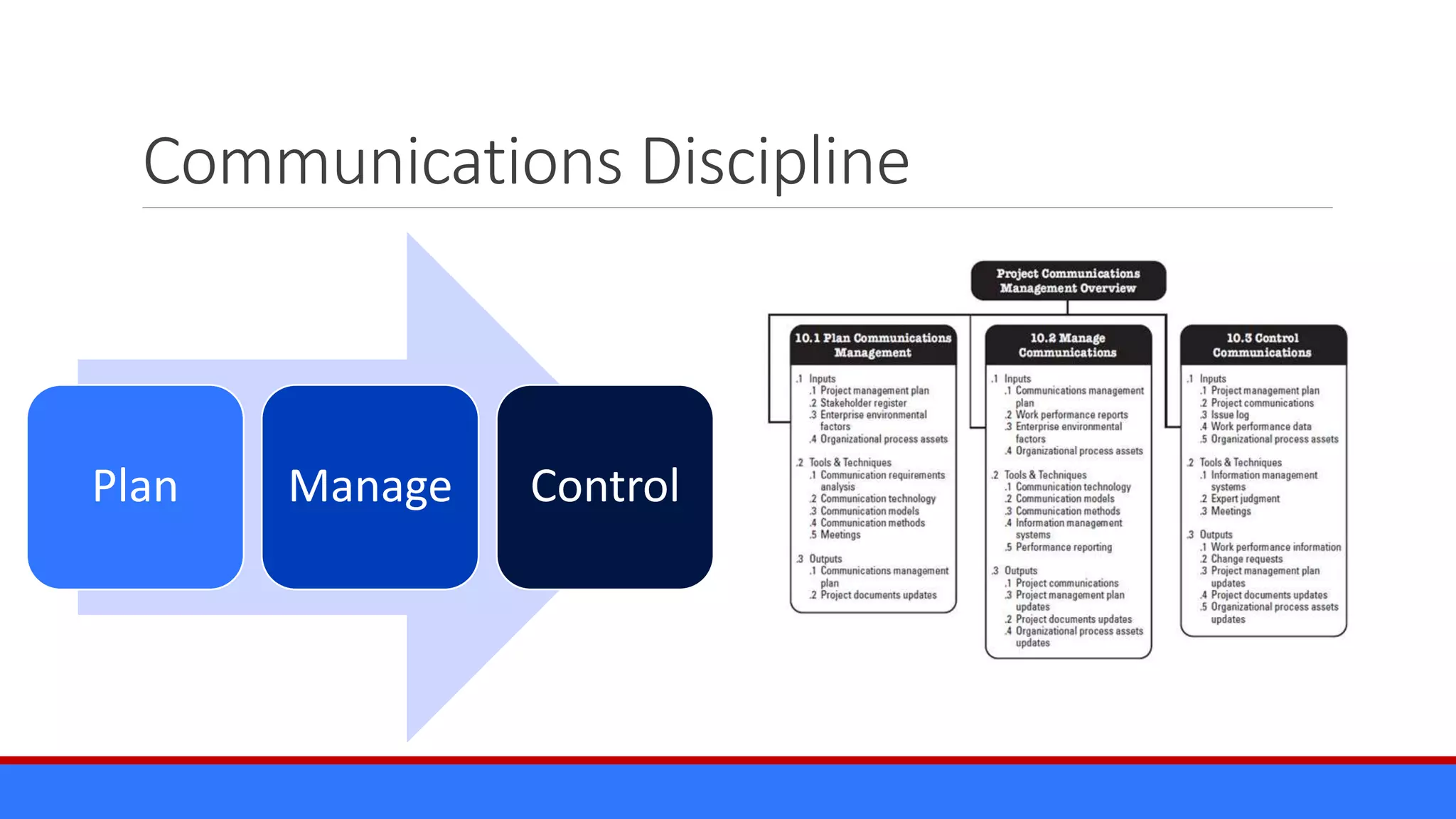
Communications Discipline
Plan Manage Control
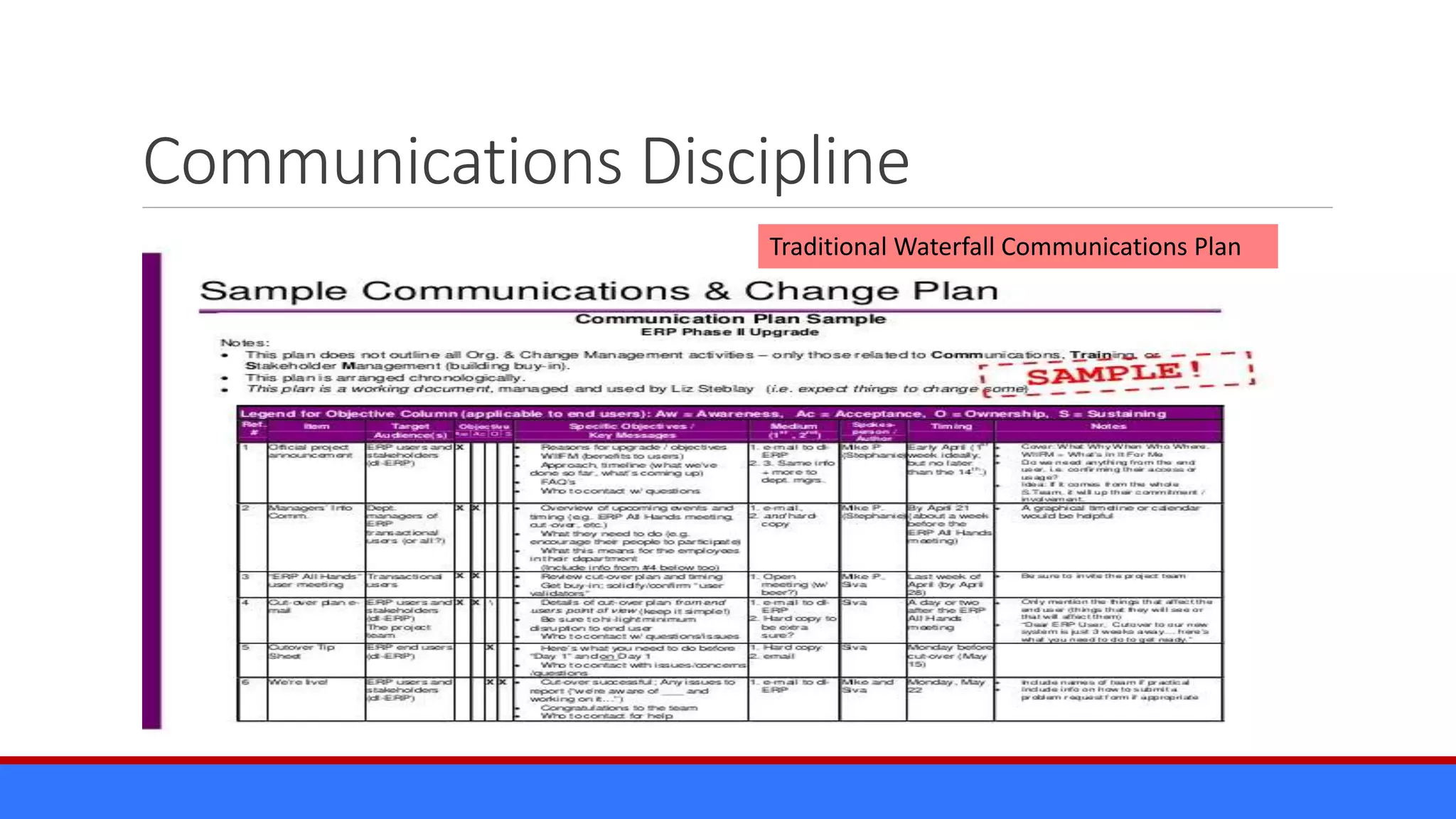
Communications Discipline
Traditional Waterfall Communications Plan
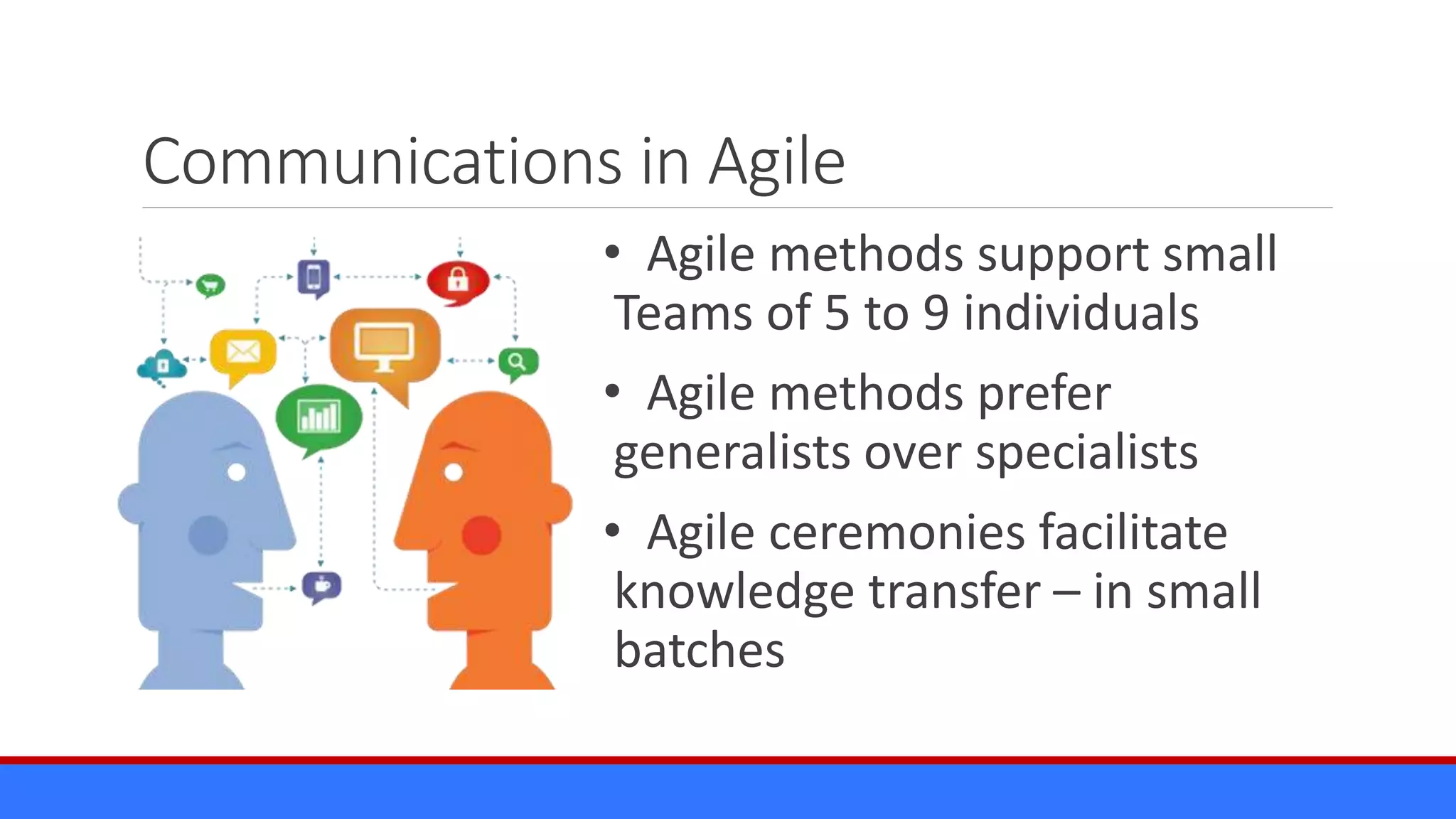
Communications in Agile
• Agile methods support small
Teams of 5 to 9 individuals
• Agile methods prefer
generalists over specialists
• Agile ceremonies facilitate
knowledge transfer – in small
batches
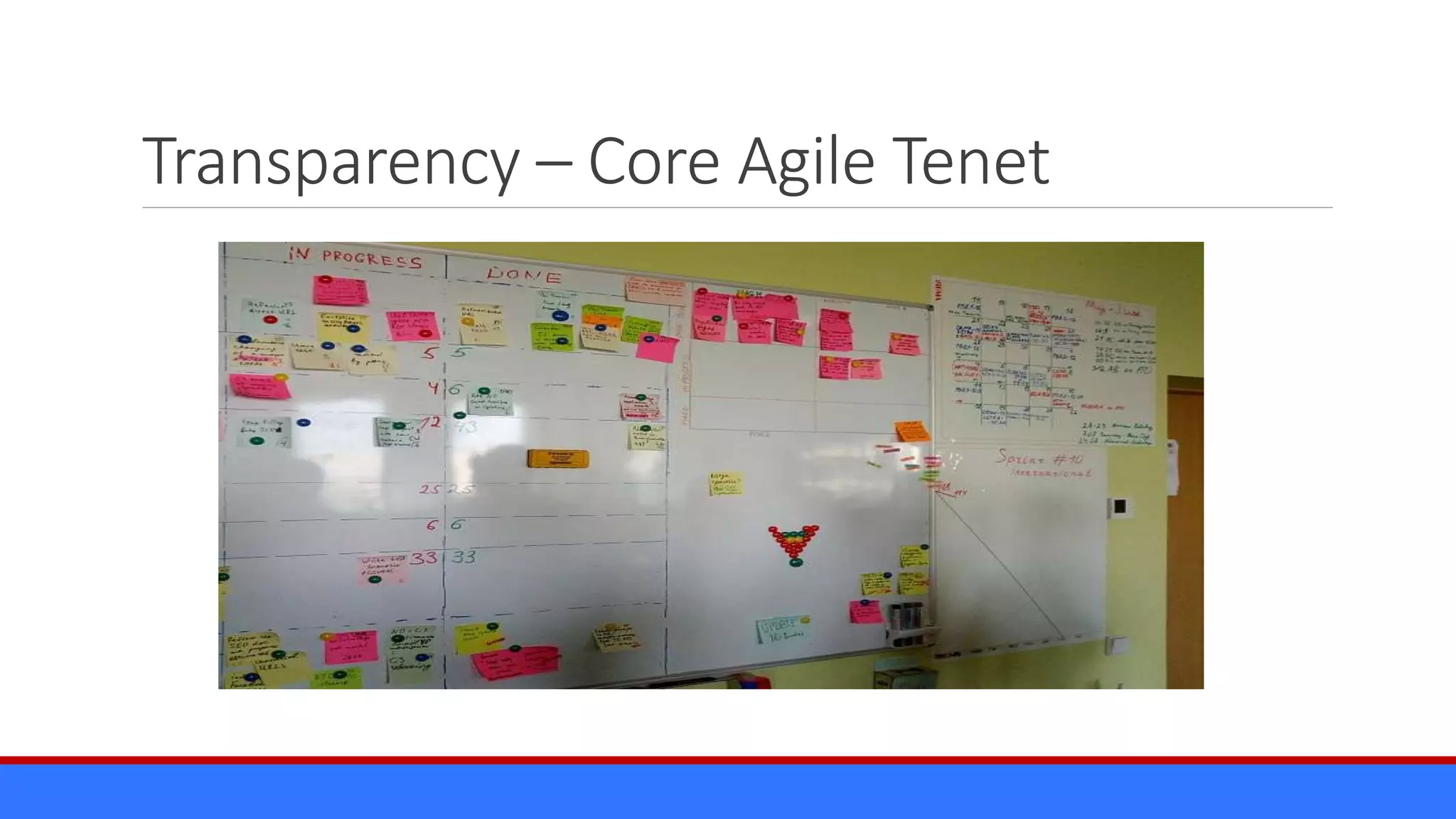
Transparency – Core Agile Tenet
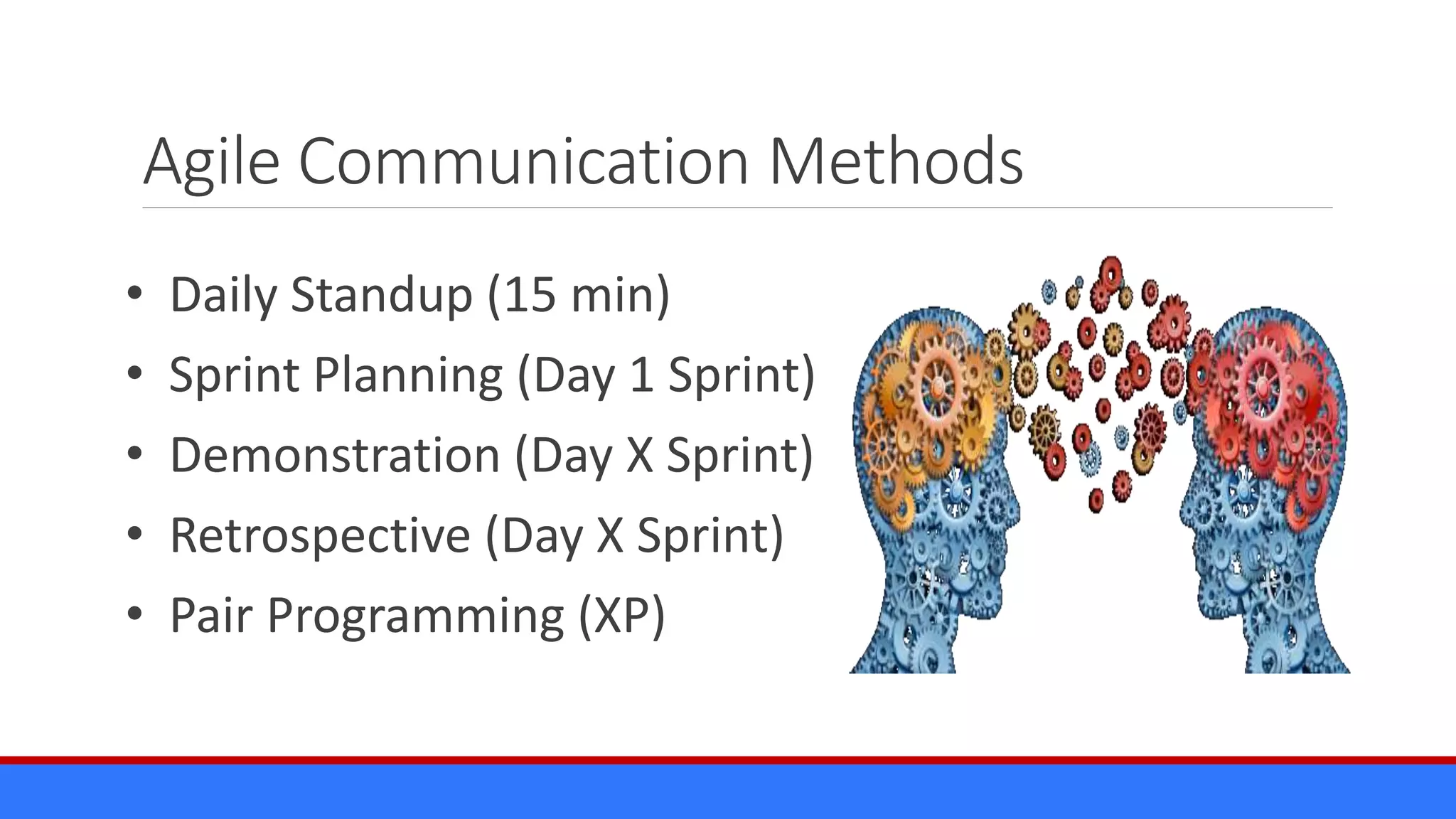
Agile Communication Methods
• Daily Standup (15 min)
• Sprint Planning (Day 1 Sprint)
• Demonstration (Day X Sprint)
• Retrospective (Day X Sprint)
• Pair Programming (XP)
Conclusion – Agile Communications
Agile methods provide a
solid framework for
knowledge transfer.
Augment only if
necessary!
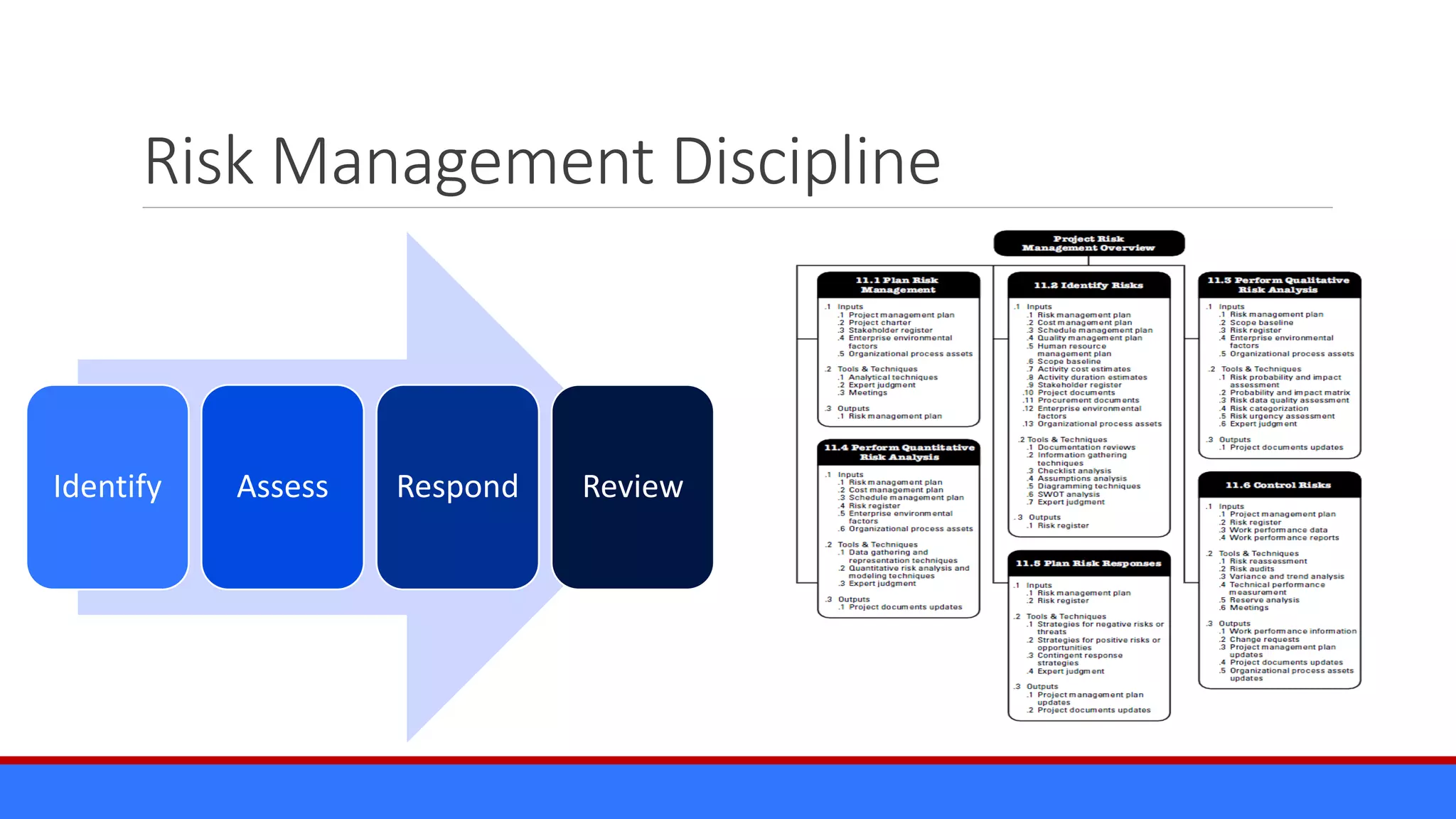
Risk Management Discipline
Identify Assess Respond Review
Risk Management Discipline
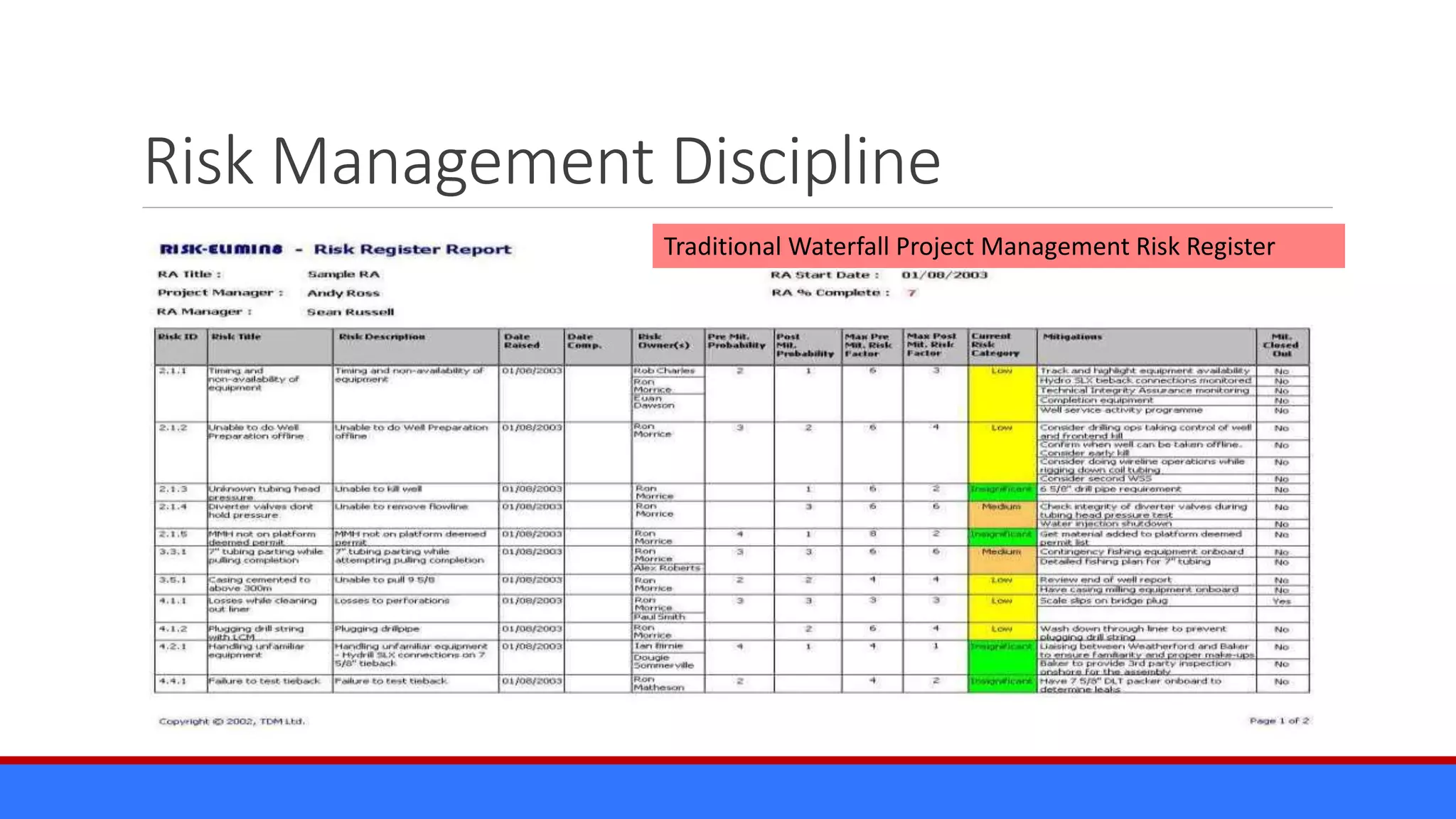
Traditional Waterfall Project Management Risk Register
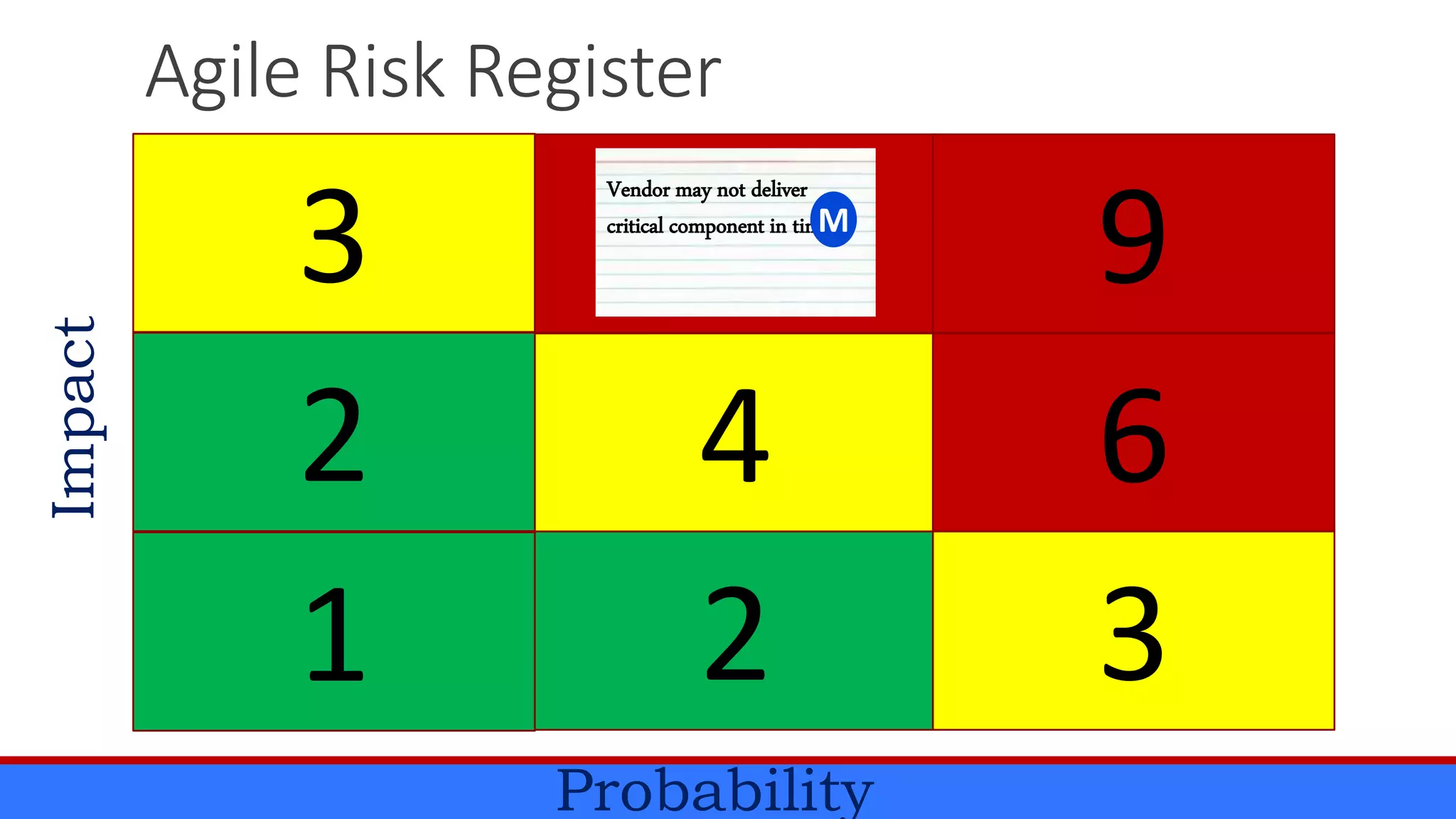
Agile Risk Register
3 6 9
2 4 6
1 2 3
Vendor may not deliver
critical component in timeM
Impact
Probability
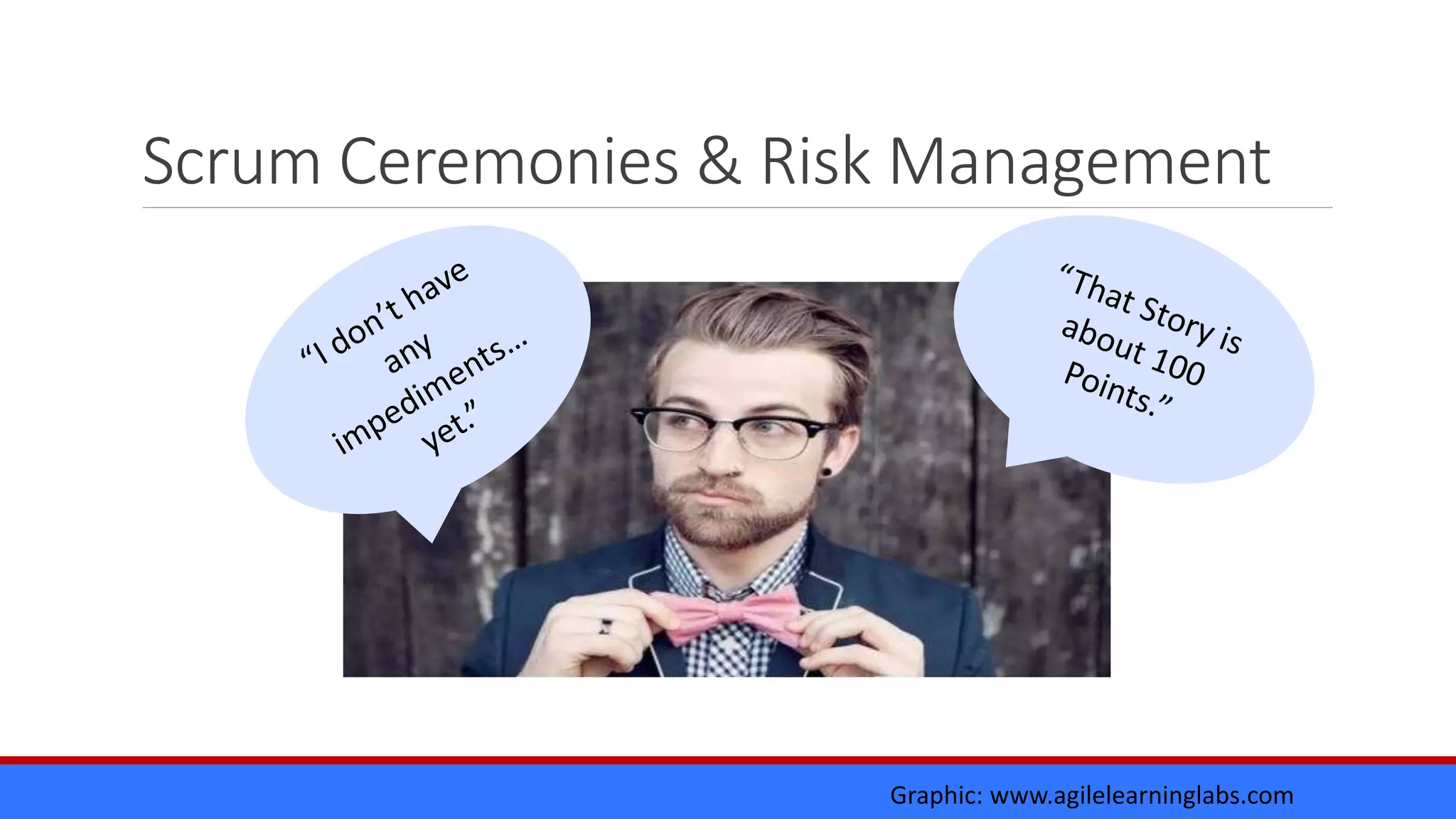
Scrum Ceremonies & Risk Management
Graphic: www.agilelearninglabs.com
Conclusion – Agile Risk Management
Lightweight Risk
Management methods
can effectively manage
risk by minimizing waste
and amplifying learning.
Today’s Premise
Project Management
discipline is a critical
component in Agile
project execution and
Enterprise adoption.
Conclusion
Project Management
discipline, applied
creatively in adherence
with Lean principles, can
amplify success in Agile
project execution and
Enterprise adoption.
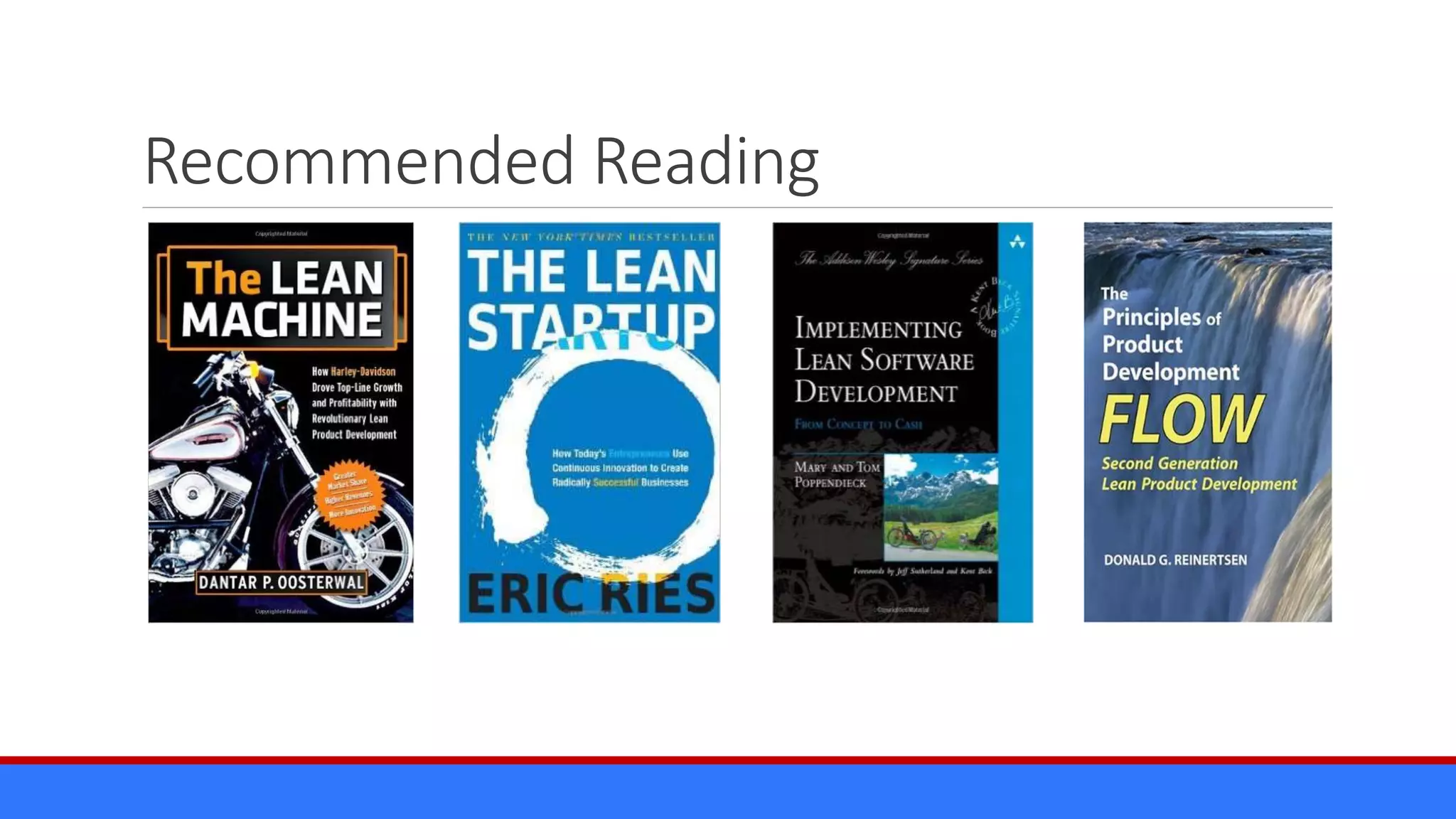
Recommended Reading
Questions?
Is Project Management Discipline Relevant in an Agile World?

Is Project Management Discipline Relevant in an Agile World?