Interpersonal
Psychotherapy (IPT)
Contents
- Development of IPT
- Theoretical Background of IPT
- IPT developed as a treatment of depression
- Target areas of IPT
- Process of IPT
- Techniques of IPT
- Applications of IPT
2
What is Interpersonal Therapy?
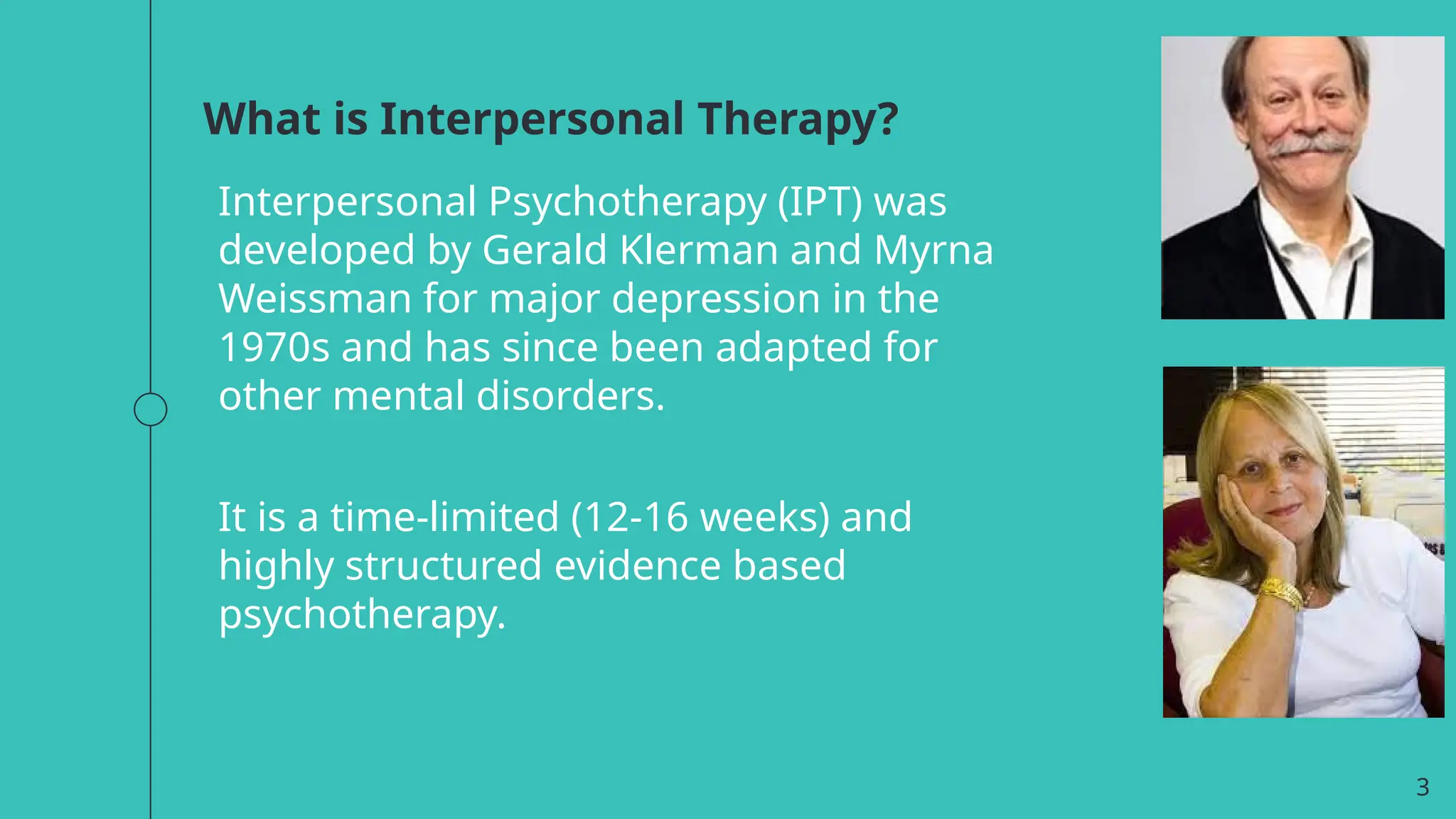
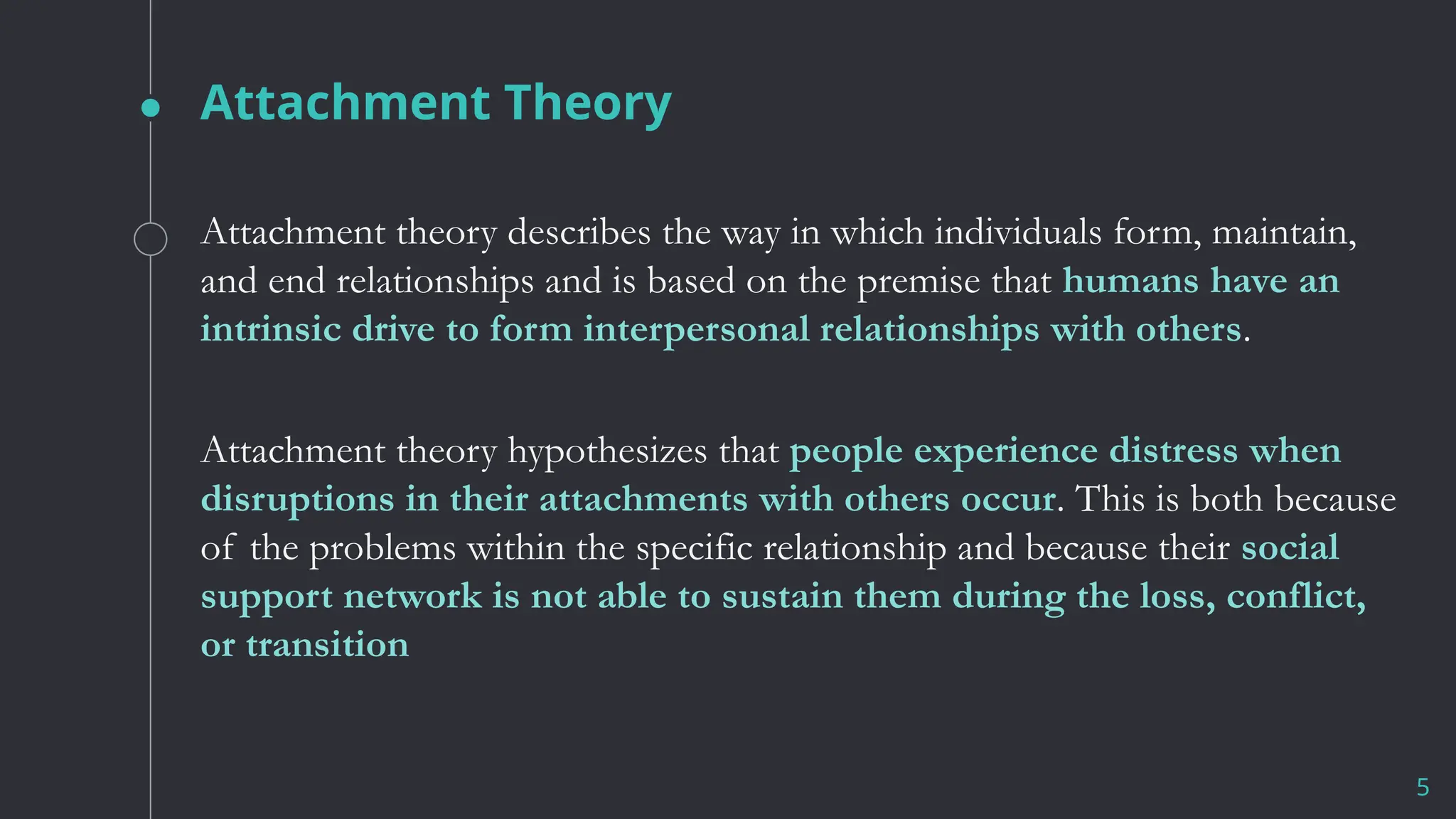
Interpersonal Psychotherapy (IPT) was
developed by Gerald Klerman and Myrna
Weissman for major depression in the
1970s and has since been adapted for
other mental disorders.
It is a time-limited (12-16 weeks) and
highly structured evidence based
psychotherapy.
3
Theoretical Background of IPT
1
4
Attachment Theory
Attachment theory describes the way in which individuals form, maintain,
and end relationships and is based on the premise that humans have an
intrinsic drive to form interpersonal relationships with others.
Attachment theory hypothesizes that people experience distress when
disruptions in their attachments with others occur. This is both because
of the problems within the specific relationship and because their social
support network is not able to sustain them during the loss, conflict,
or transition
5
Communication Theory
6
◦ Communication theory can be understood as describing the way in
which individuals communicate their attachment needs to
specific significant others.
◦ Attachment (social/macro level) is the template on which specific
communication (micro level) occurs.
◦ According to Kiesler, interpersonal problems occur as a result of
negative or non-supportive responses from others that are
elicited unintentionally by the patient.
◦ Maladaptive attachment styles lead to inappropriate or inadequate
interpersonal communication, which prevents a person’s attachment
needs from being met.
Social Theory
7
◦ Emphasizes the role of interpersonal factors such as loss and
poor or disrupted social support in maladaptive responses to
life events and the genesis of depression and anxiety.
◦ The social milieu in which a patient develops interpersonal
relationships strongly influences his or her ability to cope with
interpersonal stress.
◦ In essence, social theory posits that poor social support is a causal
factor in the genesis of psychological distress.
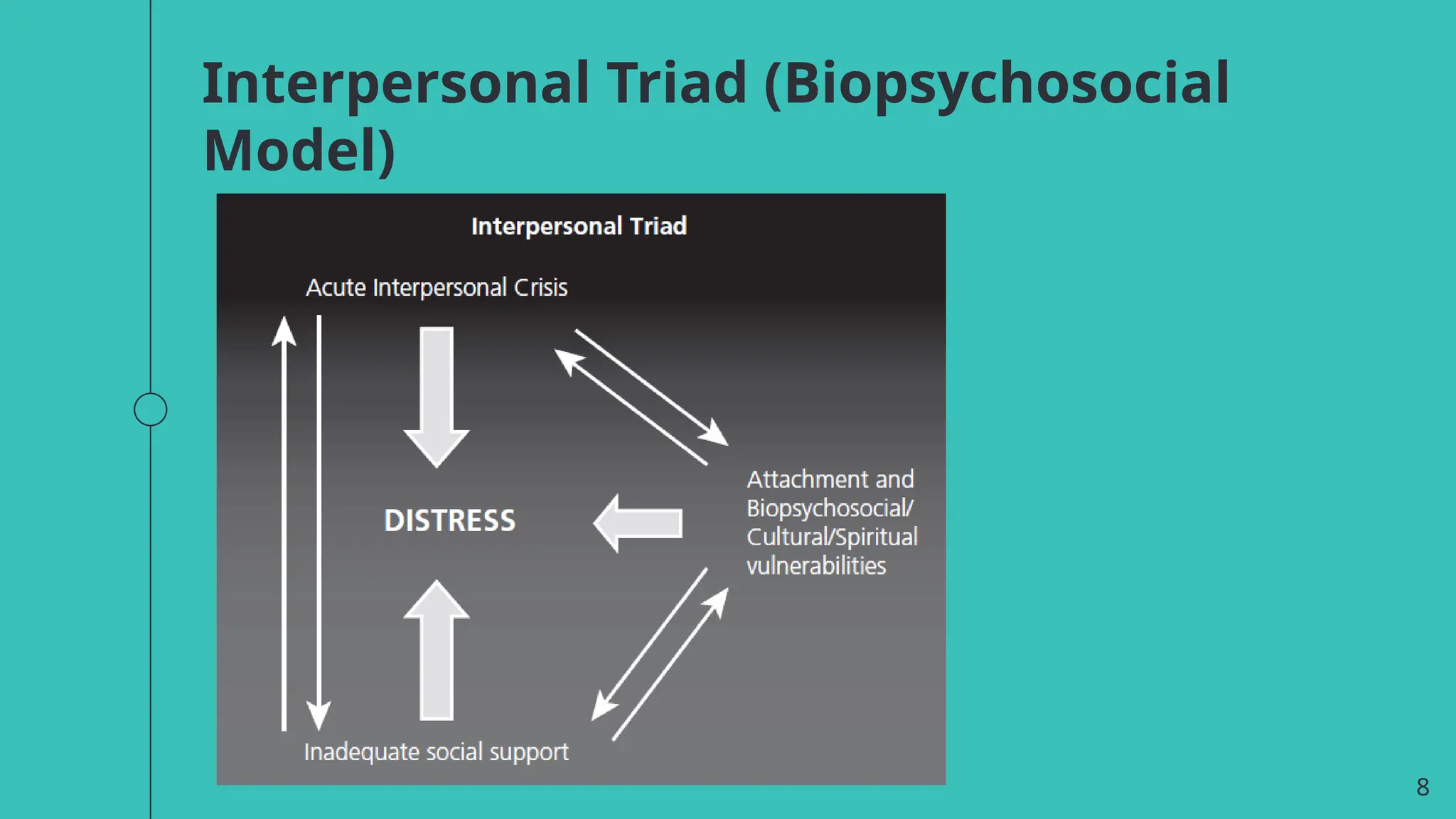
Interpersonal Triad (Biopsychosocial
Model)
8
IPT- Thrust Areas
9
◦ Understand the interpersonal context in which the
depressive symptoms arose
◦ How they relate to the current social and personal context
◦ Focusses on ipr in current scenario (here and now)
◦ Encourage coping with these current problems and the
development of self-reliance outside of the therapeutic
situation
Depression in terms of IPT
10
According to IPT occurrence of depression can be understood in the context of
a social and an interpersonal event. Some common events suggested by the
therapists are:
 Divorce, marital conflict and separation
 Extra-marital affair of self or spouse
 Death of a loved one
 Loss of job, promotion with new roles and responsibilities or demotion
 Retirement
 Shift in residence, change in family set-up
 Pregnancy, miscarriage, abortion and infertility
Depression in terms of IPT
Symptoms:
The
emotional,
cognitive &
physical
symptoms of
depression
Social and
Interpersonal Life: The
ability to get along with
other important people
in the patient’s life (e.g.,
family, friends, and
work associates).
Social supports protect
against depression,
whereas social stressors
increase vulnerability
for depression.
Personality: Enduring
patterns with which
people deal with life: how
they assert themselves,
express their anger,
maintain their self-esteem,
and whether they are shy,
aggressive, inhibited or
suspicious. These
interpersonal patterns
may contribute to
developing or maintaining
depression.
11
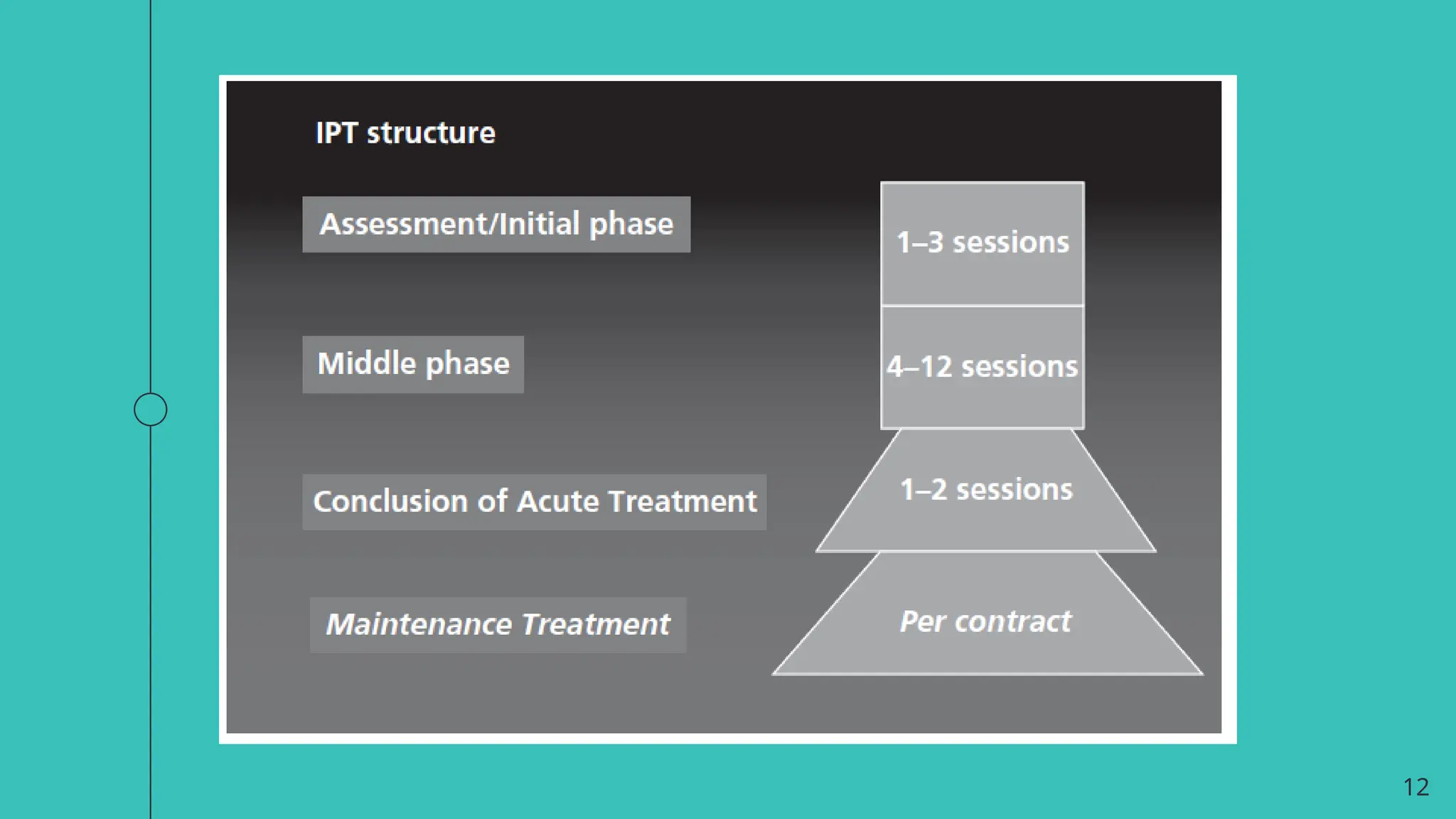
12
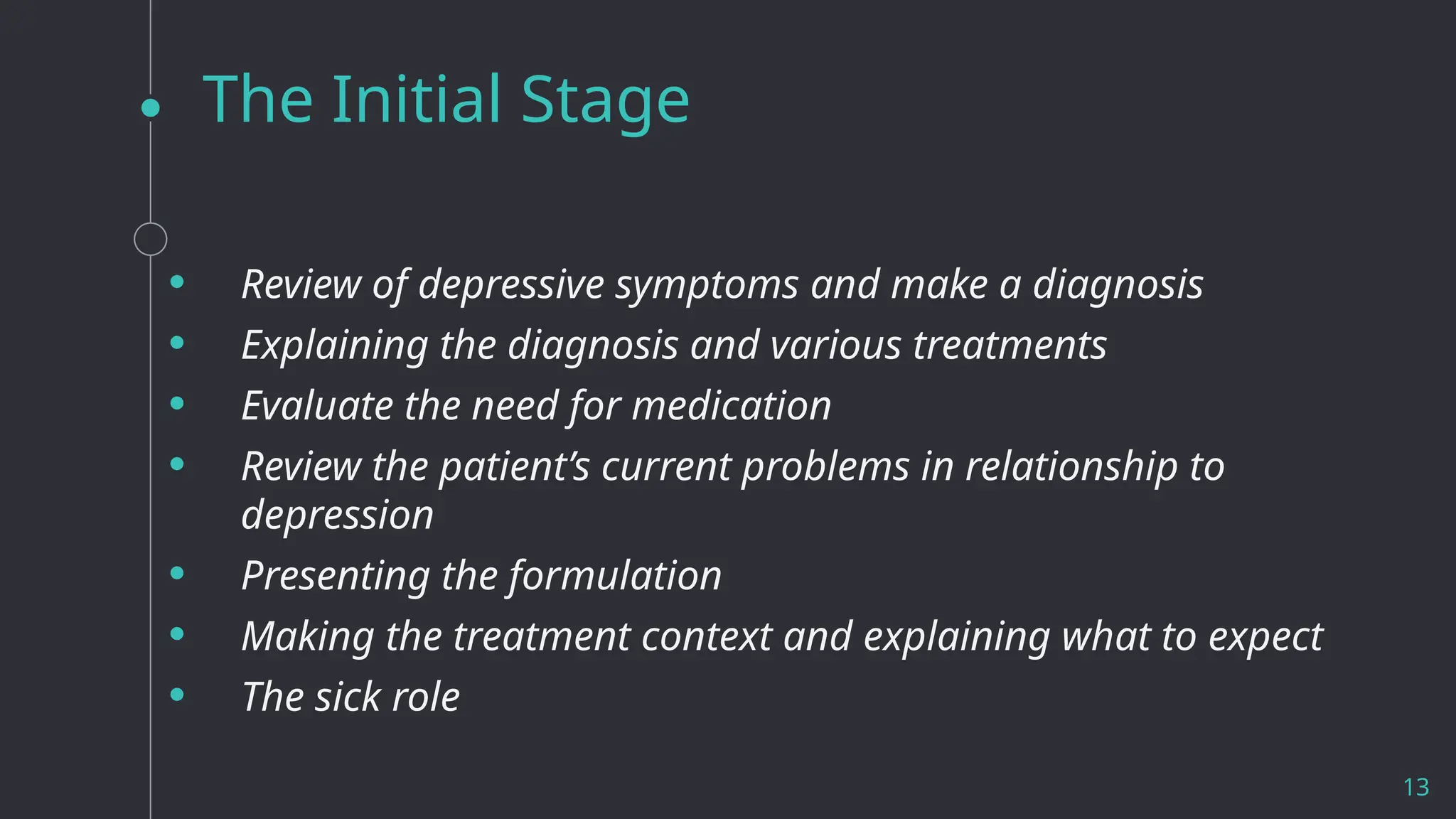
The Initial Stage
• Review of depressive symptoms and make a diagnosis
• Explaining the diagnosis and various treatments
• Evaluate the need for medication
• Review the patient’s current problems in relationship to
depression
• Presenting the formulation
• Making the treatment context and explaining what to expect
• The sick role
13
14
The Middle and Acute Stage
- Assessment
- Conceptualization of assessment findings
- Therapeutic Formulation
- Psychoeducation
- Therapeutic Treatments
15
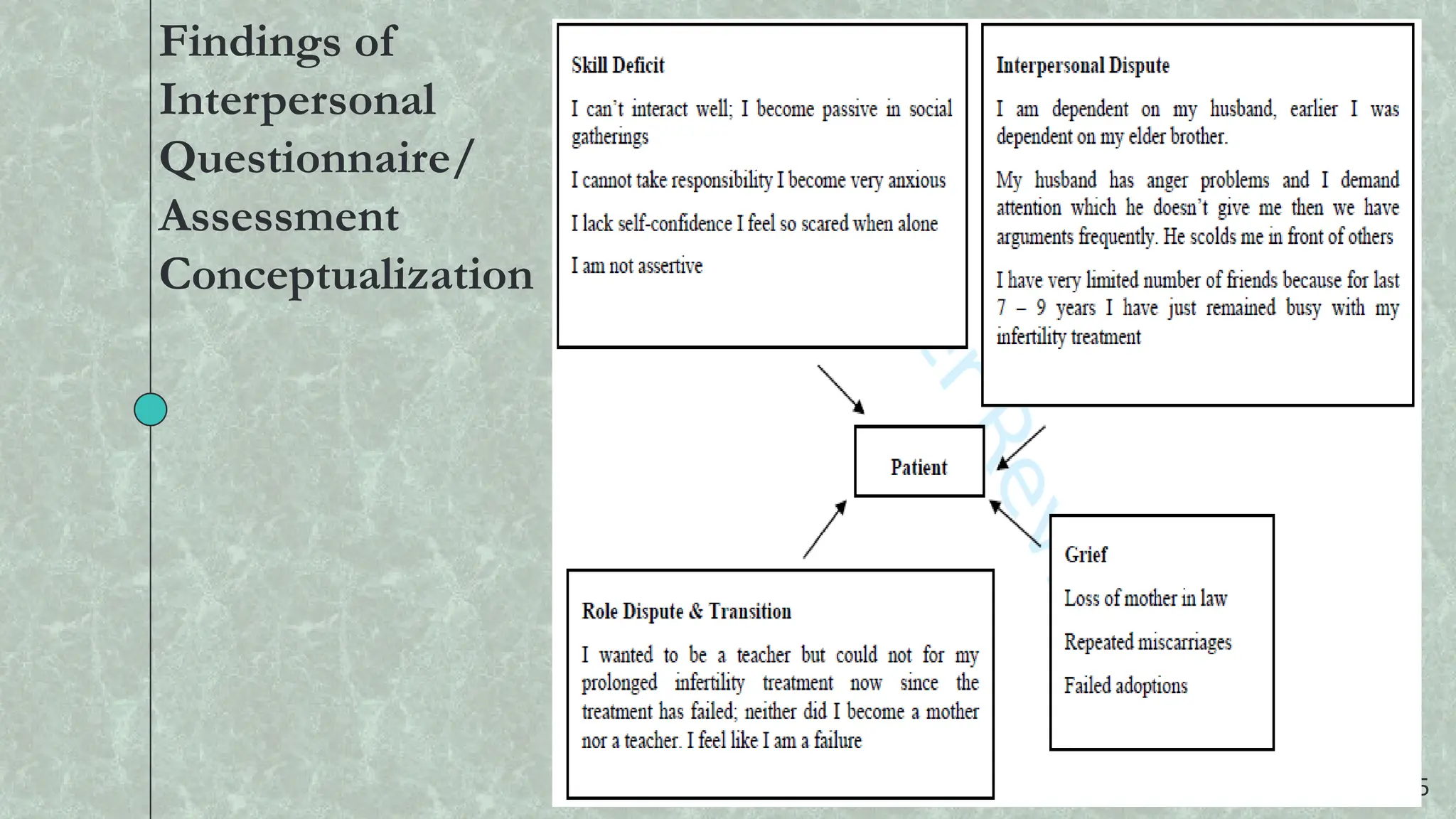
Findings of
Interpersonal
Questionnaire/
Assessment
Conceptualization
16
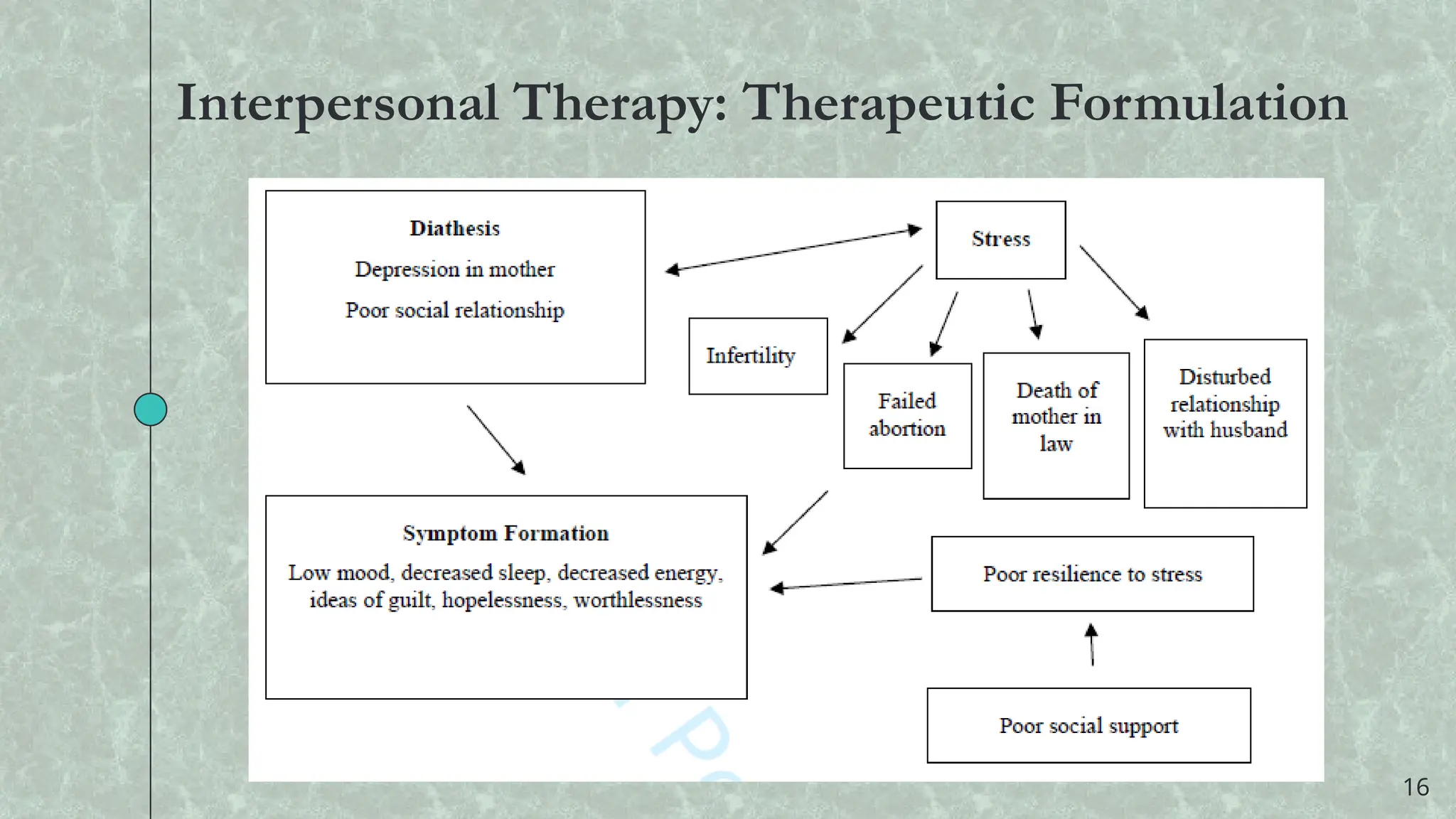
Interpersonal Therapy: Therapeutic Formulation
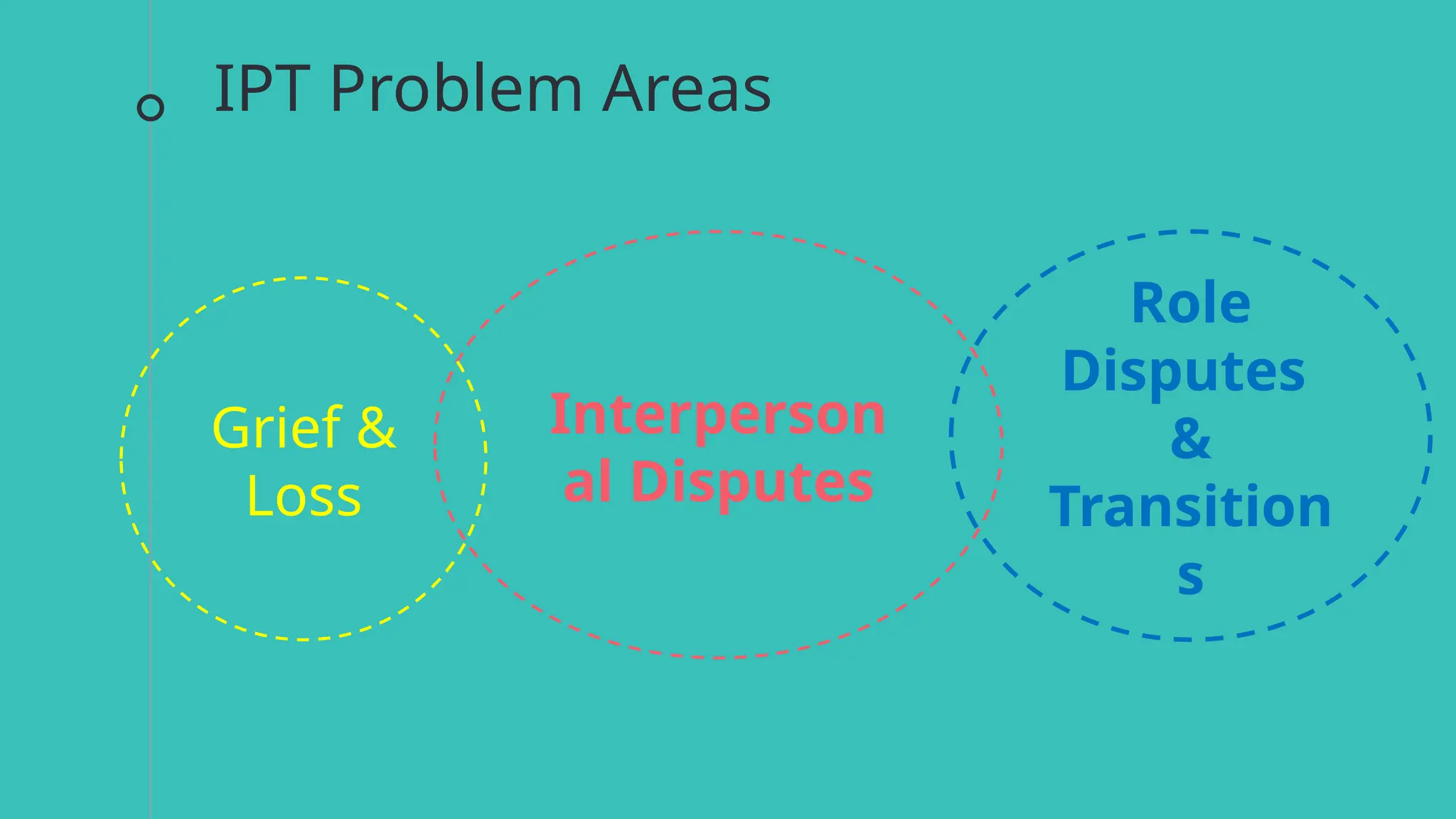
IPT Problem Areas
Interperson
al Disputes
Grief &
Loss
Role
Disputes
&
Transition
s
17
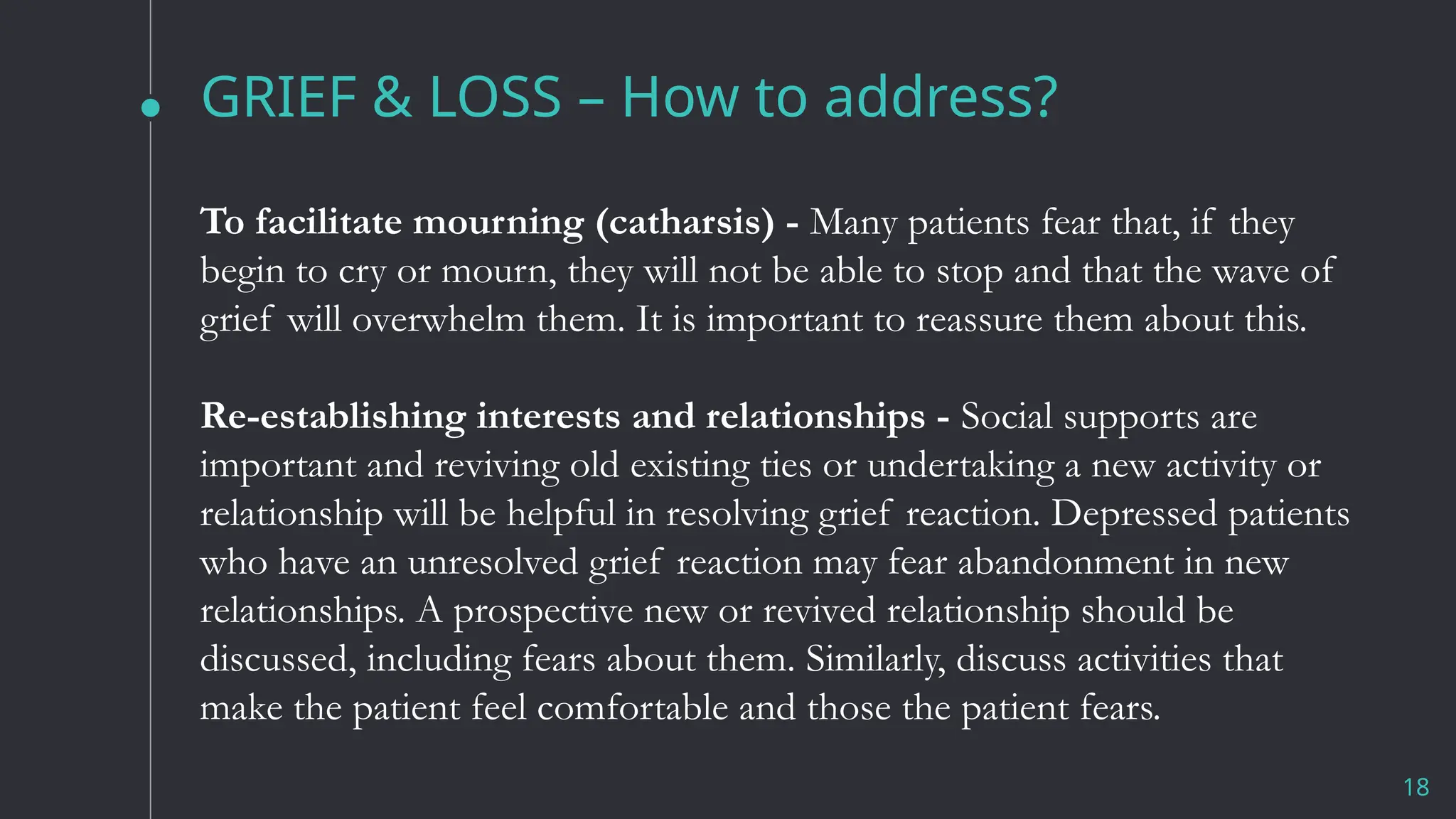
GRIEF & LOSS – How to address?
18
To facilitate mourning (catharsis) - Many patients fear that, if they
begin to cry or mourn, they will not be able to stop and that the wave of
grief will overwhelm them. It is important to reassure them about this.
Re-establishing interests and relationships - Social supports are
important and reviving old existing ties or undertaking a new activity or
relationship will be helpful in resolving grief reaction. Depressed patients
who have an unresolved grief reaction may fear abandonment in new
relationships. A prospective new or revived relationship should be
discussed, including fears about them. Similarly, discuss activities that
make the patient feel comfortable and those the patient fears.
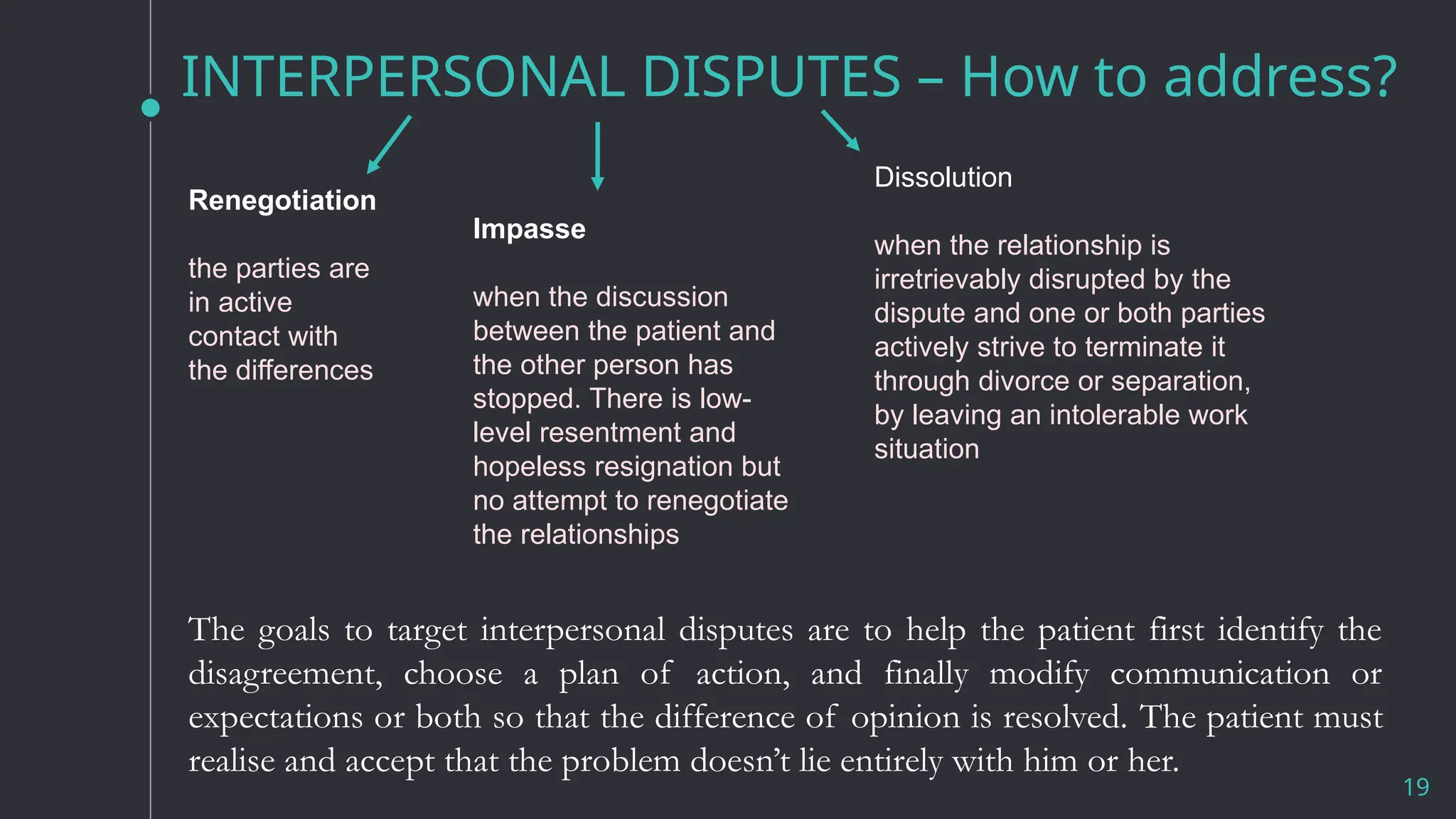
INTERPERSONAL DISPUTES – How to address?
19
Impasse
when the discussion
between the patient and
the other person has
stopped. There is low-
level resentment and
hopeless resignation but
no attempt to renegotiate
the relationships
Renegotiation
the parties are
in active
contact with
the differences
Dissolution
when the relationship is
irretrievably disrupted by the
dispute and one or both parties
actively strive to terminate it
through divorce or separation,
by leaving an intolerable work
situation
The goals to target interpersonal disputes are to help the patient first identify the
disagreement, choose a plan of action, and finally modify communication or
expectations or both so that the difference of opinion is resolved. The patient must
realise and accept that the problem doesn’t lie entirely with him or her.
ROLE DISPUTE AND TRANSITIONS – How
to address?
20
 The strategy in dealing with role transitions is to help the patient
mourn the loss of the old role and develop a more balanced view of
both the old and new roles.
 Encouraging the patient to develop new social supports in his or her
new environment also is crucial.
 Develop necessary skills for adopting the new role.
The Termination Stage
◦ To conclude the acute treatment with the recognition that separations are
role transitions and hence may be bittersweet but that the sadness of
separation is not the same thing as depression.
◦ To bolster the patient’s sense of independence and competence
◦ To relieve guilt and self-blame and practise the skills taught
◦ To discuss continuation or maintenance treatment if IPT has been
successful but the patient is at high-risk for relapse.
21
22
Techniques of IPT
1. Non-Directive Exploration
2. Direct Elicitation
3. Encouragement of affect
4. Clarification
5. Communication Analysis
6. Decision Analysis
7. Role Playing
The Techniques
23
◦ Encouragement of affect: Encouragement of affect is used to help
the patient express, understand, and manage affect.
◦ Clarification: Clarification in IPT is in essence nothing more than
listening, asking good questions so that the therapist can better
understand the patient’s experience, asking very good questions so
that the patient can better understand his or her own experience, and
asking extraordinarily good questions so that the patient is motivated
to change his or her behaviour.
The Techniques
24
◦ Communication Analysis: Communication analysis is simply a
structured method of investigating the hypothesis that the patient’s
difficulties are being caused, perpetuated, or exacerbated by poor
communication.
◦ Decision Analysis: This technique helps the patient to consider
alternative courses of actions and their consequences in order to solve a
given problem. The patient can learn to use the decision-making skill
not only within the treatment but also as a general interpersonal skill.
Questions such as “What would you want to happen?”, may be helpful.

25
26
In
Conclusio
n
27
Thank You
For Queries/Suggestions:
sampurnachakraborty@christuniversity.in

IPT (2).pptx saying what is interpersonal therpy

  • 1.
  • 2.
    Contents - Development ofIPT - Theoretical Background of IPT - IPT developed as a treatment of depression - Target areas of IPT - Process of IPT - Techniques of IPT - Applications of IPT 2
  • 3.
    What is InterpersonalTherapy? Interpersonal Psychotherapy (IPT) was developed by Gerald Klerman and Myrna Weissman for major depression in the 1970s and has since been adapted for other mental disorders. It is a time-limited (12-16 weeks) and highly structured evidence based psychotherapy. 3
  • 4.
  • 5.
    Attachment Theory Attachment theorydescribes the way in which individuals form, maintain, and end relationships and is based on the premise that humans have an intrinsic drive to form interpersonal relationships with others. Attachment theory hypothesizes that people experience distress when disruptions in their attachments with others occur. This is both because of the problems within the specific relationship and because their social support network is not able to sustain them during the loss, conflict, or transition 5
  • 6.
    Communication Theory 6 ◦ Communicationtheory can be understood as describing the way in which individuals communicate their attachment needs to specific significant others. ◦ Attachment (social/macro level) is the template on which specific communication (micro level) occurs. ◦ According to Kiesler, interpersonal problems occur as a result of negative or non-supportive responses from others that are elicited unintentionally by the patient. ◦ Maladaptive attachment styles lead to inappropriate or inadequate interpersonal communication, which prevents a person’s attachment needs from being met.
  • 7.
    Social Theory 7 ◦ Emphasizesthe role of interpersonal factors such as loss and poor or disrupted social support in maladaptive responses to life events and the genesis of depression and anxiety. ◦ The social milieu in which a patient develops interpersonal relationships strongly influences his or her ability to cope with interpersonal stress. ◦ In essence, social theory posits that poor social support is a causal factor in the genesis of psychological distress.
  • 8.
  • 9.
    IPT- Thrust Areas 9 ◦Understand the interpersonal context in which the depressive symptoms arose ◦ How they relate to the current social and personal context ◦ Focusses on ipr in current scenario (here and now) ◦ Encourage coping with these current problems and the development of self-reliance outside of the therapeutic situation
  • 10.
    Depression in termsof IPT 10 According to IPT occurrence of depression can be understood in the context of a social and an interpersonal event. Some common events suggested by the therapists are:  Divorce, marital conflict and separation  Extra-marital affair of self or spouse  Death of a loved one  Loss of job, promotion with new roles and responsibilities or demotion  Retirement  Shift in residence, change in family set-up  Pregnancy, miscarriage, abortion and infertility
  • 11.
    Depression in termsof IPT Symptoms: The emotional, cognitive & physical symptoms of depression Social and Interpersonal Life: The ability to get along with other important people in the patient’s life (e.g., family, friends, and work associates). Social supports protect against depression, whereas social stressors increase vulnerability for depression. Personality: Enduring patterns with which people deal with life: how they assert themselves, express their anger, maintain their self-esteem, and whether they are shy, aggressive, inhibited or suspicious. These interpersonal patterns may contribute to developing or maintaining depression. 11
  • 12.
  • 13.
    The Initial Stage •Review of depressive symptoms and make a diagnosis • Explaining the diagnosis and various treatments • Evaluate the need for medication • Review the patient’s current problems in relationship to depression • Presenting the formulation • Making the treatment context and explaining what to expect • The sick role 13
  • 14.
    14 The Middle andAcute Stage - Assessment - Conceptualization of assessment findings - Therapeutic Formulation - Psychoeducation - Therapeutic Treatments
  • 15.
  • 16.
  • 17.
    IPT Problem Areas Interperson alDisputes Grief & Loss Role Disputes & Transition s 17
  • 18.
    GRIEF & LOSS– How to address? 18 To facilitate mourning (catharsis) - Many patients fear that, if they begin to cry or mourn, they will not be able to stop and that the wave of grief will overwhelm them. It is important to reassure them about this. Re-establishing interests and relationships - Social supports are important and reviving old existing ties or undertaking a new activity or relationship will be helpful in resolving grief reaction. Depressed patients who have an unresolved grief reaction may fear abandonment in new relationships. A prospective new or revived relationship should be discussed, including fears about them. Similarly, discuss activities that make the patient feel comfortable and those the patient fears.
  • 19.
    INTERPERSONAL DISPUTES –How to address? 19 Impasse when the discussion between the patient and the other person has stopped. There is low- level resentment and hopeless resignation but no attempt to renegotiate the relationships Renegotiation the parties are in active contact with the differences Dissolution when the relationship is irretrievably disrupted by the dispute and one or both parties actively strive to terminate it through divorce or separation, by leaving an intolerable work situation The goals to target interpersonal disputes are to help the patient first identify the disagreement, choose a plan of action, and finally modify communication or expectations or both so that the difference of opinion is resolved. The patient must realise and accept that the problem doesn’t lie entirely with him or her.
  • 20.
    ROLE DISPUTE ANDTRANSITIONS – How to address? 20  The strategy in dealing with role transitions is to help the patient mourn the loss of the old role and develop a more balanced view of both the old and new roles.  Encouraging the patient to develop new social supports in his or her new environment also is crucial.  Develop necessary skills for adopting the new role.
  • 21.
    The Termination Stage ◦To conclude the acute treatment with the recognition that separations are role transitions and hence may be bittersweet but that the sadness of separation is not the same thing as depression. ◦ To bolster the patient’s sense of independence and competence ◦ To relieve guilt and self-blame and practise the skills taught ◦ To discuss continuation or maintenance treatment if IPT has been successful but the patient is at high-risk for relapse. 21
  • 22.
    22 Techniques of IPT 1.Non-Directive Exploration 2. Direct Elicitation 3. Encouragement of affect 4. Clarification 5. Communication Analysis 6. Decision Analysis 7. Role Playing
  • 23.
    The Techniques 23 ◦ Encouragementof affect: Encouragement of affect is used to help the patient express, understand, and manage affect. ◦ Clarification: Clarification in IPT is in essence nothing more than listening, asking good questions so that the therapist can better understand the patient’s experience, asking very good questions so that the patient can better understand his or her own experience, and asking extraordinarily good questions so that the patient is motivated to change his or her behaviour.
  • 24.
    The Techniques 24 ◦ CommunicationAnalysis: Communication analysis is simply a structured method of investigating the hypothesis that the patient’s difficulties are being caused, perpetuated, or exacerbated by poor communication. ◦ Decision Analysis: This technique helps the patient to consider alternative courses of actions and their consequences in order to solve a given problem. The patient can learn to use the decision-making skill not only within the treatment but also as a general interpersonal skill. Questions such as “What would you want to happen?”, may be helpful.
  • 25.
  • 26.
  • 27.