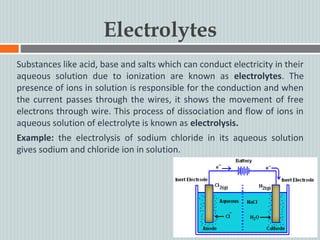
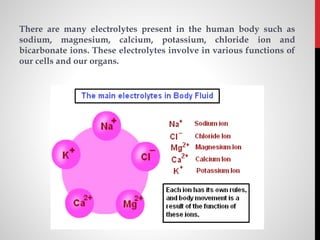
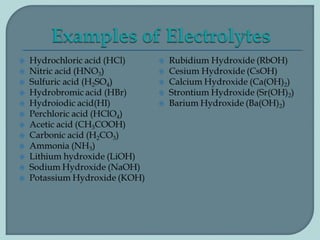
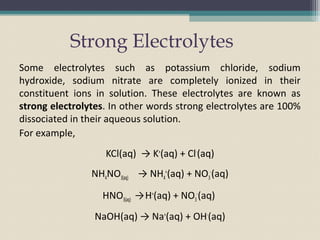
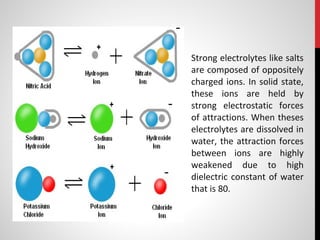
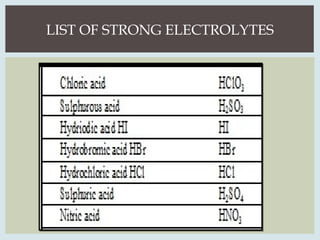
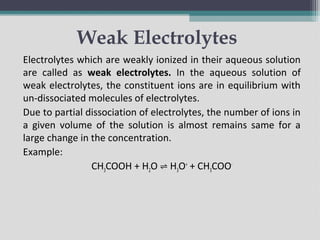
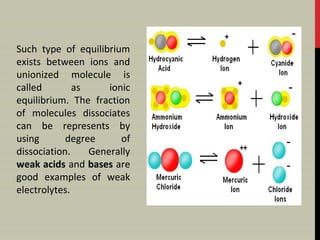
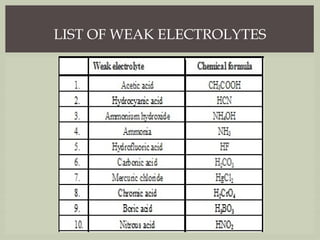
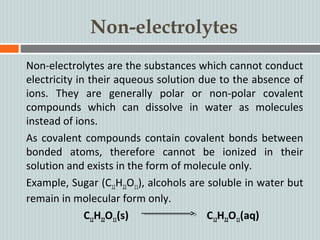
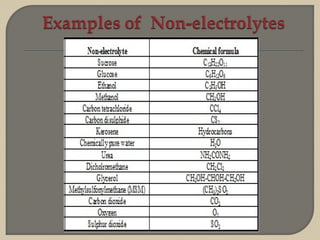
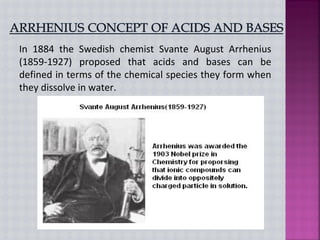
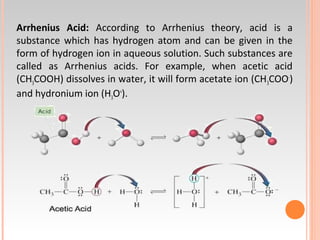
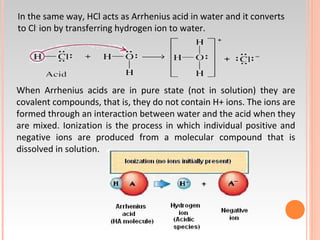
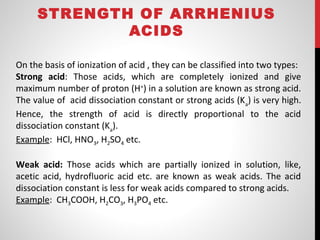
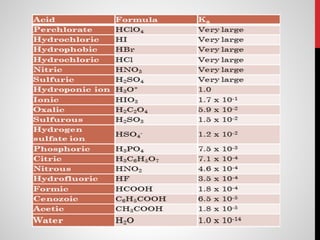
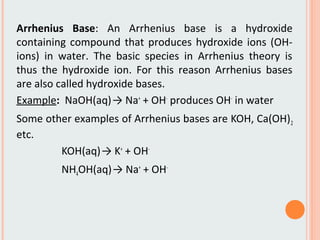
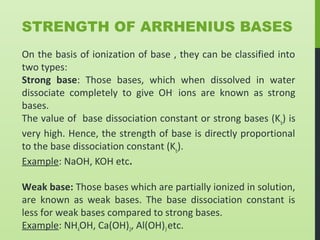
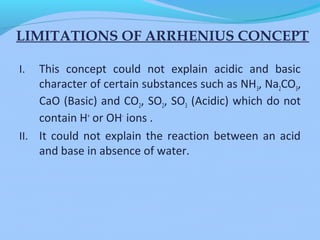
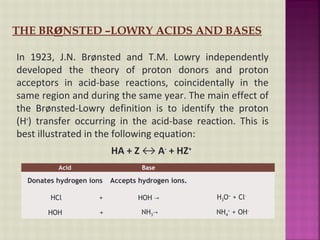
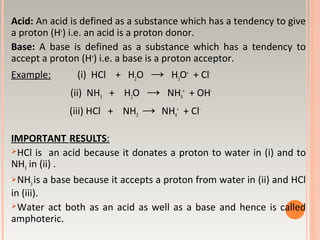
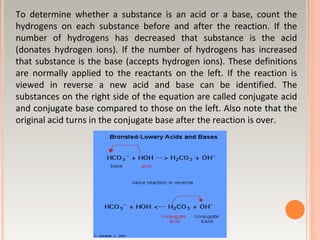
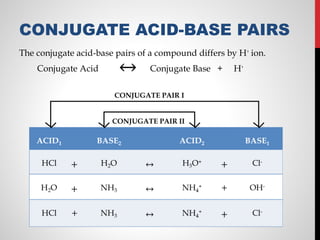
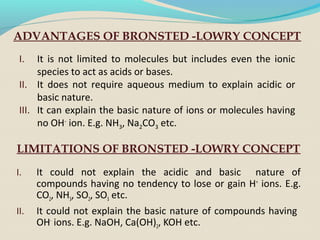
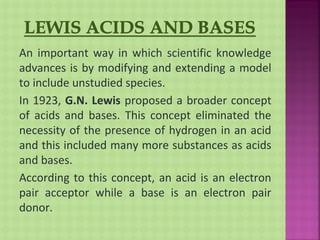
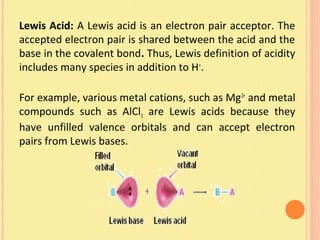
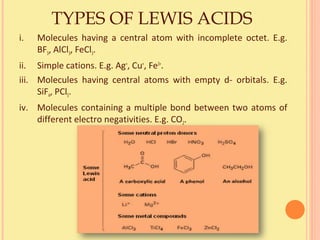
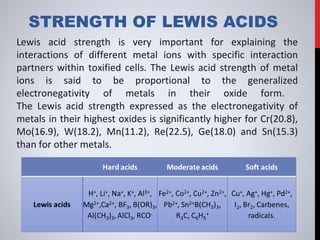
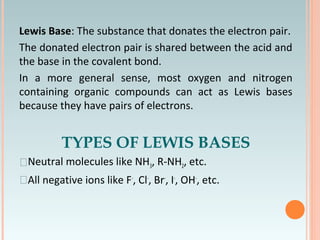
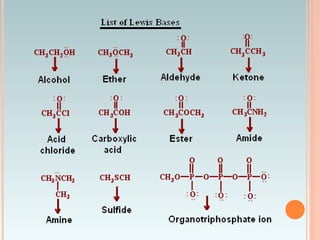
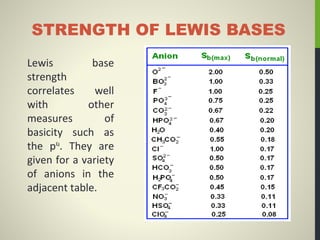
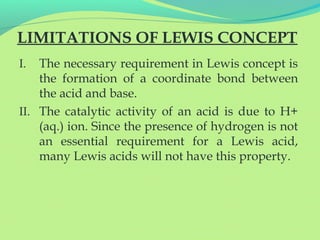
This document provides an overview of electrolytes, acids, and bases according to different theories. It defines strong and weak electrolytes, and lists examples of each. It then summarizes the Arrhenius, Bronsted-Lowry, and Lewis theories of acids and bases. The Arrhenius theory defines acids as substances that produce hydrogen ions in water and bases as those that produce hydroxide ions. The Bronsted-Lowry theory broadened this to include proton donors and acceptors. The Lewis theory further expanded the definition to any electron pair acceptor or donor.




![Acidandbase chm141 thursday[1]goodday](https://cdn.slidesharecdn.com/ss_thumbnails/acidandbasechm141-thursday1goodday-121121141355-phpapp02-thumbnail.jpg?width=640&height=640&fit=bounds)


![Polymer [ बहुलक ] Chemistry Notes PDF - Irfanullah Mehar - JJ Sir Chemistry.pdf](https://cdn.slidesharecdn.com/ss_thumbnails/polymerchemistrynotespdf-irfanullahmehar-jjsirchemistry-260210172118-3f9b37f7-thumbnail.jpg?width=640&height=640&fit=bounds)


