Invertebrates 2nd EditionRichard C. Brusca -
Downloadable PDF 2025
https://ebookfinal.com/download/invertebrates-2nd-edition-richard-c-
brusca/
Visit ebookfinal.com today to download the complete set of
ebooks or textbooks
2.
Here are somerecommended products that we believe you will be
interested in. You can click the link to download.
Reliable Design of Medical Devices 2nd Edition Richard C.
Fries
https://ebookfinal.com/download/reliable-design-of-medical-
devices-2nd-edition-richard-c-fries/
Greek Art and Archaeology c 2500 c 150 BCE 2nd Edition
Richard T. Neer
https://ebookfinal.com/download/greek-art-and-
archaeology-c-2500-c-150-bce-2nd-edition-richard-t-neer/
Embedded C Programming and the Atmel AVR 2nd Edition
Richard H. Barnett
https://ebookfinal.com/download/embedded-c-programming-and-the-atmel-
avr-2nd-edition-richard-h-barnett/
Abdominal Pelvic MRI 3rd Edition Richard C. Semelka
https://ebookfinal.com/download/abdominal-pelvic-mri-3rd-edition-
richard-c-semelka/
3.
Plain English ForLawyers 5th Edition Richard C. Wydick
https://ebookfinal.com/download/plain-english-for-lawyers-5th-edition-
richard-c-wydick/
Handbook of Medical Device Design 1st Edition Richard C.
Fries
https://ebookfinal.com/download/handbook-of-medical-device-design-1st-
edition-richard-c-fries/
Subjective Probability The Real Thing 1st Edition Richard
C. Jeffrey
https://ebookfinal.com/download/subjective-probability-the-real-
thing-1st-edition-richard-c-jeffrey/
Parameter Estimation and Inverse Problems Second Edition
Richard C. Aster
https://ebookfinal.com/download/parameter-estimation-and-inverse-
problems-second-edition-richard-c-aster/
Broadcasting and Optical Communication Technology 1st
Edition Richard C. Dorf
https://ebookfinal.com/download/broadcasting-and-optical-
communication-technology-1st-edition-richard-c-dorf/
5.
Invertebrates 2nd EditionRichard C. Brusca Digital
Instant Download
Author(s): Richard C. Brusca; Gary J. Brusca; illustrations by Nancy Haver
ISBN(s): 9780878930975, 0878930973
Edition: 2
File Details: PDF, 30.36 MB
Year: 2003
Language: english
ne of thefirst evolutionary trees of life conceived from a Darwinian
(genealogical) perspective was published by Ernst Haeckel in 1866
(Figure 1.1). Haeckel’s famous tree of life began a tradition of depicting
phylogenetic hypotheses as branching diagrams, or trees, a tradition that has per-
sisted since that time. We discuss various ways in which these trees are devel-
oped in Chapter 2. Since Haeckel’s day, many names have been coined for the
larger branches that sprout from these trees. We will not burden you with all of
these names, but a few of them need to be defined here, before we launch into our
study of the invertebrates. Some of these names refer to groups of organisms that
are probably natural phylogenetic groups (i.e., groups that include an ancestor
and all of its descendants), such as Metazoa (the animal kingdom). Other names
refer to unnatural, or composite, groupings of organisms, such as “microbes”
(i.e., any organism that is microscopic in size, such as bacteria, most protists, and
unicellular fungi) and “protozoa” (a loose assemblage of primarily unicellular
heterotrophic eukaryotes).
The discovery that organisms with a cell nucleus constitute a natural group di-
vided the living world neatly into two categories, the prokaryotes (those organ-
isms lacking membrane-enclosed organelles and a nucleus, and without linear
chromosomes), and the eukaryotes (those organisms that do possess membrane-
bound organelles and a nucleus, and linear chromosomes). Investigations by Carl
Woese and others, beginning in the 1970s, led to the discovery that the prokary-
otes actually comprise two distinct groups, called Eubacteria and Archaea (=
Archaebacteria), both quite distinct from eukaryotes (Box 1A). Eubacteria corre-
Introduction
For a gentleman should know something of
invertebrate zoology, call it culture or what you will,
just as he ought to know something about painting
and music and the weeds in his garden.
Martin Wells, Lower Animals, 1968
1
O
UNCORRECTED PAGE PROOFS
18.
spond more orless to our traditional understanding of
bacteria. Archaea strongly resemble Eubacteria, but they
have genetic and metabolic characteristics that make
them unique. For example, Archaea differ from both
Eubacteria and Eukaryota in the composition of their ri-
bosomes, in the construction of their cell walls, and in
the kinds of lipids in their cell membranes. Some
Eubacteria conduct chlorophyll-based photosynthesis, a
trait that is never present in Archaea. Not surprisingly,
due to their great age,* the genetic differences among
prokaryotes are much greater than those seen among
eukaryotes, even though these differences do not typi-
cally reveal themselves in gross anatomy. Current think-
ing favors the view that prokaryotes ruled Earth for at
least 2 billion years before the modern eukaryotic cell
appeared in the fossil record. In fact, it seems likely that
a significant portion of Earth’s biodiversity, at the level
of both genes and species, resides in the “invisible”
prokaryotic world. About 4,000 species of prokaryotes
have been described, but there are an estimated 1 to 3
million undescribed species living on Earth today.
Evolutionary change in the prokaryotes gave rise to
metabolic diversity and the evolutionary capacity to ex-
plore and colonize every conceivable environment on
Earth. Many Archaea live in extreme environments, and
this pattern is often interpreted as a refugial lifestyle—in
other words, these creatures tend to live in places where
they have been able to survive without confronting
2 CHAPTER ONE
*The date of the first appearance of life on Earth remains debat-
able. The oldest evidence consists of 3.8-billion-year-old trace fos-
sils from Australia, but these fossils have recently been chal-
lenged, and opinion is now split on whether they are traces of
early bacteria or simply mineral deposits. Uncontestable fossils
occur in rocks 2 billion years old, but these fossils already include
multicellular algae, suggesting that life must have evolved well
before then.
THE PROKARYOTES (the “domains” Eubacteria and Archaea)a
Kingdom Eubacteria (Bacteria)
The “true” bacteria, including Cyanobacteria (or blue–green algae) and spirochetes. Never with membrane-enclosed or-
ganelles or nuclei, or a cytoskeleton; none are methanogens; some use chlorophyll-based photosynthesis; with peptidogly-
can in cell wall; with a single known RNA polymerase.
Kingdom Archaea (Archaebacteria)
Anaerobic or aerobic, largely methane-producing microorganisms. Never with membrane-enclosed organelles or nuclei, or a
cytoskeleton; none use chlorophyll-based photosynthesis; without peptidoglycan in cell wall; with several RNA polymerases.
THE EUKARYOTES (the “domain” Eukaryota, or Eukarya)
Cells with a variety of membrane-enclosed organelles (e.g., mitochondria, lysosomes, peroxisomes) and with a membrane-
enclosed nucleus. Cells gain structural support from an internal network of fibrous proteins called a cytoskeleton.
Kingdom Fungi
The fungi. Probably a monophyletic group that includes molds, mushrooms, yeasts, and others. Saprobic, heterotrophic,
multicellular organisms. The earliest fossil records of fungi are from the Middle Ordovician, about 460 mya. The 72,000 de-
scribed species are thought to represent only 5–10 percent of the actual diversity.
Kingdom Plantae (= Metaphyta)
The multicellular plants. Photosynthetic, autotrophic, multicellular organisms that develop through embryonic tissue layer-
ing. Includes some groups of algae, the bryophytes and their kin, and the vascular plants (about 240,000 of which are flow-
ering plants). The described species are thought to represent about half of Earth’s actual plant diversity.
Kingdom Protista
Eukaryotic single-celled microorganisms and certain algae. A polyphyletic grouping of perhaps 18 phyla, including eu-
glenids, green algae, diatoms and some other brown algae, ciliates, dinoflagellates, foraminiferans, amoebae, and others.
Many workers feel that this group should be split into several separate kingdoms to better reflect the phylogenetic lineages
of its members. The 80,000 described species probably represent about 10 percent of the actual protist diversity on Earth
today.
Kingdom Animalia (= Metazoa)
The multicellular animals. A monophyletic taxon, containing 34 phyla of ingestive, heterotrophic, multicellular organisms.
About 1.3 million living species have been described; estimates of the number of undescribed species range from lows of
10–30 million to highs of 100–200 million.
aPortions of the old “Kingdom Monera” are now included in the Eubacteria and the Archaea. Viruses (about 5,000 described
“species”) and subviral organisms (viroids and prions) are not included in this classification.
BOX 1A The Six Kingdoms of Life
UNCORRECTED PAGE PROOFS
19.
competition with morehighly derived life forms. Many
of these “extremophiles” are anaerobic chemoauto-
trophs, and they have been found in a variety of habi-
tats, such as deep-sea hydrothermal vents, benthic ma-
rine cold seeps, hot springs, saline lakes, sewage
treatment ponds, certain sediments of natural waters,
and the guts of humans and other animals. One of the
most astonishing discoveries of the 1980s was that ex-
tremophile Archaea (and some fungi) are widespread in
the deep rocks of Earth’s crust. Since then, a community
of hydrogen-eating Archaea has been found living in a
geothermal hot spring in Idaho, 600 feet beneath Earth’s
surface, relying on neither sunshine nor organic carbon.
Other Archaea have been found at depths as great as 2.8
km, living in igneous rocks with temperatures as high
as 75°C. Extremophiles include halophiles (which grow
in the presence of high salt concentrations), ther-
mophiles and psychrophiles (which live at very high or
very low temperatures), acidiphiles and alkaliphiles
(which are optimally adapted to acidic or basic pH val-
ues), and barophiles (which grow best under pres-
sure).* Molecular phylogenetic studies now suggest that
some of these extremophiles, particularly the ther-
mophiles, lie close to the “universal ancestor” of all life
on Earth.
It has recently been suggested that the three main di-
visions of life (Eubacteria, Archaea, Eukaryota) should
be recognized at a new taxonomic level, called domains.
However, fundamental questions remain about these
three “domains,” including how many natural groups
(kingdoms) exist in each domain, whether the domains
themselves represent natural (= monophyletic) groups,
and what the phylogenetic relationships are among
these domains and the kingdoms they contain. Current
evidence suggests that eukaryotes are a natural group,
defined by the unique trait of a nucleus and linear chro-
mosomes, whereas Eubacteria and Archaea may not be
natural groups.
Courses and texts on invertebrates often include dis-
cussions of two eukaryotic kingdoms, the Animalia (=
Metazoa) and certain “animal-like” (i.e., heterotrophic)
protist phyla loosely referred to as “protozoa.” Follow-
ing this tradition, we treat 34 phyla of Metazoa and 18
phyla of protists (many of which have traditionally been
viewed as “protozoa”) in this text. The vast majority of
kinds (species) of living organisms that have been de-
scribed are animals. The kingdom Animalia, or
Metazoa, is usually defined as the multicellular, inges-
tive, heterotrophic† eukaryotes. However, its members
possess other unique attributes as well, such as an
acetylcholine/cholinesterase-based nervous system,
special types of cell–cell junctions, and a unique family
of connective tissue proteins called collagens. Over a
million species of living animals have been described,
but estimates of how many living species remain to be
discovered and described range from lows of 10–30 mil-
lion to highs of 100–200 million.‡ Among the Metazoa
are some species that possess a backbone (or vertebral
column), but most do not. Those that possess a back-
bone constitute the subphylum Vertebrata of the phy-
lum Chordata, and account for less than 5 percent
(about 46,670 species) of all described animals. Those
INTRODUCTION 3
Figure 1.1 Haeckel’s Tree of Life (1866).
*One of the most striking examples of a thermophile is Pyrolobus
fumarii, a chemolithotrophic archaean that lives in oceanic
hydrothermal vents at temperatures of 90°–113°C. (Chemo-
lithotrophs are organisms that use inorganic compounds as energy
sources.) On the other hand, Polaromonas vacuolata grows optimal-
ly at 4°C. Picrophilus oshimae is an acidiphile whose growth opti-
mum is pH 0.7 (P. oshimae is also a thermophile, preferring tem-
peratures of 60°C). The alkaliphile Natronobacterium gregoryi lives
in soda lakes where the pH can rise as high as 12. Halophilic
microorganisms abound in hypersaline lakes such as the Dead
Sea, Great Salt Lake, and solar salt evaporation ponds. Such lakes
are often colored red by dense microbial communities (e.g.,
Halobacterium). Halobacterium salinarum lives in the salt pans of San
Francisco Bay and colors them red. Barophiles have been found
living at all depths in the sea, and one unnamed species from the
Mariana Trench has been shown to require at least 500 atmos-
pheres of pressure in order to grow.
†Heterotrophic organisms are those that consume other organisms
or organic materials as food.
UNCORRECTED PAGE PROOFS
20.
that do notpossess a backbone (the remainder of the
phylum Chordata, plus 33 additional animal phyla)
constitute the invertebrates. Thus we can see that the
division of animals into invertebrates and vertebrates is
based more on tradition and convenience, reflecting a
dichotomy of zoologists’ interests, than it is on the
recognition of natural biological groupings. About
10,000 to 13,000 new species are named and described
by biologists each year, most of them invertebrates.
Where Did Invertebrates Come From?
The incredible array of extant (= living) invertebrates is
the outcome of billions of years of evolution on Earth.
Indirect evidence of prokaryotic organisms has been
found in some of the oldest sediments on the planet,
suggesting that life first appeared in Earth’s seas almost
as soon as the planet cooled enough for it to exist.§ Are-
markable level of metabolic sophistication had been
achieved by the end of the Archean eon, about 2.5 bil-
lion years ago. Hydrocarbon biomarkers suggest that
the first eukaryotic cells might have appeared 2.7 bil-
lion years ago. However, we know very few details
about the origin or early evolution of the eukaryotes.
Even though the eukaryotic condition appeared early
in Earth’s history, it probably took a few hundred mil-
lion more years for evolution to invent multicellular or-
ganisms. Molecular clock data (tenuous as they are)
suggest that the last common ancestor of plants and an-
imals existed about 1.6 billion years ago—long after the
initial appearance of eukaryotes and long before a de-
finitive fossil record of metazoans, but in line with trace
fossil evidence. The fossil record tells us that metazoan
life had its origin in the Proterozoic eon, at least 600
million years ago, although trace fossils suggest that
the earliest animals might have originated more than
1.2 billion years ago.
The ancestors of both plants and animals were al-
most certainly protists, suggesting that the phenomenon
of multicellularity arose independently in the Metazoa
and Metaphyta. Indeed, genetic and developmental
data suggest that the basic mechanisms of pattern for-
mation and cell–cell communication during develop-
ment were independently derived in animals and in
plants. In animals, segmental identity is established by
the spatially specific transcriptional activation of an
overlapping series of master regulatory genes, the
homeobox (Hox) genes. The master regulatory genes of
plants are not members of the homeobox gene family,
but belong to the MADS box family of transcription fac-
tor genes. There is no evidence that the animal home-
obox and MADS box transcription factor genes are ho-
mologous.
Although the fossil record is rich with the history of
many early animal lineages, many others have left very
few fossils. Many were very small, some were soft-bod-
ied and did not fossilize well, and others lived where
conditions were not suitable for the formation of fossils.
Therefore, we can only speculate about the abundance
of members of most animal groups in times past.
However, groups such as the echinoderms (sea stars,
urchins), molluscs (clams, snails), arthropods (crus-
taceans, insects), corals, ectoprocts, brachiopods, and
vertebrates have left rich fossil records. In fact, for some
groups (e.g., echinoderms, brachiopods, ectoprocts,
molluscs), the number of extinct species known from
fossils exceeds the number of known living forms.
Representatives of nearly all of the extant animal phyla
were present early in the Paleozoic era, more than 500
million years ago (mya). Life on land, however, did not
appear until fairly recently, by geological standards, and
terrestrial radiations began only about 470 mya.
Apparently it was more challenging for life to invade
land than to first evolve on Earth! The following ac-
count briefly summarizes the early history of life and
the rise of the invertebrates.
The Dawn of Life
It used to be thought that the Proterozoic was a time
of only a few simple kinds of life; hence the name.
However, discoveries over the past 20 years have
shown that life on Earth began early and had a very
long history throughout the Proterozoic. It is estimated
that Earth is about 4.6 billion years old, although the
oldest rocks found are only about 3.8 billion years old.
The oldest evidence of possible life on Earth consists of
3.8-billion-year-old, debated, biogenic traces suspected
to represent anaerobic sulfate-reducing prokaryotes and
4 CHAPTER ONE
‡Our great uncertainty about how many species of living organ-
isms exist on Earth is unsettling and speaks to the issue of priori-
ties and funding in biology. We know approximately how many
genes are in organisms from yeast (about 6,000 genes) to humans
(about 10,000 genes), but taxonomic research has lagged behind
other disciplines. At our current rate of species descriptions, it
would take us 2,000–8,000 years to describe the rest of Earth’s life
forms. Not all of these new species are invertebrates—in fact, just
between 1990 and 2002, 38 new primate species were discovered
and named. If prokaryotes are thrown into this mix, the numbers
become even larger (one recent estimate suggested that a ton of
soil could contain as many as 4 million species, or “different taxa,”
of prokaryotes). However, at our current rate of anthropogenic-
driven extinction, an estimated 90 percent of all species could go
extinct before they are ever described. In the United States alone,
at least 5,000 species are threatened with extinction, and an esti-
mated 500 species have already gone extinct since people first
arrived in North America. Globally, the United Nations
Environment Programme estimates that by 2030 nearly 25 percent
of the world’s mammals could go extinct.
§There are three popular theories on how life first evolved on
Earth. The classic “primeval soup” theory, dating from Stanley
Miller’s work in the 1950s, proposes that self-replicating organic
molecules first appeared in Earth’s early atmosphere and were
deposited by rainfall in the ocean, where they reacted further to
make nucleic acids, proteins, and other molecules of life. More
recently, the idea of the first synthesis of biological molecules by
chemical and thermal activity at deep-sea hydrothermal vents has
been suggested. The third proposal is that organic molecules first
arrived on Earth from another planet, or from deep space, on
comets or meteorites.
UNCORRECTED PAGE PROOFS
21.
perhaps cyanobacterial stromatolites.The first certain
traces of prokaryotic life (secondary chemical evidence
of Cyanobacteria) occur in rocks dated at 2.5 billion
years, although fossil molecular residues of Cyano-
bacteria have been found in rocks 2.7 billion years old.
The first actual fossil traces of eukaryotic life (benthic
algae) are 1.7 to 2 billion years old, whereas the first cer-
tain eukaryotic fossils (phytoplankton) are 1.4 to 1.7 bil-
lion years old. Together, these bacteria and protists ap-
pear to have formed diverse communities in shallow
marine habitats during the Proterozoic eon. Living stro-
matolites (compact layered colonies of Cyanobacteria
and mud) are still with us, and can be found incertain
high evaporation/high-salinity environments in such
places as Shark Bay (Western Australia), Scammon’s
Lagoon (Baja California), the Persian Gulf, the Paracas
coast of Peru, the Bahamas, and Antarctica.
The Ediacaran Epoch
and the Origin of Animals
One of the most perplexing unsolved mysteries in biol-
ogy is the origin and early radiation of the Metazoa. We
now know that by 600 mya, at the beginning of a period
in the late Proterozoic known as the Ediacaran epoch, a
worldwide marine invertebrate fauna had already
made its appearance. If any animals existed before this
time, they left no known unambiguous fossil record.
The Ediacaran fauna (600–570 mya) contains the first
evidence of many modern phyla, although the precise
evolutionary relationships of many of these fossils are
still being debated.* The modern phyla thought to
be represented among the Ediacaran fauna include
Porifera, Cnidaria, Echiura, Mollusca, Onychophora,
Echinodermata, a variety of annelid-like forms (includ-
ing possible pogonophorans), and quite probably
arthropods (soft-bodied trilobite-like organisms, anom-
alocarids and their kin, etc.). However, many Ediacaran
animals cannot be unambiguously assigned to any liv-
ing taxa, and these animals may represent phyla or
other high-level taxa that went extinct at the Protero-
zoic–Cambrian transition.†
Ediacaran fossils were first reported from sites in
Newfoundland and Namibia, but the name is derived
from the superb assemblages of these fossils discovered
at Ediacara in the Flinders Ranges of South Australia.
Most of the Ediacaran organisms were preserved as
shallow-water impressions on sandstone beds, but
some of the 30 or more worldwide sites represent deep-
water and continental slope communities. The Edia-
caran fauna was almost entirely soft-bodied, and there
have been no heavily shelled creatures reported from
these deposits. Even the molluscs and arthropod-like
creatures from this fauna are thought to have had rela-
tively soft (unmineralized, or lightly calcified) skeletons.
A few chitinous structures developed during this time,
such as the jaws of some annelid-like creatures (and the
chitinous sabellid-like tubes of others) and the radulae
of early molluscs.‡ In addition, siliceous spicules of
hexactinellid sponges have been reported from Au-
stralian and Chinese Ediacaran deposits. Many of these
Proterozoic animals appear to have lacked complex in-
ternal organ structures. Most were small and possessed
radial symmetry. However, at least by late Ediacaran
times, large animals with bilateral symmetry had ap-
peared, and some almost certainly had internal organs
(e.g., the segmented, sheetlike Dickinsonia, which
reached a meter in length; Figure 1.2). The Ediacaran
epoch was followed by the Cambrian period and the
great “explosion” of skeletonized metazoan life associ-
ated with that time (see below). Why skeletonized ani-
mals appeared at that particular time, and in such great
profusion, remains a mystery.
Geological evidence tells us that Earth’s earliest at-
mosphere lacked free oxygen, and clearly the radiation
of the animal kingdom could not have begun under
those conditions. Free oxygen probably accumulated
over many millions of years as a by-product of photo-
synthetic activity in the oceans, particularly by the
Cyanobacterial (blue-green algae) stromatolites. How-
ever, the evidence on free oxygen levels in the
Proterozoic is still a little murky. Significant atmospher-
ic O2 levels may have been achieved fairly early in the
Proterozoic, 1.5 to 2.8 billion years ago, or perhaps even
earlier. Proterozoic seas might have been oxic near the
surface, but anoxic in deep waters and on the bottom.
Some workers suggest that the absence of metazoan life
in the early fossil record is due to the simple fact that the
first animals were small, lacked skeletons, and did not
fossilize well, not to the absence of oxygen. The discov-
ery of highly diverse communities of metazoan meio-
fauna§ in the Proterozoic strata of south China and in
deposits from the Middle and Upper Cambrian (e.g.,
INTRODUCTION 5
*During the 1980s, some workers believed that most of the
Ediacaran biota was unrelated to modern phyla—that it was a
“failed experiment” in the evolution of life on Earth. There was
even the suggestion that Ediacaran organisms be referred to a new
phylum or even a new kingdom, the “Vendozoa,” which was said
to contain “quilted” organisms that lacked mouths and guts and
presumably received energy by absorbing dissolved organic mole-
cules or by harboring photosynthetic or chemosynthetic sym-
bionts. Today we know that this biota (now sometimes called the
“Vendobionta”) actually represents only a portion of the Edia-
caran biota, and the entire fauna includes many species now
viewed as primitive members of extant phyla.
†The largest mass extinctions occurred at the ends of the Protero-
zoic era (Ediacaran epoch) and the Ordovician, Devonian, and
Permian periods, and in the Early Triassic, Late Triassic, and end-
Cretaceous. Most of these extinction events were experienced by
both marine and terrestrial organisms. An excellent review of
Ediacaran/Cambrian animal life can be found in Lipps and Signor
(1992).
‡Chitin is a cellulose-like family of compounds that is widely dis-
tributed in nature, especially in invertebrates, fungi, and yeasts, but
it is apparently uncommon in deuterostome animals and higher
plants, perhaps due to the absence of the chitin synthase enzyme.
§Meiofauna is usually defined as the interstitial animals that pass
through a 1 mm mesh sieve, but are retained by a 0.1 mm mesh
sieve.
UNCORRECTED PAGE PROOFS
22.
the Swedish Orstenfauna) lends support to the idea
that many of the first animals were microscopic. In
thinking about the earliest metazoans, it is not difficult
to imagine a microscopic primordial animal resembling
a colony of choanoflagellate protists whose cell–cell con-
nections were enhanced by metazoan cell junctions and
whose inner and outer cells became separated and spe-
cialized. However, large animals are not uncommon
among the Ediacaran and early Cambrian faunas.
It has also been proposed that the advent of predato-
ry lifestyles was the key that favored the first appear-
ance of animal skeletons (as defensive structures), lead-
ing to the “Cambrian explosion.” The rapid appearance
and spread of diverse metazoan skeletons in the early
Cambrian heralded the beginning of the Phanerozoic
eon. The Ediacaran fauna seems to have included pri-
marily passive suspension and detritus feeders; very
few of these animals appear to have been active carni-
vores or herbivores. Only a few Ediacaran species are
known to have spanned the transition to the Cambrian
period. Early Cambrian animal communities, on the
other hand, included most of the trophic roles found in
modern marine communities, including giant predatory
arthropods.
The Paleozoic Era (570–250 mya)
The Phanerozoic eon was ushered in with the almost si-
multaneous appearance in the Lower Cambrian of well-
developed calcareous body skeletons in numerous
groups, including archaeocyathans, molluscs, ecto-
procts, brachiopods, crustaceans, and trilobites. The ap-
pearance of mineralized animal skeletons thus defines
the beginning of the Cambrian, and it was an event of
fundamental importance in the history of life. The
newly skeletonized animals radiated quickly and filled
a multitude of roles in all shallow-water marine envi-
ronments. The other major event at the Protero-
zoic–Cambrian transition was the explosion of bilateral-
ly symmetrical animals. Most of our modern metazoan
phyla and classes were established as distinct lineages at
this time.
Much of what we know about early Cambrian life
comes from the Lower Cambrian Chengjiang fossil de-
posits of the Yunnan Province of southern China and
similarly aged (although less well preserved) deposits
spread across China and the Siberian Platform. The
6 CHAPTER ONE
Figure 1.2 Some Ediacaran (late Proterozoic) animals.
(A) Charnia and Charniodiscus, two Cnidaria resembling
modern sea pens (Anthozoa, Pennatulacea). (B) A bushlike
fossil of uncertain affinity (suggestive of a cnidarian). (C)
Ediacara, a cnidarian medusa. (D) Dickinsonia, probably a
polychaete annelid. (E) One of the numerous soft-bodied
trilobites known from the Ediacaran period (some of which
also occurred in the Early Cambrian).
UNCORRECTED PAGE PROOFS
(A)
(E)
(B)
(C)
(D)
23.
Chengjiang deposits arethe oldest Cambrian occur-
rences of well-preserved soft-bodied and hard-bodied
animals, and they include a rich assemblage of exquis-
itely preserved arthropods, onychophorans, medusae
(Cnidaria), and brachiopods, many of which appear
closely related to Proterozoic Ediacaran species.
In the Middle Cambrian (e.g., the Burgess Shale
fauna of western Canada and similar deposits else-
where; Figure 1.3) polychaetes and tardigrades made
their first positive appearances in the fossil record, and
the first complete echinoderm skeletons appeared. In
the Upper Cambrian (e.g., the Orsten deposits of south-
ern Sweden and similar strata), the first pentastomid
Crustacea and the first agnathan fishes made their ap-
pearances. By the end of the Cambrian, nearly all of the
major animal phyla had appeared.
The early Paleozoic also saw the first xiphosurans,
eurypterids, trees, and teleost fishes (in the Ordovician).
The first land animals (arachnids, centipedes, myri-
apods) appeared in the Upper Silurian. By the middle
Paleozoic (the Devonian), life on land had begun to pro-
liferate. Forest ecosystems became established and
began reducing atmospheric CO2 levels (eventually ter-
minating an earlier Paleozoic greenhouse environment).
The first insects also appeared in the middle Paleozoic
fossil record. Insects developed flight in the Lower
Carboniferous, and they began their long history of co-
evolution with plants shortly thereafter (at least by the
mid-Carboniferous, when tree fern galls first appeared
in the fossil record). During the Carboniferous period,
global climates were generally warm and humid, and
extensive coal-producing swamps existed.
The late Paleozoic experienced the formation of the
world supercontinent Pangaea in the Permian period
(about 270 mya). The end of the Permian (250 mya) was
brought about by the largest mass extinction known, in
which 85 percent of Earth’s marine species (and 70 per-
cent of the terrestrial vertebrate genera) were lost over a
brief span of a few million years. The Paleozoic reef
corals (Rugosa and Tabulata) went extinct, as did the
once dominant trilobites, never to be seen again. The dri-
ving force of the Permian extinction is thought to have
been a huge asteroid impact, probably coupled with
massive Earth volcanism, and perhaps degassing of
stagnant ocean basins. The volcanism may have been the
same event that created the massive flood basalts known
as the Siberian Traps in Asia. This event may have led to
atmospheric “pollution” in the form of dust and sulfur
particles that cooled Earth’s surface or massive gas emis-
sions that led to a prolonged greenhouse warming.
The Mesozoic Era (250–65 mya)
The Mesozoic era is divided into three broad periods:
the Triassic, Jurassic, and Cretaceous. The Triassic began
with the continents joined together as Pangaea. The
land was high, and few shallow seas existed. Global cli-
mates were warm, and deserts were extensive. The ter-
restrial flora was dominated by gymnosperms, with an-
giosperms first appearing in the latest part of the period.
The oldest evidence of a flowering plant is from 130
mya. Vertebrate diversity exploded in the Triassic. On
land, the first mammals appeared, as well as the turtles,
pterosaurs, plesiosaurs, and dinosaurs. In Triassic seas,
the diversity of predatory invertebrates and fishes in-
creased dramatically, although the paleogeological data
suggest that deeper marine waters might have been too
low in oxygen to harbor much (or any) multicellular life.
The end of the Triassic witnessed a sizable global extinc-
tion event, perhaps driven by the combination of aster-
oid impact and widespread volcanism that created the
Central Atlantic Magmatic Province of northeastern
South America 200 mya.
The Jurassic saw a continuation of warm, stable cli-
mates, with little latitudinal or seasonal variation and
probably little mixing between shallow and deep ocean-
ic waters. Pangaea split into two large land masses, the
northern Laurasia and southern Gondwana, separated
by a circumglobal tropical seaway known as the Tethys
Sea. Many tropical marine families and genera today are
thought to be direct descendants of inhabitants of the
pantropical Tethys Sea. On land, modern genera of
many gymnosperms and advanced angiosperms ap-
peared, and birds began their dramatic radiation. Leaf-
mining insects (lepidopterans) appeared by the late
Jurassic (150 mya), and other leaf-mining orders ap-
peared through the Cretaceous, coincident with the ra-
diation of the vascular plants.
In the Cretaceous, large-scale fragmentation of Gond-
wana and Laurasia took place, resulting in the forma-
tion of the Atlantic and Southern Oceans. During this
period, land masses subsided and sea levels were high;
the oceans sent their waters far inland, and great epi-
continental seas and coastal swamps developed. As
land masses fragmented and new oceans formed, glob-
al climates began to cool and oceanic mixing began to
move oxygenated waters to greater depths in the sea.
The end of the Cretaceous was marked by the Cre-
taceous–Tertiary mass extinction, in which an estimated
50 percent of Earth’s species were lost, including the di-
nosaurs and all of the sea’s rich Mesozoic ammonite di-
versity. There is strong evidence that this extinction
event was driven by a combination of two factors: a
major asteroid impact (probably in the Yucatan region of
modern Mexico) and massive Earth volcanism associat-
ed with the great flood basalts of India known as the
Deccan Traps.
The Cenozoic Era (65 mya–present)
The Cenozoic era dawned with a continuing worldwide
cooling trend. As South America decoupled from
Antarctica, the Drake Passage opened to initiate the cir-
cum-Antarctic current, which eventually drove the for-
mation of the Antarctic ice cap, which in turn led to our
modern cold ocean bottom conditions (in the Miocene).
INTRODUCTION 7
UNCORRECTED PAGE PROOFS
24.
8 CHAPTER ONE
Figure1.3 Some Cambrian life forms from the Burgess
Shale deposits of Canada. (A) Canadaspis, an early mala-
costracan crustacean. (B) Yohoia, an arthropod of uncer-
tain classification. (C) Two species of Anomalocaris, A.
nathorsti (above) and A. canadensis. Anomalocarids were
once thought to represent an extinct phylum of segment-
ed animals, but are now regarded by many workers as
primitive crustaceans dating back to the Ediacaran.
(D) Wiwaxia, a Burgess Shale animal with no clear affinity
to any known metazoan phylum (although some workers
regard it as a polychaete annelid). (E) Nectocaris, another
creature that has yet to be classified into any known phy-
lum (despite its strong chordate-like appearance).
(F) Dinomischus, a stalked creature with a U-shaped gut
and with the mouth and anus both placed on a radially
symmetrical calyx. Although superficially resembling sever-
al extant phyla, Dinomischus is now thought to belong to
an unnamed extinct phylum of sessile Cambrian animals.
(G) The elusive Odontogriphus, an appendageless flattened
vermiform creature of unknown affinity. (H) One of the
more enigmatic of the Burgess Shale animals, Opabinia;
this segmented creature was probably an ancestral arthro-
pod. Notice the presence of five eyes, a long prehensile
“nozzle,” and gills positioned dorsal to lateral flaps.
(A) (B)
(D)
(E)
(F)
(G)
(H)
(C)
UNCORRECTED PAGE PROOFS
25.
India moved northfrom Antarctica and collided with
southern Asia (in the early Oligocene). Africa collided
with western Asia (late Oligocene/early Miocene), sep-
arating the Mediterranean Sea from the Indian Ocean
and breaking up the circumtropical Tethys Sea.
Relatively recently (in the Pliocene), the Arctic ice cap
formed, and the Panama isthmus rose, separating the
Caribbean Sea from the Pacific and breaking up the last
remnant of the ancient Tethys Sea about 3.5 mya.
Modern coral reefs (scleractinian-based reefs) appeared
early in the Cenozoic, reestablishing the niche once held
by the rugose and tabulate corals of the Paleozoic.
This textbook focuses primarily on invertebrate life at
the very end of the Cenozoic, in the Recent (Holocene)
epoch. However, evaluation of the present-day “suc-
cess” of animal groups also involves consideration of
the history of modern lineages, the diversity of life over
time (numbers of species and higher taxa), and the
abundance of life (numbers of individuals). The pre-
dominance of certain kinds of invertebrates today is un-
questionable. For example, of the 1,291,364 or so de-
scribed species of animals (1,244,694 of which are
invertebrates), 85 percent are arthropods. Most arthro-
pods today are insects, probably the most successful
group of animals on Earth. But the fossil record tells us
that arthropods have always been key players in the
biosphere, even before the appearance of the insects.
Box 1B conveys a general idea of the levels of diversity
among the animal phyla today.
Where Do Invertebrates Live?
Marine Habitats
Earth is a marine planet—salt water covers 71 percent of
its surface. The vast three-dimensional world of the seas
contains 99 percent of Earth’s inhabited space. Life al-
most certainly evolved in the sea, and the major events
described above leading to the diversification of inverte-
brates occurred in late Proterozoic and early Cambrian
shallow seas. Many aspects of the marine world mini-
mize physical and chemical stresses on organisms. The
barriers to evolving gas exchange and osmotic regulato-
ry structures that can function in freshwater and terres-
trial environments are formidable, and relatively few
lineages have escaped their marine origins to do so.
Thus, is not surprising to find that the marine environ-
ment continues to harbor the greatest diversity of high-
er taxa and major body plans. Some phyla (e.g., echino-
derms, sipunculans, chaetognaths, cycliophorans,
placozoans, echiurans, ctenophores) have remained ex-
clusively marine. Productivity in the world’s oceans is
very high, and this also probably contributes to the high
diversity of animal life in the sea (the total primary pro-
ductivity of the seas is about 48.7 × 10⁹ metric tons of
carbon per year). Perhaps the most significant factor,
however, is the special nature of seawater itself.
Water is a very efficient thermal buffer. Because of its
high heat capacity, it is slow to heat up or cool down.
INTRODUCTION 9
Specialists in certain groups estimate that the known kinds of organisms probably represent only a small fraction of actual
existing species. Note that we have broken down the phyla Arthropoda and Chordata into their respective subphyla, and
that we have lumped the protist phyla together (see Chapter 5 for a complete classification of the protists). Of the
1,297,708 estimated described species of Animalia (excluding protists), 1,251,038 (96 percent) are invertebrates.
BOX 1B Approximate Numbers of Known Extant Species
in Various Groups
Kingdom Protista (80,000)
Porifera (5,500)
Cnidaria (10,000)
Ctenophora (100)
Placozoa (1)
Monoblastozoa (1)
Rhombozoa (70)
Orthonectida (20)
Platyhelminthes (20,000)
Nemertea (900)
Gnathostomulida (80)
Rotifera (1,800)
Gastrotricha (450)
Kinorhyncha (150)
Nematoda (25,000)
Nematomorpha (230)
Priapula (16)
Acanthocephala (700)
Cycliophora (1)
Entoprocta (150)
Loricifera (10)
Annelida (16,500)
Echiura (135)
Sipuncula (320)
Tardigrada (600)
Onychophora (110)
Arthropoda (1,097,631)
Cheliceriformes (70,000)
Crustacea (68,171)
Hexapoda 948,000
(estimates range from
870,000 to 1,500,000)
Myriapoda (11,460)
Mollusca (50,000)
Brachiopoda (335)
Ectoprocta (4,500)
Phoronida (20)
Chaetognatha (100)
Echinodermata (7,000)
Hemichordata (85)
Chordata (49,693)
Urochordata (3,000)
Cephalochordata (23)
Vertebrata (46,670)
UNCORRECTED PAGE PROOFS
Robert Ellis wasthe first minister, and one Rev. Richmond of
Somerset, was one of the first preachers ; and they have been
furnished ministers by the M. E. Conferences since those days. At
first, preaching davs were far apart, but after being taken into the
Conference, they had preachinggonce in two weeks, on Thursdays,
and some time after that again, they had preaching on Sabbaths,
each alternate week. Sabbath School was organized Aug. 17, 1828,
and Vincent Kelley was first Superintendent. The school has been
successfullv kept up to this date, meeting during summer season
only, until in about 1880. since which time they meet all the year.
There is now an attendance of about fifty scholars, with Isaiah Rible
as Superintendent. DuNKKR Church. — It was organized in about
1817, and was among the first Christian organizations in the
township. About the time they organized they built a hewed log
church in or quite near Mt. Perry, in which they worshiped for about
fifteen or twenty years. The church
28.
212 HISTORY OFPERRY COUNTY. edifice was built upon
the farm of James Ward. This farm afterward passed into the hands
of Mason Benjamin, who claimed there was no title given for the
land the church occupied. After it was made clear that there was a
good title, the Dunkers sold the church and lot to the M. E. church in
about 1832 to 1838, and moved their membership to Hopewell
township. Some of their first members were John Hendricks and
wife, Adam Plank and wife, Peter Eversole and wife, and Abraham
Bowsher and wife. Elijah Schofield was their first minister, and they
sometimes were visited by Rev. Crinter of Pennsylvania, and Rev.
Helser of Ohio. SuMMERFiELD M. E. Church. — ^This church was
organized in about 1835 to 1838, upon the purchase of the hewed
log church from the Dunkers, and continued to hold services
regularly until about 1844, from which time up to about 1847, if any
preaching services were held they were few and irregular. At about
the date above given, there came to this church from Zanesville,
Ohio, an evangelist by the name of Stephen Shaffer, who held a
successful revival, reorganized the society with about forty of a
membership, appointed John Davison and William Willison leaders,
continued with the charge, and in about 1850, by diligent effort,
supplanted the old hewed log church by a frame house that stands
to this day. Upon the reorganization of the charge it was added to
the Asbury circuit, Zanesville District, 'Ohio Conference, and so
continued to remain until 1858, when they were put into the
Somerset circuit, Lancaster District, Ohio Conference. Since the
reorganization they have been gradually increasing in strength, and
now number about sixty members, with the hopeful anticipation of
building a new church edifice in the summer of 1883. Some of the
first members were Mason Benjamin, Batena Baird, Hannah Clark,
John Lenhart and wife, David Lenhart and wife, John Melick, Sen.,
and Mary Melick, his wife. Among the first preachers was Joseph
Carper, from near Somerset. Some of the members, upon the
reorganization, were John Lenhart and wife, David Lenhart and wife,
Lewis Bateson and wife, John Davison and wife, William Willison and
wife, Jacob Demude and wife. Mother Smith, Batena Baird, and Mary
29.
Melick. After thebuilding of the frame church came Samuel Harvey
and David Mann, as regular ministers, and have continued to be
supplied by the M. E. Conference up to this date. Sabbath school
was organized soon after the organization of the church, and was
conducted only during the summer season until 1879, since when it
has been continued during the year, with an average attendance of
about forty. Matthew Benjamin was probably the first
superintendent. Disciple church (St. Matthew) was probably first
organized in 1851, at which time they bought the old Jonathan's
Creek U. P. church, removed it to the junction of the Zanesville and
Gratiot roads, near Mt. Perry, repaired it and made quite a neat
church of the same, where they continued to worship until about
1867, when the society was disbanded. The lot upon which the
church was built was donated by Nicholas Taylor. John Eversole and
Samuel Lyle seem to have been the principal men in this pious
enterprise. One Rev. Gardner was their first minis
30.
HISTORY OF PERRYCOUNTY. 213 ter. After the church was
disorganized the house was sold and is now used as a dwelling
house. In 1880, a sufficient number of members collected together
and reorganized and bought a church edifice of a disbanded
Lutheran denomination, who had built a church on the pike that
passes through this township, and removed it to Mt. Perry, repaired
it in a neat, substantial manner, and have since prospered in their
second house of the Lord. They now have about thirty members.
Sabbath school was organized simultaneously with the erection of
their present church, and they have an attendance of about twenty,
and meet during the whole year. The United Presbyterian
Congregation, of Jonathan's Creek, was organized in 1807, and met
at first in a log school house in the winter and in a tent during the
sumrner season, where the old church now stands, about one and
one-half miles east from Mt. Perry. In 1809 this became a settled
charge in connection with Brush Creek charge. They continued to
worship as above mentioned until 1823, when the}^ commenced a
churce edifice which was not finished until 1828. This building was
occupied until 1851, when it was sold to the Disciple branch of the
church, and they erected the frame house that is still in use. In 1877
they built a second and a new church in Mt. Perry, but keep up both
the old and the new houses, having preaching services alternately in
each. The first pastor was Rev, Abraham Craig, who continued until
1823, when there was a split in the church, some going to the
Seceder denomination and some to the Covenanters. At first this
congregation was known as the Associate Reform church, and so
continued by those who did not leave by the split until 1858, when
the Associate Reform and Associate churches united and formed the
present denomination, the United Presbyterian. On account of the
weakness of the societ}^ caused by the split, they became unable
to support a minister, and were without a pastor until 1829, when
Rev. Benjamin Waddle was chosen pastor, who so continued vmtil
1836, when he was called to another field of labor. Under Rev,
Waddle the church was much built up. They were without a pastor
then until 1841, when T, B. Calderhead took charge of the
31.
congregation and continuedas pastor for about twelve years. In
1853 Rev, Calderhead was called to give his attention to other
pastoral charges, and then they were without a pastor for about
eight years. In 1861 the Rev. James White took charge of the church
and remained for more than 17 years, when he was called to other
pastoral work. There was then a vacancy of two years, when the
Rev. J. H. Leiper became their pastor in 1882, and who continues to
this date. The first Session of this church or corps of ruling elders
were John Baird, Joseph Bogle, Thomas Nesbit, and William Wills.
The present Session is Alexander Baird, R. R. Huston, James Smith,
Alexander Miller, and James Ardrey. There are now in the church
about 170 members. Sabbath school was first organized about 25
years ago, and R. H. Baird was first superintendent, with about 75 of
an attendance. Since the first year the school has been continued
during the whole year.
32.
21 A HISTORYOF PERRY COUNTY. James McCullough is
the present superintendent, and they have about 150 of an
atttendance. Zion church (Methodist Episcopal), situated in the
southwestern part of the township, near the Zanesville and Maysville
Turnpike, is an old, thriving and influential congregation, and is
sketched in connection with the Somerset church, with which charge
it is consected, and probably has been, ever since its organization.
33.
HISTORY OF PERRYCOUNTY. 215 CHAPTER XXIX. MONDAY
CREEK TOWNSHIP. Monday Creek township consists ot twenty-four
sections, and was originally a part of Fairfield county. It was
organized in 1823, and named after the creeks (Big and Little
Monday) that flow through it. It is drained principally by what is
known as Big and Litde Monday Creeks, though a portion is drained
into Rush Creek, and other tributaries of the Hocking River. The
township, as a whole, may be denominated hilly, though there is well
laying land along the principal streams, and on some of the high
ridges between. A considerable portion of the township is highly
productive, and in a good state of cultivation. It was heavily
timbered when the first settlers came, and parts of it are yet well
timbered. Monday Creek township, geologicall}^ considered,
belongs to the Coal Measures, and a very considerable portion of it
is underlaid with a good marketable article of bituminous coal. It is
also verv rich in iron ore, the principal seam being known as the
Baird seam. The landowners of Monday Creek, for quite a number of
years, occasionally mined and hauled ore to the Logan (Hocking
county) Furnace, and Frank Baird, who, for a time, had charge of
said lurnace, became acquainted with the ore of the township, and
along about 1872, in connection with others interested, effected the
purchase of several hundred acres of mineral lands in the eastern
part of the township, and proceeded to erect a furnace, which was
completed and went into operation in 1874. The lands purchased
contained not only iron ore, but coal, limestone, and everything
necessary for the manufacture of a good article of iron. Here, in
1874, and in succeeding years, a good article of pig iron was made,
cheaper than anywhere else in the world. Ore is extensively mined in
various parts of the township, and sold at Baird's, Gore, Winona, and
Logan furnaces, the latter six or eight miles distant. The furnaces at
Gore and Winona are only a few rods over the line in Hocking
county, and are almost as accessible for an ore market as Baird's
"furnace. The iron business and ore trade furnish a remunerative
employment for men and teams, at almost all seasons of the year,
and bring in handsome sums to the land-owners for ro3^alty, and all
34.
without seriously interferingwith farming operations. Thus
employment is obtained, money is eas3% and times are usually the
reverse of dull. The first settlers of Monday Creek were principally
from Virginia. Timothy Terrell came witii his family to the township in
1815, and appears to have been the first permanent settler. Robert
Nixon and Charles Manning soon followed. Nixon and Terrell were
brothers-inlaw. Terrell discovered a trail of strange cattle in the wild
pea vines, and, following it up, came to the cabin of Charles
Manning, only two
no dogs along.Probably bears were becoming scarce, and were
seldom encountered. However, he came upon a bear, and an
unusually large one. He thought he could kill him and fired. Bruin,
who was wounded and terribly enraged, immediately took after the
lone hunter. Terrell said that he soon discovered that the bear was a
good runner, and he proceeded without useless delay, to put himself
in "light running order." He hastily threw away his gun, pouch, and
every weight but a knife. The bear was persistent, and the race was
a long and doubtful one. Going up hill the hunter would gain on the
bear ; but on descending ground the bear made long strides and
gained on the hunter. Terrell says Bruin would blow and snort every
jump, as he struck the ground behind him, evidently getting short of
breath as well as himself. Bruin at length gave up the chase, and
retired in the direction of his lonely haunts. Terrell afterward
gathered up his gun and other accouterments, but no doubt he took
a dog or two with him, and other assistance. The young Terrells, the
oldest a boy of fifteen or sixteen, were left
37.
The text onthis page is estimated to be only 0.00%
accurate
*ea4-^C_j
38.
HISTORY OF PERRYCOUNTY. 21'J at home one Sunday
while their parents went to church, some miles away. Two large dogs
were left with the youngsters. During the absence of the father and
mother, a large bear with two half grown cubs came into the
meadow^ near the house. The eldest boy seized the ax, the next
older a hatchet, and a little girl armed herself with a hammer. One of
the cubs was killed w^hile crossing thfe meadow^ fence into the
woods, and the big dogs chased the other two aw^ay. The boys had
seen their father dress bears, and they thought thev would try their
hand. They succeeded nicely indressingit, and had a large piece of it
in the dinner-pot cooking, wdien their father and mother returned,
not a little astonished to learn what had been going on in their
absence. John Mackin and his sons w^ere at work in a clearing,
when they saw a huge roll of snakes, of several different kinds,
including rattlesnakes, blacksnakes and others, all lapped and
twisted together, rolling around over the ground. The senior Mackin
took a shovel, filled it with red hot coals from a heap, and threw
them into the bunch of snakes. They "broke ranks" without receiving
orders, and ran in every direction. The Mackins only suceeded in
killing twovor three of them. To see bunches of snakes of different
species, coiled up in this way, was not an uncommon occurrence
when the country was new; but "the seed of the woman has bruised
the serpent's head," until it is a rare thing now to see a poisonous
snake of any kind, even among the hills of Monday Creek. The
township has as yet no railroad, but one is frequently talked of, in
railroad and mineral circles, to be called the Monday Creek Valley
railroad. Though without a railroad, the township is so environed by
roads and stations, that it is not so very remote from market, or
disconnected with the outside world. New Straitsville, Gore, Winona
and Webb's Summit on the Straitsville branch of the Hocking Valley ;
McCuneville and Dicksonton on the Newark, Somerset and
Straitsville ; Junction City and Bremen on the C. and M. V. are not far
distant, and all more or less accommodate some parts of the
township. Charles Manning, one of the early settlers, was a
Lutheran, and there was preaching of that denomination, at his
39.
house, at avery earlj day. There was also Presbyterian preaching in
the Ross neighborhood, and Methodists held services at various
private houses, years before any religious societies w-ere organized
or churches built. The Methodists organized at Mount Carmel, two
and a half miles . east of Maxville, about 1840, and erected a frame
church. Stated preaching has been maintained. The Methodists
organized at Maxville about 1845, built a church, which was used for
several years, and then disposed of it to be used for school
purposes. The society bought a new lot, in another part of the
village, and erected a new frame church in 1852. Regular preaching
and other church services have been sustained throughout the
whole time, and the society is in a prosperous condition. Sabbath
school is kept up through a portion of the year. Ebenezer church was
built by the Baptists one mile west of Maxville, about 1832. The
edifice was originally a log one. At a later date, a new and better
edifice was erected, which is still in use. Reg
40.
2l8 HISTORY OFPERRY COUNTY. ular preaching has been
maintained, and there is a Sabbath school connected with the
church. The St. John's (Lutheran) congregation was organized by a
colony of Germans, direct from the "Fatherhind," at an early day and
a house of worship erected, which was used for several years.
Subsequently a larger and better edifice took the place of the old
one, and is still in use. The congregation is strong and influential. It
supports regular preaching and sustains a Sabbath school connected
with the church, Rev. Wiseman is the present pastor. Harmony
(United Brethren) church situated in the western part of the
township, was organized and a church built about thirty years ago,
since which time it has been a regular appointment of the
denomination, and has maintained stated services. A Sabbath school
is connected with the church. Rev. Cumings is the present pastor.
The Mennonite church was organized at an early day, and for man}^
years worshipped in a log building, which was also used as a school
house. About thirty years since a new and more commodious house
was erected. Regular services are maintained. There is a Sabbath
school in connection with the congregation. The oldest buring
ground in the township is what is known as the Nixon family grave-
yard, and was used at a very early da}'. George Nixon, a child nine
years old, was the first interment therein, and the first in the
township. The early schools were primitive enough. The first school
of which there is any account, was taught in the neighborhood of
where Mt. Carmel now is, in an old abandoned log-cabin. The
township is now organized into six school districts, and has fairly
good school houses and teachers. The schools at Maxville and
Baird's Furnace are the only village schools. The following named
persons lived in the township at the time or soon after it was
organized : Robert Nixon, James Ross, Timothy Terrell, Charles
Manning, Lemuel Steele, James Johnston, Reuben Miller, Thomas
Ross, William Johnston, Joseph Everly, Jpseph Johnston, Reuben
Jackson, Joseph Parsons, James Chester, Ewen Miller, John Abrams.
Maxville was laid out in 1850, by Wm. McCormick, on what is called
Little Monda}-- Creek. The manufacture of plasterer's lime, was, for
41.
a long while,a very considerable industry carried on there, and the
Maxville Limestone is known far and near. The town has a post
office, church, school house, hotel, two stores, one physician, two
blacksmith shops, two shoe shops, one saddler shop, and a number
of private residences. Maxville is omitted in the census bulletin, but it
has a population of two or three hundred. There is quite a little
village at Baird's Furnace, though there is no laid out town. There is
a large company store, a physician, several shops, and a population
of about one hundred, consisting mainly of those employed about
the furnace. The number of inhabitants in Monday Creek township,
in June, 1880, was one thousand six hundred and thirty-six.
42.
HISTORY OF PERRYCOUNTY. 2I9 } CHAPTER XXX.
MONROE TOWNSHIP. Monroe township was organized in 1823. It
was named in honor of James Monroe, fifth President of the United
States. Previous to the organization as an independent precinct, it
w^as, for several vears, attached to the township of Bearfield. It
was organized as a Congressional township, six miles square, and
remained of the same dimensions until five sections were taken off"
to aid in forming the new township of Pleasant. Monroe township
was originally well timbered, in most places, and contained oak,
poplar and other valuable wood. Considered as a whole, it is hill}^
and, in some parts almost mountainons. Adjacent to some of the
larger streams, and particularly near their confluence, there are
considerable areas of well laying land. The surface of this township
is better adapted to stock raising and wool growing, than to the
cultivation of any of the cereals. The stony points and hill sides are
believed to be well adapted to grape growing, but this industry has
not received any great attention. The water system of Monroe is
simple. The. whole township lies in the Hocking Valley, and is
drained b}" the cast and west branches of Sunday Creek and their
tributaries, among which are Sulphur, Dodson's and Hadley's Fork.
The confluence of the two principal branches of Sunday Creek, is
over the county line in Athens county. The township, geologicalh^
speaking, all belongs to the Coal Measures, and is the richest part of
the Ohio coal region. The so-called " great vein " seam reaches its
maximum in this township, where it is thirteen teet thick. There are
also the Norris and Stallsmith seams of coal ; the former about six
and the latter about four feet thick. The great vein seam appears to
underlie nearly the whole township. The Norris and Stallsmith seams
have been opened in various places, and it is believed that they will
be found wherever the hills are high enough to contain them. There
is also another coal, No. 5, below the great seam, which has been
found in places, but, for the most part, this seam lies far beneath
the lowest surface, and sufficient borings have not been made to
decide whether or not it is persistent, or what its value may be.
There is believed to be a large quantity of iron ore in the township,
43.
but it hasnot been much developed, and its ultimate value cannot
even be approximated. It also ha-s fire clay, potter's clay, and sand
stone ; the latter in practically inexhaustible quantities. The first
settlements were made in 1814, by John McDonald and James Dew.
John McDonald and James Dew were brothers-in-law, and emigrated
from Maryland. They blazed their way through from Zanesville, and
built a little log cabin, which yet stands in the yard
44.
220 HISTORY OP'PERRY COUNTY. near the old McDonald
residence. It is somewhat modified and is now used as a smoke-
house. McDonald and Dew moved on horseback. Soon after they got
their little cabin built, McDonald followed the " blaze" back to
Zanesville, bought a bushel of cornmeal, a skillet and a board to
make a table. When Mr. McDonald got these things home, they all
thought they were comfortably fixed. The man who subsequently
became the richest man in his township, if not in the county,
commenced housekeeping in this humble way. Dew settled on the
east branch of Sunda}^ Creek, near the Athens line. The following
named persons were living in Monroe at the time, or soon after the
township was organized : John McDonald, James Dew, Enos Devore,
David Devore, Elisha Tinker, John Small, Samuel Morrow, Nicholas
Owings, Elijah yooley, Jacob Woolens Stephen Rodman, John
Rodman, C. Wood, David Hearing, Wm. Ward, James M. Ward,
George Juniper, William Stamford, John Acord and John Gaver.
Previous to its settlement, Monroe was a great hunting ground for
the Indians, and afterward for the whites, from older settled parts of
the county. Indians encamped and spent the winter on Sunday
Creek as late as 1815, if not later. The countr}' was also full of wild
hogs, or hogs thai nobody owned. Hogs had probably strayed aw^ay
from the older settlements along the Ohio, and with their increase,
became almost as wild as those of India or South America. Along
about 1816, there was an unu^suall}' long, cold winter, and these
hogs nearly all perished. Many were tbund dead in heaps on Sunday
Creek, after that memorable winter br6ke up. They gathered in
bunches for warmth, but perished, nevertheless. Lord Dunmore's
expedition from Virginia, in 1874, t^g^inst the hostile Indians on the
Scioto, doubtless crossed the valley of Sunday Creek, and tradition
has it that the little army encamped one night on Sunday Creek, but
it was probably south of the Perry county line. As previously stated,
Monroe township was, before its settlement, and for a considerable
time after its first settlers came, a good hunting ground. Deer and
wild turkeys were numerous, and bears, panthers and wolves were
not scarce, in the earlier times. Hunters habitually came from the
45.
northern part ofthe countv, and from other counties, to camp out
and hunt on Sunday Creek. They usually came with horses, dogs
and guns, prepared to spend a week, at least, and often a number
of weeks. Their horses were belled and turned loose, and some of
them hobbled. The men composing these hunting parties would
usually separate in the morning, come into camp in the evening,
and, around the camp fire, relate the adventures and success of the
dav. Edward Danison of New Lexington, and Jonathan Colborn, of
Noblesville, Indiana, hunted and camped on Sunday Creek in very
early times, and enjoy telling their old adventures. These hunters
were usually in the pursuit of deer, as the most desirable and
profitable game, but they not unfrequently encountered other
animals. Edward Danison, of New Lexington, a hunter previously
named, relates that, upon one occasion, just after he had espied two
deer, and was maneuvering to get a good shot at one of them, he
heard a great noise in a
47.
HISTORY OF PERRYCOUNTY. 221 thick cluster of bushes,
and soon after a bear ran across an open space with Danison's dog
in close pursuit. The two deer having scampered, the hunter
followed on in the direction the dog and bear had taken, and in a
short time heard the dog bark ; then he was satisfied that the bear
had been treed. Following up, he soon came in view and saw that
Bruin, was, sure enough, up a tree, and the dog barking furiously
beneath. Mr. Danison was a considerable distance oft', and probably
did not care about venturing any nearer; but he thought he could
bring Bruin down. He took good aim and fired. The bear only
reached upward with his paw and went one limb higher. Danison
leveled and fired again, and this time the bear tumbled to the
ground. But he was not badly hurt, and the bear and dog engaged
in a fight that was fearful to behold. Mr. Danison all this while felt
considerably alarmed, but reloaded his gun, and kept a sharp
lookout forbear number two, which he expected every moment. The
bear and dog fight continued. Sometimes the bear was under, and
sometimes the dog. As the fight proceeded, the combatants
approached the brow of a steep hill, and down it they rolled, over
and over, until the bottom was reached, where the struggle for the
mastery continued. A comrade of Danison now made his
appearance, coming over the hill. It soon became evident that the
dog was getting the w'orst of the battle, and Danison requested his
companion to shoot the bear, if he thought he could without killing
the dog. The hunter fired accordingly, and Bruin was killed. The
faithful dog was badly used up, and it was some time before he was
sufficiently recovered to drag along after his master into camp.
There was sttU an apprehension that another bear might be around,
but he did not put in an appearance, and it is likely enough that the
venturesome hunters did not seriously regret it. The bear was not
slaughtered or skinned in camp, but was carried in triumph to
Madison township, where Mr. Danison then resided. Tobacco was
once very extensively raised in Monroe township, and, though it was
considered a paying occupation for the time being, it no doubt
contributed toward the impoverishment of much of the land, and the
48.
culture of theweed was eventually abandoned. Though the
township is hilly, and the surface of the land comparatively
unproductive, some of the finest and most valuable stock in the
county is to be found there. Monroe was, for many years, far from
market, even with such surplus products as she had to dispose of.
Athens, New Lexington and McConnellsville were the nearest
markets. All this is changed now. With the building of the Ohio
Central, and the establishment of stations at Rendville, Corning,
Buckingham and Borbec, the people of the township have as good
facilities for shipment, and for coming and going, as any others in
the county. Some of the coal mines of Monroe were opened and
used along about 1832, and afterward, but as there was nothing
more than a neighhood demand, except a little trade with Morgan
county, they were but little developed until the coming of the
railroad era. The Sands' bank, near Millertown, and probably a few
others, sold coal to the farmers and some of the residents of villages
in Morgan county, who came to
49.
222 HISTORY OFPERRY COUNTY. the mines and hauled
the coal away, in the fall of the year, while the roads were solid and
comparatively good. With the completion of the Ohio Central to
Rendville and Corning, in 1879 ^"^ 1880, and the extension and
building of a line up the West Branch of Sunday Creek, at a later
date, and the sinking of shafts and the opening of mines at
Rendville, Corning, below Corning, and at Borbec, Buckingham and
Hemlock, the development of the coal deposits began on a grander
scale, and the output is yet on the increase. Monroe now leads all
the townships of the county in the export of coal. Millertown was laid
out in 1834, ^Y Jacob Miller. It is located upon a high piece of
ground, between the east and west branches of Sunday Creek, and
is less than a mile from the new town of Corning. There is from a
point a little above Millertown, one of the finest outlooks in Southern
Ohio. Millertown has a physician, store, hotel, church, severel shops,
and had. according to the census of 1880, eighty-four inhabitants.
Thompsonville, usually called Chapel Hill, was laid out in 1849, '^y
George Thompson and Bryan Murtaugh. It is a pleasanth- situated
village. It has a church, hotel, store, shops, etc., and had a
population of fift^'-two, in 1880. Ferrara was laid out by Nelson
Rodgers and James Taylor, in 187 1, at the time the Atlantic and
Lake Erie Railroad was projected. The railroad failed for the time,
and Ferrara has remained a paper town, or almost so, ever since.
Ferrara is situated between Corning and Rendville, in a nice,
conspicuous place, and several new houses have lately been erected
in it. Rendville was established by Thomas J. Smith and Wm. P.
Rend, and others, in 1879, ^^^ grew with a rapidity marvelous in
this section of the world, and yet very much like other mining towns
of the county. Boarding houses were improvised, shafts sunk and
coal works erected. Houses for miners and other workmen were put
together, finished and inhabited in a space of time that would seem
almost impos.sib]e. Rendville is situated in the narrow valley of the
east branch ot Sunday Creek, and upon the slopes, hills and ridges,
on either side. The Company houses are mostly built in rows, but
more to suit the ground, than upon parallel or corresponding lines-.
50.
The houses inthe same row are usually alike ; but the houses in
different rows are of different size, shape and color, and this seems
to give an agreeable and picturesque appearance to all, when
viewed together. After this description, it seems almost useless to
say that rough board shanties received little consideration in the
building of Rendville. In addition to the numerous neat Compan}'-
houses, it has quite a number of nice costl}^ residences, erected for
lease, or to be occupied by the persons owning them. The town has
a post office, station house, two churches, one large union school
house, hotel, numerous boarding houses, dr}'- good stores, drug
stores, groceries, shops, saloons, etc. The population in 1880 was
349, but the town was then only a few months old. The population is
now estimated at 2,500, and is on the increase. Corning was laid out
in 1878 by Joseph Rodgeis. Its growth was
51.
HISTOKV OF PERRYCOUNTY. 223 very similar to that of
Rendville, so tar as the Company houses for miners and other
employes were concerned ; but the most of the othfer buildings
erected were even of a more costly and substantial character. The
valley is a little wider at Corning, and the chances for streets a trifle
better than at Rendville. The business part of the town is very much
solidified, as compared with Rendville. To a person standing in the
business section of the place. Corning looks as though it might have
been built fifteen or twenty years, so solid and substantial does it
appear. The largest and most costly storehose in the county is here,
and there are many other large establishments. In addition to the
numerous company houses on the slopes and hill-sides, there are
many beautiful and costly residences, some of them among the
finest in the county. Several of them are ver}'^ handsomel}-
situated. Corning has a post-oflice, telegraph office, station-house,
one large union school-house, newspaper, two churches, two hotels,
several attorneys, physicians, dry-good stores, clothing
establishments, drug stores, meat stores, boarding houses,
groceries, bakeries, millinery stores, blacksmith shops, shoe shops,
billiard rooms, saloons, etc. It had, according to the census of 1880,
a populatijon of two hundred and seventy ; but the town had just
commenced, and nearh^ all its growth has been since that date. Its
population is now estimated at from tvventv-five hundred to three
thousand. The most notable events that occurred in Rendvdlle and
Corning were in connection with the labor troubles in 1880. Both
towns were full of dissatisfied miners from Shawnee, New
Straitsville, and the Hocking valley, for several days, and companies
of the National Guard, called out b}- Governor Foster, were stationed
in the two towns for a week or two. There was one company on
duty at Corning, but the principal camp and headquarters were at
the northern end of Rendville. The skirmish which took place
between the dissatisfied miners and the State troops was in the
woods near the Rendville camp. The miners first assembled in
Corning, and then moved in a body up the narrow valley to
Rendville. A detailed account of the " Corning War " is given in
52.
Welcome to ourwebsite – the ideal destination for book lovers and
knowledge seekers. With a mission to inspire endlessly, we offer a
vast collection of books, ranging from classic literary works to
specialized publications, self-development books, and children's
literature. Each book is a new journey of discovery, expanding
knowledge and enriching the soul of the reade
Our website is not just a platform for buying books, but a bridge
connecting readers to the timeless values of culture and wisdom. With
an elegant, user-friendly interface and an intelligent search system,
we are committed to providing a quick and convenient shopping
experience. Additionally, our special promotions and home delivery
services ensure that you save time and fully enjoy the joy of reading.
Let us accompany you on the journey of exploring knowledge and
personal growth!
ebookfinal.com






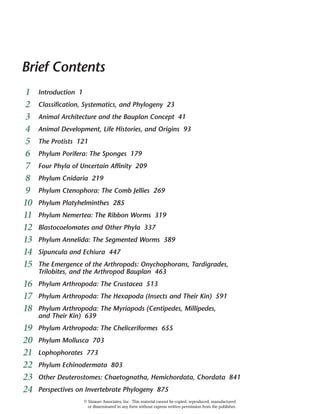
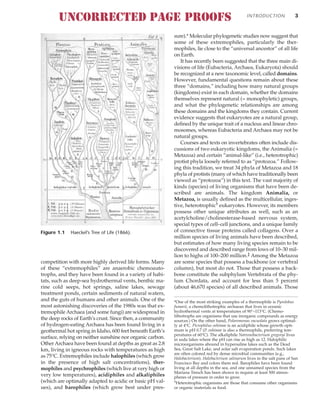
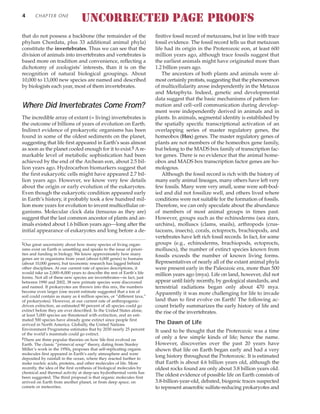
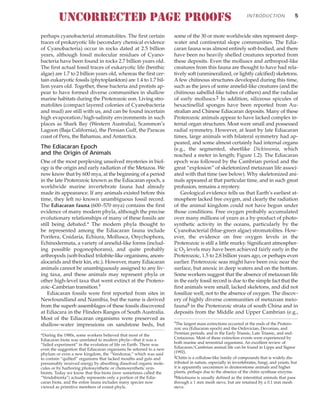
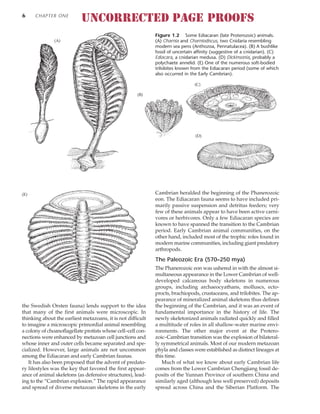

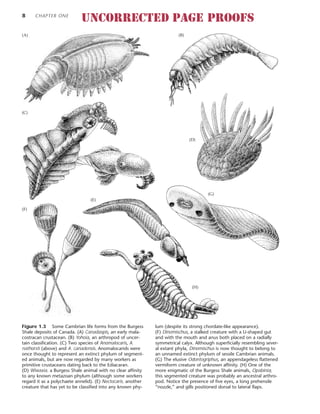
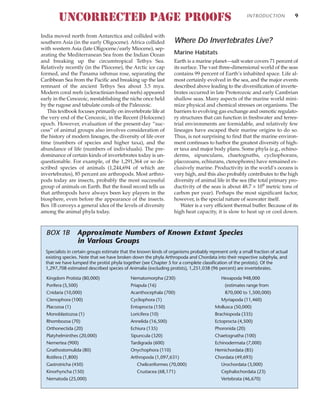



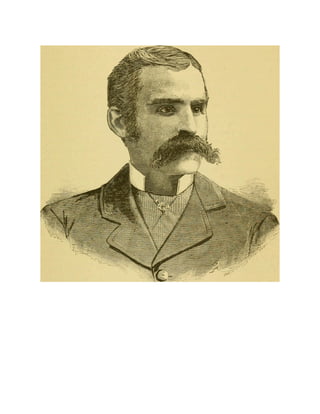
![222 HISTORY OF PERRY COUNTY. the mines and hauled
the coal away, in the fall of the year, while the roads were solid and
comparatively good. With the completion of the Ohio Central to
Rendville and Corning, in 1879 ^"^ 1880, and the extension and
building of a line up the West Branch of Sunday Creek, at a later
date, and the sinking of shafts and the opening of mines at
Rendville, Corning, below Corning, and at Borbec, Buckingham and
Hemlock, the development of the coal deposits began on a grander
scale, and the output is yet on the increase. Monroe now leads all
the townships of the county in the export of coal. Millertown was laid
out in 1834, ^Y Jacob Miller. It is located upon a high piece of
ground, between the east and west branches of Sunday Creek, and
is less than a mile from the new town of Corning. There is from a
point a little above Millertown, one of the finest outlooks in Southern
Ohio. Millertown has a physician, store, hotel, church, severel shops,
and had. according to the census of 1880, eighty-four inhabitants.
Thompsonville, usually called Chapel Hill, was laid out in 1849, '^y
George Thompson and Bryan Murtaugh. It is a pleasanth- situated
village. It has a church, hotel, store, shops, etc., and had a
population of fift^'-two, in 1880. Ferrara was laid out by Nelson
Rodgers and James Taylor, in 187 1, at the time the Atlantic and
Lake Erie Railroad was projected. The railroad failed for the time,
and Ferrara has remained a paper town, or almost so, ever since.
Ferrara is situated between Corning and Rendville, in a nice,
conspicuous place, and several new houses have lately been erected
in it. Rendville was established by Thomas J. Smith and Wm. P.
Rend, and others, in 1879, ^^^ grew with a rapidity marvelous in
this section of the world, and yet very much like other mining towns
of the county. Boarding houses were improvised, shafts sunk and
coal works erected. Houses for miners and other workmen were put
together, finished and inhabited in a space of time that would seem
almost impos.sib]e. Rendville is situated in the narrow valley of the
east branch ot Sunday Creek, and upon the slopes, hills and ridges,
on either side. The Company houses are mostly built in rows, but
more to suit the ground, than upon parallel or corresponding lines-.](https://image.slidesharecdn.com/95389-250723111228-41682bc7/85/Invertebrates-2nd-Edition-Richard-C-Brusca-49-320.jpg)