






It is a data engine introduced by Microsoft.
Provides an environment used to create
databases.
Allows secure and efficient storage and
management of data.
Provides other components and services that
support the business intelligence platform to
generate reports help in data analysis.


A business application can have the following
elements:
a. the user interface or the presentation
element, through which data is entered.
b. The application logic or the business rule
element, which helps in validating the entered
data.
c. The data storage or the data
management element, which manages the
storage and retrieval of data.





Single-tier architecture
Two tier architecture
Three tier architecture
N-tier architecture


Combines all the elements of business
application as a single process.




Divides the business application into two
parts, one part handles the data while other
provides the user interface
It is also called the client-server architecture.







It divides the business application into three
tiers.
The first tier is called the client tier.
The second middle tier is called the business
tier.
The third tier is called the server tier.



It is also called as multi-tier architecture.
Has one component near the client tier, which
is responsible to do the client side validation
and send the data to the presentation tier.





Client tier
UI-centric processing components
Data-centric processing objects
Database server.


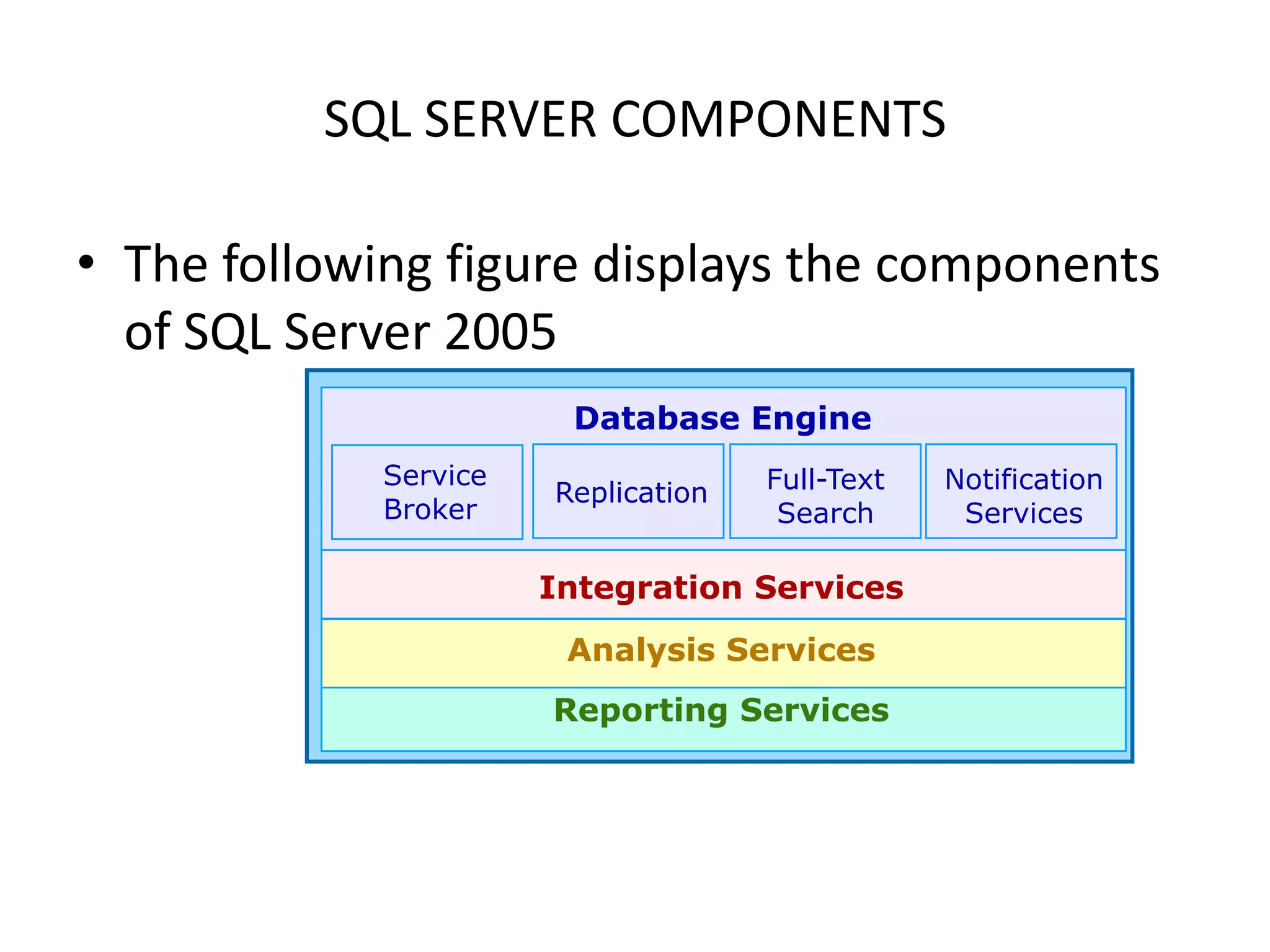
The following figure displays the components
of SQL Server
Database Engine
Service
Broker

Replication

Full-Text
Search

Integration Services
Analysis Services
Reporting Services

Notification
Services
Provides support to store, query, process, and secure data on the
database server.
Allows you to create and manage database objects, such as
tables.
Provides the following background services:
Service Broker
Replication
Full-text search
Notification services
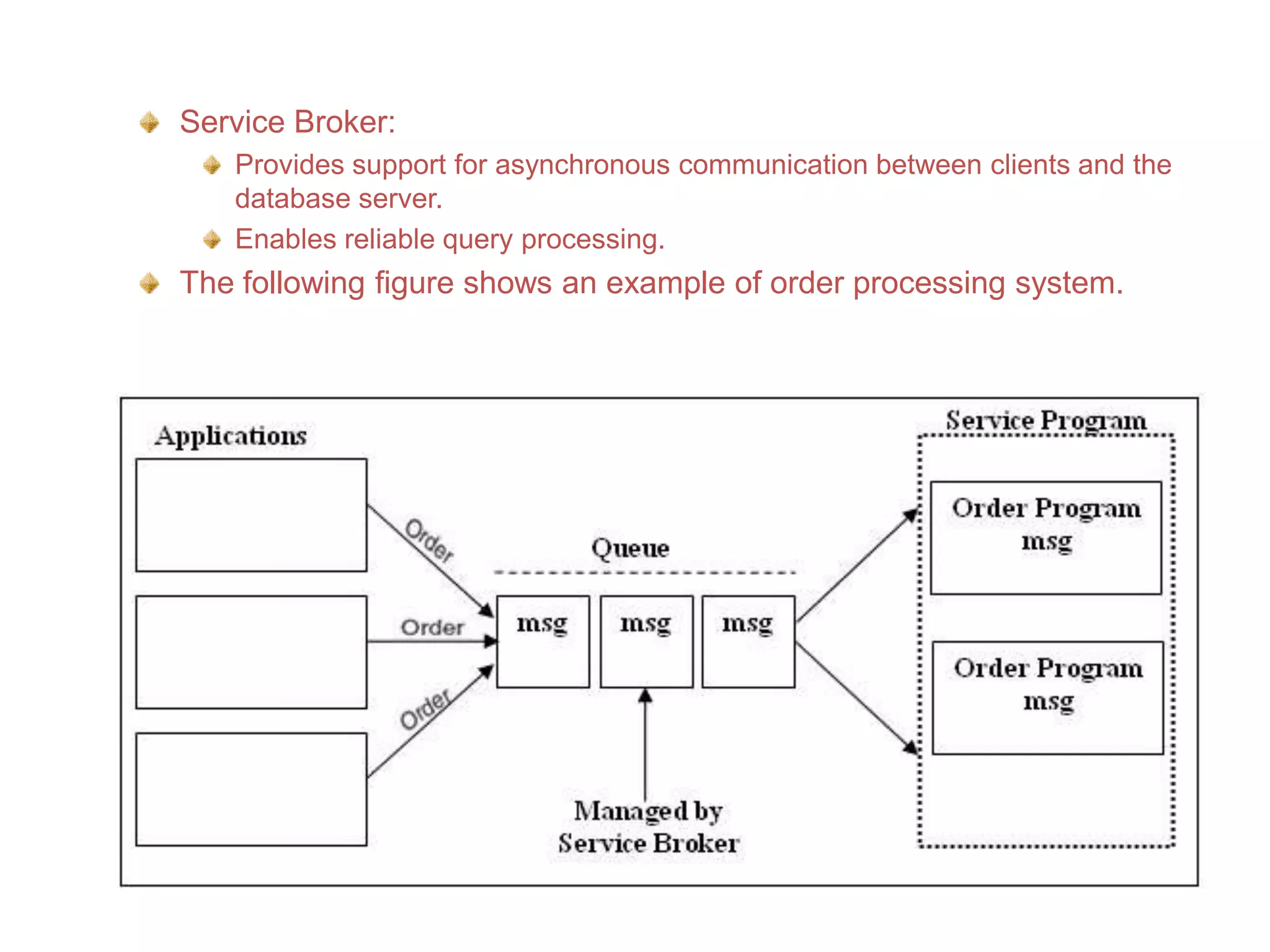
Service Broker:
Provides support for asynchronous communication between clients and the
database server.
Enables reliable query processing.

The following figure shows an example of order processing system.
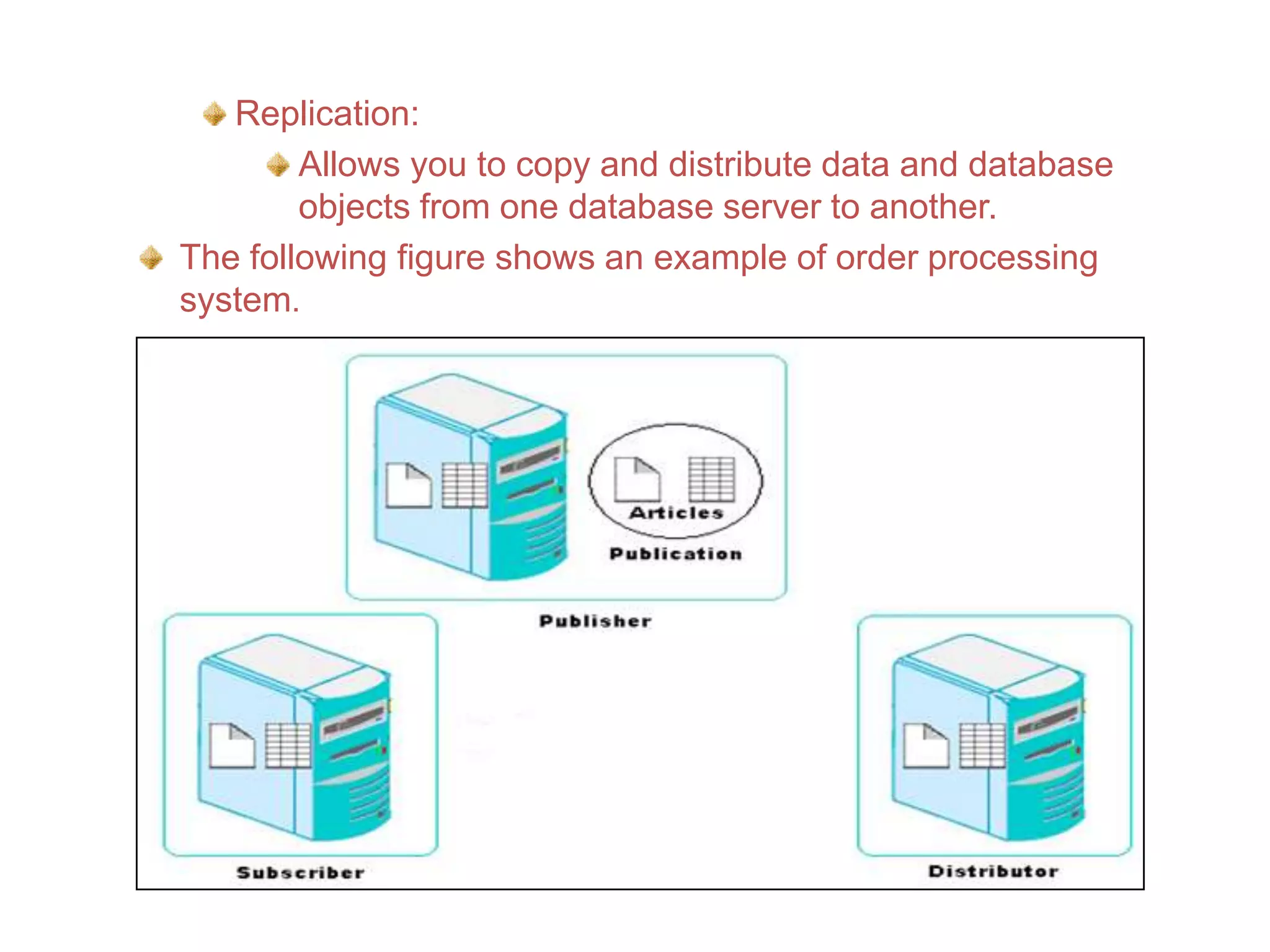
Replication:
Allows you to copy and distribute data and database objects
from one database server to another.

The following figure shows an example of order processing
system.
Full-text search:
Allows you to implement fast and intelligent search in large databases.

Notification services:
Allow you to generate and send notification messages to the users or
administrators about any event.
Allow developers to build notification applications that send timely, personalized
information updates, helping to enhance customer relationships.

Introductuction of sql server gain america

  • 2.
        It is adata engine introduced by Microsoft. Provides an environment used to create databases. Allows secure and efficient storage and management of data. Provides other components and services that support the business intelligence platform to generate reports help in data analysis.
  • 3.
     A business applicationcan have the following elements: a. the user interface or the presentation element, through which data is entered. b. The application logic or the business rule element, which helps in validating the entered data. c. The data storage or the data management element, which manages the storage and retrieval of data.
  • 4.
        Single-tier architecture Two tierarchitecture Three tier architecture N-tier architecture
  • 5.
     Combines all theelements of business application as a single process.
  • 6.
      Divides the businessapplication into two parts, one part handles the data while other provides the user interface It is also called the client-server architecture.
  • 7.
        It divides thebusiness application into three tiers. The first tier is called the client tier. The second middle tier is called the business tier. The third tier is called the server tier.
  • 8.
      It is alsocalled as multi-tier architecture. Has one component near the client tier, which is responsible to do the client side validation and send the data to the presentation tier.
  • 9.
        Client tier UI-centric processingcomponents Data-centric processing objects Database server.
  • 10.
     The following figuredisplays the components of SQL Server Database Engine Service Broker Replication Full-Text Search Integration Services Analysis Services Reporting Services Notification Services
  • 11.
    Provides support tostore, query, process, and secure data on the database server. Allows you to create and manage database objects, such as tables. Provides the following background services: Service Broker Replication Full-text search Notification services
  • 12.
    Service Broker: Provides supportfor asynchronous communication between clients and the database server. Enables reliable query processing. The following figure shows an example of order processing system.
  • 13.
    Replication: Allows you tocopy and distribute data and database objects from one database server to another. The following figure shows an example of order processing system.
  • 14.
    Full-text search: Allows youto implement fast and intelligent search in large databases. Notification services: Allow you to generate and send notification messages to the users or administrators about any event. Allow developers to build notification applications that send timely, personalized information updates, helping to enhance customer relationships.