Introduction to
Vertical Cities
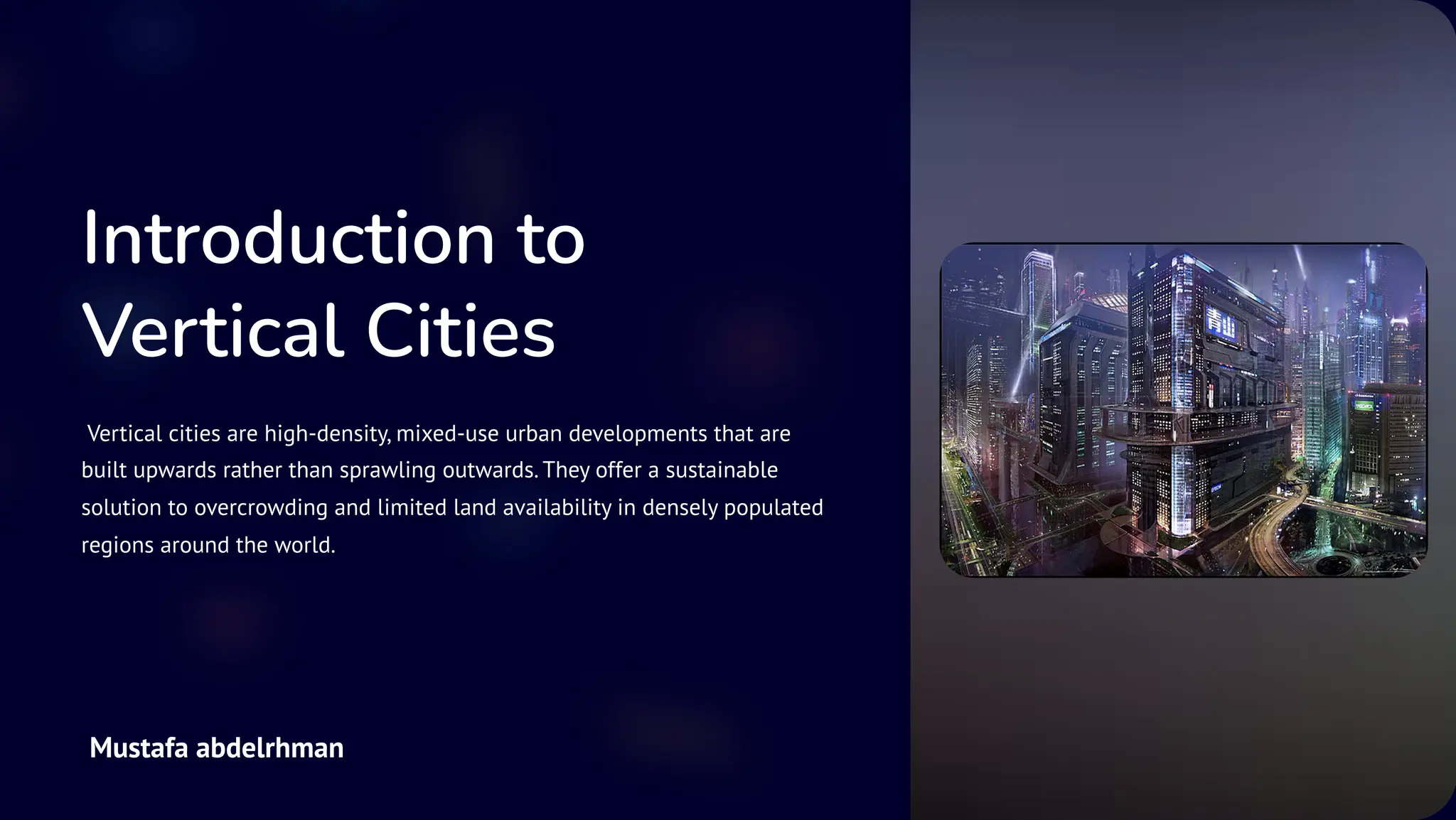
Vertical cities are high-density, mixed-use urban developments that are
built upwards rather than sprawling outwards. They offer a sustainable
solution to overcrowding and limited land availability in densely populated
regions around the world.
Mustafa abdelrhman
Definition and Characteristics of Vertical Cities
High-Rise Design
Vertical cities are characterized by
towering skyscrapers and multi-
level buildings that maximize the
use of limited land area.
Mixed-Use Development
These cities integrate residential,
commercial, and recreational spaces
within a concentrated, vertical
footprint.
Efficient Infrastructure
Vertical cities utilize advanced
transportation systems, utilities, and
amenities to serve the high-density
population efficiently.
Benefits of Vertical Cities
1 Reduced Urban Sprawl
Vertical cities minimize the encroachment on surrounding natural
habitats and farmland.
2 Improved Resource Efficiency
High-density living allows for more efficient use of energy, water,
and other resources.
3 Enhanced Livability
Vertical cities can provide easy access to amenities, transportation,
and green spaces.
4 Economic Opportunities
These cities can attract businesses and investment, creating jobs
and economic growth.
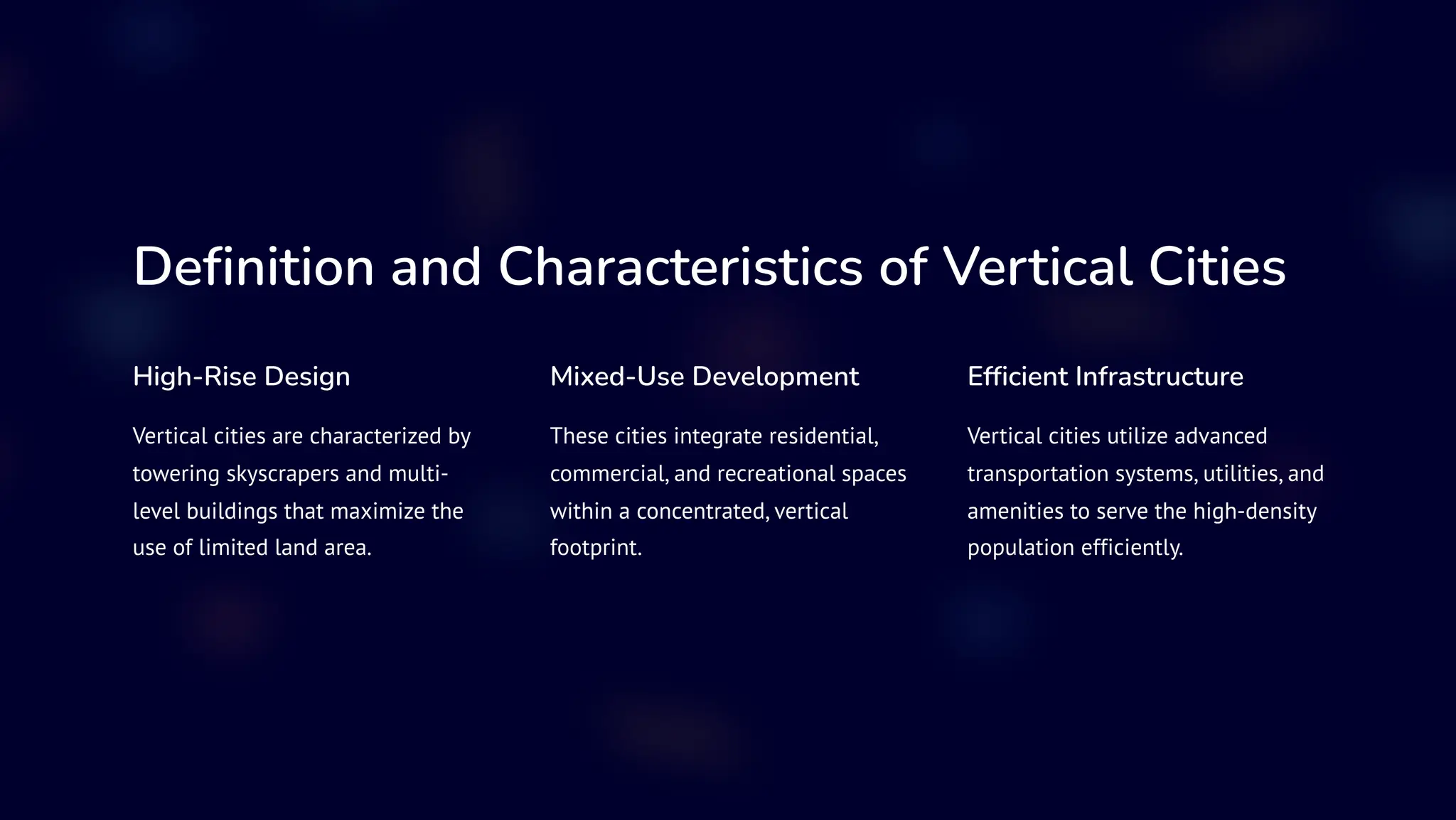
Challenges in Implementing
Vertical Cities
High Upfront Costs
The construction of tall, complex buildings requires significant
financial investment.
Structural Complexity
Vertical cities demand advanced engineering and construction
techniques to ensure safety and stability.
Social Acceptance
Residents may be hesitant to adapt to the dense, vertical living
environment.
Environmental Concerns
Potential issues include increased energy demand and waste
generation in high-density settings.
Case Study: An Example of a
Successful Vertical City
1 Marina Bay Sands, Singapore
This iconic integrated resort and urban development
showcases how vertical design can create a vibrant,
sustainable city center.
2 Diverse Amenities
The complex includes hotels, shopping malls, museums,
gardens, and a renowned rooftop infinity pool.
3 Innovative Infrastructure
The development features efficient public transportation,
renewable energy sources, and extensive green spaces.
Considerations for Designing
Vertical Cities
Mixed-Use Integration
Carefully plan the placement of residential, commercial, and public spaces.
Efficient Mobility
Prioritize public transit, pedestrian walkways, and connected transportation
hubs.
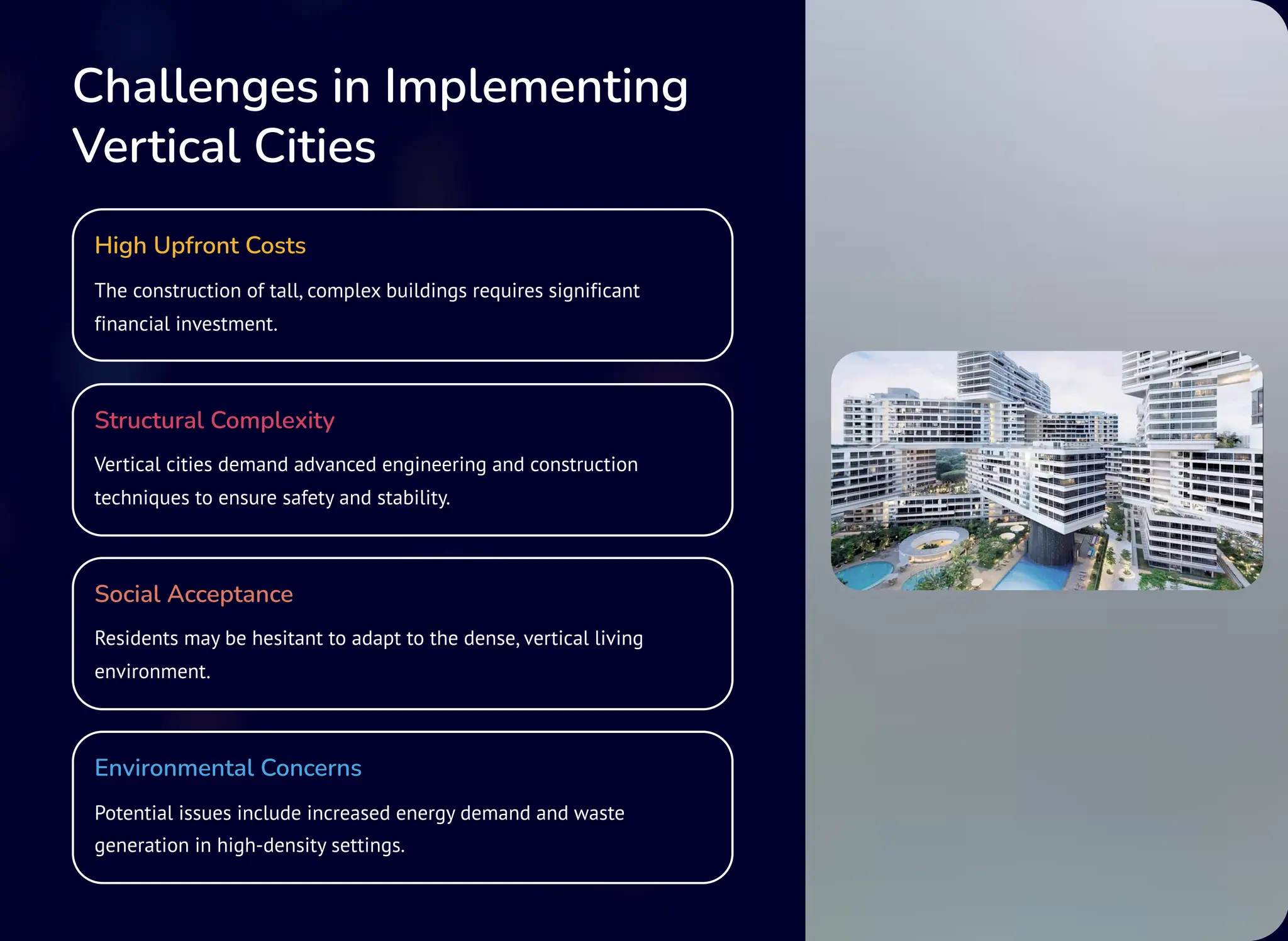
Ample Green Spaces
Incorporate parks, gardens, and other green amenities throughout the
vertical city.
Sustainable Design
Implement energy-efficient technologies and eco-friendly building
practices.
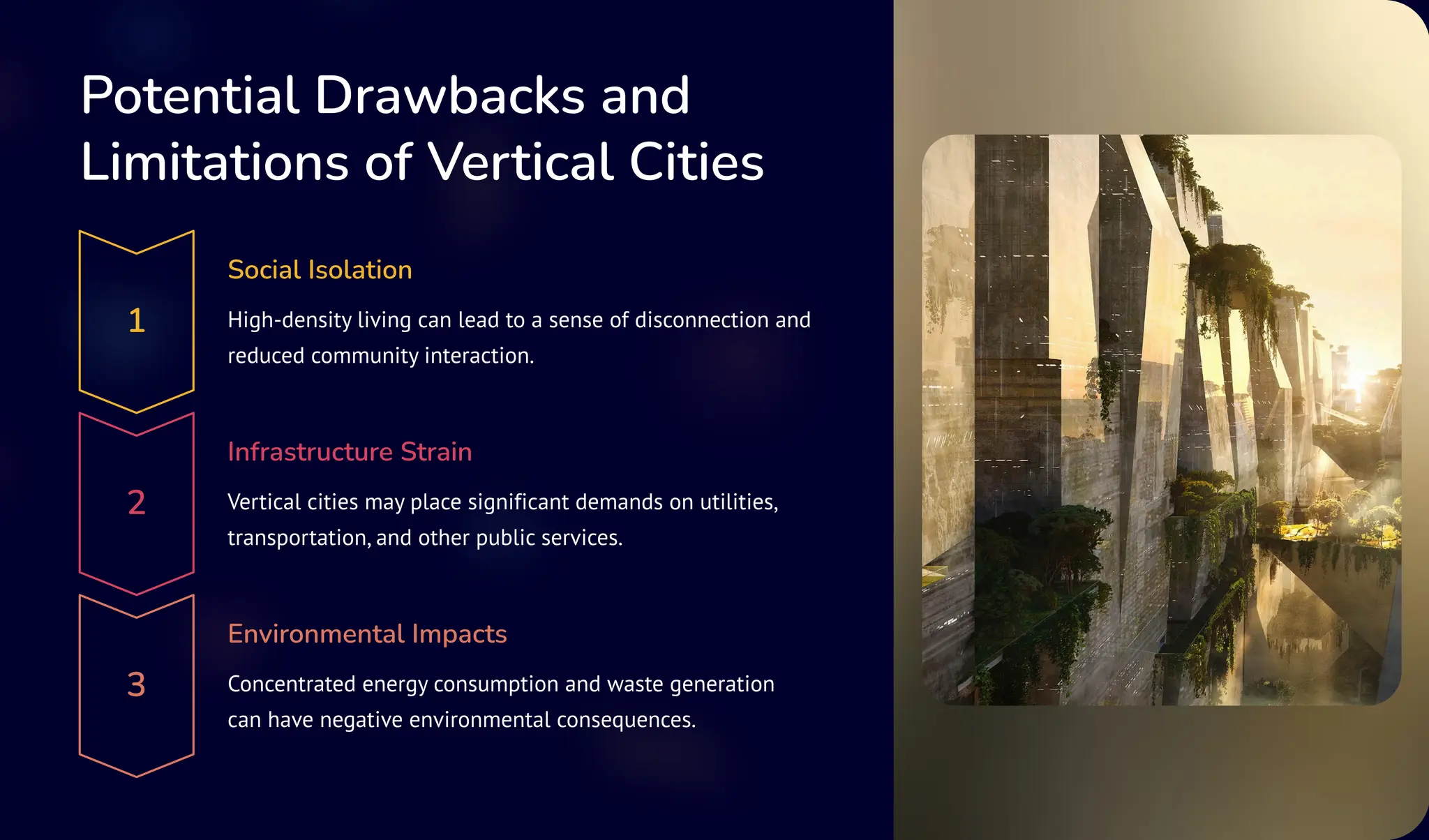
Potential Drawbacks and
Limitations of Vertical Cities
1
Social Isolation
High-density living can lead to a sense of disconnection and
reduced community interaction.
2
Infrastructure Strain
Vertical cities may place significant demands on utilities,
transportation, and other public services.
3
Environmental Impacts
Concentrated energy consumption and waste generation
can have negative environmental consequences.
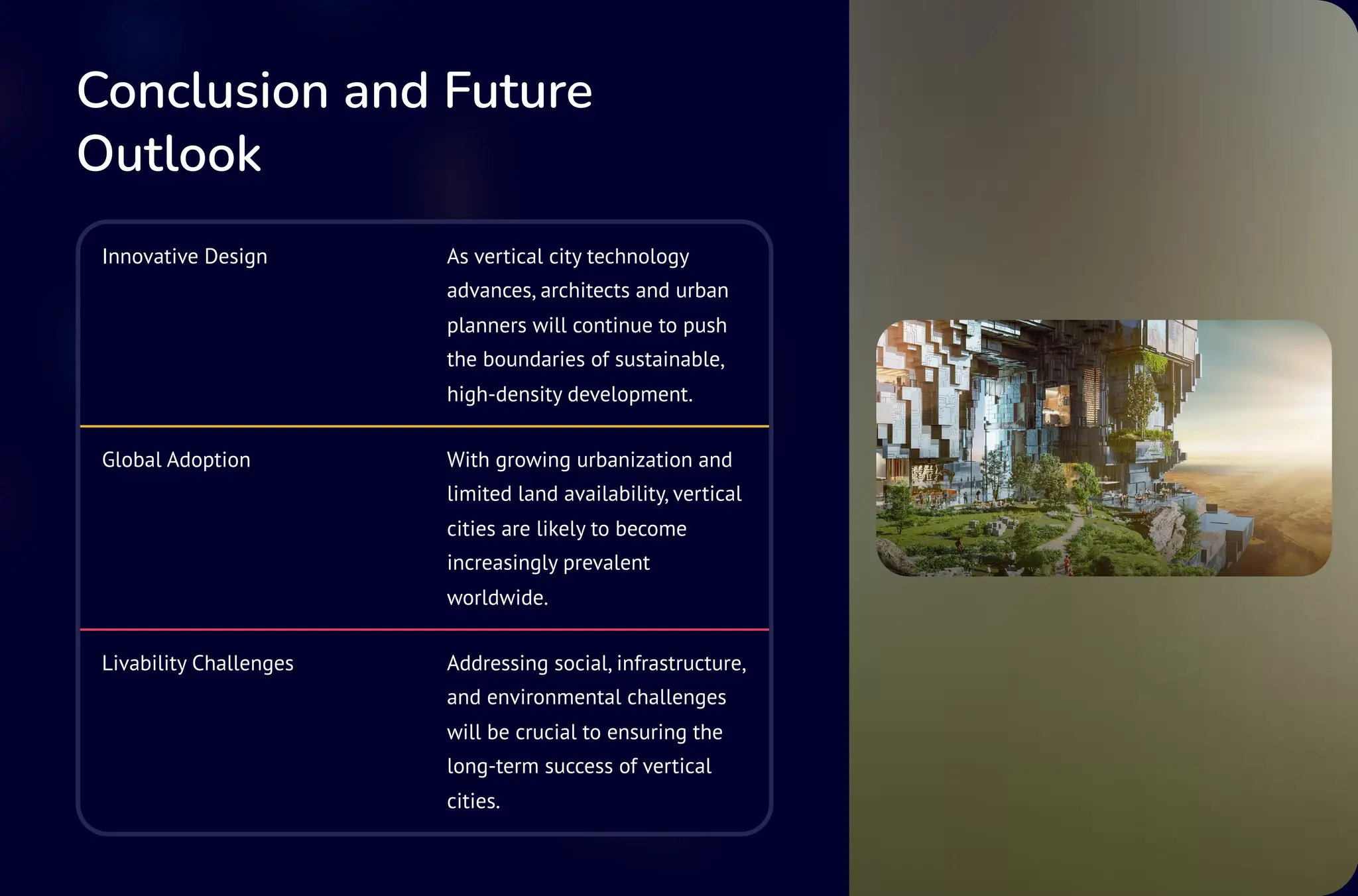
Conclusion and Future
Outlook
Innovative Design As vertical city technology
advances, architects and urban
planners will continue to push
the boundaries of sustainable,
high-density development.
Global Adoption With growing urbanization and
limited land availability, vertical
cities are likely to become
increasingly prevalent
worldwide.
Livability Challenges Addressing social, infrastructure,
and environmental challenges
will be crucial to ensuring the
long-term success of vertical
cities.

Introduction to Vertical Cities Vertical cities are high-density, mixed-use urban developments

  • 1.
    Introduction to Vertical Cities Verticalcities are high-density, mixed-use urban developments that are built upwards rather than sprawling outwards. They offer a sustainable solution to overcrowding and limited land availability in densely populated regions around the world. Mustafa abdelrhman
  • 2.
    Definition and Characteristicsof Vertical Cities High-Rise Design Vertical cities are characterized by towering skyscrapers and multi- level buildings that maximize the use of limited land area. Mixed-Use Development These cities integrate residential, commercial, and recreational spaces within a concentrated, vertical footprint. Efficient Infrastructure Vertical cities utilize advanced transportation systems, utilities, and amenities to serve the high-density population efficiently.
  • 3.
    Benefits of VerticalCities 1 Reduced Urban Sprawl Vertical cities minimize the encroachment on surrounding natural habitats and farmland. 2 Improved Resource Efficiency High-density living allows for more efficient use of energy, water, and other resources. 3 Enhanced Livability Vertical cities can provide easy access to amenities, transportation, and green spaces. 4 Economic Opportunities These cities can attract businesses and investment, creating jobs and economic growth.
  • 4.
    Challenges in Implementing VerticalCities High Upfront Costs The construction of tall, complex buildings requires significant financial investment. Structural Complexity Vertical cities demand advanced engineering and construction techniques to ensure safety and stability. Social Acceptance Residents may be hesitant to adapt to the dense, vertical living environment. Environmental Concerns Potential issues include increased energy demand and waste generation in high-density settings.
  • 5.
    Case Study: AnExample of a Successful Vertical City 1 Marina Bay Sands, Singapore This iconic integrated resort and urban development showcases how vertical design can create a vibrant, sustainable city center. 2 Diverse Amenities The complex includes hotels, shopping malls, museums, gardens, and a renowned rooftop infinity pool. 3 Innovative Infrastructure The development features efficient public transportation, renewable energy sources, and extensive green spaces.
  • 6.
    Considerations for Designing VerticalCities Mixed-Use Integration Carefully plan the placement of residential, commercial, and public spaces. Efficient Mobility Prioritize public transit, pedestrian walkways, and connected transportation hubs. Ample Green Spaces Incorporate parks, gardens, and other green amenities throughout the vertical city. Sustainable Design Implement energy-efficient technologies and eco-friendly building practices.
  • 7.
    Potential Drawbacks and Limitationsof Vertical Cities 1 Social Isolation High-density living can lead to a sense of disconnection and reduced community interaction. 2 Infrastructure Strain Vertical cities may place significant demands on utilities, transportation, and other public services. 3 Environmental Impacts Concentrated energy consumption and waste generation can have negative environmental consequences.
  • 8.
    Conclusion and Future Outlook InnovativeDesign As vertical city technology advances, architects and urban planners will continue to push the boundaries of sustainable, high-density development. Global Adoption With growing urbanization and limited land availability, vertical cities are likely to become increasingly prevalent worldwide. Livability Challenges Addressing social, infrastructure, and environmental challenges will be crucial to ensuring the long-term success of vertical cities.