The Role of Urban Development in Attracting Tourists
Iconic Landmarks
Landmark buildings and structures,
such as the Eiffel Tower or the
Sydney Opera House, become must-
see attractions that draw visitors
to a city.
Vibrant Public Spaces
Well-designed public spaces, like
plazas and pedestrian-friendly
streets, encourage exploration and
enhance the overall tourist
experience.
Adaptive Reuse
Repurposing historical buildings for
modern uses, such as museums or
hotels, preserves cultural heritage
while providing unique experiences
for tourists.
Positive Impact of Tourism on the National and Individual
Economy
1 Increased Tax Revenue
Tourism generates revenue for governments
through taxes on hotels, restaurants, and other
tourism-related businesses.
2 Job Creation
The tourism industry creates a wide range of
employment opportunities, from hospitality
workers to tour guides and architects.
3 Economic Diversification
Tourism can help diversify a local economy,
reducing reliance on a single industry and
providing more economic stability.
4 Increased Individual Incomes
Tourism can boost incomes for local businesses
and individuals, improving the standard of living
in the community.
Architectural Styles and Their
Influence on Tourist Attraction
Historic Preservation
Maintaining and restoring historic architectural styles can attract
tourists seeking authentic cultural experiences.
Modern Marvels
Innovative and contemporary architectural designs can become
iconic tourist attractions, such as the Guggenheim Museum in
Bilbao.
Cultural Immersion
Local architectural styles that reflect the unique cultural heritage
of a destination can enhance the tourist's sense of place.
Thematic Experiences
Themed architectural developments, like resort areas or historic
districts, can create immersive experiences for visitors.
Preservation of Historical
Landmarks and Its Effect on
Tourism
1
Preservation
Protecting and restoring historical landmarks and
buildings ensures their longevity and cultural
significance.
2
Authenticity
Preserving the architectural heritage of a destination
enhances the authenticity and uniqueness of the
tourist experience.
3
Economic Benefits
Visitors are often willing to pay more to experience
well-preserved historical sites, generating economic
benefits for the local community.
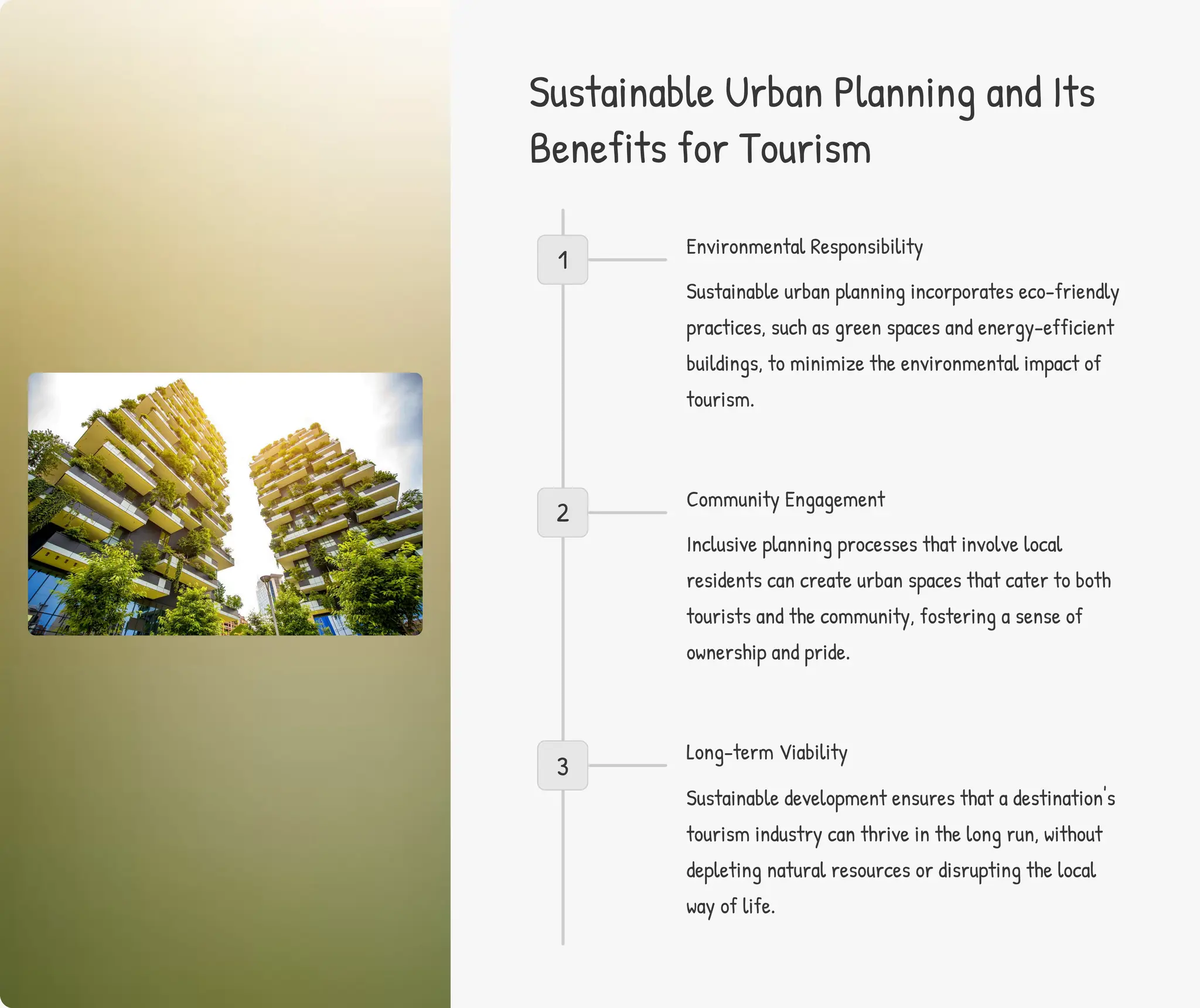
Sustainable Urban Planning and Its
Benefits for Tourism
1
Environmental Responsibility
Sustainable urban planning incorporates eco-friendly
practices, such as green spaces and energy-efficient
buildings, to minimize the environmental impact of
tourism.
2
Community Engagement
Inclusive planning processes that involve local
residents can create urban spaces that cater to both
tourists and the community, fostering a sense of
ownership and pride.
3
Long-term Viability
Sustainable development ensures that a destination's
tourism industry can thrive in the long run, without
depleting natural resources or disrupting the local
way of life.
Innovative Architectural Designs
and Their Appeal to Tourists
Sustainable Design
Eco-friendly architectural features, such as renewable energy systems
and green spaces, can attract environmentally conscious tourists.
Technological Integration
Innovative use of technology in building design, like interactive exhibits
or smart building systems, can fascinate and engage visitors.
Unique Experiences
Unconventional or experimental architectural designs can offer visitors
one-of-a-kind experiences and photo opportunities.
Cultural Expression
Architecture that celebrates the local culture and traditions can deepen
the tourist's understanding and appreciation of the destination.
Conclusion: Maximizing the Synergy
Between Architecture and Tourism
By strategically aligning urban development, architectural preservation,
and sustainable planning, destinations can harness the powerful synergy
between architecture and tourism to boost their appeal, enhance the
visitor experience, and drive economic growth. This approach can ensure
the long-term viability and success of the tourism industry.

The-Relationship-Between-Architecture-and-Tourism.pdf

  • 2.
    The Role ofUrban Development in Attracting Tourists Iconic Landmarks Landmark buildings and structures, such as the Eiffel Tower or the Sydney Opera House, become must- see attractions that draw visitors to a city. Vibrant Public Spaces Well-designed public spaces, like plazas and pedestrian-friendly streets, encourage exploration and enhance the overall tourist experience. Adaptive Reuse Repurposing historical buildings for modern uses, such as museums or hotels, preserves cultural heritage while providing unique experiences for tourists.
  • 3.
    Positive Impact ofTourism on the National and Individual Economy 1 Increased Tax Revenue Tourism generates revenue for governments through taxes on hotels, restaurants, and other tourism-related businesses. 2 Job Creation The tourism industry creates a wide range of employment opportunities, from hospitality workers to tour guides and architects. 3 Economic Diversification Tourism can help diversify a local economy, reducing reliance on a single industry and providing more economic stability. 4 Increased Individual Incomes Tourism can boost incomes for local businesses and individuals, improving the standard of living in the community.
  • 4.
    Architectural Styles andTheir Influence on Tourist Attraction Historic Preservation Maintaining and restoring historic architectural styles can attract tourists seeking authentic cultural experiences. Modern Marvels Innovative and contemporary architectural designs can become iconic tourist attractions, such as the Guggenheim Museum in Bilbao. Cultural Immersion Local architectural styles that reflect the unique cultural heritage of a destination can enhance the tourist's sense of place. Thematic Experiences Themed architectural developments, like resort areas or historic districts, can create immersive experiences for visitors.
  • 5.
    Preservation of Historical Landmarksand Its Effect on Tourism 1 Preservation Protecting and restoring historical landmarks and buildings ensures their longevity and cultural significance. 2 Authenticity Preserving the architectural heritage of a destination enhances the authenticity and uniqueness of the tourist experience. 3 Economic Benefits Visitors are often willing to pay more to experience well-preserved historical sites, generating economic benefits for the local community.
  • 6.
    Sustainable Urban Planningand Its Benefits for Tourism 1 Environmental Responsibility Sustainable urban planning incorporates eco-friendly practices, such as green spaces and energy-efficient buildings, to minimize the environmental impact of tourism. 2 Community Engagement Inclusive planning processes that involve local residents can create urban spaces that cater to both tourists and the community, fostering a sense of ownership and pride. 3 Long-term Viability Sustainable development ensures that a destination's tourism industry can thrive in the long run, without depleting natural resources or disrupting the local way of life.
  • 7.
    Innovative Architectural Designs andTheir Appeal to Tourists Sustainable Design Eco-friendly architectural features, such as renewable energy systems and green spaces, can attract environmentally conscious tourists. Technological Integration Innovative use of technology in building design, like interactive exhibits or smart building systems, can fascinate and engage visitors. Unique Experiences Unconventional or experimental architectural designs can offer visitors one-of-a-kind experiences and photo opportunities. Cultural Expression Architecture that celebrates the local culture and traditions can deepen the tourist's understanding and appreciation of the destination.
  • 8.
    Conclusion: Maximizing theSynergy Between Architecture and Tourism By strategically aligning urban development, architectural preservation, and sustainable planning, destinations can harness the powerful synergy between architecture and tourism to boost their appeal, enhance the visitor experience, and drive economic growth. This approach can ensure the long-term viability and success of the tourism industry.