Introduction to
Research Design
Research design is the framework or blueprint for conducting research. It
outlines the steps and procedures to be followed to answer a research
question.
SS
Dr. Siva Gurunathan S
Assistant Professor,
PG and Research Department of Economics,
Sacred Heart College (Autonomous),
Tirupattur-635601.
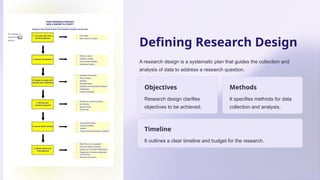
Defining Research Design
A research design is a systematic plan that guides the collection and
analysis of data to address a research question.
Objectives
Research design clarifies
objectives to be achieved.
Methods
It specifies methods for data
collection and analysis.
Timeline
It outlines a clear timeline and budget for the research.
Types of Research Design
Research designs are categorized based on the purpose and methods of the study.
Quantitative
Quantitative research uses numerical
data to measure and analyze
phenomena.
Qualitative
Qualitative research explores
meanings, experiences, and
perspectives using non-numerical
data.
Mixed-Methods
Mixed-methods research combines
both quantitative and qualitative
approaches.
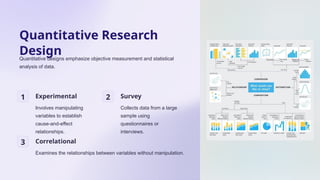
Quantitative Research
Design
Quantitative designs emphasize objective measurement and statistical
analysis of data.
1 Experimental
Involves manipulating
variables to establish
cause-and-effect
relationships.
2 Survey
Collects data from a large
sample using
questionnaires or
interviews.
3 Correlational
Examines the relationships between variables without manipulation.
Qualitative Research Design
Qualitative designs focus on understanding the meaning and interpretation of data.
Ethnographic
Immersion in a culture or community to understand their perspectives.
Grounded Theory
Developing theories based on patterns emerging from data analysis.
Case Study
In-depth examination of a particular individual, group, or event.
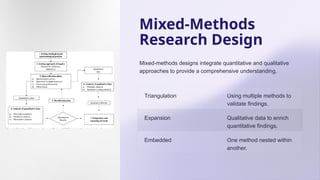
Mixed-Methods
Research Design
Mixed-methods designs integrate quantitative and qualitative
approaches to provide a comprehensive understanding.
Triangulation Using multiple methods to
validate findings.
Expansion Qualitative data to enrich
quantitative findings.
Embedded One method nested within
another.
Sampling Techniques
Sampling techniques are used to select a representative subset of the
population for the study.
Random Sampling
Every individual has an equal
chance of being selected.
Stratified Sampling
Dividing the population into strata
and randomly selecting from each
stratum.
Convenience Sampling
Selecting participants based on
ease of access.
Snowball Sampling
Participants refer other potential
participants.
Data Collection Methods
Data collection methods are the tools used to gather data from participants.
1
Surveys
Using questionnaires or interviews to collect
data from a large sample.
2 Observations
Systematic recording of behaviors or events in
a natural setting.
3
Experiments
Manipulating variables to test hypotheses.
4 Interviews
In-depth conversations with participants to
gather detailed information.
5
Focus Groups
Discussions with a small group of participants
to explore a particular topic.
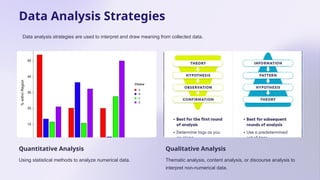
Data Analysis Strategies
Data analysis strategies are used to interpret and draw meaning from collected data.
Quantitative Analysis
Using statistical methods to analyze numerical data.
Qualitative Analysis
Thematic analysis, content analysis, or discourse analysis to
interpret non-numerical data.
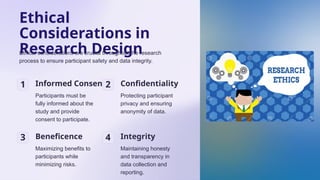
Ethical
Considerations in
Research Design
Ethical considerations are crucial throughout the research
process to ensure participant safety and data integrity.
1 Informed Consent
Participants must be
fully informed about the
study and provide
consent to participate.
2 Confidentiality
Protecting participant
privacy and ensuring
anonymity of data.
3 Beneficence
Maximizing benefits to
participants while
minimizing risks.
4 Integrity
Maintaining honesty
and transparency in
data collection and
reporting.

Introduction - to - Research - Design.pptx

  • 1.
    Introduction to Research Design Researchdesign is the framework or blueprint for conducting research. It outlines the steps and procedures to be followed to answer a research question. SS Dr. Siva Gurunathan S Assistant Professor, PG and Research Department of Economics, Sacred Heart College (Autonomous), Tirupattur-635601.
  • 2.
    Defining Research Design Aresearch design is a systematic plan that guides the collection and analysis of data to address a research question. Objectives Research design clarifies objectives to be achieved. Methods It specifies methods for data collection and analysis. Timeline It outlines a clear timeline and budget for the research.
  • 3.
    Types of ResearchDesign Research designs are categorized based on the purpose and methods of the study. Quantitative Quantitative research uses numerical data to measure and analyze phenomena. Qualitative Qualitative research explores meanings, experiences, and perspectives using non-numerical data. Mixed-Methods Mixed-methods research combines both quantitative and qualitative approaches.
  • 4.
    Quantitative Research Design Quantitative designsemphasize objective measurement and statistical analysis of data. 1 Experimental Involves manipulating variables to establish cause-and-effect relationships. 2 Survey Collects data from a large sample using questionnaires or interviews. 3 Correlational Examines the relationships between variables without manipulation.
  • 5.
    Qualitative Research Design Qualitativedesigns focus on understanding the meaning and interpretation of data. Ethnographic Immersion in a culture or community to understand their perspectives. Grounded Theory Developing theories based on patterns emerging from data analysis. Case Study In-depth examination of a particular individual, group, or event.
  • 6.
    Mixed-Methods Research Design Mixed-methods designsintegrate quantitative and qualitative approaches to provide a comprehensive understanding. Triangulation Using multiple methods to validate findings. Expansion Qualitative data to enrich quantitative findings. Embedded One method nested within another.
  • 7.
    Sampling Techniques Sampling techniquesare used to select a representative subset of the population for the study. Random Sampling Every individual has an equal chance of being selected. Stratified Sampling Dividing the population into strata and randomly selecting from each stratum. Convenience Sampling Selecting participants based on ease of access. Snowball Sampling Participants refer other potential participants.
  • 8.
    Data Collection Methods Datacollection methods are the tools used to gather data from participants. 1 Surveys Using questionnaires or interviews to collect data from a large sample. 2 Observations Systematic recording of behaviors or events in a natural setting. 3 Experiments Manipulating variables to test hypotheses. 4 Interviews In-depth conversations with participants to gather detailed information. 5 Focus Groups Discussions with a small group of participants to explore a particular topic.
  • 9.
    Data Analysis Strategies Dataanalysis strategies are used to interpret and draw meaning from collected data. Quantitative Analysis Using statistical methods to analyze numerical data. Qualitative Analysis Thematic analysis, content analysis, or discourse analysis to interpret non-numerical data.
  • 10.
    Ethical Considerations in Research Design Ethicalconsiderations are crucial throughout the research process to ensure participant safety and data integrity. 1 Informed Consent Participants must be fully informed about the study and provide consent to participate. 2 Confidentiality Protecting participant privacy and ensuring anonymity of data. 3 Beneficence Maximizing benefits to participants while minimizing risks. 4 Integrity Maintaining honesty and transparency in data collection and reporting.