Introduction to
Nanocomposite
Project
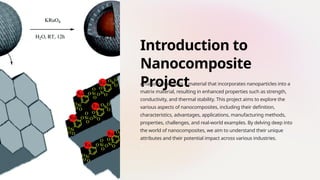
A nanocomposite is a material that incorporates nanoparticles into a
matrix material, resulting in enhanced properties such as strength,
conductivity, and thermal stability. This project aims to explore the
various aspects of nanocomposites, including their definition,
characteristics, advantages, applications, manufacturing methods,
properties, challenges, and real-world examples. By delving deep into
the world of nanocomposites, we aim to understand their unique
attributes and their potential impact across various industries.
jc
Definition and Characteristics of
Nanocomposites
Definition
Nanocomposites are materials composed of
a matrix with nanoscale inclusions, resulting
in properties that differ from those of
conventional composites.
Characteristics
Nanocomposites exhibit superior
mechanical, thermal, and barrier properties,
making them ideal for a wide range of
applications.
Advantages and Applications of
Nanocomposites
1 Advantages
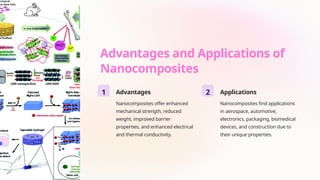
Nanocomposites offer enhanced
mechanical strength, reduced
weight, improved barrier
properties, and enhanced electrical
and thermal conductivity.
2 Applications
Nanocomposites find applications
in aerospace, automotive,
electronics, packaging, biomedical
devices, and construction due to
their unique properties.
Manufacturing Methods of
Nanocomposites
3
Polymer Nanocomposites
5
Ceramic Nanocomposites
Properties and Performances of
Nanocomposites
1. Mechanical Strength Enhanced tensile strength and modulus
2. Thermal Conductivity Superior heat transfer capabilities
3. Electrical Conductivity Improved electrical properties
Challenges and Limits of Nanocomposites
Challenges
Uniform dispersion of nanoparticles, scalability, and cost-effective manufacturing are
significant challenges in the development of nanocomposites.
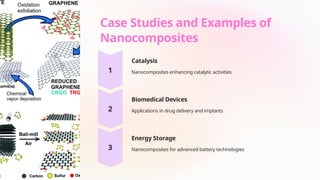
Case Studies and Examples of
Nanocomposites
Catalysis
Nanocomposites enhancing catalytic activities
Biomedical Devices
Applications in drug delivery and implants
Energy Storage
Nanocomposites for advanced battery technologies
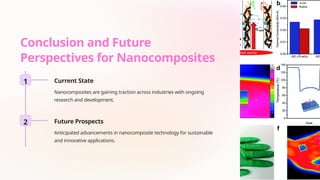
Conclusion and Future
Perspectives for Nanocomposites
1 Current State
Nanocomposites are gaining traction across industries with ongoing
research and development.
2 Future Prospects
Anticipated advancements in nanocomposite technology for sustainable
and innovative applications.

Introduction-to-Nanocomposite-Project.pptx

  • 1.
    Introduction to Nanocomposite Project A nanocompositeis a material that incorporates nanoparticles into a matrix material, resulting in enhanced properties such as strength, conductivity, and thermal stability. This project aims to explore the various aspects of nanocomposites, including their definition, characteristics, advantages, applications, manufacturing methods, properties, challenges, and real-world examples. By delving deep into the world of nanocomposites, we aim to understand their unique attributes and their potential impact across various industries. jc
  • 2.
    Definition and Characteristicsof Nanocomposites Definition Nanocomposites are materials composed of a matrix with nanoscale inclusions, resulting in properties that differ from those of conventional composites. Characteristics Nanocomposites exhibit superior mechanical, thermal, and barrier properties, making them ideal for a wide range of applications.
  • 3.
    Advantages and Applicationsof Nanocomposites 1 Advantages Nanocomposites offer enhanced mechanical strength, reduced weight, improved barrier properties, and enhanced electrical and thermal conductivity. 2 Applications Nanocomposites find applications in aerospace, automotive, electronics, packaging, biomedical devices, and construction due to their unique properties.
  • 4.
    Manufacturing Methods of Nanocomposites 3 PolymerNanocomposites 5 Ceramic Nanocomposites
  • 5.
    Properties and Performancesof Nanocomposites 1. Mechanical Strength Enhanced tensile strength and modulus 2. Thermal Conductivity Superior heat transfer capabilities 3. Electrical Conductivity Improved electrical properties
  • 6.
    Challenges and Limitsof Nanocomposites Challenges Uniform dispersion of nanoparticles, scalability, and cost-effective manufacturing are significant challenges in the development of nanocomposites.
  • 7.
    Case Studies andExamples of Nanocomposites Catalysis Nanocomposites enhancing catalytic activities Biomedical Devices Applications in drug delivery and implants Energy Storage Nanocomposites for advanced battery technologies
  • 8.
    Conclusion and Future Perspectivesfor Nanocomposites 1 Current State Nanocomposites are gaining traction across industries with ongoing research and development. 2 Future Prospects Anticipated advancements in nanocomposite technology for sustainable and innovative applications.