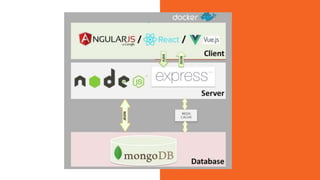
What is MEAN
?
A Collection of
JavaScript based
technologies
to Develop
Web Applications
Why MEAN stack
!
1. Single language is used
throughout the application
2. Support and often enforce the
use of the MVC architecture
3. Performance
4. Popularity of JavaScript
5. Open Source Project
What is NodeJS
?
A Run Time Environment for Java
Script
How NodeJS
It Compiles the javascript code to
Native machine code before
execution
Event based mechanism
Why NodeJS
Scalable and Fast Web
Application
Light weight
Perfect for real time
applications
Features of
NodeJS
Asynchronous and Event driven
Single threaded
No buffering
Open Source
Npm
Node modules
What is
AngularJS MVC based JavaScript Framework
What AngularJS
can do?
Develop complex client side
application
Single Page Applications
Why this
AngularJS
Less load on the server
Structure the Code and
development practice and in
MVC/MVVM
Reusable components
Easily Testable components
How AngularJS
Components
Dependency Injection
Data binding
Directives
Filters
Services
Routes
Dirty checking
What is
MongoDB
no SQL Database
It uses JSON style documents for
the data representation
Why MongoDB
JSON everywhere
Lightweight
Less disk space
Scalable architecture
No more SQL statements
How MongoDB
Support ad hoc queries
Indexing
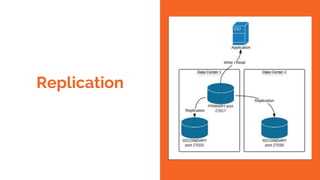
Replication
Load Balancing
Map reduction and Aggregation
tools
JavaScript instead of Procedures
High performance
Replication
What is
ExpressJS
Server side web and mobile
application framework
Features of
ExpressJS
Allows and responds to HTTP
requests
Defines routes
Dynamic rendering of HTML pages
Helper functions for Web
Applications
Templating Engines
REST support
What is Vue.Js A progressive framework for
building user interfaces
Features of
VueJS
Declarative rendering
Vue focuses on “view layer”
Reactivity
Data Binding
Directives
Components
Encapsulation
Event Handling
Computed properties
Transition effects
Typescript support
Introduction to mean stack

Introduction to mean stack