What is MES: An
Overview
Manufacturing Execution Systems: Bridging
Planning & Production
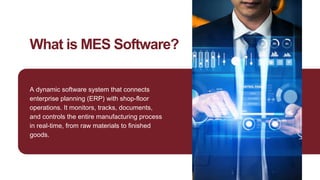
What is MES Software?
A dynamic software system that connects
enterprise planning (ERP) with shop-floor
operations. It monitors, tracks, documents,
and controls the entire manufacturing process
in real-time, from raw materials to finished
goods.
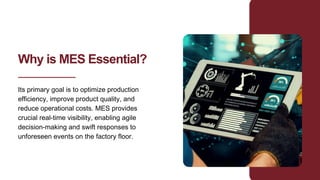
Why is MES Essential?
Its primary goal is to optimize production
efficiency, improve product quality, and
reduce operational costs. MES provides
crucial real-time visibility, enabling agile
decision-making and swift responses to
unforeseen events on the factory floor.
Core MES Capabilities
(Part 1)
Data Collection: Gathers live data from
machines, sensors, and operators.
Production Tracking: Monitors work-in-
progress (WIP), order status, and material
flow.
Quality Management: Ensures product
specifications, tracks deviations.
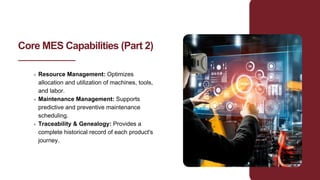
Core MES Capabilities (Part 2)
Resource Management: Optimizes
allocation and utilization of machines, tools,
and labor.
Maintenance Management: Supports
predictive and preventive maintenance
scheduling.
Traceability & Genealogy: Provides a
complete historical record of each product's
journey.
Impact of MES
Software
Implementing MES software leads to
reduced downtime, improved product
quality, lower operational expenses, and
enhanced regulatory compliance. It's a
foundational component for achieving
Industry 4.0 goals and building smarter
factories.
847-298-4777 info@ins3.com
Thank you
www.ins3.com

Introduction to Manufacturing Execution Systems

  • 1.
    What is MES:An Overview Manufacturing Execution Systems: Bridging Planning & Production
  • 2.
    What is MESSoftware? A dynamic software system that connects enterprise planning (ERP) with shop-floor operations. It monitors, tracks, documents, and controls the entire manufacturing process in real-time, from raw materials to finished goods.
  • 3.
    Why is MESEssential? Its primary goal is to optimize production efficiency, improve product quality, and reduce operational costs. MES provides crucial real-time visibility, enabling agile decision-making and swift responses to unforeseen events on the factory floor.
  • 4.
    Core MES Capabilities (Part1) Data Collection: Gathers live data from machines, sensors, and operators. Production Tracking: Monitors work-in- progress (WIP), order status, and material flow. Quality Management: Ensures product specifications, tracks deviations.
  • 5.
    Core MES Capabilities(Part 2) Resource Management: Optimizes allocation and utilization of machines, tools, and labor. Maintenance Management: Supports predictive and preventive maintenance scheduling. Traceability & Genealogy: Provides a complete historical record of each product's journey.
  • 6.
    Impact of MES Software ImplementingMES software leads to reduced downtime, improved product quality, lower operational expenses, and enhanced regulatory compliance. It's a foundational component for achieving Industry 4.0 goals and building smarter factories.
  • 7.