BUSINESS REGULATORY FRAMEWORK
- Micheal Solomon L
CIVILISATION
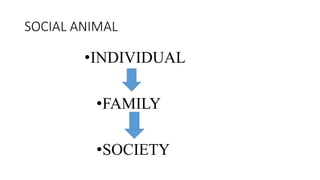
SOCIAL ANIMAL
•INDIVIDUAL
•FAMILY
•SOCIETY
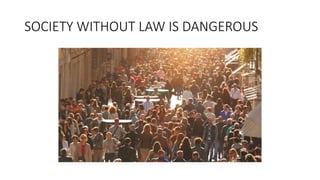
SOCIETY WITHOUT LAW IS DANGEROUS
LAW OF CONTRACTS
After effects of not having a Legal System
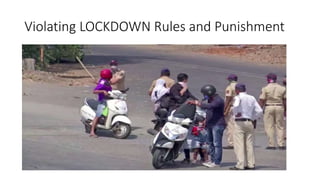
Violating LOCKDOWN Rules and Punishment
Law in British Ruled India
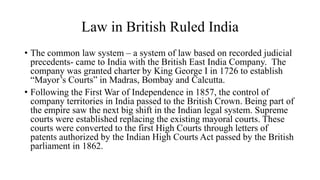
• The common law system – a system of law based on recorded judicial
precedents- came to India with the British East India Company. The
company was granted charter by King George I in 1726 to establish
“Mayor’s Courts” in Madras, Bombay and Calcutta.
• Following the First War of Independence in 1857, the control of
company territories in India passed to the British Crown. Being part of
the empire saw the next big shift in the Indian legal system. Supreme
courts were established replacing the existing mayoral courts. These
courts were converted to the first High Courts through letters of
patents authorized by the Indian High Courts Act passed by the British
parliament in 1862.
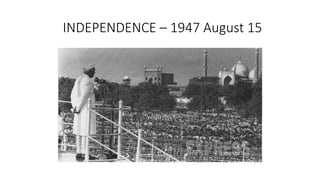
INDEPENDENCE – 1947 August 15
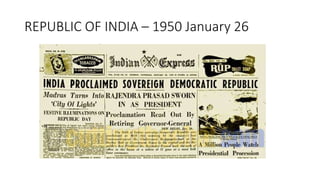
REPUBLIC OF INDIA – 1950 January 26
INDIAN CONSTITUTION – PREAMBLE
• The Chief Justice is appointed by the President of India
• The first Chief Justice was Sir Maurice Gwyer and the other two
judges were Sir Shah Muhammad Sulaiman and M. R. Jayakar. It
functioned until the establishment of the Supreme Court of India on
28 January 1950.
• President Ram Nath Kovind administers the oath of office
to Justice Sharad Arvind Bobde after he was appointed as the
47th Chief Justice of India (CJI) at Rashtrapati Bhavan, in New
Delhi.
Meaning
•Law means “SET OF RULES” of conduct
RECOGNISED and ENFORCED by the
STATE to control and REGULATE the
CONDUCT OF PEOPLE, to PROTECT
their PROPERTY and CONTRACTUAL
rights with a view to securing JUSTICE,
PEACEFUL LIVING and SOCIAL
SECURITY.
In short
• Law means
• RULES
• REGULATIONS
• GUIDELINES
• PRINCIPLES
• Which regulate the relations of citizens with STATE and between one
CITIZEN and OTHER
Law - Importance / Need / Purpose/ Functions
• Serves as a norm of conduct
• Keeps the society running
• Act as guideline
• Easy adoption of change
• Gives protections to the victims
• Promoting common good
• Resolving disputes over limited resources
• Encouraging people to do the right thing
International Law
• Public Law
• Private Law
MUNICIPAL LAW
PUBLIC LAW
• CONSTITUIONAL LAW
• ADINISTRATIVE LAW
• CRIMINAL LAW
PRIVATE LAW
•PERSONAL LAW
•PROPERTY LAW
•LAW OF OBLIGATION
MERCANTILE LAW – IMPORTANCE
•Bring definiteness in commercial dealings
•Determines the validity of a contract
•Deals with different types of contracts
•Serves as a vehicle of social change
•Establishes socio-economic justice
•Helps to maintain order
•Helps to regulate the activities of individuals
Sources of Mercantile Law
• The English Mercantile Law
• Indian statute law
• Judicial decisions
• Customs and usage
Some Mercantile Acts
• The Companies Act 2013
• The Partnership Act 1932
• The Information Technology Act 2000
• The Foreign Exchange Management Act 1999
• The Competition Act 2002
• The Consumer Protection Act 1986
• The Factories Act 1948
• The Employees Compensation Act 1923
• The Right to Information Act 2005

Introduction to LAW

  • 1.
  • 2.
  • 3.
  • 4.
    SOCIETY WITHOUT LAWIS DANGEROUS
  • 5.
  • 6.
    After effects ofnot having a Legal System
  • 7.
  • 8.
    Law in BritishRuled India • The common law system – a system of law based on recorded judicial precedents- came to India with the British East India Company. The company was granted charter by King George I in 1726 to establish “Mayor’s Courts” in Madras, Bombay and Calcutta. • Following the First War of Independence in 1857, the control of company territories in India passed to the British Crown. Being part of the empire saw the next big shift in the Indian legal system. Supreme courts were established replacing the existing mayoral courts. These courts were converted to the first High Courts through letters of patents authorized by the Indian High Courts Act passed by the British parliament in 1862.
  • 9.
  • 10.
    REPUBLIC OF INDIA– 1950 January 26
  • 11.
  • 14.
    • The ChiefJustice is appointed by the President of India • The first Chief Justice was Sir Maurice Gwyer and the other two judges were Sir Shah Muhammad Sulaiman and M. R. Jayakar. It functioned until the establishment of the Supreme Court of India on 28 January 1950. • President Ram Nath Kovind administers the oath of office to Justice Sharad Arvind Bobde after he was appointed as the 47th Chief Justice of India (CJI) at Rashtrapati Bhavan, in New Delhi.
  • 15.
    Meaning •Law means “SETOF RULES” of conduct RECOGNISED and ENFORCED by the STATE to control and REGULATE the CONDUCT OF PEOPLE, to PROTECT their PROPERTY and CONTRACTUAL rights with a view to securing JUSTICE, PEACEFUL LIVING and SOCIAL SECURITY.
  • 16.
    In short • Lawmeans • RULES • REGULATIONS • GUIDELINES • PRINCIPLES • Which regulate the relations of citizens with STATE and between one CITIZEN and OTHER
  • 17.
    Law - Importance/ Need / Purpose/ Functions • Serves as a norm of conduct • Keeps the society running • Act as guideline • Easy adoption of change • Gives protections to the victims • Promoting common good • Resolving disputes over limited resources • Encouraging people to do the right thing
  • 18.
    International Law • PublicLaw • Private Law
  • 19.
  • 20.
    PUBLIC LAW • CONSTITUIONALLAW • ADINISTRATIVE LAW • CRIMINAL LAW
  • 21.
  • 22.
    MERCANTILE LAW –IMPORTANCE •Bring definiteness in commercial dealings •Determines the validity of a contract •Deals with different types of contracts •Serves as a vehicle of social change •Establishes socio-economic justice •Helps to maintain order •Helps to regulate the activities of individuals
  • 23.
    Sources of MercantileLaw • The English Mercantile Law • Indian statute law • Judicial decisions • Customs and usage
  • 24.
    Some Mercantile Acts •The Companies Act 2013 • The Partnership Act 1932 • The Information Technology Act 2000 • The Foreign Exchange Management Act 1999 • The Competition Act 2002 • The Consumer Protection Act 1986 • The Factories Act 1948 • The Employees Compensation Act 1923 • The Right to Information Act 2005