Introduction to
HVAC,Components of
AHU and its Functioning
Presented by : Hari Sankar CR
1
2
What is HVAC?
HEATING Heating the air during cold weather
VENTILATION Fresh air circulation
AIR CONDITIONING Cooling of air, purification and maintain
moisture level for human comfort
3
Why Do We Need HVAC?
1. Comfort
HVAC systems regulate temperature to keep indoor spaces warm in winter and cool in
summer.
2. Indoor Air Quality
HVAC systems filter and circulate air, removing dust, and pollutants.
3. Health & Safety
Poor air circulation and temperature extremes can lead to health problems like
respiratory issues
4. Energy Efficiency
Modern HVAC systems reduce energy waste, saving money.
5. Protecting Property & Equipment
HVAC maintains proper humidity and temperature levels, protecting electronics,
furniture, and sensitive materials.
Common
HVAC units
• Split AC
• Fan Coil Unit (FCU)
• Chillers
• Air Handling Unit (AHU)
• Package Air Conditioning Unit (PACU)
• WINDOW AC
• VRF
4
5
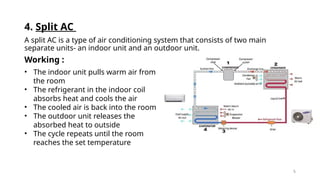
4. Split AC
A split AC is a type of air conditioning system that consists of two main
separate units- an indoor unit and an outdoor unit.
Working :
• The indoor unit pulls warm air from
the room
• The refrigerant in the indoor coil
absorbs heat and cools the air
• The cooled air is back into the room
• The outdoor unit releases the
absorbed heat to outside
• The cycle repeats until the room
reaches the set temperature
6
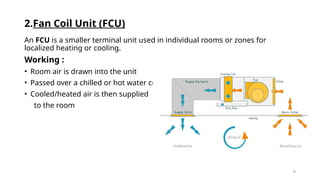
2.Fan Coil Unit (FCU)
An FCU is a smaller terminal unit used in individual rooms or zones for
localized heating or cooling.
Working :
• Room air is drawn into the unit
• Passed over a chilled or hot water coil
• Cooled/heated air is then supplied
to the room
7
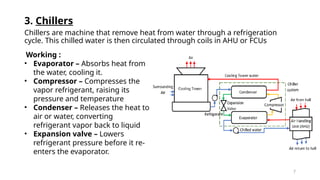
3. Chillers
Chillers are machine that remove heat from water through a refrigeration
cycle. This chilled water is then circulated through coils in AHU or FCUs
Working :
• Evaporator – Absorbs heat from
the water, cooling it.
• Compressor – Compresses the
vapor refrigerant, raising its
pressure and temperature
• Condenser – Releases the heat to
air or water, converting
refrigerant vapor back to liquid
• Expansion valve – Lowers
refrigerant pressure before it re-
enters the evaporator.
8
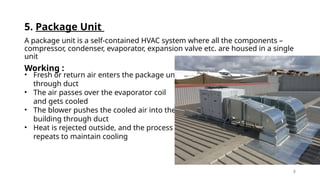
5. Package Unit
A package unit is a self-contained HVAC system where all the components –
compressor, condenser, evaporator, expansion valve etc. are housed in a single
unit
Working :
• Fresh or return air enters the package unit
through duct
• The air passes over the evaporator coil
and gets cooled
• The blower pushes the cooled air into the
building through duct
• Heat is rejected outside, and the process
repeats to maintain cooling
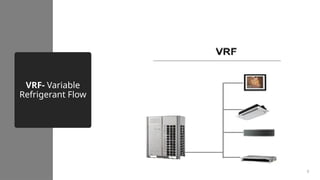
VRF- Variable
Refrigerant Flow
9
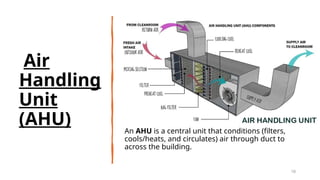
Air
Handling
Unit
(AHU) An AHU is a central unit that conditions (filters,
cools/heats, and circulates) air through duct to
across the building.
10
Component
s
11
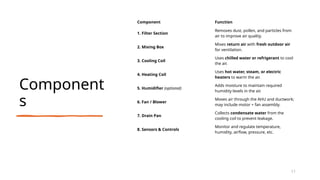
Component Function
1. Filter Section
Removes dust, pollen, and particles from
air to improve air quality.
2. Mixing Box
Mixes return air with fresh outdoor air
for ventilation.
3. Cooling Coil
Uses chilled water or refrigerant to cool
the air.
4. Heating Coil
Uses hot water, steam, or electric
heaters to warm the air.
5. Humidifier (optional)
Adds moisture to maintain required
humidity levels in the air.
6. Fan / Blower
Moves air through the AHU and ductwork;
may include motor + fan assembly.
7. Drain Pan
Collects condensate water from the
cooling coil to prevent leakage.
8. Sensors & Controls
Monitor and regulate temperature,
humidity, airflow, pressure, etc.
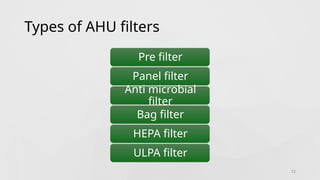
Types of AHU filters
12
Pre filter
Panel filter
Anti microbial
filter
Bag filter
HEPA filter
ULPA filter
13
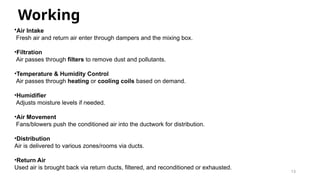
Working
•Air Intake
Fresh air and return air enter through dampers and the mixing box.
•Filtration
Air passes through filters to remove dust and pollutants.
•Temperature & Humidity Control
Air passes through heating or cooling coils based on demand.
•Humidifier
Adjusts moisture levels if needed.
•Air Movement
Fans/blowers push the conditioned air into the ductwork for distribution.
•Distribution
Air is delivered to various zones/rooms via ducts.
•Return Air
Used air is brought back via return ducts, filtered, and reconditioned or exhausted.

14

Introduction to Hvac,Components of AHU and its functioning

  • 1.
    Introduction to HVAC,Components of AHUand its Functioning Presented by : Hari Sankar CR 1
  • 2.
    2 What is HVAC? HEATINGHeating the air during cold weather VENTILATION Fresh air circulation AIR CONDITIONING Cooling of air, purification and maintain moisture level for human comfort
  • 3.
    3 Why Do WeNeed HVAC? 1. Comfort HVAC systems regulate temperature to keep indoor spaces warm in winter and cool in summer. 2. Indoor Air Quality HVAC systems filter and circulate air, removing dust, and pollutants. 3. Health & Safety Poor air circulation and temperature extremes can lead to health problems like respiratory issues 4. Energy Efficiency Modern HVAC systems reduce energy waste, saving money. 5. Protecting Property & Equipment HVAC maintains proper humidity and temperature levels, protecting electronics, furniture, and sensitive materials.
  • 4.
    Common HVAC units • SplitAC • Fan Coil Unit (FCU) • Chillers • Air Handling Unit (AHU) • Package Air Conditioning Unit (PACU) • WINDOW AC • VRF 4
  • 5.
    5 4. Split AC Asplit AC is a type of air conditioning system that consists of two main separate units- an indoor unit and an outdoor unit. Working : • The indoor unit pulls warm air from the room • The refrigerant in the indoor coil absorbs heat and cools the air • The cooled air is back into the room • The outdoor unit releases the absorbed heat to outside • The cycle repeats until the room reaches the set temperature
  • 6.
    6 2.Fan Coil Unit(FCU) An FCU is a smaller terminal unit used in individual rooms or zones for localized heating or cooling. Working : • Room air is drawn into the unit • Passed over a chilled or hot water coil • Cooled/heated air is then supplied to the room
  • 7.
    7 3. Chillers Chillers aremachine that remove heat from water through a refrigeration cycle. This chilled water is then circulated through coils in AHU or FCUs Working : • Evaporator – Absorbs heat from the water, cooling it. • Compressor – Compresses the vapor refrigerant, raising its pressure and temperature • Condenser – Releases the heat to air or water, converting refrigerant vapor back to liquid • Expansion valve – Lowers refrigerant pressure before it re- enters the evaporator.
  • 8.
    8 5. Package Unit Apackage unit is a self-contained HVAC system where all the components – compressor, condenser, evaporator, expansion valve etc. are housed in a single unit Working : • Fresh or return air enters the package unit through duct • The air passes over the evaporator coil and gets cooled • The blower pushes the cooled air into the building through duct • Heat is rejected outside, and the process repeats to maintain cooling
  • 9.
  • 10.
    Air Handling Unit (AHU) An AHUis a central unit that conditions (filters, cools/heats, and circulates) air through duct to across the building. 10
  • 11.
    Component s 11 Component Function 1. FilterSection Removes dust, pollen, and particles from air to improve air quality. 2. Mixing Box Mixes return air with fresh outdoor air for ventilation. 3. Cooling Coil Uses chilled water or refrigerant to cool the air. 4. Heating Coil Uses hot water, steam, or electric heaters to warm the air. 5. Humidifier (optional) Adds moisture to maintain required humidity levels in the air. 6. Fan / Blower Moves air through the AHU and ductwork; may include motor + fan assembly. 7. Drain Pan Collects condensate water from the cooling coil to prevent leakage. 8. Sensors & Controls Monitor and regulate temperature, humidity, airflow, pressure, etc.
  • 12.
    Types of AHUfilters 12 Pre filter Panel filter Anti microbial filter Bag filter HEPA filter ULPA filter
  • 13.
    13 Working •Air Intake Fresh airand return air enter through dampers and the mixing box. •Filtration Air passes through filters to remove dust and pollutants. •Temperature & Humidity Control Air passes through heating or cooling coils based on demand. •Humidifier Adjusts moisture levels if needed. •Air Movement Fans/blowers push the conditioned air into the ductwork for distribution. •Distribution Air is delivered to various zones/rooms via ducts. •Return Air Used air is brought back via return ducts, filtered, and reconditioned or exhausted.
  • 14.