An Introduction to Drama
Dr. Amal Riyadh Kitishat
Al Balqa Applied University
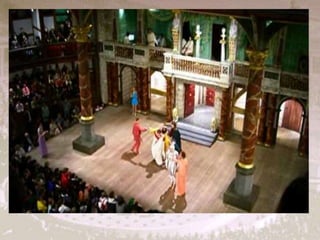
What is a play
A play is a representation of human beings
“in action.” But “action” does not mean
mere physical movement, it includes
psychological motivations that lie behind
visible behavior. The dramatic action
incorporates what is actively done and the
purpose for which it is done.
What is a play
• A drama, or a play, is a piece of writing that is
presented almost exclusively through dialogue
• Like a short story or novel, it has a setting,
characters, plot and even symbolism.
• A play is meant to be performed in front of an
audience, not read.
Elements of Drama
According to Aristotle there are six elements:
* Plot
* Character
* Thought
* Diction
* Music
* Spectacle
Plot
Plot is often considered merely the
summary of a play’s incidents, but-
though it includes the story line - it also
refers to the organization of all the
elements into a meaningful pattern. Plot
is thus the overall structure of a play. It
has a beginning, a middle and an end.
Plot
• Plot refers to the sequence of events inside a
story which affect other events through the
principle of cause and effect.
• Aristotle in The POETICS considered plot or
mythos as the most important element of drama,
even more important than character.
• (main plot / sub-plot)
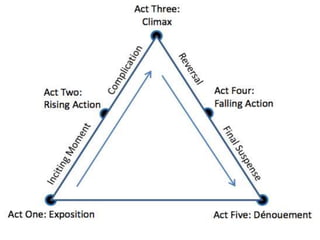
Plot Structure
*Exposition
*Rising Action
*Crisis, Climax
*Falling Action
*Resolution, Denouement
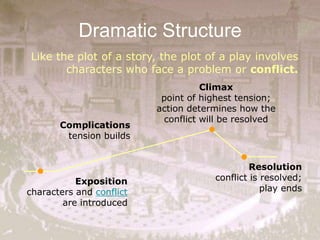
Like the plot of a story, the plot of a play involves
characters who face a problem or conflict.
Climax
point of highest tension;
action determines how the
conflict will be resolved
Resolution
conflict is resolved;
play ends
Complications
tension builds
Exposition
characters and conflict
are introduced
Dramatic Structure
Character and Characterization
Character is the primary material from which plots are
created, for incidents are developed through the
speech and behavior of dramatic personages.
Characterization is the playwright’s means of
differentiating one personage from another. It may be
divided into four levels.
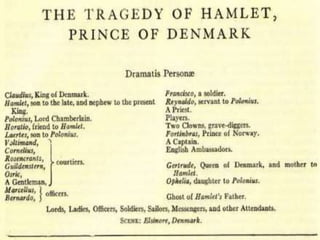
Dramatic Personae
Levels of characterization
* Physical
* Social
* Psychological
* Moral
Physical
Basic facts as:
* Sex
* Age
* Size
* Coloration
Social
The factors that place a
character in a particular
environment.
* Economic status
* Profession
* Trade
* Religion
* Family relationships
Psychological
The inner workings of the mind:
* A character’s habitual responses
* Desires
* Motivations
* Likes
* Dislikes
Since drama most often arises from conflicting
desires, the psychological is the most
essential level of characterization.
Moral
*It is most fully developed in serious
plays.
• It reveals what characters are willing
to do to get what they want (as
opposed to what they have said they
or others should do in such situations).
*Moral decisions differentiate characters
more fully than any other type.
A playwright can emphasize one or more
of these levels and may assign many or
few traits, depending on how the
character functions in the play.
*Minor characters
*Principal characters
The principal characters need to be
drawn in considerable depth.
How Characters Function in a Play?
A characterisrevealedinseveralways:
How can we judge /evaluate a character?
* Through descriptions in stage directions an
* What the character says
* What others in the play say and, most impo
* Through what the character does.
Thought
Sometimes the author’s intention is
clearly stated in the script.
Dramatists in different periods have used
various devices to project ideas:
* Direct statement:
chorus, soliloquies, asides
* Allegory
* Symbol.
Diction
Language ( diction) is the
playwright’s primary means of
expression.
The basic criterion for judging
diction is its appropriateness to
the characters, the situation, the
level of probability, and the type
of play.
Music
Music, as we ordinarily understand
the term, does not occur in every
play. But if the term is extended
to include all patterned sound, it
is an important ingredient in every
production.
Music (cont.)
The performers- through the elements of
pitch, stress, volume, tempo, duration,
and quality- transform print into sound.
It is through these elements that
meaning is conveyed.
In addition to the sound of the actors’
voices, a play may also use music in
the form of incidental songs and
background music.
Spectacle
The visual elements of a production:
* the movement and spatial relations
of characters
* lighting
* settings
* costumes
* properties
Spectacle (cont.)
The reader of a script must try to
envision the spectacle in order to grasp
a play’s full power.
Many older plays contain almost no stage
directions, and all clues must be
sought in the dialogue to help the
reader visualize the action.
Stage Directions
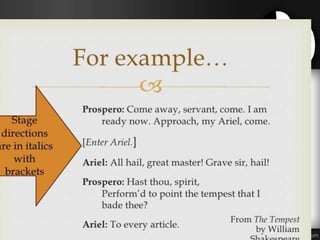
• Stage Direction: instructions for the director, the
performers, and the stage crew.
• These are printed in italics or are enclosed in
parentheses
• Many stage directions tell the actors how to
speak or move.
• They describe the scenery- all the decorations
on the stage that help create the setting.
Dialogue
• Dialogue: is the conversation between
characters.
• Both the plot of the play and the
characters’ personalities are revealed
through dialogue.
Forms of a Character’s Speech
• Dialogue: conversations of characters on
stage
• Monologue: long speech given by one
character to others
• Soliloquy: speech by a character alone
onstage to himself or herself or to the
audience
• Asides: remarks made to the audience or
to one character; the other characters
onstage do not hear an aside
Form in Drama
* Tragedy
* Comedy
* Tragicomedy
* Melodrama
* Farce
Form in Drama
(cont.)
Critics have divided plays into dramatic
forms on the basis of certain
characteristics, the most important of
which are type of action, overall tone,
and basic emotional appeals.
Throughout much of history, tragedy and
comedy have been considered the two
basic forms.
TRAGEDY
• Tragedy is a type of drama that shows the
downfall and destruction of a noble or
outstanding person, traditionally one who
possesses a character weakness called a tragic
flaw (discussed by Aristotle in The POETICS)
• Macbeth (ambition)
• Othello (jealousy)
• Hamlet (indecisiveness)
COMEDY
• Comedy is a type of drama intended to
interest and amuse the audience rather than
make them deeply concerned about events
that happen.
• The characters overcome some difficulties,
but they always overcome their ill fortune and
find happiness in the end.
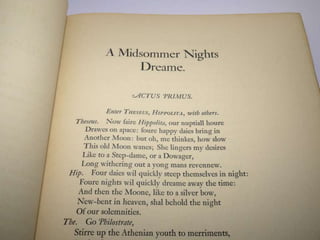
• A Midsummer’s Night Dream
• As You Like It
Tragicomedy
• Tragicomedy is a play that does not adhere
strictly to the structure of tragedy.
• This is usually serious play that also has some
of the qualities of comedy. It arouses thought
even with laughter.
• The Merchant of Venice
FARCE
• Farce is a play that brings laughter for the sake
of laughter, usually making use of grossly
embellished events and characters.
• It has very swift movements, has ridiculous
situations, and does not stimulate thought.
MELODRAMA
• Melodrama shows events that follow each
other rapidly, but seems to be governed
always by chance.
• The characters are victims in the hands of
merciless fate.
Introduction to Drama. part 1.ppt
  • 1.
    An Introduction toDrama Dr. Amal Riyadh Kitishat Al Balqa Applied University
  • 2.
    What is aplay A play is a representation of human beings “in action.” But “action” does not mean mere physical movement, it includes psychological motivations that lie behind visible behavior. The dramatic action incorporates what is actively done and the purpose for which it is done.
  • 3.
    What is aplay • A drama, or a play, is a piece of writing that is presented almost exclusively through dialogue • Like a short story or novel, it has a setting, characters, plot and even symbolism. • A play is meant to be performed in front of an audience, not read.
  • 5.
    Elements of Drama Accordingto Aristotle there are six elements: * Plot * Character * Thought * Diction * Music * Spectacle
  • 6.
    Plot Plot is oftenconsidered merely the summary of a play’s incidents, but- though it includes the story line - it also refers to the organization of all the elements into a meaningful pattern. Plot is thus the overall structure of a play. It has a beginning, a middle and an end.
  • 7.
    Plot • Plot refersto the sequence of events inside a story which affect other events through the principle of cause and effect. • Aristotle in The POETICS considered plot or mythos as the most important element of drama, even more important than character. • (main plot / sub-plot)
  • 8.
    Plot Structure *Exposition *Rising Action *Crisis,Climax *Falling Action *Resolution, Denouement
  • 9.
    Like the plotof a story, the plot of a play involves characters who face a problem or conflict. Climax point of highest tension; action determines how the conflict will be resolved Resolution conflict is resolved; play ends Complications tension builds Exposition characters and conflict are introduced Dramatic Structure
  • 11.
    Character and Characterization Characteris the primary material from which plots are created, for incidents are developed through the speech and behavior of dramatic personages. Characterization is the playwright’s means of differentiating one personage from another. It may be divided into four levels.
  • 12.
  • 14.
    Levels of characterization *Physical * Social * Psychological * Moral
  • 15.
    Physical Basic facts as: *Sex * Age * Size * Coloration
  • 16.
    Social The factors thatplace a character in a particular environment. * Economic status * Profession * Trade * Religion * Family relationships
  • 17.
    Psychological The inner workingsof the mind: * A character’s habitual responses * Desires * Motivations * Likes * Dislikes Since drama most often arises from conflicting desires, the psychological is the most essential level of characterization.
  • 18.
    Moral *It is mostfully developed in serious plays. • It reveals what characters are willing to do to get what they want (as opposed to what they have said they or others should do in such situations). *Moral decisions differentiate characters more fully than any other type.
  • 19.
    A playwright canemphasize one or more of these levels and may assign many or few traits, depending on how the character functions in the play. *Minor characters *Principal characters The principal characters need to be drawn in considerable depth. How Characters Function in a Play?
  • 20.
    A characterisrevealedinseveralways: How canwe judge /evaluate a character? * Through descriptions in stage directions an * What the character says * What others in the play say and, most impo * Through what the character does.
  • 21.
    Thought Sometimes the author’sintention is clearly stated in the script. Dramatists in different periods have used various devices to project ideas: * Direct statement: chorus, soliloquies, asides * Allegory * Symbol.
  • 22.
    Diction Language ( diction)is the playwright’s primary means of expression. The basic criterion for judging diction is its appropriateness to the characters, the situation, the level of probability, and the type of play.
  • 23.
    Music Music, as weordinarily understand the term, does not occur in every play. But if the term is extended to include all patterned sound, it is an important ingredient in every production.
  • 24.
    Music (cont.) The performers-through the elements of pitch, stress, volume, tempo, duration, and quality- transform print into sound. It is through these elements that meaning is conveyed. In addition to the sound of the actors’ voices, a play may also use music in the form of incidental songs and background music.
  • 25.
    Spectacle The visual elementsof a production: * the movement and spatial relations of characters * lighting * settings * costumes * properties
  • 26.
    Spectacle (cont.) The readerof a script must try to envision the spectacle in order to grasp a play’s full power. Many older plays contain almost no stage directions, and all clues must be sought in the dialogue to help the reader visualize the action.
  • 27.
    Stage Directions • StageDirection: instructions for the director, the performers, and the stage crew. • These are printed in italics or are enclosed in parentheses • Many stage directions tell the actors how to speak or move. • They describe the scenery- all the decorations on the stage that help create the setting.
  • 29.
    Dialogue • Dialogue: isthe conversation between characters. • Both the plot of the play and the characters’ personalities are revealed through dialogue.
  • 31.
    Forms of aCharacter’s Speech • Dialogue: conversations of characters on stage • Monologue: long speech given by one character to others • Soliloquy: speech by a character alone onstage to himself or herself or to the audience • Asides: remarks made to the audience or to one character; the other characters onstage do not hear an aside
  • 32.
    Form in Drama *Tragedy * Comedy * Tragicomedy * Melodrama * Farce
  • 33.
    Form in Drama (cont.) Criticshave divided plays into dramatic forms on the basis of certain characteristics, the most important of which are type of action, overall tone, and basic emotional appeals. Throughout much of history, tragedy and comedy have been considered the two basic forms.
  • 34.
    TRAGEDY • Tragedy isa type of drama that shows the downfall and destruction of a noble or outstanding person, traditionally one who possesses a character weakness called a tragic flaw (discussed by Aristotle in The POETICS) • Macbeth (ambition) • Othello (jealousy) • Hamlet (indecisiveness)
  • 35.
    COMEDY • Comedy isa type of drama intended to interest and amuse the audience rather than make them deeply concerned about events that happen. • The characters overcome some difficulties, but they always overcome their ill fortune and find happiness in the end. • A Midsummer’s Night Dream • As You Like It
  • 36.
    Tragicomedy • Tragicomedy isa play that does not adhere strictly to the structure of tragedy. • This is usually serious play that also has some of the qualities of comedy. It arouses thought even with laughter. • The Merchant of Venice
  • 37.
    FARCE • Farce isa play that brings laughter for the sake of laughter, usually making use of grossly embellished events and characters. • It has very swift movements, has ridiculous situations, and does not stimulate thought.
  • 38.
    MELODRAMA • Melodrama showsevents that follow each other rapidly, but seems to be governed always by chance. • The characters are victims in the hands of merciless fate.