Introduction to
Digital Logic
Circuits
Digital systems, such as computers, rely on logic circuits to
perform operations. These circuits can be divided into two
main categories: Combinational Logic and Sequential Logic.
by Utkarsh D P
Combinational Logic
Definition
Combinational logic circuits
produce outputs based solely
on their current inputs. The
output is a direct result of the
inputs, with no dependence on
past states.
Characteristics
These circuits do not have
memory elements, meaning
they do not store past input
values. This leads to a direct
output based on the current
inputs.
Examples
Common examples include
adders, subtractors,
multiplexers, and decoders.
These circuits perform specific
logical operations on the input
data.
Example: 4-bit Binary Adder
Circuit Description
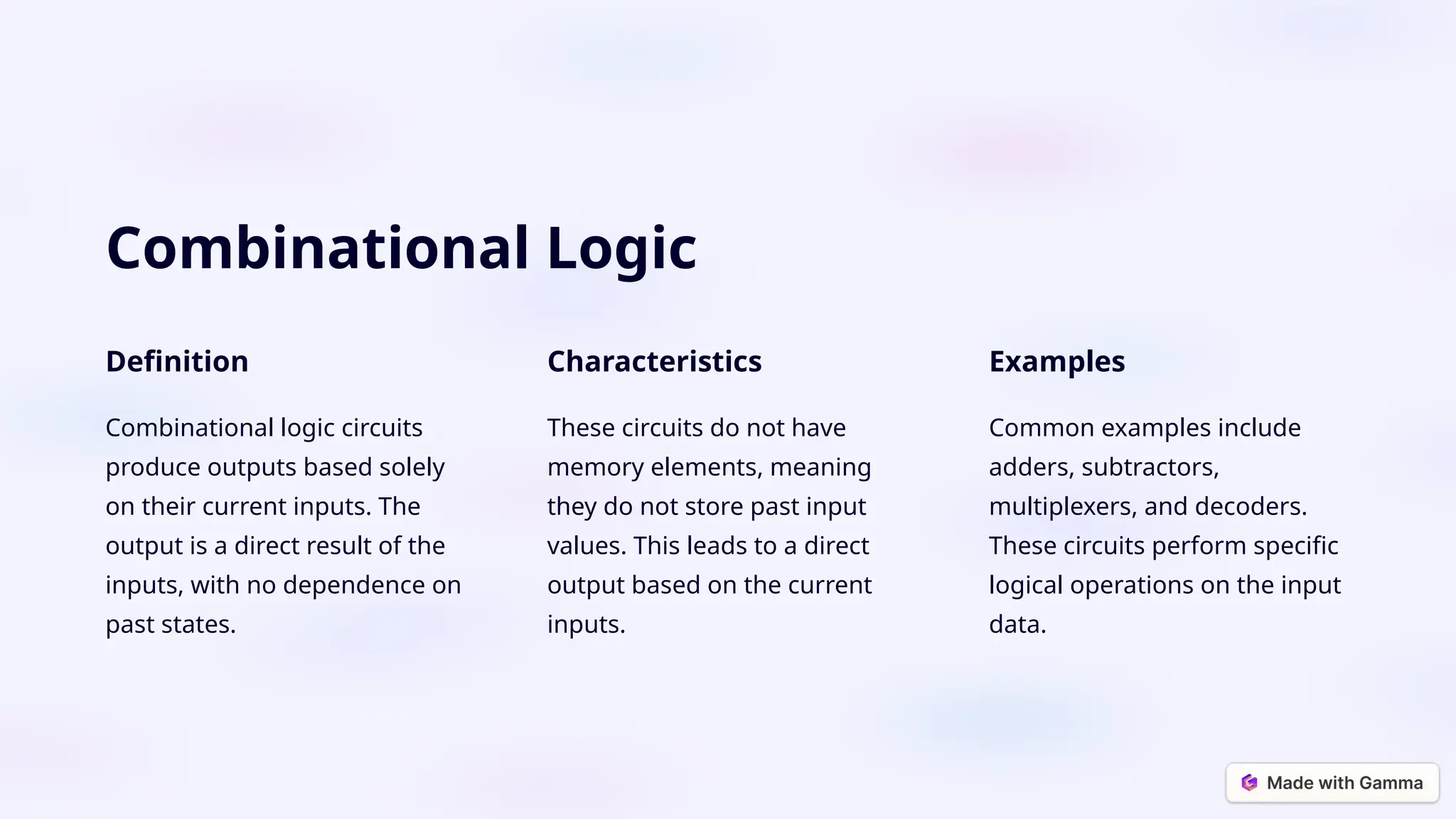
A 4-bit binary adder takes two 4-bit binary
numbers and adds them together. It produces a 4-
bit sum and a carry-out bit, representing the
potential overflow from the addition.
Real-Time Usage
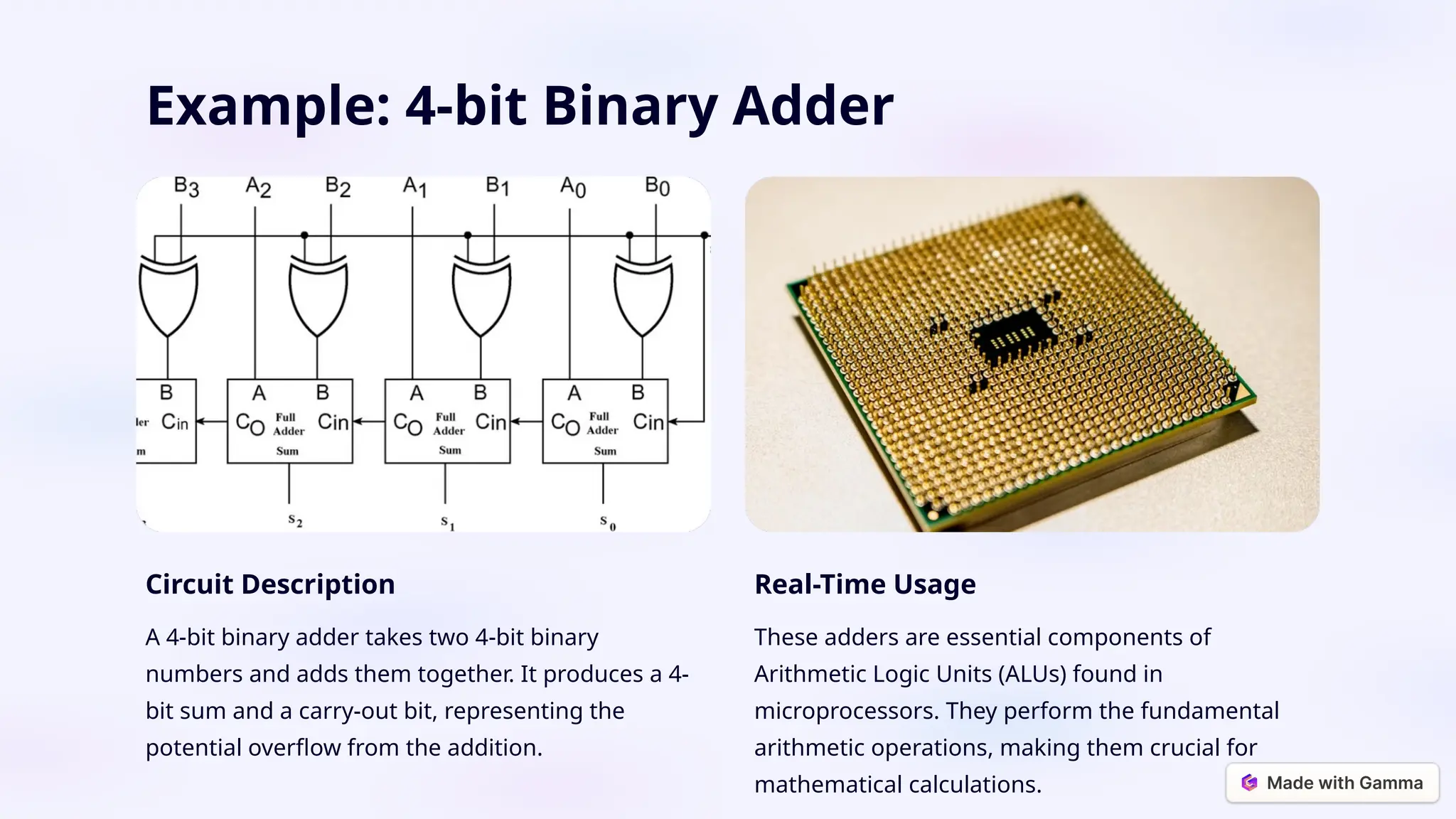
These adders are essential components of
Arithmetic Logic Units (ALUs) found in
microprocessors. They perform the fundamental
arithmetic operations, making them crucial for
mathematical calculations.
Sequential Logic
1 Definition
Sequential logic circuits differ from combinational logic by incorporating memory
elements. These elements, such as flip-flops and registers, allow the circuit to retain
information about past input states.
2 Characteristics
The outputs of sequential logic circuits depend not only on the current inputs but also on
the sequence of past inputs. The memory elements store information, influencing the
circuit's behavior.
3 Examples
Counters, shift registers, and memory units are examples of sequential logic circuits.
They utilize memory elements to perform functions like counting, data shifting, and data
storage.
4 Key Difference
The key difference between combinational and sequential logic lies in their reliance on
memory elements. Combinational logic circuits lack memory, while sequential logic
circuits incorporate memory elements for storing past states.
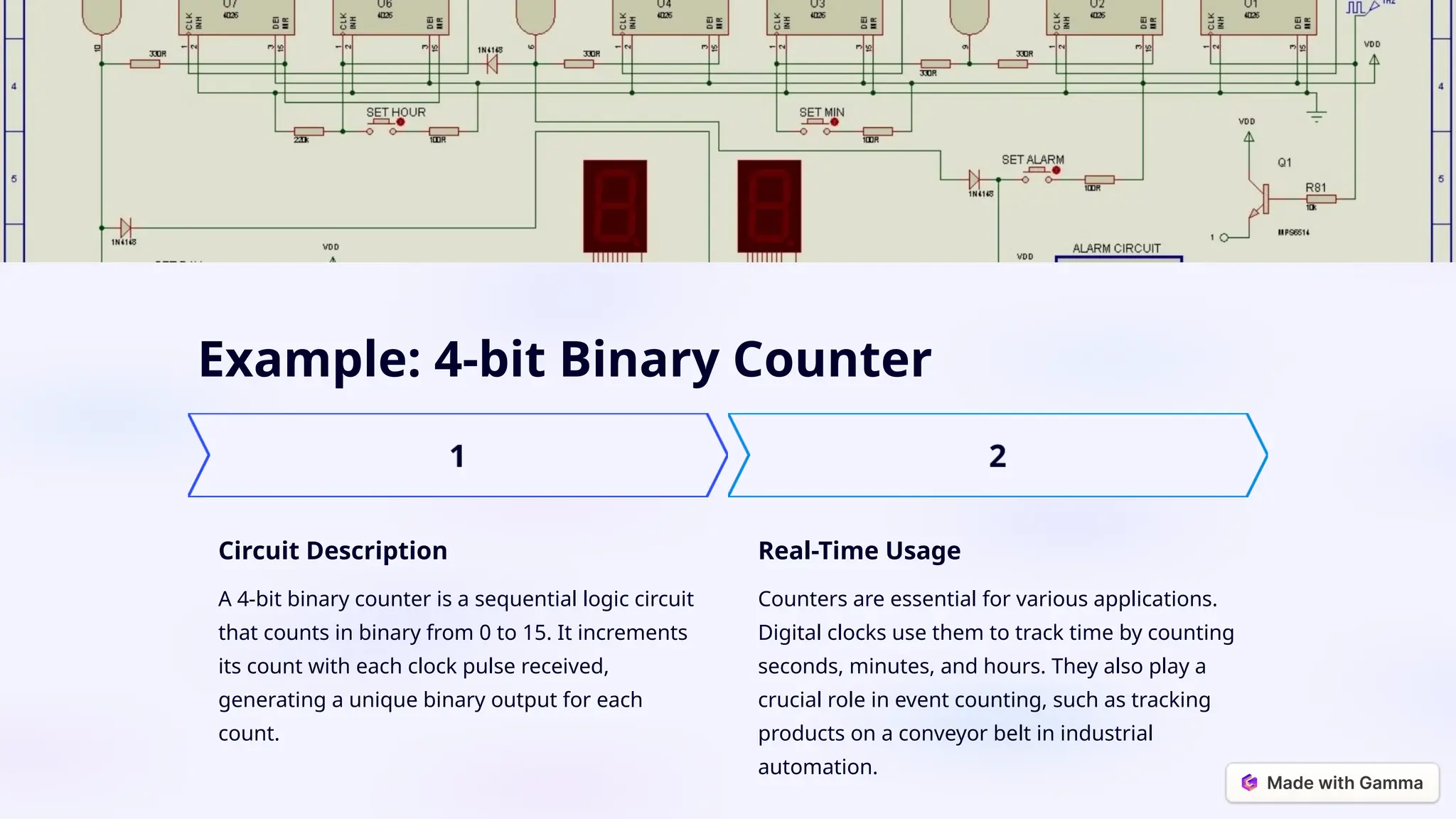
Example: 4-bit Binary Counter
Circuit Description
A 4-bit binary counter is a sequential logic circuit
that counts in binary from 0 to 15. It increments
its count with each clock pulse received,
generating a unique binary output for each
count.
Real-Time Usage
Counters are essential for various applications.
Digital clocks use them to track time by counting
seconds, minutes, and hours. They also play a
crucial role in event counting, such as tracking
products on a conveyor belt in industrial
automation.
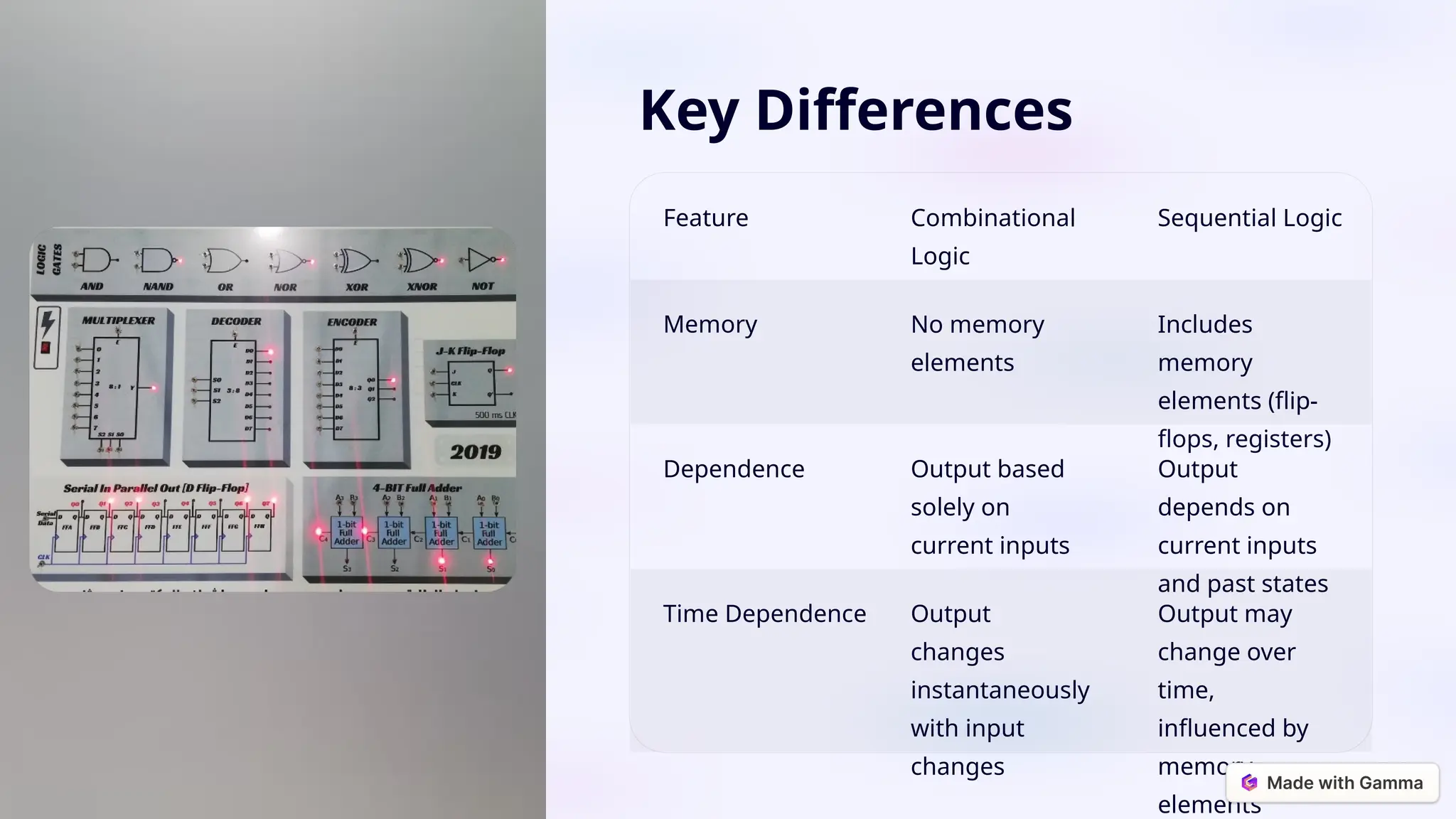
Key Differences
Feature Combinational
Logic
Sequential Logic
Memory No memory
elements
Includes
memory
elements (flip-
flops, registers)
Dependence Output based
solely on
current inputs
Output
depends on
current inputs
and past states
Time Dependence Output
changes
instantaneously
with input
changes
Output may
change over
time,
influenced by
memory
elements
Applications of Logic Circuits
Multiplexers
Multiplexers play a vital role in communication systems. They act as data routers, allowing
multiple input sources to be directed to a single output channel. This capability is essential
for managing data flow in complex systems.
Decoders
Decoders are crucial for memory addressing in computer systems. They convert a binary
input into a unique output signal, selecting specific memory locations for data access. This
process ensures accurate data retrieval and storage.
Shift Registers
Shift registers, a type of sequential logic circuit, are widely used in data storage and
transfer. They facilitate the movement of data bits between different locations, enabling
serial-to-parallel data conversion and other essential operations.
Memory Units
Memory units, like RAM in computers, are indispensable for storing data and instructions.
These units, built using sequential logic, provide the essential storage capacity for digital
systems to function.
Conclusion
Understanding the fundamental differences between combinational and sequential logic is crucial for
anyone working with digital systems. Each type of logic has unique characteristics and applications, playing
a vital role in shaping the functionality of computers and other electronic devices.

Introduction-to-Digital-Logic-Circuits.pptx

  • 1.
    Introduction to Digital Logic Circuits Digitalsystems, such as computers, rely on logic circuits to perform operations. These circuits can be divided into two main categories: Combinational Logic and Sequential Logic. by Utkarsh D P
  • 2.
    Combinational Logic Definition Combinational logiccircuits produce outputs based solely on their current inputs. The output is a direct result of the inputs, with no dependence on past states. Characteristics These circuits do not have memory elements, meaning they do not store past input values. This leads to a direct output based on the current inputs. Examples Common examples include adders, subtractors, multiplexers, and decoders. These circuits perform specific logical operations on the input data.
  • 3.
    Example: 4-bit BinaryAdder Circuit Description A 4-bit binary adder takes two 4-bit binary numbers and adds them together. It produces a 4- bit sum and a carry-out bit, representing the potential overflow from the addition. Real-Time Usage These adders are essential components of Arithmetic Logic Units (ALUs) found in microprocessors. They perform the fundamental arithmetic operations, making them crucial for mathematical calculations.
  • 4.
    Sequential Logic 1 Definition Sequentiallogic circuits differ from combinational logic by incorporating memory elements. These elements, such as flip-flops and registers, allow the circuit to retain information about past input states. 2 Characteristics The outputs of sequential logic circuits depend not only on the current inputs but also on the sequence of past inputs. The memory elements store information, influencing the circuit's behavior. 3 Examples Counters, shift registers, and memory units are examples of sequential logic circuits. They utilize memory elements to perform functions like counting, data shifting, and data storage. 4 Key Difference The key difference between combinational and sequential logic lies in their reliance on memory elements. Combinational logic circuits lack memory, while sequential logic circuits incorporate memory elements for storing past states.
  • 5.
    Example: 4-bit BinaryCounter Circuit Description A 4-bit binary counter is a sequential logic circuit that counts in binary from 0 to 15. It increments its count with each clock pulse received, generating a unique binary output for each count. Real-Time Usage Counters are essential for various applications. Digital clocks use them to track time by counting seconds, minutes, and hours. They also play a crucial role in event counting, such as tracking products on a conveyor belt in industrial automation.
  • 6.
    Key Differences Feature Combinational Logic SequentialLogic Memory No memory elements Includes memory elements (flip- flops, registers) Dependence Output based solely on current inputs Output depends on current inputs and past states Time Dependence Output changes instantaneously with input changes Output may change over time, influenced by memory elements
  • 7.
    Applications of LogicCircuits Multiplexers Multiplexers play a vital role in communication systems. They act as data routers, allowing multiple input sources to be directed to a single output channel. This capability is essential for managing data flow in complex systems. Decoders Decoders are crucial for memory addressing in computer systems. They convert a binary input into a unique output signal, selecting specific memory locations for data access. This process ensures accurate data retrieval and storage. Shift Registers Shift registers, a type of sequential logic circuit, are widely used in data storage and transfer. They facilitate the movement of data bits between different locations, enabling serial-to-parallel data conversion and other essential operations. Memory Units Memory units, like RAM in computers, are indispensable for storing data and instructions. These units, built using sequential logic, provide the essential storage capacity for digital systems to function.
  • 8.
    Conclusion Understanding the fundamentaldifferences between combinational and sequential logic is crucial for anyone working with digital systems. Each type of logic has unique characteristics and applications, playing a vital role in shaping the functionality of computers and other electronic devices.