1.
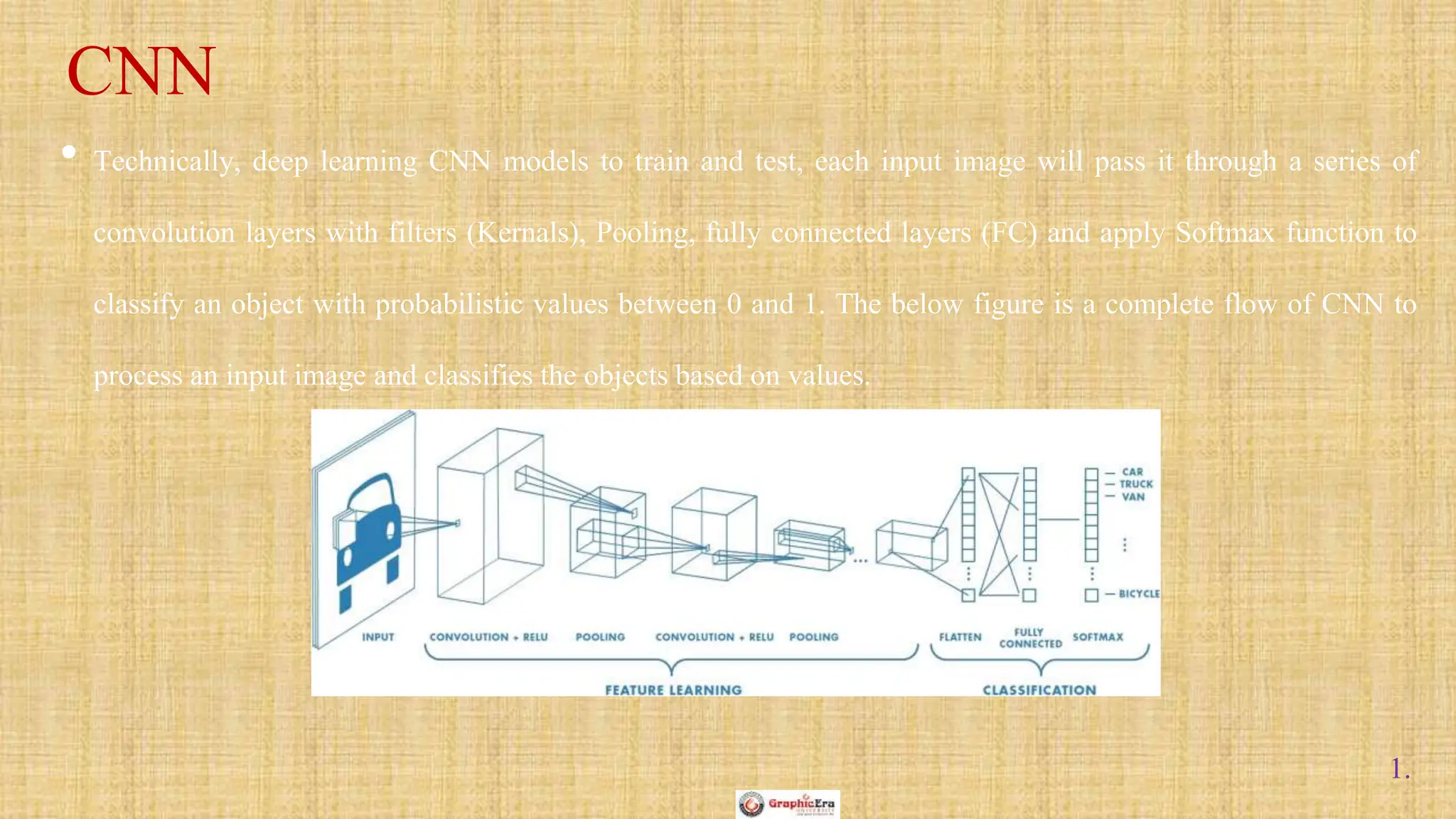
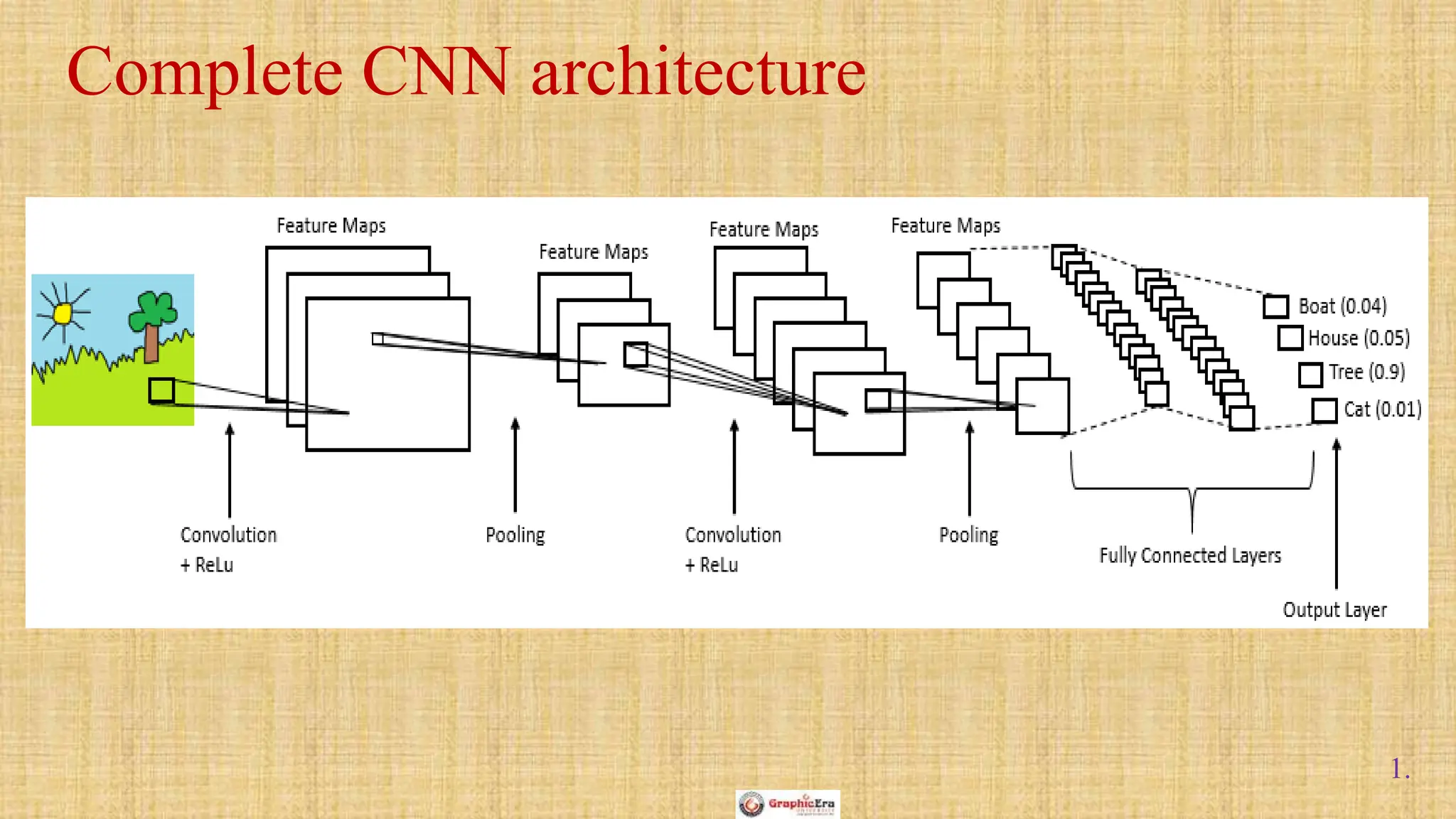
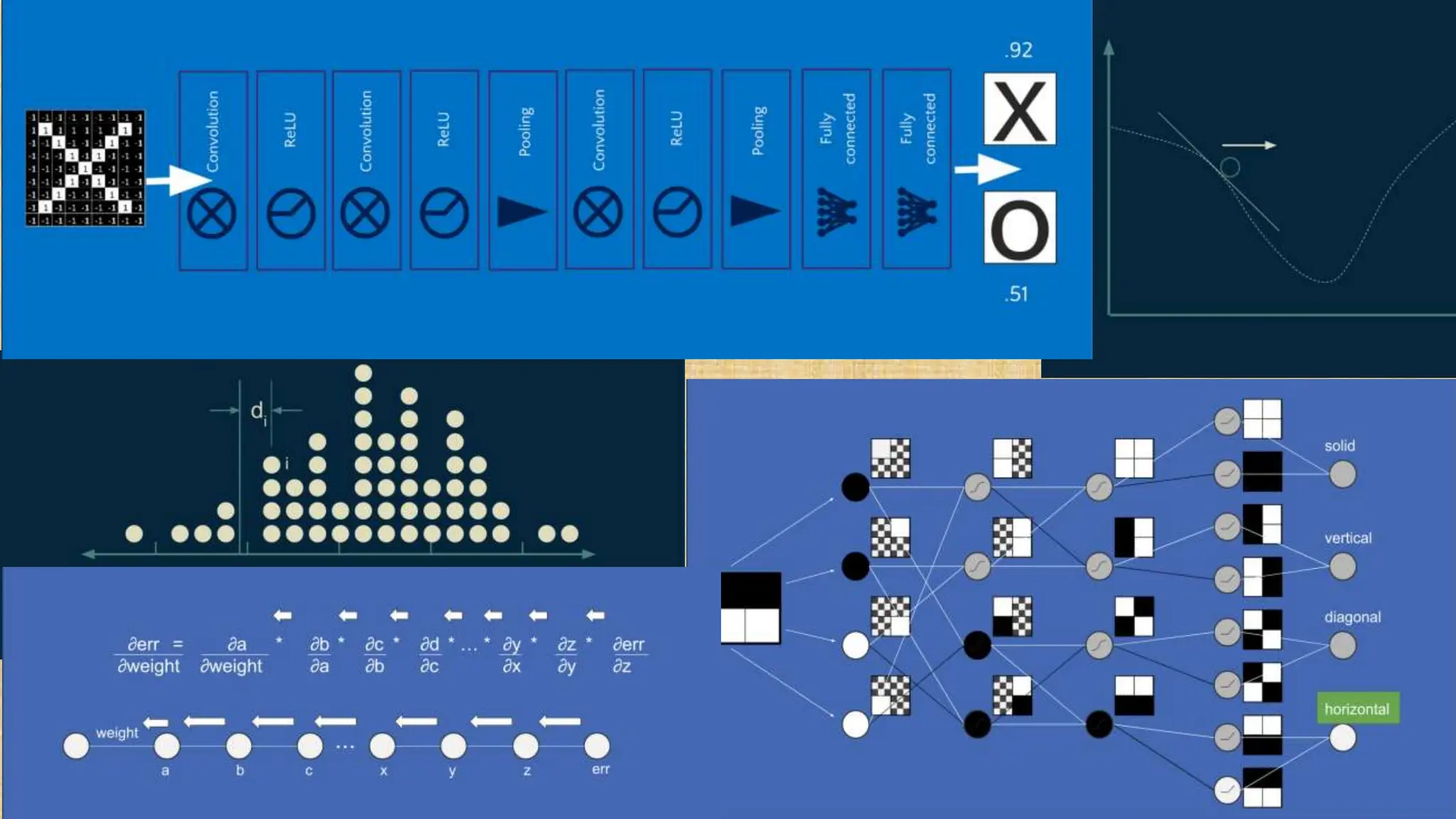
• Technically, deep learning CNN models to train and test, each input image will pass it through a series of
convolution layers with filters (Kernals), Pooling, fully connected layers (FC) and apply Softmax function to
classify an object with probabilistic values between 0 and 1. The below figure is a complete flow of CNN to
process an input image and classifies the objects based on values.
CNN
1.
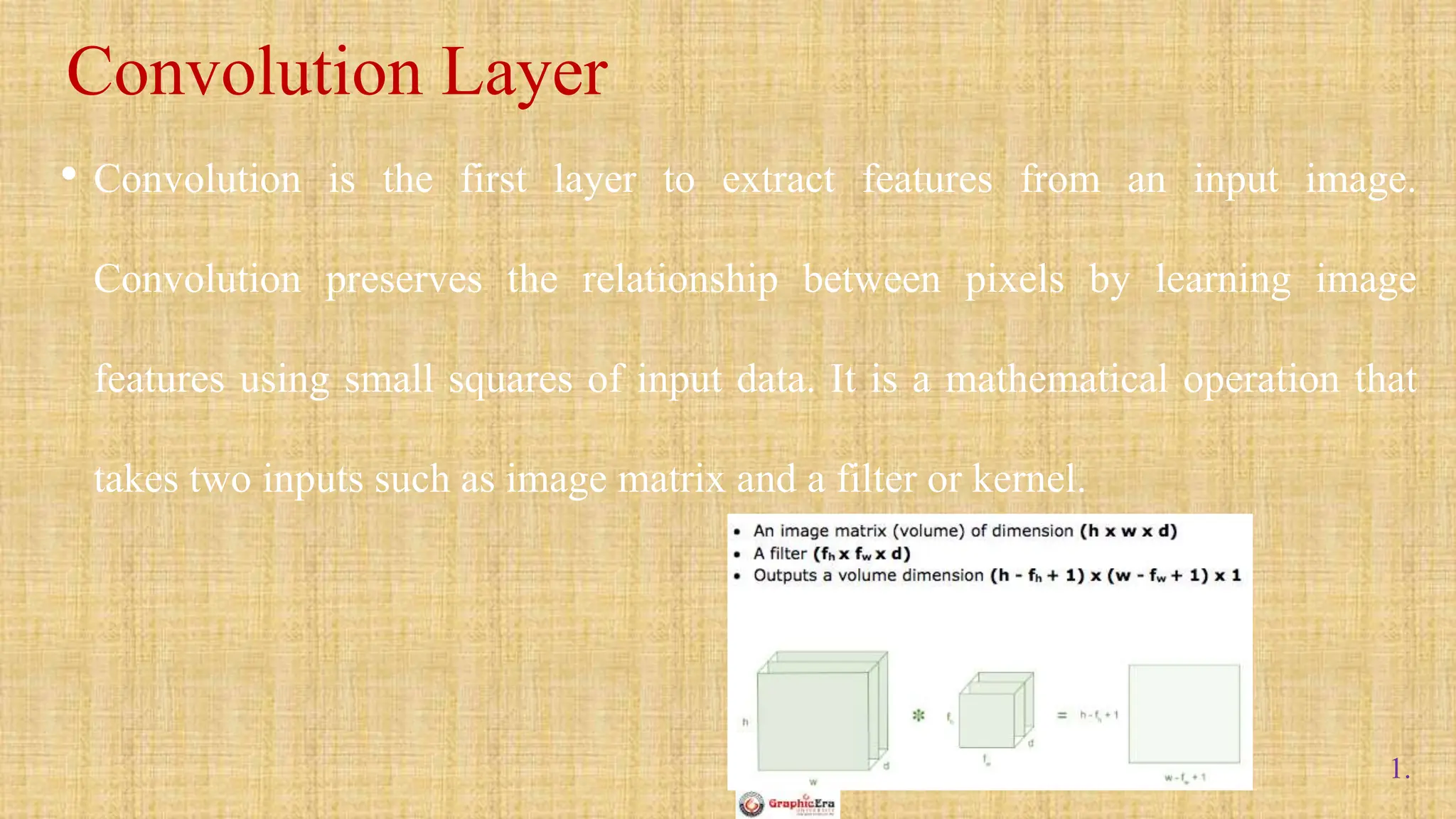
• Convolution is the first layer to extract features from an input image.
Convolution preserves the relationship between pixels by learning image
features using small squares of input data. It is a mathematical operation that
takes two inputs such as image matrix and a filter or kernel.
Convolution Layer
1.
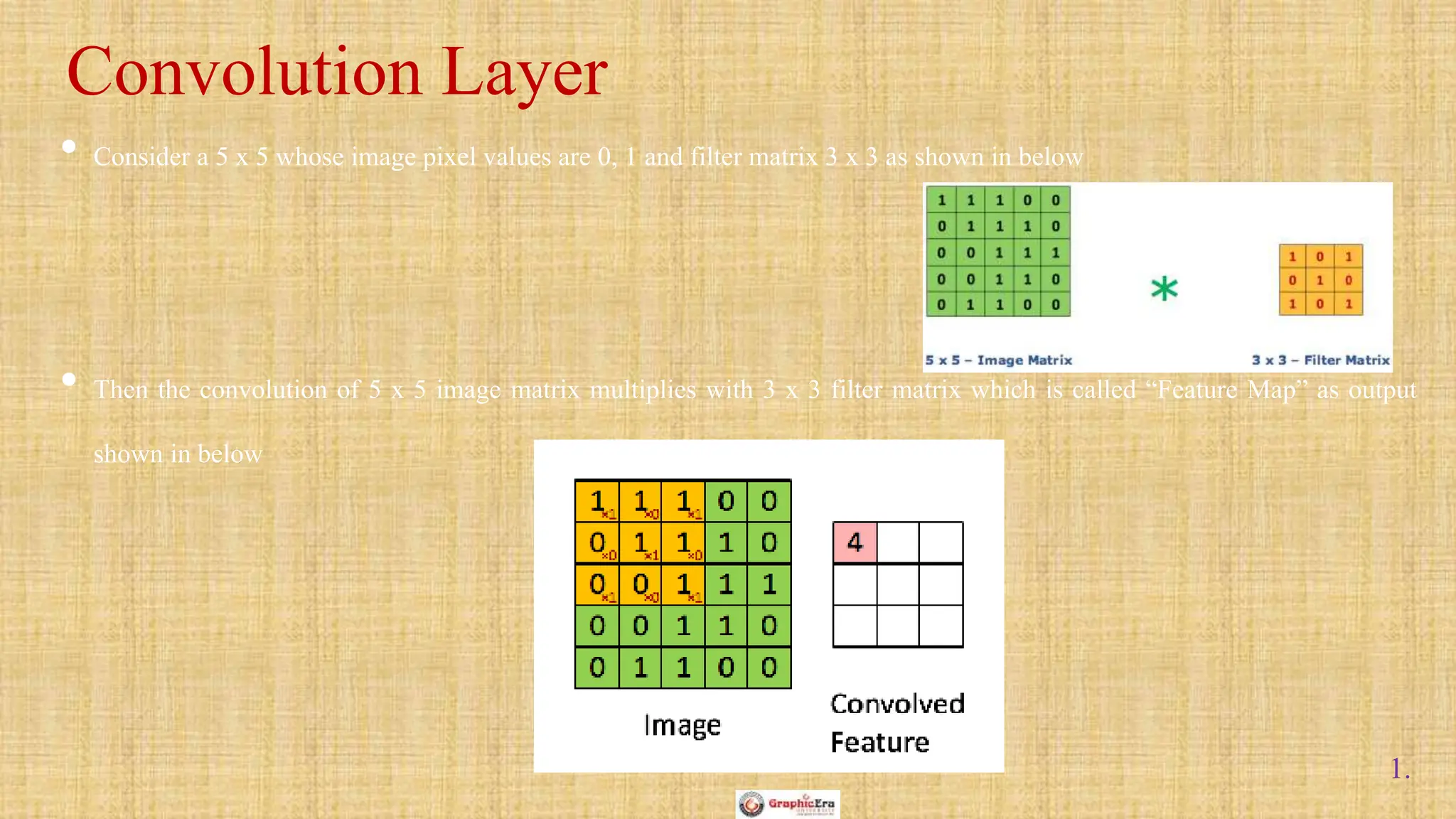
• Consider a 5 x 5 whose image pixel values are 0, 1 and filter matrix 3 x 3 as shown in below
• Then the convolution of 5 x 5 image matrix multiplies with 3 x 3 filter matrix which is called “Feature Map” as output
shown in below
Convolution Layer
1.
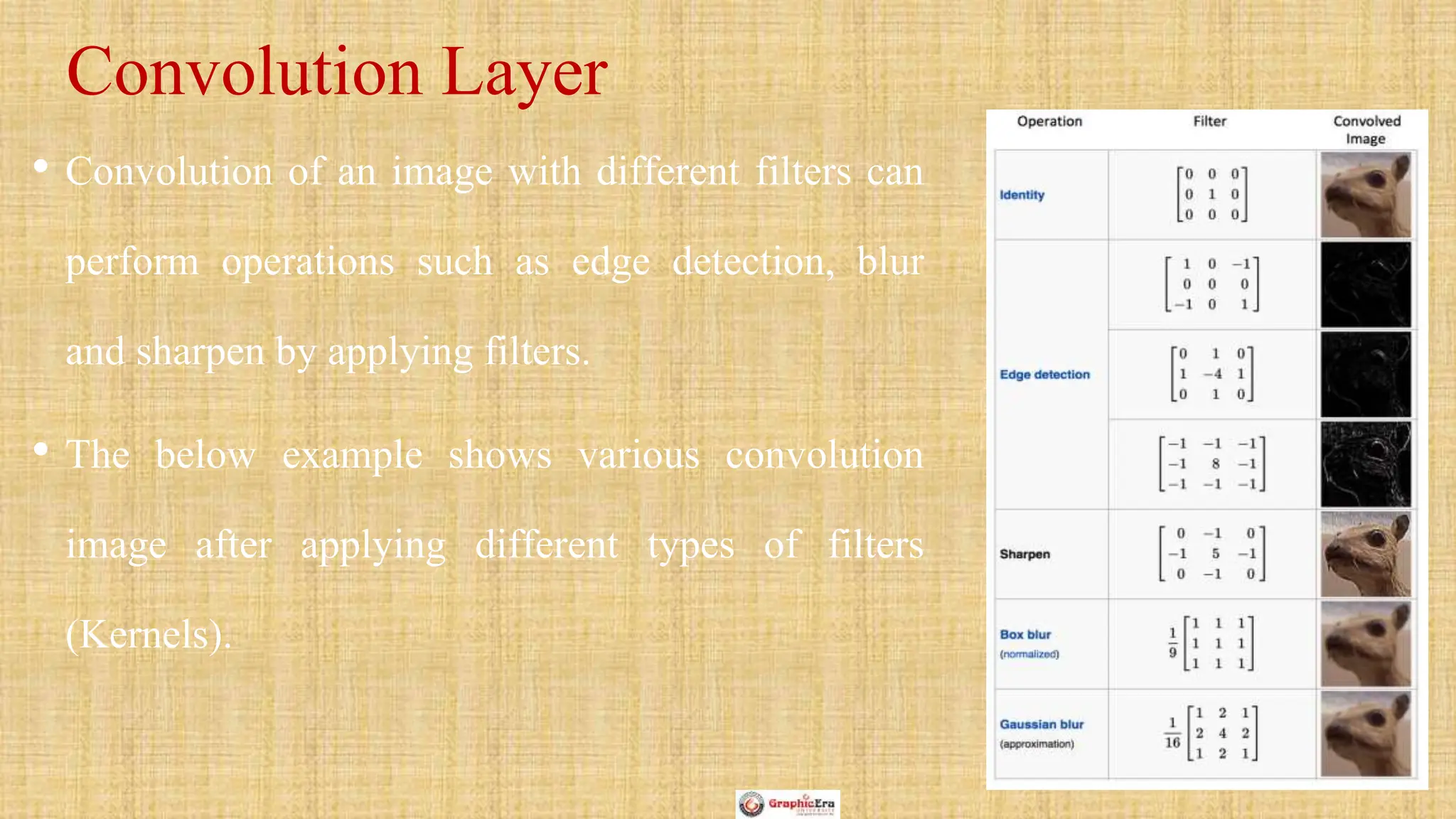
• Convolution of an image with different filters can
perform operations such as edge detection, blur
and sharpen by applying filters.
• The below example shows various convolution
image after applying different types of filters
(Kernels).
Convolution Layer
1.
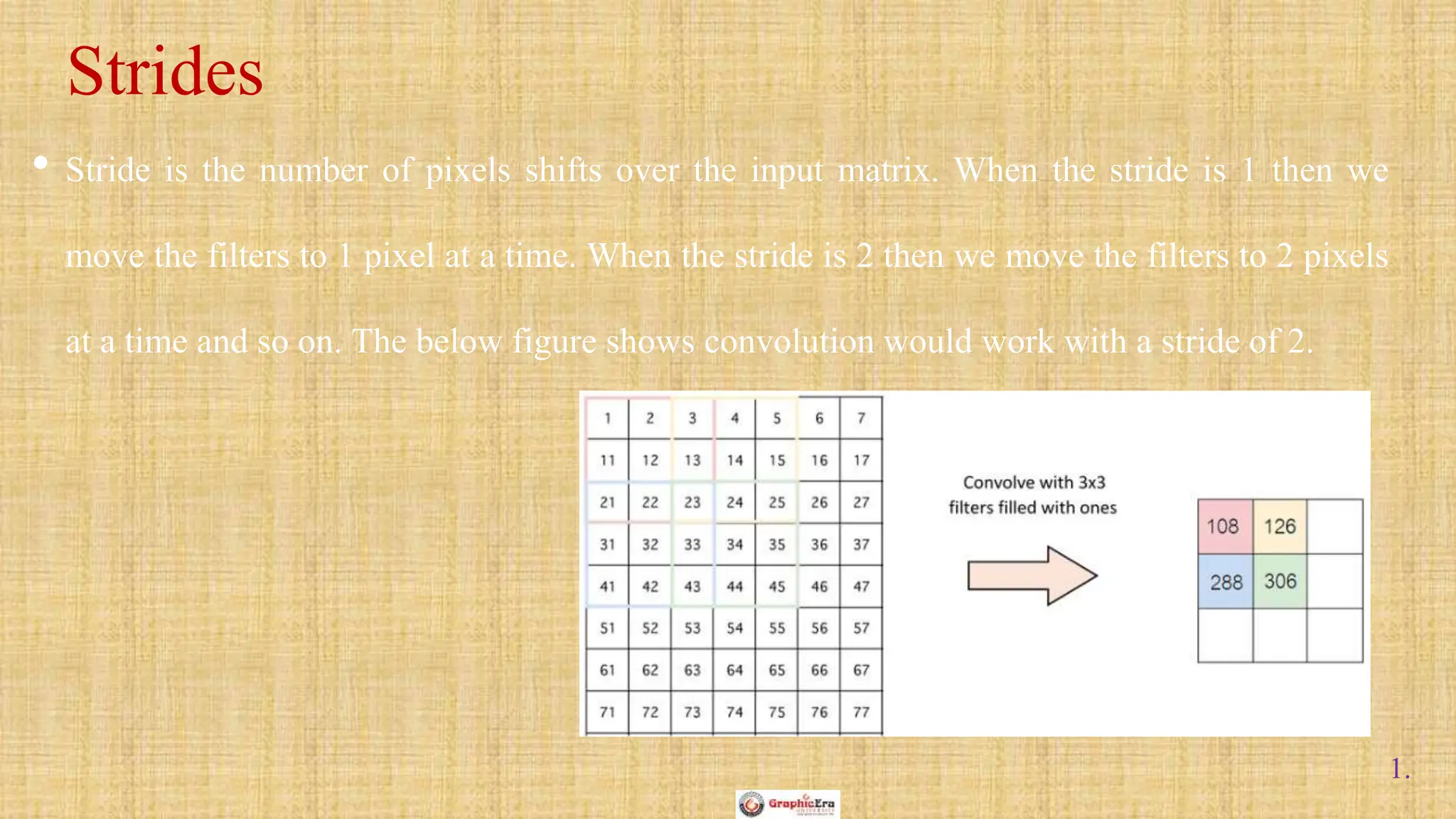
• Stride is the number of pixels shifts over the input matrix. When the stride is 1 then we
move the filters to 1 pixel at a time. When the stride is 2 then we move the filters to 2 pixels
at a time and so on. The below figure shows convolution would work with a stride of 2.
Strides
1.
Sometimes filter does not fit perfectly fit the input image. We
have two options:
• Pad the picture with zeros (zero-padding) so that it fits
• Drop the part of the image where the filter did not fit. This is
called valid padding which keeps only valid part of the image.
Padding
1.
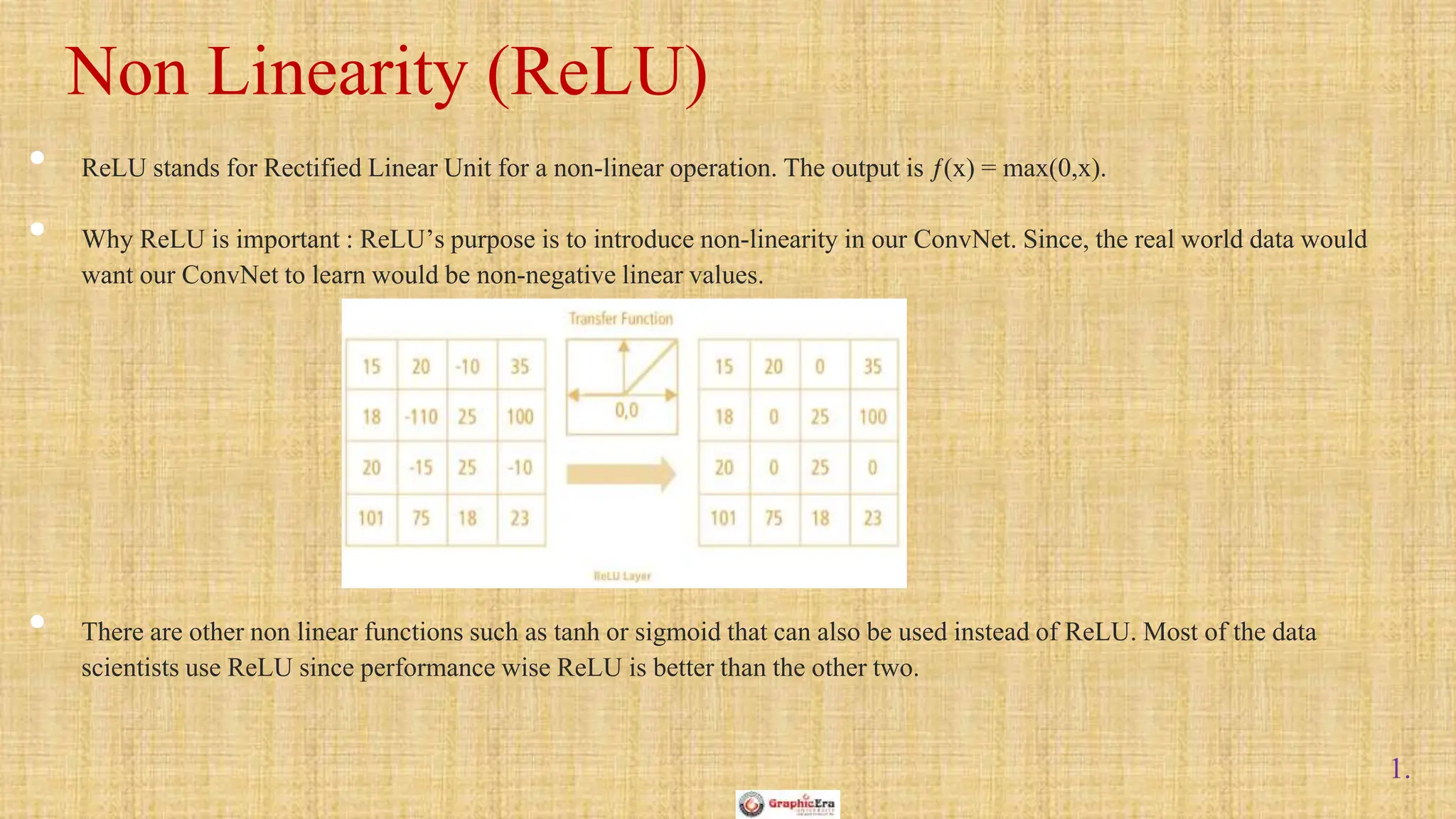
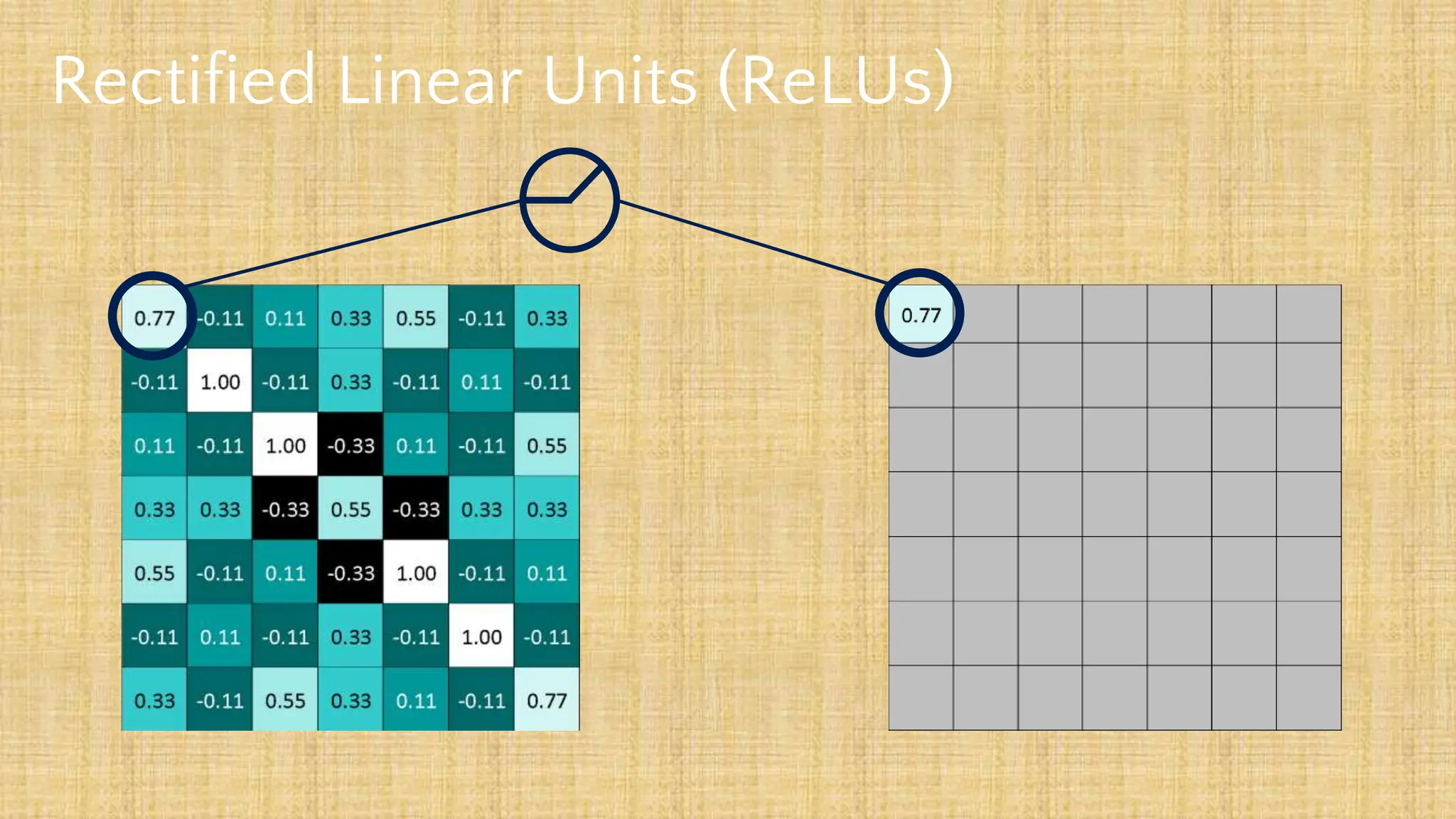
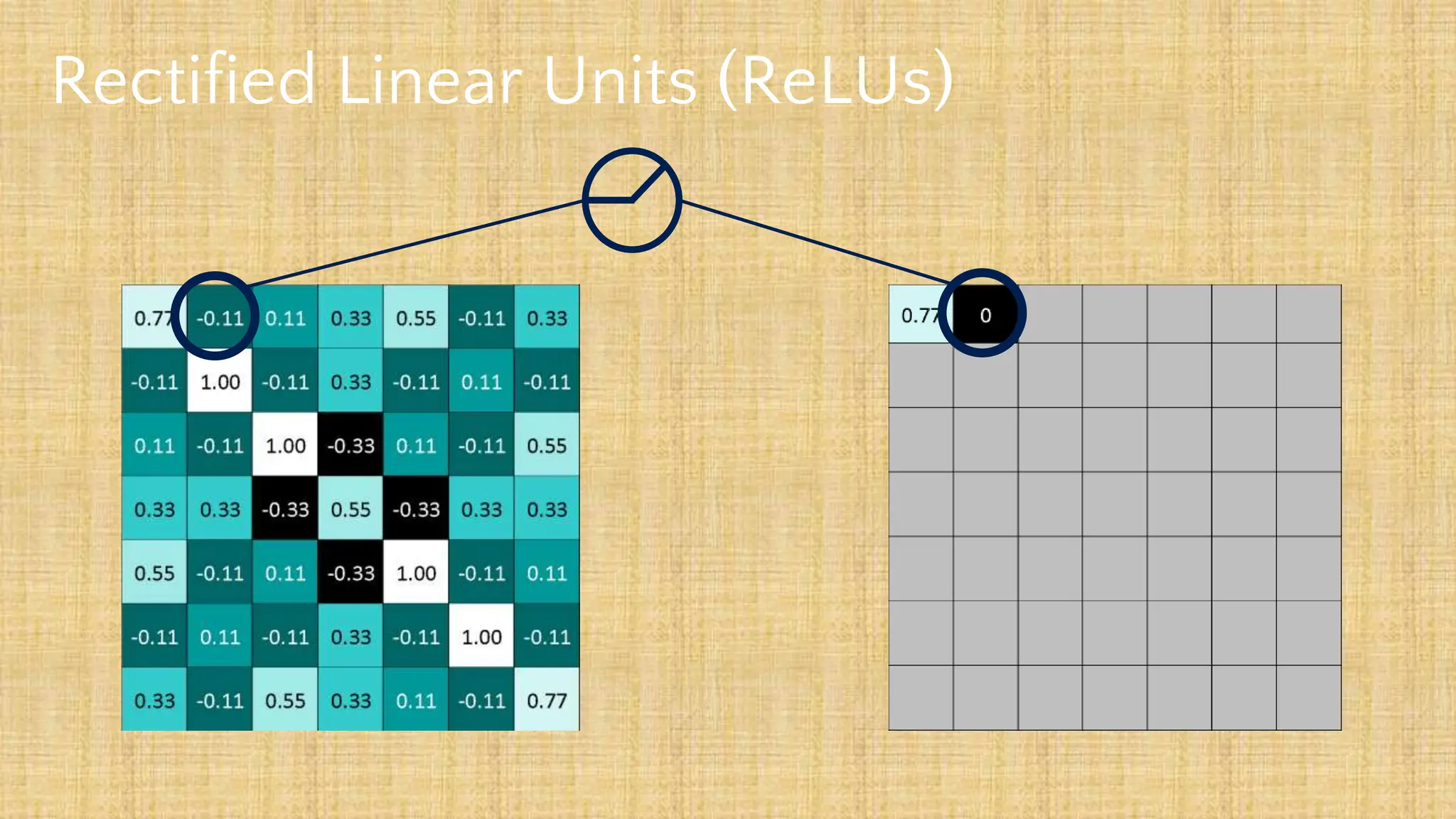
• ReLU stands for Rectified Linear Unit for a non-linear operation. The output is ƒ(x) = max(0,x).
• Why ReLU is important : ReLU’s purpose is to introduce non-linearity in our ConvNet. Since, the real world data would
want our ConvNet to learn would be non-negative linear values.
• There are other non linear functions such as tanh or sigmoid that can also be used instead of ReLU. Most of the data
scientists use ReLU since performance wise ReLU is better than the other two.
Non Linearity (ReLU)
1.
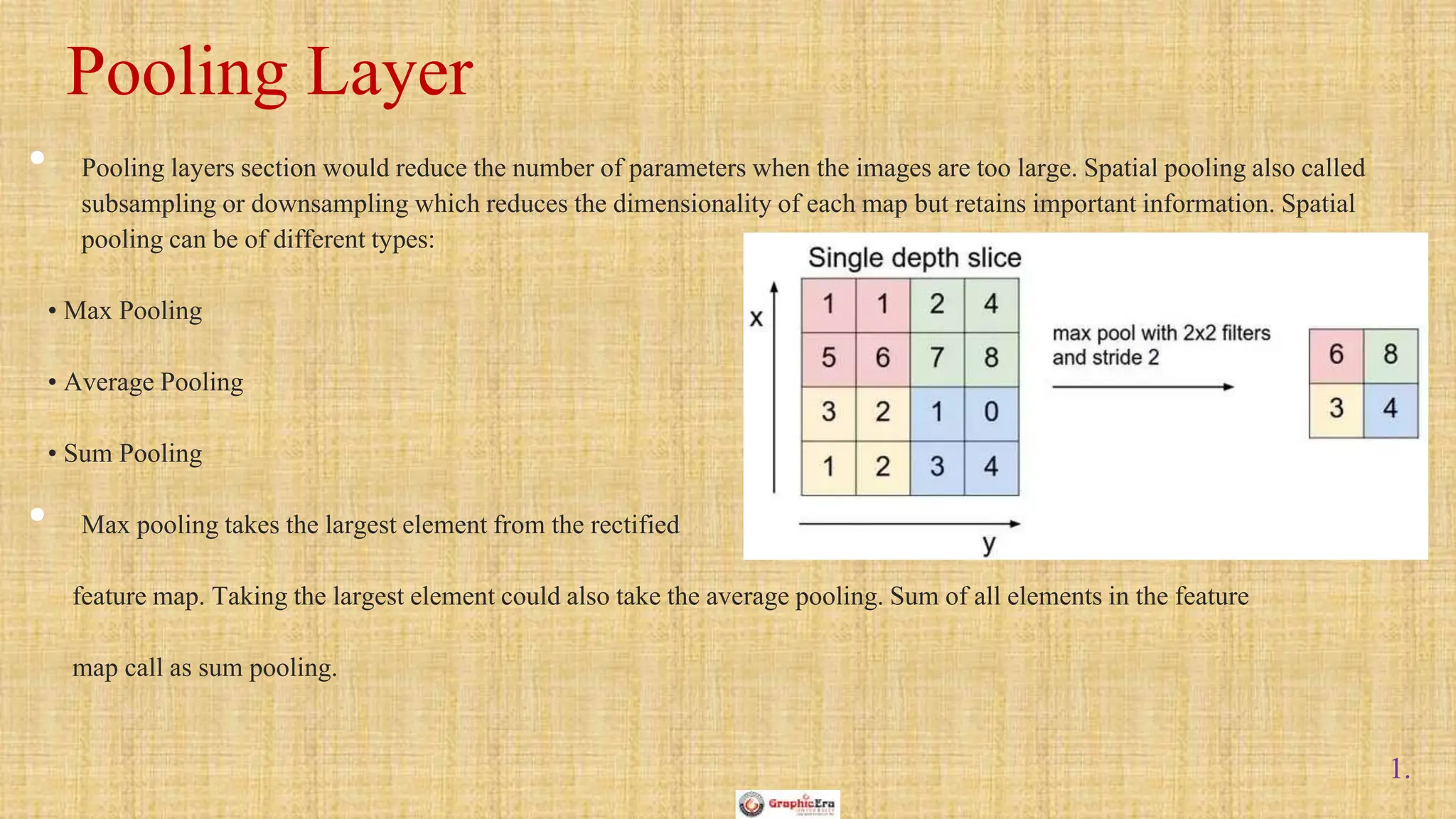
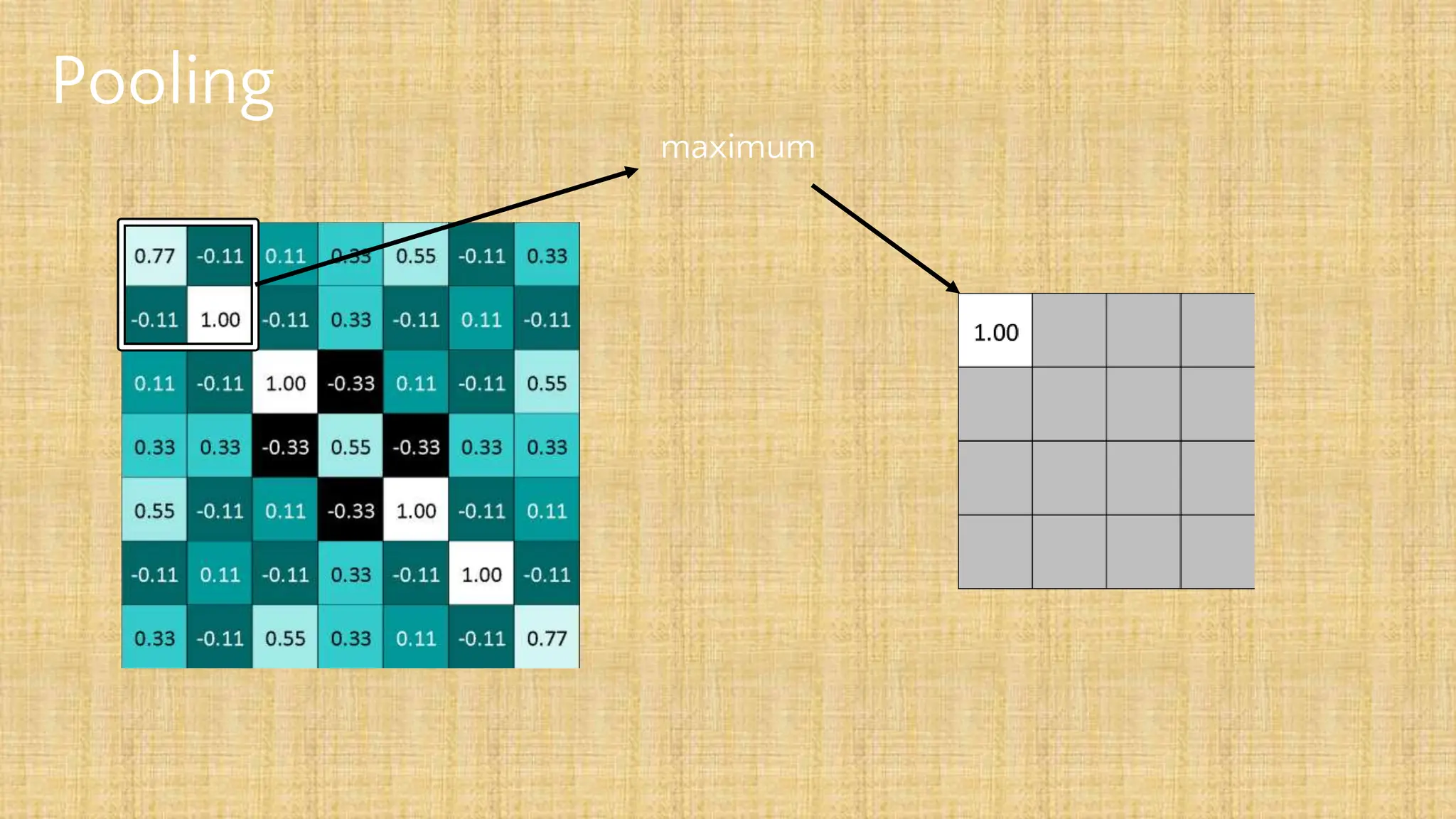
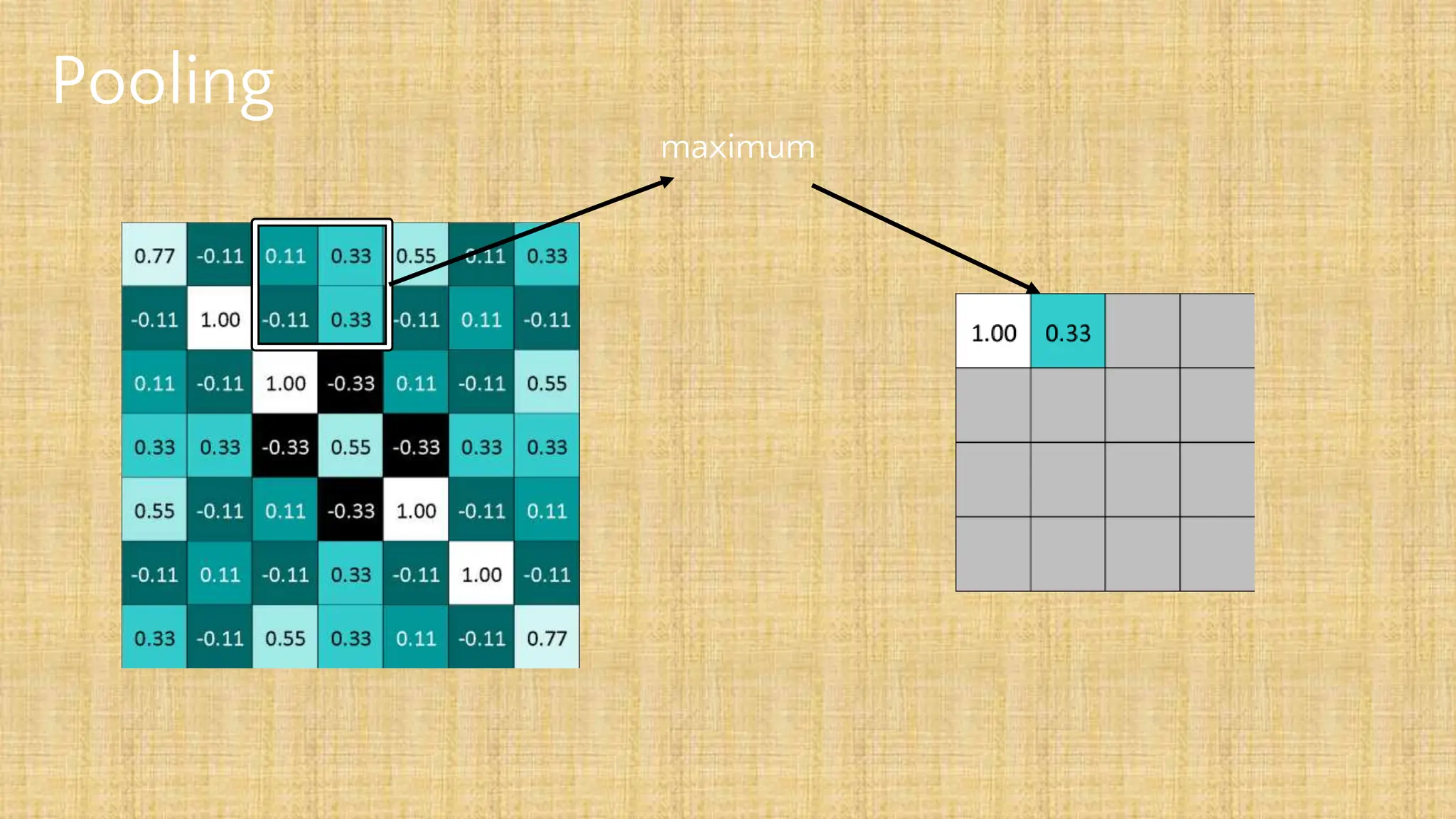
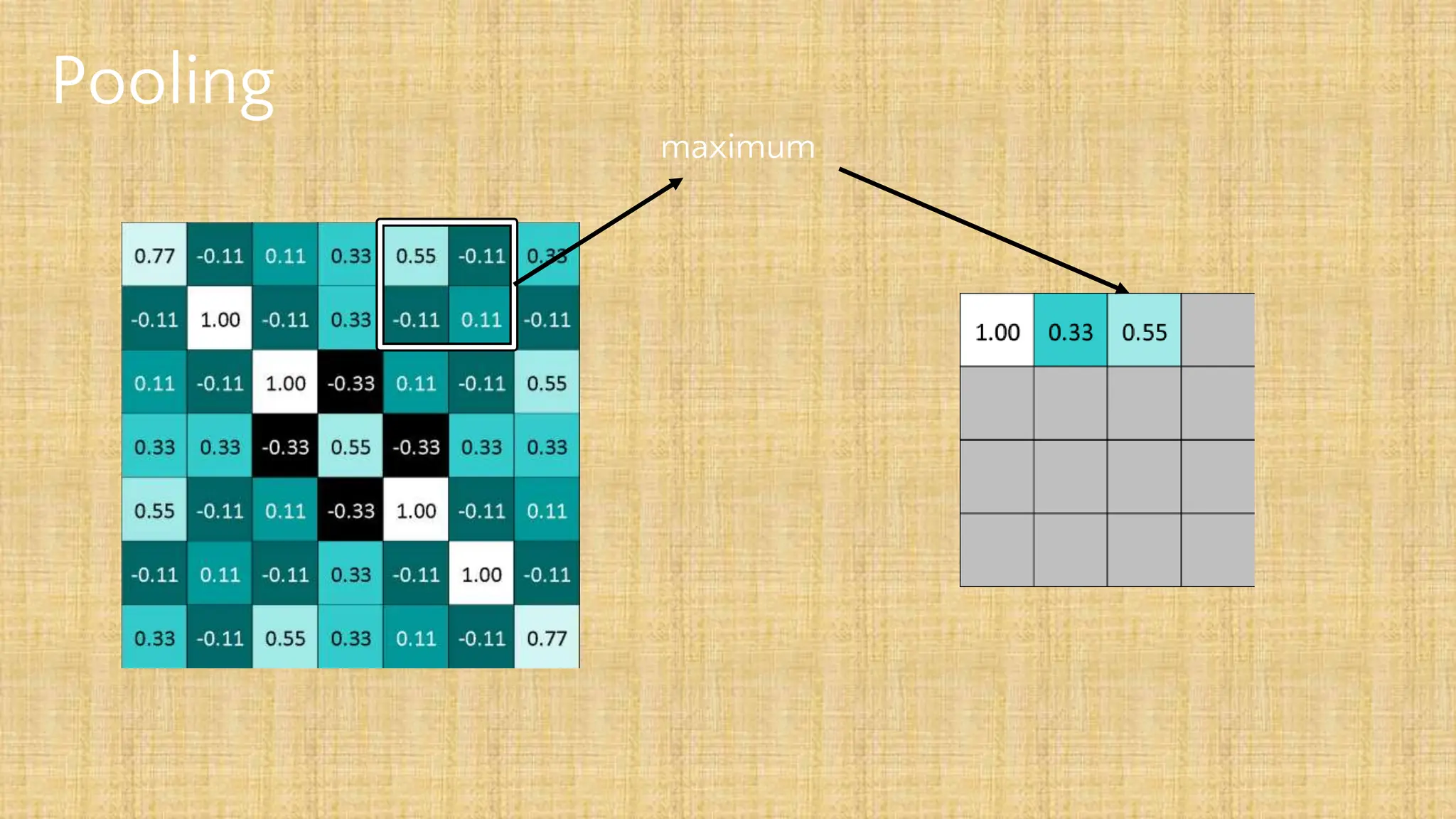
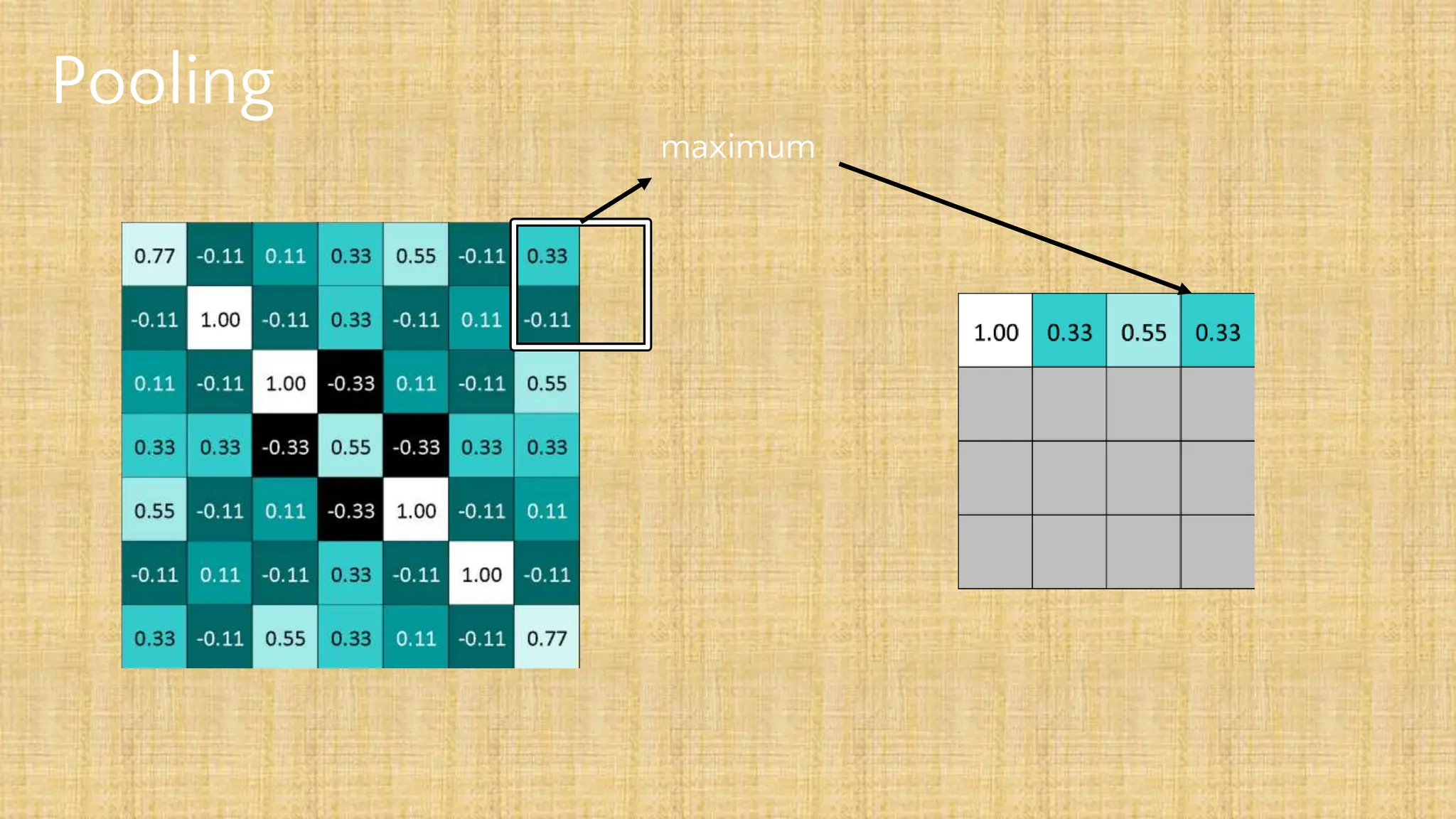
• Pooling layers section would reduce the number of parameters when the images are too large. Spatial pooling also called
subsampling or downsampling which reduces the dimensionality of each map but retains important information. Spatial
pooling can be of different types:
• Max Pooling
• Average Pooling
• Sum Pooling
• Max pooling takes the largest element from the rectified
feature map. Taking the largest element could also take the average pooling. Sum of all elements in the feature
map call as sum pooling.
Pooling Layer
1.
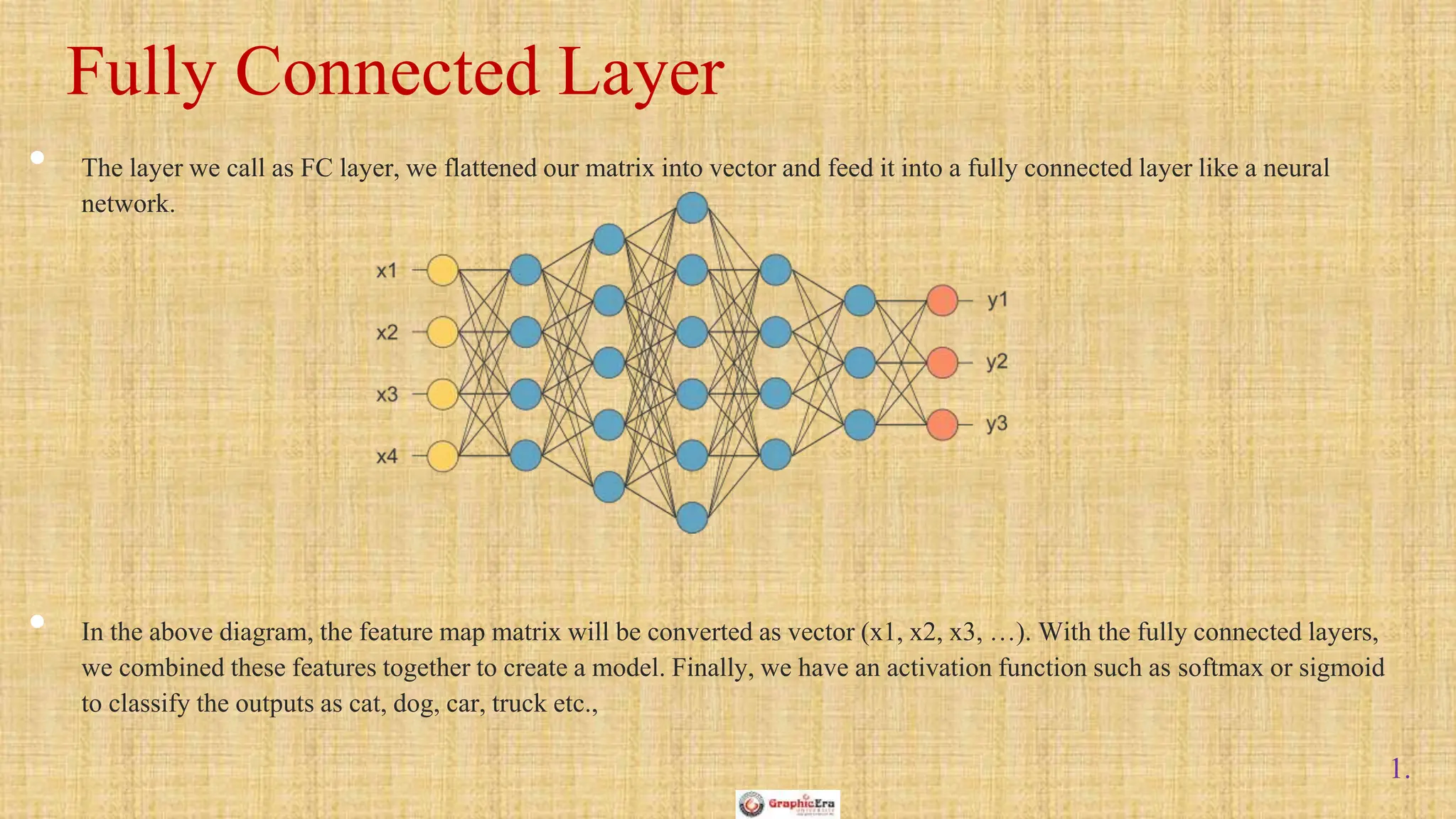
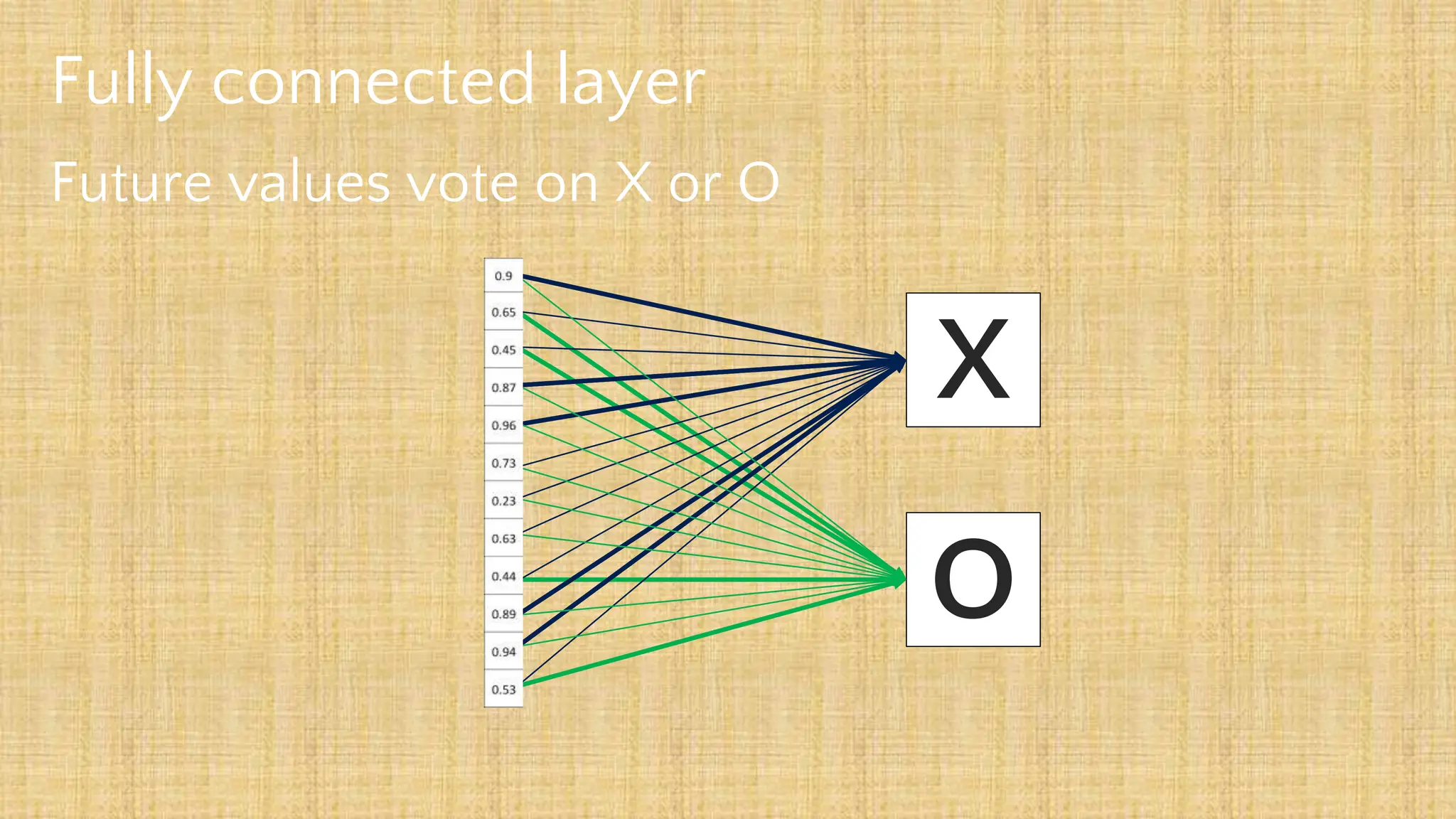
• The layer we call as FC layer, we flattened our matrix into vector and feed it into a fully connected layer like a neural
network.
• In the above diagram, the feature map matrix will be converted as vector (x1, x2, x3, …). With the fully connected layers,
we combined these features together to create a model. Finally, we have an activation function such as softmax or sigmoid
to classify the outputs as cat, dog, car, truck etc.,
Fully Connected Layer
1.
Complete CNN architecture
1.
• Provide input image into convolution layer
• Choose parameters, apply filters with strides, padding if requires. Perform convolution on the image and apply
ReLU activation to the matrix.
• Perform pooling to reduce dimensionality size
• Add as many convolutional layers until satisfied
• Flatten the output and feed into a fully connected layer (FC Layer)
• Output the class using an activation function (Logistic Regression with cost functions) and classifies images.
Summary of CNN
1.
• In neural networks, Convolutional neural network (ConvNets
or CNNs) is one of the main categories to do images
recognition, images classifications. Objects detections,
recognition faces etc., are some of the areas where CNNs are
widely used.
Application Area of CNN
How
Convolutional Neural
Networks
Work
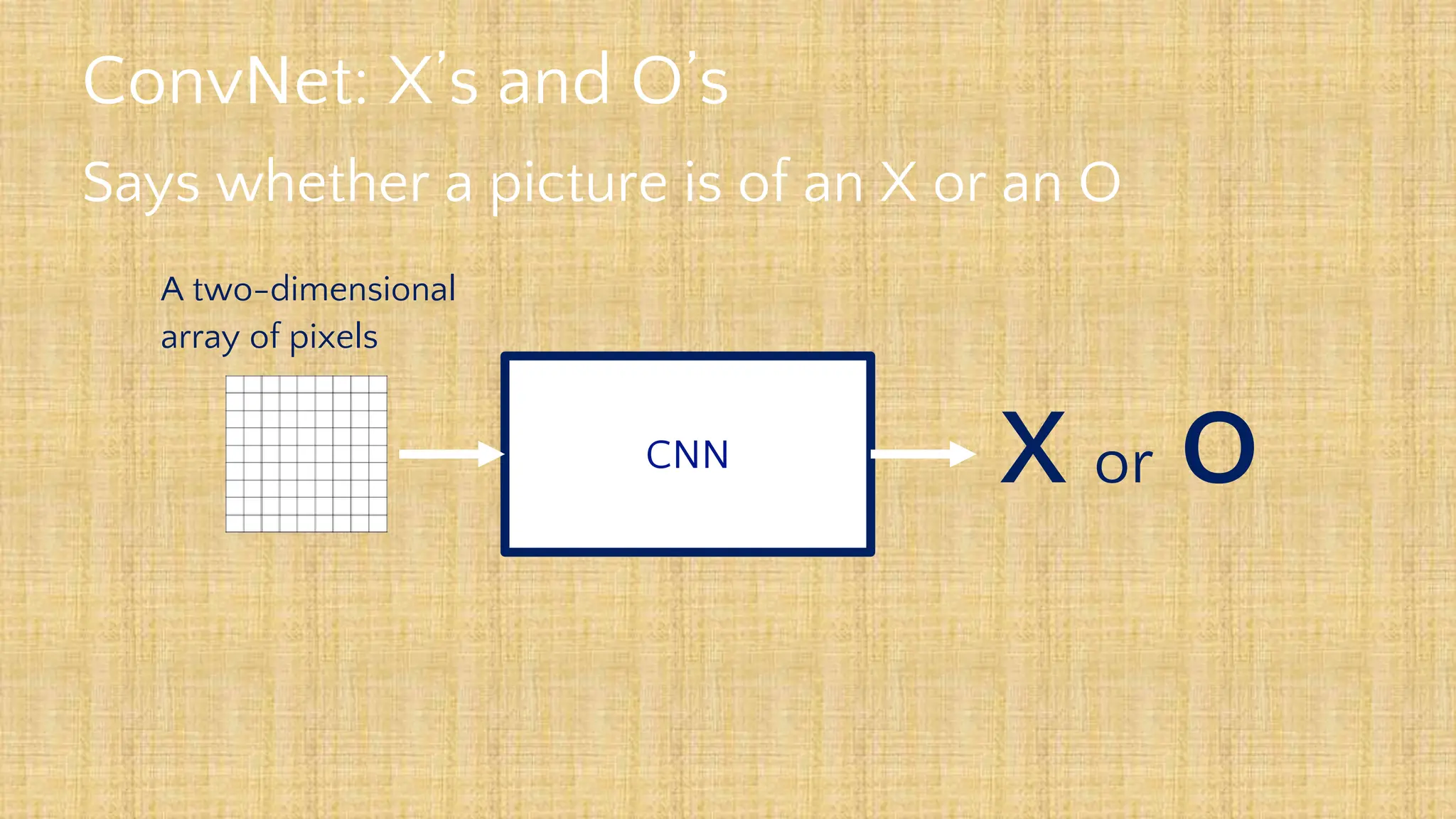
ConvNet: X’s and O’s
Says whether a picture is of an X or an O
X or O
CNN
A two-dimensional
array of pixels
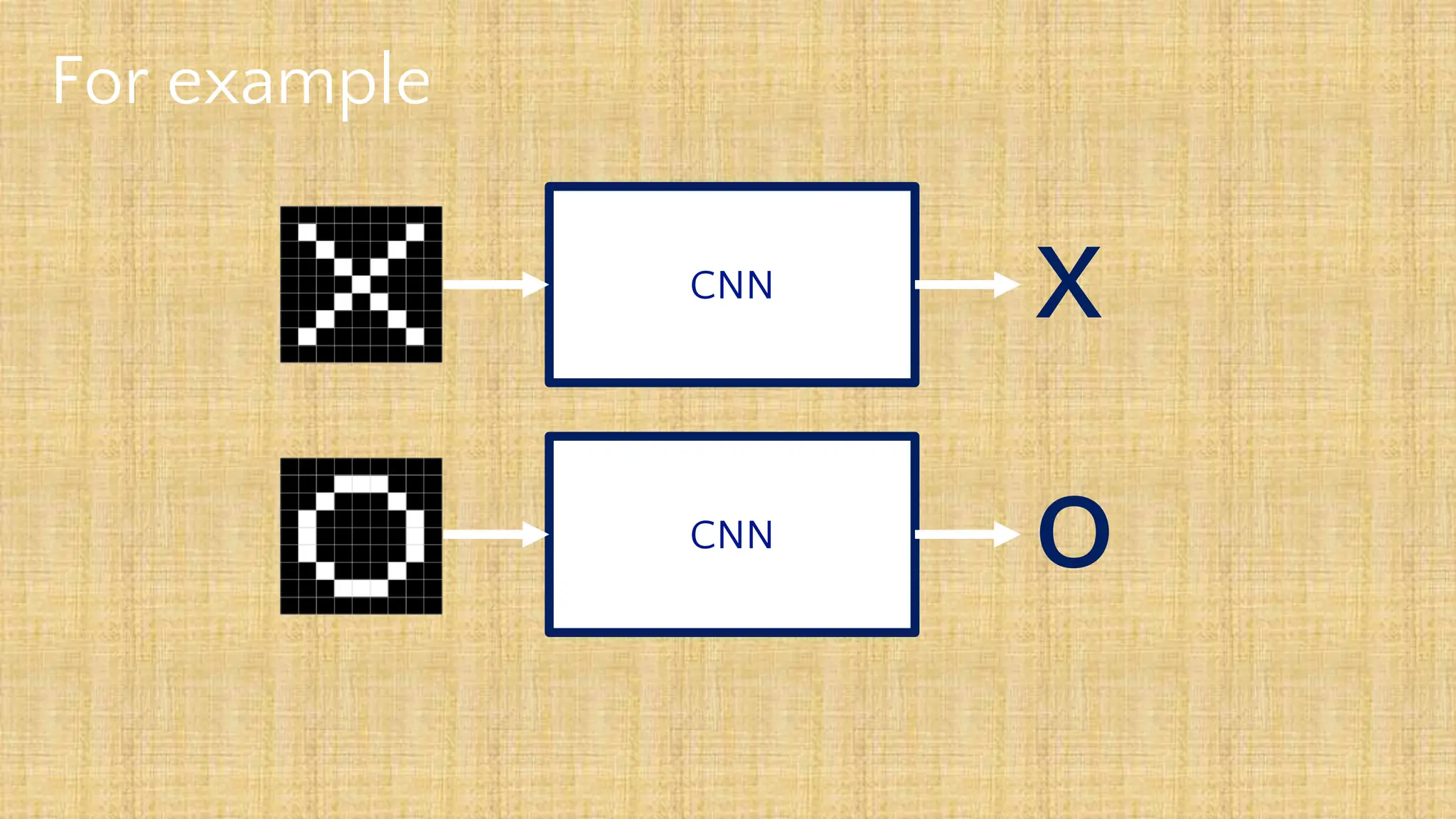
For example
CNN X
CNN O
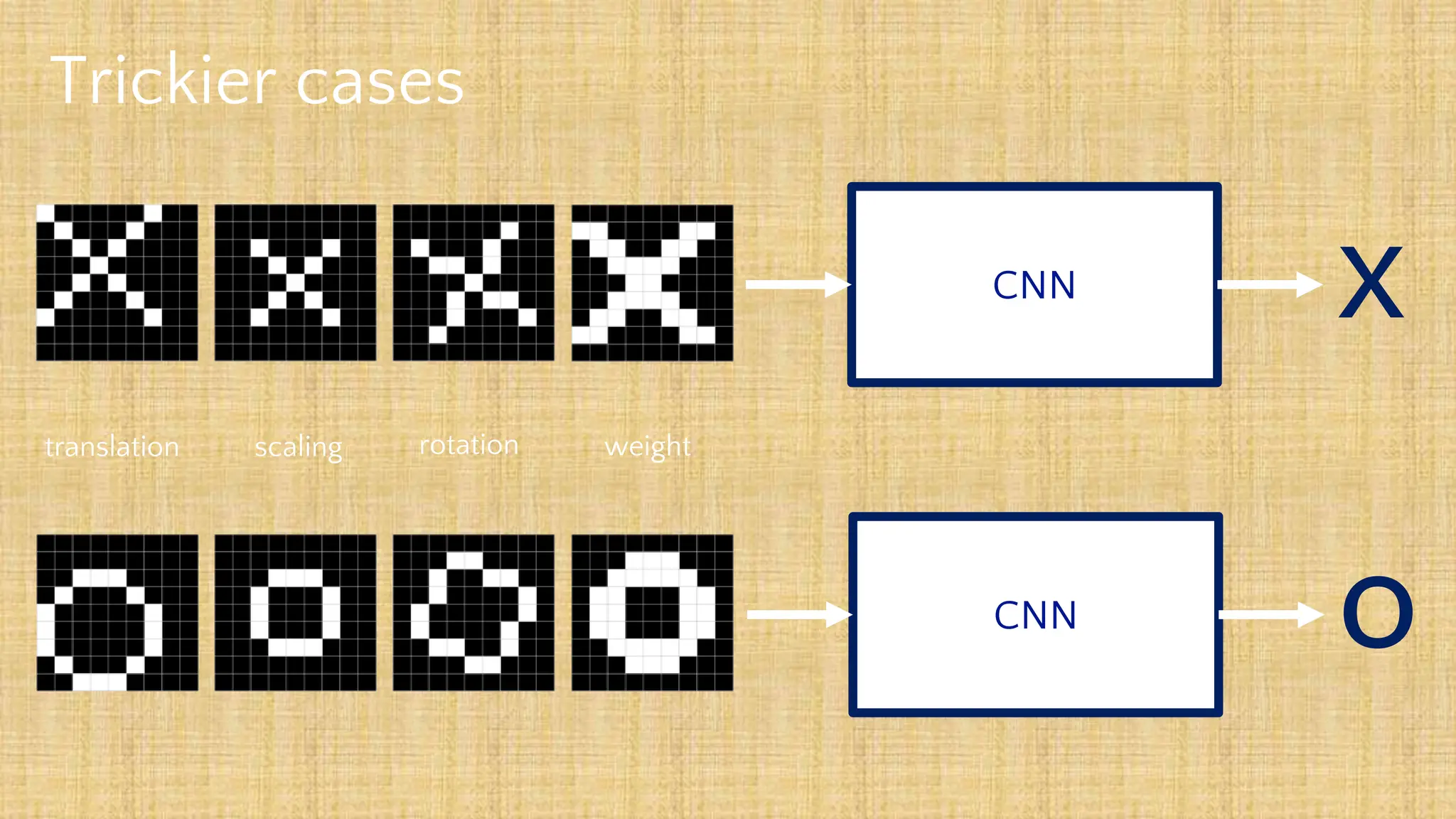
Trickier cases
CNN X
CNN O
translation scaling weight
rotation
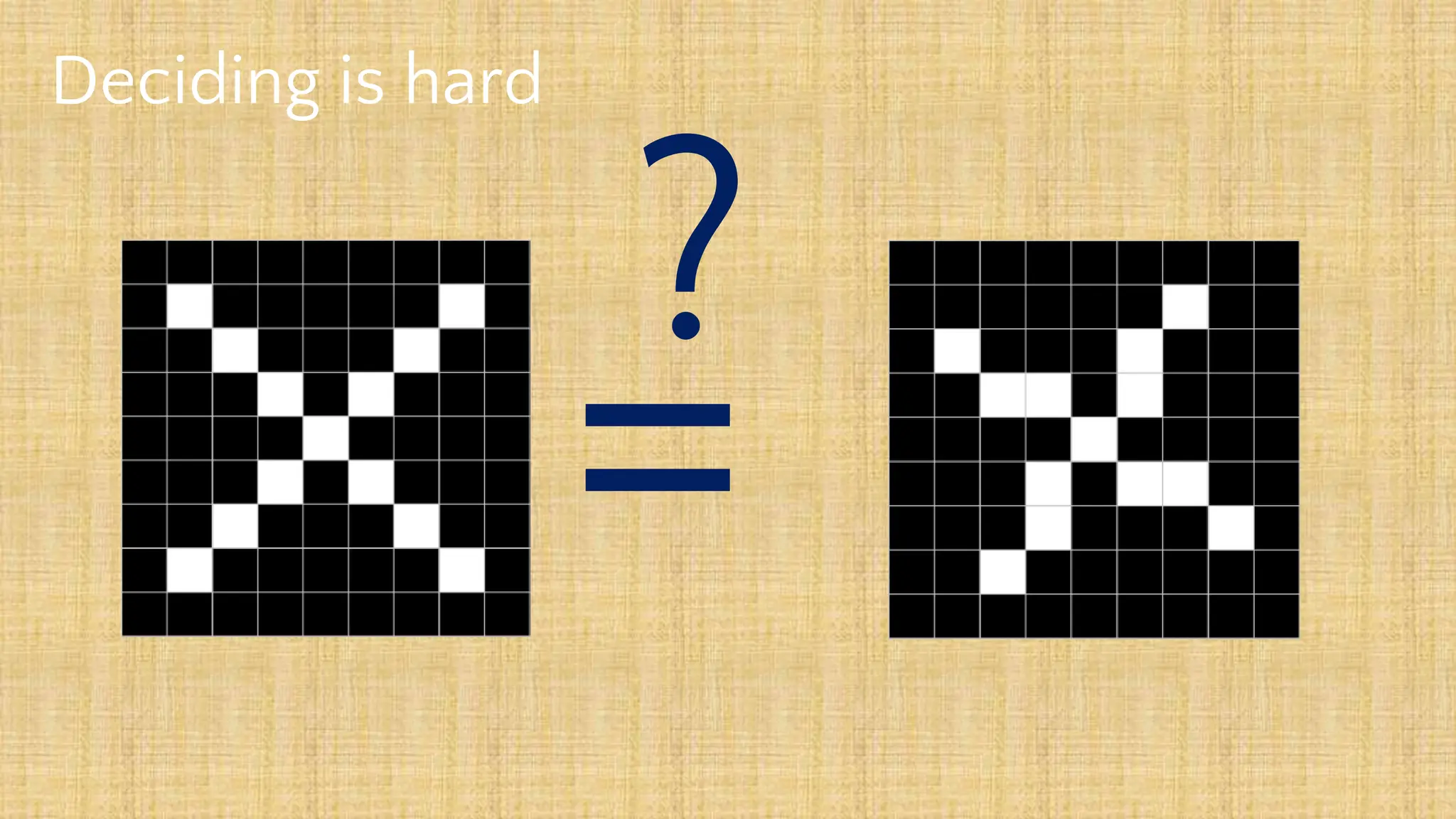
Deciding is hard
?
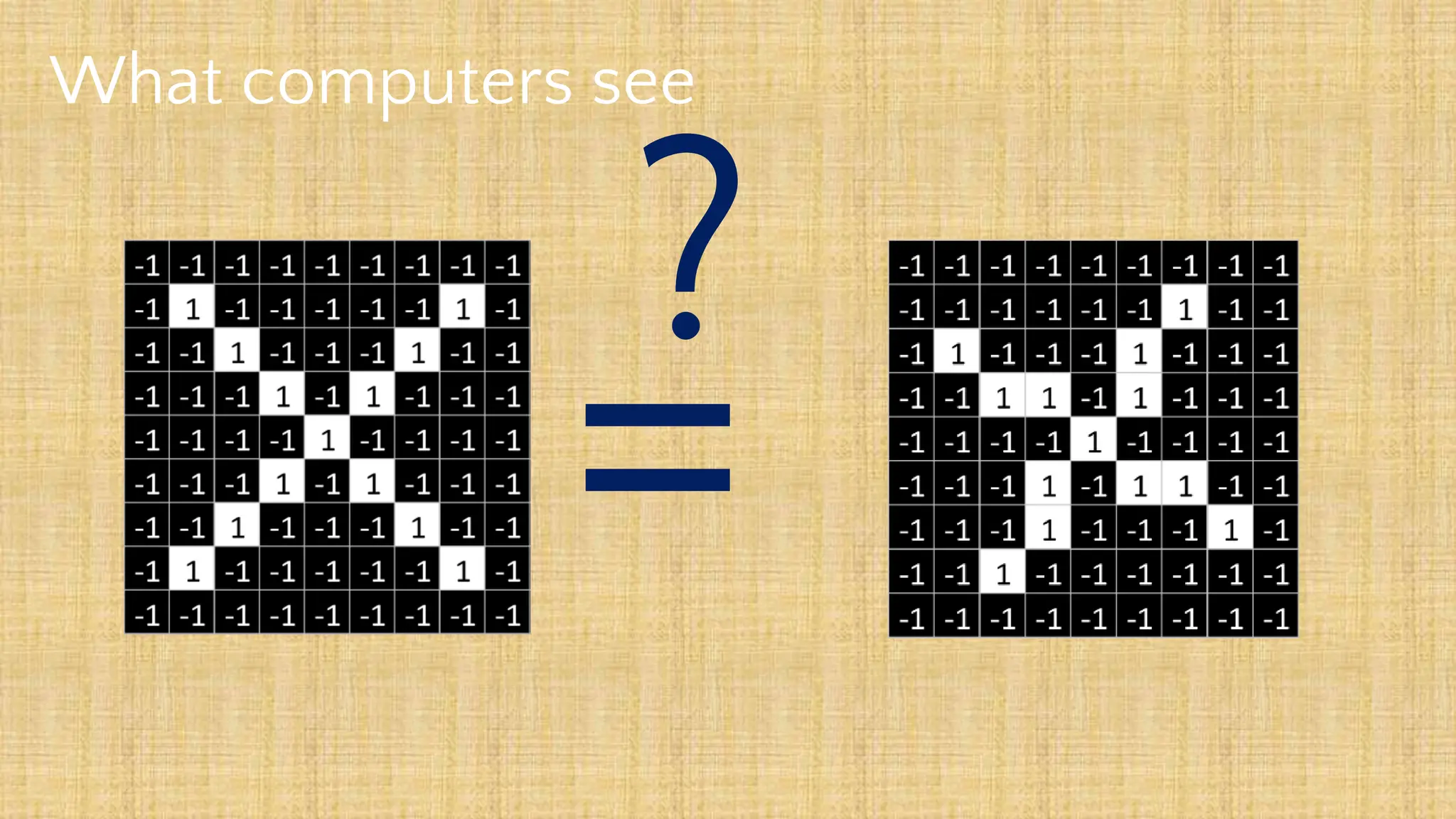
What computers see
?
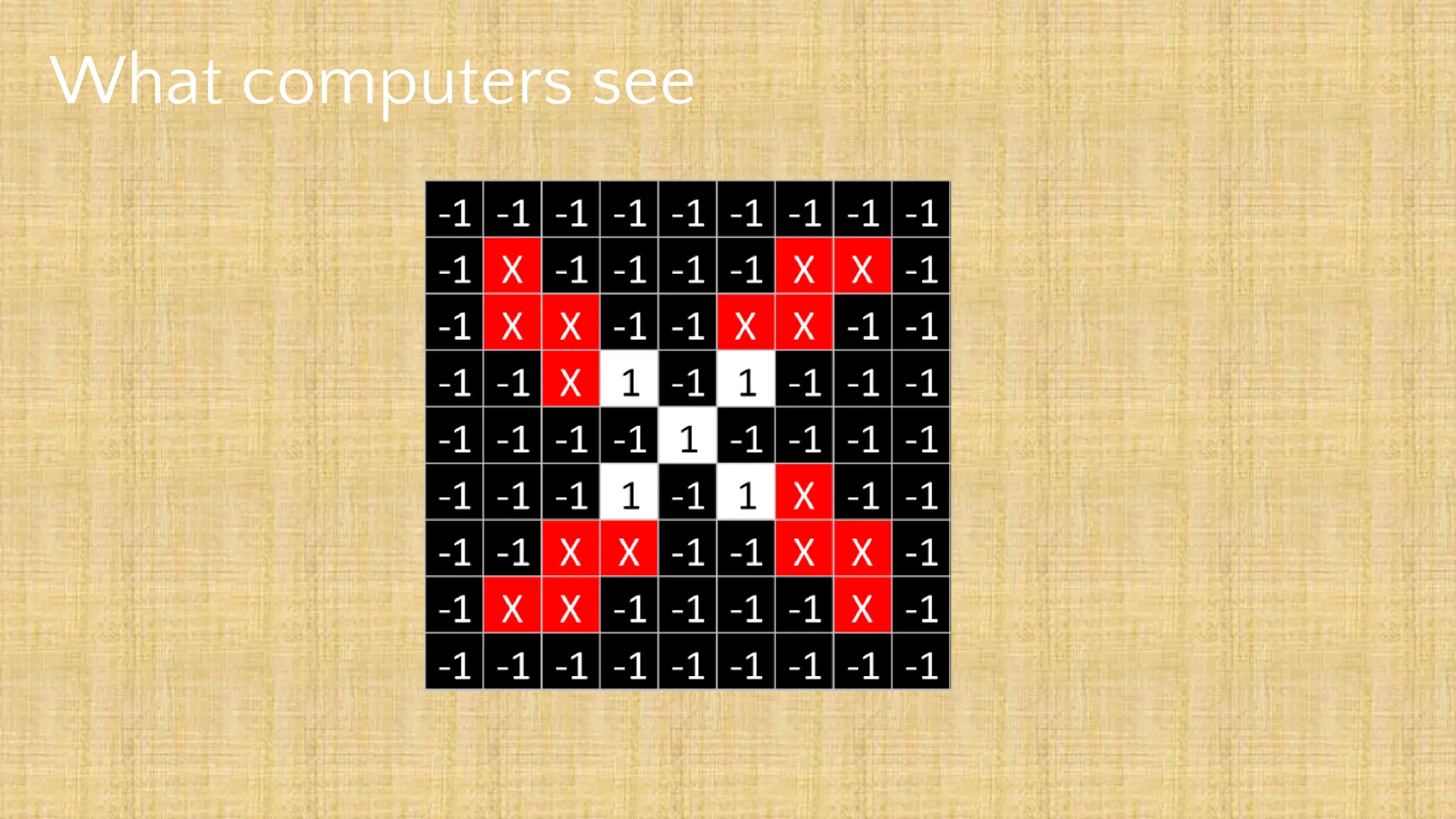
What computers see
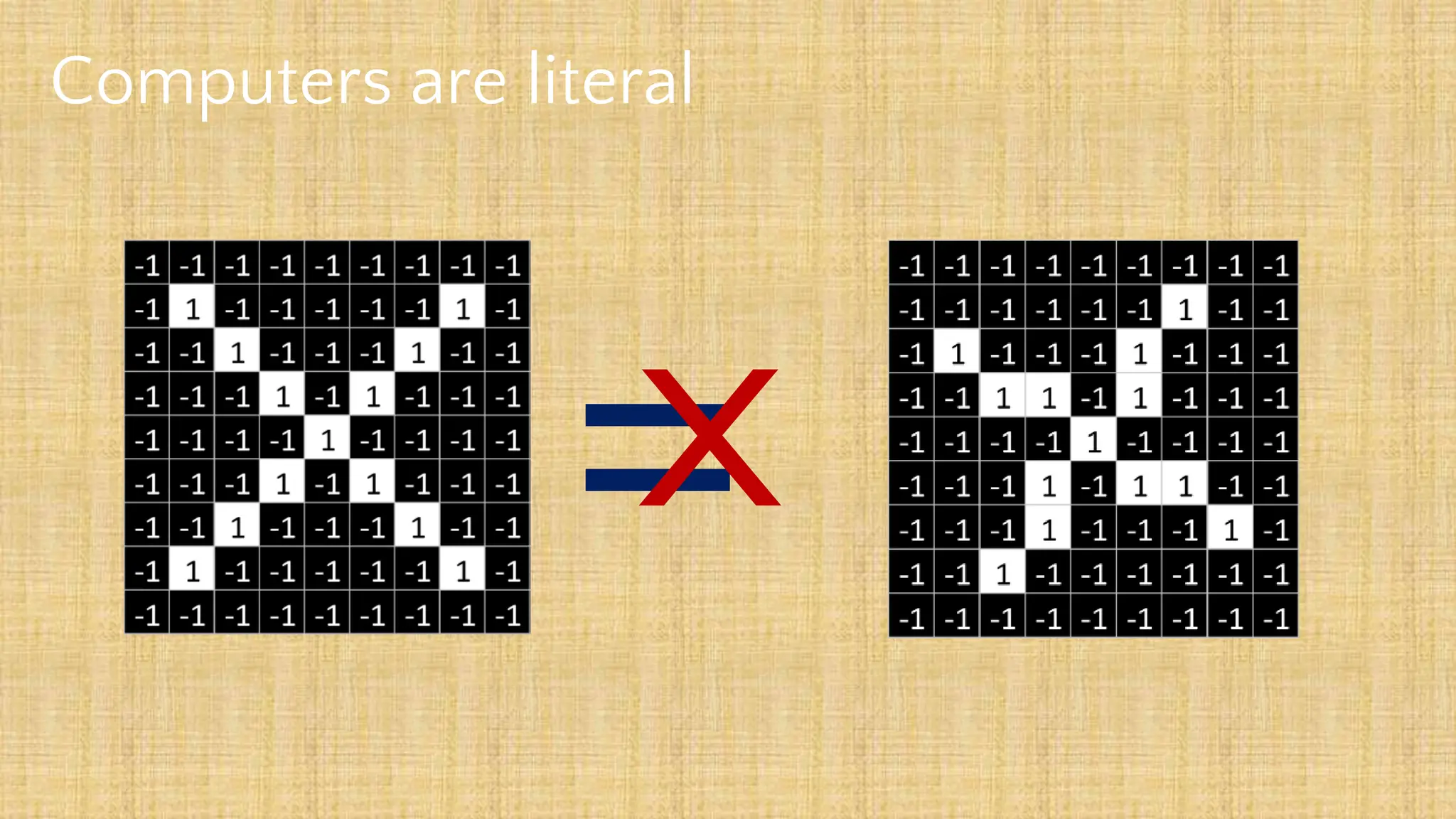
Computers are literal
x
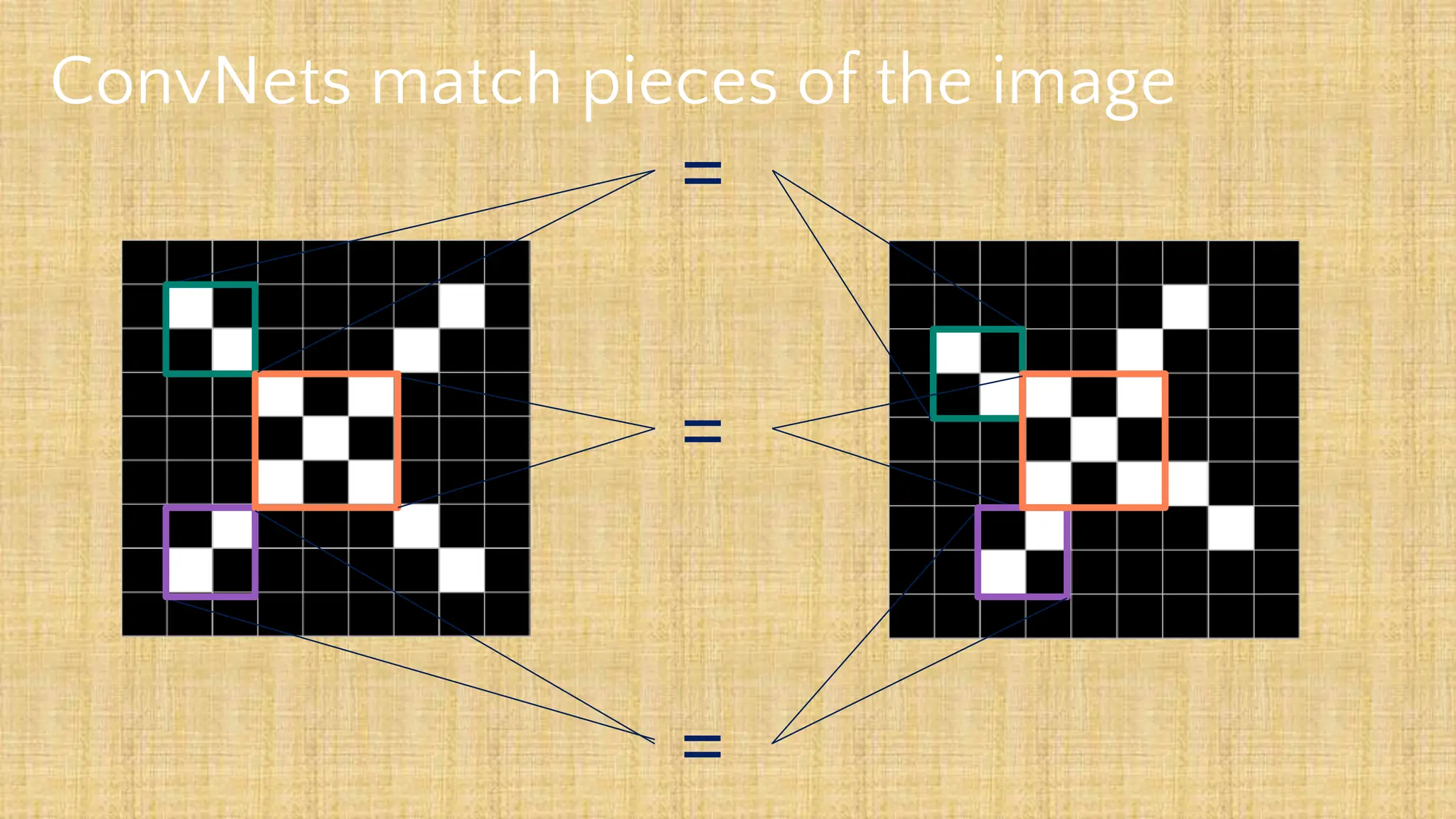
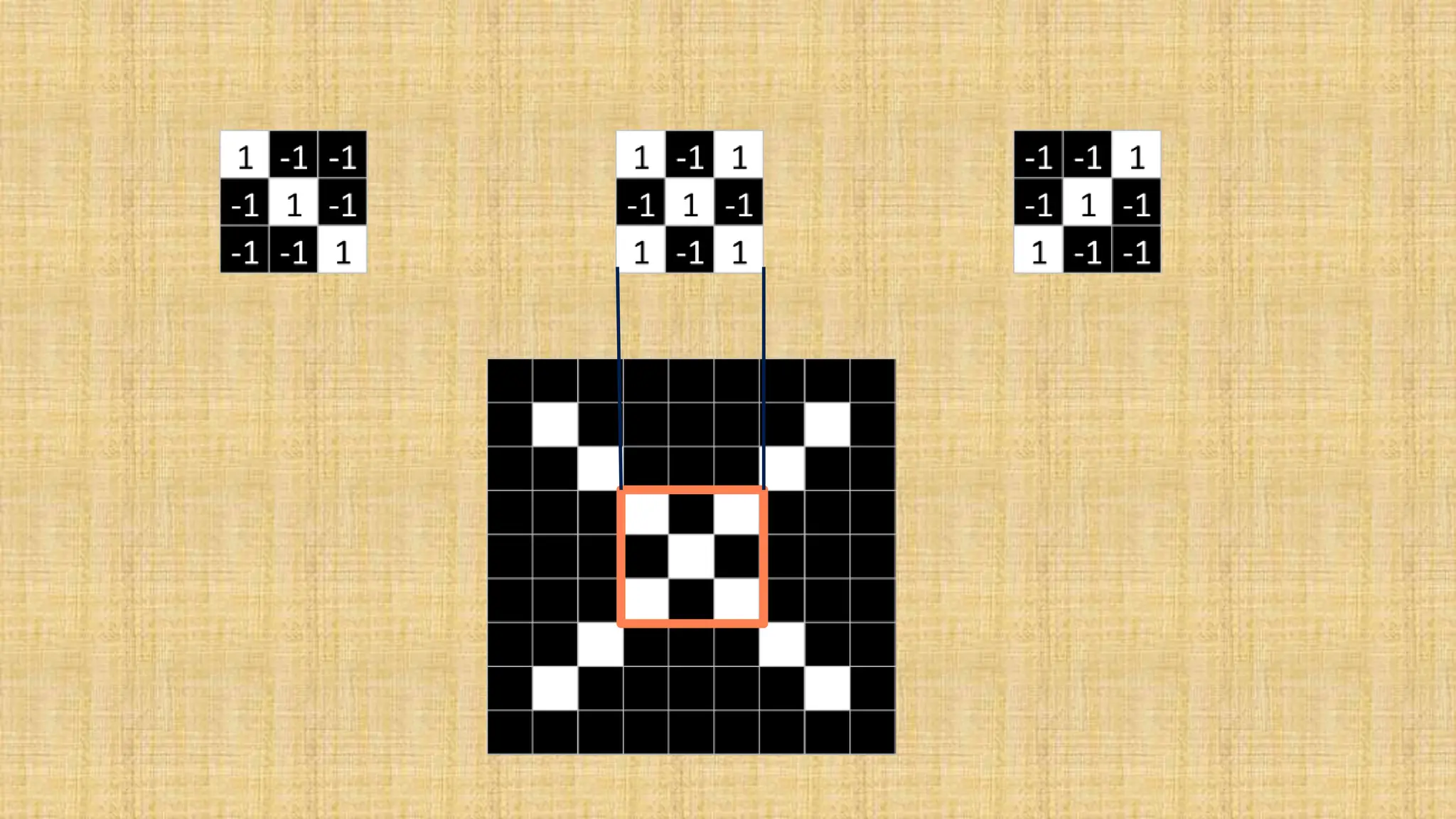
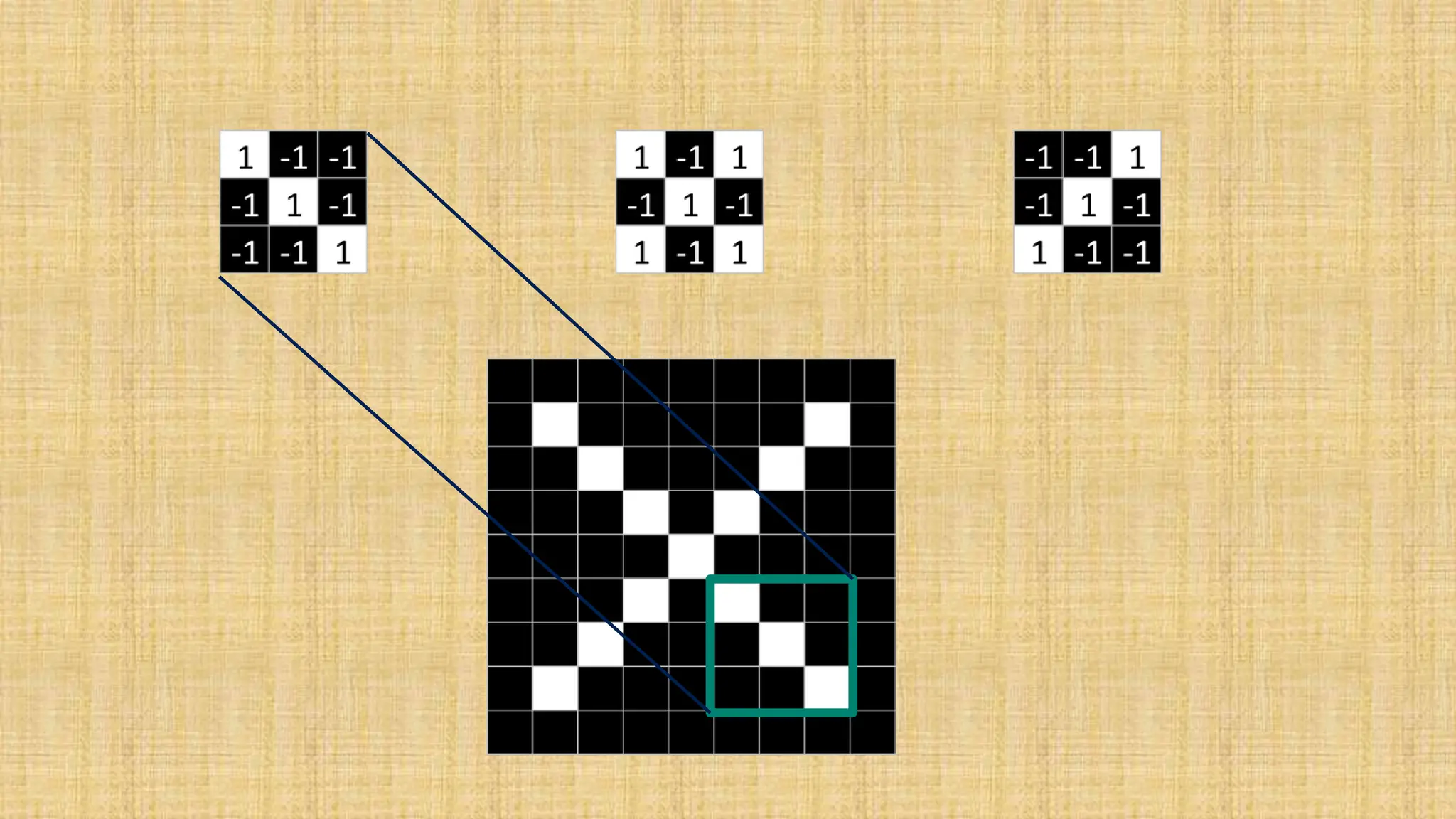
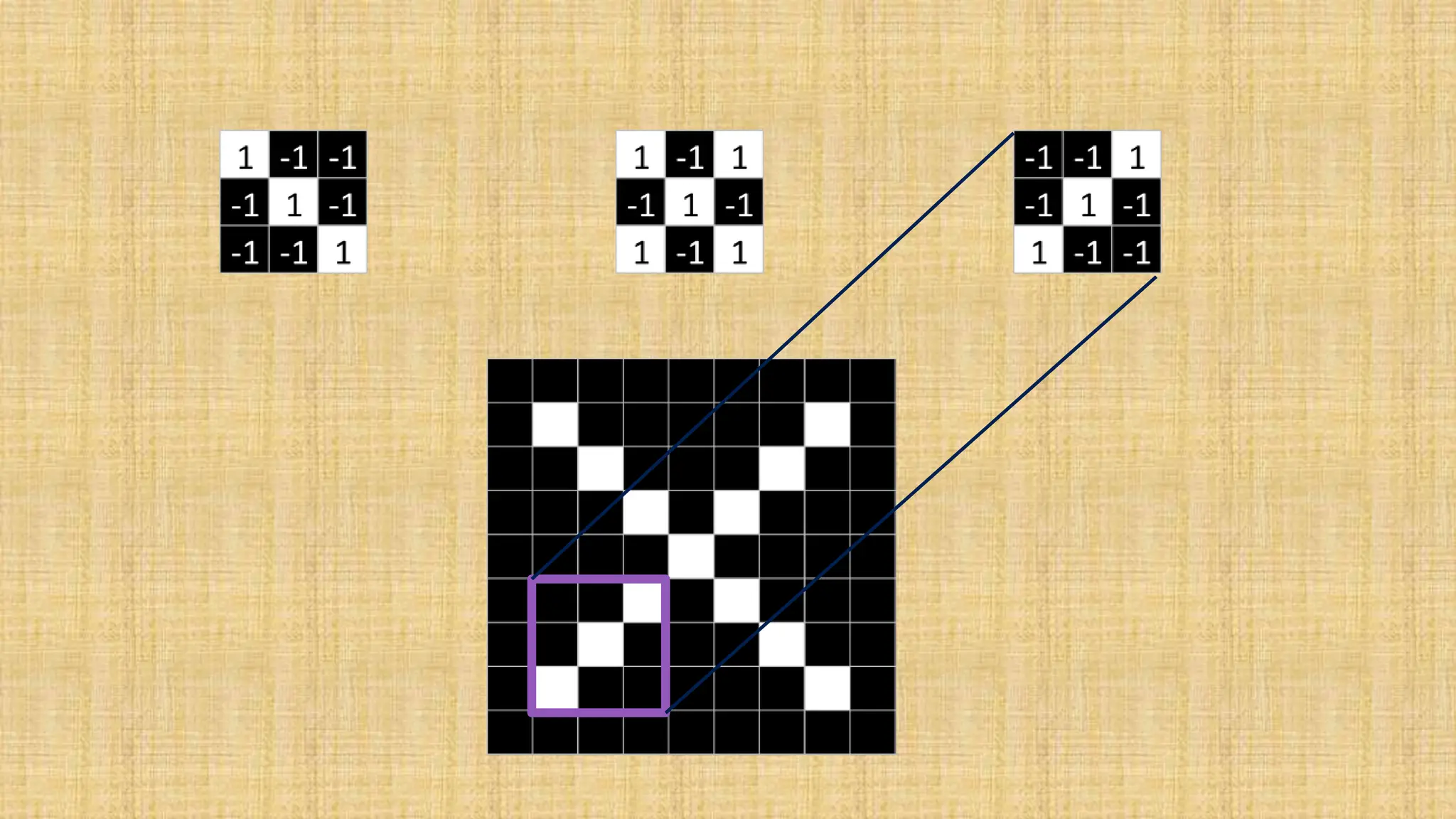
ConvNets match pieces of the image
=
=
=
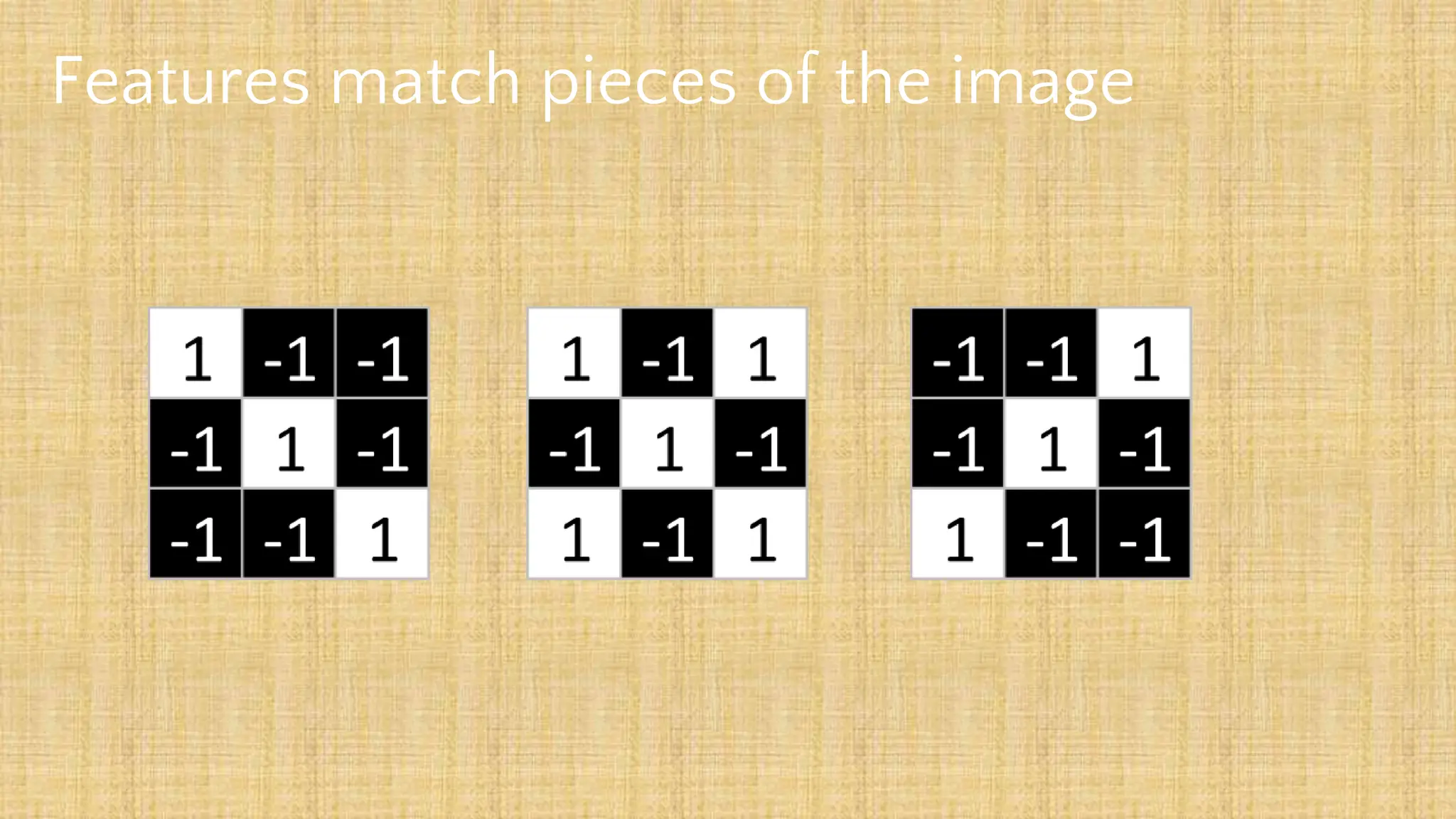
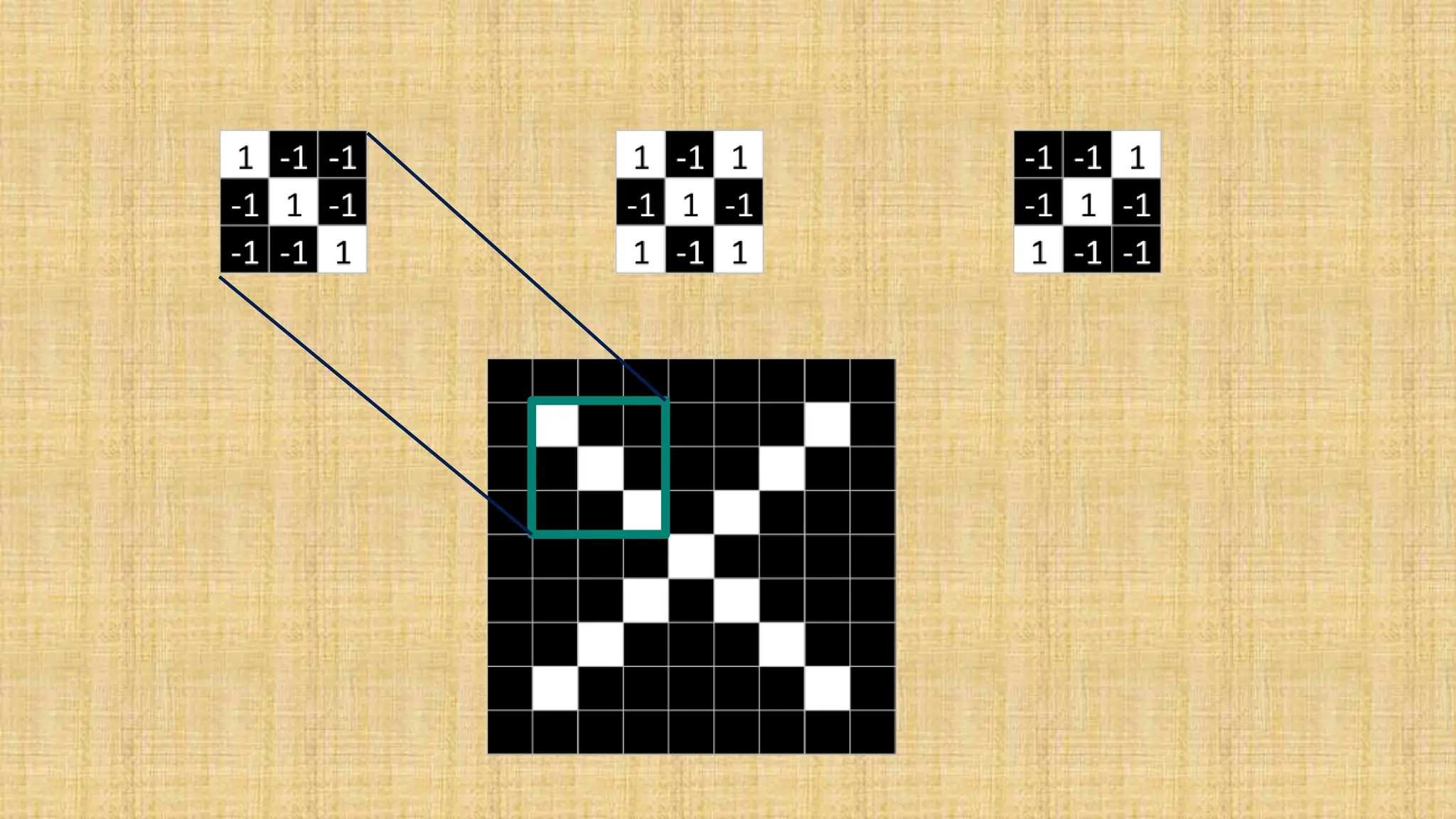
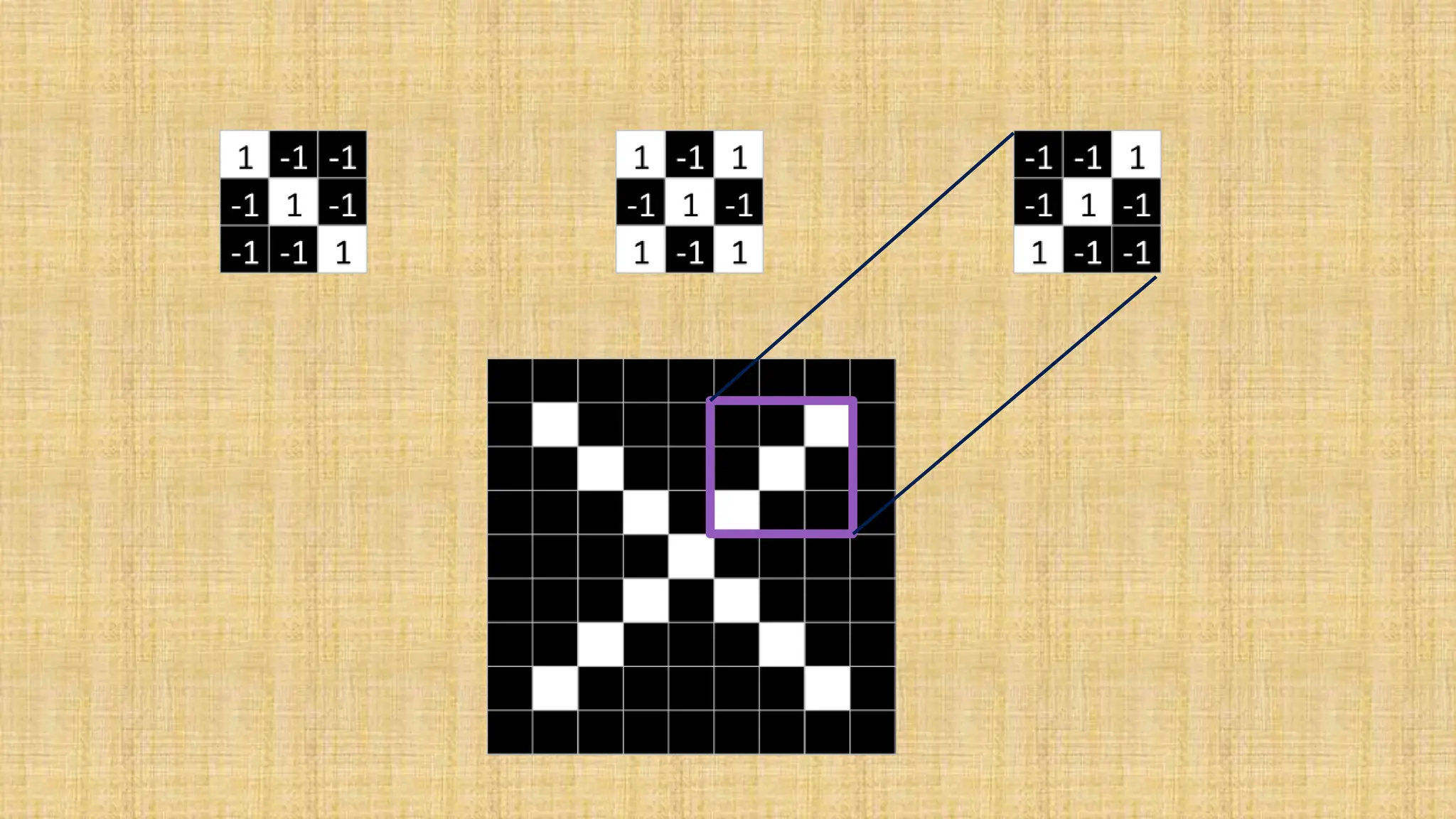
Features match pieces of the image
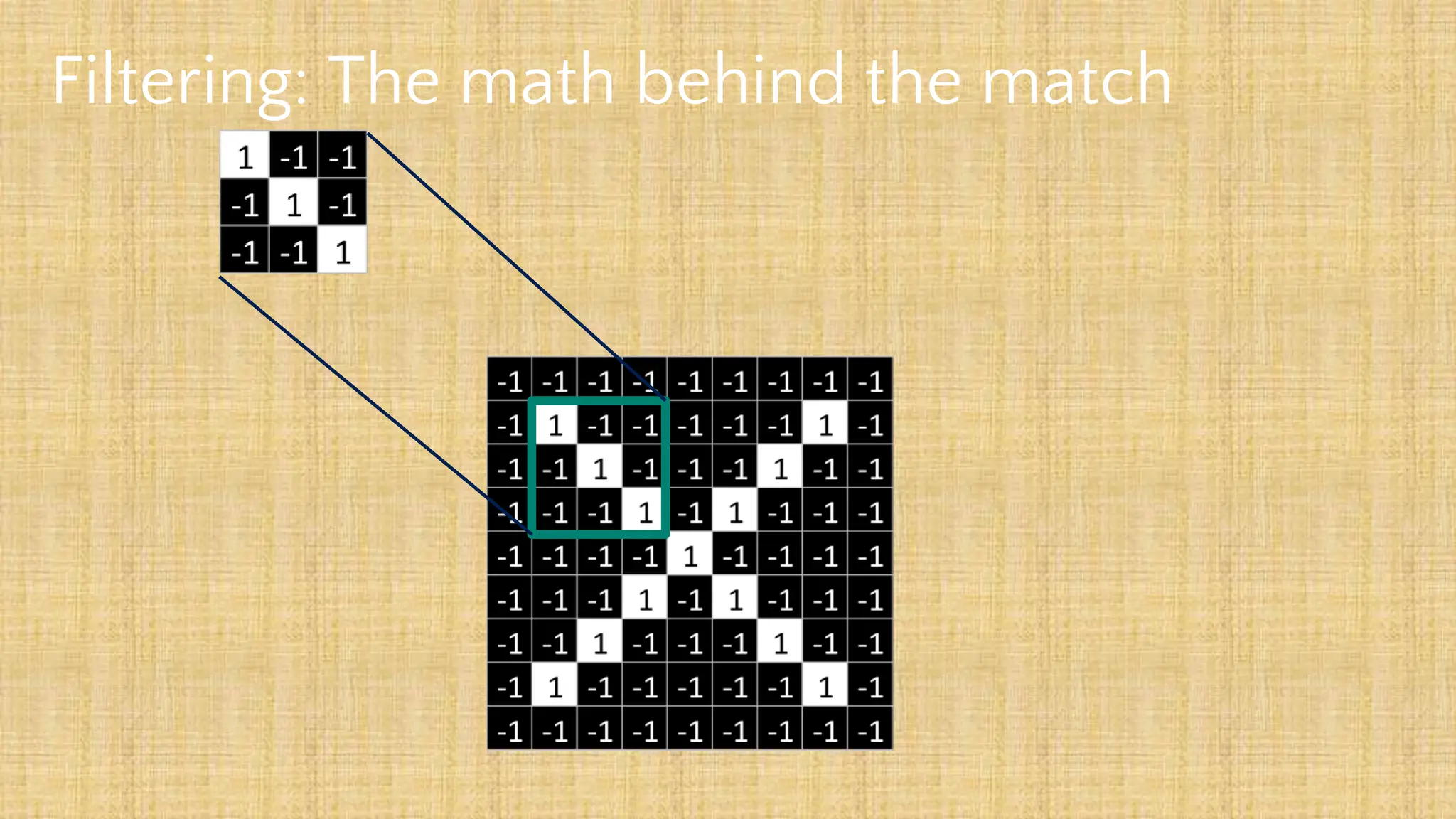
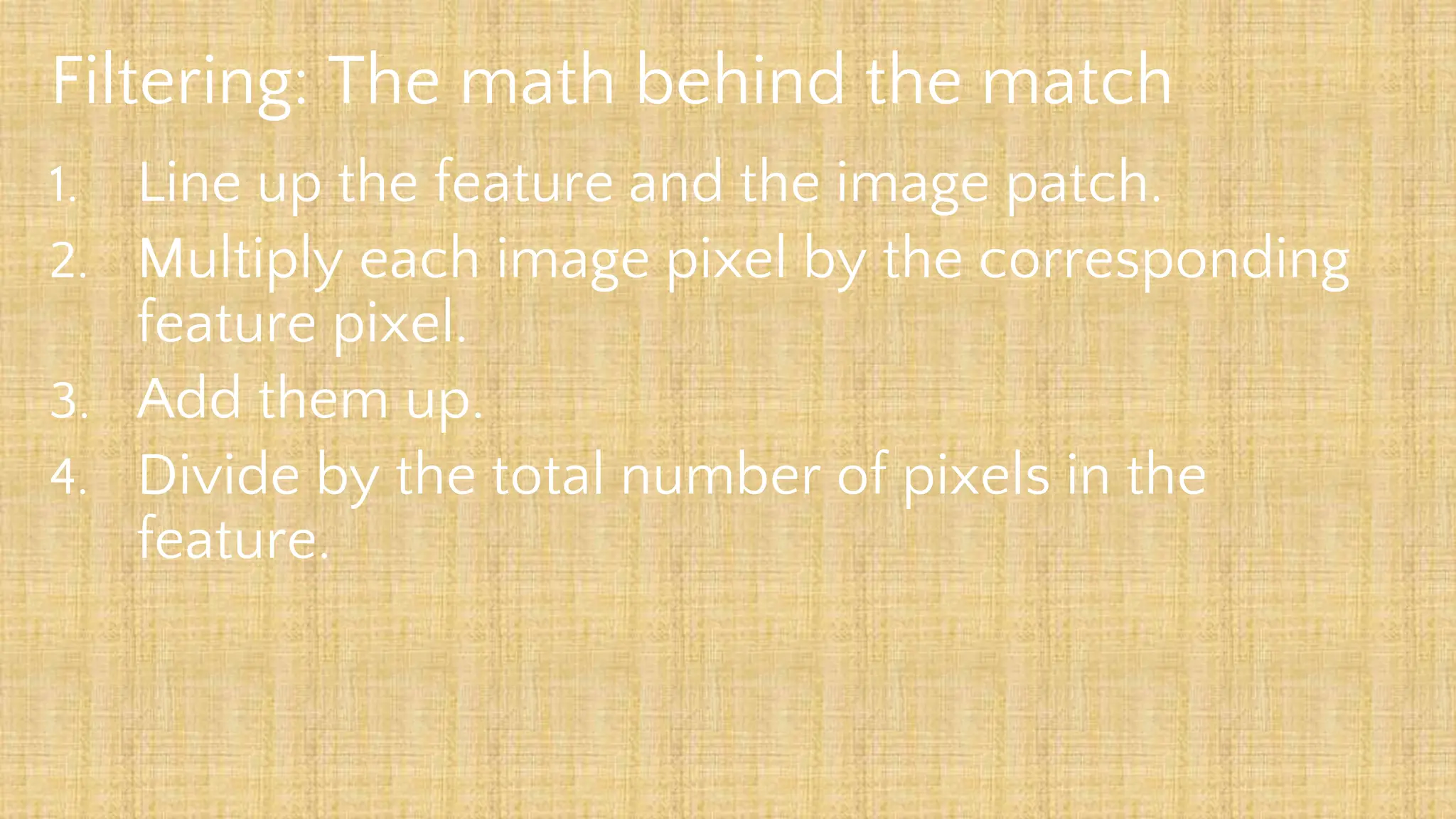
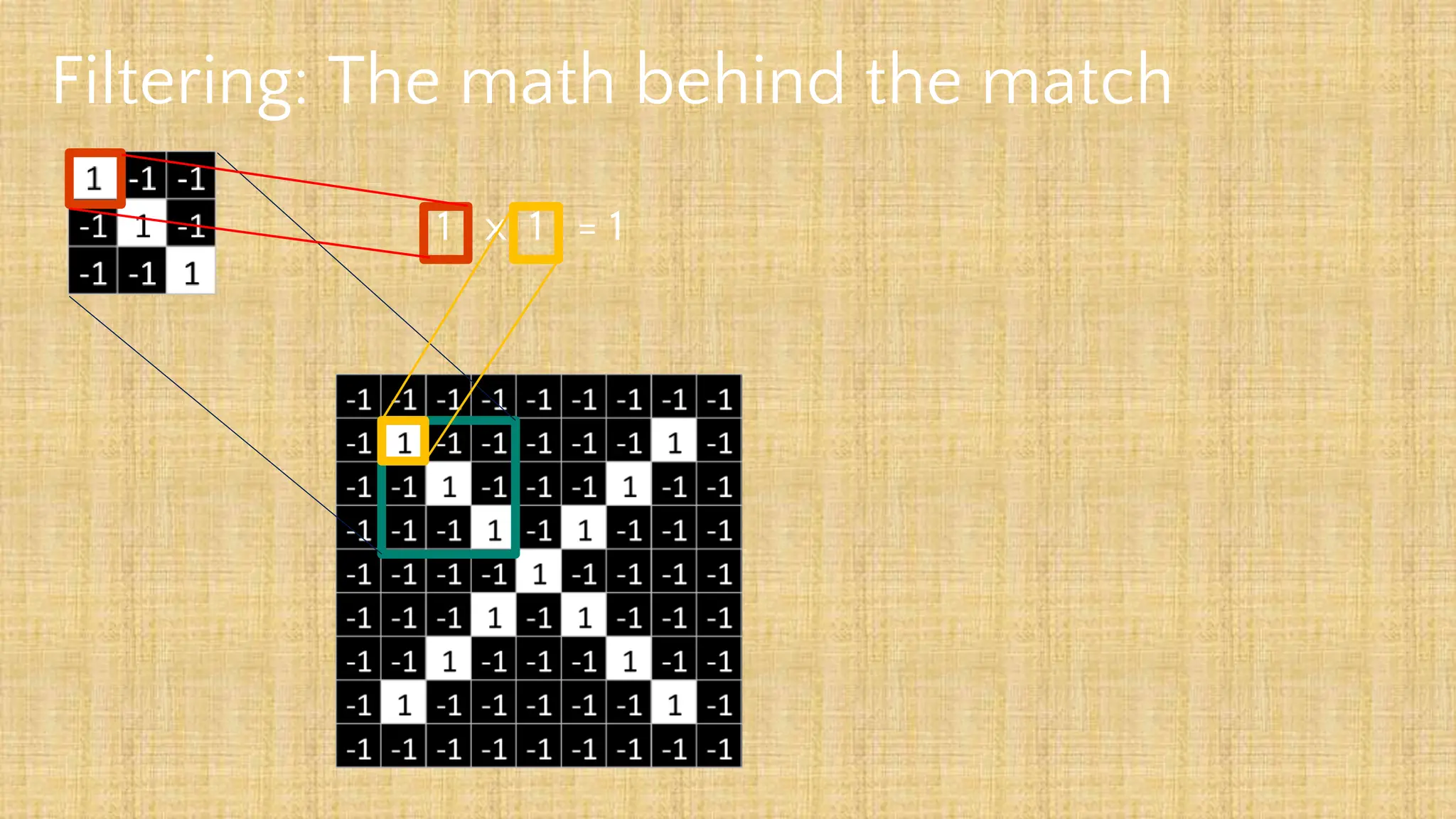
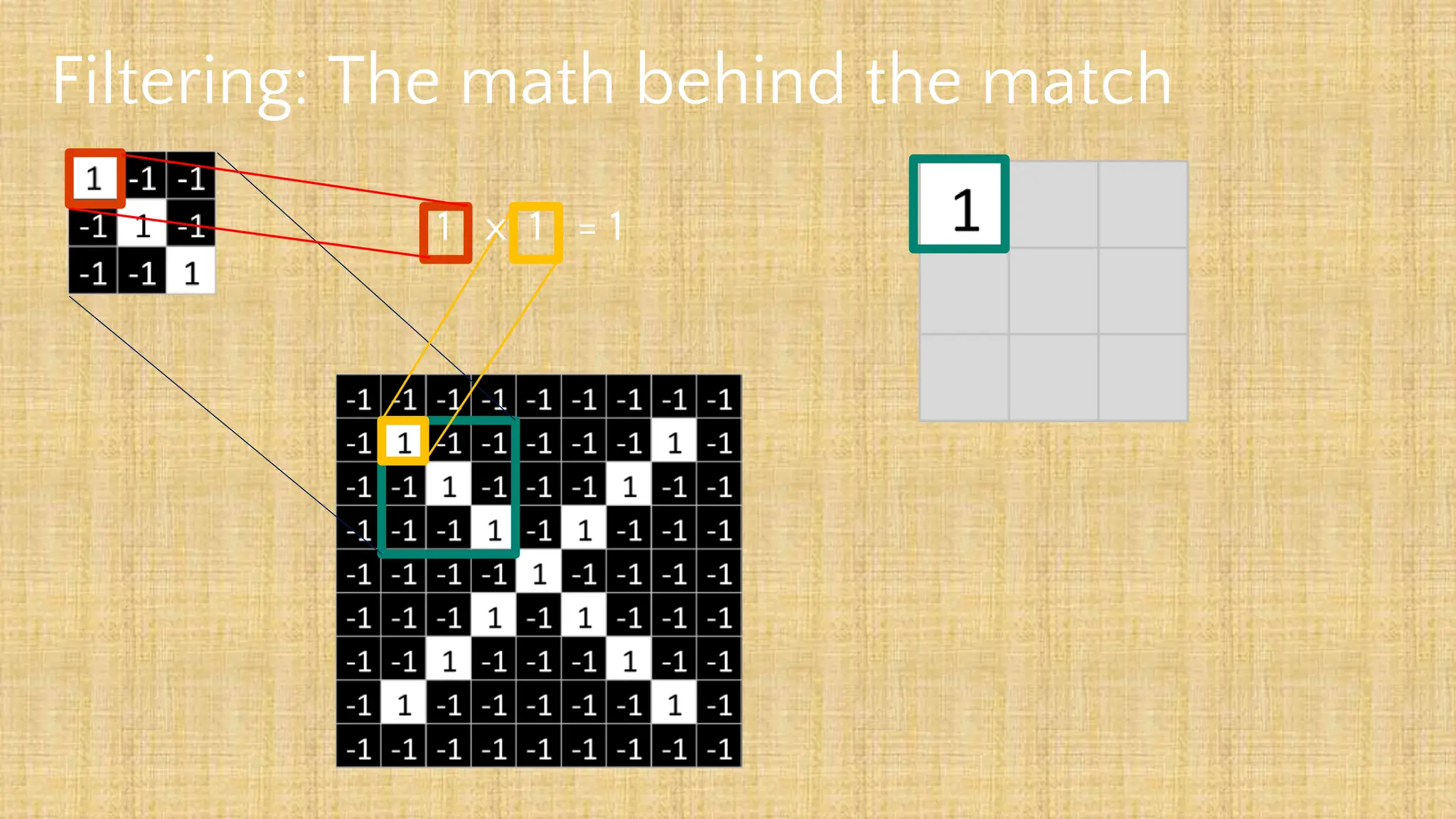
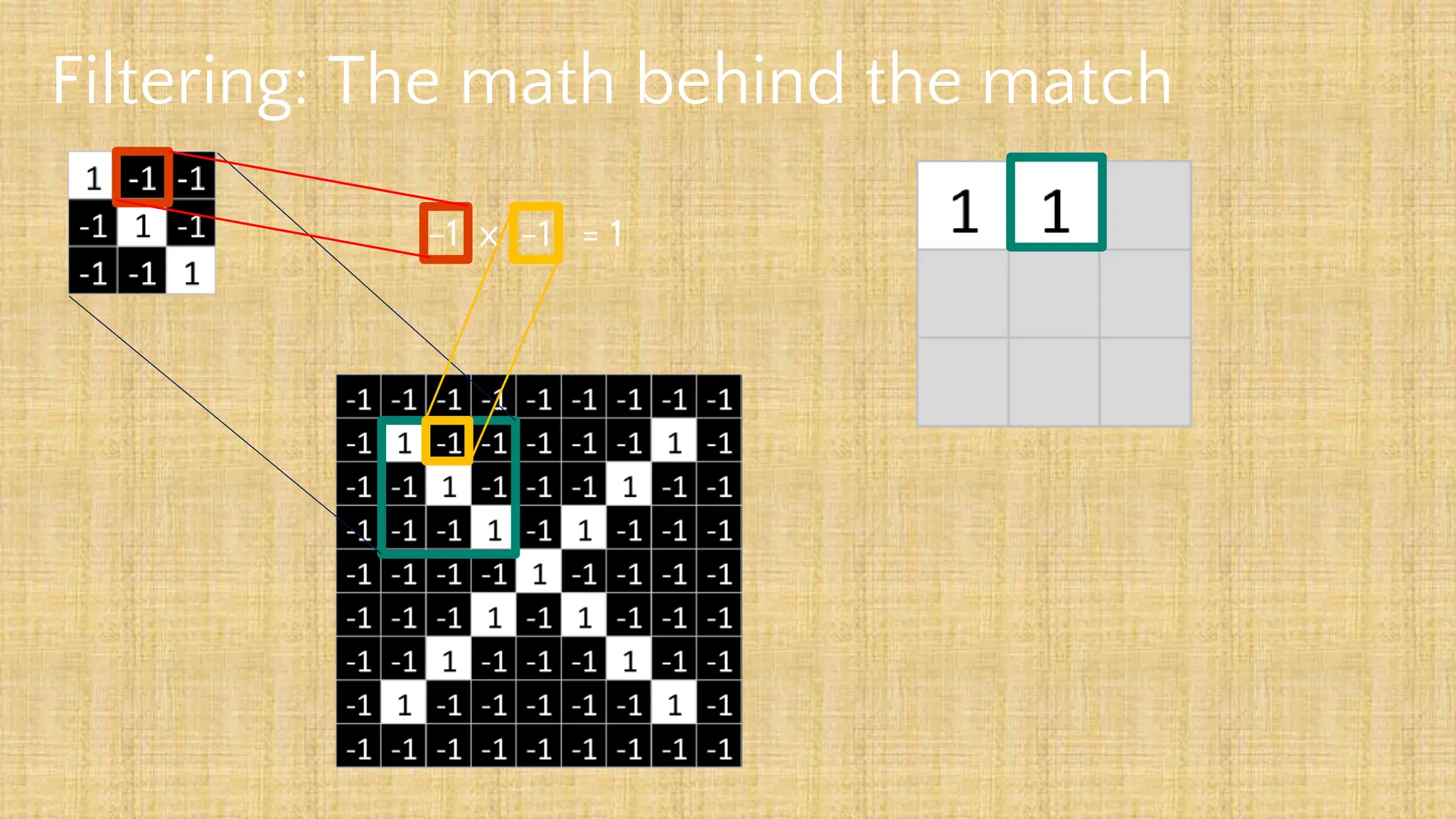
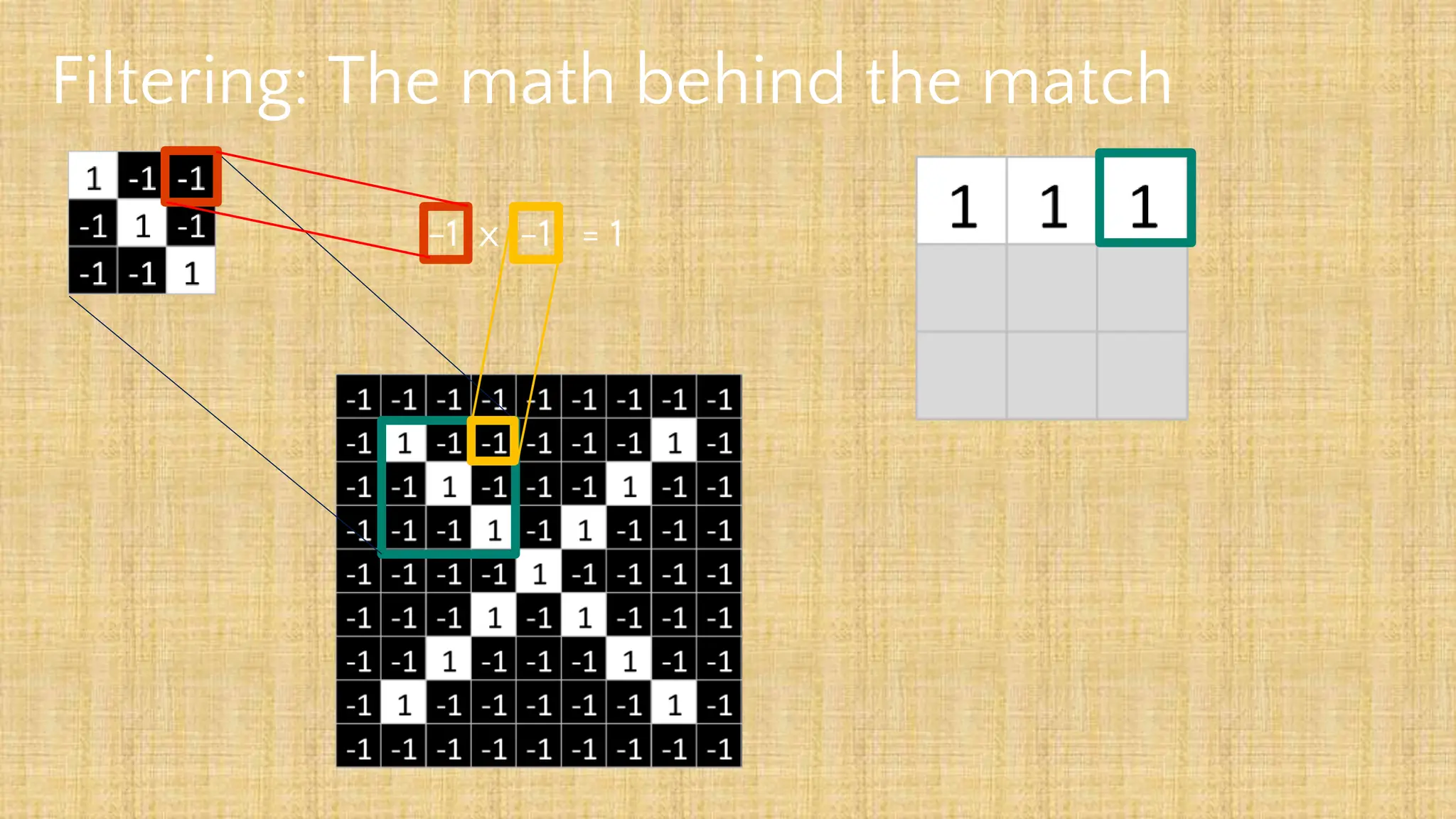
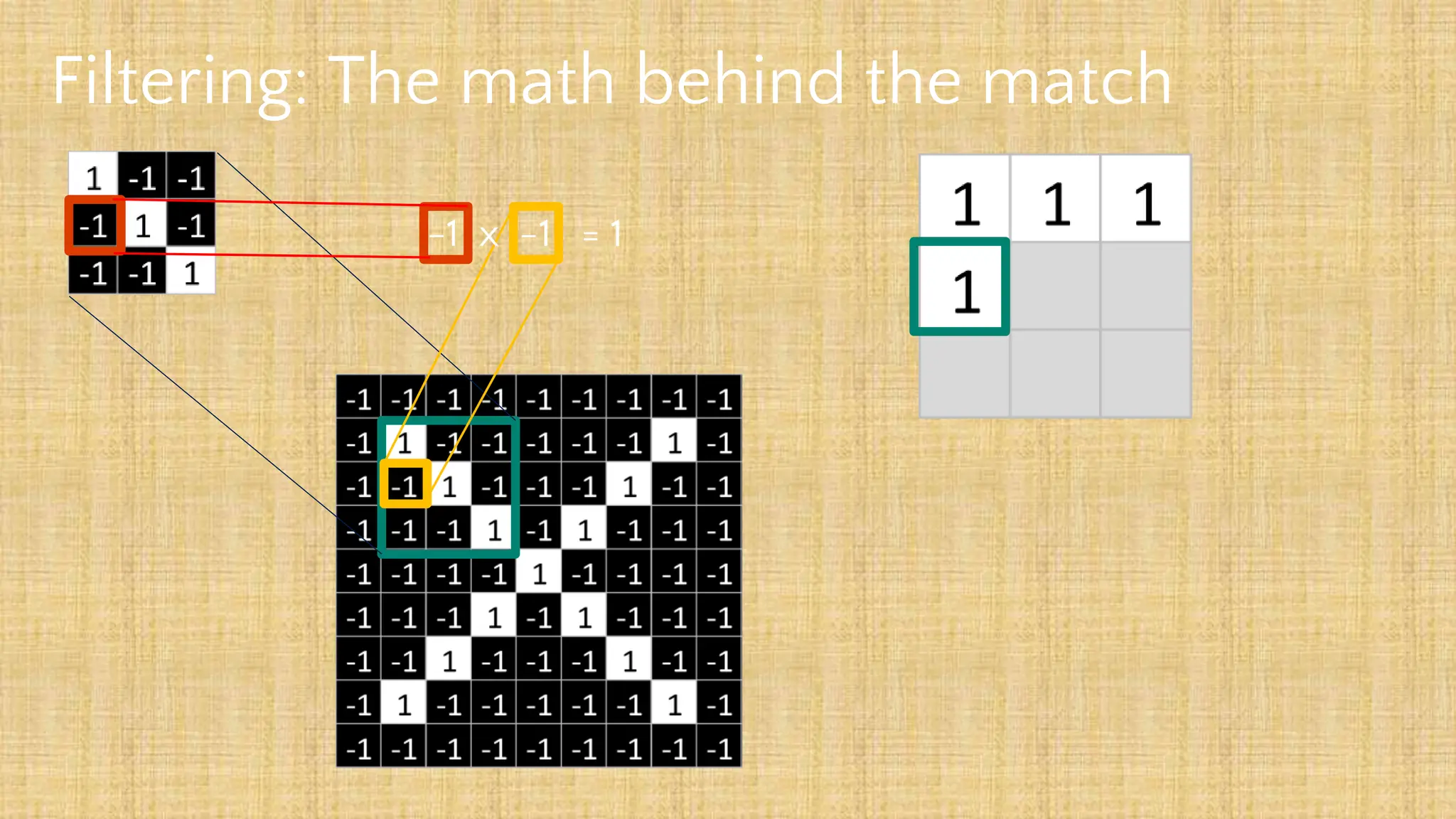
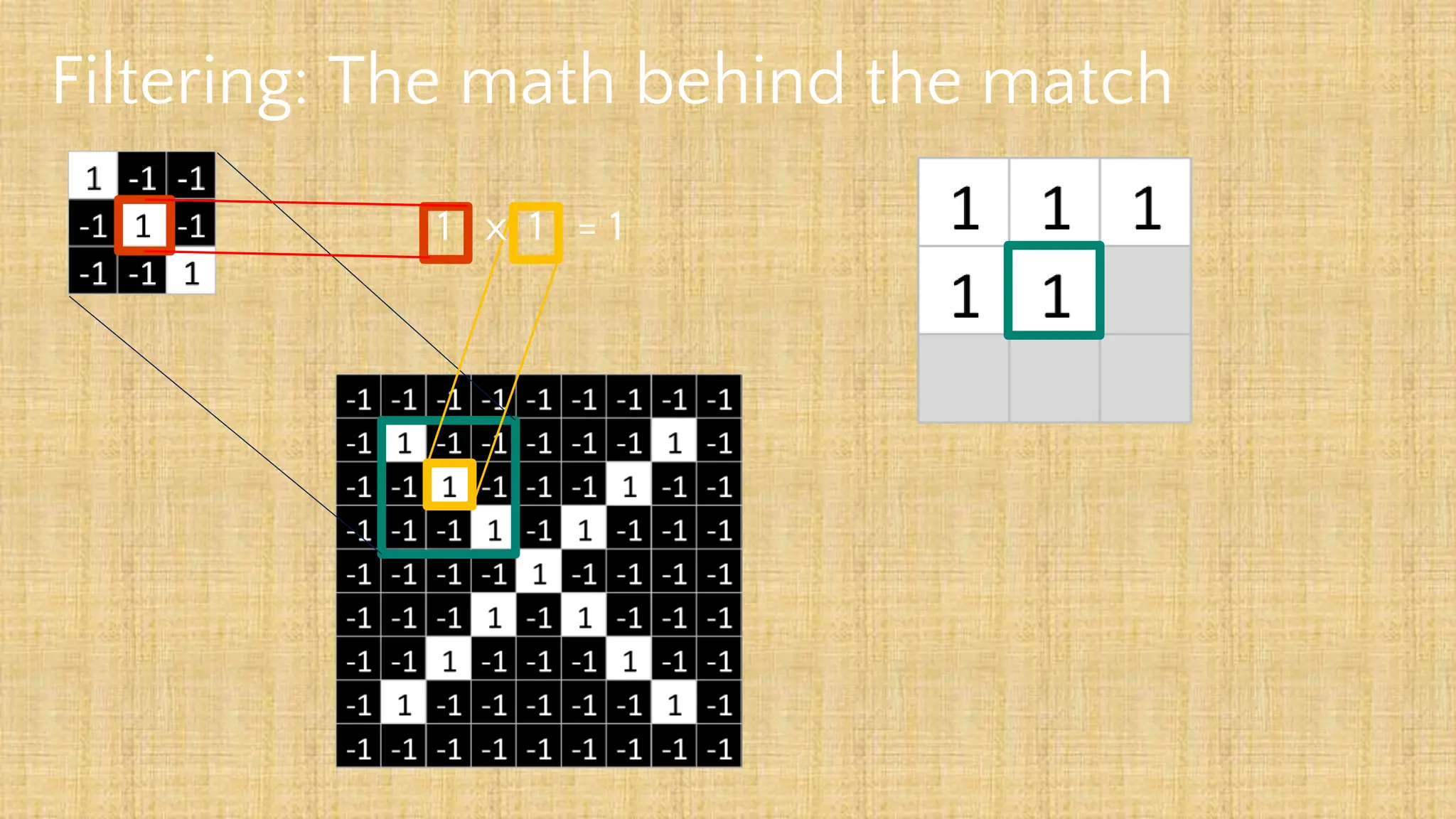
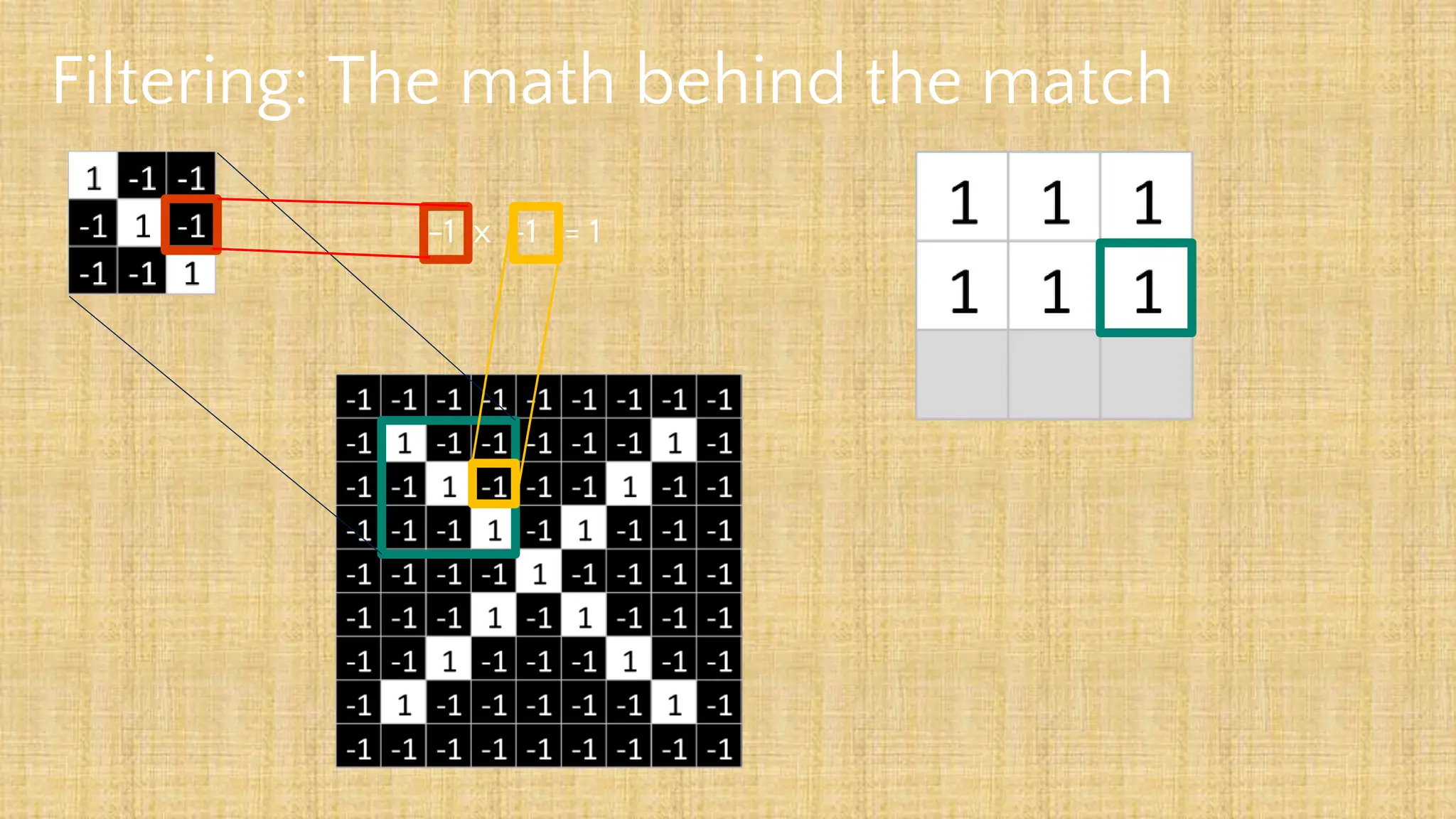
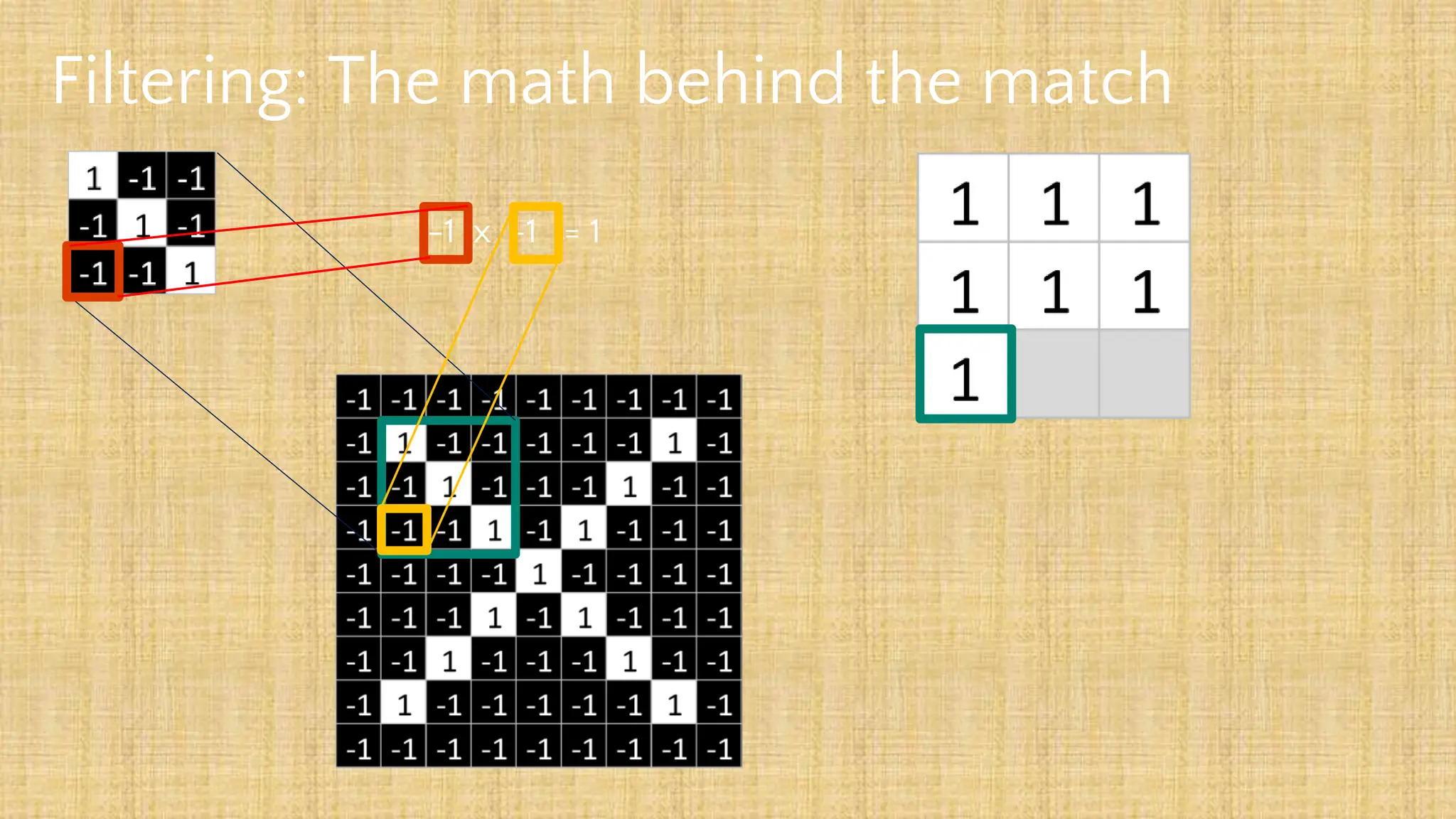
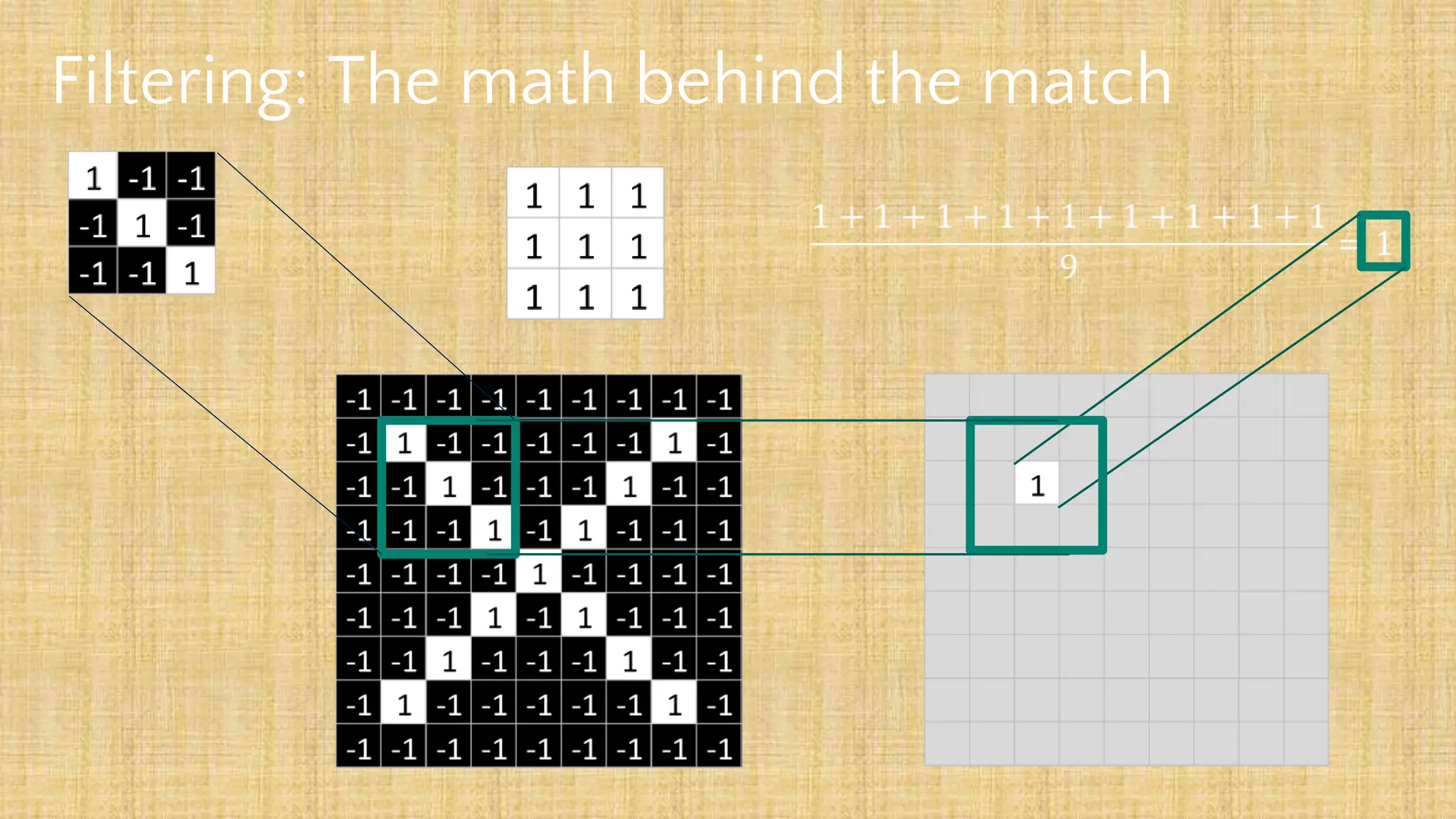
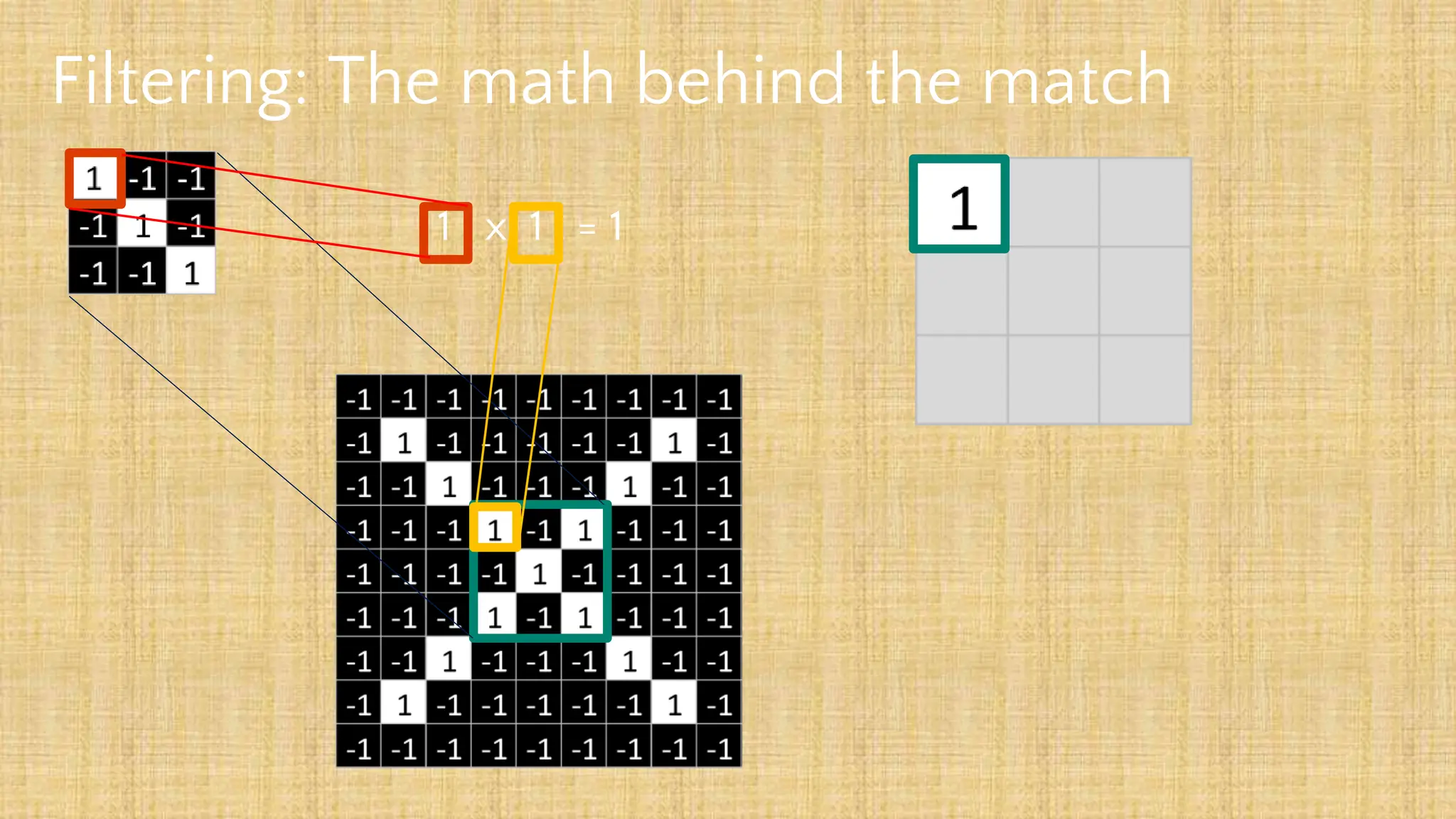
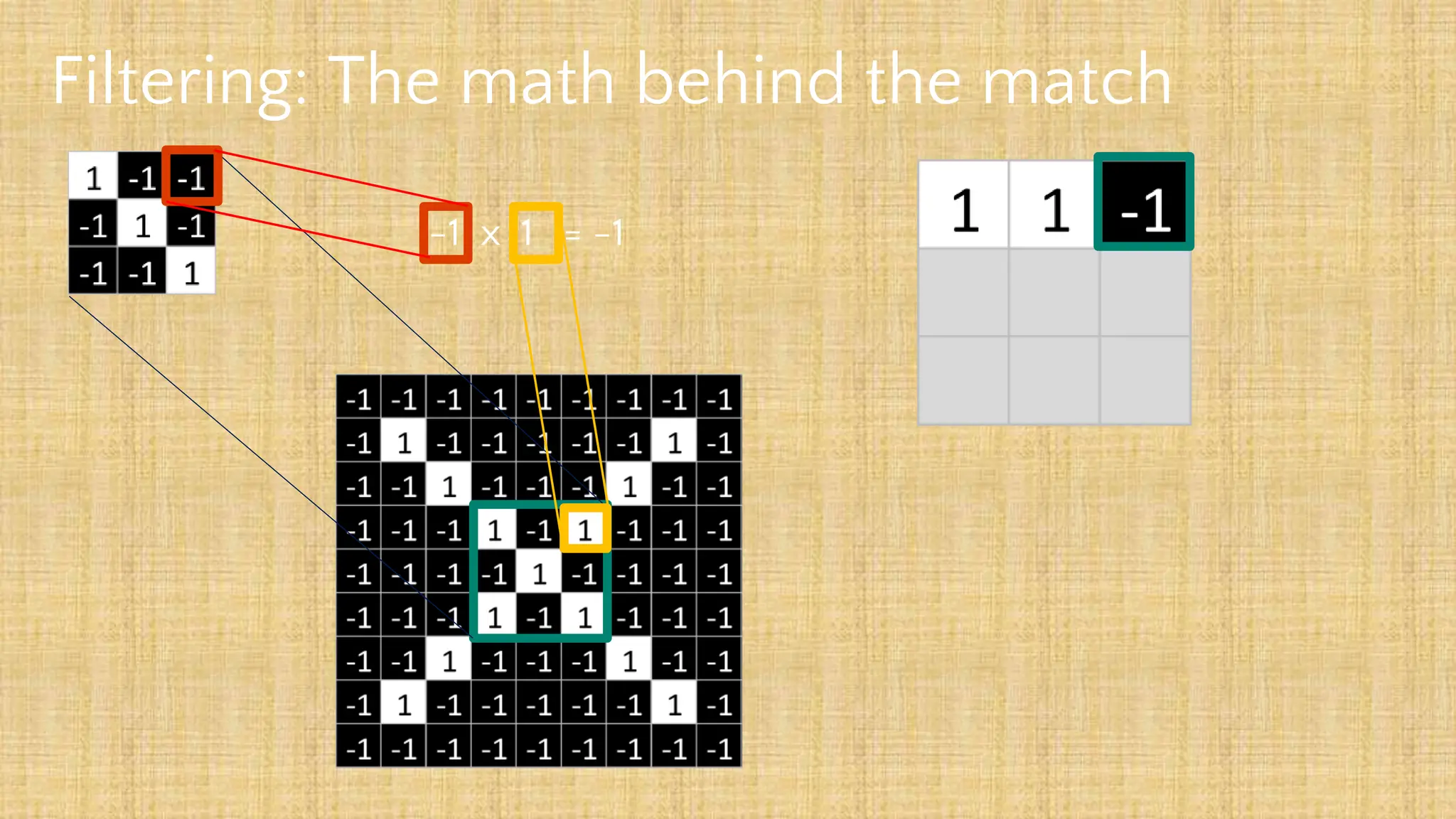
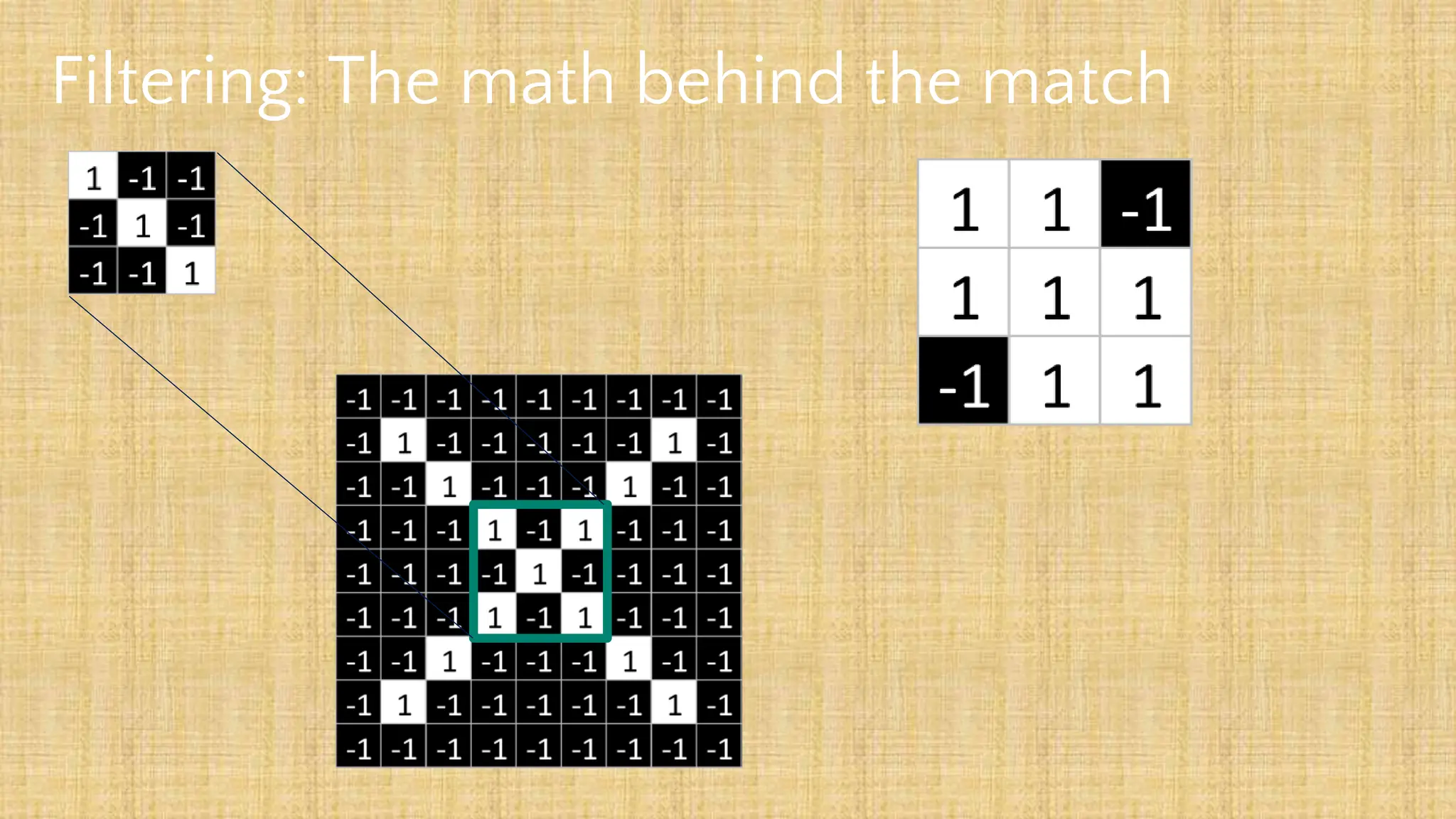
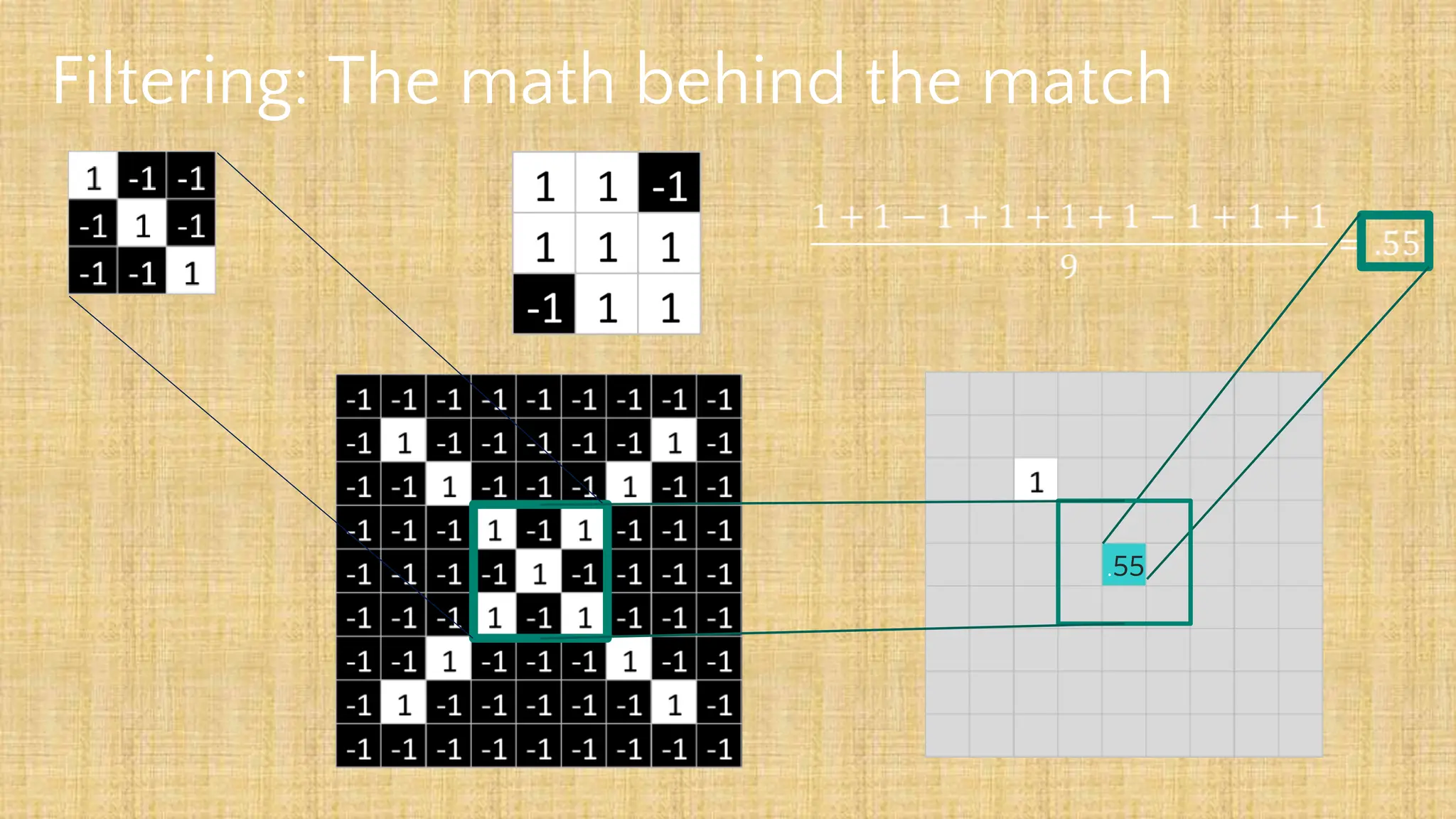
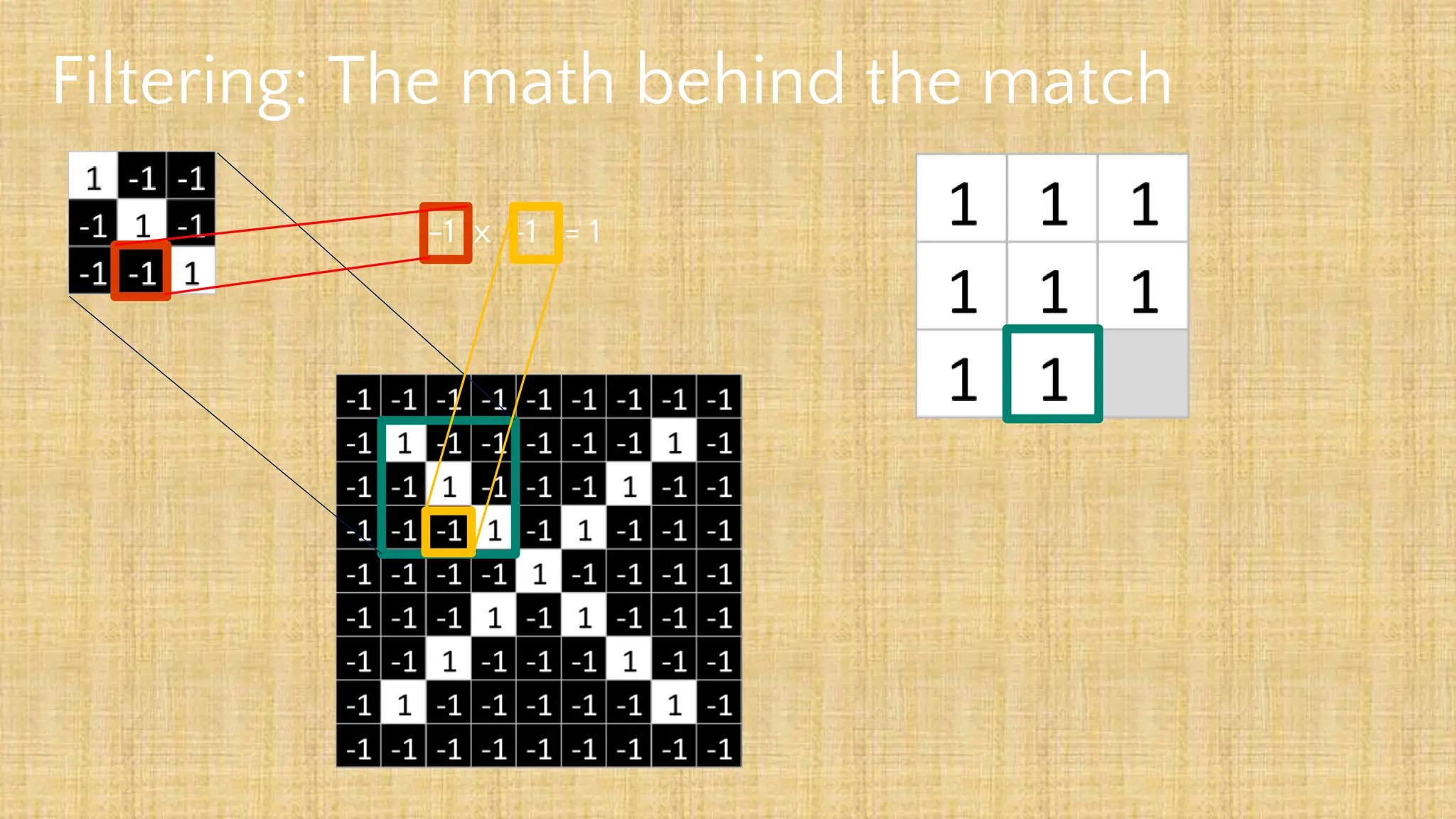
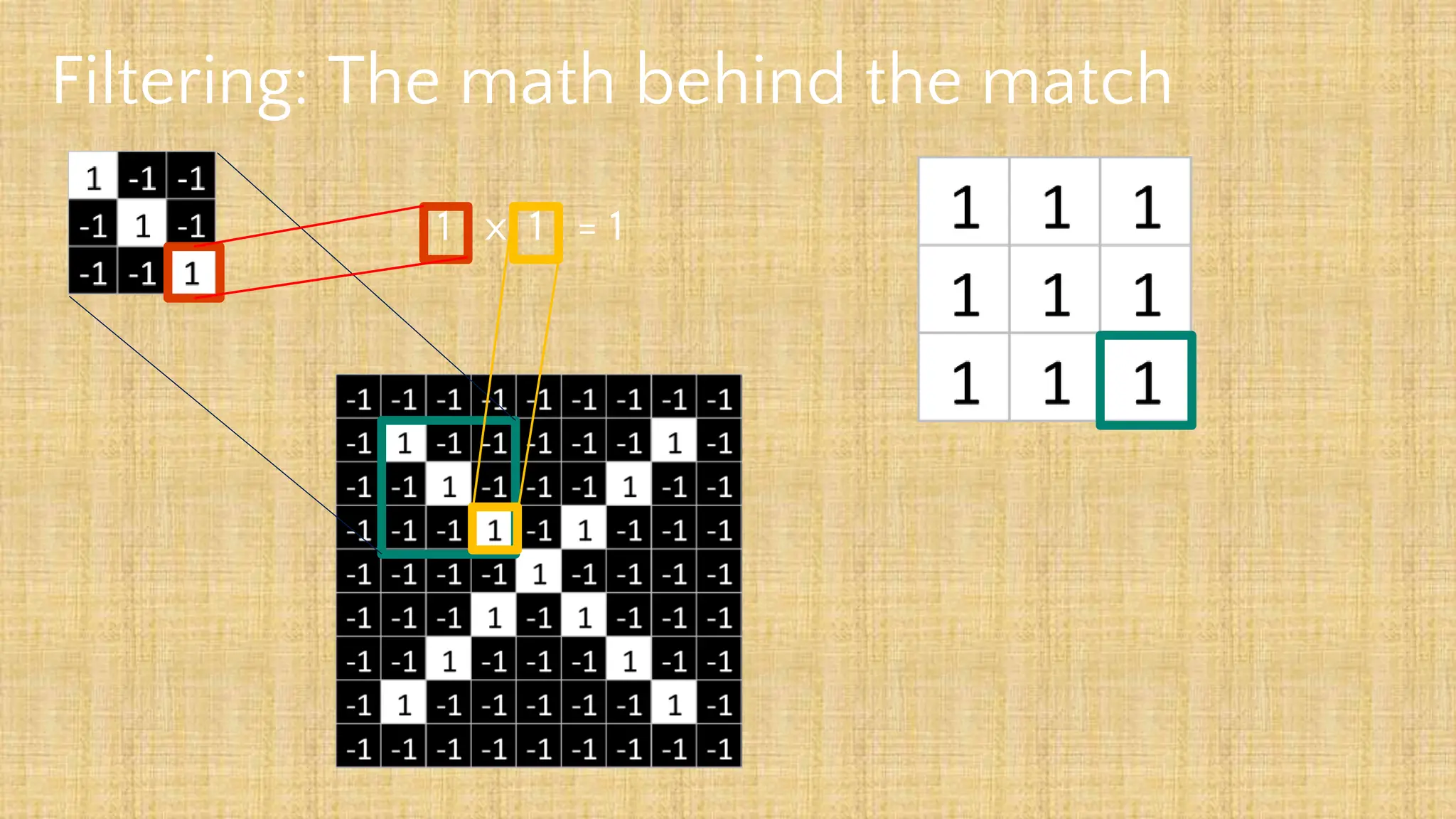
Filtering: The math behind the match
1. Line up the feature and the image patch.
2. Multiply each image pixel by the corresponding
feature pixel.
3. Add them up.
4. Divide by the total number of pixels in the
feature.
Filtering: The math behind the match
1 x 1 = 1
Filtering: The math behind the match
1 x 1 = 1
Filtering: The math behind the match
-1 x -1 = 1
Filtering: The math behind the match
-1 x -1 = 1
Filtering: The math behind the match
-1 x -1 = 1
Filtering: The math behind the match
1 x 1 = 1
Filtering: The math behind the match
-1 x -1 = 1
Filtering: The math behind the match
-1 x -1 = 1
Filtering: The math behind the match
-1 x -1 = 1
Filtering: The math behind the match
1 x 1 = 1
Filtering: The math behind the match
1 x 1 = 1
Filtering: The math behind the match
-1 x 1 = -1
Filtering: The math behind the match
.55
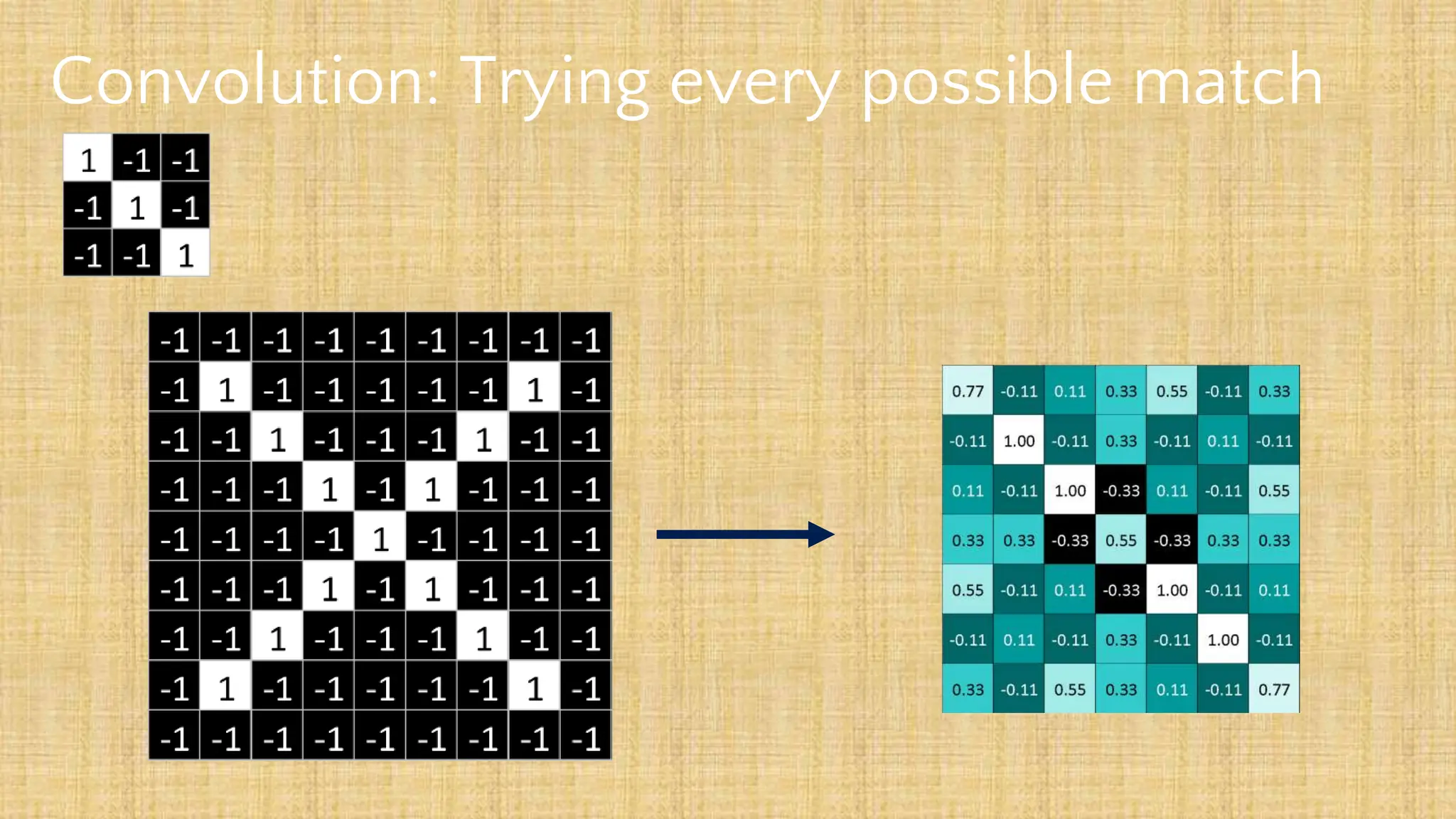
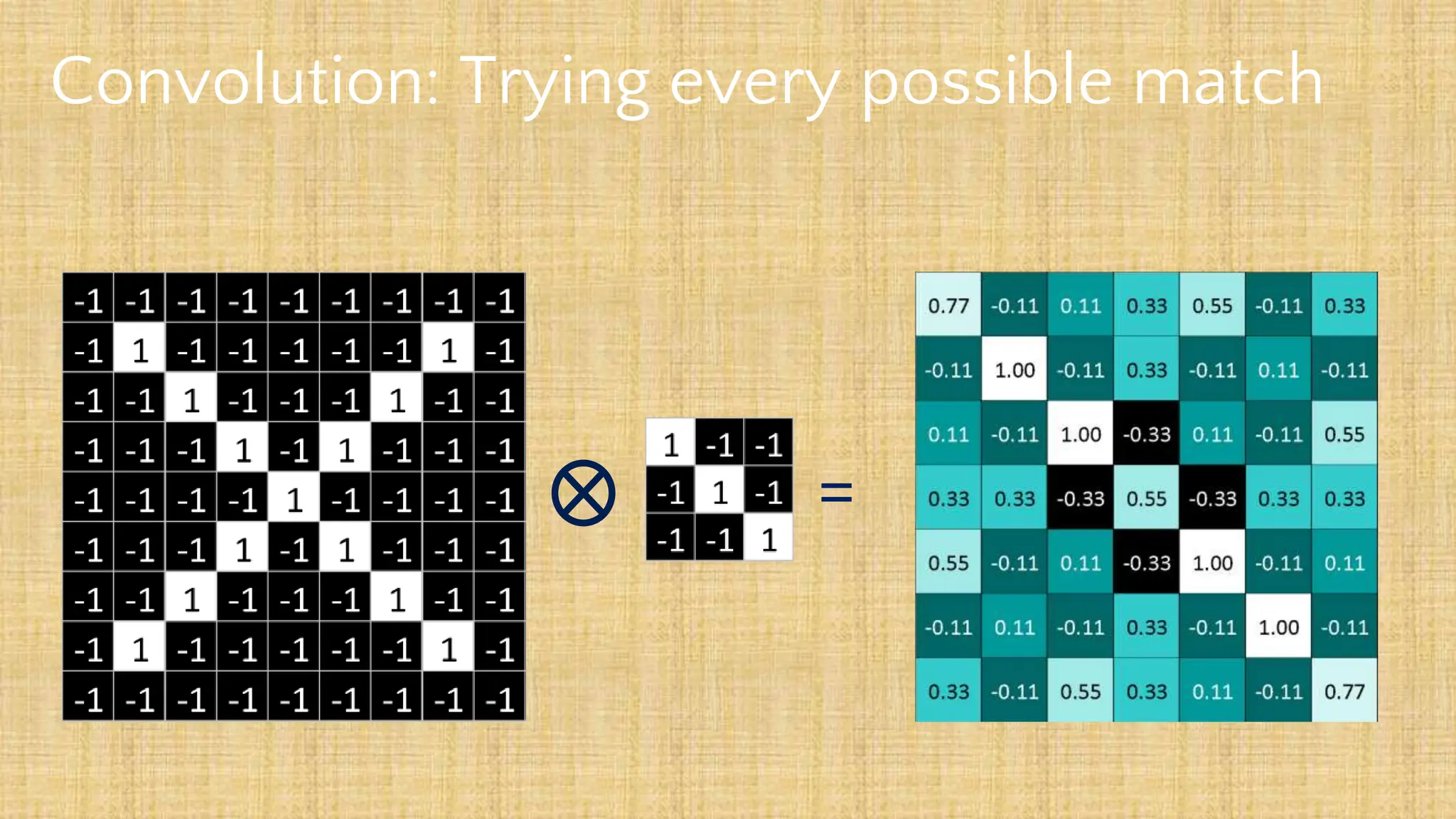
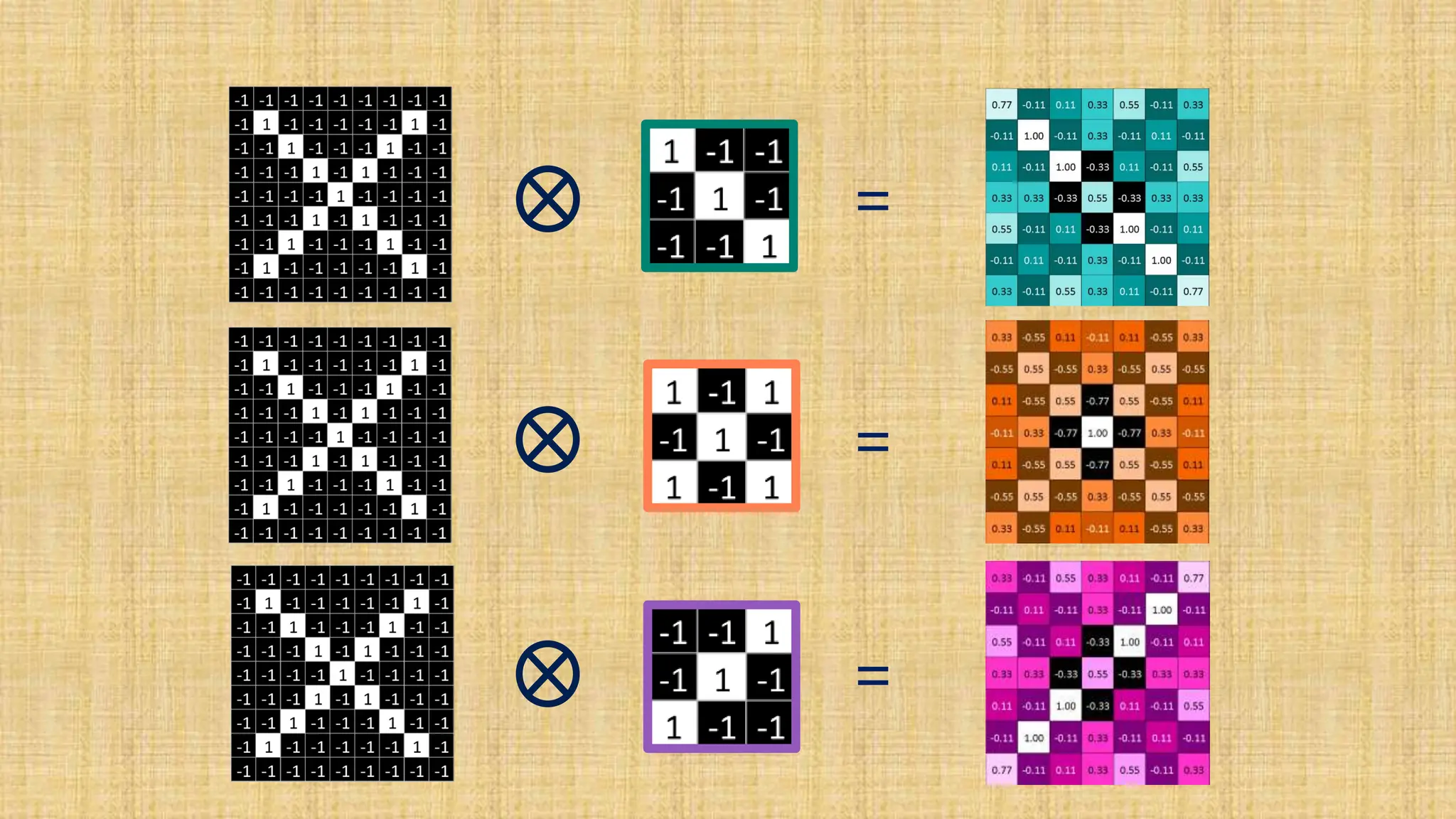
Convolution: Trying every possible match
=
=
=
=
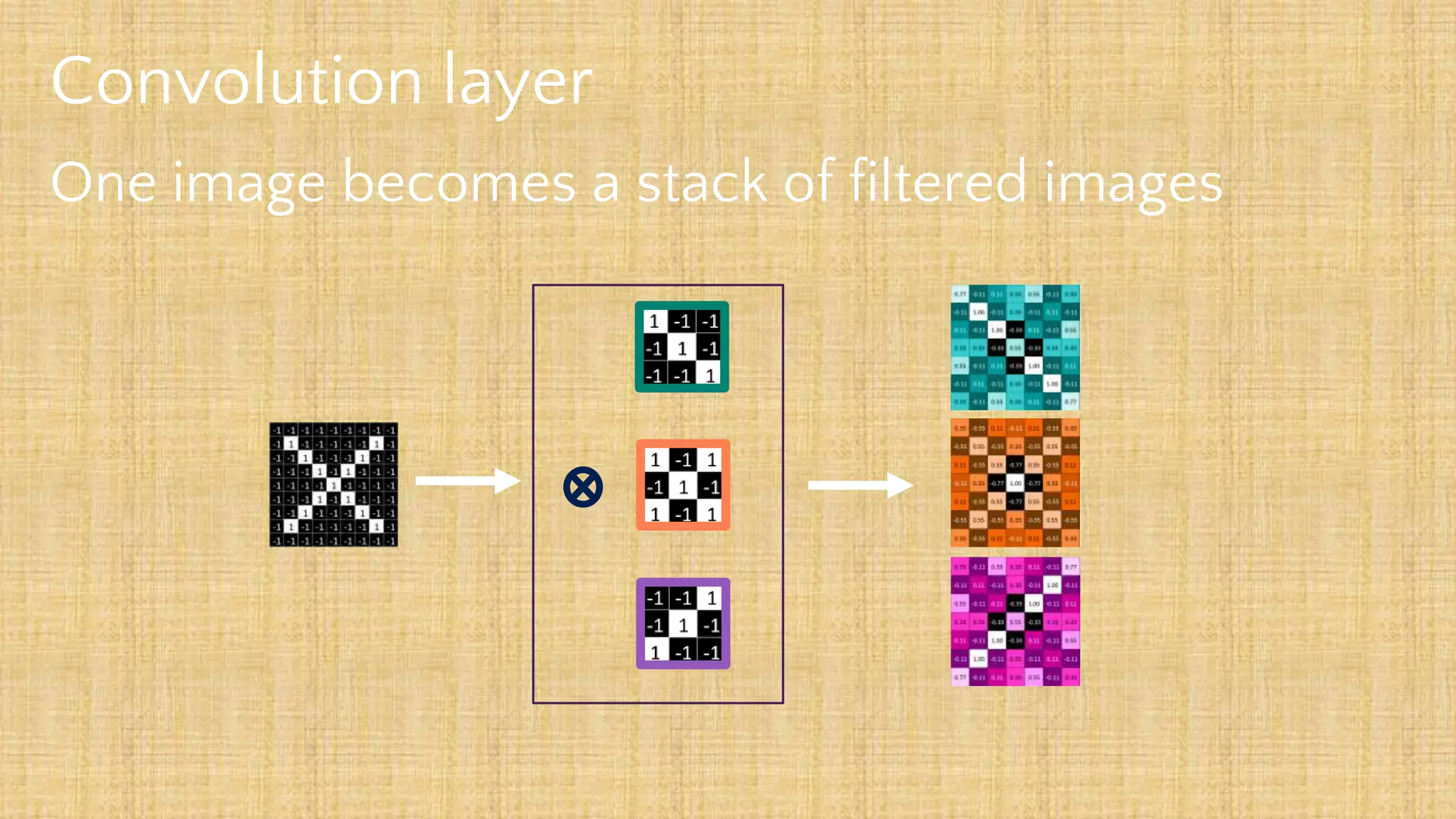
Convolution layer
One image becomes a stack of filtered images
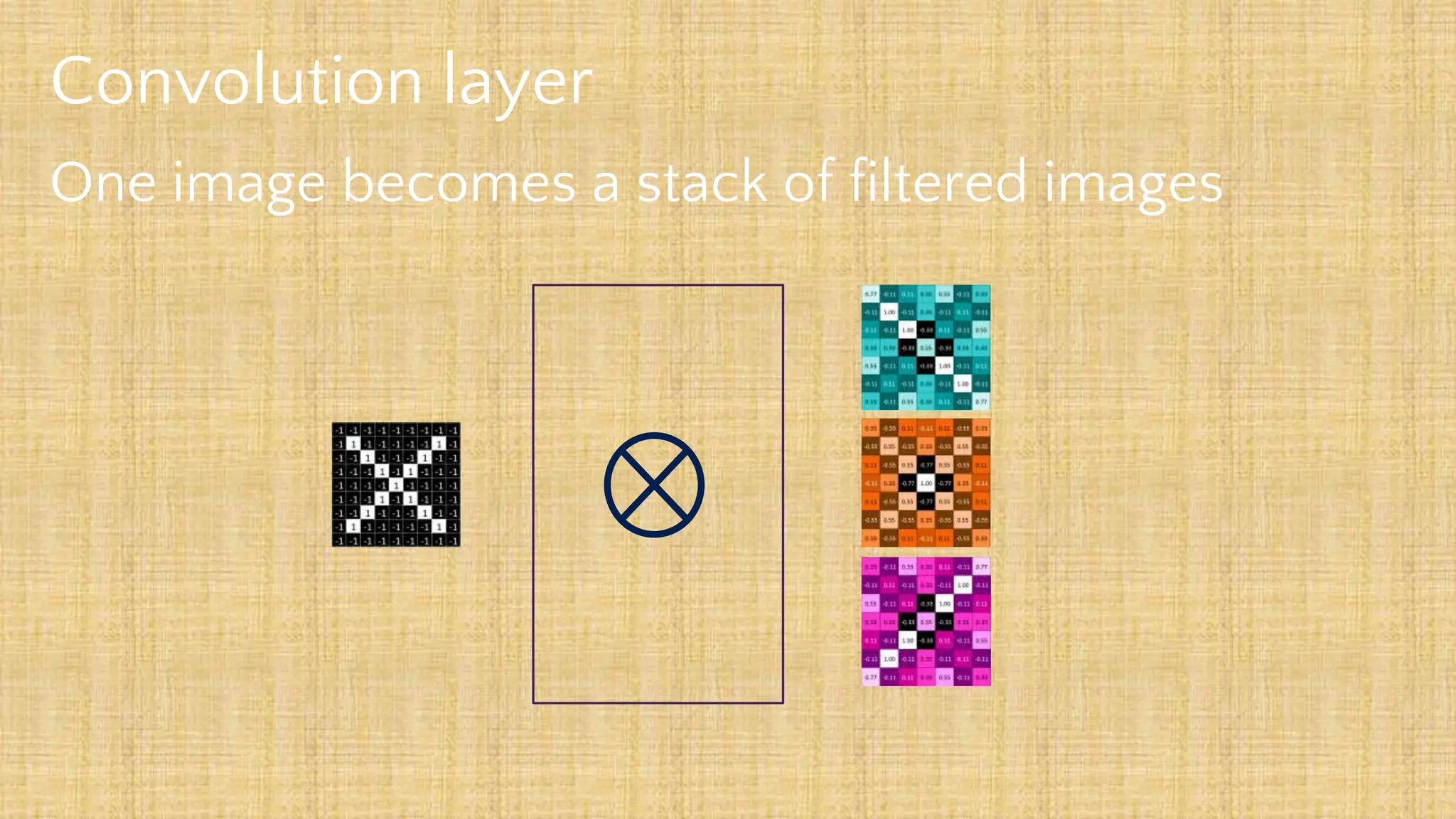
Convolution layer
One image becomes a stack of filtered images
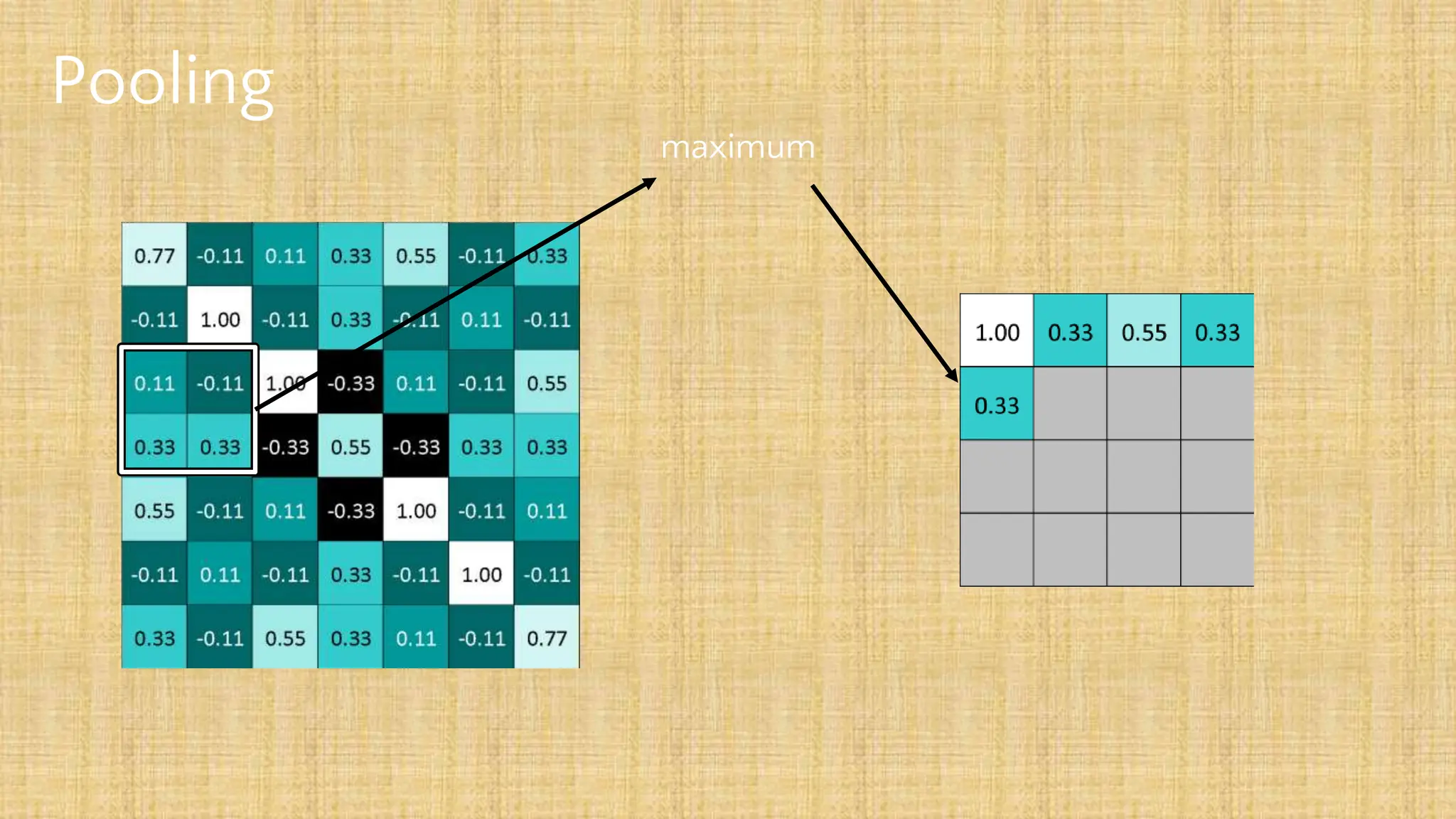
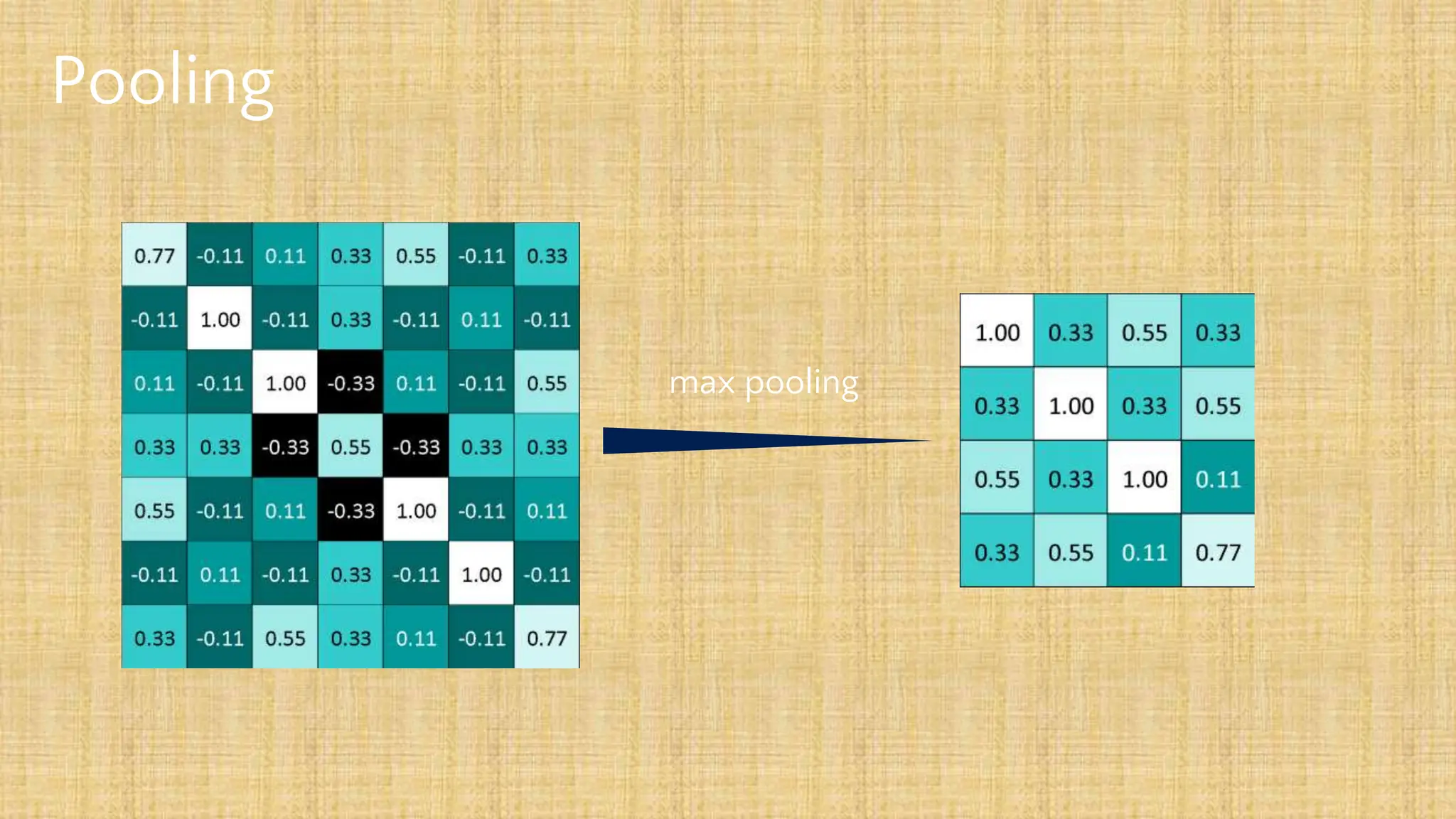
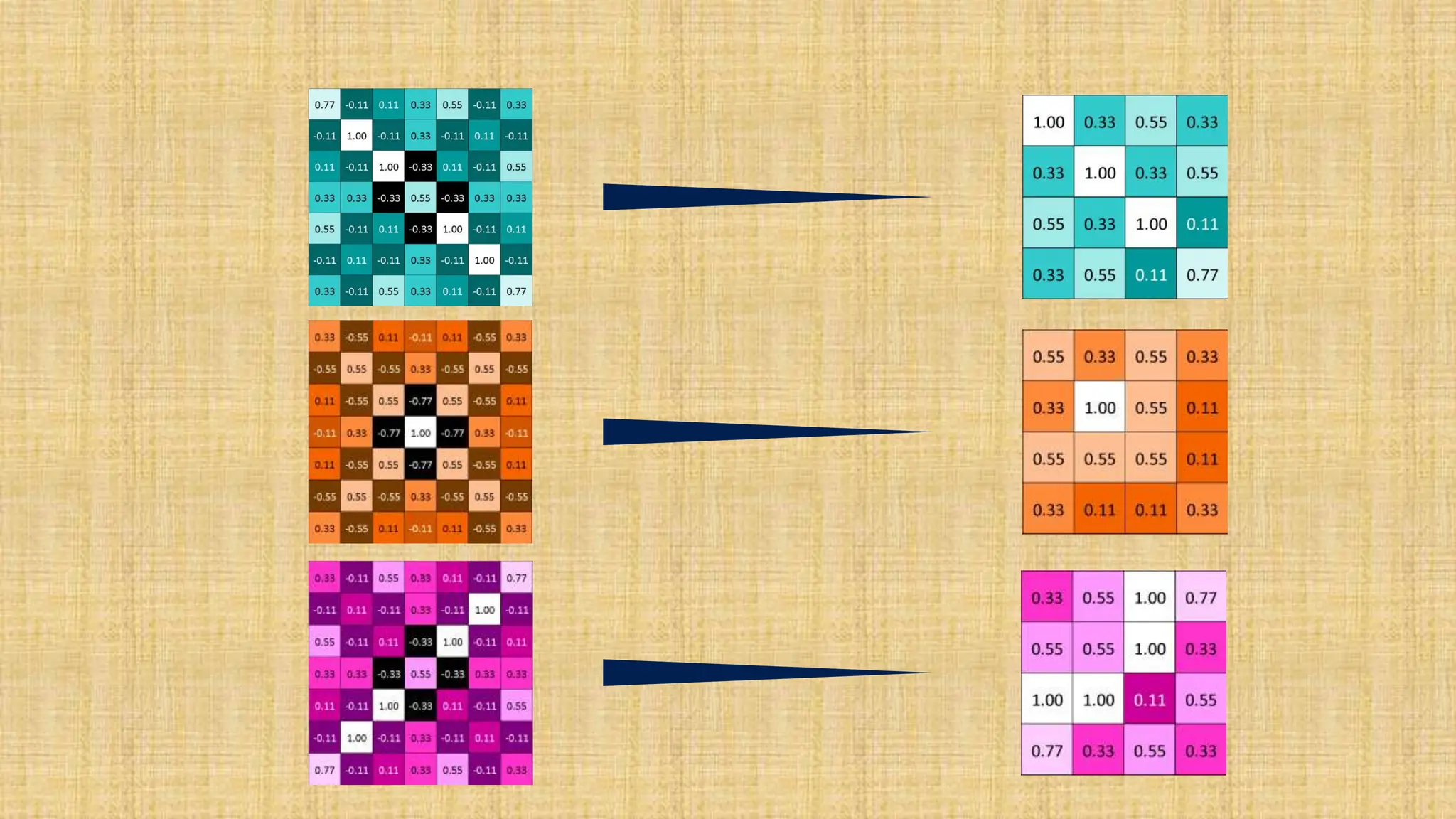
Pooling: Shrinking the image stack
1. Pick a window size (usually 2 or 3).
2. Pick a stride (usually 2).
3. Walk your window across your filtered images.
4. From each window, take the maximum value.
Pooling
maximum
Pooling
maximum
Pooling
maximum
Pooling
maximum
Pooling
maximum
Pooling
max pooling
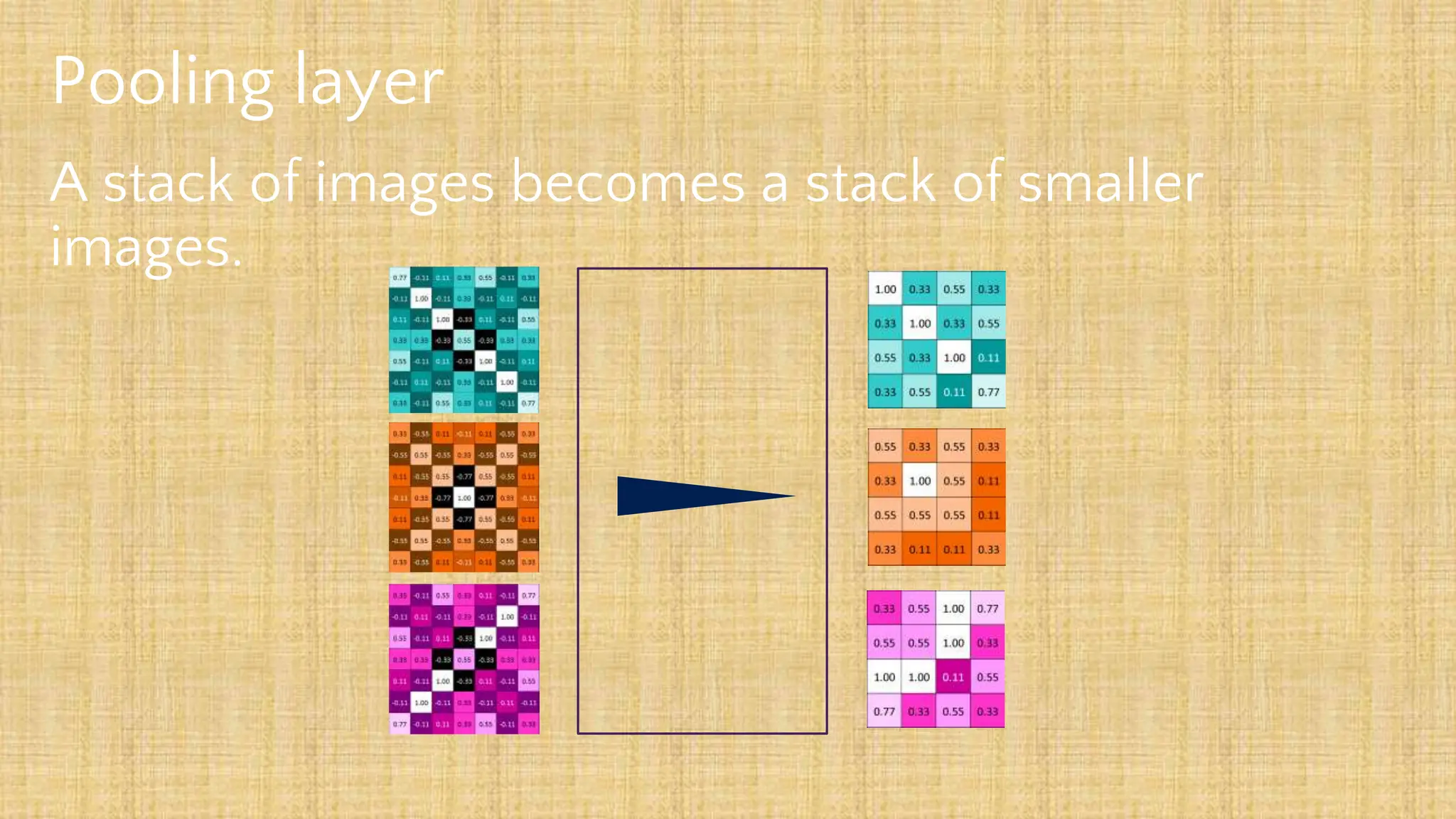
Pooling layer
A stack of images becomes a stack of smaller
images.
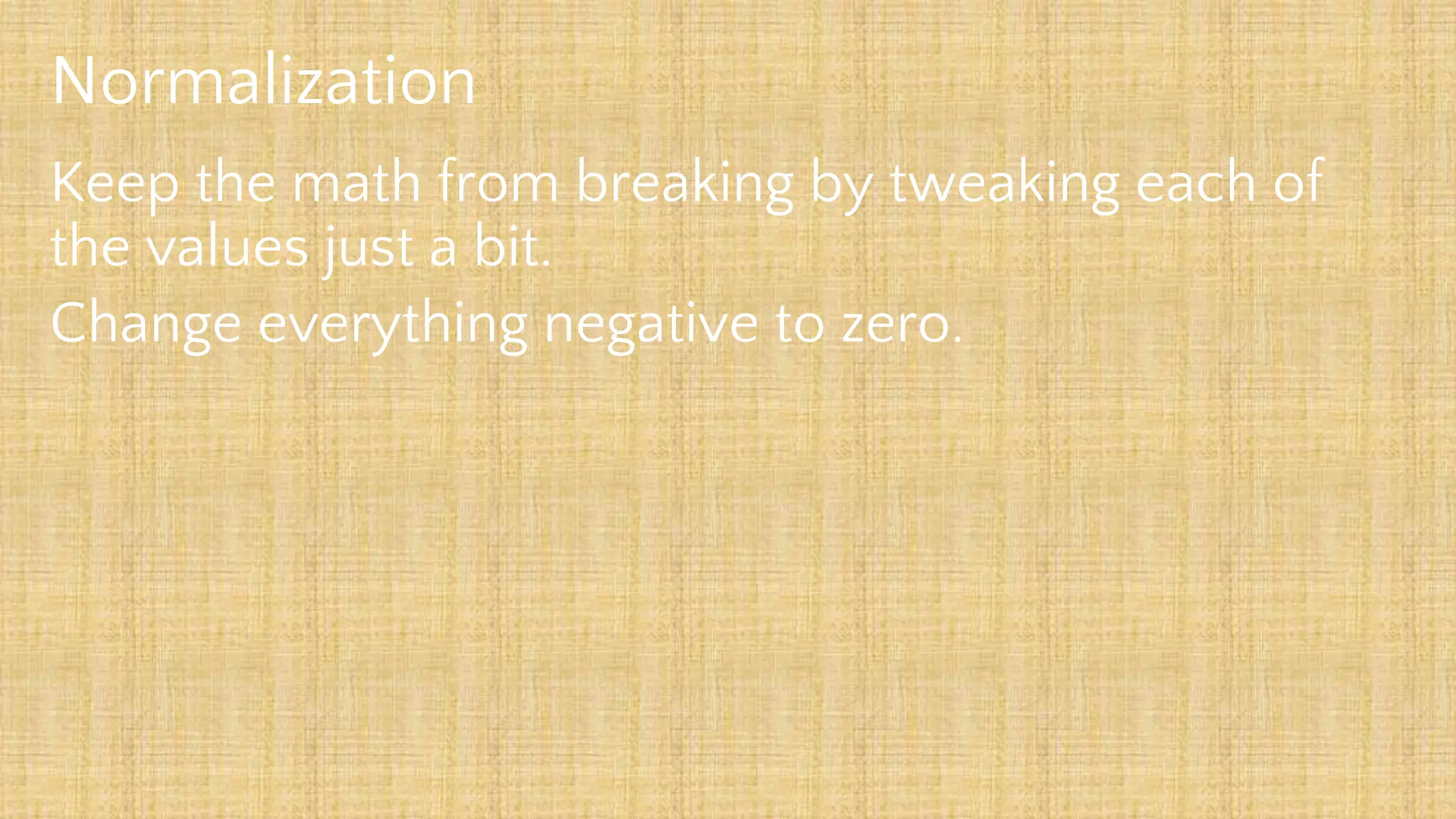
Normalization
Keep the math from breaking by tweaking each of
the values just a bit.
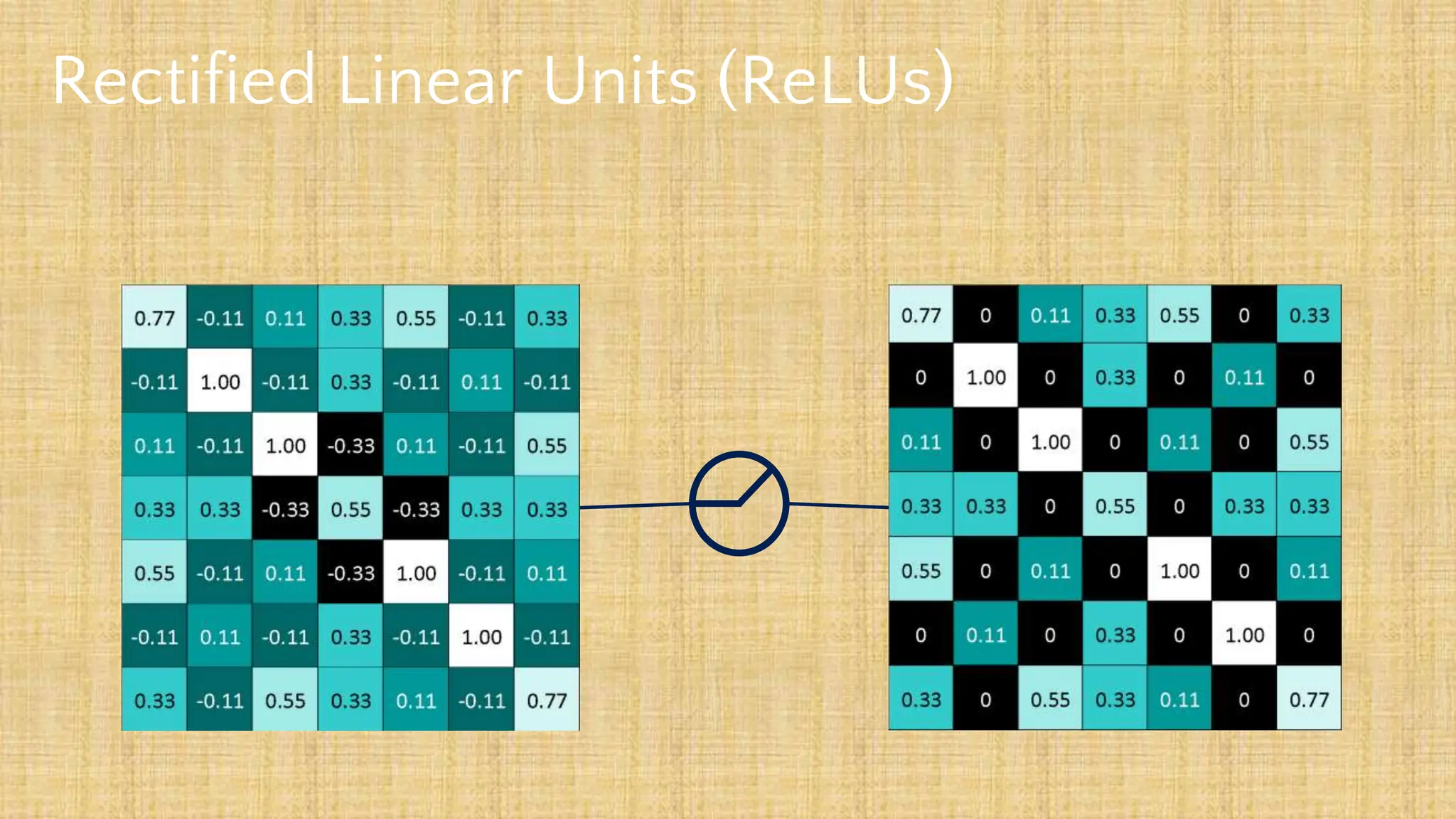
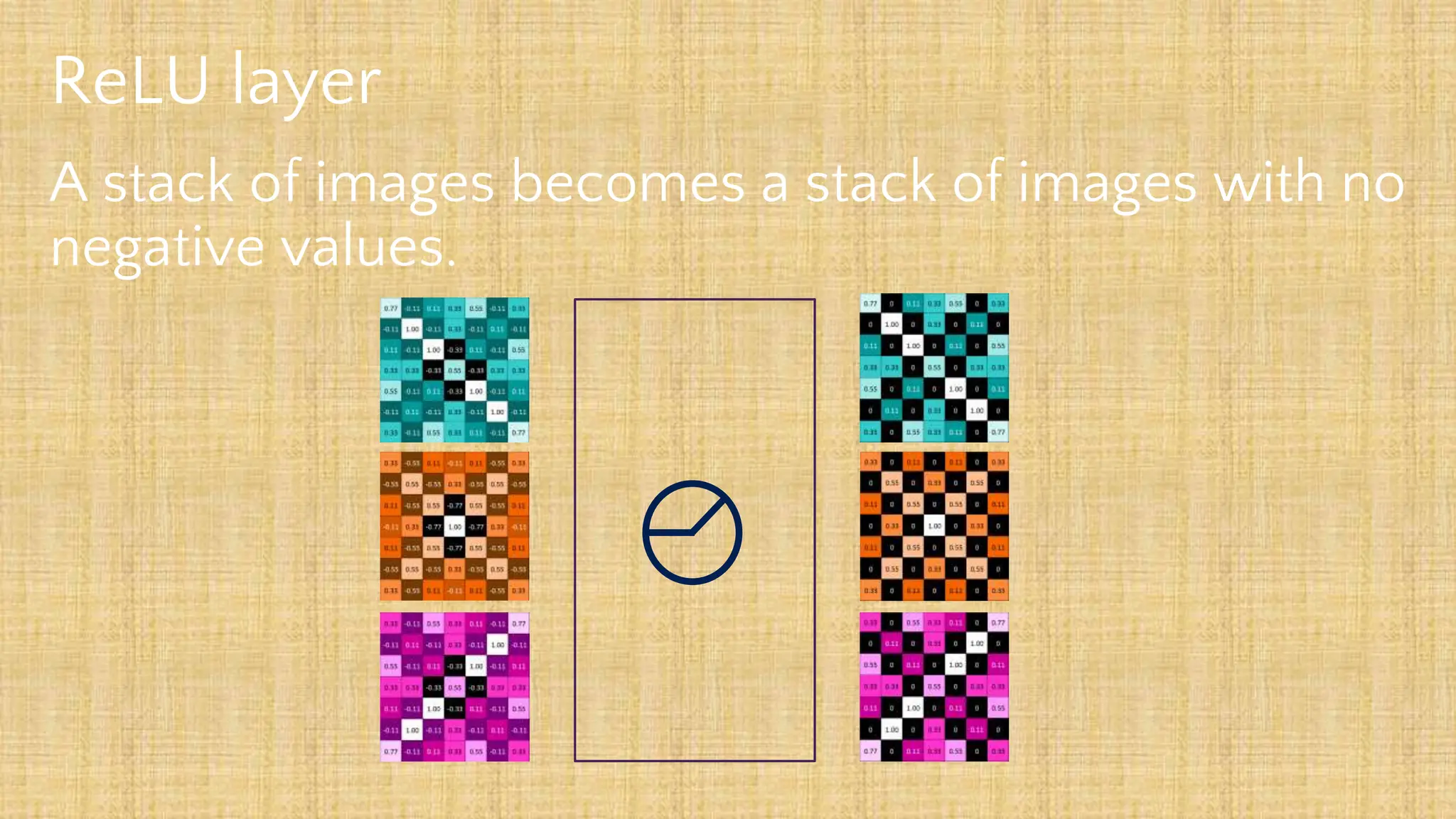
Change everything negative to zero.
Rectified Linear Units (ReLUs)
ReLU layer
A stack of images becomes a stack of images with no
negative values.
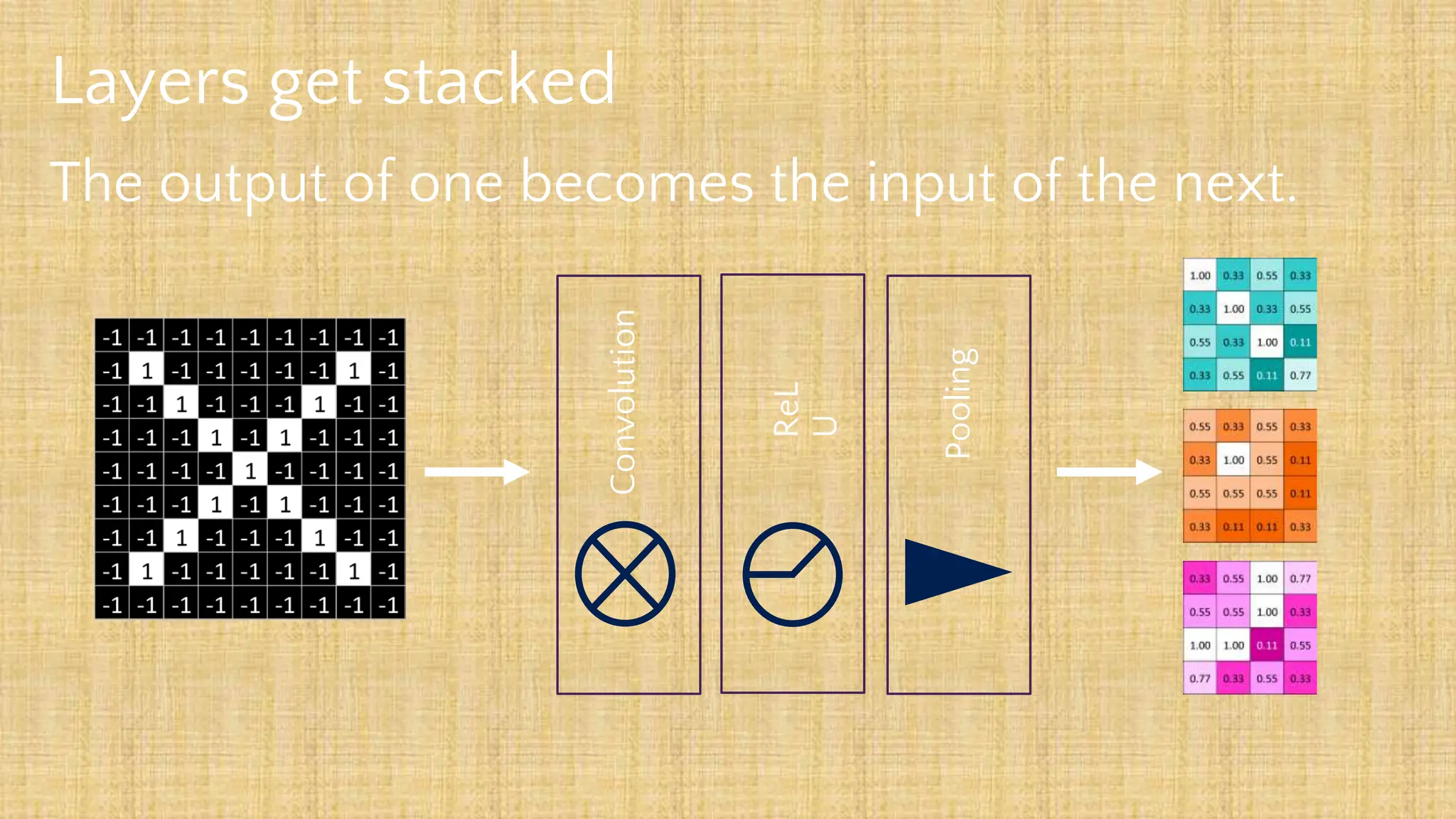
Layers get stacked
The output of one becomes the input of the next.
Convolution
ReL
U
Pooling
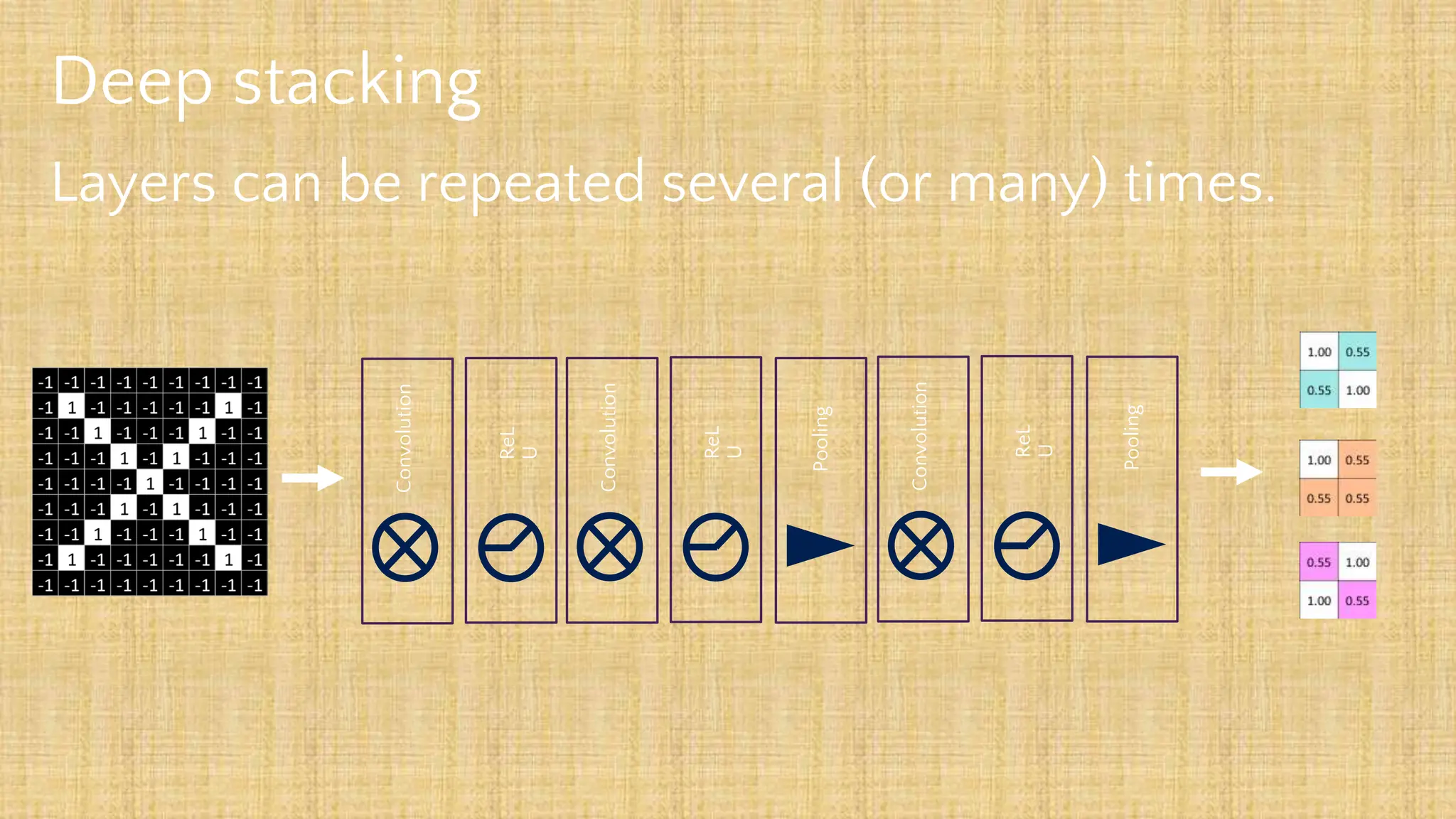
Deep stacking
Layers can be repeated several (or many) times.
Convolution
ReL
U
Pooling
Convolution
ReL
U
Convolution
ReL
U
Pooling
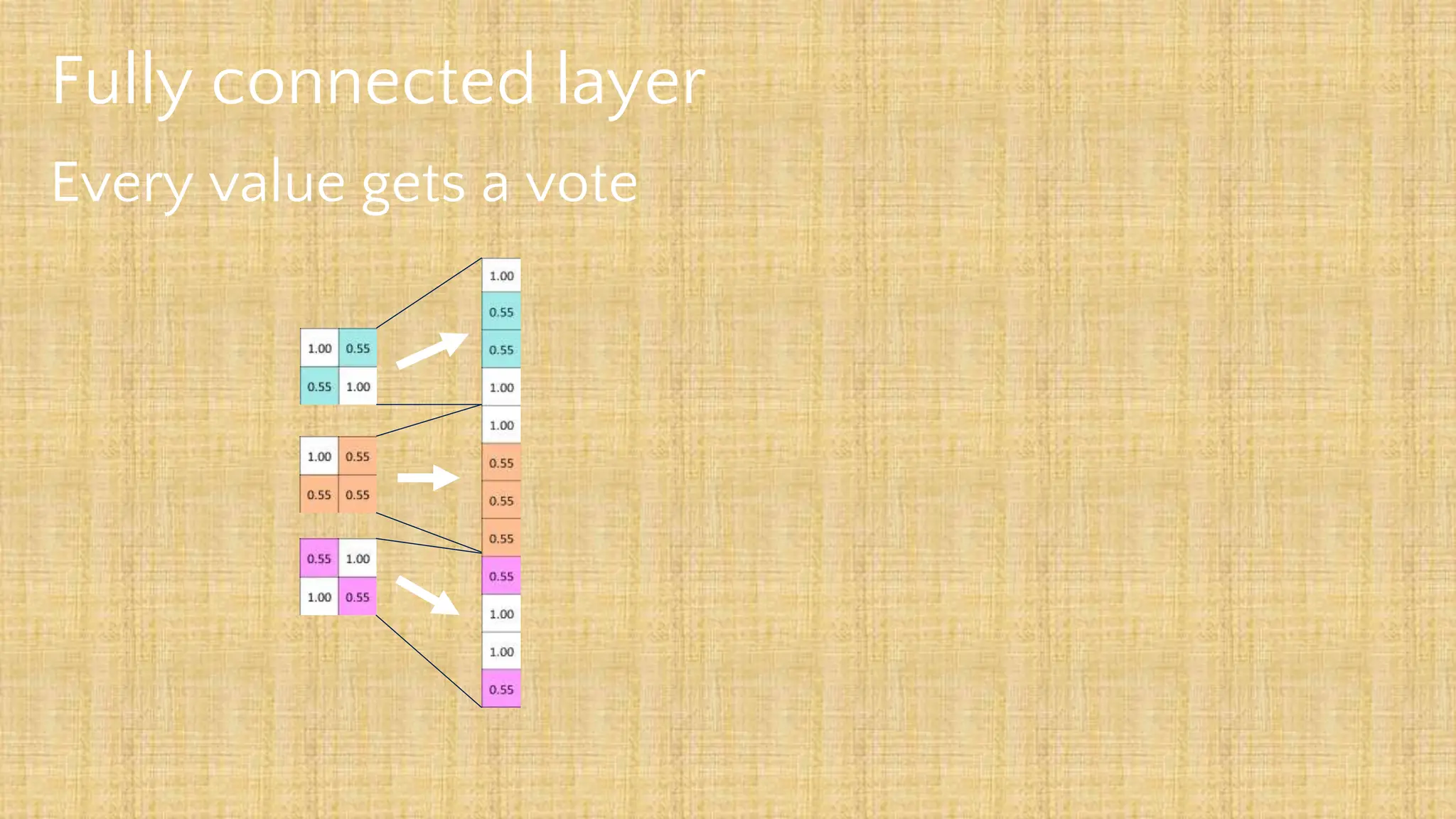
Fully connected layer
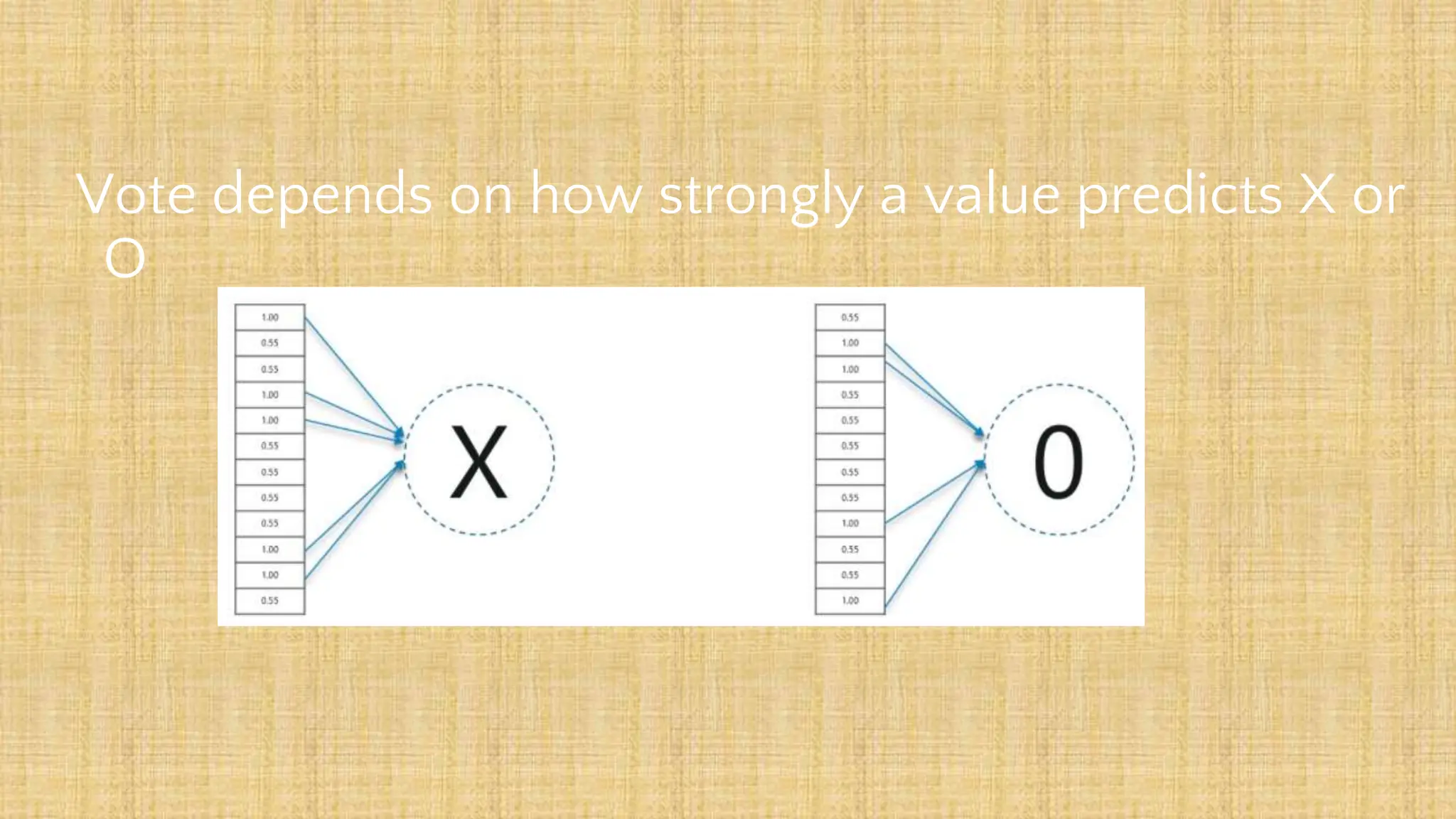
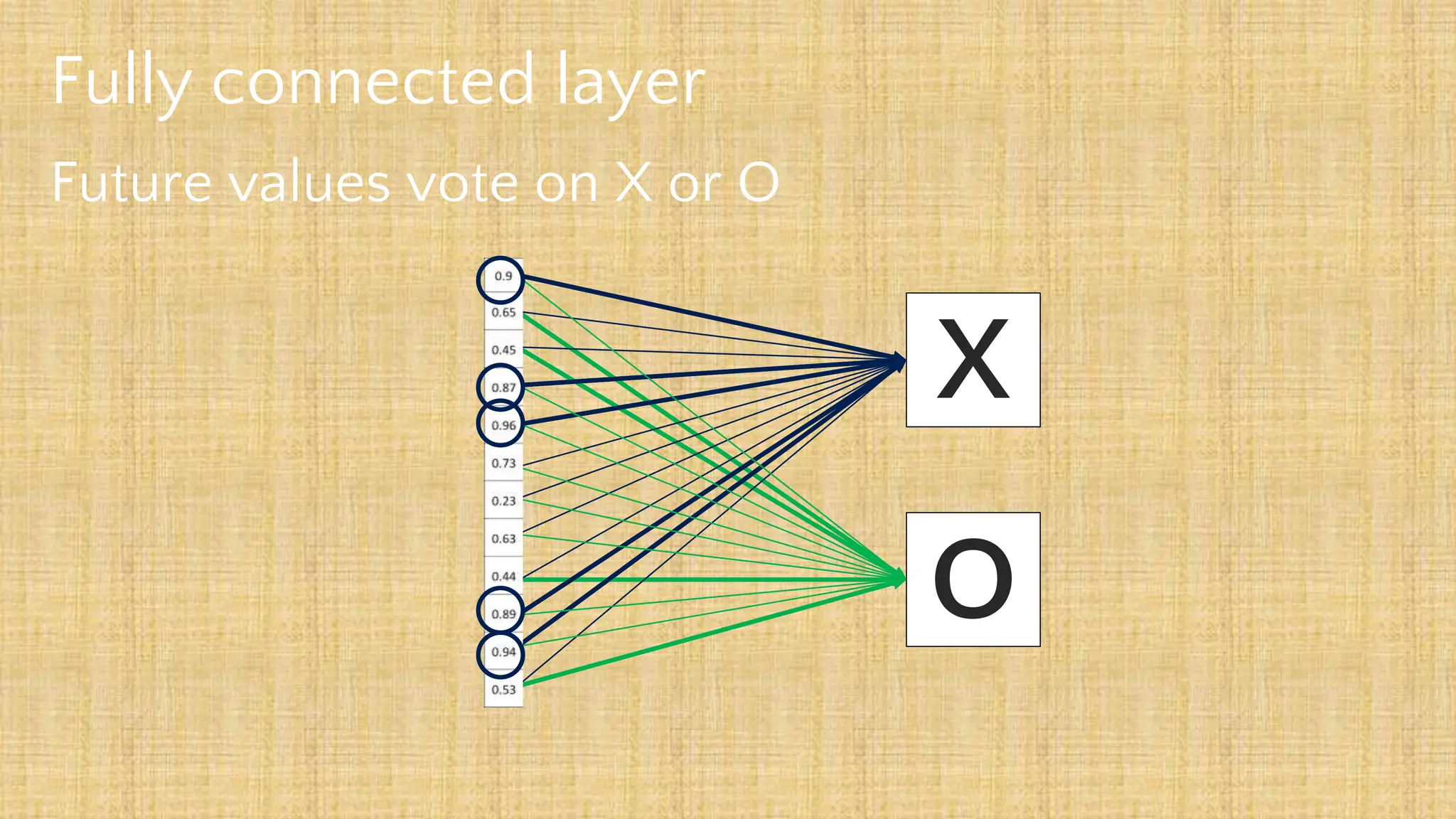
Every value gets a vote
Vote depends on how strongly a value predicts X or
O
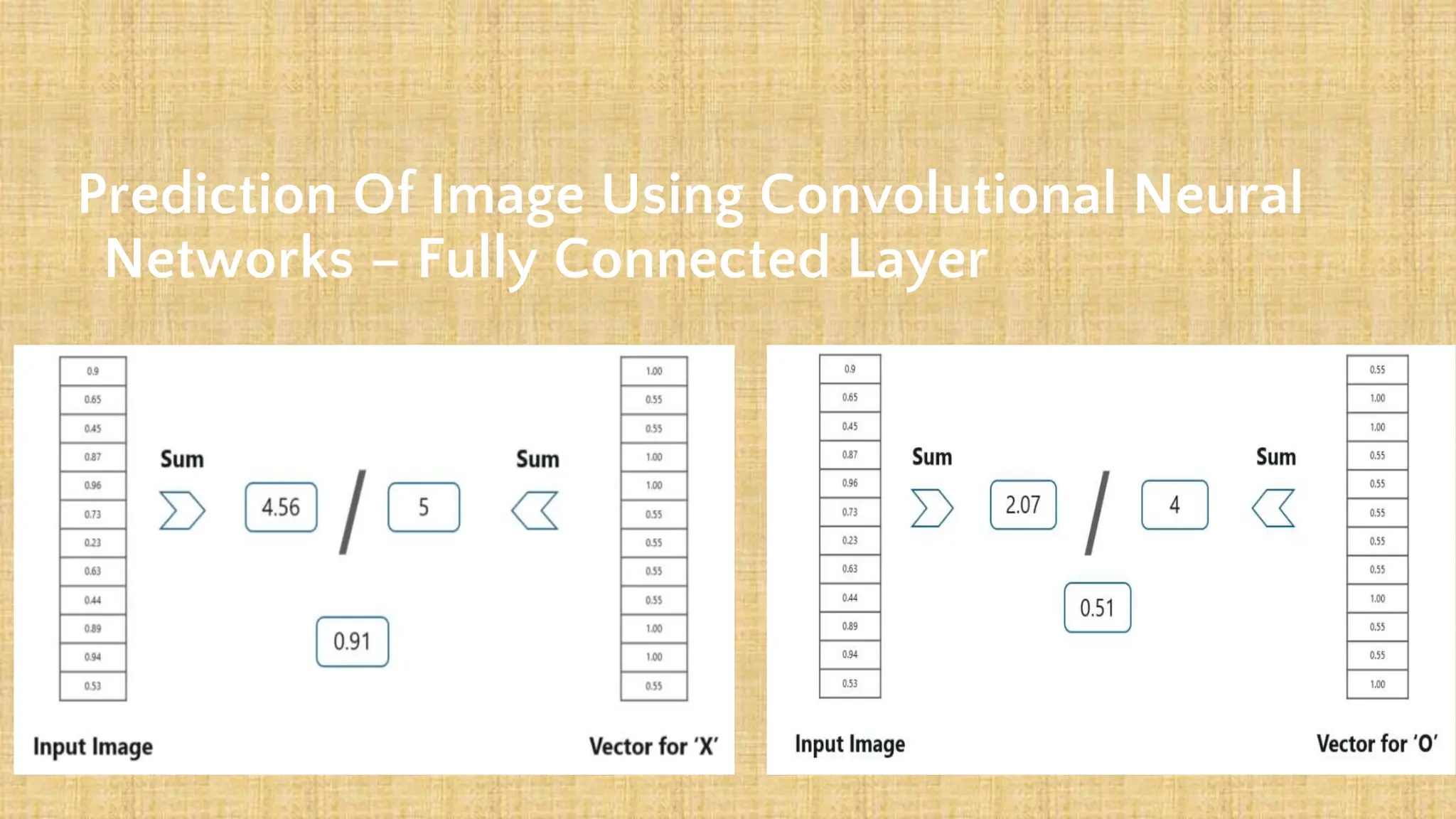
Prediction Of Image Using Convolutional Neural
Networks – Fully Connected Layer
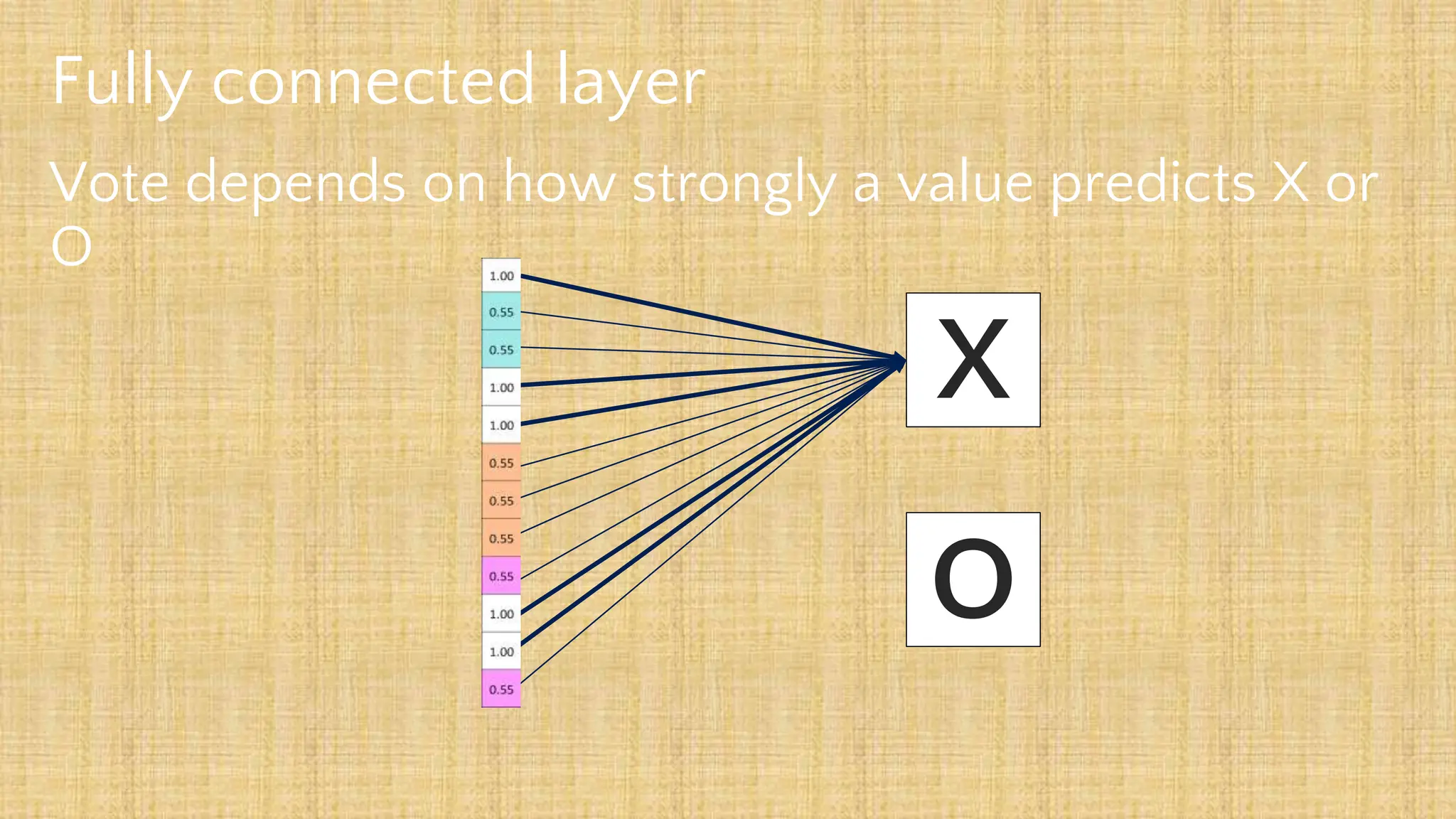
Fully connected layer
Vote depends on how strongly a value predicts X or
O
X
O
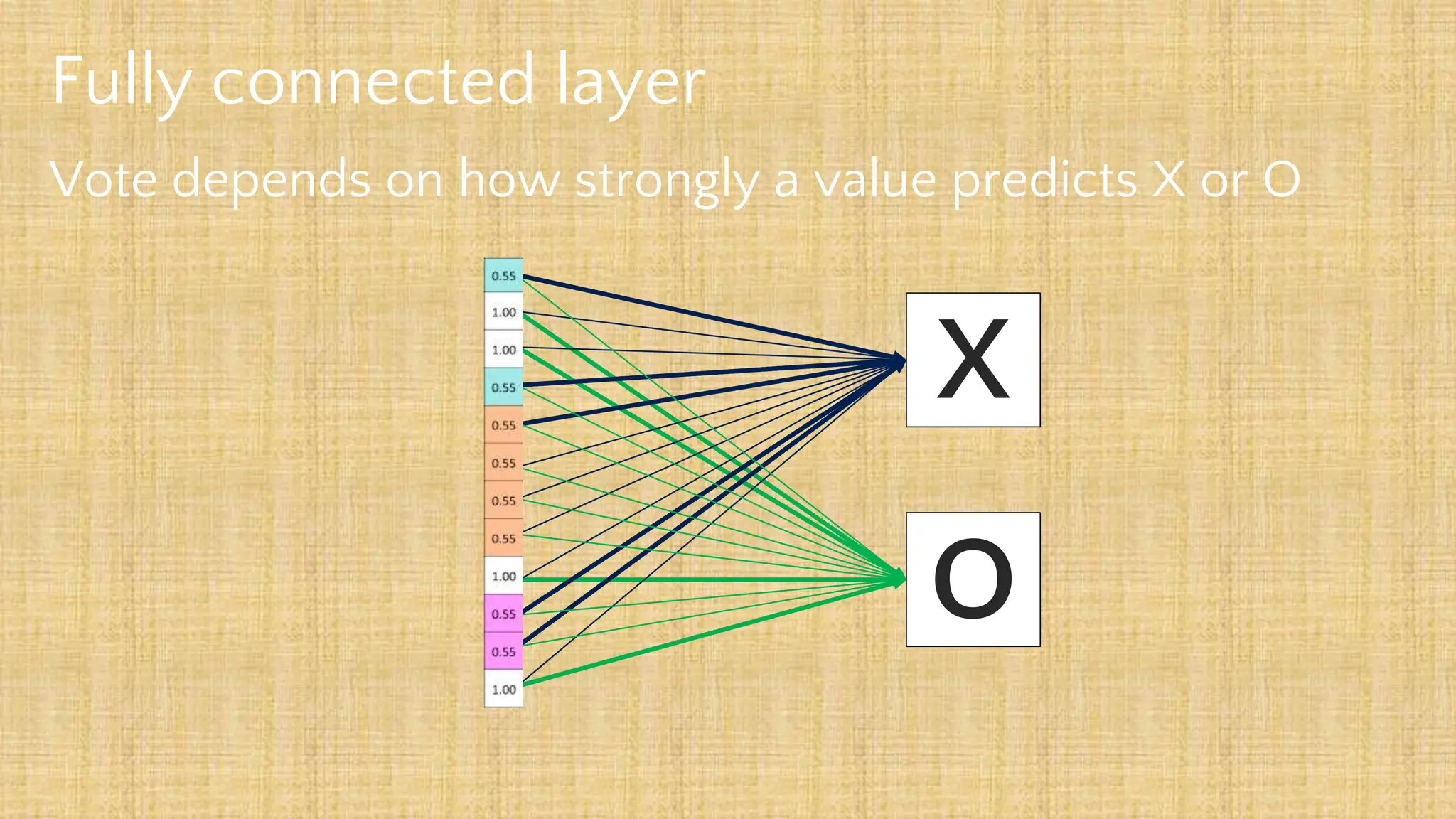
Fully connected layer
Vote depends on how strongly a value predicts X or O
X
O
Fully connected layer
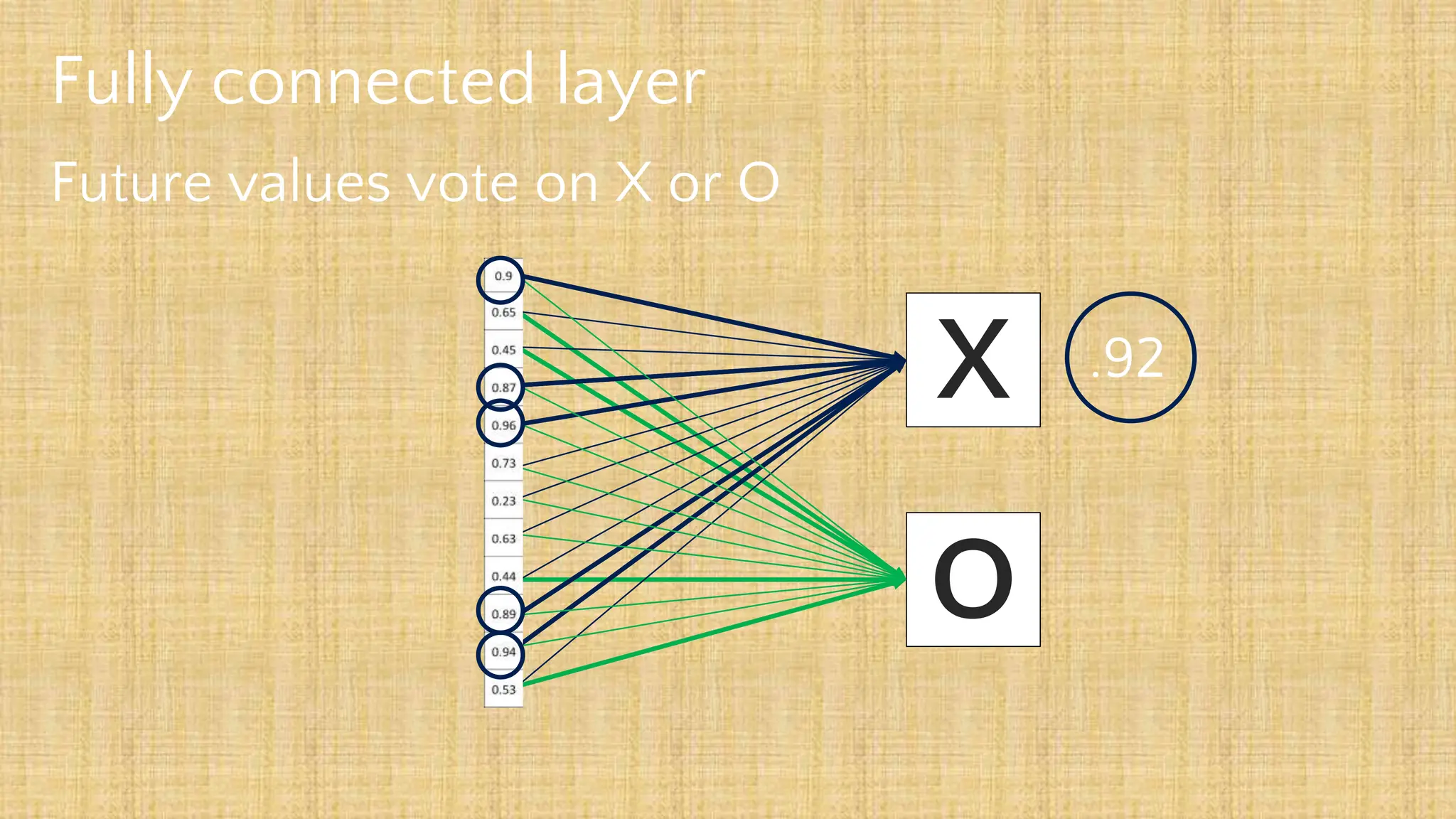
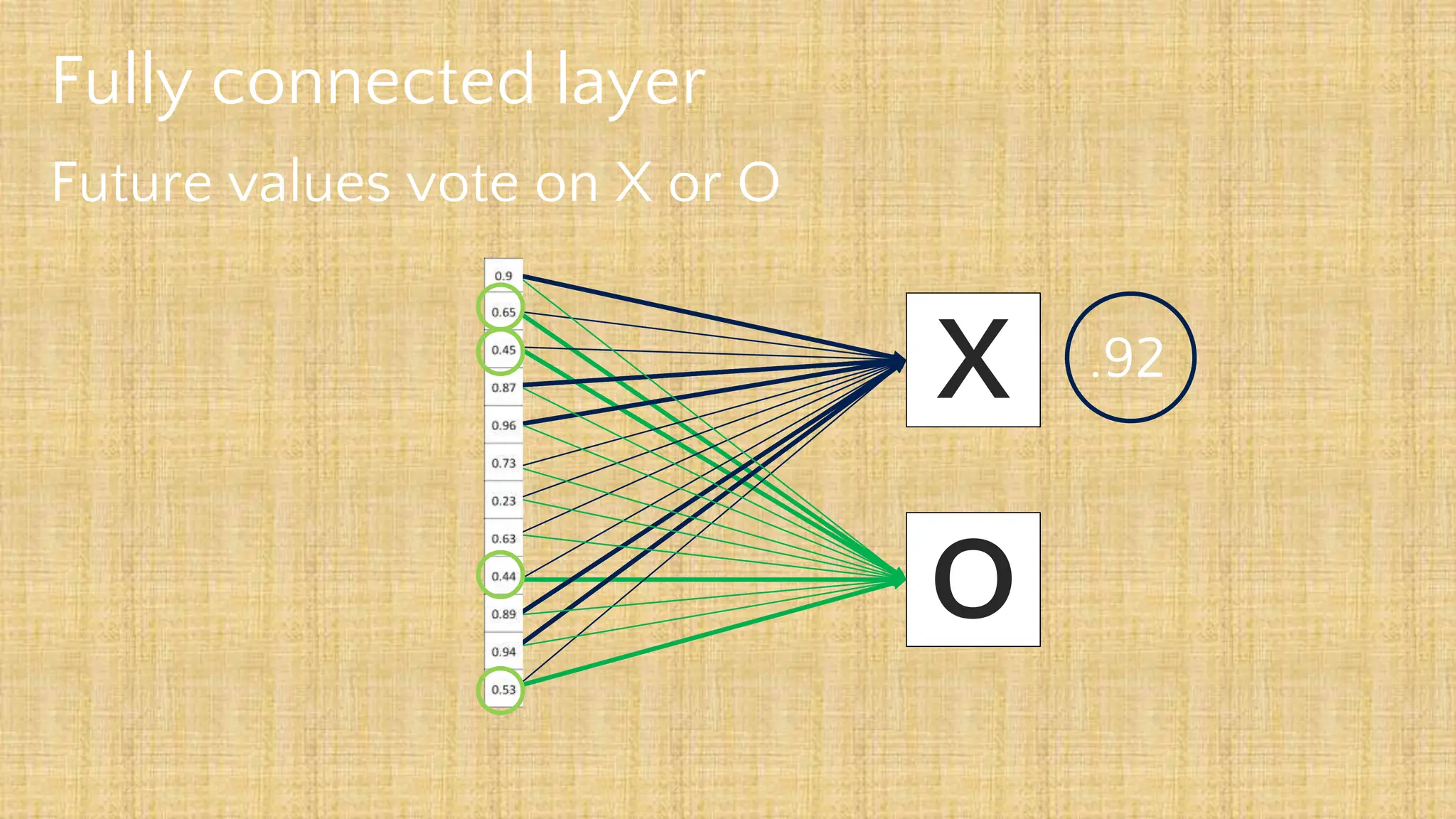
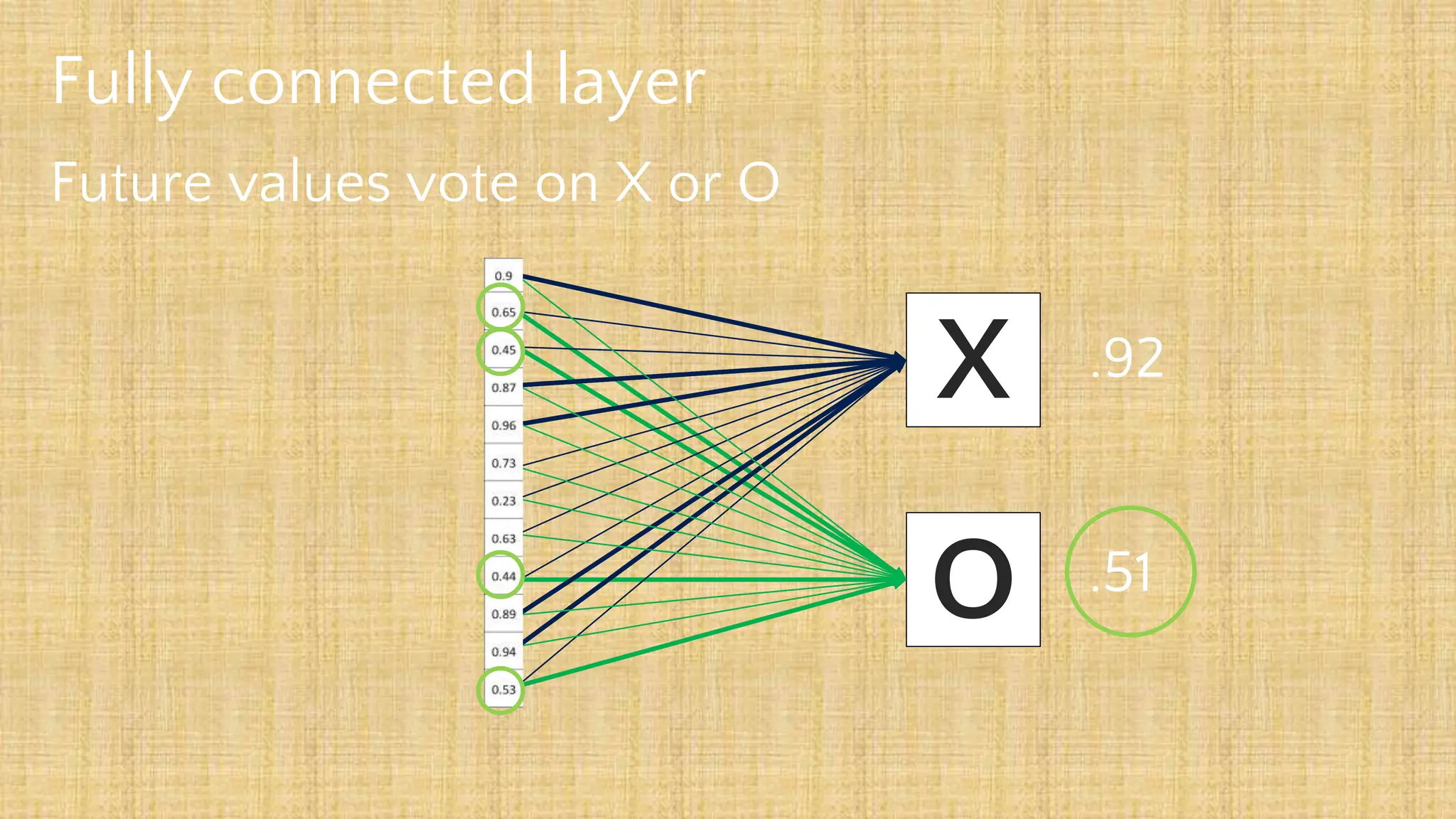
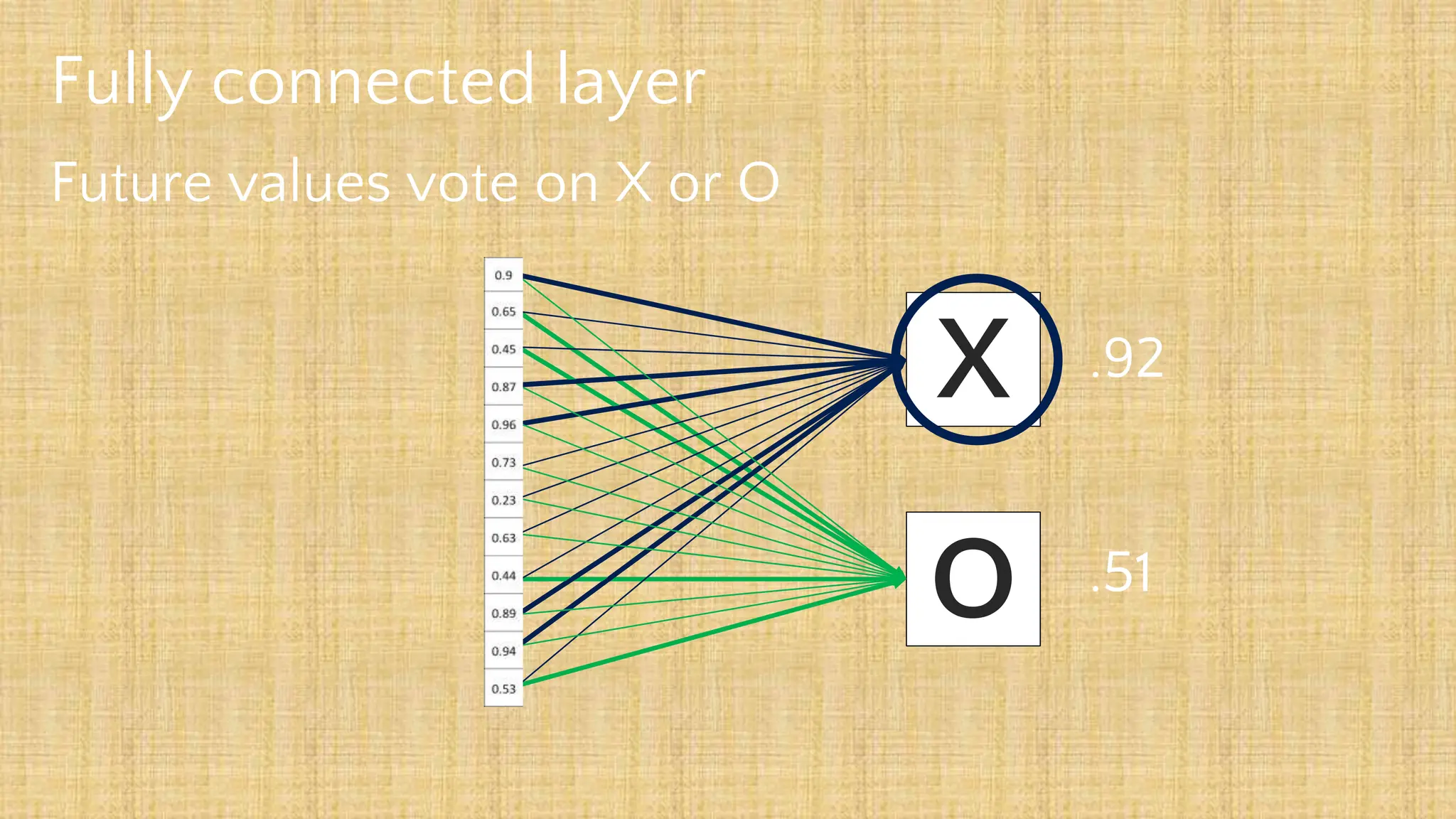
Future values vote on X or O
X
O
Fully connected layer
Future values vote on X or O
X
O
Fully connected layer
Future values vote on X or O
X
O
.92
Fully connected layer
Future values vote on X or O
X
O
.92
Fully connected layer
Future values vote on X or O
X
O
.92
.51
Fully connected layer
Future values vote on X or O
X
O
.92
.51
Fully connected layer
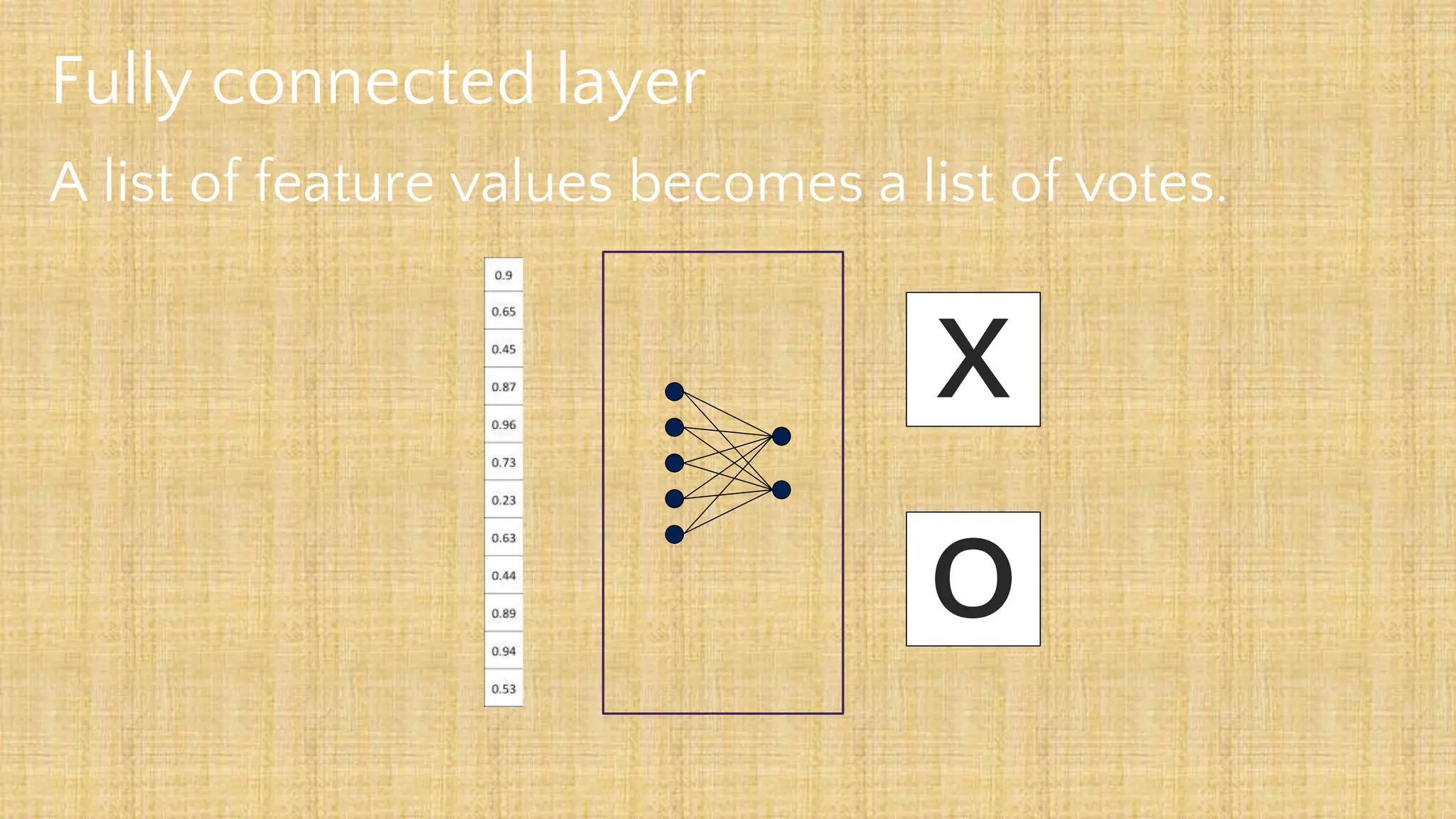
A list of feature values becomes a list of votes.
X
O
Fully connected layer
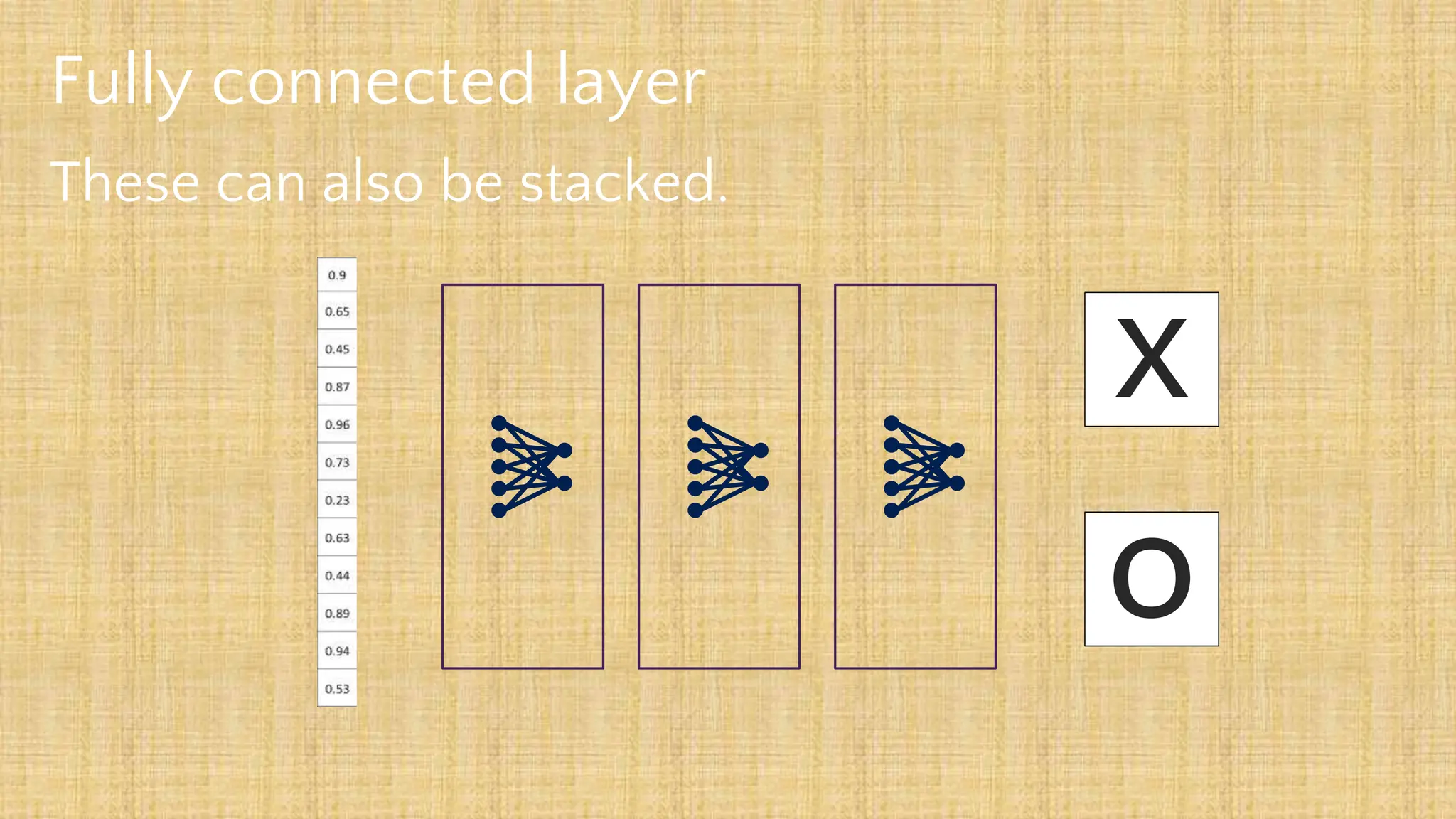
These can also be stacked.
X
O
Introduction to convolutional networks .pptx

Introduction to convolutional networks .pptx