
INTRODUCTION TO C++
What is OOP 
• Object-oriented programming (OOP) is a 
programming paradigm that represents the 
concept of "objects" that have data fields 
(attributes that describe the object) and 
associated procedures known as methods.
Objects 
• Basic run time entities in OOP. 
• In real world may be a cars, person, bank account etc. 
• Have attributes and behaviors. 
• Cars has colors and speed. 
• In programming, attributes are variables and behaviors 
are functions.
Class 
• A class is a collection of objects of similar type. 
• Mango, Apple etc. are objects and their class is Fruit.
Message Passing 
• Information or message of one object can be sent to other 
object.
Encapsulation 
• Wrapping up of data and functions into a single unit 
(class) is called encapsulation 
• Data is not accessible to outside world. 
• Only those functions which are which are wrapped in the 
class can access it.
Inheritance 
• Inheritance is the process of one class acquire the 
properties of another class.
Polymorphism 
• One name, multiple forms. 
• Allows us to have more than one function with the same 
name in a program.
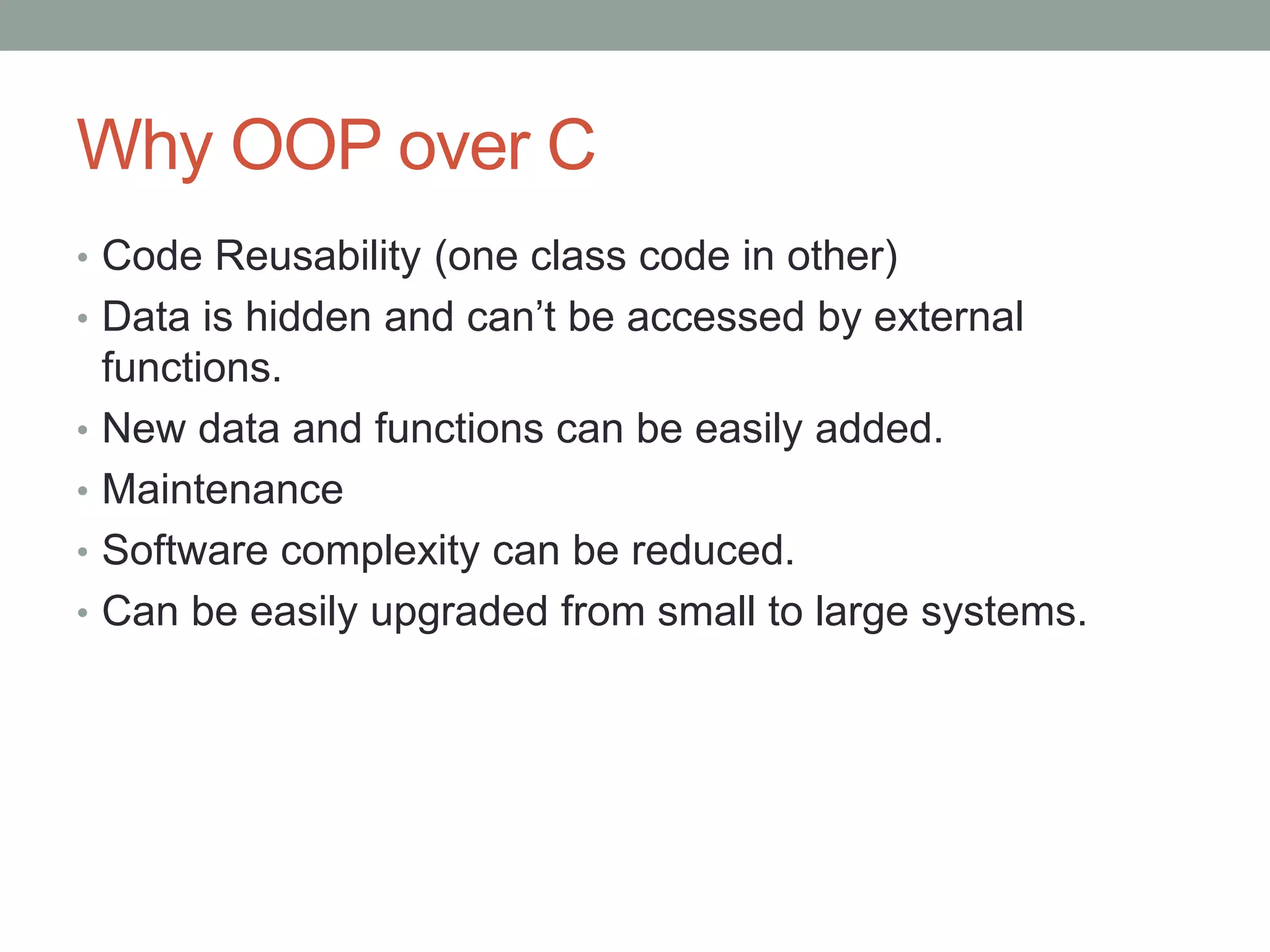
Why OOP over C 
• Code Reusability (one class code in other) 
• Data is hidden and can’t be accessed by external 
functions. 
• New data and functions can be easily added. 
• Maintenance 
• Software complexity can be reduced. 
• Can be easily upgraded from small to large systems.
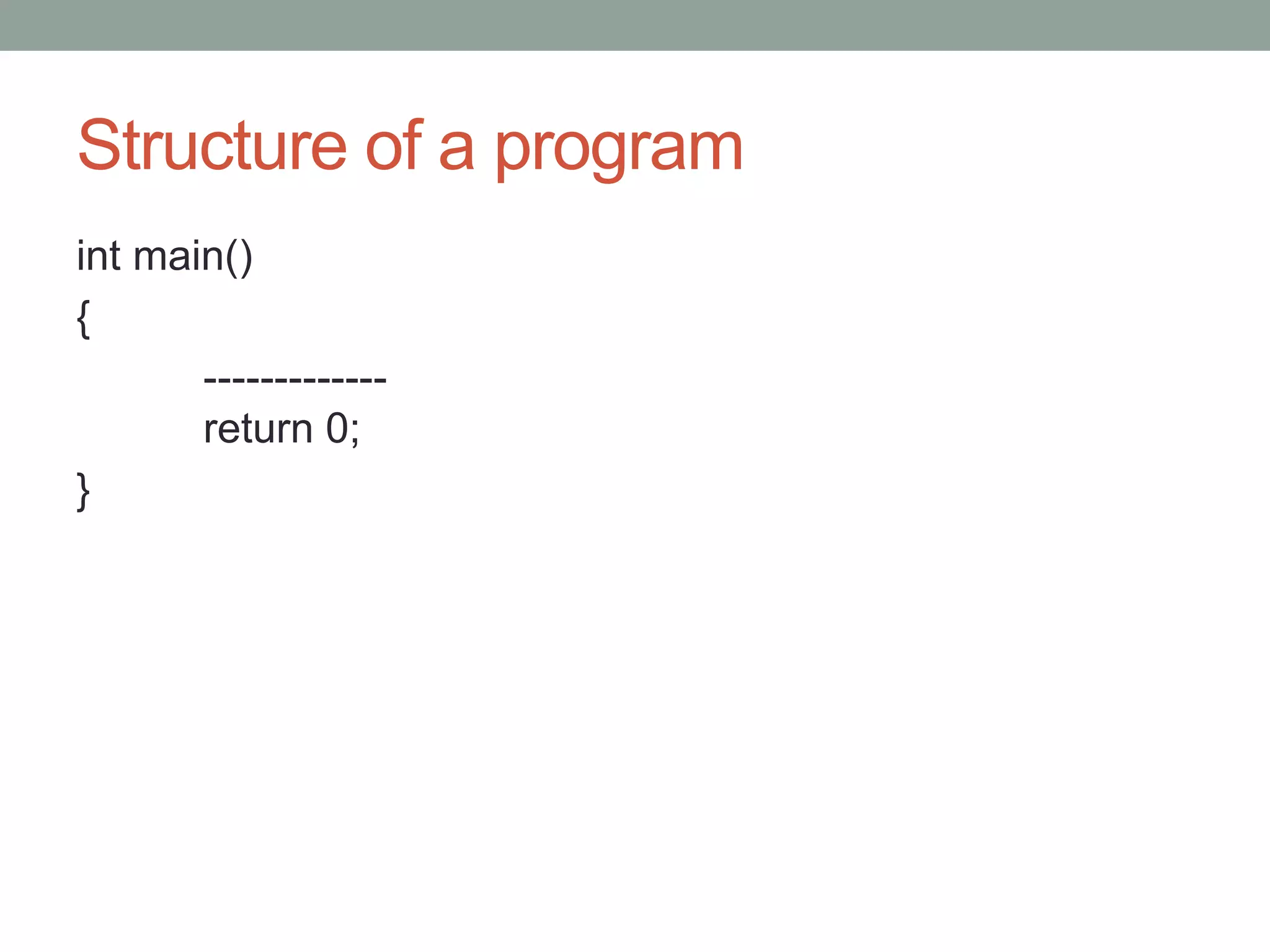
Structure of a program 
int main() 
{ 
------------- 
return 0; 
}
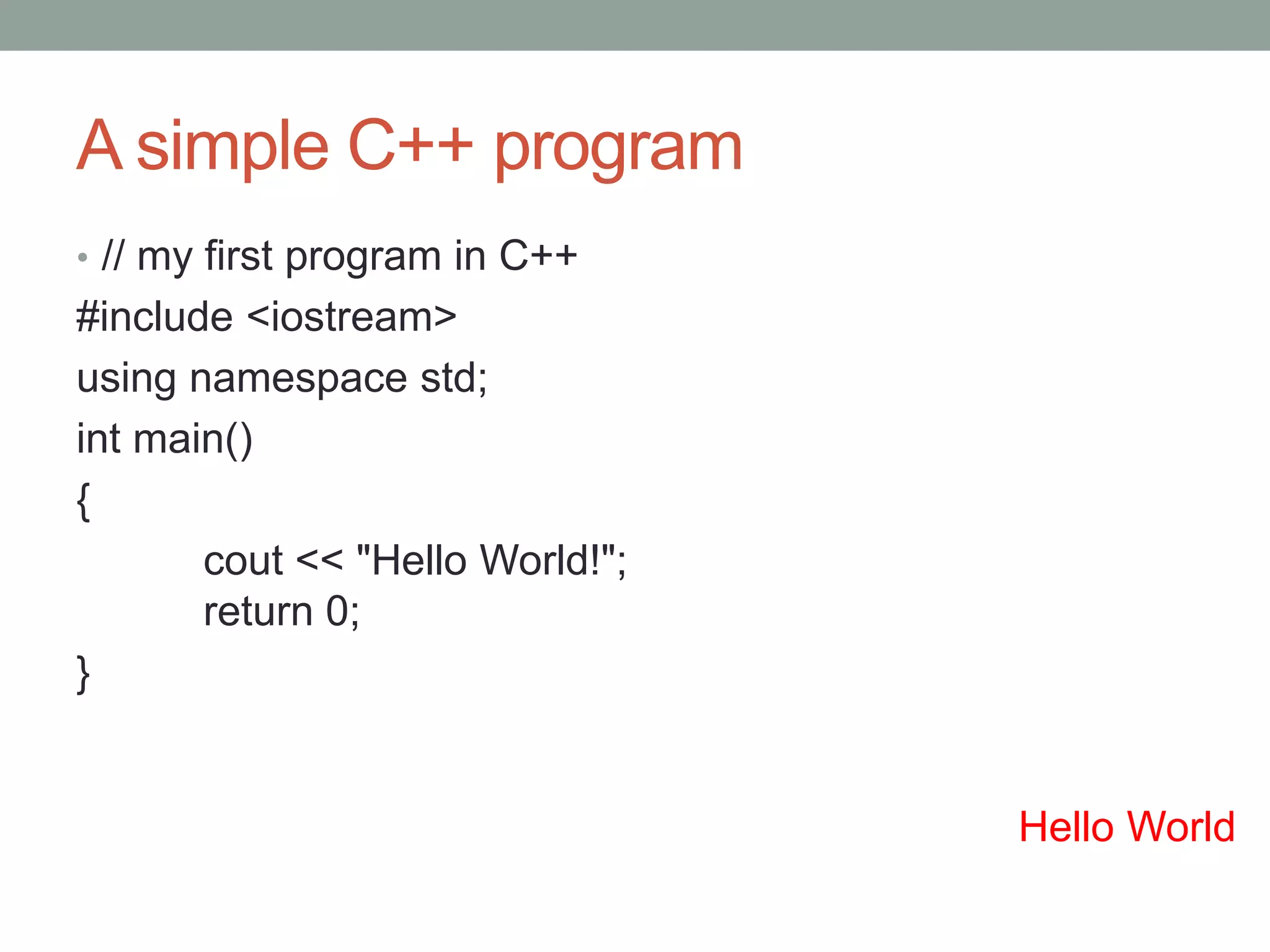
A simple C++ program 
• // my first program in C++ 
#include <iostream> 
using namespace std; 
int main() 
{ 
cout << "Hello World!"; 
return 0; 
} 
Hello World
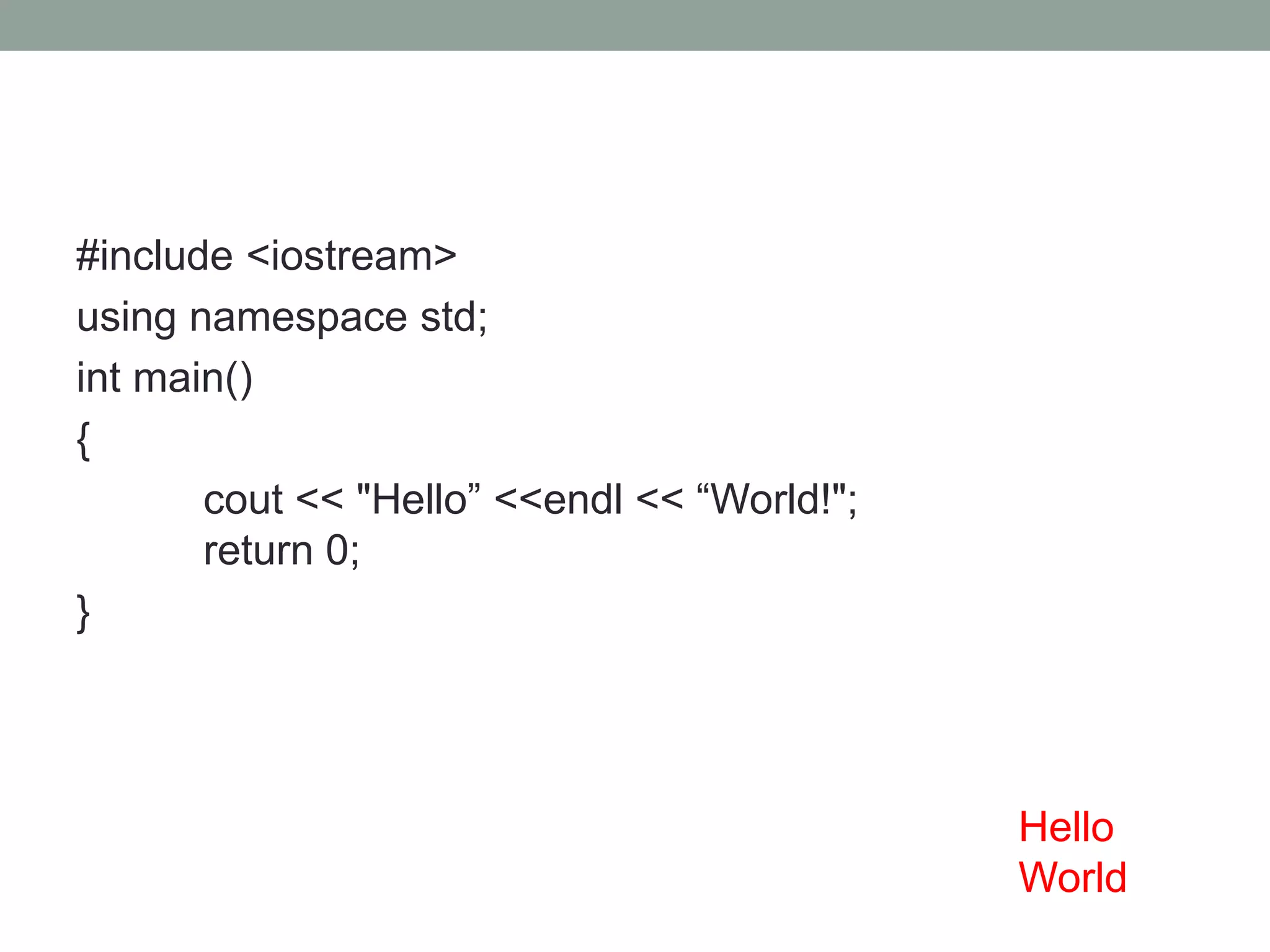
#include <iostream> 
using namespace std; 
int main() 
{ 
cout << "Hello” <<endl << “World!"; 
return 0; 
} 
Hello 
World
Comment 
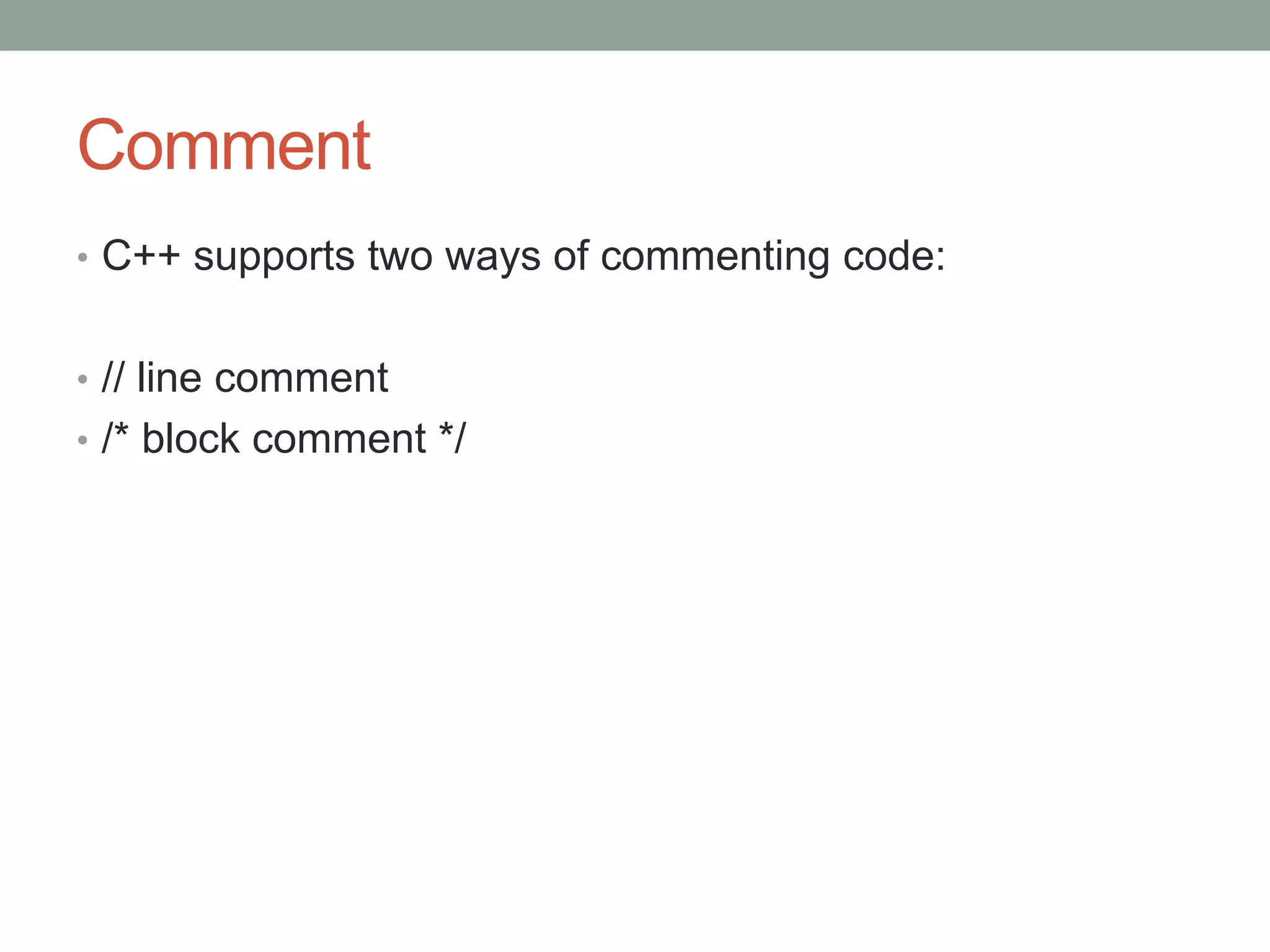
• C++ supports two ways of commenting code: 
• // line comment 
• /* block comment */
Initialization of variables 
• int a=5; // initial value: 5 
• int b(3); // initial value: 3 
• int c{2}; // initial value: 2
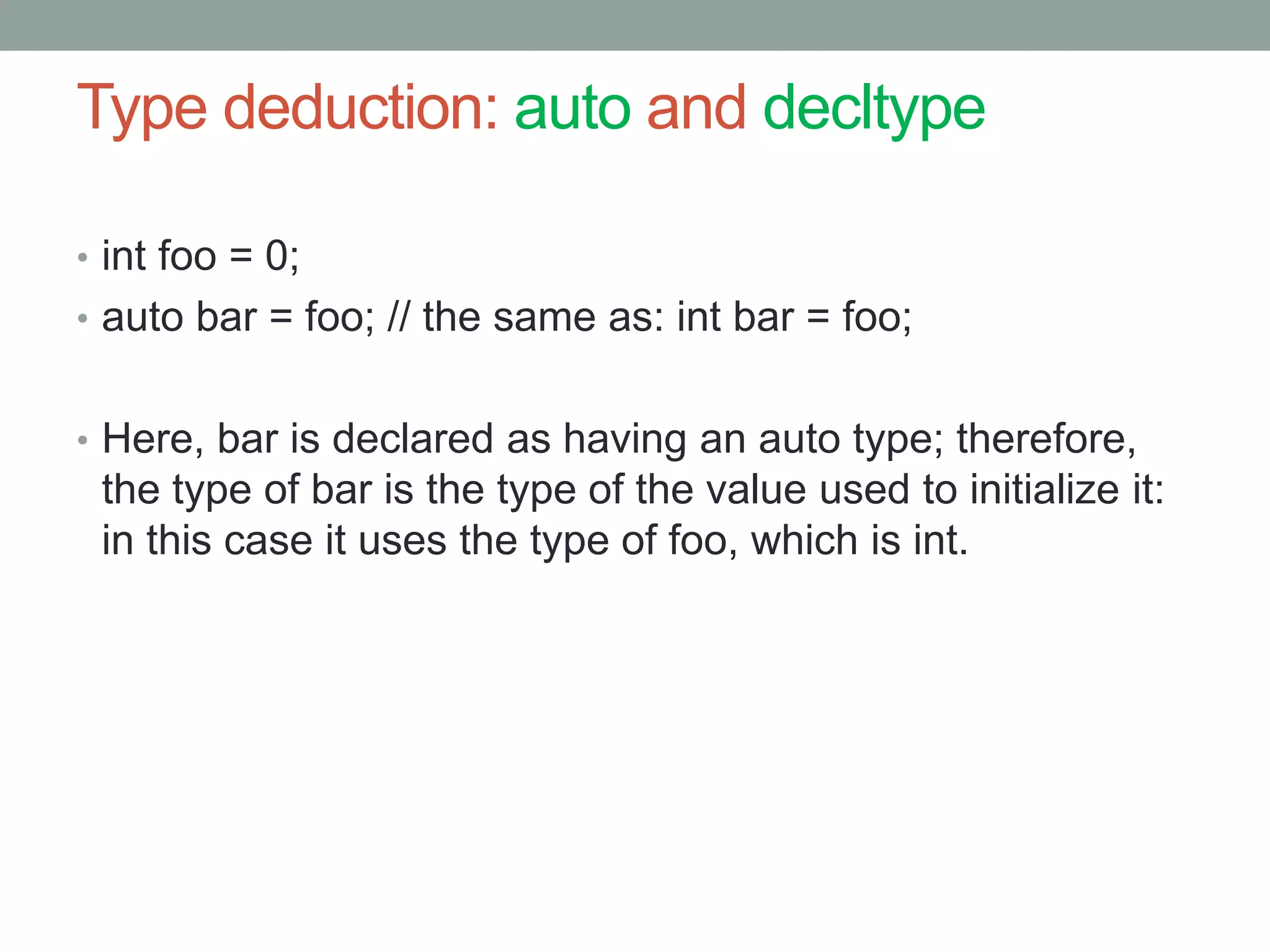
Type deduction: auto and decltype 
• int foo = 0; 
• auto bar = foo; // the same as: int bar = foo; 
• Here, bar is declared as having an auto type; therefore, 
the type of bar is the type of the value used to initialize it: 
in this case it uses the type of foo, which is int.
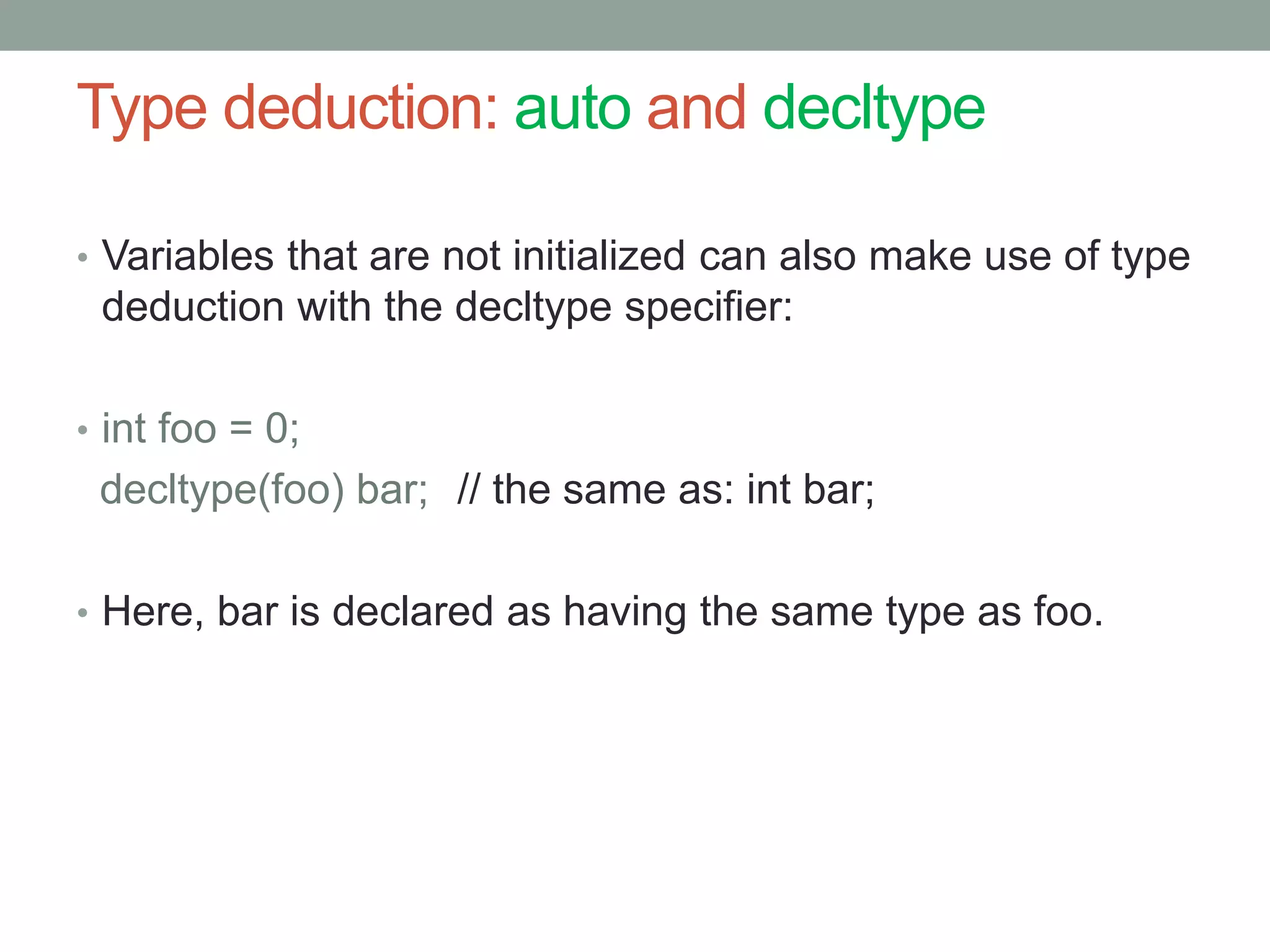
Type deduction: auto and decltype 
• Variables that are not initialized can also make use of type 
deduction with the decltype specifier: 
• int foo = 0; 
decltype(foo) bar; // the same as: int bar; 
• Here, bar is declared as having the same type as foo.
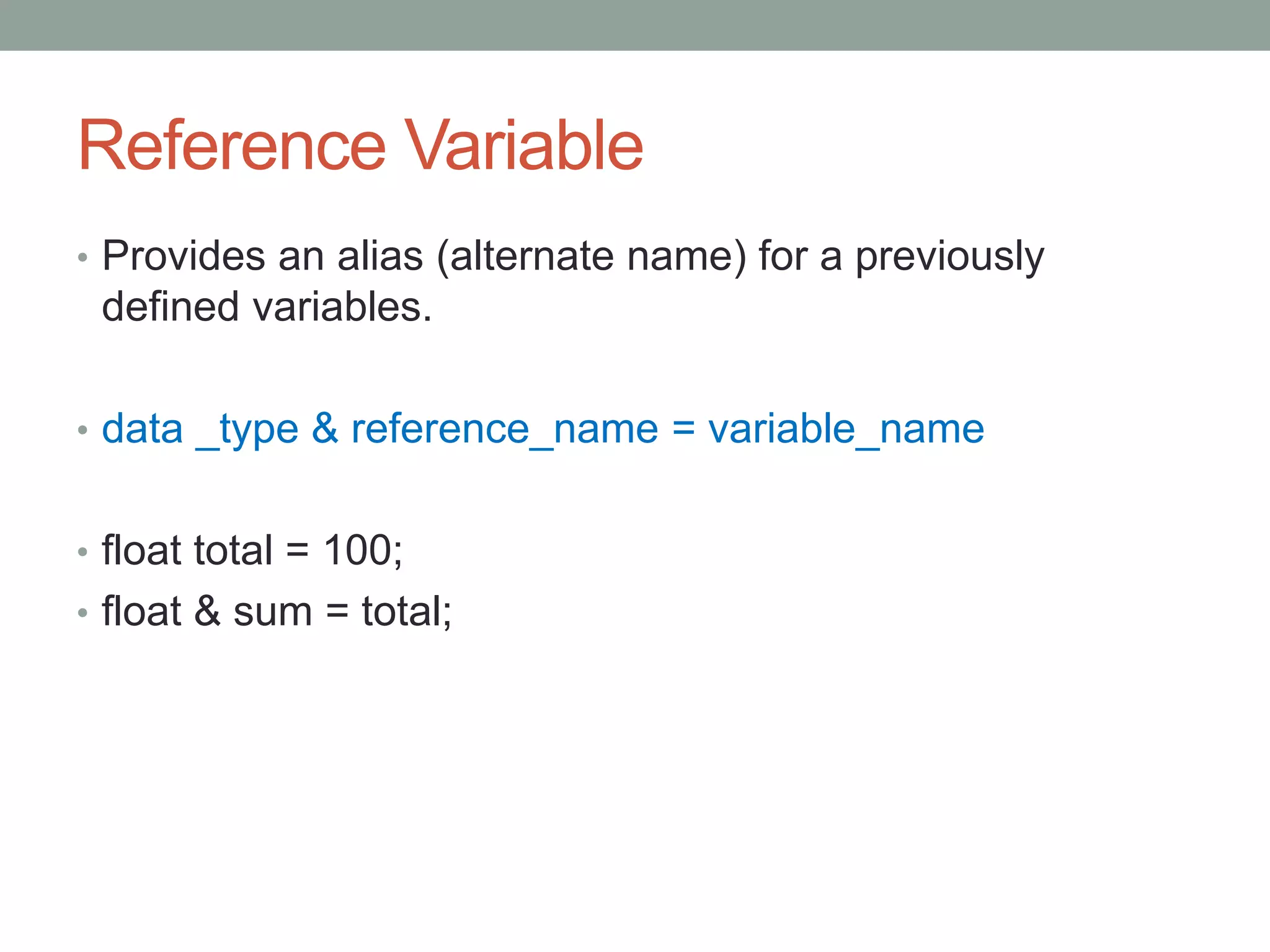
Reference Variable 
• Provides an alias (alternate name) for a previously 
defined variables. 
• data _type & reference_name = variable_name 
• float total = 100; 
• float & sum = total;
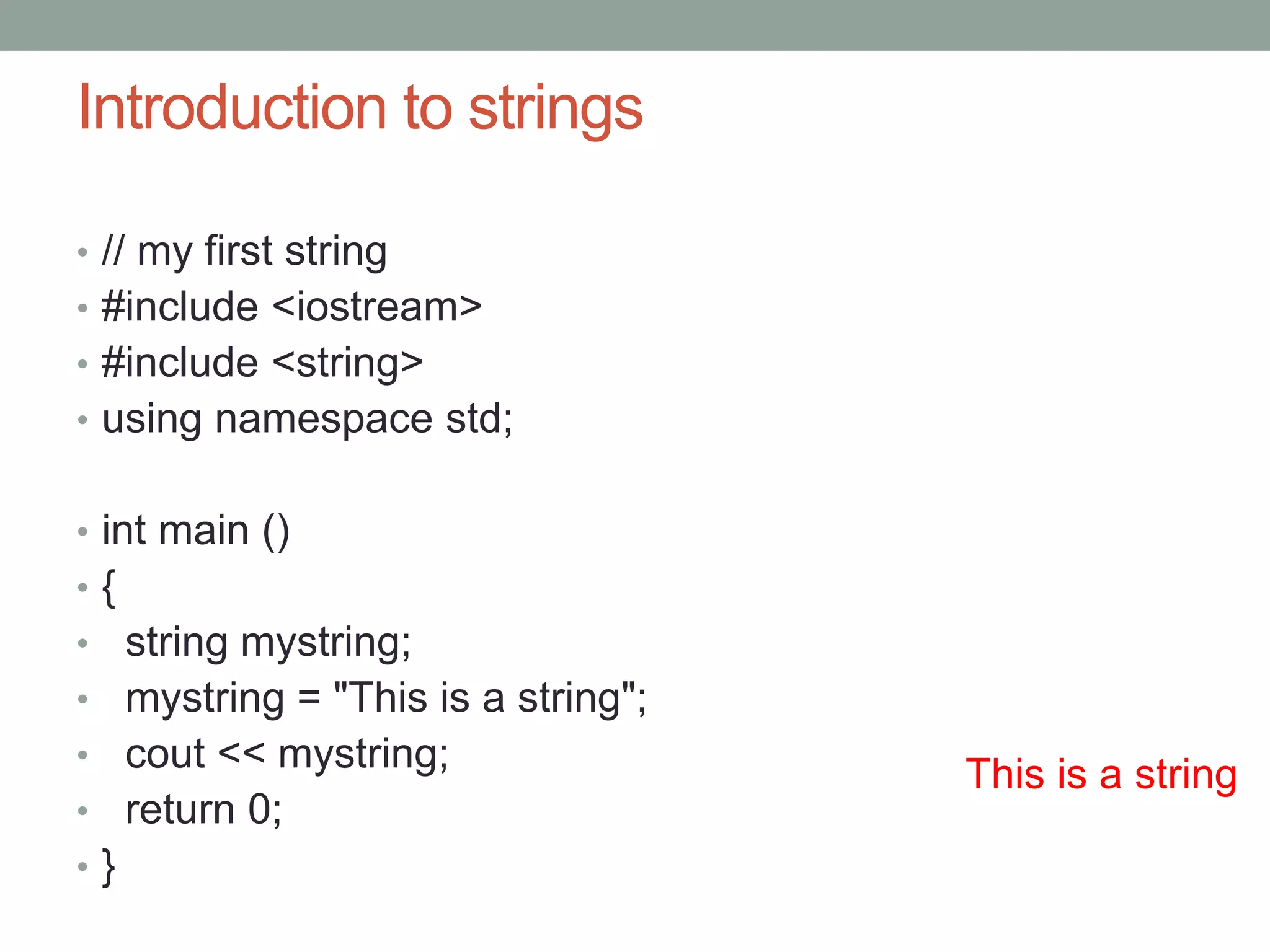
Introduction to strings 
• // my first string 
• #include <iostream> 
• #include <string> 
• using namespace std; 
• int main () 
• { 
• string mystring; 
• mystring = "This is a string"; 
• cout << mystring; 
• return 0; 
• } 
This is a string
Some coding arrangement 
n newline 
r carriage return 
t tab 
v vertical tab 
b backspace 
f form feed (page feed) 
a alert (beep) 
' single quote (') 
" double quote (") 
? question mark (?) 
 backslash ()
Arithmetic Operators 
operator description 
+ addition 
- subtraction 
* multiplication 
/ division 
% modulo
Basic Input/Output 
• // i/o example of taking a number, display and double it 
• #include <iostream> 
• using namespace std; 
• int main () 
• { 
• int i; 
• cout << "Please enter an integer value: "; 
• cin >> i; 
• cout << "The value you entered is " << i; 
• cout << " and its double is " << i*2 << ".n"; 
• return 0; 
• } Please enter an integer value: 702 
The value you entered is 702 and its double is 1404.
Thank you

Introduction to C++

  • 1.
  • 2.
    What is OOP • Object-oriented programming (OOP) is a programming paradigm that represents the concept of "objects" that have data fields (attributes that describe the object) and associated procedures known as methods.
  • 3.
    Objects • Basicrun time entities in OOP. • In real world may be a cars, person, bank account etc. • Have attributes and behaviors. • Cars has colors and speed. • In programming, attributes are variables and behaviors are functions.
  • 4.
    Class • Aclass is a collection of objects of similar type. • Mango, Apple etc. are objects and their class is Fruit.
  • 5.
    Message Passing •Information or message of one object can be sent to other object.
  • 6.
    Encapsulation • Wrappingup of data and functions into a single unit (class) is called encapsulation • Data is not accessible to outside world. • Only those functions which are which are wrapped in the class can access it.
  • 7.
    Inheritance • Inheritanceis the process of one class acquire the properties of another class.
  • 8.
    Polymorphism • Onename, multiple forms. • Allows us to have more than one function with the same name in a program.
  • 9.
    Why OOP overC • Code Reusability (one class code in other) • Data is hidden and can’t be accessed by external functions. • New data and functions can be easily added. • Maintenance • Software complexity can be reduced. • Can be easily upgraded from small to large systems.
  • 10.
    Structure of aprogram int main() { ------------- return 0; }
  • 11.
    A simple C++program • // my first program in C++ #include <iostream> using namespace std; int main() { cout << "Hello World!"; return 0; } Hello World
  • 12.
    #include <iostream> usingnamespace std; int main() { cout << "Hello” <<endl << “World!"; return 0; } Hello World
  • 13.
    Comment • C++supports two ways of commenting code: • // line comment • /* block comment */
  • 14.
    Initialization of variables • int a=5; // initial value: 5 • int b(3); // initial value: 3 • int c{2}; // initial value: 2
  • 15.
    Type deduction: autoand decltype • int foo = 0; • auto bar = foo; // the same as: int bar = foo; • Here, bar is declared as having an auto type; therefore, the type of bar is the type of the value used to initialize it: in this case it uses the type of foo, which is int.
  • 16.
    Type deduction: autoand decltype • Variables that are not initialized can also make use of type deduction with the decltype specifier: • int foo = 0; decltype(foo) bar; // the same as: int bar; • Here, bar is declared as having the same type as foo.
  • 17.
    Reference Variable •Provides an alias (alternate name) for a previously defined variables. • data _type & reference_name = variable_name • float total = 100; • float & sum = total;
  • 18.
    Introduction to strings • // my first string • #include <iostream> • #include <string> • using namespace std; • int main () • { • string mystring; • mystring = "This is a string"; • cout << mystring; • return 0; • } This is a string
  • 19.
    Some coding arrangement n newline r carriage return t tab v vertical tab b backspace f form feed (page feed) a alert (beep) ' single quote (') " double quote (") ? question mark (?) backslash ()
  • 20.
    Arithmetic Operators operatordescription + addition - subtraction * multiplication / division % modulo
  • 21.
    Basic Input/Output •// i/o example of taking a number, display and double it • #include <iostream> • using namespace std; • int main () • { • int i; • cout << "Please enter an integer value: "; • cin >> i; • cout << "The value you entered is " << i; • cout << " and its double is " << i*2 << ".n"; • return 0; • } Please enter an integer value: 702 The value you entered is 702 and its double is 1404.
  • 22.