Introduction to Bioinformatics
2023 Nobel prize in
Medicine and
Physiology
Drew Weismann
“for their discoveries concerning nucleoside
base modifications that enabled the
development of effective mRNA vaccines
against COVID-19”
What is Bioinformatics?
Bioinformatics is the application of
computational techniques to manage,
analyze, and interpret biological data. It's
the bridge that connects biology with the
power of computer science.
Basics: Cell structure
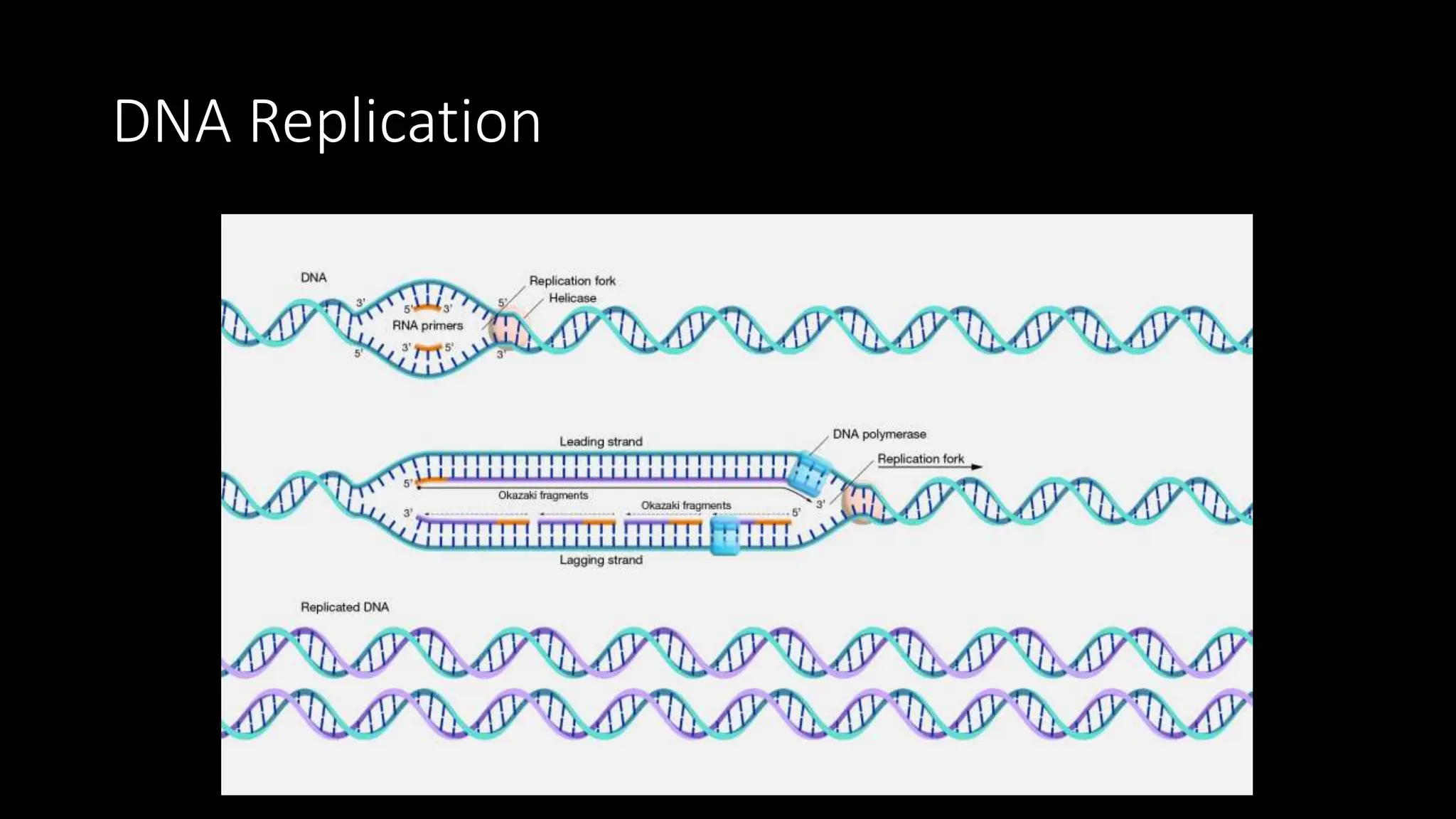
DNA Replication
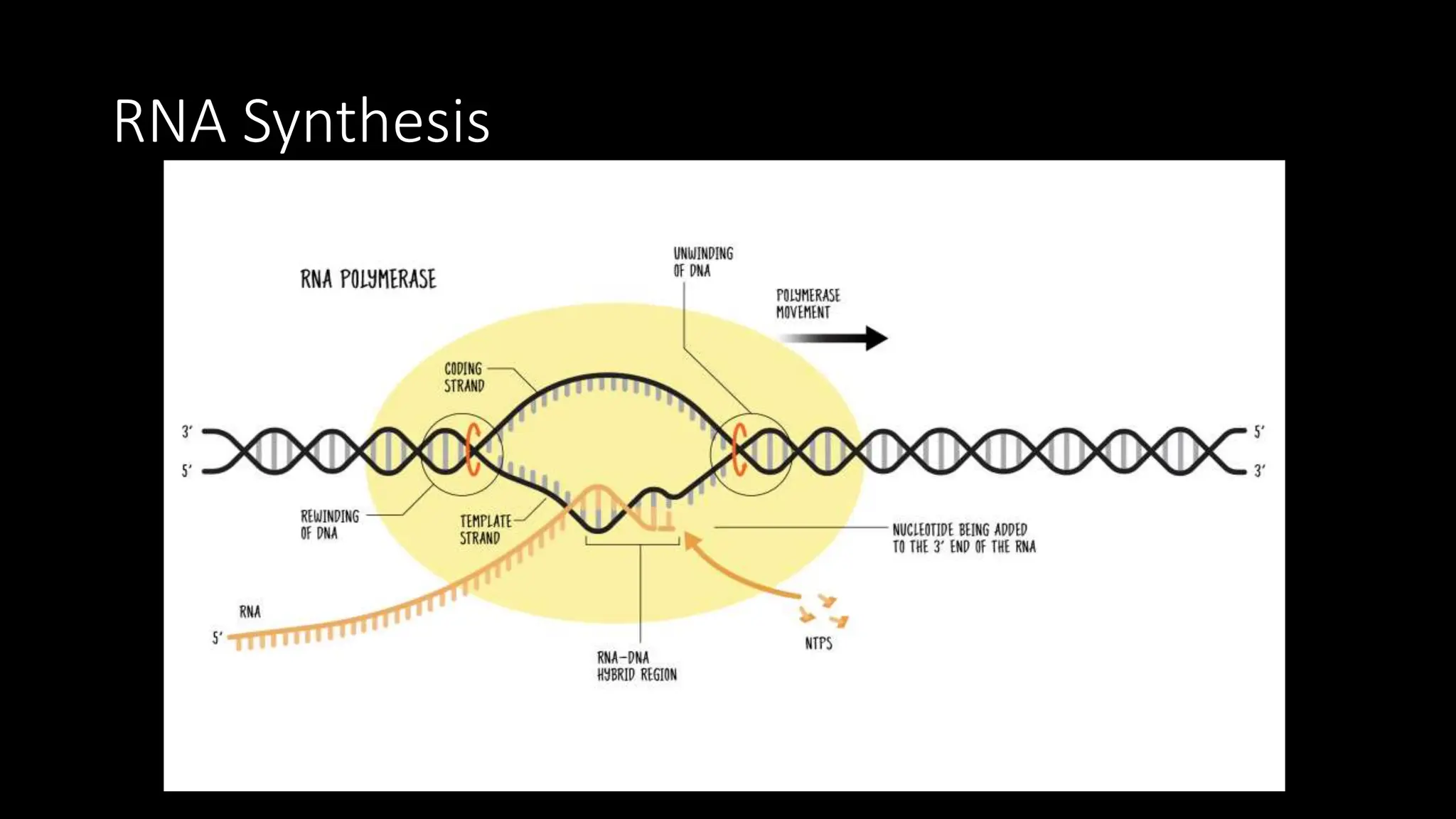
RNA Synthesis
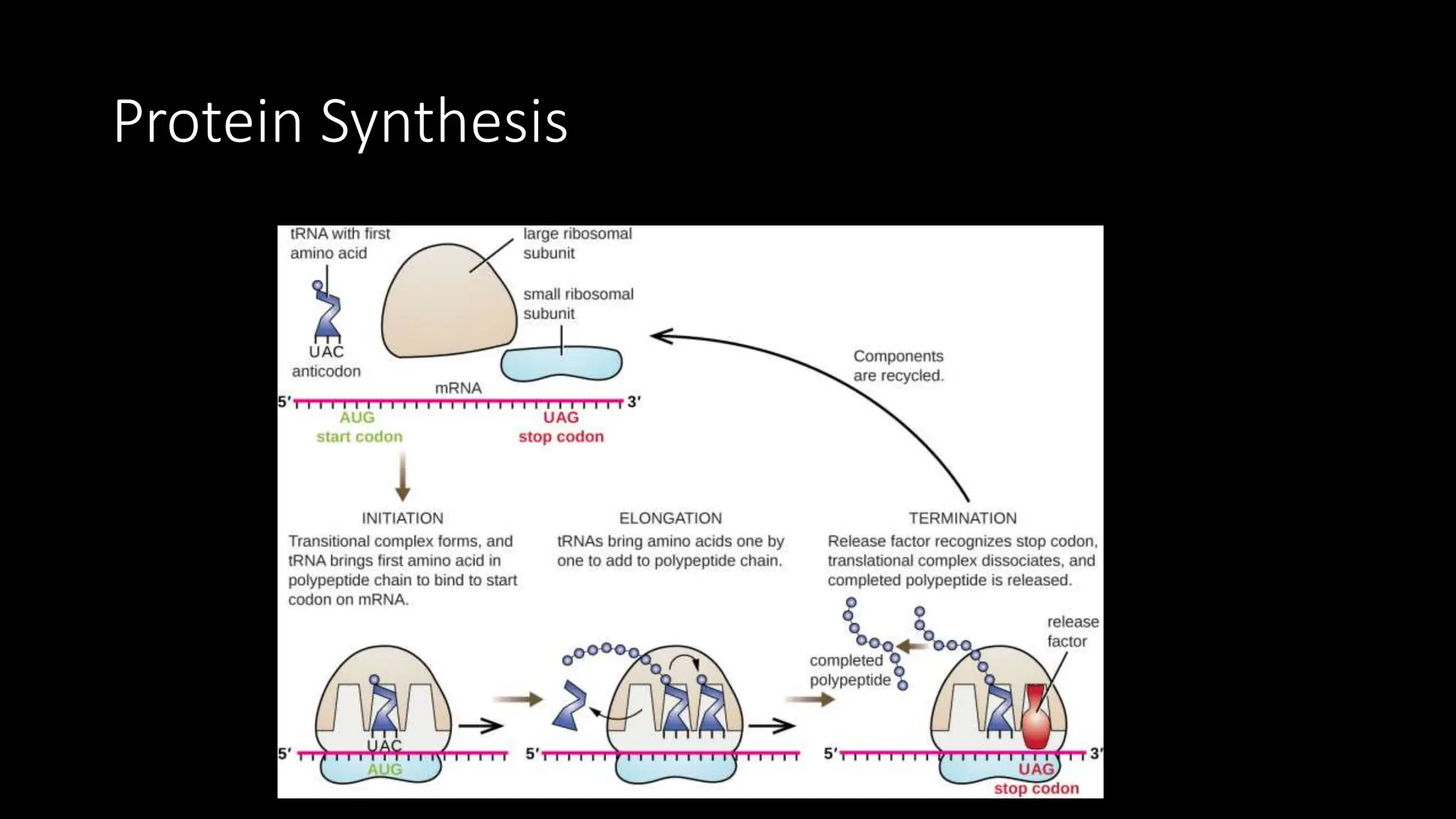
Protein Synthesis
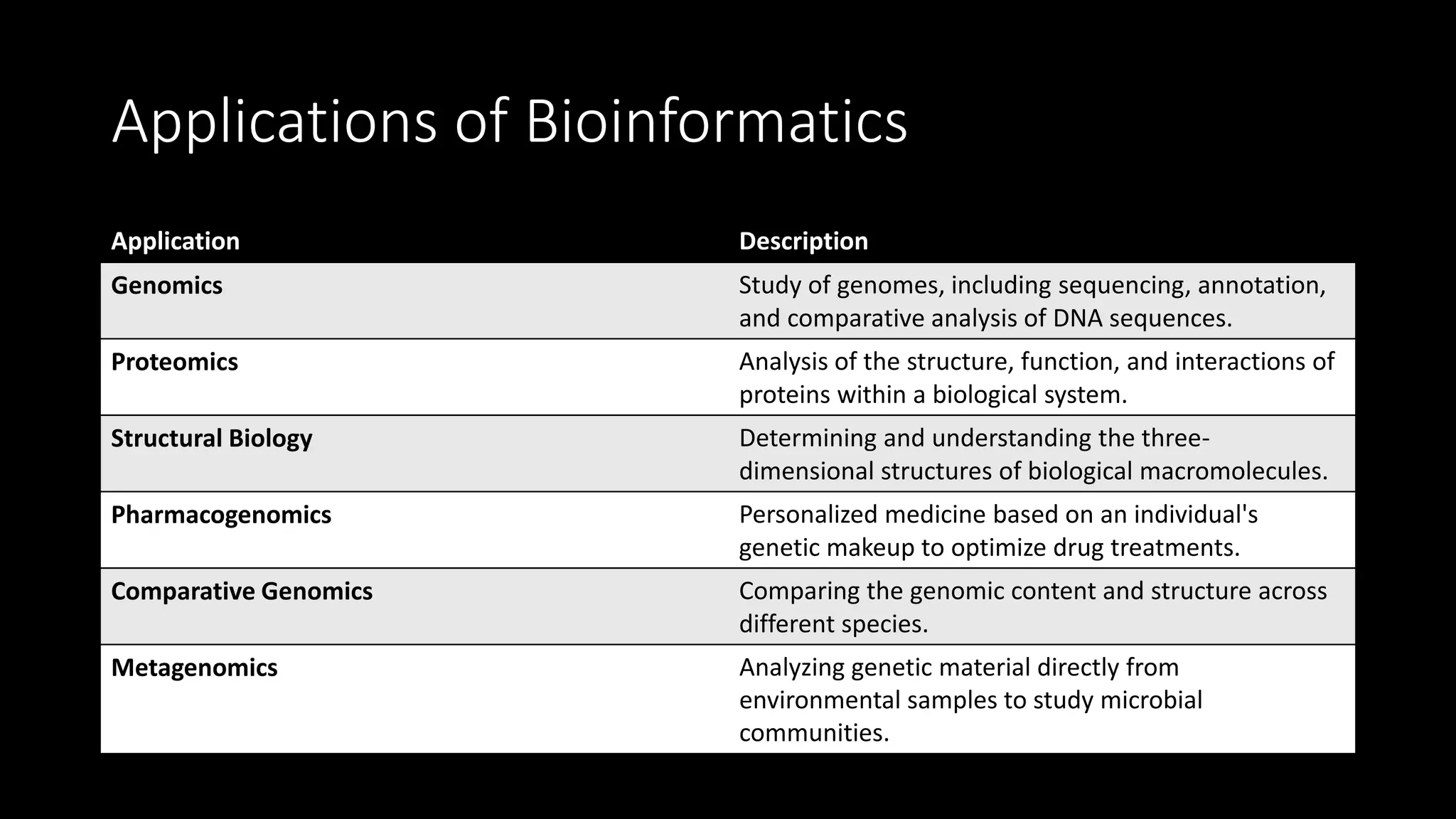
Applications of Bioinformatics
Description
Application
Study of genomes, including sequencing, annotation,
and comparative analysis of DNA sequences.
Genomics
Analysis of the structure, function, and interactions of
proteins within a biological system.
Proteomics
Determining and understanding the three-
dimensional structures of biological macromolecules.
Structural Biology
Personalized medicine based on an individual's
genetic makeup to optimize drug treatments.
Pharmacogenomics
Comparing the genomic content and structure across
different species.
Comparative Genomics
Analyzing genetic material directly from
environmental samples to study microbial
communities.
Metagenomics
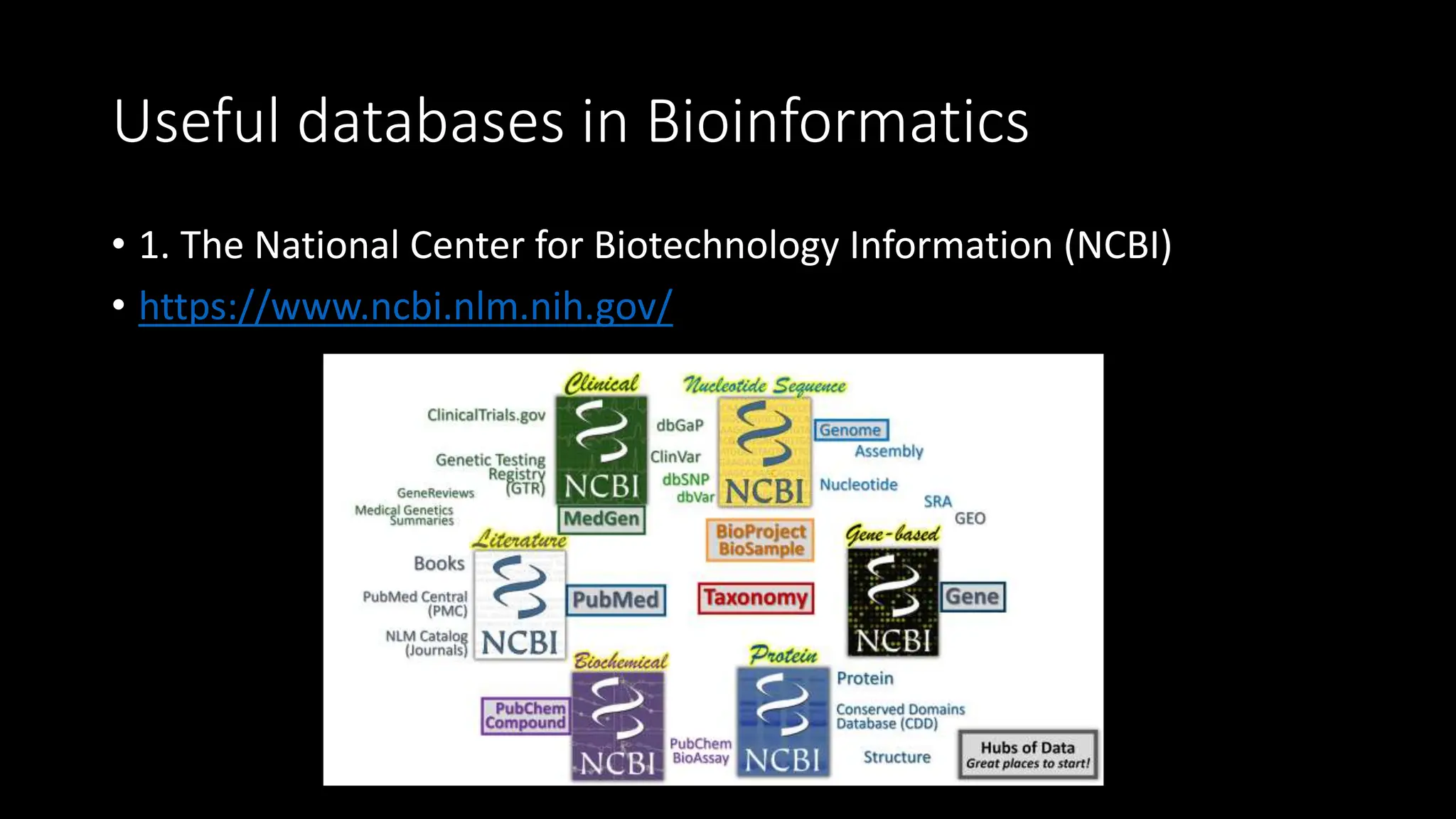
Useful databases in Bioinformatics
• 1. The National Center for Biotechnology Information (NCBI)
• https://www.ncbi.nlm.nih.gov/
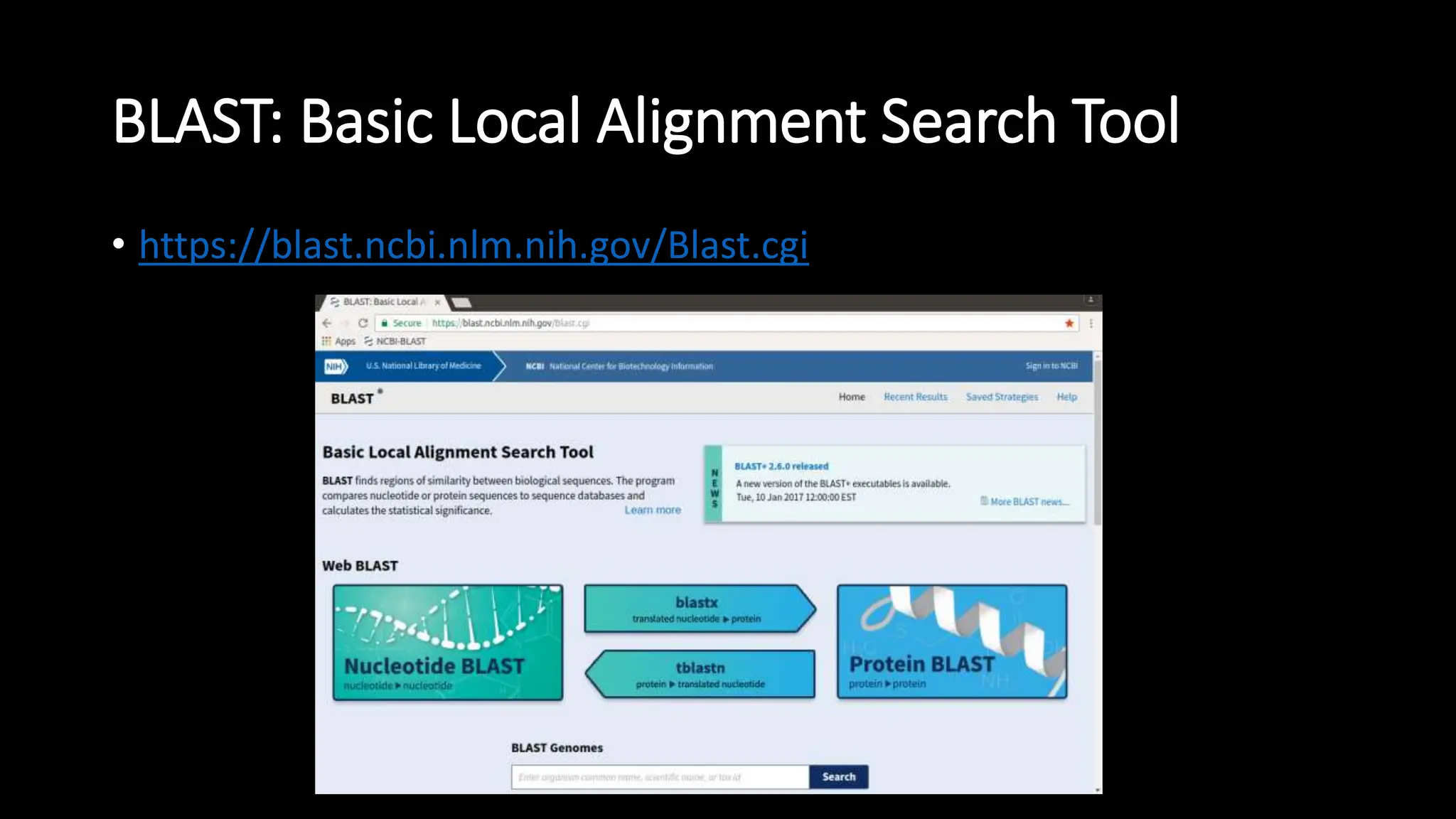
BLAST: Basic Local Alignment Search Tool
• https://blast.ncbi.nlm.nih.gov/Blast.cgi
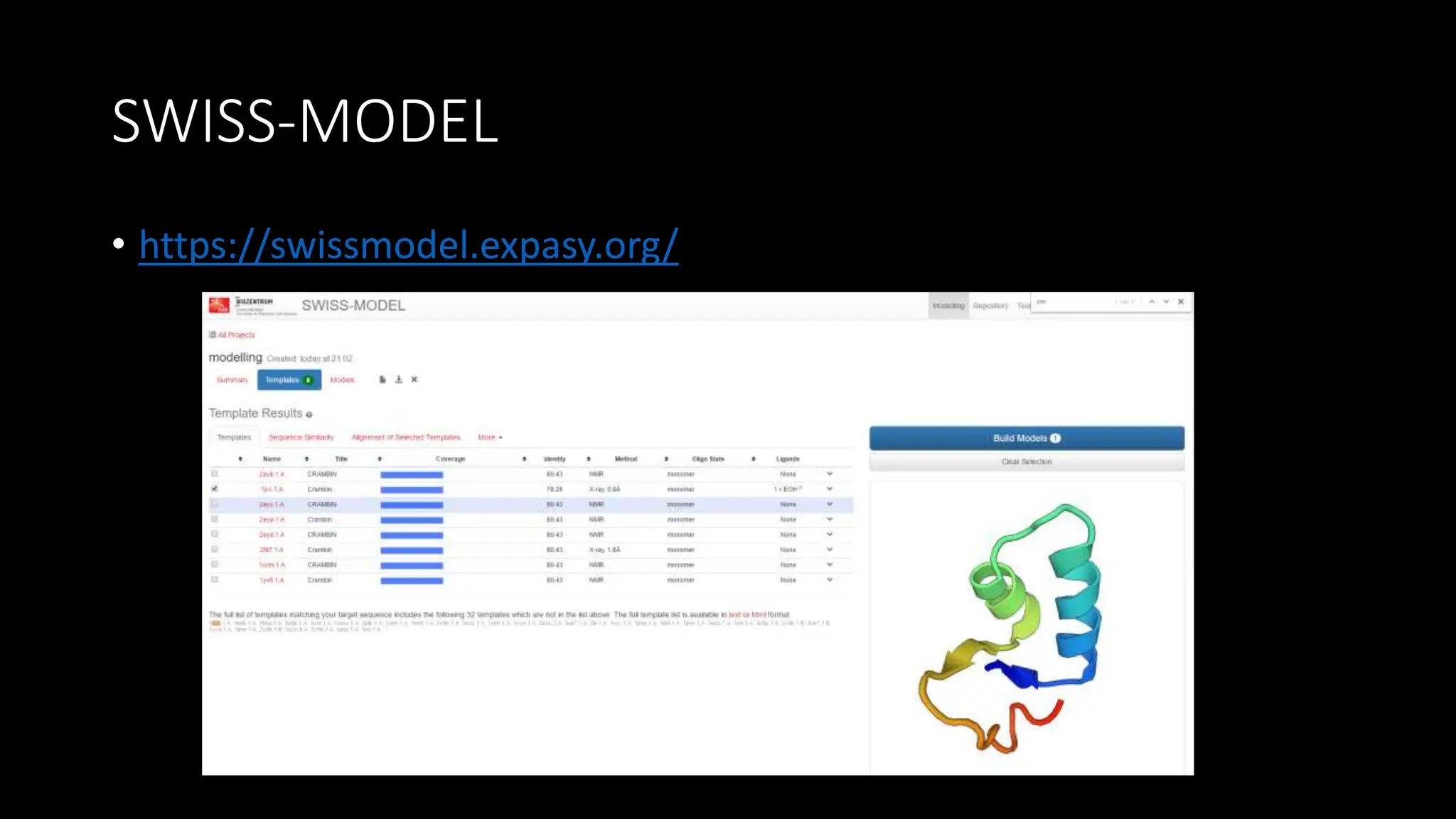
SWISS-MODEL
• https://swissmodel.expasy.org/
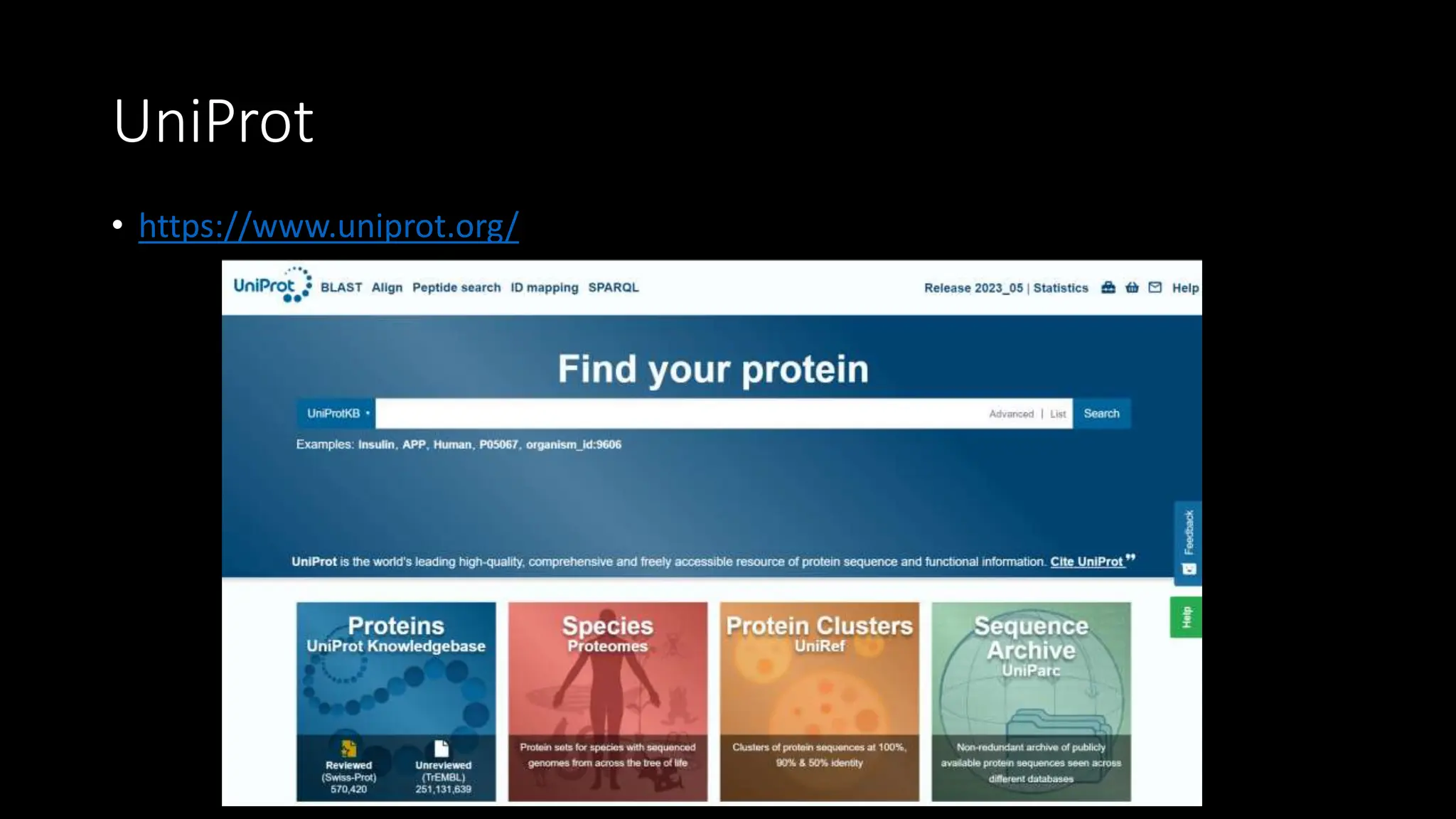
UniProt
• https://www.uniprot.org/
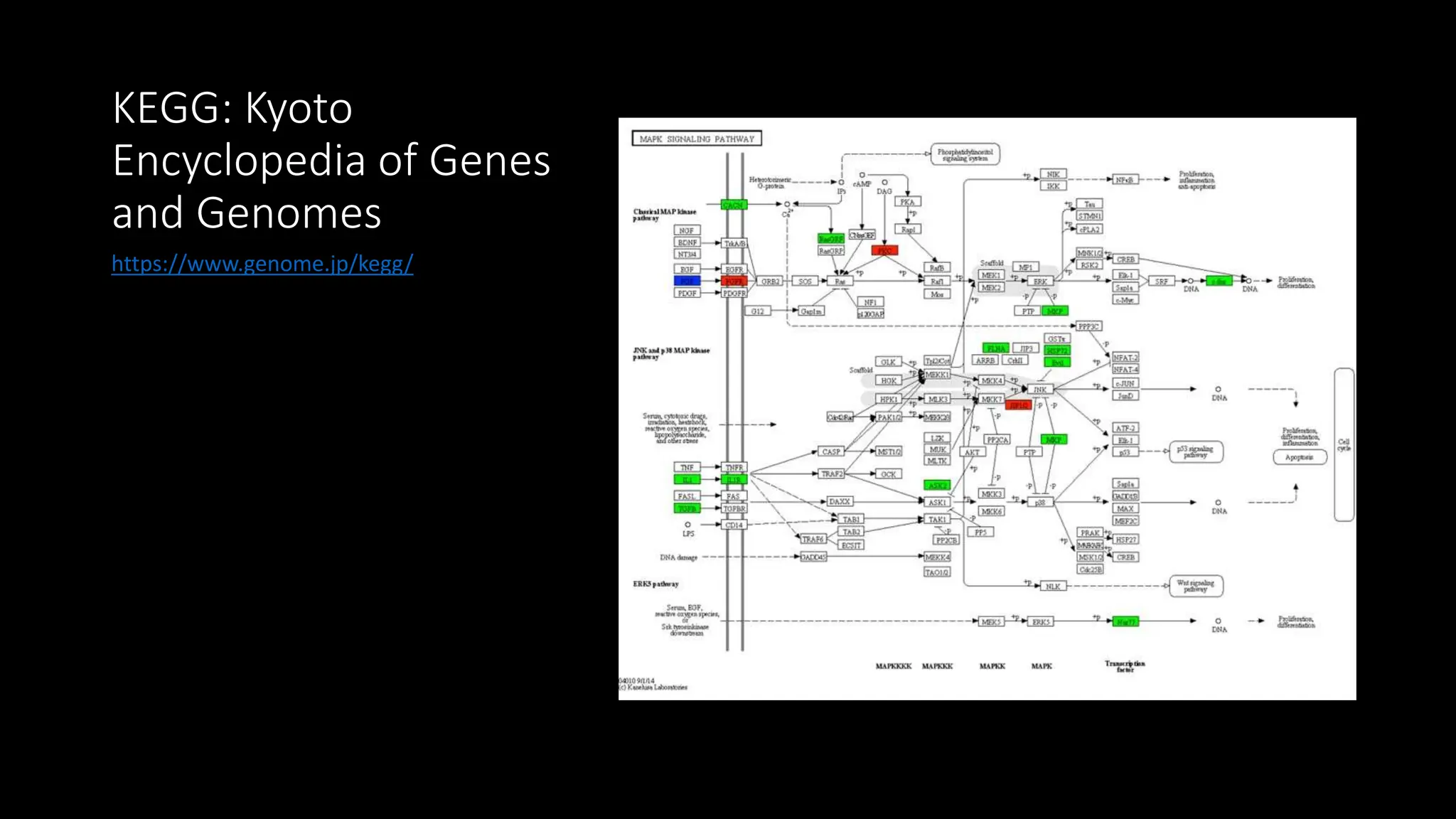
KEGG: Kyoto
Encyclopedia of Genes
and Genomes
https://www.genome.jp/kegg/
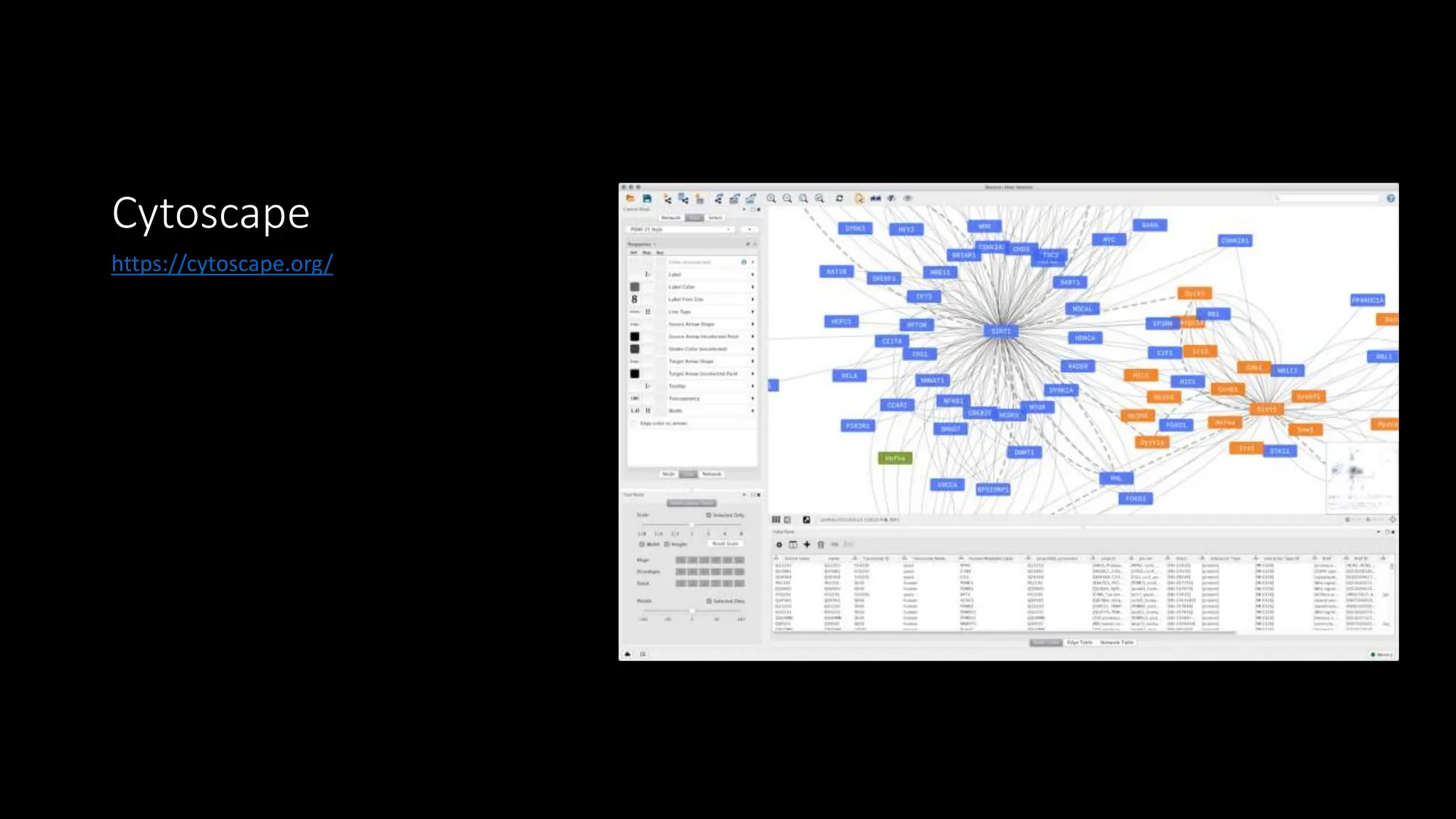
Cytoscape
https://cytoscape.org/
Popular free courses in Bioinformatics
• Bioinformatics – UCSD – Coursera
• Link: https://www.coursera.org/specializations/bioinformatics
• Genomic data science – Johns Hopkins University – Coursera
• Link: https://www.coursera.org/specializations/genomic-data-science
Popular Journals in Bioinformatics
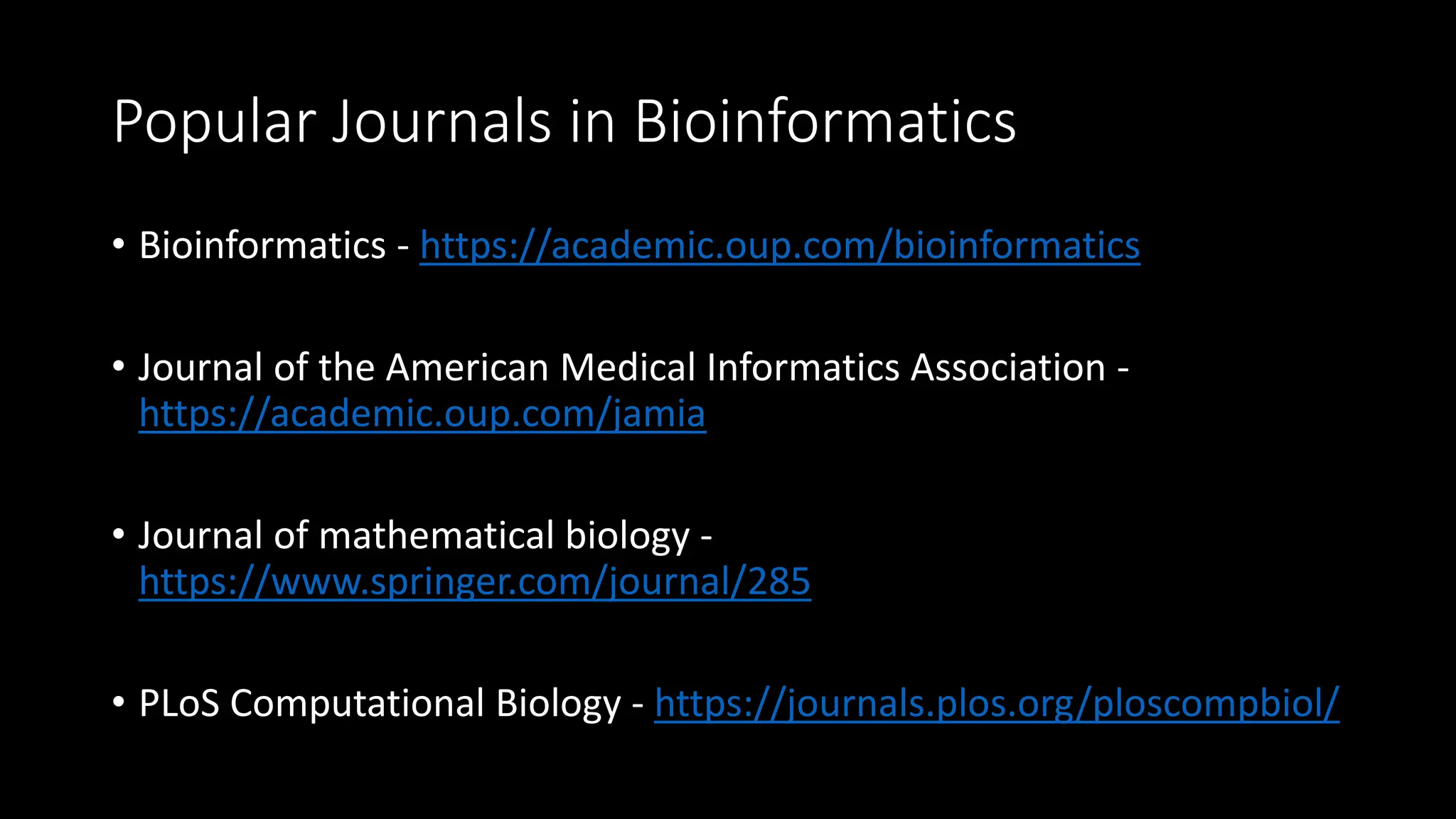
• Bioinformatics - https://academic.oup.com/bioinformatics
• Journal of the American Medical Informatics Association -
https://academic.oup.com/jamia
• Journal of mathematical biology -
https://www.springer.com/journal/285
• PLoS Computational Biology - https://journals.plos.org/ploscompbiol/
Conclusion
• Bioinformatics is a dynamic field that revolutionizes the way we
explore and understand the complexities of life. From unraveling the
mysteries of our genetic code to driving innovations in medicine,
bioinformatics continues to be a driving force in biological research.

Introduction to bioinformatics.pptx

  • 1.
  • 2.
    2023 Nobel prizein Medicine and Physiology Drew Weismann “for their discoveries concerning nucleoside base modifications that enabled the development of effective mRNA vaccines against COVID-19”
  • 3.
    What is Bioinformatics? Bioinformaticsis the application of computational techniques to manage, analyze, and interpret biological data. It's the bridge that connects biology with the power of computer science.
  • 4.
  • 5.
  • 6.
  • 7.
  • 8.
    Applications of Bioinformatics Description Application Studyof genomes, including sequencing, annotation, and comparative analysis of DNA sequences. Genomics Analysis of the structure, function, and interactions of proteins within a biological system. Proteomics Determining and understanding the three- dimensional structures of biological macromolecules. Structural Biology Personalized medicine based on an individual's genetic makeup to optimize drug treatments. Pharmacogenomics Comparing the genomic content and structure across different species. Comparative Genomics Analyzing genetic material directly from environmental samples to study microbial communities. Metagenomics
  • 9.
    Useful databases inBioinformatics • 1. The National Center for Biotechnology Information (NCBI) • https://www.ncbi.nlm.nih.gov/
  • 10.
    BLAST: Basic LocalAlignment Search Tool • https://blast.ncbi.nlm.nih.gov/Blast.cgi
  • 11.
  • 12.
  • 13.
    KEGG: Kyoto Encyclopedia ofGenes and Genomes https://www.genome.jp/kegg/
  • 14.
  • 15.
    Popular free coursesin Bioinformatics • Bioinformatics – UCSD – Coursera • Link: https://www.coursera.org/specializations/bioinformatics • Genomic data science – Johns Hopkins University – Coursera • Link: https://www.coursera.org/specializations/genomic-data-science
  • 16.
    Popular Journals inBioinformatics • Bioinformatics - https://academic.oup.com/bioinformatics • Journal of the American Medical Informatics Association - https://academic.oup.com/jamia • Journal of mathematical biology - https://www.springer.com/journal/285 • PLoS Computational Biology - https://journals.plos.org/ploscompbiol/
  • 17.
    Conclusion • Bioinformatics isa dynamic field that revolutionizes the way we explore and understand the complexities of life. From unraveling the mysteries of our genetic code to driving innovations in medicine, bioinformatics continues to be a driving force in biological research.