Managerial Accounting
and The Business
Environment
Prepared & Edited by
Nazim Uddin
Assistant Professor
National Institute of Textile Engineering & Research
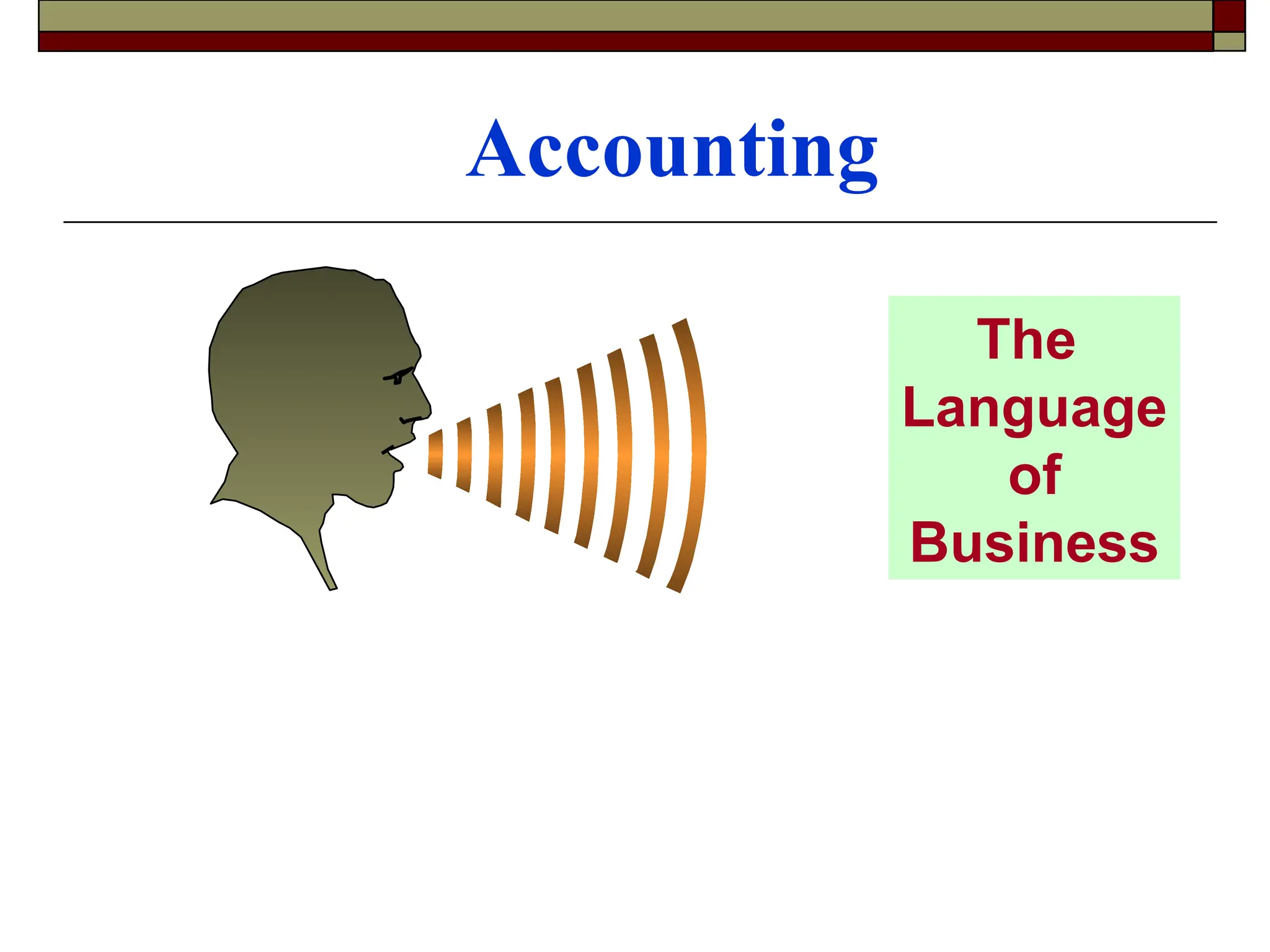
Accounting
The
Language
of
Business
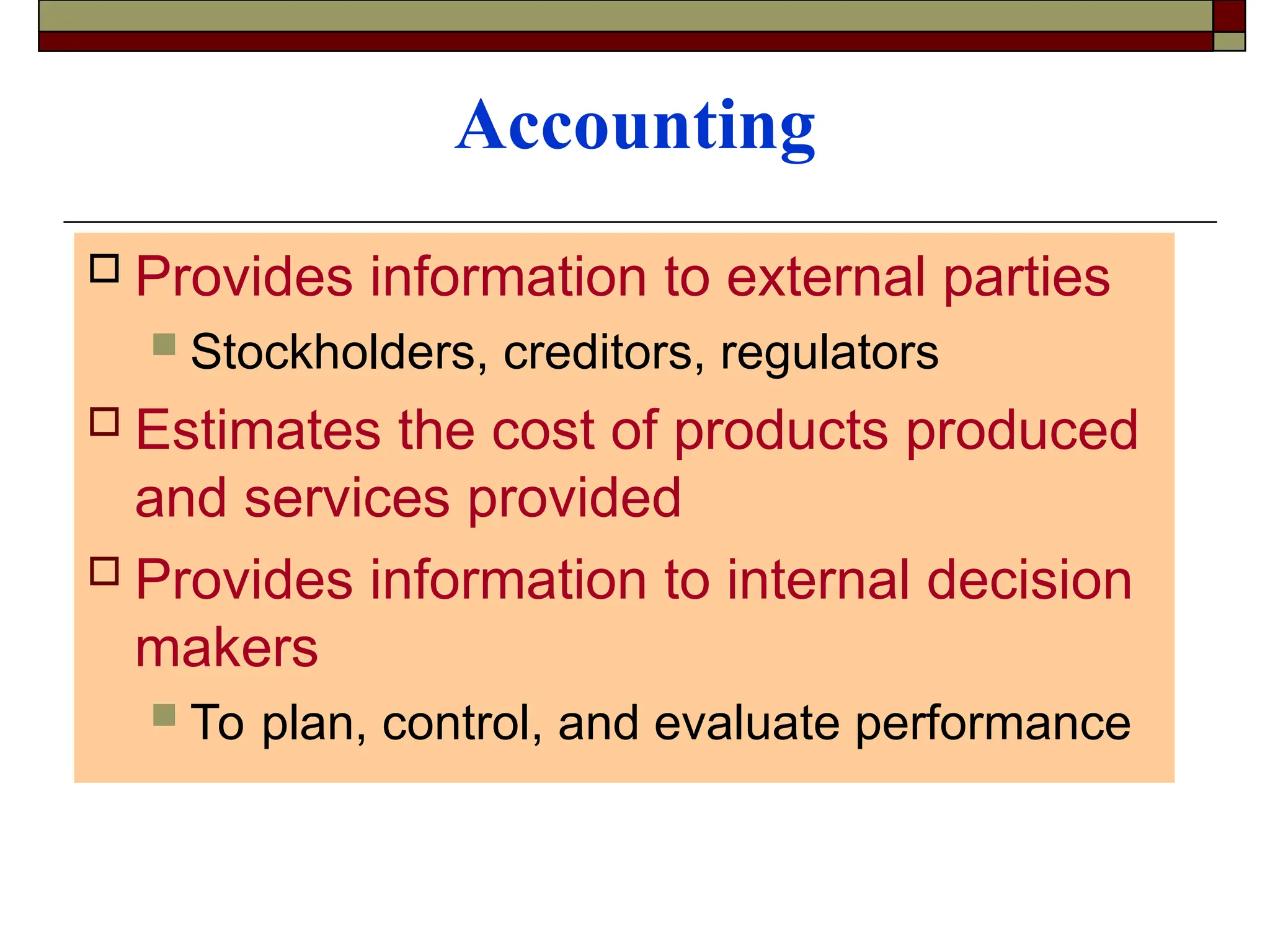
Accounting
 Provides information to external parties
 Stockholders, creditors, regulators
 Estimates the cost of products produced
and services provided
 Provides information to internal decision
makers
 To plan, control, and evaluate performance
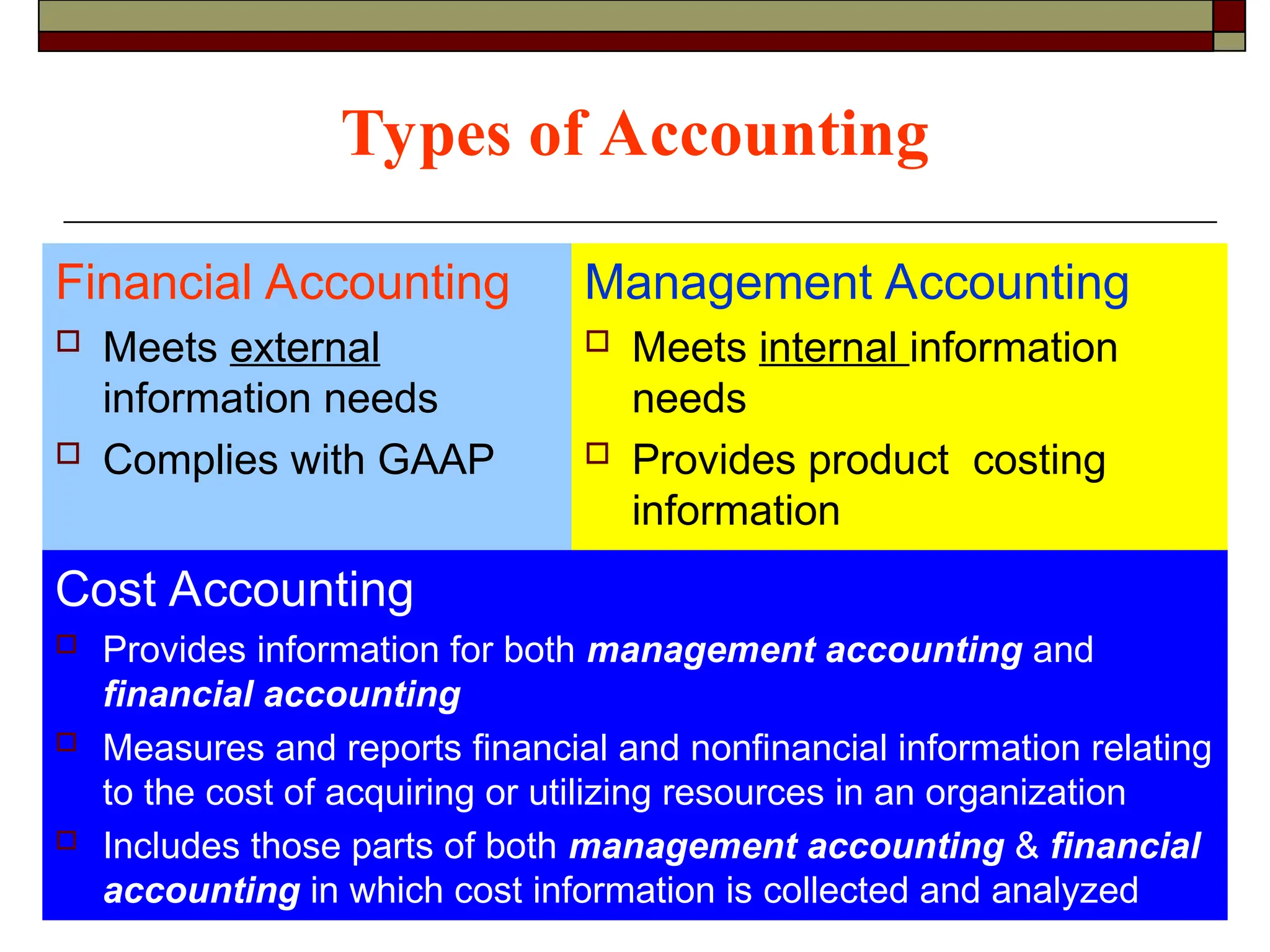
Types of Accounting
Financial Accounting
 Meets external
information needs
 Complies with GAAP
Management Accounting
 Meets internal information
needs
 Provides product costing
information
Cost Accounting
 Provides information for both management accounting and
financial accounting
 Measures and reports financial and nonfinancial information relating
to the cost of acquiring or utilizing resources in an organization
 Includes those parts of both management accounting & financial
accounting in which cost information is collected and analyzed
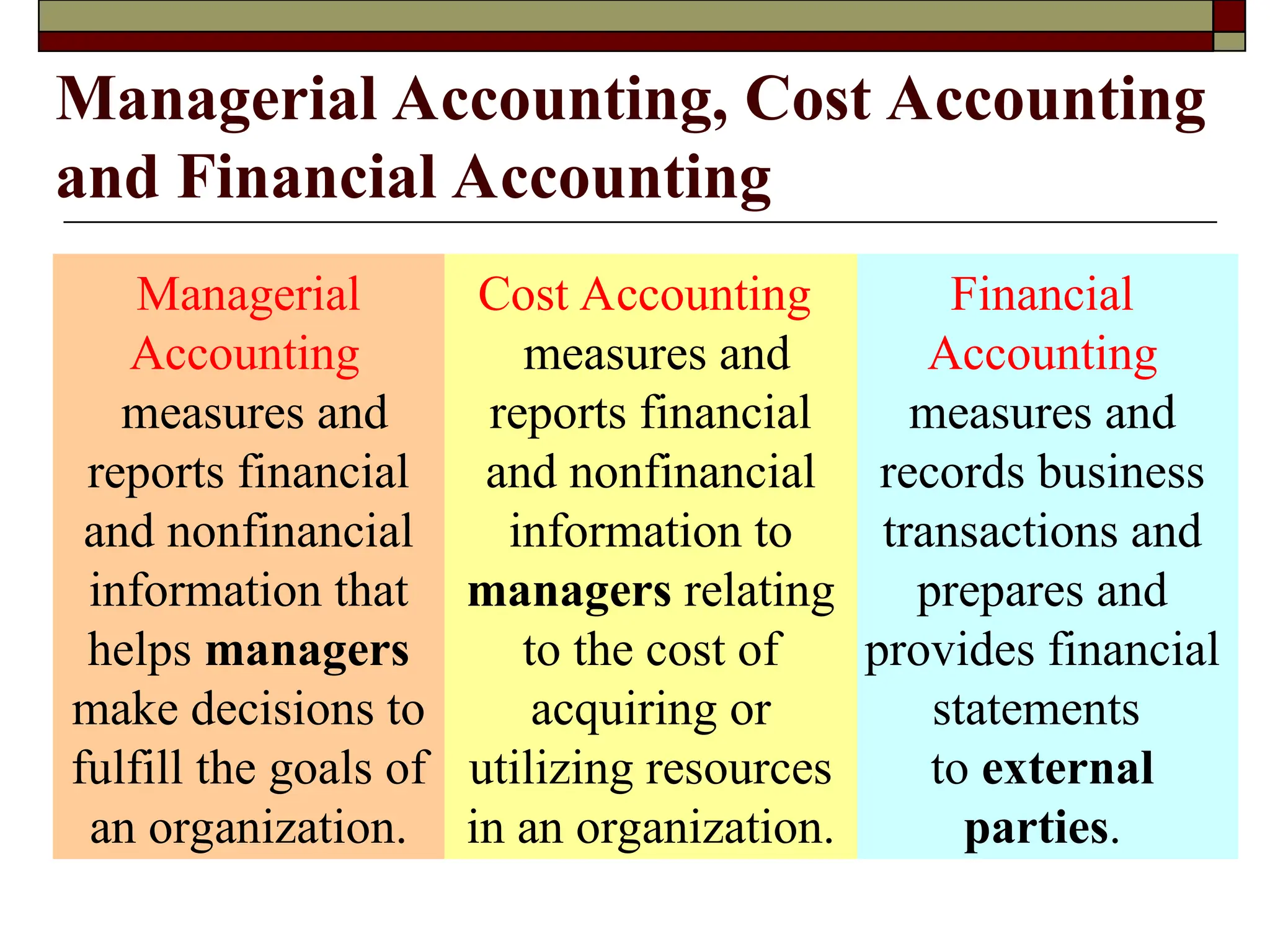
Managerial Accounting, Cost Accounting
and Financial Accounting
Managerial
Accounting
measures and
reports financial
and nonfinancial
information that
helps managers
make decisions to
fulfill the goals of
an organization.
Financial
Accounting
measures and
records business
transactions and
prepares and
provides financial
statements
to external
parties.
Cost Accounting
measures and
reports financial
and nonfinancial
information to
managers relating
to the cost of
acquiring or
utilizing resources
in an organization.
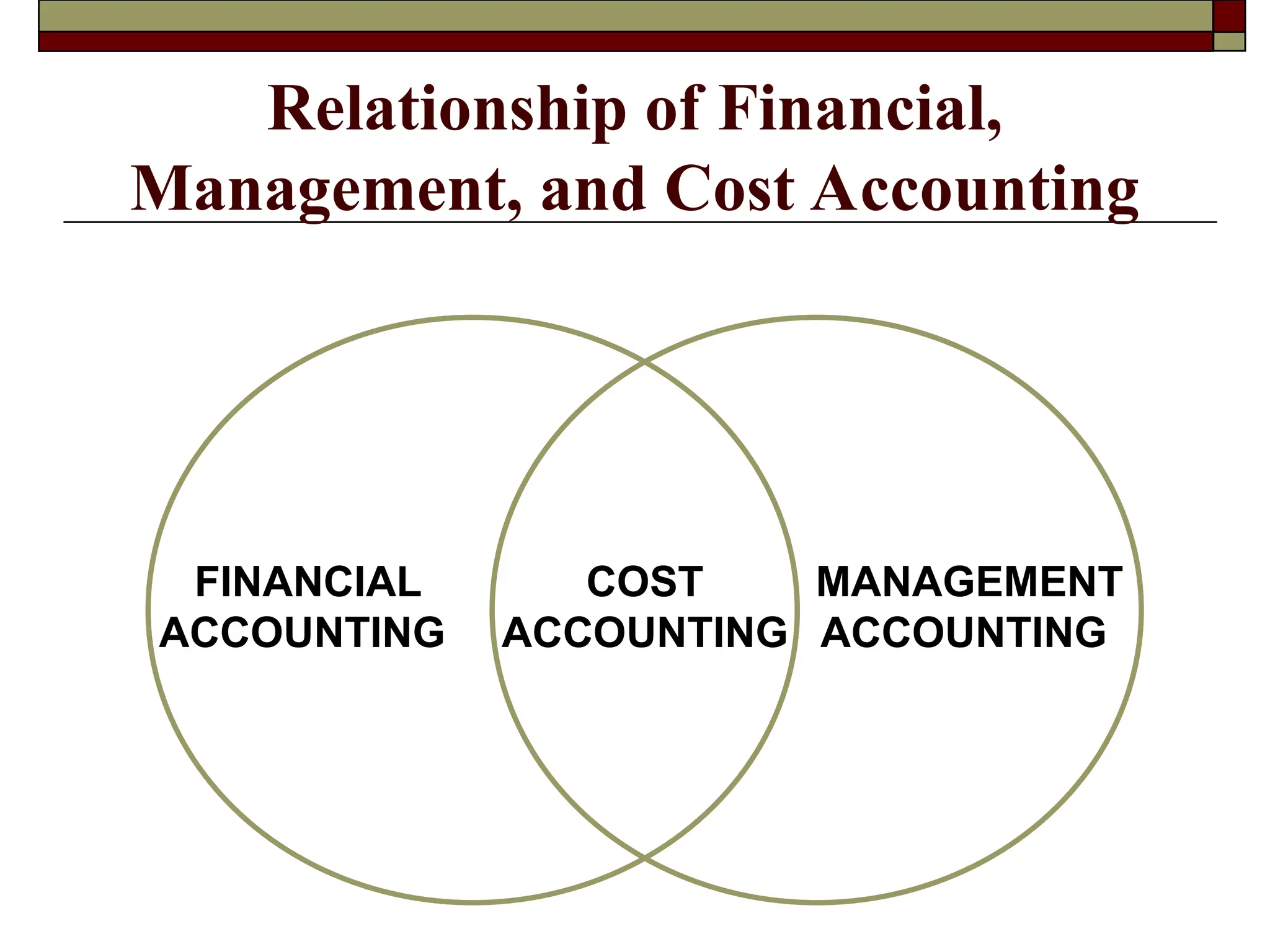
Relationship of Financial,
Management, and Cost Accounting
FINANCIAL
ACCOUNTING
MANAGEMENT
ACCOUNTING
COST
ACCOUNTING
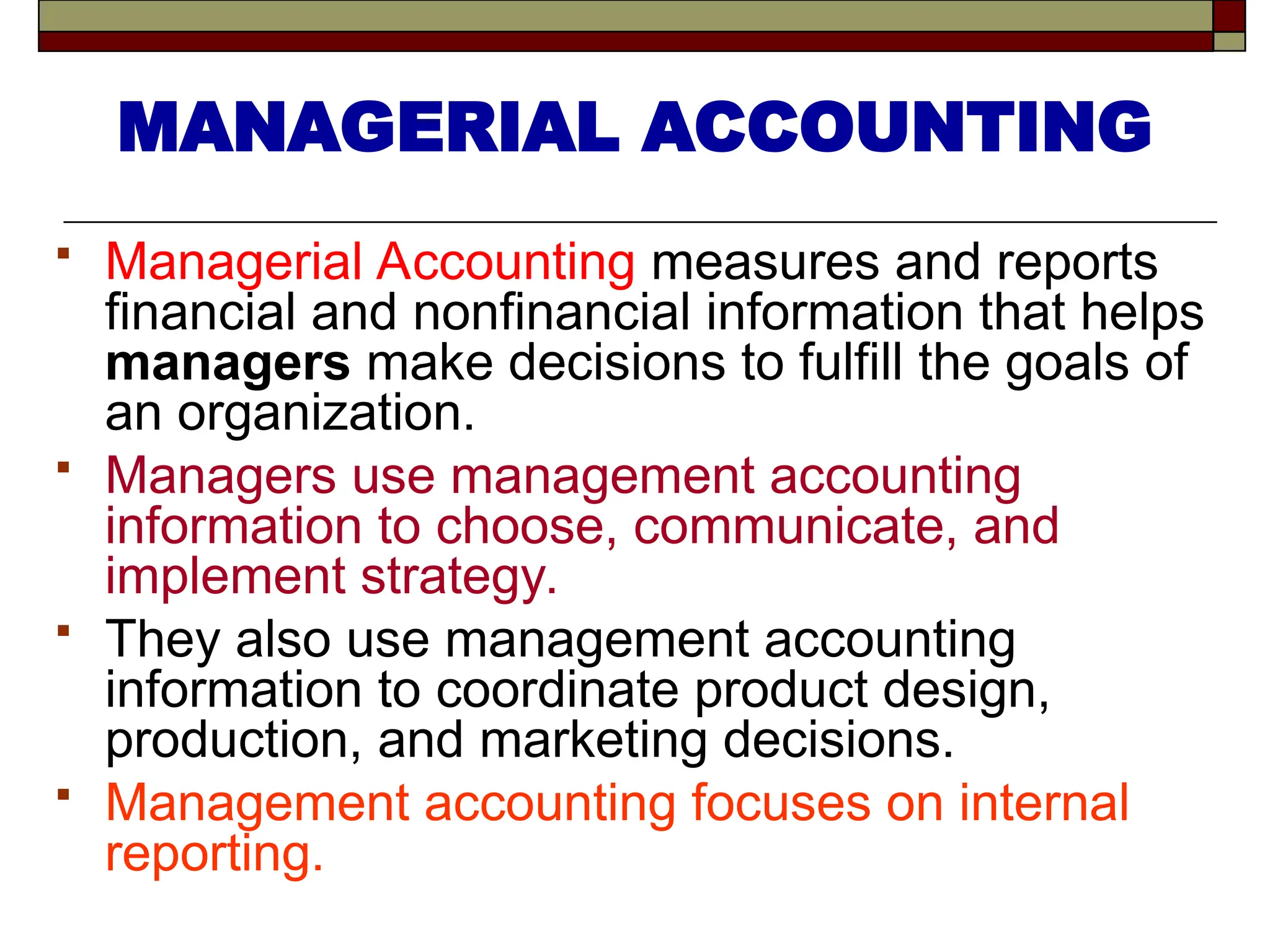
 Managerial Accounting measures and reports
financial and nonfinancial information that helps
managers make decisions to fulfill the goals of
an organization.
 Managers use management accounting
information to choose, communicate, and
implement strategy.
 They also use management accounting
information to coordinate product design,
production, and marketing decisions.
 Management accounting focuses on internal
reporting.
MANAGERIAL ACCOUNTING
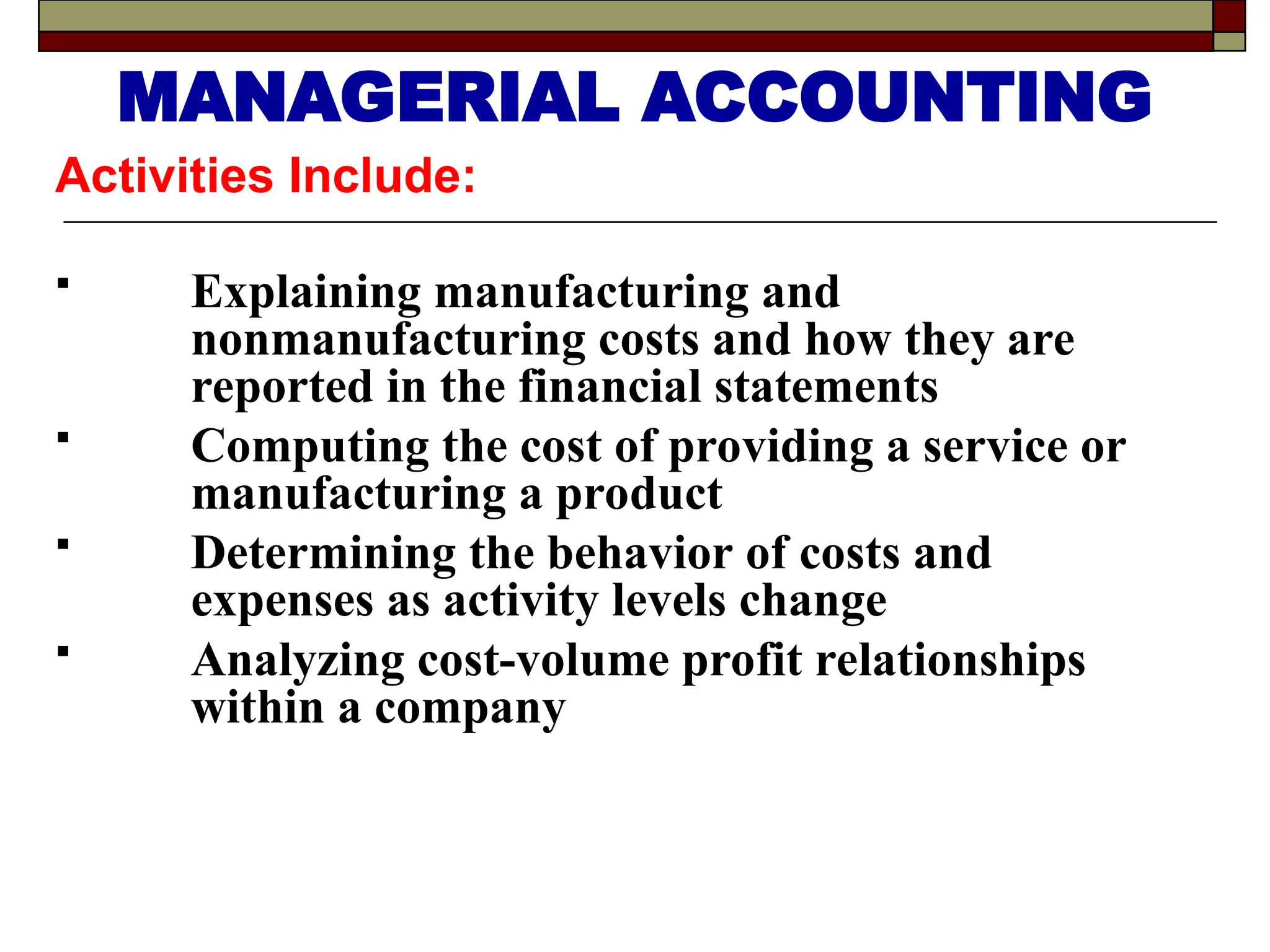
Activities Include:
 Explaining manufacturing and
nonmanufacturing costs and how they are
reported in the financial statements
 Computing the cost of providing a service or
manufacturing a product
 Determining the behavior of costs and
expenses as activity levels change
 Analyzing cost-volume profit relationships
within a company
MANAGERIAL ACCOUNTING
Activities Include (continued):
 Assisting management in profit planning and
budgeting
 Providing a basis for controlling costs and
expenses by comparing actual results with
planned objectives and standard costs
 Accumulating and presenting relevant data for
management decision making
MANAGERIAL ACCOUNTING
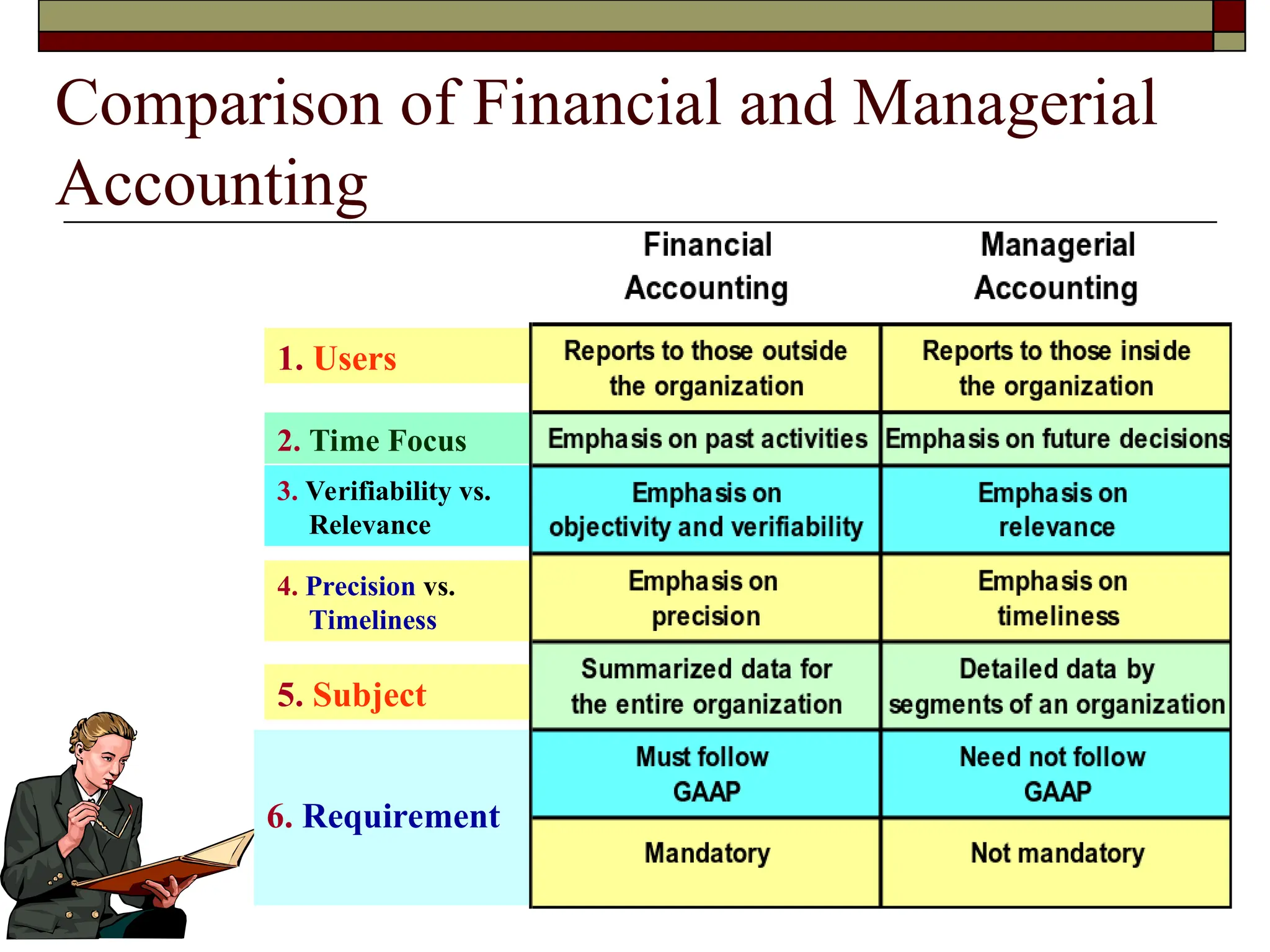
Comparison of Financial and Managerial
Accounting
1. Users
2. Time Focus
3. Verifiability vs.
Relevance
4. Precision vs.
Timeliness
5. Subject
6. Requirement
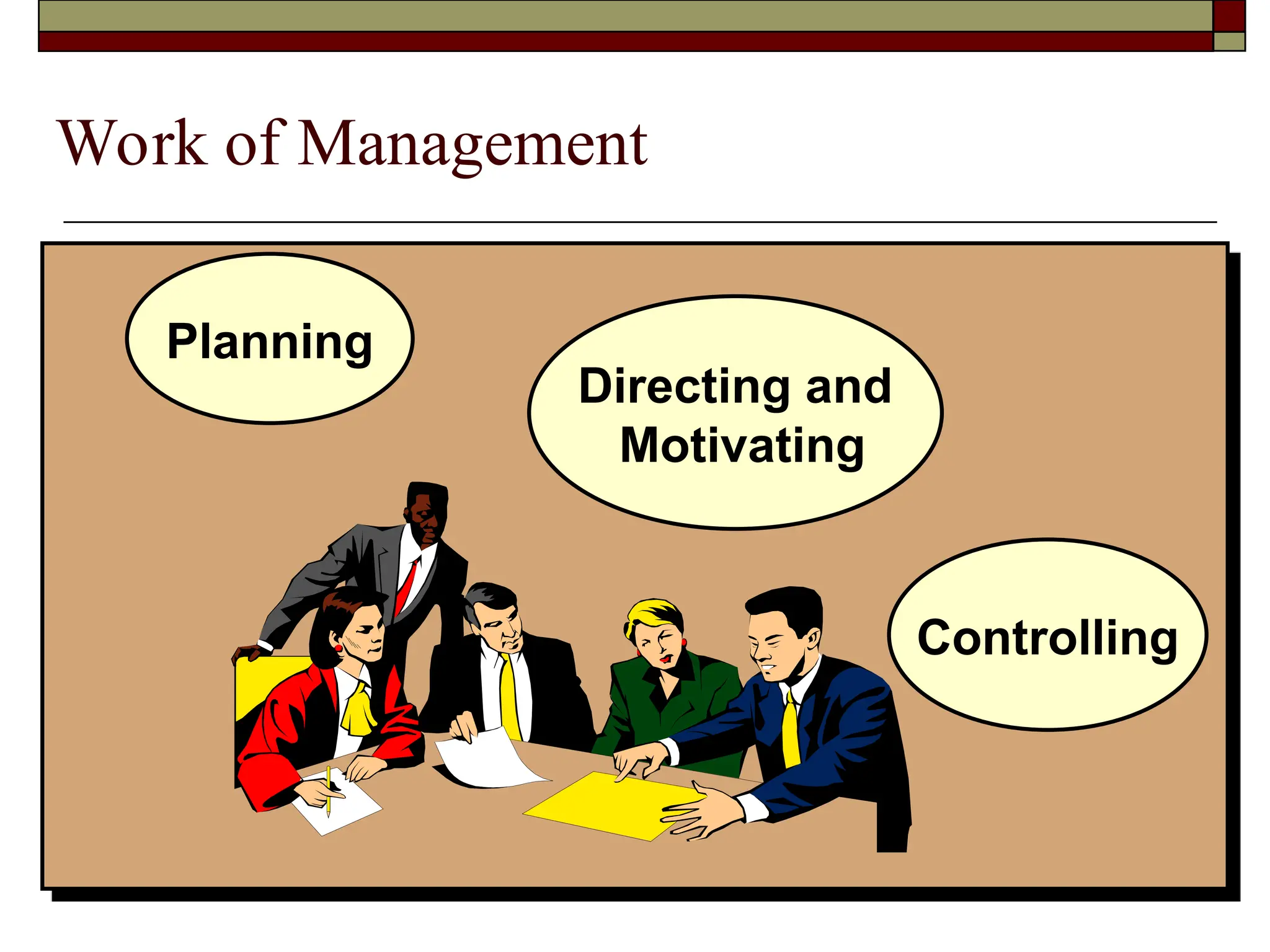
Work of Management
Planning
Controlling
Directing and
Motivating
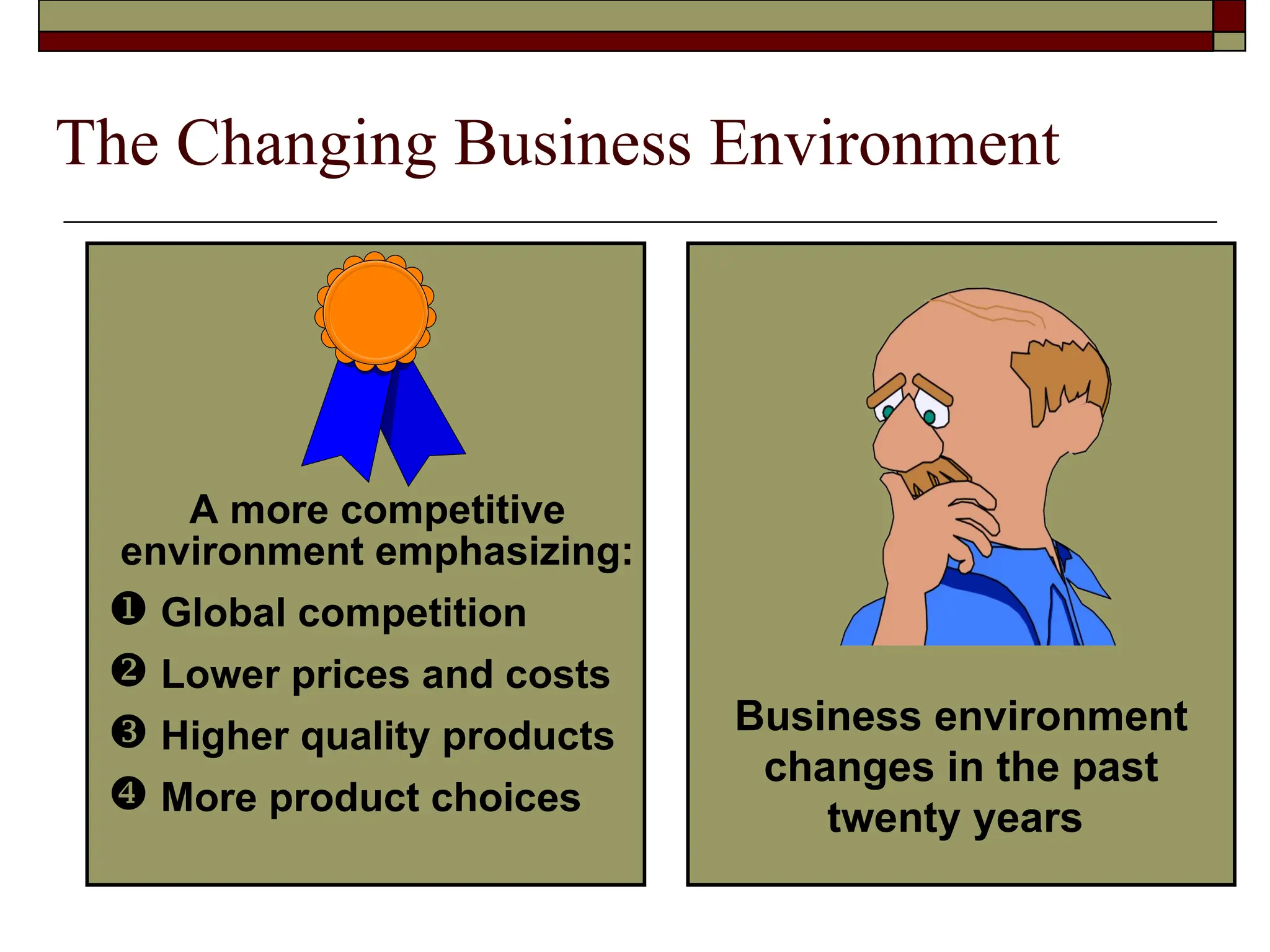
The Changing Business Environment
A more competitive
environment emphasizing:
 Global competition
 Lower prices and costs
 Higher quality products
 More product choices
Business environment
changes in the past
twenty years
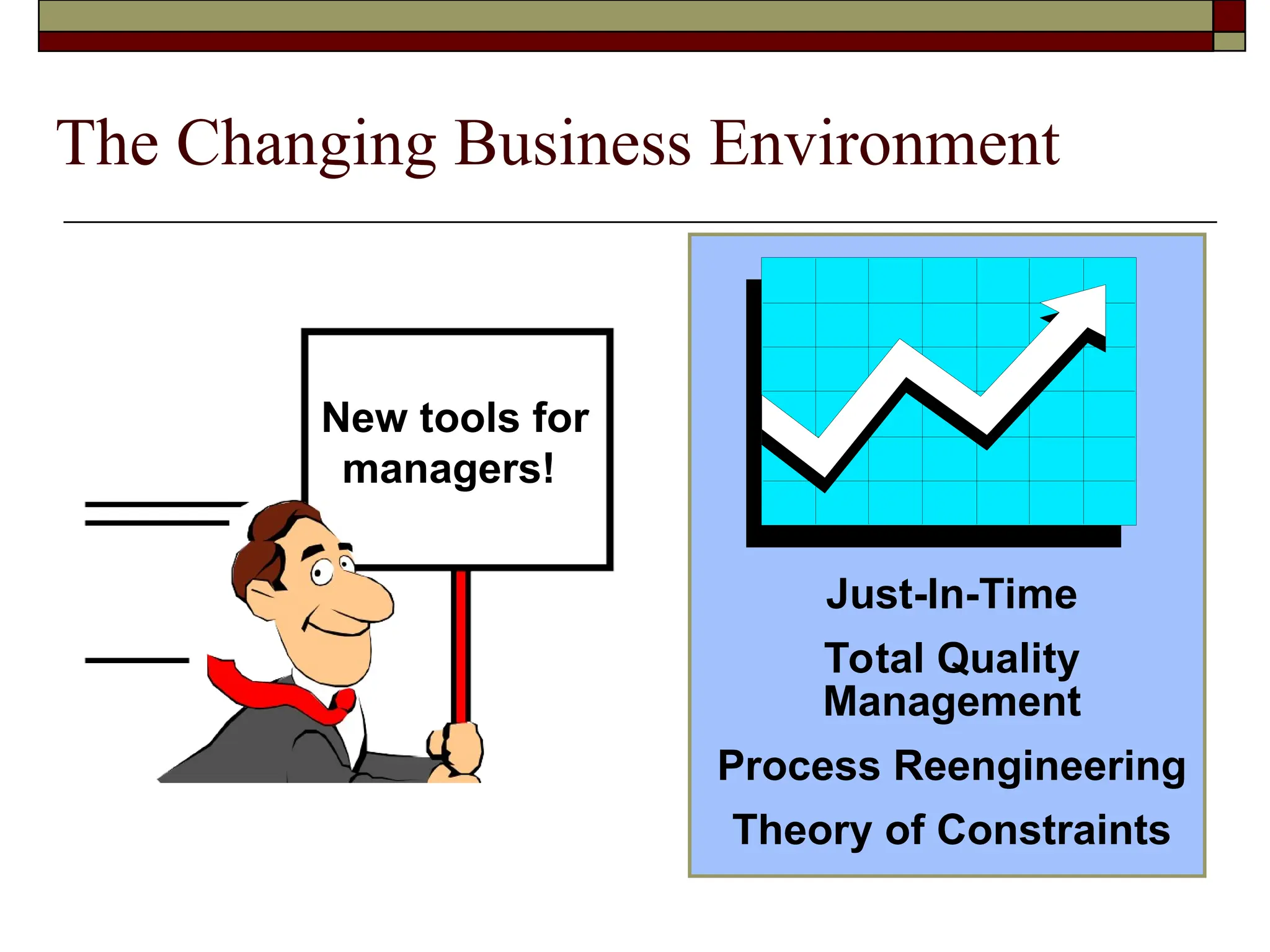
The Changing Business Environment
Just-In-Time
Total Quality
Management
Process Reengineering
Theory of Constraints
New tools for
managers!
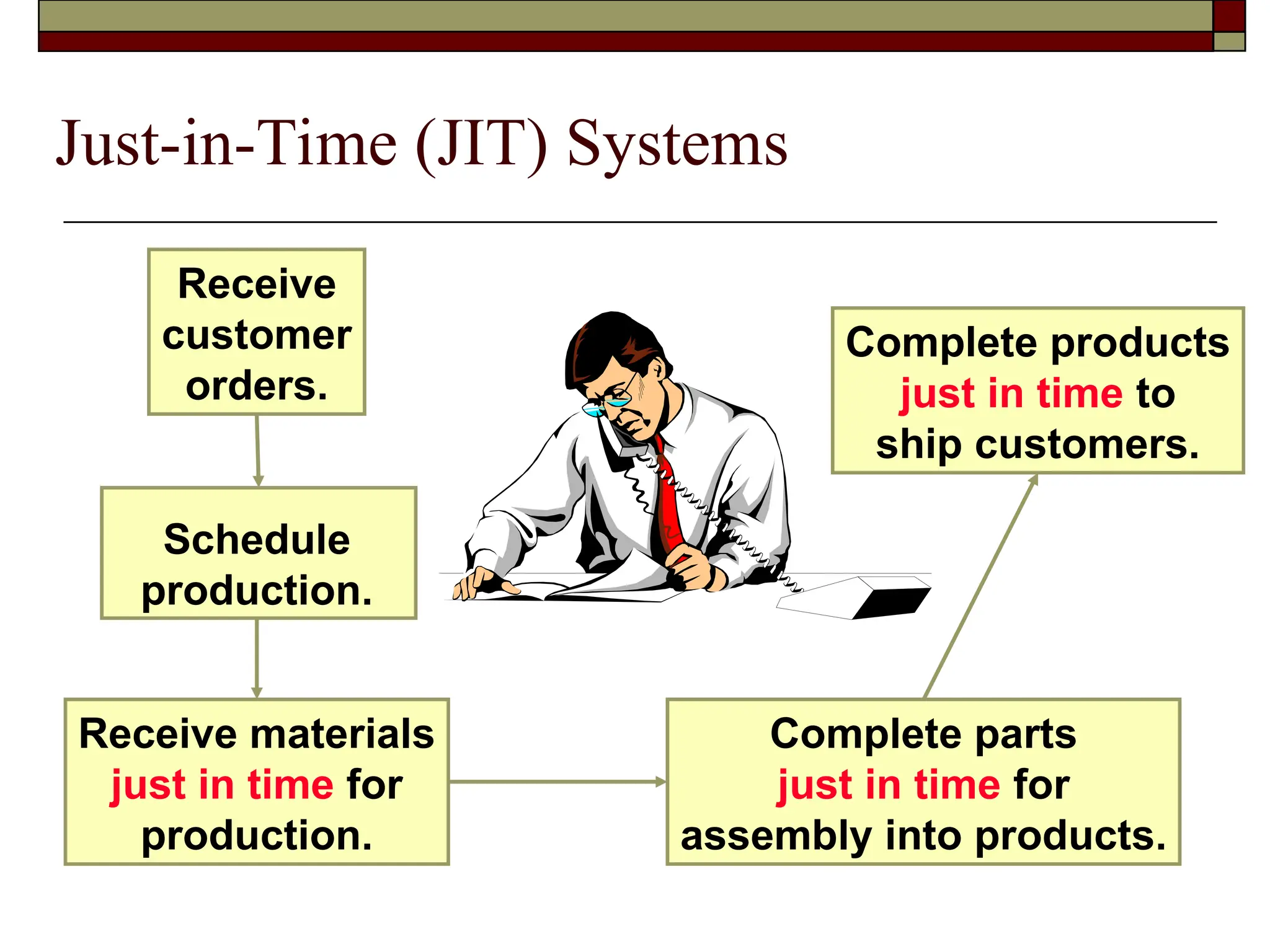
Just-in-Time (JIT) Systems
Receive
customer
orders.
Schedule
production.
Receive materials
just in time for
production.
Complete parts
just in time for
assembly into products.
Complete products
just in time to
ship customers.
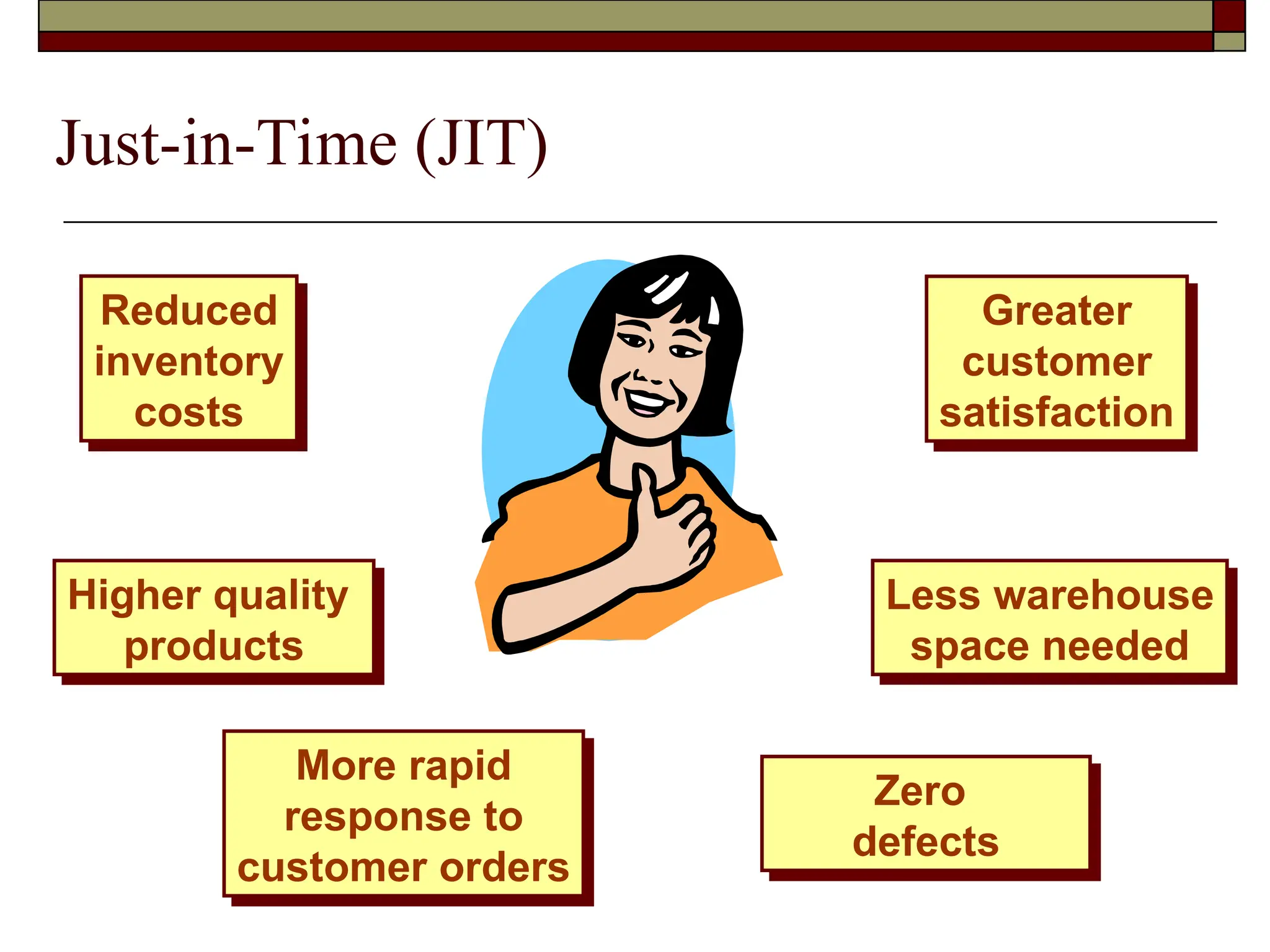
More rapid
response to
customer orders
Less warehouse
space needed
Reduced
inventory
costs
Greater
customer
satisfaction
Just-in-Time (JIT)
Higher quality
products
Zero
defects
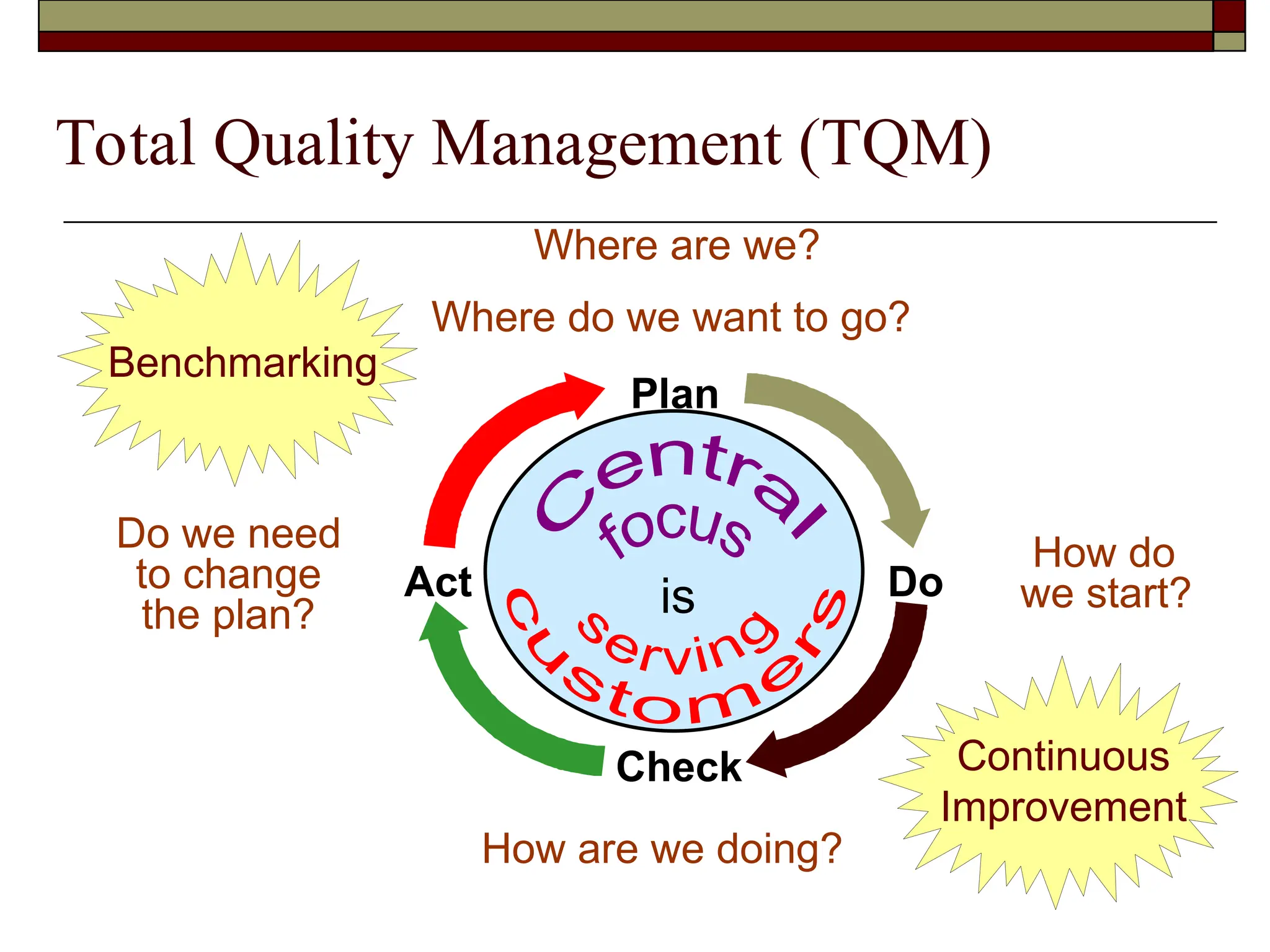
Do we need
to change
the plan?
Where are we?
Where do we want to go?
How do
we start?
How are we doing?
Check
Plan
Act Do
is
Total Quality Management (TQM)
Benchmarking
Continuous
Improvement
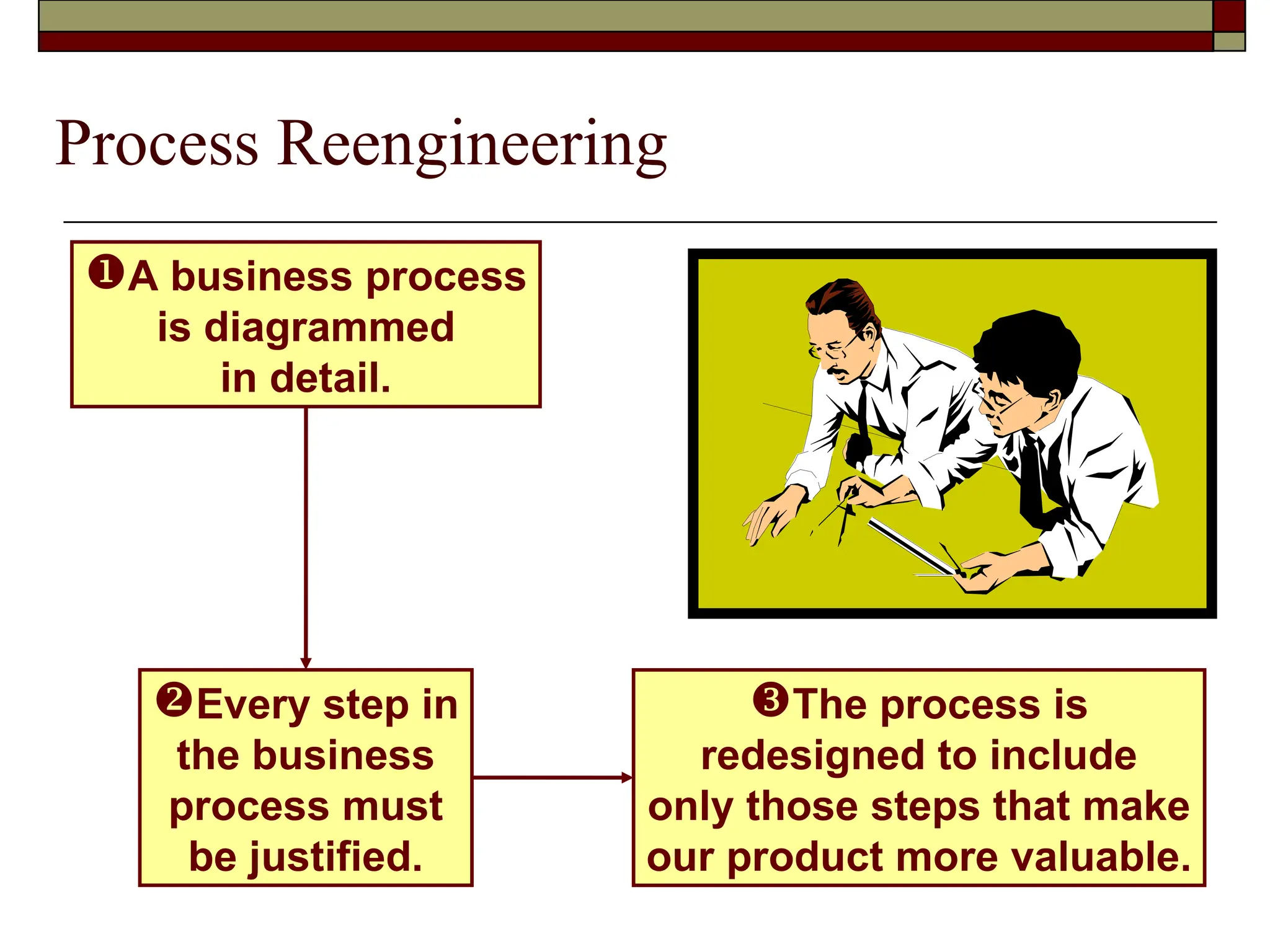
Process Reengineering
A business process
is diagrammed
in detail.
The process is
redesigned to include
only those steps that make
our product more valuable.
Every step in
the business
process must
be justified.
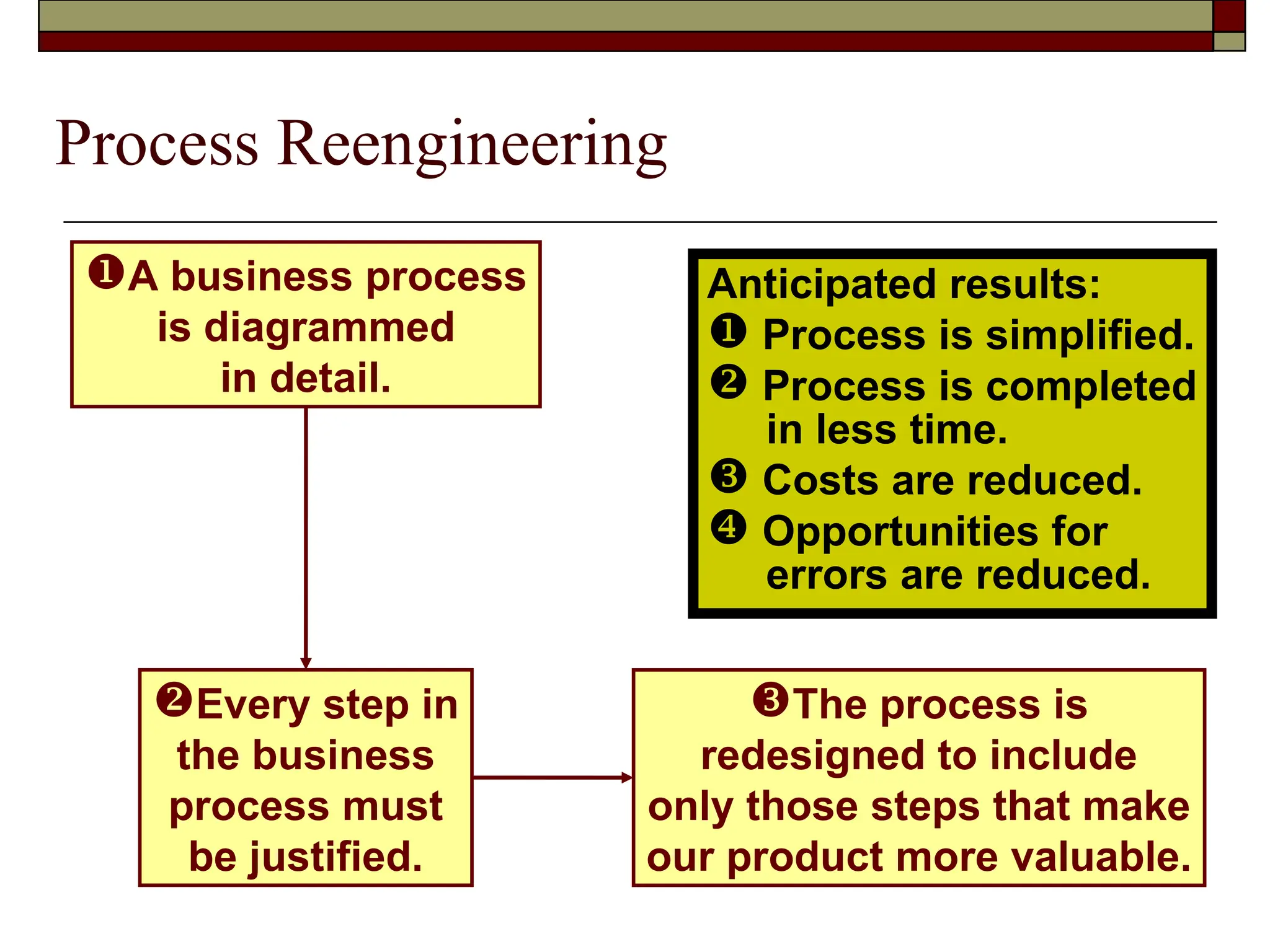
Process Reengineering
A business process
is diagrammed
in detail.
The process is
redesigned to include
only those steps that make
our product more valuable.
Every step in
the business
process must
be justified.
Anticipated results:
 Process is simplified.
 Process is completed
in less time.
 Costs are reduced.
 Opportunities for
errors are reduced.
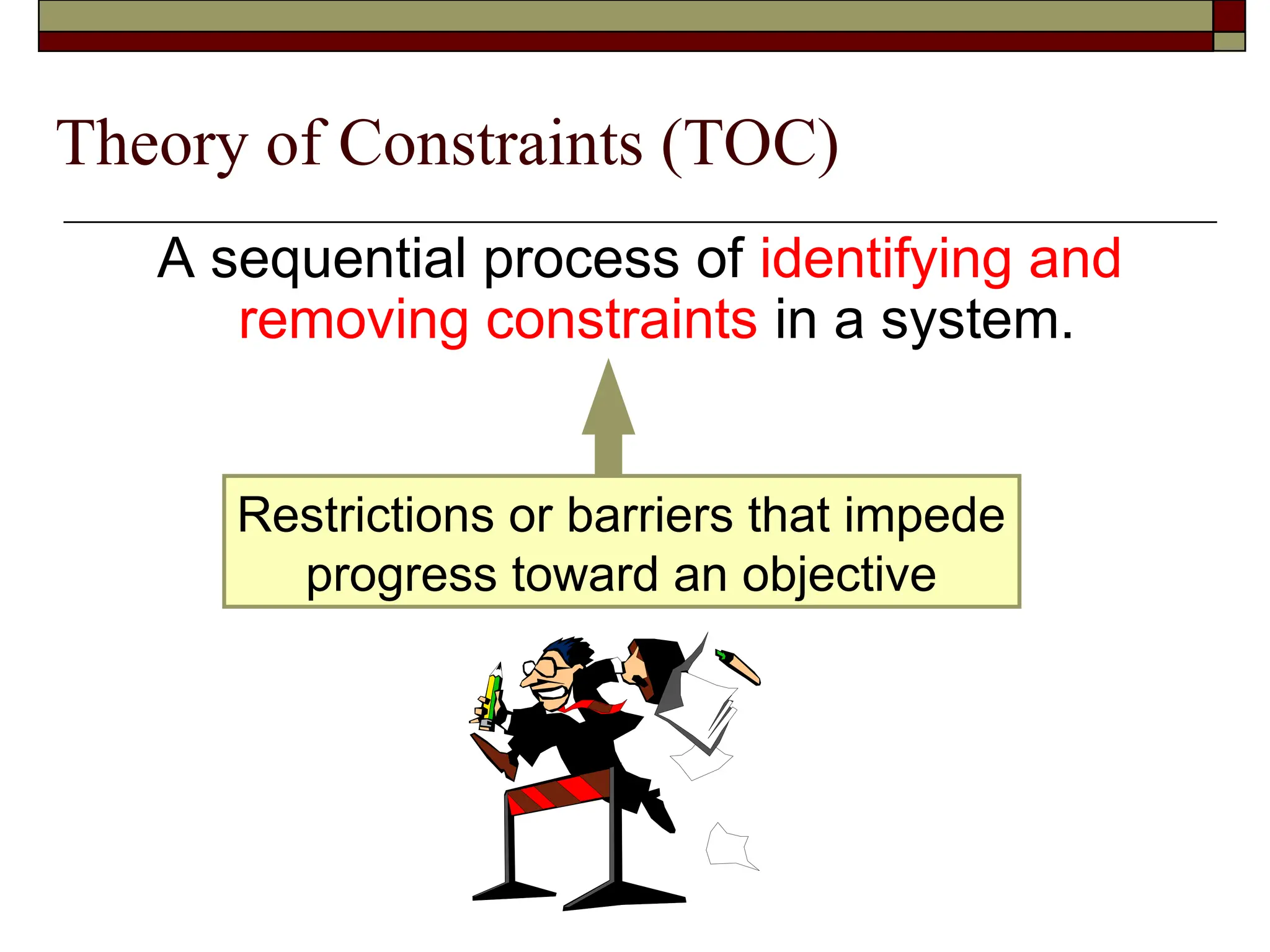
Theory of Constraints (TOC)
A sequential process of identifying and
removing constraints in a system.
Restrictions or barriers that impede
progress toward an objective
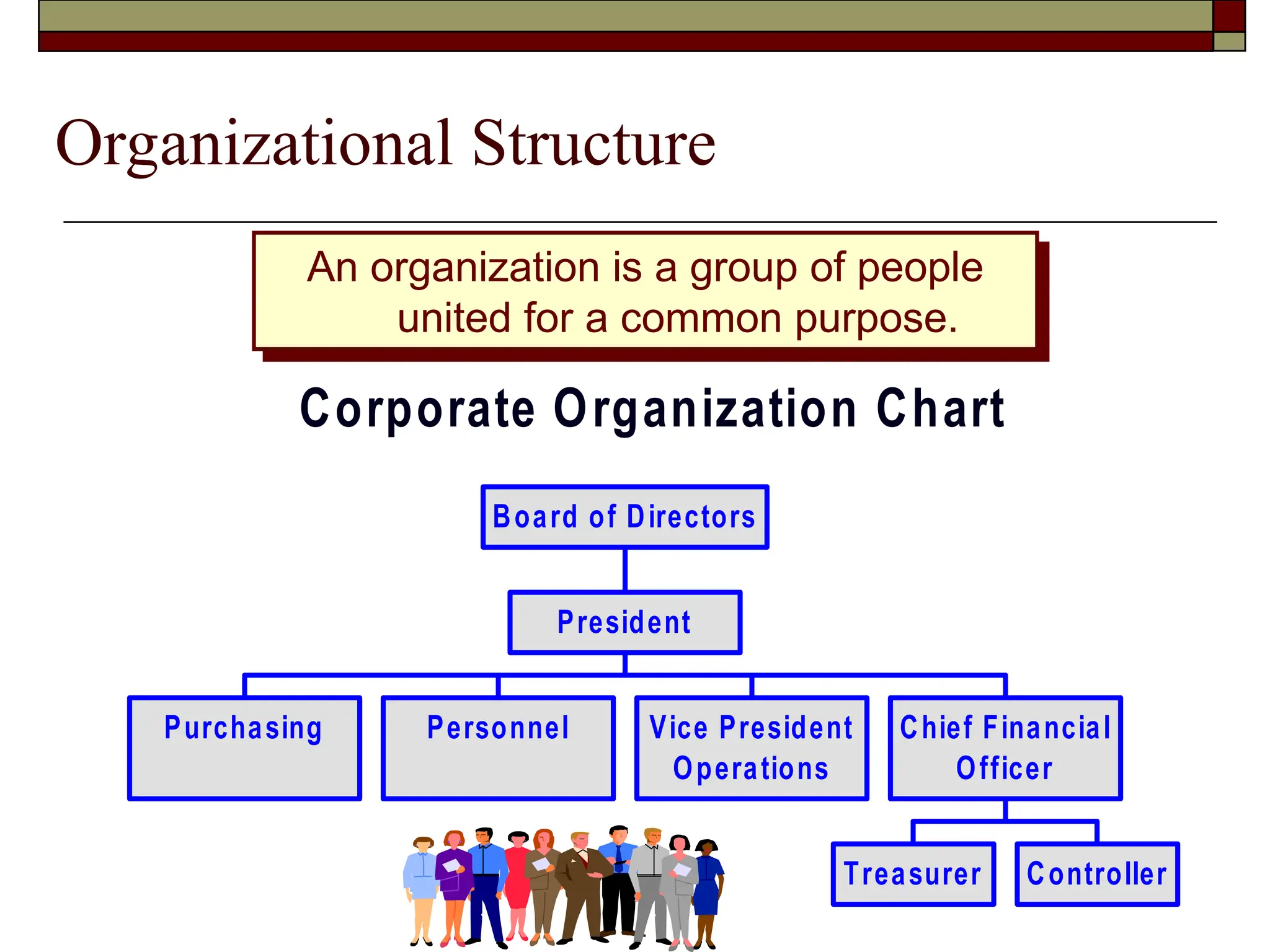
Corporate Organization Chart
Purchasing Personnel Vice President
Operations
Treasurer Controller
Chief Financial
Officer
President
Board of Directors
Organizational Structure
An organization is a group of people
united for a common purpose.
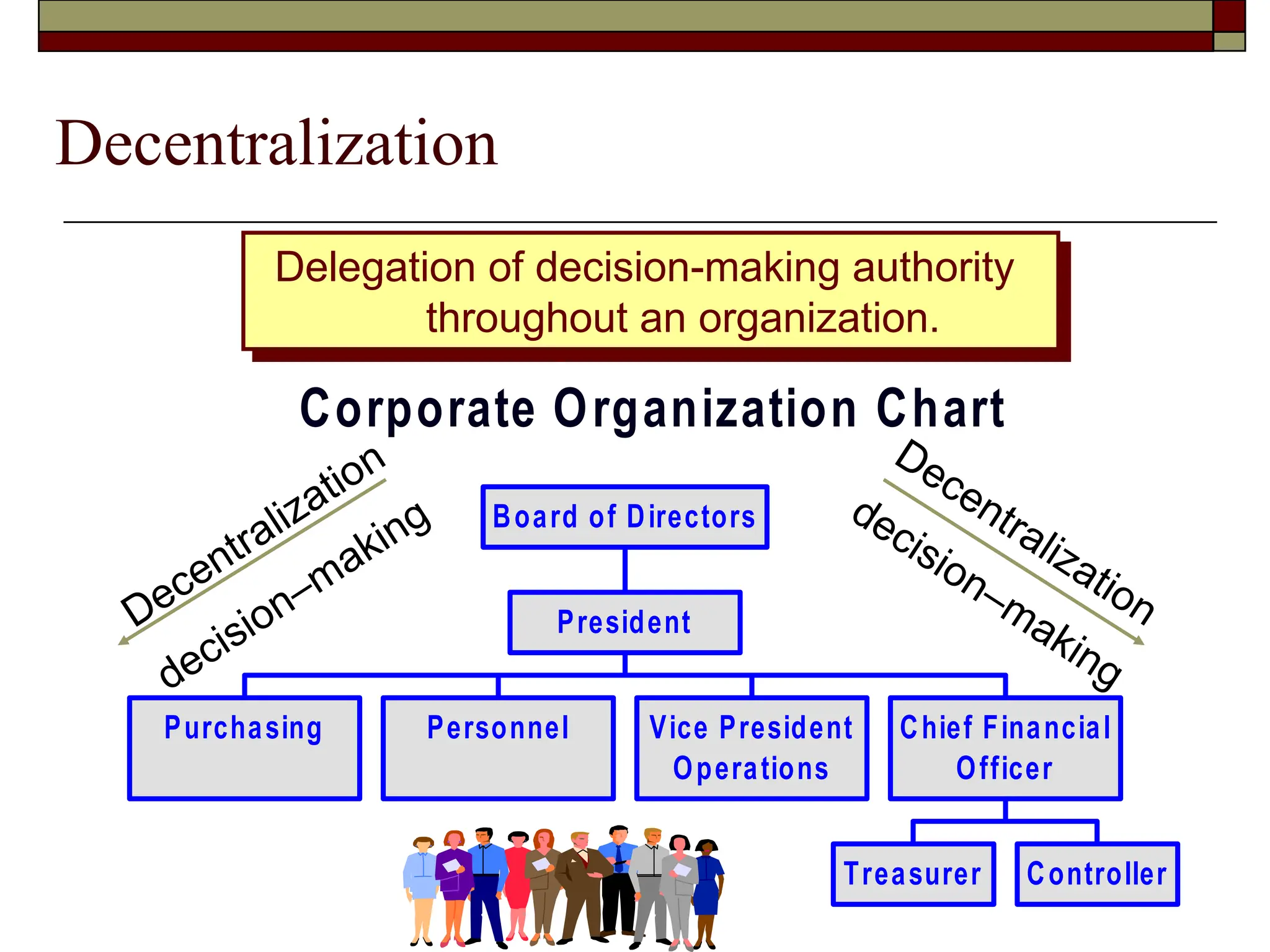
Decentralization
Decentralization
decision–making
Decentralization
decision–making
Delegation of decision-making authority
throughout an organization.
Corporate Organization Chart
Purchasing Personnel Vice President
Operations
Treasurer Controller
Chief Financial
Officer
President
Board of Directors
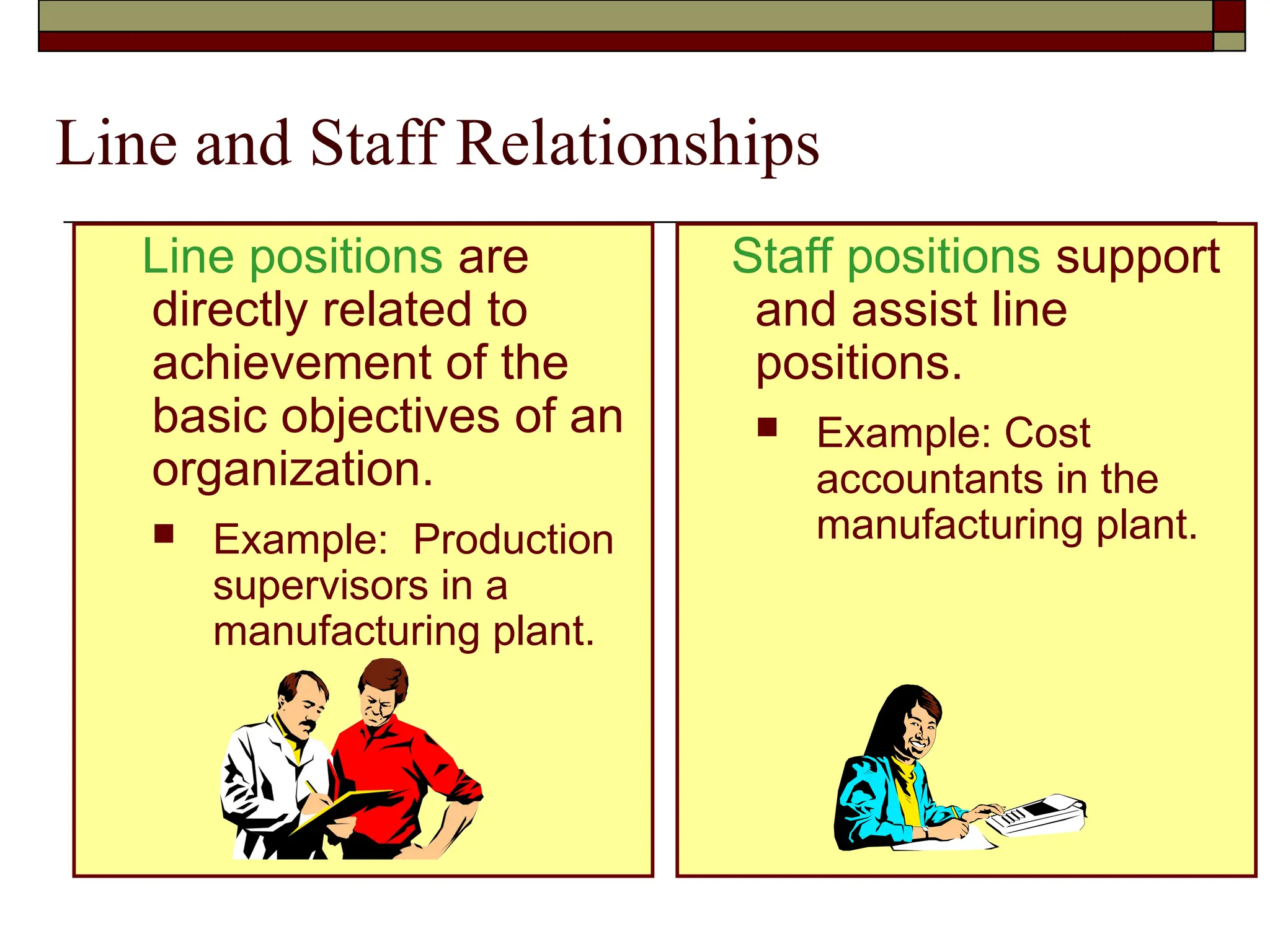
Line and Staff Relationships
Line positions are
directly related to
achievement of the
basic objectives of an
organization.
 Example: Production
supervisors in a
manufacturing plant.
Staff positions support
and assist line
positions.
 Example: Cost
accountants in the
manufacturing plant.
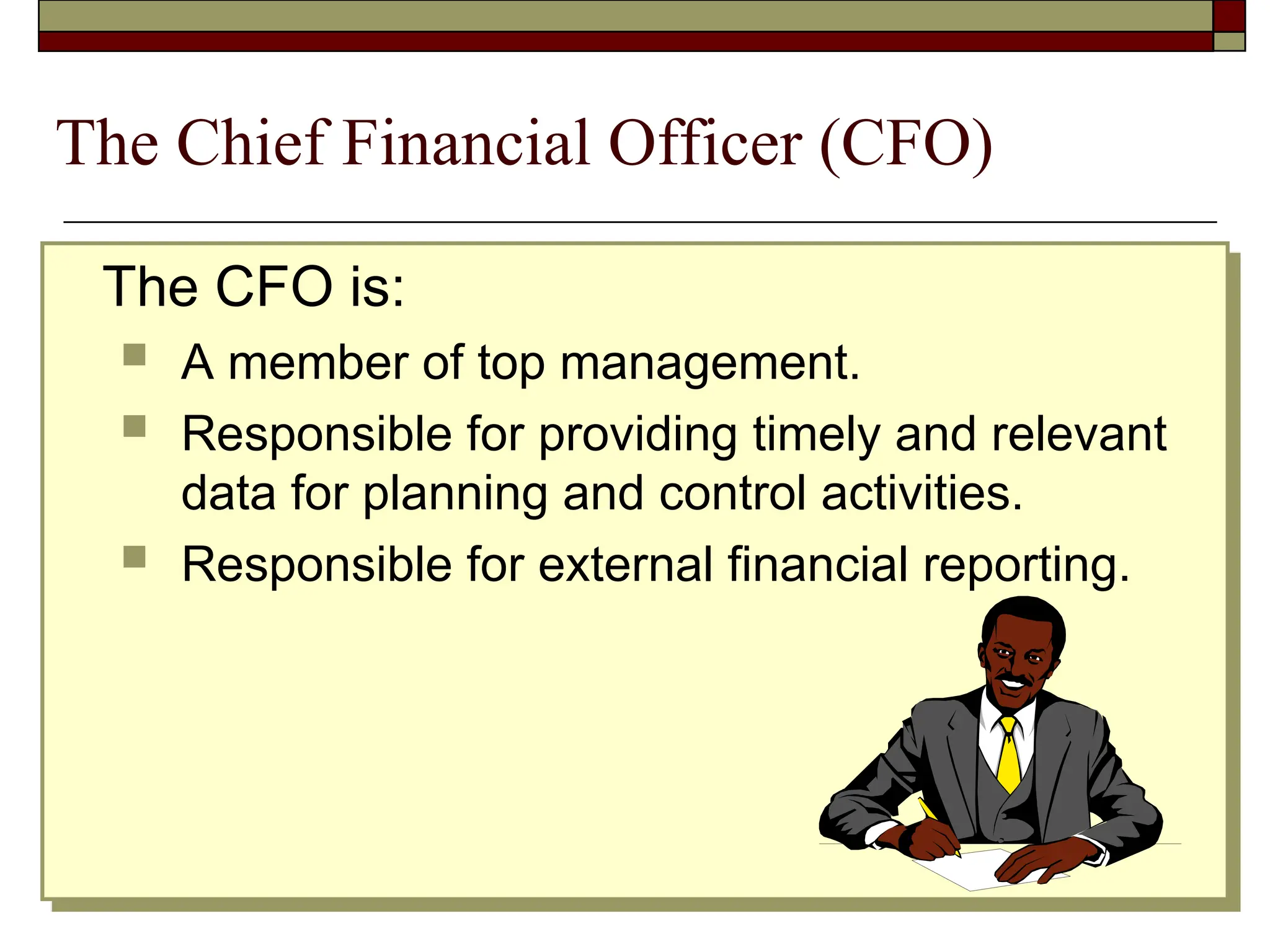
The Chief Financial Officer (CFO)
The CFO is:
 A member of top management.
 Responsible for providing timely and relevant
data for planning and control activities.
 Responsible for external financial reporting.
Questions

Introduction of Cost _ Management Accounting.ppt

  • 1.
    Managerial Accounting and TheBusiness Environment Prepared & Edited by Nazim Uddin Assistant Professor National Institute of Textile Engineering & Research
  • 2.
  • 3.
    Accounting  Provides informationto external parties  Stockholders, creditors, regulators  Estimates the cost of products produced and services provided  Provides information to internal decision makers  To plan, control, and evaluate performance
  • 4.
    Types of Accounting FinancialAccounting  Meets external information needs  Complies with GAAP Management Accounting  Meets internal information needs  Provides product costing information Cost Accounting  Provides information for both management accounting and financial accounting  Measures and reports financial and nonfinancial information relating to the cost of acquiring or utilizing resources in an organization  Includes those parts of both management accounting & financial accounting in which cost information is collected and analyzed
  • 5.
    Managerial Accounting, CostAccounting and Financial Accounting Managerial Accounting measures and reports financial and nonfinancial information that helps managers make decisions to fulfill the goals of an organization. Financial Accounting measures and records business transactions and prepares and provides financial statements to external parties. Cost Accounting measures and reports financial and nonfinancial information to managers relating to the cost of acquiring or utilizing resources in an organization.
  • 6.
    Relationship of Financial, Management,and Cost Accounting FINANCIAL ACCOUNTING MANAGEMENT ACCOUNTING COST ACCOUNTING
  • 7.
     Managerial Accountingmeasures and reports financial and nonfinancial information that helps managers make decisions to fulfill the goals of an organization.  Managers use management accounting information to choose, communicate, and implement strategy.  They also use management accounting information to coordinate product design, production, and marketing decisions.  Management accounting focuses on internal reporting. MANAGERIAL ACCOUNTING
  • 8.
    Activities Include:  Explainingmanufacturing and nonmanufacturing costs and how they are reported in the financial statements  Computing the cost of providing a service or manufacturing a product  Determining the behavior of costs and expenses as activity levels change  Analyzing cost-volume profit relationships within a company MANAGERIAL ACCOUNTING
  • 9.
    Activities Include (continued): Assisting management in profit planning and budgeting  Providing a basis for controlling costs and expenses by comparing actual results with planned objectives and standard costs  Accumulating and presenting relevant data for management decision making MANAGERIAL ACCOUNTING
  • 10.
    Comparison of Financialand Managerial Accounting 1. Users 2. Time Focus 3. Verifiability vs. Relevance 4. Precision vs. Timeliness 5. Subject 6. Requirement
  • 11.
  • 12.
    The Changing BusinessEnvironment A more competitive environment emphasizing:  Global competition  Lower prices and costs  Higher quality products  More product choices Business environment changes in the past twenty years
  • 13.
    The Changing BusinessEnvironment Just-In-Time Total Quality Management Process Reengineering Theory of Constraints New tools for managers!
  • 14.
    Just-in-Time (JIT) Systems Receive customer orders. Schedule production. Receivematerials just in time for production. Complete parts just in time for assembly into products. Complete products just in time to ship customers.
  • 15.
    More rapid response to customerorders Less warehouse space needed Reduced inventory costs Greater customer satisfaction Just-in-Time (JIT) Higher quality products Zero defects
  • 16.
    Do we need tochange the plan? Where are we? Where do we want to go? How do we start? How are we doing? Check Plan Act Do is Total Quality Management (TQM) Benchmarking Continuous Improvement
  • 17.
    Process Reengineering A businessprocess is diagrammed in detail. The process is redesigned to include only those steps that make our product more valuable. Every step in the business process must be justified.
  • 18.
    Process Reengineering A businessprocess is diagrammed in detail. The process is redesigned to include only those steps that make our product more valuable. Every step in the business process must be justified. Anticipated results:  Process is simplified.  Process is completed in less time.  Costs are reduced.  Opportunities for errors are reduced.
  • 19.
    Theory of Constraints(TOC) A sequential process of identifying and removing constraints in a system. Restrictions or barriers that impede progress toward an objective
  • 20.
    Corporate Organization Chart PurchasingPersonnel Vice President Operations Treasurer Controller Chief Financial Officer President Board of Directors Organizational Structure An organization is a group of people united for a common purpose.
  • 21.
    Decentralization Decentralization decision–making Decentralization decision–making Delegation of decision-makingauthority throughout an organization. Corporate Organization Chart Purchasing Personnel Vice President Operations Treasurer Controller Chief Financial Officer President Board of Directors
  • 22.
    Line and StaffRelationships Line positions are directly related to achievement of the basic objectives of an organization.  Example: Production supervisors in a manufacturing plant. Staff positions support and assist line positions.  Example: Cost accountants in the manufacturing plant.
  • 23.
    The Chief FinancialOfficer (CFO) The CFO is:  A member of top management.  Responsible for providing timely and relevant data for planning and control activities.  Responsible for external financial reporting.
  • 24.