General Method of
Teaching
B.Ed (Hons) 1st
Semester
Department of Education
Discussion Method
A method in which group discussion techniques are used to reach instructional
objectives.
Uses of Discussion Method
1. To develop imaginative solutions to problems.
2. To motivate thinking, interest and to secure students’ participation.
3. To emphasize main teaching points.
4. To improve lectures, reading, or laboratory exercises.
5. To control how well students understand concepts and principles.
6. To prepare students for application of theory of procedure.
7. To summarize, clarify points or review.
Advantages of Discussion Method
1. Increases students’ interest
2. Develops students’ acceptance and commitments.
3. Utilizes students’ knowledge and experience.
4. Results in more permanent learning because of high degree of students’
participation.
Disadvantages of Discussion Method
1. Involves highly skilled instructor.
2. Requires preparation by students.
3. Limits content.
4. Consumes time.
5. Restricts size of groups.
Teacher-centered learning
This model of study is centered around a teacher as the source of knowledge.
The method is based on the authority figure that passes the information over to
students. Pupils, on the other end, can only listen to lectures and get
instructions from their teachers. They cannot be active and participate in the
lesson, ask questions as they are passive listeners. The main goal of a teacher-
centered method is to teach and measure the knowledge based on assessments
and various tests.
Advantages of Teacher-centered learning
• Logical arrangement of educational content
• Development of cooperation
• Focus on the subject
Disadvantages of Teacher-centered learning
• Limited content
• Full dependency of students on teachers
• Summative evaluation
Pupil-centered Teaching
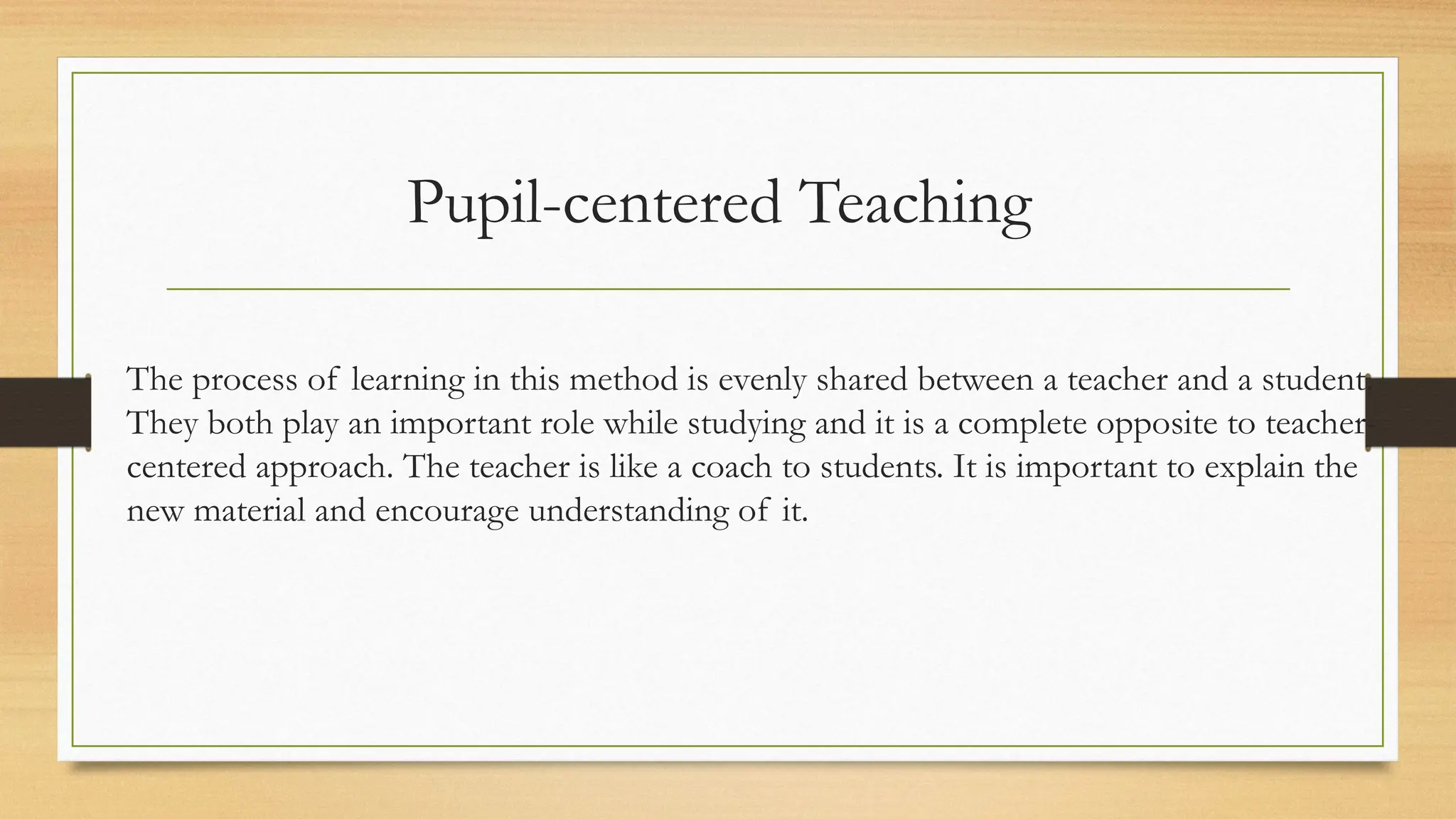
The process of learning in this method is evenly shared between a teacher and a student.
They both play an important role while studying and it is a complete opposite to teacher-
centered approach. The teacher is like a coach to students. It is important to explain the
new material and encourage understanding of it.
Pupil-centered Teaching
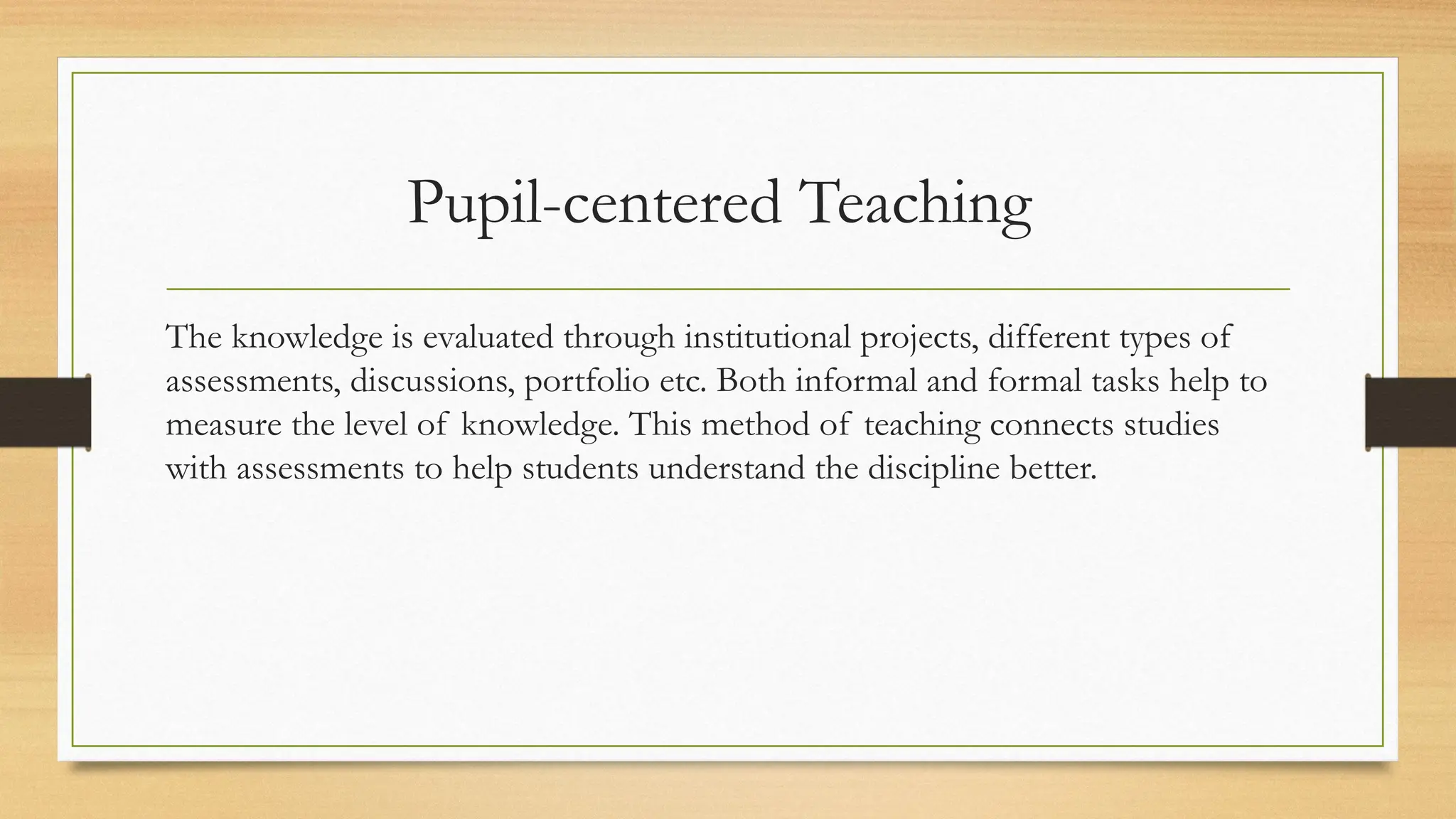
The knowledge is evaluated through institutional projects, different types of
assessments, discussions, portfolio etc. Both informal and formal tasks help to
measure the level of knowledge. This method of teaching connects studies
with assessments to help students understand the discipline better.
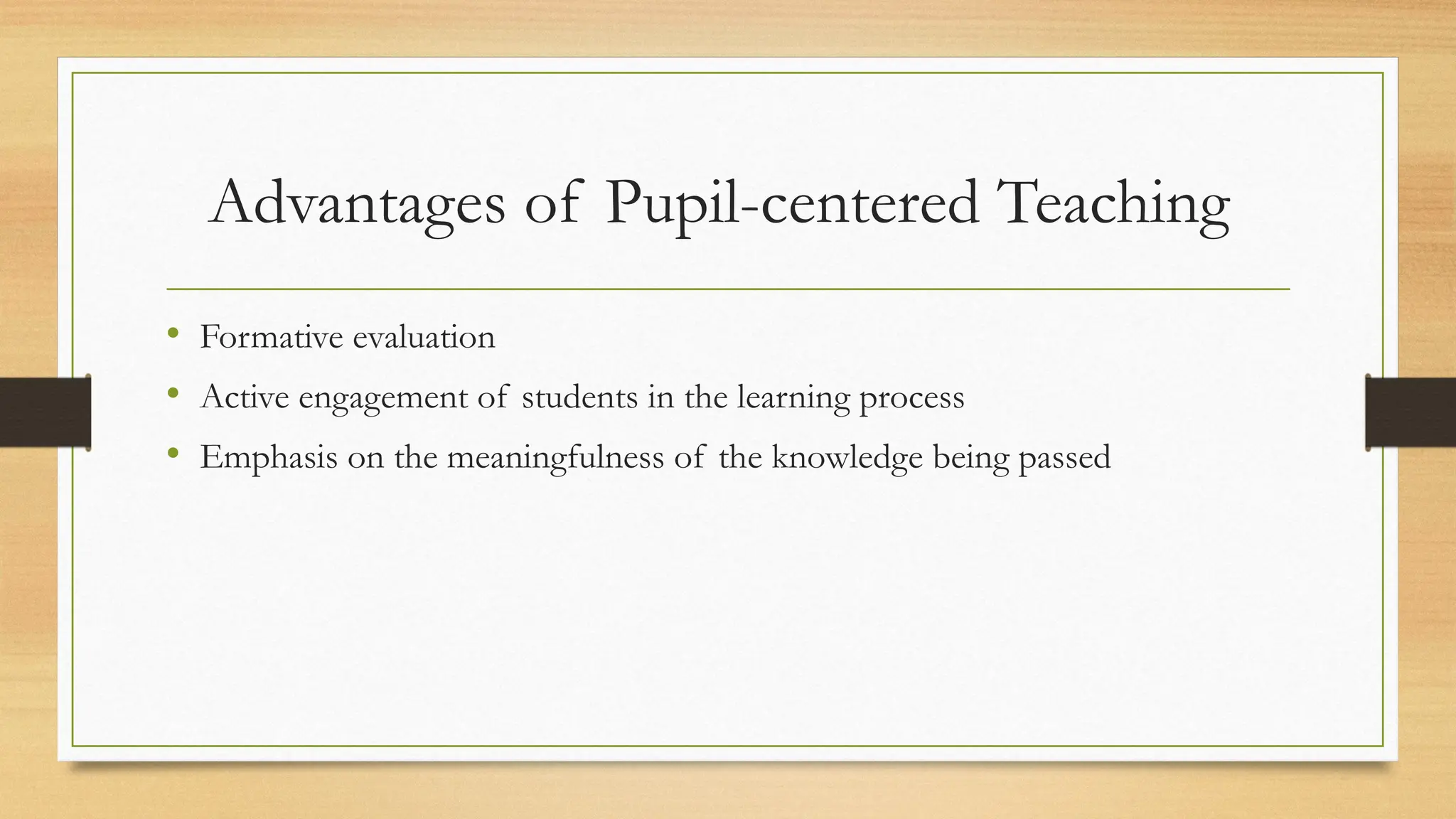
Advantages of Pupil-centered Teaching
• Formative evaluation
• Active engagement of students in the learning process
• Emphasis on the meaningfulness of the knowledge being passed
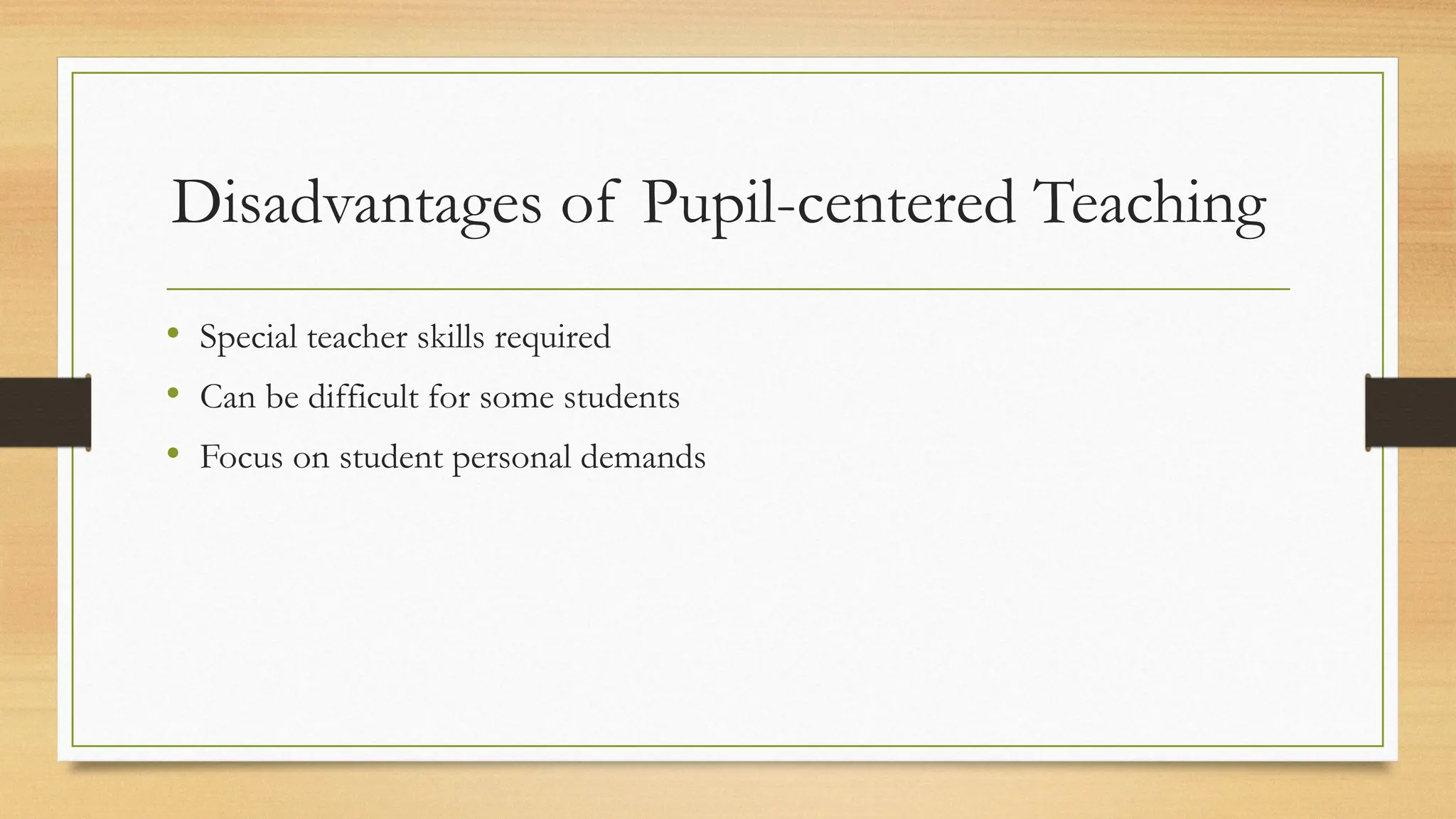
Disadvantages of Pupil-centered Teaching
• Special teacher skills required
• Can be difficult for some students
• Focus on student personal demands

Intro to General Method of Teaching in Education

  • 1.
    General Method of Teaching B.Ed(Hons) 1st Semester Department of Education
  • 2.
    Discussion Method A methodin which group discussion techniques are used to reach instructional objectives.
  • 3.
    Uses of DiscussionMethod 1. To develop imaginative solutions to problems. 2. To motivate thinking, interest and to secure students’ participation. 3. To emphasize main teaching points. 4. To improve lectures, reading, or laboratory exercises. 5. To control how well students understand concepts and principles. 6. To prepare students for application of theory of procedure. 7. To summarize, clarify points or review.
  • 4.
    Advantages of DiscussionMethod 1. Increases students’ interest 2. Develops students’ acceptance and commitments. 3. Utilizes students’ knowledge and experience. 4. Results in more permanent learning because of high degree of students’ participation.
  • 5.
    Disadvantages of DiscussionMethod 1. Involves highly skilled instructor. 2. Requires preparation by students. 3. Limits content. 4. Consumes time. 5. Restricts size of groups.
  • 6.
    Teacher-centered learning This modelof study is centered around a teacher as the source of knowledge. The method is based on the authority figure that passes the information over to students. Pupils, on the other end, can only listen to lectures and get instructions from their teachers. They cannot be active and participate in the lesson, ask questions as they are passive listeners. The main goal of a teacher- centered method is to teach and measure the knowledge based on assessments and various tests.
  • 7.
    Advantages of Teacher-centeredlearning • Logical arrangement of educational content • Development of cooperation • Focus on the subject
  • 8.
    Disadvantages of Teacher-centeredlearning • Limited content • Full dependency of students on teachers • Summative evaluation
  • 9.
    Pupil-centered Teaching The processof learning in this method is evenly shared between a teacher and a student. They both play an important role while studying and it is a complete opposite to teacher- centered approach. The teacher is like a coach to students. It is important to explain the new material and encourage understanding of it.
  • 10.
    Pupil-centered Teaching The knowledgeis evaluated through institutional projects, different types of assessments, discussions, portfolio etc. Both informal and formal tasks help to measure the level of knowledge. This method of teaching connects studies with assessments to help students understand the discipline better.
  • 11.
    Advantages of Pupil-centeredTeaching • Formative evaluation • Active engagement of students in the learning process • Emphasis on the meaningfulness of the knowledge being passed
  • 12.
    Disadvantages of Pupil-centeredTeaching • Special teacher skills required • Can be difficult for some students • Focus on student personal demands