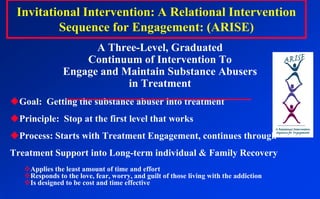
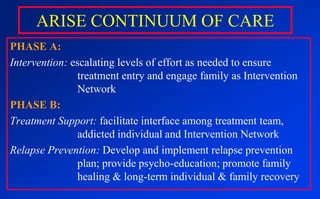
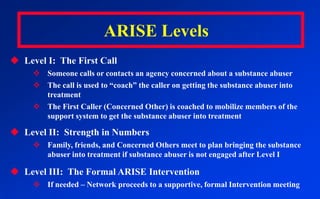
Invitational Intervention:The ARISE ModelGetting Resistant Substance Abusers into TreatmentChar Scott MaloneyPassages Counseling Center, Inc.	www.passagescounseling.netwww.ARISEInterventionNow.comOffice:  630.848.0445charlcswcadc@sbcglobal.net
Today’s AgendaScope of addiction and current challengesPsychosocial AspectsThe role of families and support systems in treatment engagementImpact of stressorsTreatment engagement, treatment and long-term recoveryHow families can bring about healing
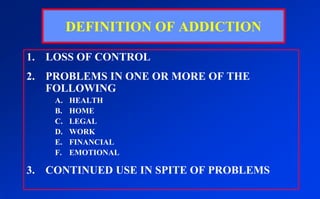
DEFINITION OF ADDICTIONLOSS OF CONTROLPROBLEMS IN ONE OR MORE OF THE FOLLOWINGHEALTHHOMELEGALWORKFINANCIALEMOTIONALCONTINUED USE IN SPITE OF PROBLEMS
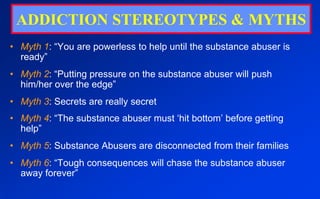
ADDICTION STEREOTYPES & MYTHSMyth 1: “You are powerless to help until the substance abuser is ready”Myth 2: “Putting pressure on the substance abuser will push him/her over the edge”Myth 3: Secrets are really secretMyth 4: “The substance abuser must ‘hit bottom’ before getting help”Myth 5: Substance Abusers are disconnected from their familiesMyth 6: “Tough consequences will chase the substance abuser away forever”
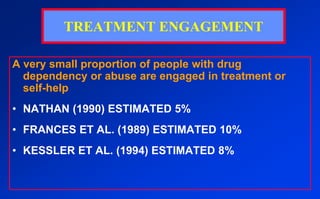
TREATMENT ENGAGEMENTA very small proportion of people with drug dependency or abuse are engaged in treatment or self-helpNATHAN (1990) ESTIMATED 5%FRANCES ET AL. (1989) ESTIMATED 10%KESSLER ET AL. (1994) ESTIMATED 8%
Psychosocial Aspects of Addiction
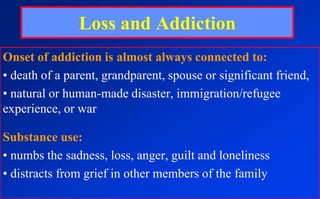
Loss and AddictionOnset of addiction is almost always connected to:death of a parent, grandparent, spouse or significant friend,
 natural or human-made disaster, immigration/refugee experience, or warSubstance use:numbs the sadness, loss, anger, guilt and loneliness
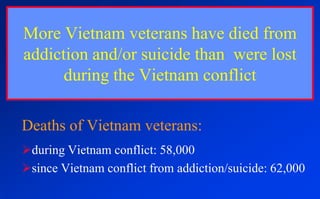
 distracts from grief in other members of the familyMore Vietnam veterans have died from addiction and/or suicide than  were lost during the Vietnam conflictDeaths of Vietnam veterans: during Vietnam conflict: 58,000
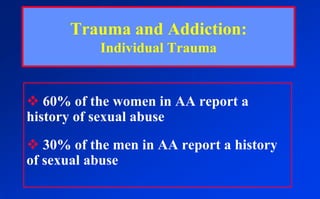
since Vietnam conflict from addiction/suicide: 62,000Trauma and Addiction:Individual Trauma 60% of the women in AA report a history of sexual abuse
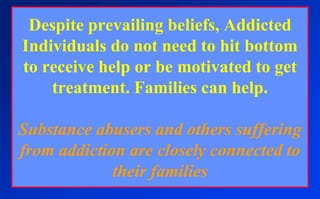
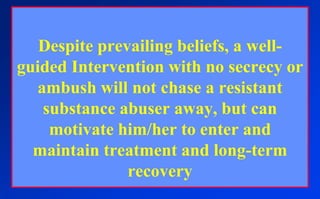
 30% of the men in AA report a history of sexual abuseDespite prevailing beliefs, Addicted Individuals do not need to hit bottom to receive help or be motivated to get treatment. Families can help.Substance abusers and others suffering from addiction are closely connected to their families
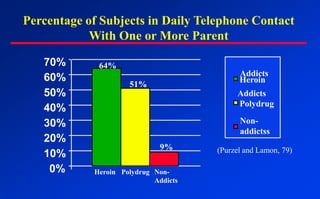
70%64%60%51%50%40%30%20%9%10%0%Non-AddictsHeroinPolydrugPercentage of Subjects in Daily Telephone Contact With One or More ParentAddictsHeroinAddictsPolydrugNon-addictss(Purzel and Lamon, 79)
IS THERE A STRANGER LIVING IN YOUR HOME?Nature of calls that come in from family regarding getting a resistant loved one started in treatment
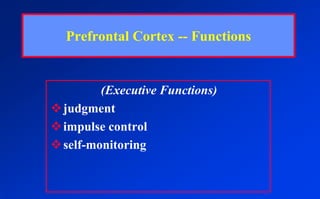
Prefrontal Cortex -- Functions(Executive Functions)judgment
impulse control
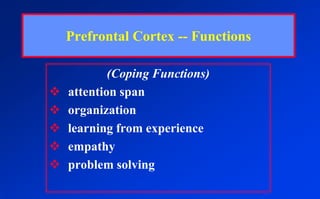
self-monitoringPrefrontal Cortex -- Functions(Coping Functions)attention span
organization
learning from experience
empathy
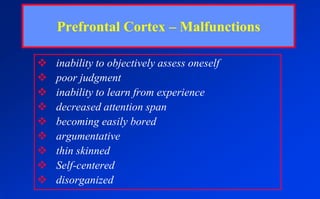
problem solvingPrefrontal Cortex – Malfunctionsinability to objectively assess oneself
poor judgment
inability to learn from experience
decreased attention span
becoming easily bored
argumentative
thin skinned
Self-centered
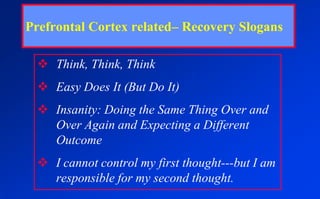
disorganizedPrefrontal Cortex related– Recovery SlogansThink, Think, Think
Easy Does It (But Do It)
Insanity: Doing the Same Thing Over and Over Again and Expecting a Different Outcome
I cannot control my first thought---but I am responsible for my second thought.TRANSITIONALFAMILY THERAPY
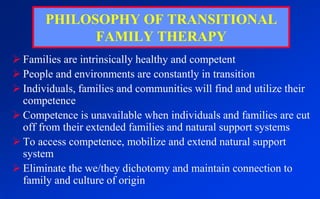
PHILOSOPHY OF TRANSITIONAL FAMILY THERAPYFamilies are intrinsically healthy and competent
People and environments are constantly in transition
Individuals, families and communities will find and utilize their competence
Competence is unavailable when individuals and families are cut off from their extended families and natural support systems
To access competence, mobilize and extend natural support system
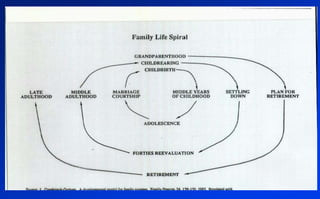
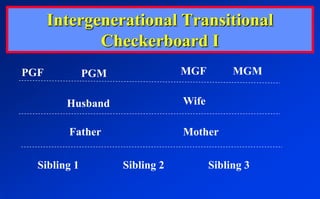
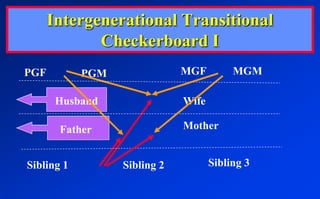
Eliminate the we/they dichotomy and maintain connection to family and culture of originImpact of Stressors/Change on Family Functioningand Getting Off-Track

Intervention Presentation