Interpersonal
Intelligence
Ishleen Dhaliwal
✨Interpersonal intelligence refers to a
person's ability to bond and connect with
other people and manage relationships.✨
The Essence of Connection: Why
Interpersonal Intelligence Matters
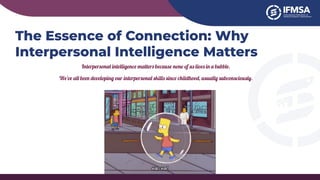
Interpersonal intelligence matters because none of us lives in a bubble.
We've all been developing our interpersonal skills since childhood, usually subconsciously.
The Significance in Today's World
The importance of the personal intelligences extends far beyond
persuasion
Their larger significance is aptly captured through Peter Drucker’s
evocative term:
how we manage ourselves
The plurality of ‘ourselves’ is the key.
Unpacking Interpersonal Intelligence
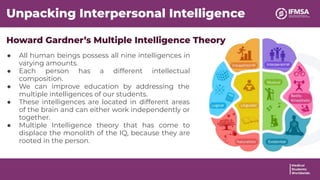
Howard Gardner’s Multiple Intelligence Theory
Howard
● All human beings possess all nine intelligences in
varying amounts.
● Each person has a different intellectual
composition.
● We can improve education by addressing the
multiple intelligences of our students.
● These intelligences are located in different areas
of the brain and can either work independently or
together.
● Multiple Intelligence theory that has come to
displace the monolith of the IQ, because they are
rooted in the person.
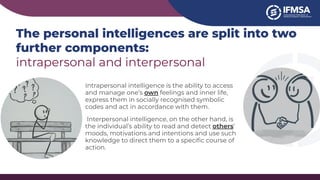
The personal intelligences are split into two
further components:
intrapersonal and interpersonal
Intrapersonal intelligence is the ability to access
and manage one’s own feelings and inner life,
express them in socially recognised symbolic
codes and act in accordance with them.
Interpersonal intelligence, on the other hand, is
the individual’s ability to read and detect others’
moods, motivations and intentions and use such
knowledge to direct them to a specific course of
action.
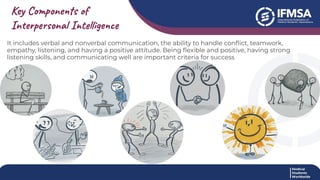
Key Components of
Interpersonal Intelligence
It includes verbal and nonverbal communication, the ability to handle conflict, teamwork,
empathy, listening, and having a positive attitude. Being flexible and positive, having strong
listening skills, and communicating well are important criteria for success
Cultivating Connection: How to Develop
Interpersonal Intelligence
➔ The first step towards improving is to develop your
knowledge of yourself and your weaknesses.
➔ Communication is far more than the words that come
out of your mouth.
➔ Taking time to think about conversations and
interpersonal interactions will enable you to learn from
your mistakes and successes, and continue to develop.
Practical Strategies and
Techniques
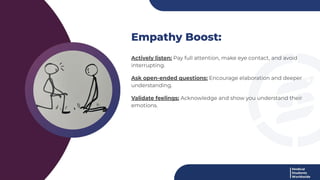
Empathy Boost:
Actively listen: Pay full attention, make eye contact, and avoid
interrupting.
Ask open-ended questions: Encourage elaboration and deeper
understanding.
Validate feelings: Acknowledge and show you understand their
emotions.
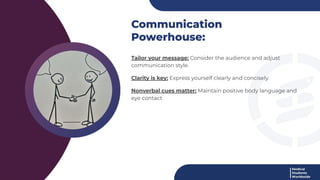
Communication
Powerhouse:
Tailor your message: Consider the audience and adjust
communication style.
Clarity is key: Express yourself clearly and concisely.
Nonverbal cues matter: Maintain positive body language and
eye contact
Social Savvy:
Read social cues: Notice nonverbal communication like facial
expressions and posture.
Find common ground: Build rapport by identifying shared
interests.
Be adaptable: Adjust your approach based on the situation and
people.
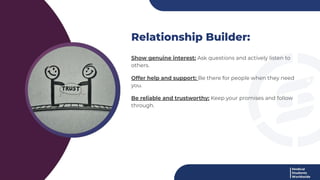
Relationship Builder:
Show genuine interest: Ask questions and actively listen to
others.
Offer help and support: Be there for people when they need
you.
Be reliable and trustworthy: Keep your promises and follow
through.
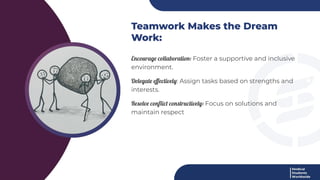
Teamwork Makes the Dream
Work:
Encourage collaboration: Foster a supportive and inclusive
environment.
Delegate effectively: Assign tasks based on strengths and
interests.
Resolve conflict constructively: Focus on solutions and
maintain respect
Why is
Interpersonal
Intelligence
Important to
You?
How Do You See Interpersonal
Intelligence Impacting Your Life?
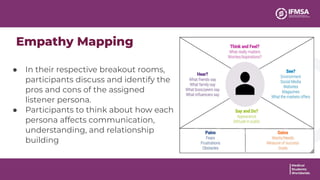
Empathy Mapping
● In their respective breakout rooms,
participants discuss and identify the
pros and cons of the assigned
listener persona.
● Participants to think about how each
persona affects communication,
understanding, and relationship
building
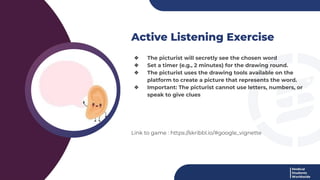
Active Listening Exercise
❖ The picturist will secretly see the chosen word
❖ Set a timer (e.g., 2 minutes) for the drawing round.
❖ The picturist uses the drawing tools available on the
platform to create a picture that represents the word.
❖ Important: The picturist cannot use letters, numbers, or
speak to give clues
Link to game : https://skribbl.io/#google_vignette
Imagining a Connected World:
What If We Applied Interpersonal Intelligence?
Case scenario
Dr. Sarah is seeing a patient, Mrs. Lopez, who is struggling with a new
diagnosis of diabetes. Dr. Sarah focuses solely on the medical facts and
quickly prescribes a treatment plan without acknowledging Mrs. Lopez's
emotional distress.
Tom, a new volunteer in IFMSA, offers to help with organizing
a health education event. However, the event coordinator,
Jenna, dismisses his suggestions and assigns him only minor
tasks, making Tom feel undervalued and less motivated to
contribute.
Case scenario
During an IFMSA General Assembly, two members, Alex and Priya, have a
disagreement over a policy proposal. The conflict escalates and affects
the group's decision-making process. The facilitator fails to address the
conflict effectively, leading to a stalled discussion.
Case scenario
After an IFMSA training session, the trainer, Chris, provides vague and
non-specific feedback to participants. As a result, participants are unsure
how to improve their skills and performance.
Case scenario
Hence proved ,
Interpersonal intelligence is
Interpersonal Intelligence presentation ppt

Interpersonal Intelligence presentation ppt

  • 1.
  • 3.
    ✨Interpersonal intelligence refersto a person's ability to bond and connect with other people and manage relationships.✨
  • 4.
    The Essence ofConnection: Why Interpersonal Intelligence Matters Interpersonal intelligence matters because none of us lives in a bubble. We've all been developing our interpersonal skills since childhood, usually subconsciously.
  • 5.
    The Significance inToday's World The importance of the personal intelligences extends far beyond persuasion Their larger significance is aptly captured through Peter Drucker’s evocative term: how we manage ourselves The plurality of ‘ourselves’ is the key.
  • 6.
    Unpacking Interpersonal Intelligence HowardGardner’s Multiple Intelligence Theory Howard ● All human beings possess all nine intelligences in varying amounts. ● Each person has a different intellectual composition. ● We can improve education by addressing the multiple intelligences of our students. ● These intelligences are located in different areas of the brain and can either work independently or together. ● Multiple Intelligence theory that has come to displace the monolith of the IQ, because they are rooted in the person.
  • 7.
    The personal intelligencesare split into two further components: intrapersonal and interpersonal Intrapersonal intelligence is the ability to access and manage one’s own feelings and inner life, express them in socially recognised symbolic codes and act in accordance with them. Interpersonal intelligence, on the other hand, is the individual’s ability to read and detect others’ moods, motivations and intentions and use such knowledge to direct them to a specific course of action.
  • 8.
    Key Components of InterpersonalIntelligence It includes verbal and nonverbal communication, the ability to handle conflict, teamwork, empathy, listening, and having a positive attitude. Being flexible and positive, having strong listening skills, and communicating well are important criteria for success
  • 9.
    Cultivating Connection: Howto Develop Interpersonal Intelligence ➔ The first step towards improving is to develop your knowledge of yourself and your weaknesses. ➔ Communication is far more than the words that come out of your mouth. ➔ Taking time to think about conversations and interpersonal interactions will enable you to learn from your mistakes and successes, and continue to develop.
  • 10.
  • 11.
    Empathy Boost: Actively listen:Pay full attention, make eye contact, and avoid interrupting. Ask open-ended questions: Encourage elaboration and deeper understanding. Validate feelings: Acknowledge and show you understand their emotions.
  • 12.
    Communication Powerhouse: Tailor your message:Consider the audience and adjust communication style. Clarity is key: Express yourself clearly and concisely. Nonverbal cues matter: Maintain positive body language and eye contact
  • 13.
    Social Savvy: Read socialcues: Notice nonverbal communication like facial expressions and posture. Find common ground: Build rapport by identifying shared interests. Be adaptable: Adjust your approach based on the situation and people.
  • 14.
    Relationship Builder: Show genuineinterest: Ask questions and actively listen to others. Offer help and support: Be there for people when they need you. Be reliable and trustworthy: Keep your promises and follow through.
  • 15.
    Teamwork Makes theDream Work: Encourage collaboration: Foster a supportive and inclusive environment. Delegate effectively: Assign tasks based on strengths and interests. Resolve conflict constructively: Focus on solutions and maintain respect
  • 16.
  • 17.
    How Do YouSee Interpersonal Intelligence Impacting Your Life?
  • 19.
    Empathy Mapping ● Intheir respective breakout rooms, participants discuss and identify the pros and cons of the assigned listener persona. ● Participants to think about how each persona affects communication, understanding, and relationship building
  • 20.
    Active Listening Exercise ❖The picturist will secretly see the chosen word ❖ Set a timer (e.g., 2 minutes) for the drawing round. ❖ The picturist uses the drawing tools available on the platform to create a picture that represents the word. ❖ Important: The picturist cannot use letters, numbers, or speak to give clues Link to game : https://skribbl.io/#google_vignette
  • 21.
    Imagining a ConnectedWorld: What If We Applied Interpersonal Intelligence?
  • 22.
    Case scenario Dr. Sarahis seeing a patient, Mrs. Lopez, who is struggling with a new diagnosis of diabetes. Dr. Sarah focuses solely on the medical facts and quickly prescribes a treatment plan without acknowledging Mrs. Lopez's emotional distress.
  • 23.
    Tom, a newvolunteer in IFMSA, offers to help with organizing a health education event. However, the event coordinator, Jenna, dismisses his suggestions and assigns him only minor tasks, making Tom feel undervalued and less motivated to contribute. Case scenario
  • 24.
    During an IFMSAGeneral Assembly, two members, Alex and Priya, have a disagreement over a policy proposal. The conflict escalates and affects the group's decision-making process. The facilitator fails to address the conflict effectively, leading to a stalled discussion. Case scenario
  • 25.
    After an IFMSAtraining session, the trainer, Chris, provides vague and non-specific feedback to participants. As a result, participants are unsure how to improve their skills and performance. Case scenario
  • 26.