International
Transfer Pricing
Methods.
Shabana banu,
2nd year M. COM
Under the guidance of
Sundar B. N.
Asst. Prof. & Course Co-ordinator
GFGCW, PG Studies in Commerce
Holenarasipura
INTRODUCTION.
The setting of price for goods and services sold
between controlled / related legal entities with an
organization is called transfer pricing.
Transfer pricing is a key technique of divisional
performance measurement particularly when the
product or services of one division are transferred
to another division of same company for further
processing or treatment before they are passed on
to the hands of the customers as final product.
MEANING OF TRANSFER
PRICING.
It is the value at which goods and services
are transferred from one unit to another
unit of a company.
Transfer prices are normally set for
intermediate products, which are supplied
by selling division to buying division
DEFINITION OF TRANSFER
PRICING.
Determination of exchange price when different
business units within a firm exchange the products
and services. A price negotiated between two
related persons.
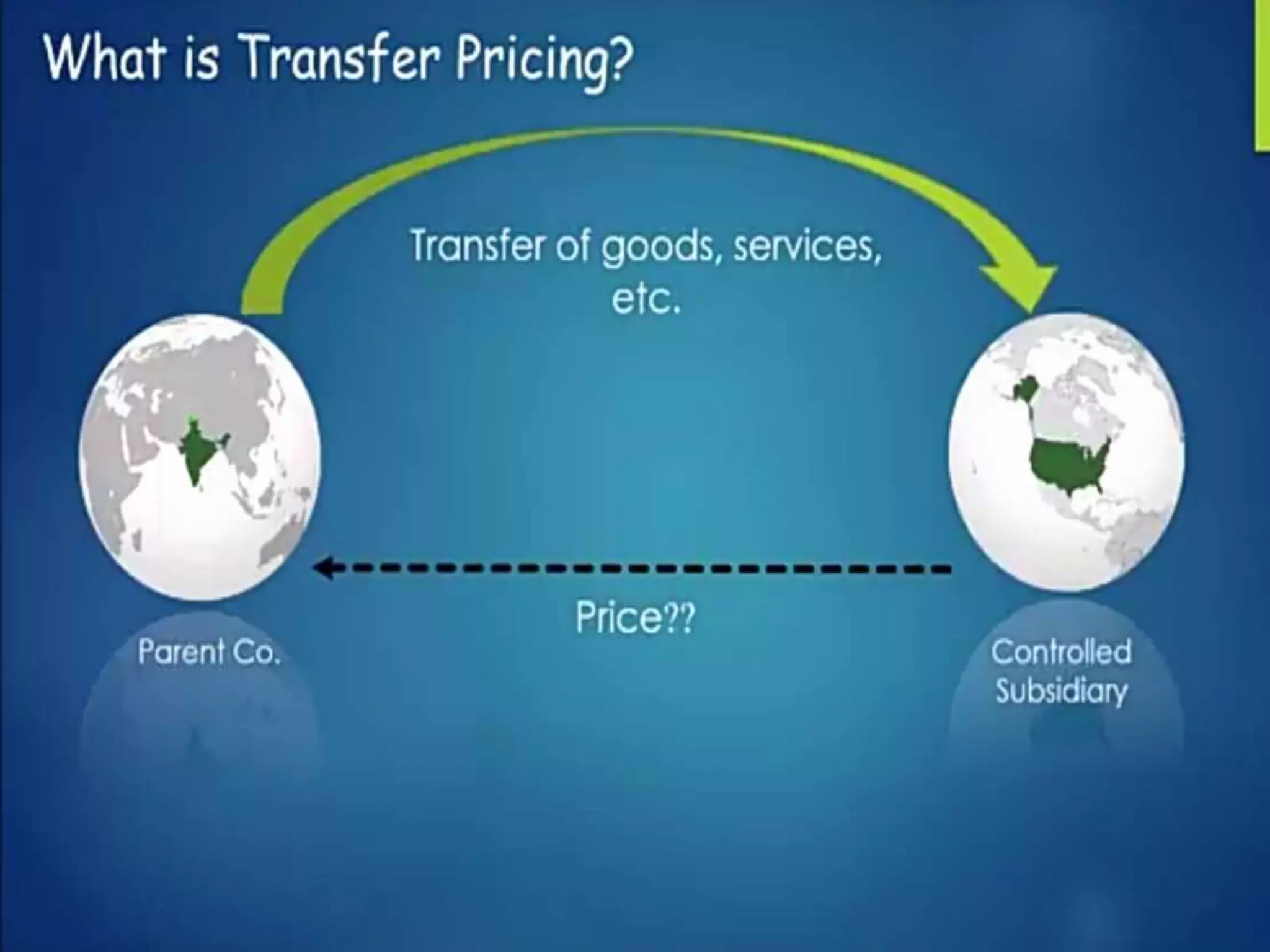
For example, if a subsidiary company sells goods
to a parent company, the cost of those goods paid
by the parent to the subsidiary is the transfer price.
METHODS OF TRANSFER
PRICING.
Cost Based
Transfer price.
Market Based
transfer Price.
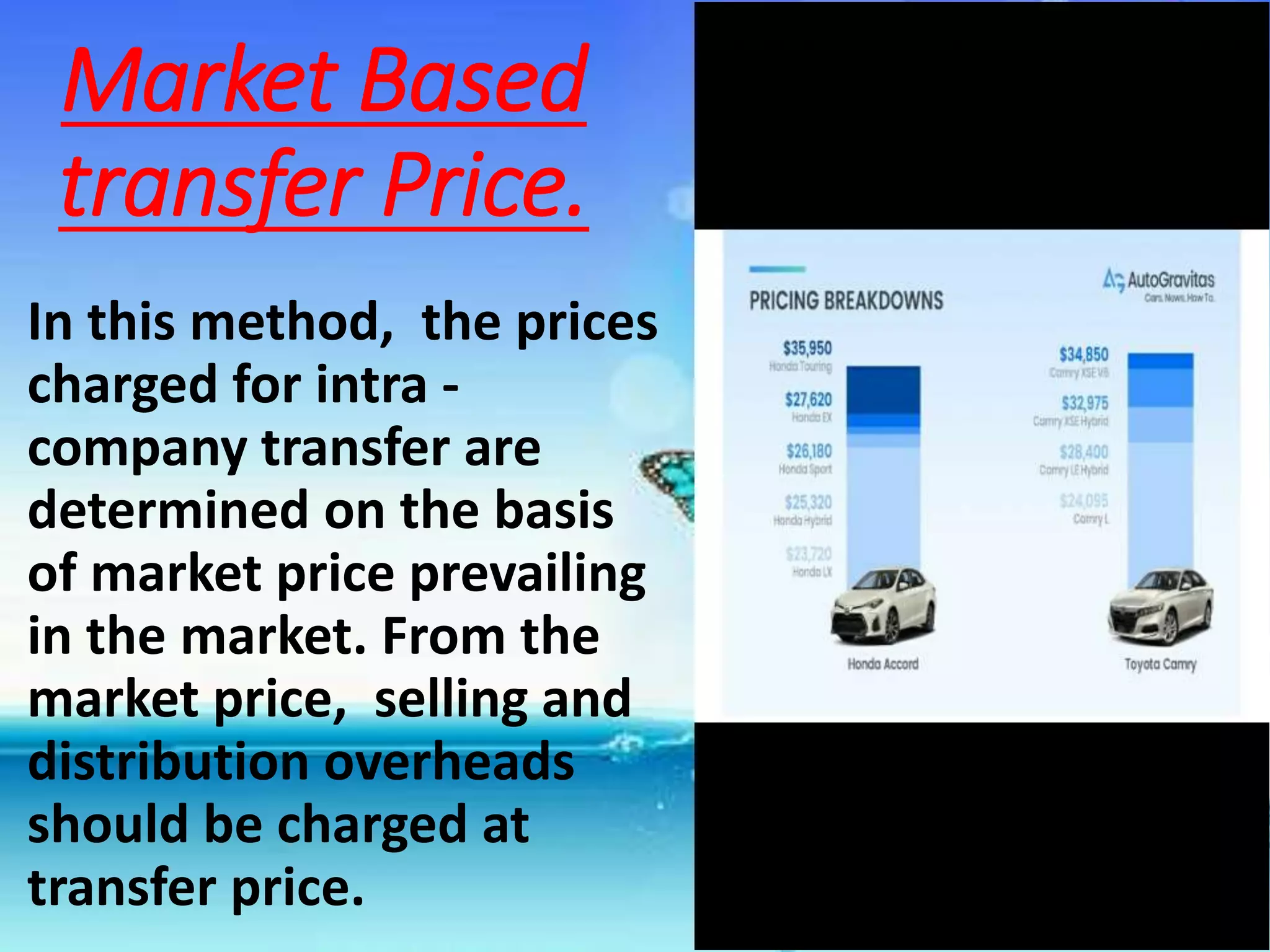
In this method, the prices
charged for intra -
company transfer are
determined on the basis
of market price prevailing
in the market. From the
market price, selling and
distribution overheads
should be charged at
transfer price.
Negotiated
Transfer Price.
Factors Of Transfer
Pricing Policy.
1. Employees : Employees of the different divisions of a firm can be
affected by the transfer pricing policy particularly when their
performance is measured in terms of profitability of their divisions.
2. Shareholders / owner's : shareholders and owners of the firm, like the
employees can influence and be influenced by the transfer pricing
policy.
3. Management : Management of the firm especially at the senior level
would prefer such transfer pricing policy as would help the firm
maximize it's consolidated earnings especially when their
compensations is liked to the firm's overall performance.
4. Competitors : Transfer pricing of firms can affect the market
competition as a multinational corporations can charge artificially low
transfer price for the goods or services supplied to it's affiliates in the
foreign country there by enabling the affiliate offer it's products at a
CONCLUSION.
The transfer price is the price that one division of a company
charges another division of the same company for a product
transferred between the two division so there are no cash flows
between the divisions.
The transfer price becomes an expenses for the receiving
manager and a revenue for the supplying manager.
The transfer price is used for accounting purposes.
The most common objective in transfer pricing is to avoid or
reduce tax there by decreasing cost of production and
increasing profit.
International Transfer Pricing Methods

International Transfer Pricing Methods

  • 1.
    International Transfer Pricing Methods. Shabana banu, 2ndyear M. COM Under the guidance of Sundar B. N. Asst. Prof. & Course Co-ordinator GFGCW, PG Studies in Commerce Holenarasipura
  • 2.
    INTRODUCTION. The setting ofprice for goods and services sold between controlled / related legal entities with an organization is called transfer pricing. Transfer pricing is a key technique of divisional performance measurement particularly when the product or services of one division are transferred to another division of same company for further processing or treatment before they are passed on to the hands of the customers as final product.
  • 3.
    MEANING OF TRANSFER PRICING. Itis the value at which goods and services are transferred from one unit to another unit of a company. Transfer prices are normally set for intermediate products, which are supplied by selling division to buying division
  • 4.
    DEFINITION OF TRANSFER PRICING. Determinationof exchange price when different business units within a firm exchange the products and services. A price negotiated between two related persons. For example, if a subsidiary company sells goods to a parent company, the cost of those goods paid by the parent to the subsidiary is the transfer price.
  • 6.
  • 7.
  • 8.
    Market Based transfer Price. Inthis method, the prices charged for intra - company transfer are determined on the basis of market price prevailing in the market. From the market price, selling and distribution overheads should be charged at transfer price.
  • 9.
  • 10.
    Factors Of Transfer PricingPolicy. 1. Employees : Employees of the different divisions of a firm can be affected by the transfer pricing policy particularly when their performance is measured in terms of profitability of their divisions. 2. Shareholders / owner's : shareholders and owners of the firm, like the employees can influence and be influenced by the transfer pricing policy. 3. Management : Management of the firm especially at the senior level would prefer such transfer pricing policy as would help the firm maximize it's consolidated earnings especially when their compensations is liked to the firm's overall performance. 4. Competitors : Transfer pricing of firms can affect the market competition as a multinational corporations can charge artificially low transfer price for the goods or services supplied to it's affiliates in the foreign country there by enabling the affiliate offer it's products at a
  • 11.
    CONCLUSION. The transfer priceis the price that one division of a company charges another division of the same company for a product transferred between the two division so there are no cash flows between the divisions. The transfer price becomes an expenses for the receiving manager and a revenue for the supplying manager. The transfer price is used for accounting purposes. The most common objective in transfer pricing is to avoid or reduce tax there by decreasing cost of production and increasing profit.