Relocation to Nepal
Contents:
   Introduction about Nepal

   Traits Of An International Manager

   Difference In Communication Skills In Nepal

   Impact On Our Business

   Need Of Relocation Training And Inclusion Of
    Spouse

   HR Designing Program
About Nepal..


   The rich culture of Nepal is a unique
    combination of tradition and novelty. The
    traditions are followed as they were and new
    customs are created to keep pace with the
    changing times.

   The mountain kingdom of Nepal is multi-ethic
    and multi-lingual. The land is rich with unique
    cultural groups like Tharu,Yadav, Ahir, Newars
    and others.
   People Of Nepal: Nepalese are culturally
    warm, hospitable and affectionate hosts who place
    their heart above their head. Religion is the
    lifeblood of the Nepalese. Officially it is a Hindu
    country, but in practice the religion is a syncretism
    of Hindu and Buddhist beliefs.

   Art and Crafts of Nepal: The 2 millennium old
    Hindu and Buddhist heritage has survived various
    onslaughts and is still influencing the Nepalese art
    and craft tradition.

   Nepali Music: The rhythm, beats, bounce of
    Nepali traditional folk and classical music is
    spiritual, entertaining and is associated with every
    event in Nepal. E.g. birth, marriage, festivals or
    National events.
   Fairs and Festivals in Nepal: it has a vibrant Hindu
    past and that's reflected in most of its festivals and
    celebrations. Nepal has had a constant history of
    cultural exchange with India. Therefore most of the
    Hindu festivals that are celebrated in India are
    celebrated in Nepal like Dipawali and Holi.

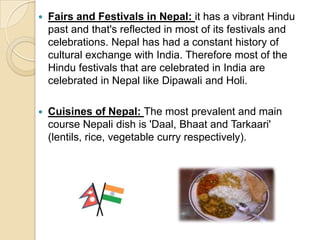
   Cuisines of Nepal: The most prevalent and main
    course Nepali dish is 'Daal, Bhaat and Tarkaari'
    (lentils, rice, vegetable curry respectively).
 Language Of Nepal:Almost all of these
  ethnic groups have their own languages.
 Official language: Nepali or Nepalese.
 Others: Newari (spoken by Newar
  community), Bhojpuri, Awadhi and Maithali
  (spoken by immigrants from Bihar, Utter
  Pradesh)
Traits of an International manager
 Cross-cultural skills: Ability to identify
  cultural differences and overcome them by
  choosing the right form of communication and
  by adapting the management practices to the
  local context.
 Analytical skills: To refine their ability to
  scale up, reduce complexity and find the right
  mix between local adaptation, cross-border
  standardization and global merchandize.
 Technical skills: to be able to think through
  issues about the firm: foreign market
  selection; market entry timing and speed;
  choice of market entry mode; offshoring
  decisions; transfer pricing etc
TO SUM UP..

Strong communication skills-verbal and non-
verbal.

Well educated about market, international-
national issues, firms and business.

Diplomatic and mature attitude in making
relationships.

Flexible, adaptive and sensitive to a new
culture.

Stress manager and Conflict resolver.
Cultural differences in Nepal

   Affection between men and women is
    selfdom expressed. Hugging or hand-
    holding are offensive. But it is acceptable
    for two men to walk hand in hand.

   Bargaining is to be expected. Don‟t
    bargain if you‟re not really interested. If
    your price is accepted, don‟t try to back
    out, and don‟t try to get an even lower
    price.
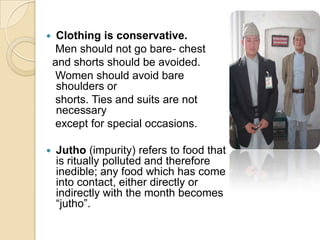
    Clothing is conservative.
     Men should not go bare- chest
    and shorts should be avoided.
     Women should avoid bare
     shoulders or
     shorts. Ties and suits are not
     necessary
     except for special occasions.

   Jutho (impurity) refers to food that
    is ritually polluted and therefore
    inedible; any food which has come
    into contact, either directly or
    indirectly with the month becomes
    “jutho”.
How communication skills in
Nepal change..
   Anger is best not expressed openly. It causes
    you and the person you‟re mad at loss of face.

   Baksheesh is an extra payment for a service
    performed and is usually given to porters or
    laborers at the end of the job. (money or clothes)

   Conversations may have „dead‟ patches.
    Nepalese are not uncomfortable with silence.

   Gifts are rarely given and seldom opened in
    front of the person who has given it.
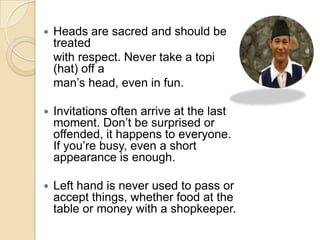
   Heads are sacred and should be
    treated
    with respect. Never take a topi
    (hat) off a
    man‟s head, even in fun.

   Invitations often arrive at the last
    moment. Don‟t be surprised or
    offended, it happens to everyone.
    If you‟re busy, even a short
    appearance is enough.

   Left hand is never used to pass or
    accept things, whether food at the
    table or money with a shopkeeper.
Impact on business
   Creating a positive global image of the
    organisation.

   Bringing in new business deals and increasing
    future perspectives.

   Better Inter-organizational and Intra-organizational
    healthy relationships.

   Increase in goodwill, trust and confidence with
    firm.
Need for Relocation Training:
   To find suitable candidates

   Better understanding of a new culture, work environment,
    people in the new country

   For improving the career growth of the employees

   Adjusting to new environment by getting prepared

   To eliminate Partner Dissatisfaction (spouse training
    program)

   To remove the fear of relocation of employees

   For making the manager more confidence and ready
Benefits and need of spouse
training
   Prepares the individual/family mentally for the
    move and provide counselling

   To increase cross cultural understanding

   Reduces stress and anxiety

   Motivates and increase confidence

   To make the family comfortable in a new
    environment

   To reduce the chances of relocation failure
Relocation Training for International
Assignees: Why is it so important?
  It‟s not difficult to imagine the stress an
  international assignee might experience
  when changing his/her comfortable office
  to an unfamiliar one in Nepal. International
  assignees often react to stress by
  expressing some of the following:
  • General fatigue
  • Lack of efficiency
  • Lack of initiative
  • Difficulty prioritizing
  • Slower reaction to time
  • Frustration and irritation
Training Programme:
    It is carried out to help the
    candidate be prepared for the
    move. It has many categories
    like :

   Cross Cultural Relocation
    Training
   Culture and Language Training
   Culture Shock training
   International Assignment
    Programme
   Spouse Training
   Assistance over telephone
    Repatriation Training
It includes steps like:

   Conduct Psychological test of the candidates

   Choose a few candidates whom you want send for the
    project

   Select the most suitable candidates

   Conduct Relocation Training which includes teaching
    about communication skills, cultural differences

   Conduct spouse training so as to involve family

   Give knowledge about organisation and work assignment
    thoroughly
Best Practices to Support Assignees
   Welcoming and orientation. Provide a point of contact for the newly arrived family.
   Employment liaison. Finding purposeful work for spouses can be key to successful
    adjustment, and the provision of multiple employment resources should be made
    available
   Education liaison. Most relocation companies provides information and contacts for
    local schools, but offering managed support programs for youths and childcare
    resources is also beneficial.
   Information and resource management. Making resources such as internet and
    intranet access is helpful in the interim period until home access is established, as
    well as literature and events in the local culture.
   Guidance and referral. Offering services such as confidential counseling, as well as
    resources and referrals for such issues as divorce, spouse/child abuse, adoption,
    death, and mental health concerns.
   Community liaison. Cultivate relationships with community and social organizations
    and local resources that can benefit expatriates.
   Events and cultural programming. Cultural events as well as informative programs
    and workshops on host-country culture help families to orient and adjust to the new
    culture.
   Crisis management and security liaison. Relaying security information to the
    community. This includes ensuring crisis preparedness, emergency evacuation
    information through alerts and seminars, as well as rebuilding the community after a
    crisis.
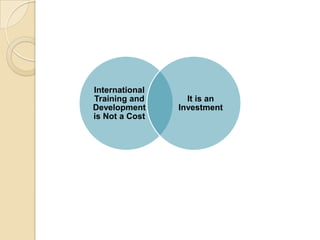
International
Training and      It is an
Development     Investment
is Not a Cost
THANK YOU…!

International Relocation Traning

  • 1.
  • 3.
    Contents:  Introduction about Nepal  Traits Of An International Manager  Difference In Communication Skills In Nepal  Impact On Our Business  Need Of Relocation Training And Inclusion Of Spouse  HR Designing Program
  • 4.
    About Nepal..  The rich culture of Nepal is a unique combination of tradition and novelty. The traditions are followed as they were and new customs are created to keep pace with the changing times.  The mountain kingdom of Nepal is multi-ethic and multi-lingual. The land is rich with unique cultural groups like Tharu,Yadav, Ahir, Newars and others.
  • 5.
    People Of Nepal: Nepalese are culturally warm, hospitable and affectionate hosts who place their heart above their head. Religion is the lifeblood of the Nepalese. Officially it is a Hindu country, but in practice the religion is a syncretism of Hindu and Buddhist beliefs.  Art and Crafts of Nepal: The 2 millennium old Hindu and Buddhist heritage has survived various onslaughts and is still influencing the Nepalese art and craft tradition.  Nepali Music: The rhythm, beats, bounce of Nepali traditional folk and classical music is spiritual, entertaining and is associated with every event in Nepal. E.g. birth, marriage, festivals or National events.
  • 6.
    Fairs and Festivals in Nepal: it has a vibrant Hindu past and that's reflected in most of its festivals and celebrations. Nepal has had a constant history of cultural exchange with India. Therefore most of the Hindu festivals that are celebrated in India are celebrated in Nepal like Dipawali and Holi.  Cuisines of Nepal: The most prevalent and main course Nepali dish is 'Daal, Bhaat and Tarkaari' (lentils, rice, vegetable curry respectively).
  • 7.
     Language OfNepal:Almost all of these ethnic groups have their own languages.  Official language: Nepali or Nepalese.  Others: Newari (spoken by Newar community), Bhojpuri, Awadhi and Maithali (spoken by immigrants from Bihar, Utter Pradesh)
  • 8.
    Traits of anInternational manager  Cross-cultural skills: Ability to identify cultural differences and overcome them by choosing the right form of communication and by adapting the management practices to the local context.  Analytical skills: To refine their ability to scale up, reduce complexity and find the right mix between local adaptation, cross-border standardization and global merchandize.  Technical skills: to be able to think through issues about the firm: foreign market selection; market entry timing and speed; choice of market entry mode; offshoring decisions; transfer pricing etc
  • 9.
    TO SUM UP.. Strongcommunication skills-verbal and non- verbal. Well educated about market, international- national issues, firms and business. Diplomatic and mature attitude in making relationships. Flexible, adaptive and sensitive to a new culture. Stress manager and Conflict resolver.
  • 10.
    Cultural differences inNepal  Affection between men and women is selfdom expressed. Hugging or hand- holding are offensive. But it is acceptable for two men to walk hand in hand.  Bargaining is to be expected. Don‟t bargain if you‟re not really interested. If your price is accepted, don‟t try to back out, and don‟t try to get an even lower price.
  • 11.
    Clothing is conservative. Men should not go bare- chest and shorts should be avoided. Women should avoid bare shoulders or shorts. Ties and suits are not necessary except for special occasions.  Jutho (impurity) refers to food that is ritually polluted and therefore inedible; any food which has come into contact, either directly or indirectly with the month becomes “jutho”.
  • 12.
    How communication skillsin Nepal change..  Anger is best not expressed openly. It causes you and the person you‟re mad at loss of face.  Baksheesh is an extra payment for a service performed and is usually given to porters or laborers at the end of the job. (money or clothes)  Conversations may have „dead‟ patches. Nepalese are not uncomfortable with silence.  Gifts are rarely given and seldom opened in front of the person who has given it.
  • 13.
    Heads are sacred and should be treated with respect. Never take a topi (hat) off a man‟s head, even in fun.  Invitations often arrive at the last moment. Don‟t be surprised or offended, it happens to everyone. If you‟re busy, even a short appearance is enough.  Left hand is never used to pass or accept things, whether food at the table or money with a shopkeeper.
  • 14.
    Impact on business  Creating a positive global image of the organisation.  Bringing in new business deals and increasing future perspectives.  Better Inter-organizational and Intra-organizational healthy relationships.  Increase in goodwill, trust and confidence with firm.
  • 15.
    Need for RelocationTraining:  To find suitable candidates  Better understanding of a new culture, work environment, people in the new country  For improving the career growth of the employees  Adjusting to new environment by getting prepared  To eliminate Partner Dissatisfaction (spouse training program)  To remove the fear of relocation of employees  For making the manager more confidence and ready
  • 16.
    Benefits and needof spouse training  Prepares the individual/family mentally for the move and provide counselling  To increase cross cultural understanding  Reduces stress and anxiety  Motivates and increase confidence  To make the family comfortable in a new environment  To reduce the chances of relocation failure
  • 17.
    Relocation Training forInternational Assignees: Why is it so important? It‟s not difficult to imagine the stress an international assignee might experience when changing his/her comfortable office to an unfamiliar one in Nepal. International assignees often react to stress by expressing some of the following: • General fatigue • Lack of efficiency • Lack of initiative • Difficulty prioritizing • Slower reaction to time • Frustration and irritation
  • 18.
    Training Programme: It is carried out to help the candidate be prepared for the move. It has many categories like :  Cross Cultural Relocation Training  Culture and Language Training  Culture Shock training  International Assignment Programme  Spouse Training  Assistance over telephone  Repatriation Training
  • 19.
    It includes stepslike:  Conduct Psychological test of the candidates  Choose a few candidates whom you want send for the project  Select the most suitable candidates  Conduct Relocation Training which includes teaching about communication skills, cultural differences  Conduct spouse training so as to involve family  Give knowledge about organisation and work assignment thoroughly
  • 20.
    Best Practices toSupport Assignees  Welcoming and orientation. Provide a point of contact for the newly arrived family.  Employment liaison. Finding purposeful work for spouses can be key to successful adjustment, and the provision of multiple employment resources should be made available  Education liaison. Most relocation companies provides information and contacts for local schools, but offering managed support programs for youths and childcare resources is also beneficial.  Information and resource management. Making resources such as internet and intranet access is helpful in the interim period until home access is established, as well as literature and events in the local culture.  Guidance and referral. Offering services such as confidential counseling, as well as resources and referrals for such issues as divorce, spouse/child abuse, adoption, death, and mental health concerns.  Community liaison. Cultivate relationships with community and social organizations and local resources that can benefit expatriates.  Events and cultural programming. Cultural events as well as informative programs and workshops on host-country culture help families to orient and adjust to the new culture.  Crisis management and security liaison. Relaying security information to the community. This includes ensuring crisis preparedness, emergency evacuation information through alerts and seminars, as well as rebuilding the community after a crisis.
  • 21.
    International Training and It is an Development Investment is Not a Cost
  • 22.