Insects for Feed, Food and Pharma
          W.L. Jansen PhD, MSc
Team


   Walter Jansen PhD, MSc
   Animal husbandry           Tara van Beelen BSc          Natasja Gianotten MSc               Antoine Moser MSc, MBA
   Insurances                 Insects                     Immunology                         Business Development
   Claim settlement           Insurances                  Ethology                           Corporate Finance
   Arbitration                Domestic animals            Non-Production animals             Corporate strategy


Marieke de Wijs BSc            Eva Mes BSc           Susanne Driessen MSc             Mr. Kees Verloop       Bettie Hammink
Multifunctional agriculture   Multifunctional      Biology                         Schade-expertise      Office-manager
Animal nutrition              agriculture           Education
                               Education            (Government) policy
                               Animal welfare
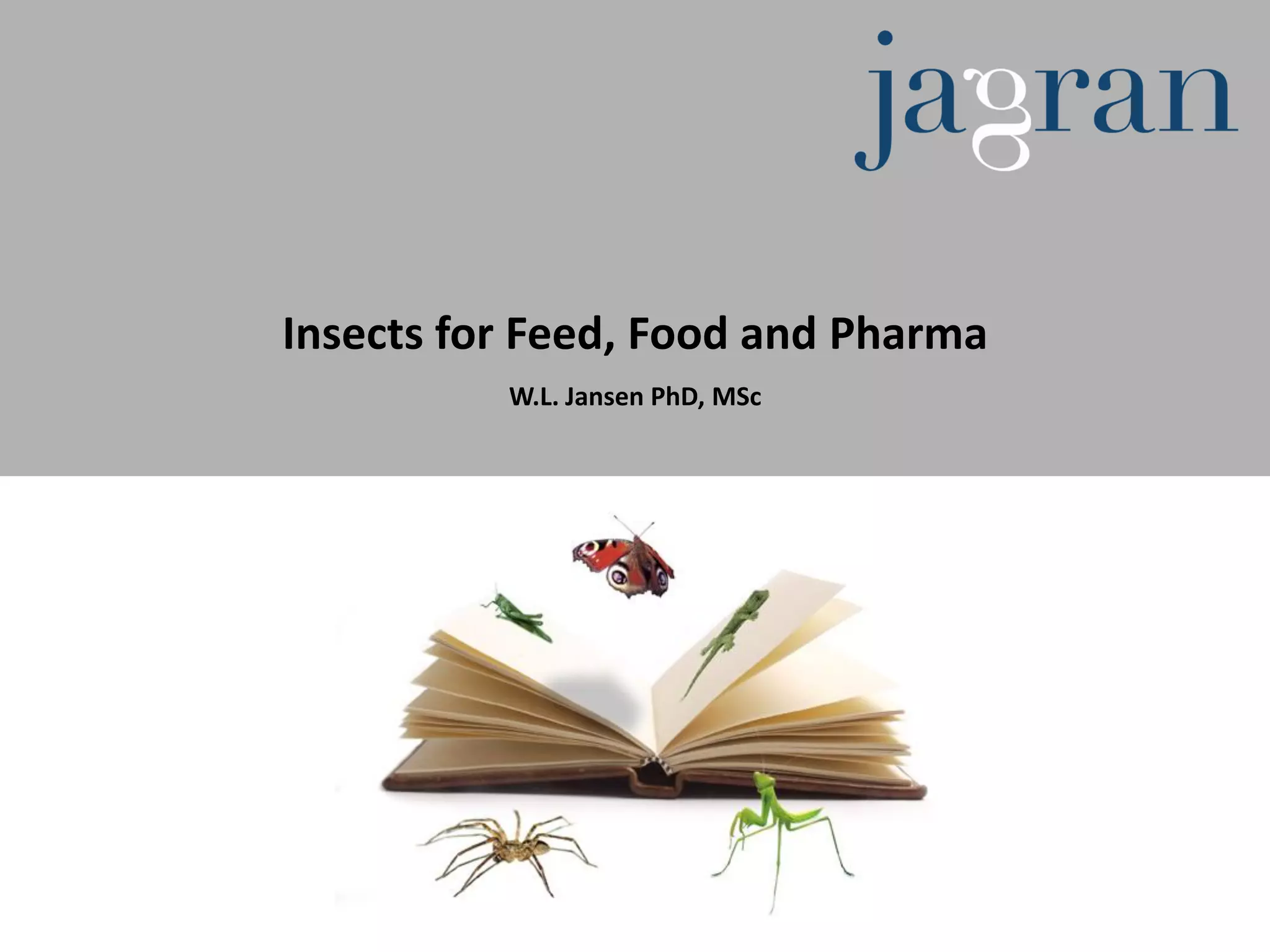
Over 18 years experience


             Education


Production               Companion
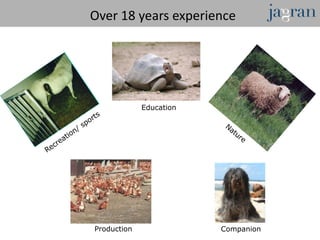
Over 18 years experience


     Medicine production


   Congress organization
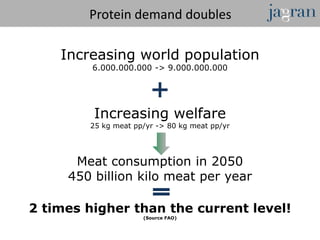
Protein demand doubles

    Increasing world population
         6.000.000.000 -> 9.000.000.000


         Increasing welfare
        25 kg meat pp/yr -> 80 kg meat pp/yr


      Meat consumption in 2050
     450 billion kilo meat per year

2 times higher than the current level!
                     (Source FAO)
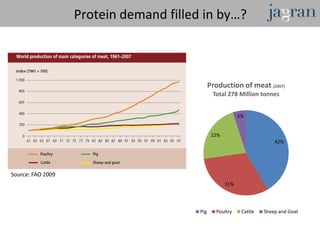
Protein demand filled in by…?
                             Market


                                              Production of meat (2007)
                                               Total 278 Million tonnes


                                                           5%


                                               22%
                                                                         42%


Source: FAO 2009
                                                     31%


                                        Pig     Poultry     Cattle   Sheep and Goat
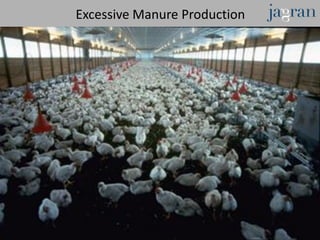
Excessive Manure Production
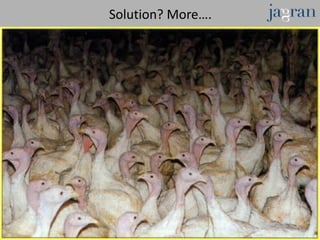
Solution? More….
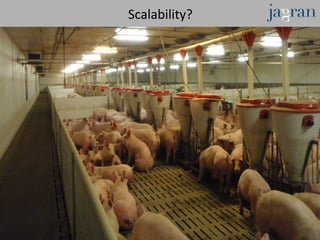
Scalability?
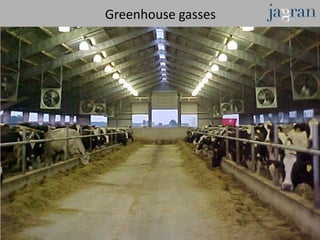
Greenhouse gasses
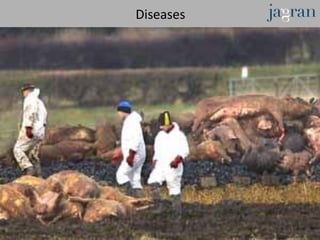
Diseases
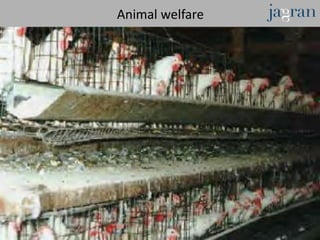
Animal welfare
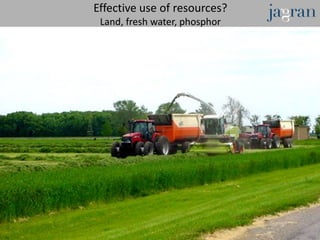
Effective use of resources?
 Land, fresh water, phosphor
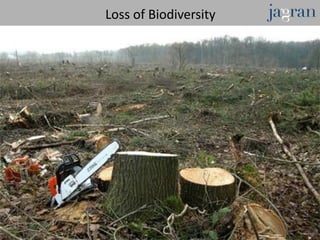
Loss of Biodiversity
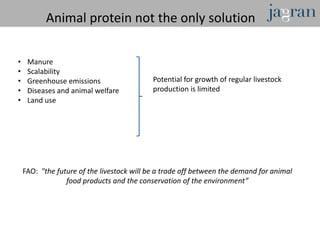
Animal protein not the only solution

•    Manure
•    Scalability
•    Greenhouse emissions                   Potential for growth of regular livestock
•    Diseases and animal welfare            production is limited
•    Land use


    FAO: "the future of the livestock will be a trade off between the demand for animal
                 food products and the conservation of the environment”
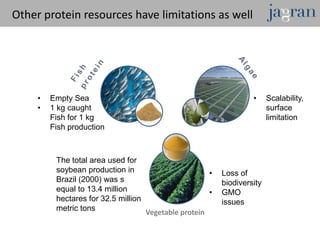
Other protein resources have limitations as well


     •   Empty Sea                                                 •     Scalability,
     •   1 kg caught                                                     surface
         Fish for 1 kg                                                   limitation
         Fish production


          The total area used for
          soybean production in                       •   Loss of
          Brazil (2000) was s                             biodiversity
          equal to 13.4 million                       •   GMO
          hectares for 32.5 million                       issues
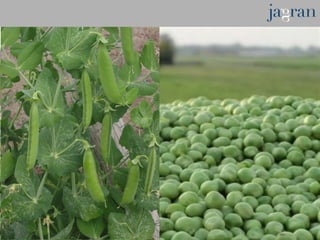
          metric tons               Vegetable protein
Competition developing markets
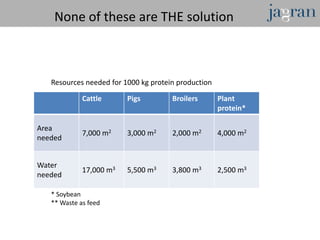
None of these are THE solution


   Resources needed for 1000 kg protein production

             Cattle      Pigs         Broilers       Plant
                                                     protein*

Area
             7,000 m2    3,000 m2     2,000 m2       4,000 m2
needed


Water
             17,000 m3   5,500 m3     3,800 m3       2,500 m3
needed

   * Soybean
   ** Waste as feed
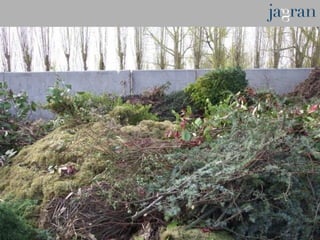
The only source of protein that we have
          in huge quantity is


  ORGANIC
   WASTE
One of the solutions!


INSECTS!
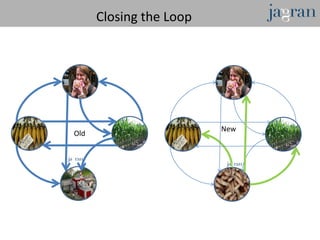
Closing the Loop


                         New
Old
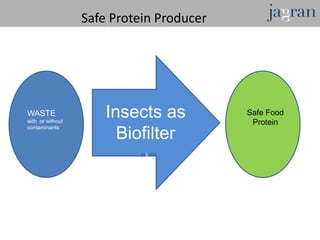
Safe Protein Producer


WASTE
with or without
                      Insects as          Safe Food
                                           Protein
contaminants
                        Biofilter
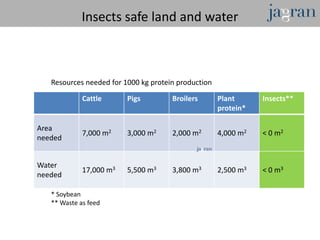
Insects safe land and water


   Resources needed for 1000 kg protein production

             Cattle      Pigs         Broilers       Plant      Insects**
                                                     protein*

Area
             7,000 m2    3,000 m2     2,000 m2       4,000 m2   < 0 m2
needed


Water
             17,000 m3   5,500 m3     3,800 m3       2,500 m3   < 0 m3
needed

   * Soybean
   ** Waste as feed
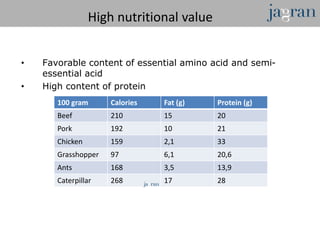
High nutritional value


•   Favorable content of essential amino acid and semi-
    essential acid
•   High content of protein
       100 gram      Calories   Fat (g)   Protein (g)
       Beef          210        15        20
       Pork          192        10        21
       Chicken       159        2,1       33
       Grasshopper   97         6,1       20,6
       Ants          168        3,5       13,9
       Caterpillar   268        17        28
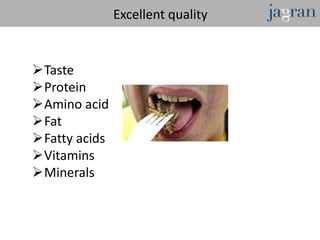
Excellent quality


Taste
Protein
Amino acid
Fat
Fatty acids
Vitamins
Minerals
As a protein source
      Insects are extremely environmental friendly


 Much lower emissions (NH3 and greenhouse gasses)

 Better feed conversion efficiency
  (in terms of speed as well CO2 production)

 Much less land required

 Getting rid of waste
Source: “An exploration on greenhouse gas and ammonia production bij insect species suitable for animal or human
consumption” by D. Oonincx et al.
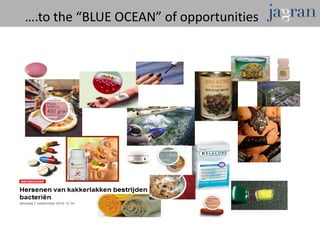
….to the “BLUE OCEAN” of opportunities
Economically very interesting


     Result due to the short period from
               birth to market:

1 COW                                           INSECT
Female weight         650 kg   Weight insect (162.500)   650 kg


Yield after 3 years   650 kg   Yield after 3 years       1.800.000 kg
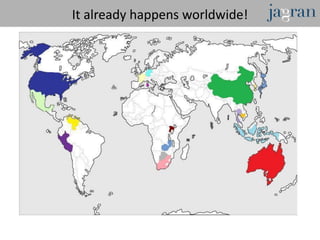
It already happens worldwide!
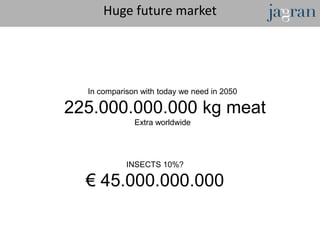
Huge future market


  In comparison with today we need in 2050

225.000.000.000 kg meat
              Extra worldwide


            INSECTS 10%?

  € 45.000.000.000
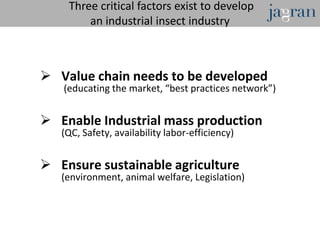
Three critical factors exist to develop
        an industrial insect industry


 Value chain needs to be developed
   (educating the market, “best practices network”)


 Enable Industrial mass production
   (QC, Safety, availability labor-efficiency)


 Ensure sustainable agriculture
   (environment, animal welfare, Legislation)
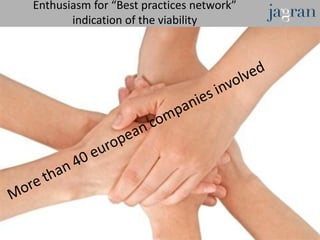
Enthusiasm for “Best practices network”
       indication of the viability

Insects for Feed, Food and Pharma

  • 1.
    Insects for Feed,Food and Pharma W.L. Jansen PhD, MSc
  • 2.
    Team Walter Jansen PhD, MSc Animal husbandry Tara van Beelen BSc Natasja Gianotten MSc Antoine Moser MSc, MBA Insurances Insects Immunology Business Development Claim settlement Insurances Ethology Corporate Finance Arbitration Domestic animals Non-Production animals Corporate strategy Marieke de Wijs BSc Eva Mes BSc Susanne Driessen MSc Mr. Kees Verloop Bettie Hammink Multifunctional agriculture Multifunctional Biology Schade-expertise Office-manager Animal nutrition agriculture Education Education (Government) policy Animal welfare
  • 3.
    Over 18 yearsexperience Education Production Companion
  • 4.
    Over 18 yearsexperience Medicine production Congress organization
  • 5.
    Protein demand doubles Increasing world population 6.000.000.000 -> 9.000.000.000 Increasing welfare 25 kg meat pp/yr -> 80 kg meat pp/yr Meat consumption in 2050 450 billion kilo meat per year 2 times higher than the current level! (Source FAO)
  • 6.
    Protein demand filledin by…? Market Production of meat (2007) Total 278 Million tonnes 5% 22% 42% Source: FAO 2009 31% Pig Poultry Cattle Sheep and Goat
  • 7.
  • 8.
  • 9.
  • 10.
  • 11.
  • 12.
  • 13.
    Effective use ofresources? Land, fresh water, phosphor
  • 14.
  • 15.
    Animal protein notthe only solution • Manure • Scalability • Greenhouse emissions Potential for growth of regular livestock • Diseases and animal welfare production is limited • Land use FAO: "the future of the livestock will be a trade off between the demand for animal food products and the conservation of the environment”
  • 16.
    Other protein resourceshave limitations as well • Empty Sea • Scalability, • 1 kg caught surface Fish for 1 kg limitation Fish production The total area used for soybean production in • Loss of Brazil (2000) was s biodiversity equal to 13.4 million • GMO hectares for 32.5 million issues metric tons Vegetable protein
  • 17.
  • 18.
    None of theseare THE solution Resources needed for 1000 kg protein production Cattle Pigs Broilers Plant protein* Area 7,000 m2 3,000 m2 2,000 m2 4,000 m2 needed Water 17,000 m3 5,500 m3 3,800 m3 2,500 m3 needed * Soybean ** Waste as feed
  • 19.
    The only sourceof protein that we have in huge quantity is ORGANIC WASTE
  • 22.
    One of thesolutions! INSECTS!
  • 23.
  • 24.
    Safe Protein Producer WASTE withor without Insects as Safe Food Protein contaminants Biofilter
  • 25.
    Insects safe landand water Resources needed for 1000 kg protein production Cattle Pigs Broilers Plant Insects** protein* Area 7,000 m2 3,000 m2 2,000 m2 4,000 m2 < 0 m2 needed Water 17,000 m3 5,500 m3 3,800 m3 2,500 m3 < 0 m3 needed * Soybean ** Waste as feed
  • 26.
    High nutritional value • Favorable content of essential amino acid and semi- essential acid • High content of protein 100 gram Calories Fat (g) Protein (g) Beef 210 15 20 Pork 192 10 21 Chicken 159 2,1 33 Grasshopper 97 6,1 20,6 Ants 168 3,5 13,9 Caterpillar 268 17 28
  • 27.
  • 28.
    As a proteinsource Insects are extremely environmental friendly  Much lower emissions (NH3 and greenhouse gasses)  Better feed conversion efficiency (in terms of speed as well CO2 production)  Much less land required  Getting rid of waste Source: “An exploration on greenhouse gas and ammonia production bij insect species suitable for animal or human consumption” by D. Oonincx et al.
  • 29.
    ….to the “BLUEOCEAN” of opportunities
  • 30.
    ….to the “BLUEOCEAN” of opportunities
  • 31.
    Economically very interesting Result due to the short period from birth to market: 1 COW INSECT Female weight 650 kg Weight insect (162.500) 650 kg Yield after 3 years 650 kg Yield after 3 years 1.800.000 kg
  • 32.
  • 33.
    Huge future market In comparison with today we need in 2050 225.000.000.000 kg meat Extra worldwide INSECTS 10%? € 45.000.000.000
  • 34.
    Three critical factorsexist to develop an industrial insect industry  Value chain needs to be developed (educating the market, “best practices network”)  Enable Industrial mass production (QC, Safety, availability labor-efficiency)  Ensure sustainable agriculture (environment, animal welfare, Legislation)
  • 35.
    Enthusiasm for “Bestpractices network” indication of the viability