Downloaded 10 times


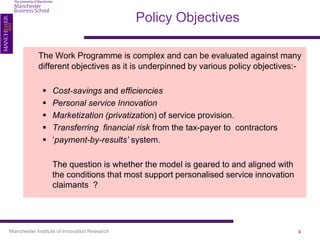
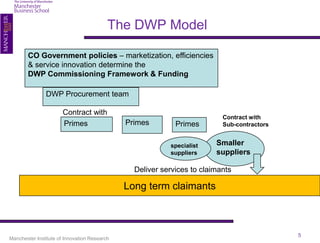
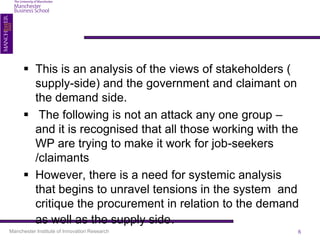
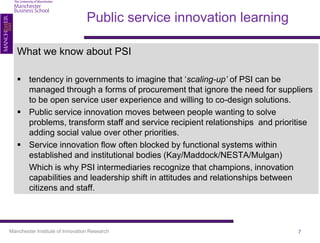
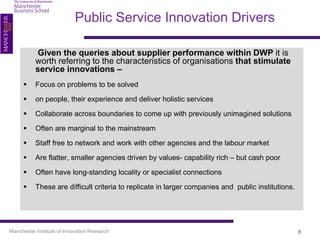


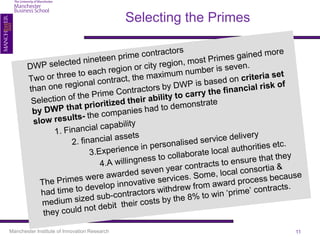

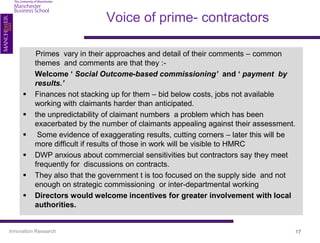
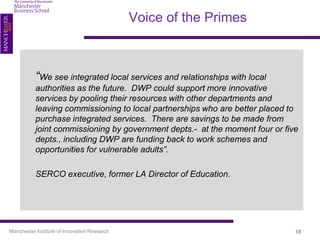
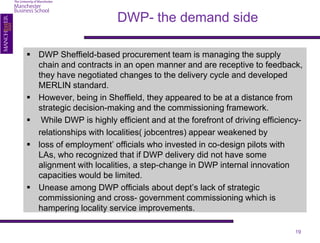
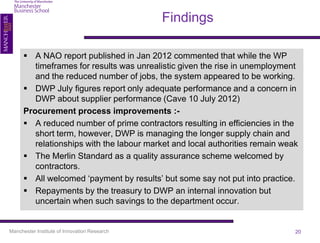
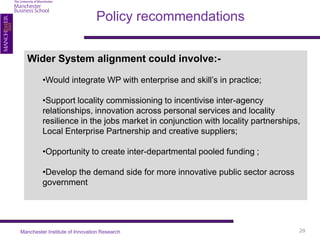


The Work Programme procurement model aimed to reduce long-term claimants, cut welfare costs, and deliver personalized services. However, a study found tensions between these goals and the two-tier procurement framework. While some specialized subcontractors innovated, the model favored large prime contractors over local specialists. It also weakened relationships between local job centers and other agencies important for local economic development. Locality collaboration and devolved budgets were proposed to better integrate services, stimulate local jobs, and sustain innovation.


