Assessment Outline
Infrastructure Assessment.
Server and Software Inventory Analysis
This presentation analyzes the inventory of server hardware, server
software, and lifecycle management and maintenance. It includes
recommendations for best practices and examples of findings.
01
02
03
04
05
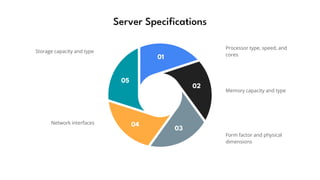
Processor type, speed, and
cores
Memory capacity and type
Storage capacity and type
Network interfaces
Server Specifications
Form factor and physical
dimensions
Hardware Health
Assessment
● Temperature monitoring and analysis
● Power consumption and efficiency
● Component failure rates and
historical data
● Redundancy and fault tolerance
analysis
01
02
03
04
CPU, memory, and
storage utilization
patterns
Network bandwidth
usage and bottlenecks
Performance metrics (e.g.,
response time, latency)
Load balancing and
resource allocation
Utilization and Performance Analysis
Predictive analysis for future
resource requirements
Expansion capabilities (e.g.,
additional RAM, storage)
Capacity Planning and Scalability
Compatibility with emerging
technologies (e.g.,
virtualization, containers)
01
02
03
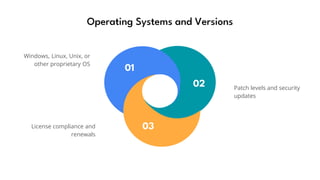
Patch levels and security
updates
Operating Systems and Versions
Windows, Linux, Unix, or
other proprietary OS
License compliance and
renewals
Virtualization and Containerization
● Hypervisor types and versions (e.g.,
VMware, HyperV)
● Virtual machine and container density
● Resource allocation and management
01
02
03
Middleware and Application
Software
Application frameworks (e.g., Java, .NET)
Web servers (e.g., Apache, Nginx)
Database management systems (e.g., MySQL, Oracle)
Software license inventory and
compliance
Auditing and license renewal
tracking
Licensing and Compliance
Open source software usage
and compliance
01
02
03
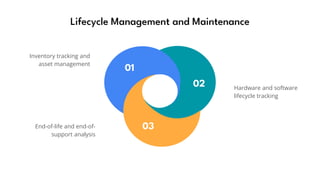
Hardware and software
lifecycle tracking
Lifecycle Management and Maintenance
Inventory tracking and
asset management
End-of-life and end-of-
support analysis
Risk Assessment and
Mitigation
● Vulnerability scanning and patch
management
● Firmware and driver updates
● Security audits and compliance
checks
01
03
02
04
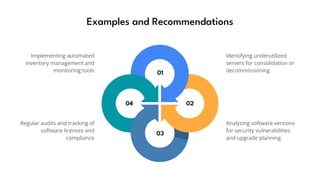
Identifying underutilized
servers for consolidation or
decommissioning
Analyzing software versions
for security vulnerabilities
and upgrade planning
Implementing automated
inventory management and
monitoring tools
Regular audits and tracking of
software licenses and
compliance
Examples and Recommendations
01
02
03
Conclusion
Implications for data center performance, security,
and scalability
Summary of key findings from the server inventory
analysis
Importance of ongoing monitoring and optimization
Thank you for your time 😊

Infra Assessment.pptx

  • 1.
  • 2.
    Server and SoftwareInventory Analysis This presentation analyzes the inventory of server hardware, server software, and lifecycle management and maintenance. It includes recommendations for best practices and examples of findings.
  • 3.
    01 02 03 04 05 Processor type, speed,and cores Memory capacity and type Storage capacity and type Network interfaces Server Specifications Form factor and physical dimensions
  • 4.
    Hardware Health Assessment ● Temperaturemonitoring and analysis ● Power consumption and efficiency ● Component failure rates and historical data ● Redundancy and fault tolerance analysis
  • 5.
    01 02 03 04 CPU, memory, and storageutilization patterns Network bandwidth usage and bottlenecks Performance metrics (e.g., response time, latency) Load balancing and resource allocation Utilization and Performance Analysis
  • 6.
    Predictive analysis forfuture resource requirements Expansion capabilities (e.g., additional RAM, storage) Capacity Planning and Scalability Compatibility with emerging technologies (e.g., virtualization, containers)
  • 7.
    01 02 03 Patch levels andsecurity updates Operating Systems and Versions Windows, Linux, Unix, or other proprietary OS License compliance and renewals
  • 8.
    Virtualization and Containerization ●Hypervisor types and versions (e.g., VMware, HyperV) ● Virtual machine and container density ● Resource allocation and management
  • 9.
    01 02 03 Middleware and Application Software Applicationframeworks (e.g., Java, .NET) Web servers (e.g., Apache, Nginx) Database management systems (e.g., MySQL, Oracle)
  • 10.
    Software license inventoryand compliance Auditing and license renewal tracking Licensing and Compliance Open source software usage and compliance
  • 11.
    01 02 03 Hardware and software lifecycletracking Lifecycle Management and Maintenance Inventory tracking and asset management End-of-life and end-of- support analysis
  • 12.
    Risk Assessment and Mitigation ●Vulnerability scanning and patch management ● Firmware and driver updates ● Security audits and compliance checks
  • 13.
    01 03 02 04 Identifying underutilized servers forconsolidation or decommissioning Analyzing software versions for security vulnerabilities and upgrade planning Implementing automated inventory management and monitoring tools Regular audits and tracking of software licenses and compliance Examples and Recommendations
  • 14.
    01 02 03 Conclusion Implications for datacenter performance, security, and scalability Summary of key findings from the server inventory analysis Importance of ongoing monitoring and optimization
  • 15.
    Thank you foryour time 😊

Editor's Notes

  • #2 Entered text Server Hardware Inventory Analysis a. Server specifications: Processor type, speed, and cores Memory capacity and type Storage capacity and type Network interfaces Form factor and physical dimensions b. Hardware health assessment: Temperature monitoring and analysis Power consumption and efficiency Component failure rates and historical data Redundancy and fault tolerance analysis c. Utilization and performance analysis: CPU, memory, and storage utilization patterns Network bandwidth usage and bottlenecks Performance metrics (e.g., response time, latency) Load balancing and resource allocation d. Capacity planning and scalability: Predictive analysis for future resource requirements Expansion capabilities (e.g., additional RAM, storage) Compatibility with emerging technologies (e.g., virtualization, containers) Server Software Inventory Analysis a. Operating systems and versions: Windows, Linux, Unix, or other proprietary OS Patch levels and security updates License compliance and renewals b. Virtualization and containerization: Hypervisor types and versions (e.g., VMware, Hyper-V) Virtual machine and container density Resource allocation and management c. Middleware and application software: Web servers (e.g., Apache, Nginx) Database management systems (e.g., MySQL, Oracle) Application frameworks (e.g., Java, .NET) d. Licensing and compliance: Software license inventory and compliance Auditing and license renewal tracking Open source software usage and compliance Lifecycle Management and Maintenance a. Inventory tracking and asset management: Configuration management database (CMDB) utilization Hardware and software lifecycle tracking End-of-life and end-of-support analysis b. Risk assessment and mitigation: Vulnerability scanning and patch management Firmware and driver updates Security audits and compliance checks Examples and Recommendations a. Example: Identifying underutilized servers for consolidation or decommissioning b. Example: Analyzing software versions for security vulnerabilities and upgrade planning c. Recommendation: Implementing automated inventory management and monitoring tools d. Recommendation: Regular audits and tracking of software licenses and compliance Conclusion a. Summary of key findings from the server inventory analysis b. Importance of ongoing monitoring and optimization c. Implications for data center performance, security, and scalability