By :– Vinmit Patel
Information
Security
Introduction
Information security is the practice of
defending information from unauthorized
access, use, disclosure, disruption,
modification, perusal, inspection,
recording or destruction.
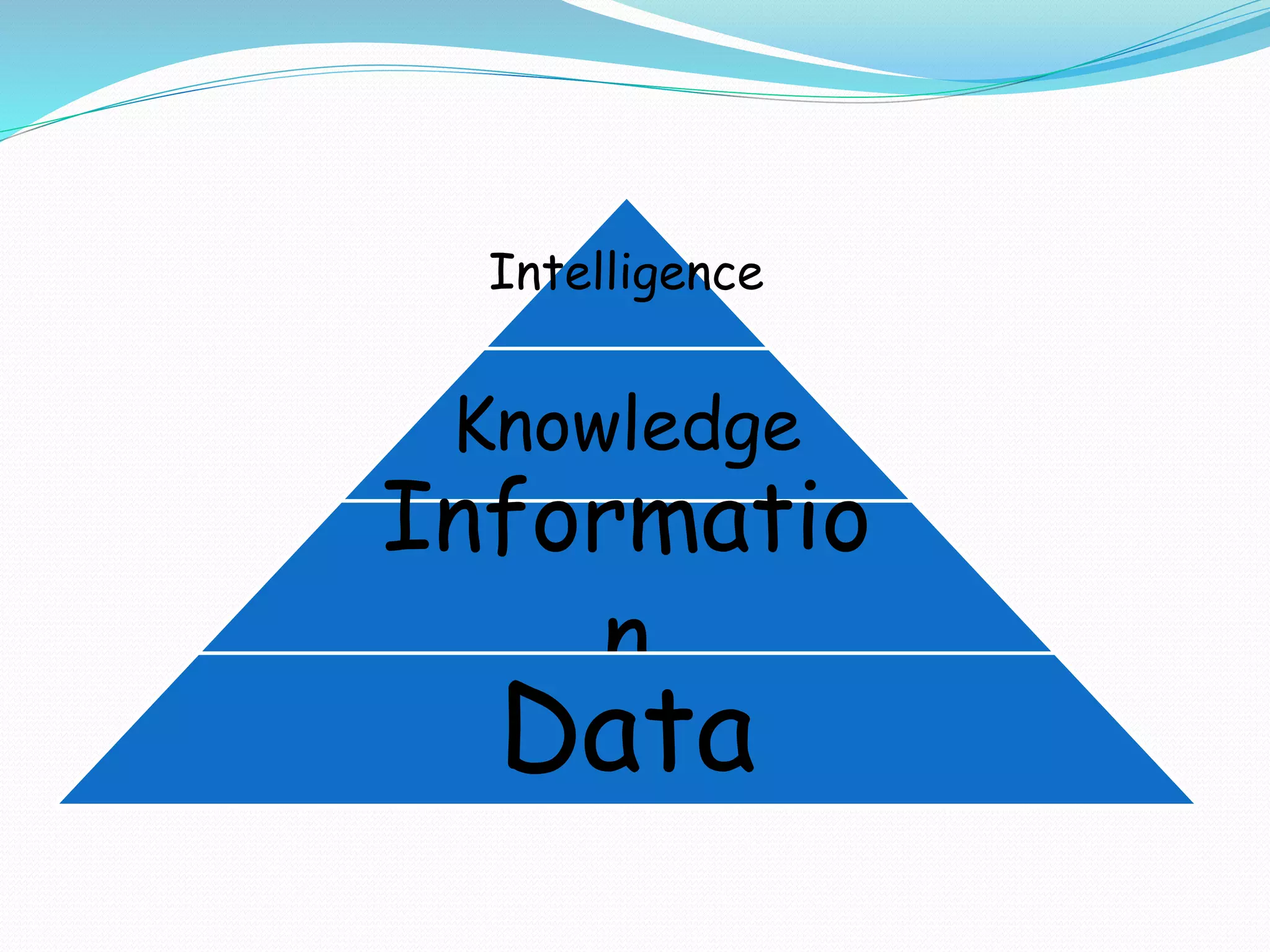
Intelligence
Knowledge
Informatio
n
Data
Richard’s Law Of Computer Security
Either don’t buy a computer system
and if you are buying a computer
system don’t turn it on.
Basic Principle of Security
 C - Confidentiality
 I - Integrity
 A - Availability
Confidentiality
Confidentiality refers to preventing the disclosure of
information to unauthorized individuals or systems.
Integrity
In information security, data integrity means
maintaining and assuring the accuracy and consistency
of data over its entire life-cycle.
Availability
For any information system to serve its purpose, the
information must be available when it is needed.
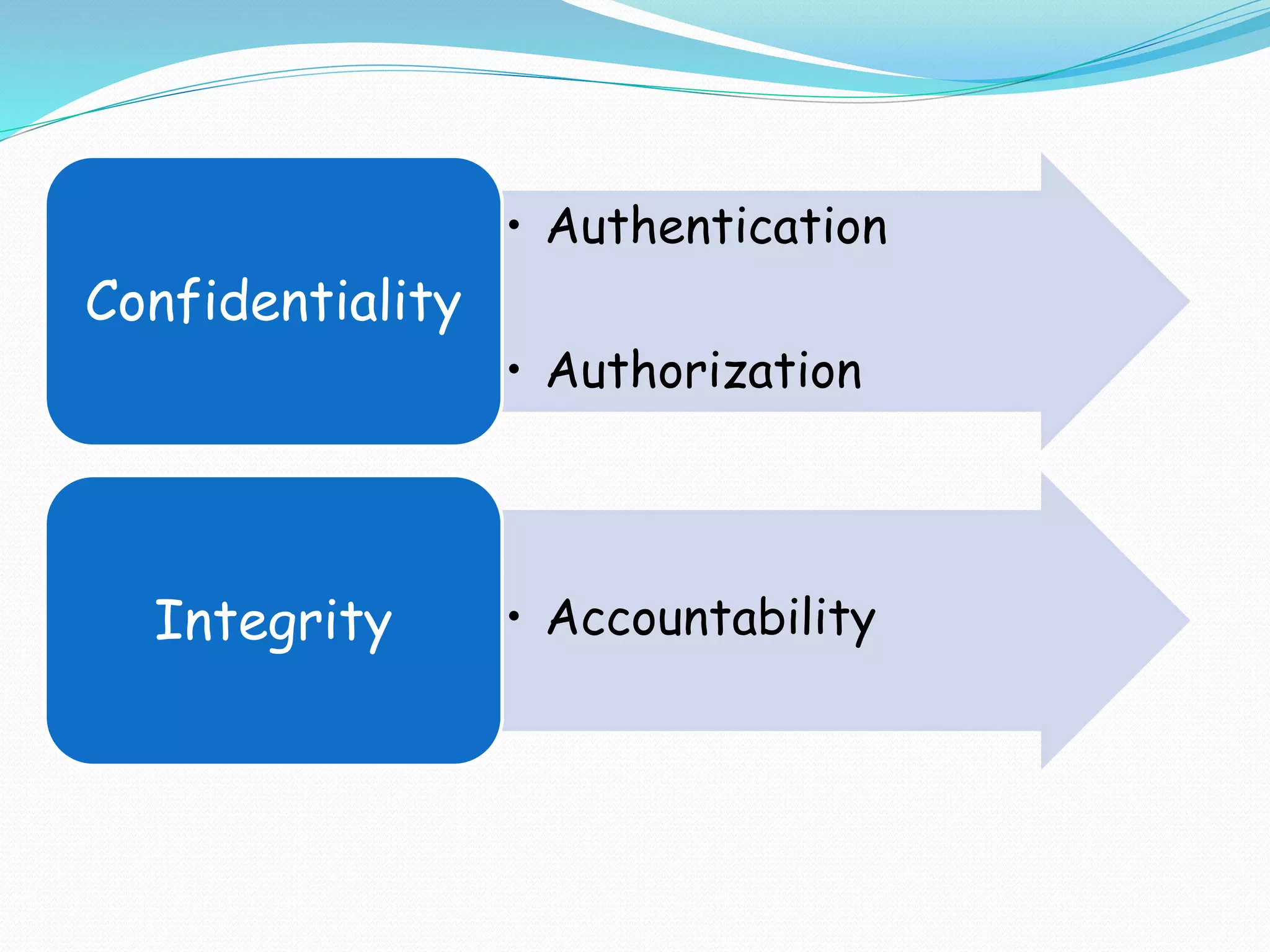
• Authentication
• Authorization
Confidentiality
• Accountability
Integrity
Cryptography
It is an art of secret writing in which
plain text is converted into cipher
text(not readable) by using
mathematical induction process
Types of Cryptography
On the basis of Cipher text
1. stream line cipher
2. Block (chunk)cipher
On the basis of Secret Key
1. Single key Cryptography Standard
2. Public key Cryptography Standard
Steganography
To hide an information behind an
image is called steganography
This technique was used in 26/11
attack
Ethical Hacking
Introduction
Hacking is neither legal nor illegal it is just a
concept to bypass a security mechanism of any
system , server or any network with
authentication and authorization or without
authentication and authorization.
Types Of Hacker
1. White hat/ Ethical hackers
2. Black hat hackers/ Crackers
3. Grey hat hackers
4. Blue hat hackers
Additional category
1. Neophyte
2. Hacktivist
3. Elite hacker
4. Script kiddie
White hat / Ethical hacker
• If someone is bypassing security or breaching
security with authentication and authorization is
called ethical hacker
• A white hat hacker breaks security for non-
malicious reasons, perhaps to test their own
security system or while working for a security
company which makes security software. The
term "white hat" in Internet slang refers to an
ethical hacker.
Black hat hacker
A "black hat" hacker is a hacker who "violates computer
security for little reason beyond maliciousness or for
personal gain"
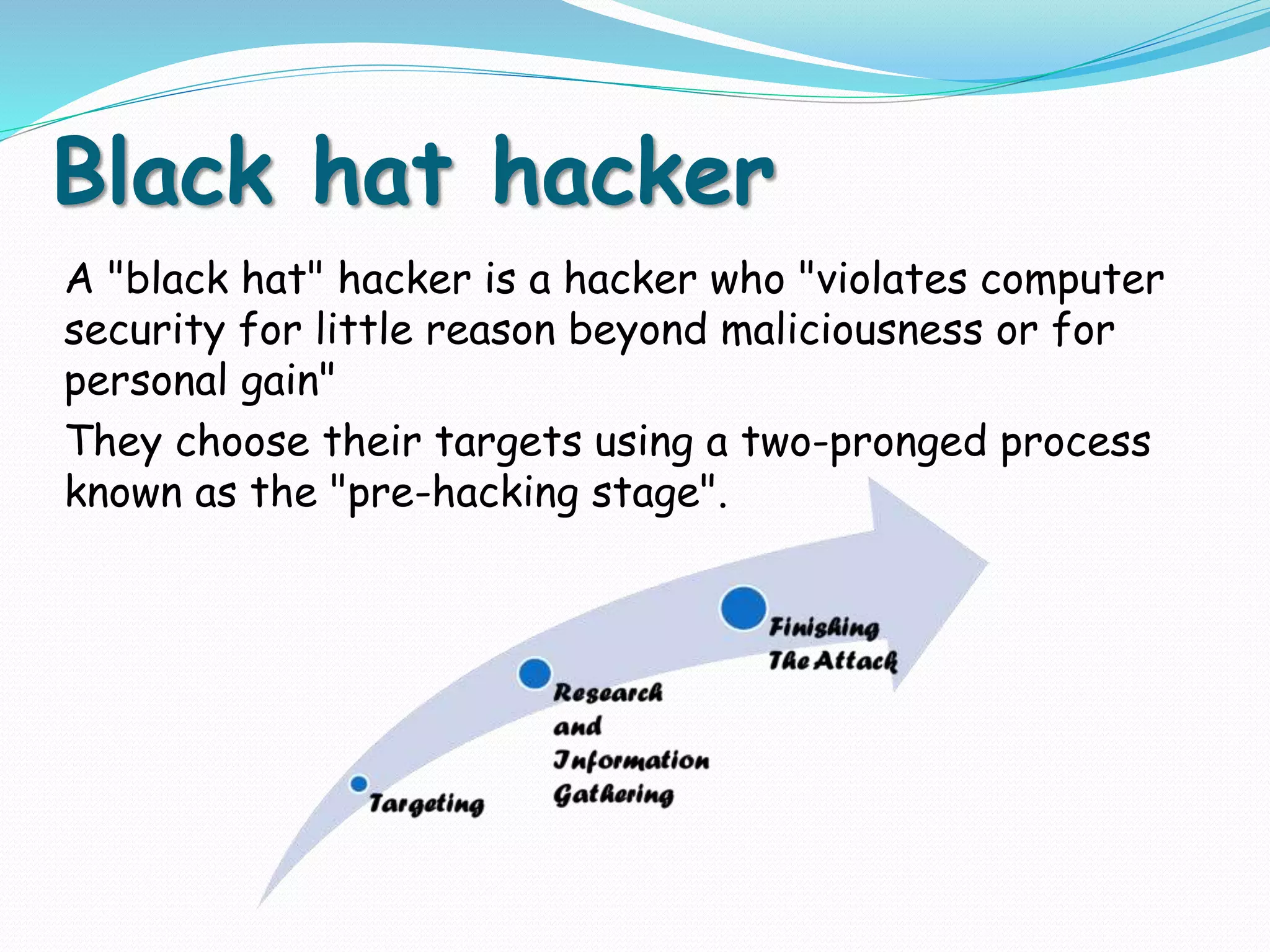
They choose their targets using a two-pronged process
known as the "pre-hacking stage".
Blue hat hacker
A blue hat hacker is someone outside computer
security consulting firms who is used to bug test a
system prior to its launch, looking for exploits so
they can be closed. Microsoft also uses the term
Blue Hat to represent a series of security briefing
events.
Grey hat hacker
A grey hat hacker is a combination of a Black Hat
and a White Hat Hacker. A Grey Hat Hacker may
surf the internet and hack into a computer system
for the sole purpose of notifying the administrator
that their system has been hacked, for example.
Then they may offer to repair their system for a
small fee.[
Basic Techniques
Vulnerability scanner
Password cracking
Packet sniffer
Spoofing attack
Rootkit
Social engineering
Trojan horses
Viruses
Worms
Key loggers
Thank You

Information security

  • 1.
  • 2.
  • 3.
    Introduction Information security isthe practice of defending information from unauthorized access, use, disclosure, disruption, modification, perusal, inspection, recording or destruction.
  • 4.
  • 5.
    Richard’s Law OfComputer Security Either don’t buy a computer system and if you are buying a computer system don’t turn it on.
  • 6.
    Basic Principle ofSecurity  C - Confidentiality  I - Integrity  A - Availability
  • 7.
    Confidentiality Confidentiality refers topreventing the disclosure of information to unauthorized individuals or systems. Integrity In information security, data integrity means maintaining and assuring the accuracy and consistency of data over its entire life-cycle. Availability For any information system to serve its purpose, the information must be available when it is needed.
  • 8.
  • 9.
    Cryptography It is anart of secret writing in which plain text is converted into cipher text(not readable) by using mathematical induction process
  • 10.
    Types of Cryptography Onthe basis of Cipher text 1. stream line cipher 2. Block (chunk)cipher On the basis of Secret Key 1. Single key Cryptography Standard 2. Public key Cryptography Standard
  • 11.
    Steganography To hide aninformation behind an image is called steganography This technique was used in 26/11 attack
  • 12.
  • 13.
    Introduction Hacking is neitherlegal nor illegal it is just a concept to bypass a security mechanism of any system , server or any network with authentication and authorization or without authentication and authorization.
  • 14.
    Types Of Hacker 1.White hat/ Ethical hackers 2. Black hat hackers/ Crackers 3. Grey hat hackers 4. Blue hat hackers Additional category 1. Neophyte 2. Hacktivist 3. Elite hacker 4. Script kiddie
  • 15.
    White hat /Ethical hacker • If someone is bypassing security or breaching security with authentication and authorization is called ethical hacker • A white hat hacker breaks security for non- malicious reasons, perhaps to test their own security system or while working for a security company which makes security software. The term "white hat" in Internet slang refers to an ethical hacker.
  • 16.
    Black hat hacker A"black hat" hacker is a hacker who "violates computer security for little reason beyond maliciousness or for personal gain" They choose their targets using a two-pronged process known as the "pre-hacking stage".
  • 17.
    Blue hat hacker Ablue hat hacker is someone outside computer security consulting firms who is used to bug test a system prior to its launch, looking for exploits so they can be closed. Microsoft also uses the term Blue Hat to represent a series of security briefing events.
  • 18.
    Grey hat hacker Agrey hat hacker is a combination of a Black Hat and a White Hat Hacker. A Grey Hat Hacker may surf the internet and hack into a computer system for the sole purpose of notifying the administrator that their system has been hacked, for example. Then they may offer to repair their system for a small fee.[
  • 19.
    Basic Techniques Vulnerability scanner Passwordcracking Packet sniffer Spoofing attack Rootkit Social engineering Trojan horses Viruses Worms Key loggers
  • 20.