PRESENTATION ABOUT
WORLD TRADE
ORGANISATION
I AM TSʹOSANE PHELETO A 3RD YEAR
STUDENT AT LESOTHO COLLEGE OF
EDUCATION ( L C E )
EMAIL : tsosanepheleto07@gmail.com
WHAT IS WTO?
WTO stands for the World Trade Organization. It is an international
organization that deals with global trade rules among nations .It is an
intergovernmental organization that regulates and facilitates international
trade.
WTO headquarters and origin
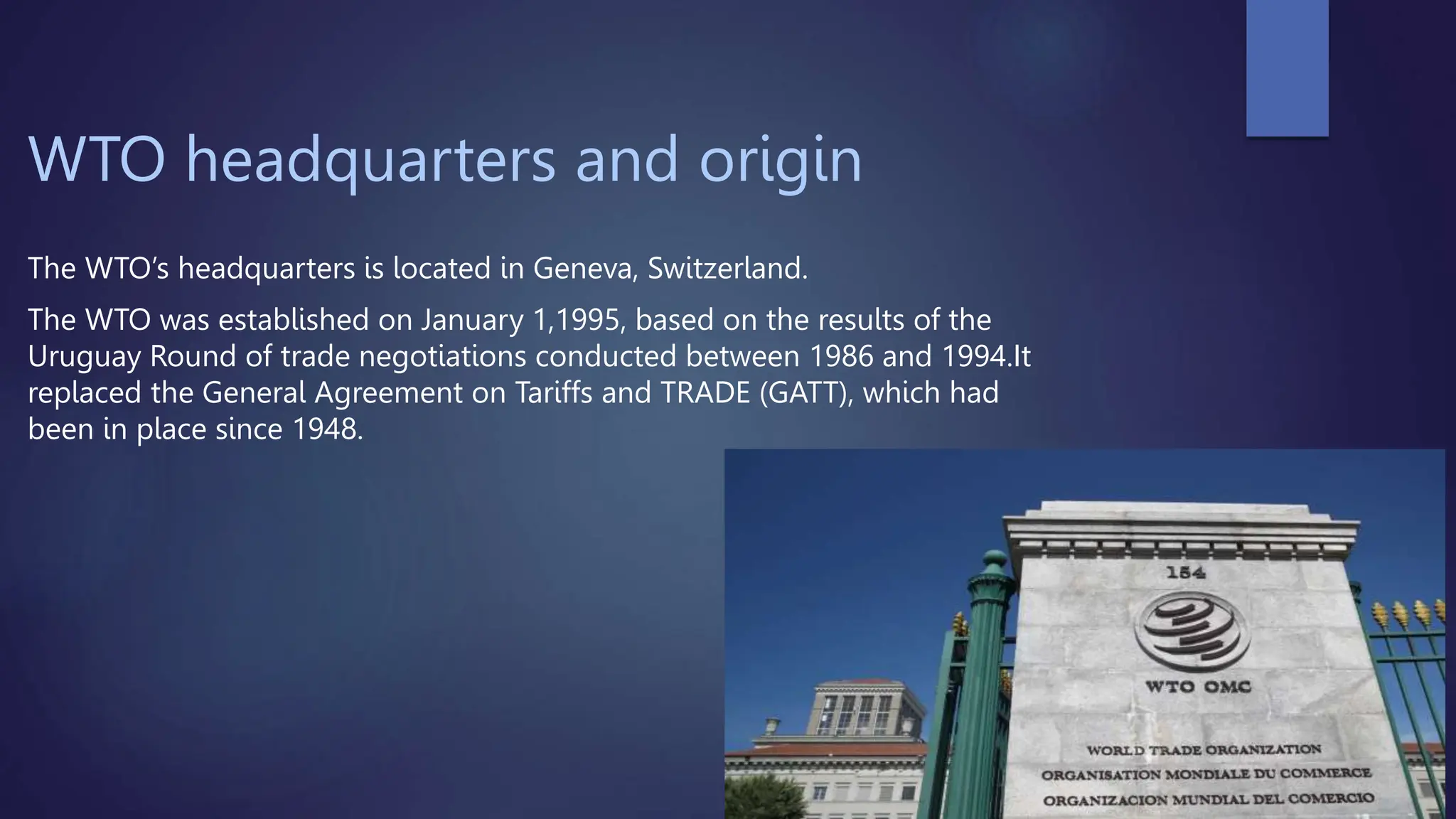
The WTO’s headquarters is located in Geneva, Switzerland.
The WTO was established on January 1,1995, based on the results of the
Uruguay Round of trade negotiations conducted between 1986 and 1994.It
replaced the General Agreement on Tariffs and TRADE (GATT), which had
been in place since 1948.
Members of WTO
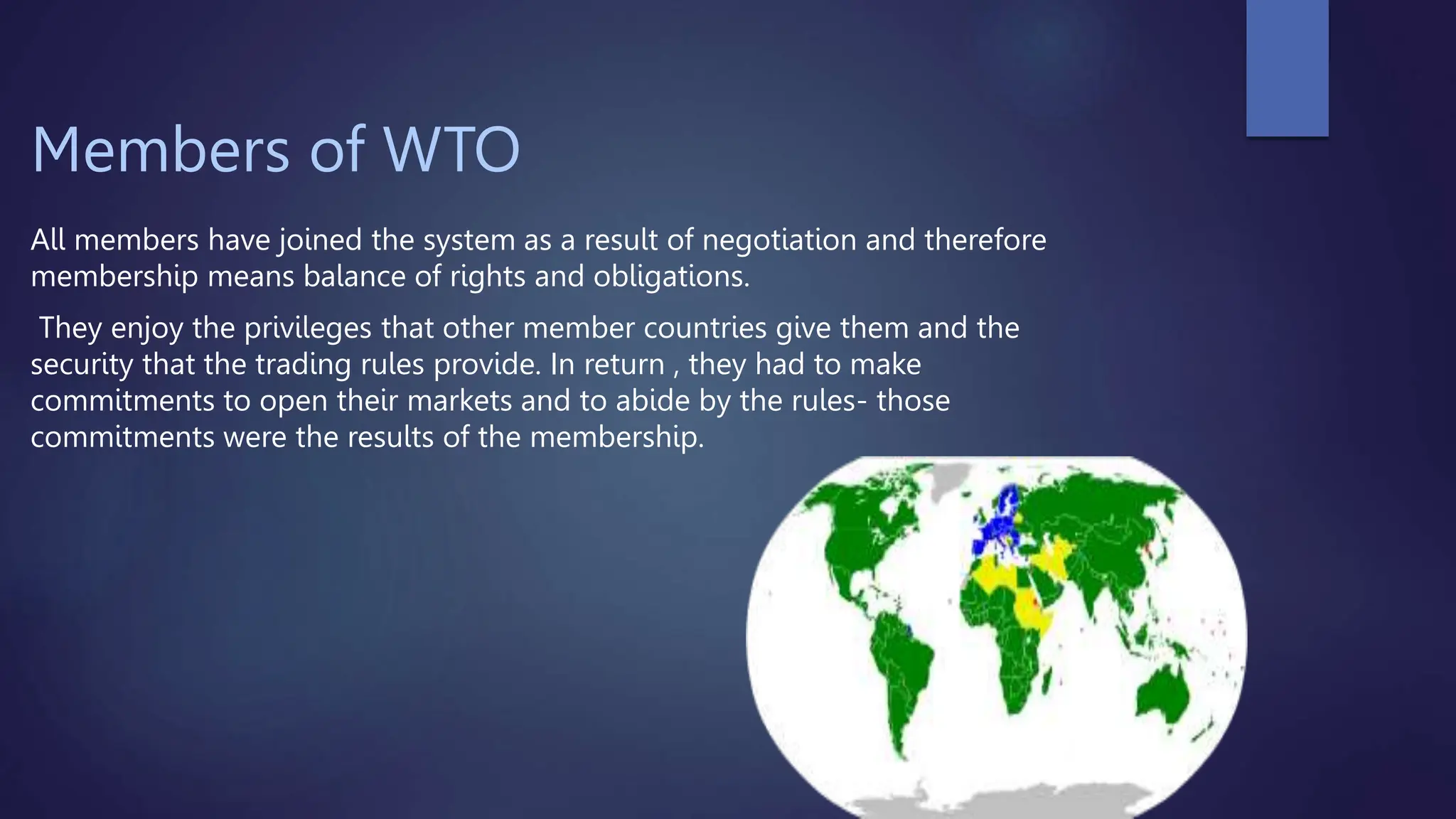
All members have joined the system as a result of negotiation and therefore
membership means balance of rights and obligations.
They enjoy the privileges that other member countries give them and the
security that the trading rules provide. In return , they had to make
commitments to open their markets and to abide by the rules- those
commitments were the results of the membership.
Cont. members of WTO
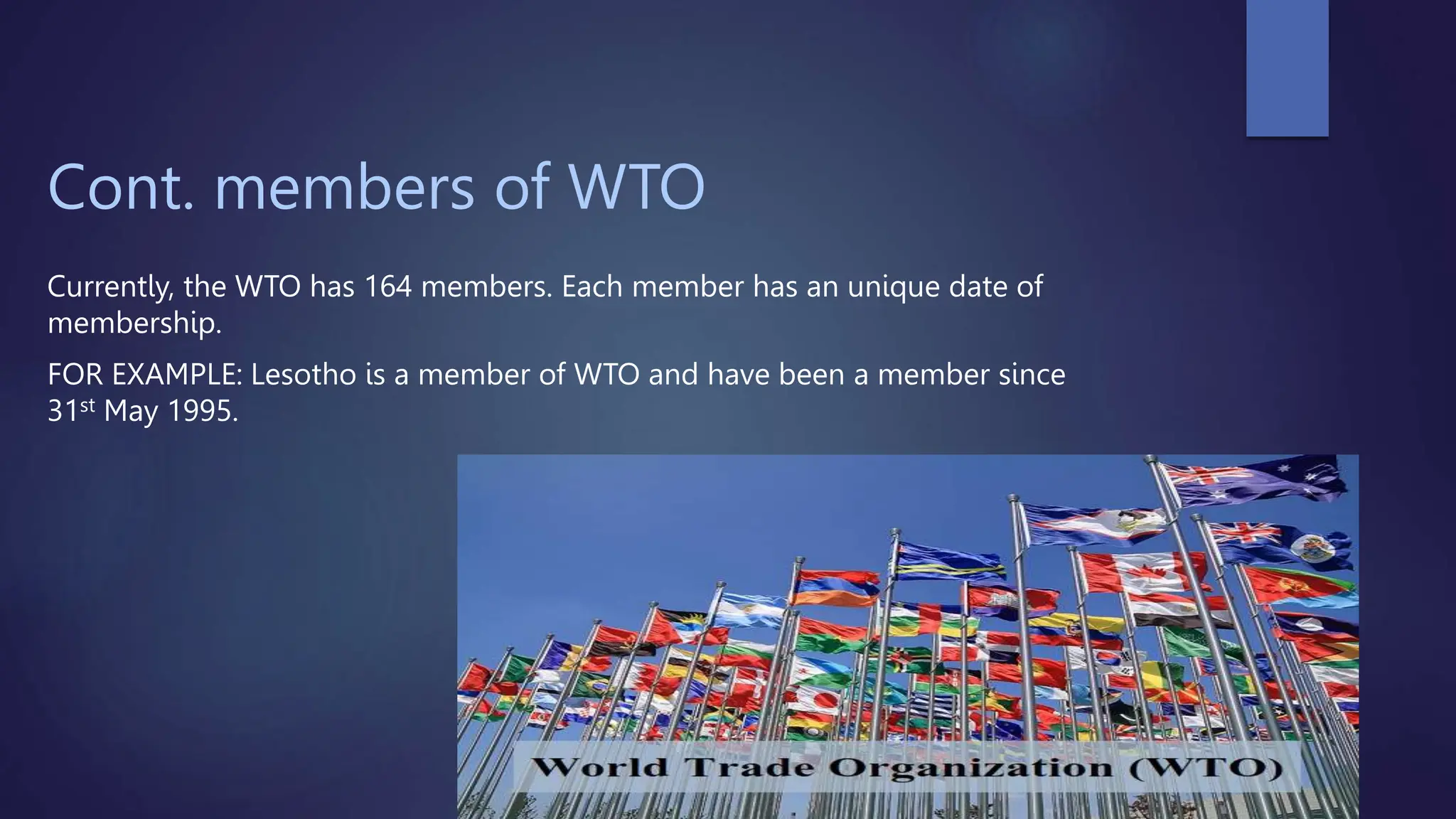
Currently, the WTO has 164 members. Each member has an unique date of
membership.
FOR EXAMPLE: Lesotho is a member of WTO and have been a member since
31st May 1995.
NATURE OF WTO
 To set and enforce rules for international trade.
 To provide forum for negotiating and further trade liberalization.
 To resolve trade disputes.
 To increase transparency of decision making process.
 It deals with sales of trade between nations at global level.
CONT.NATURE OF WTO
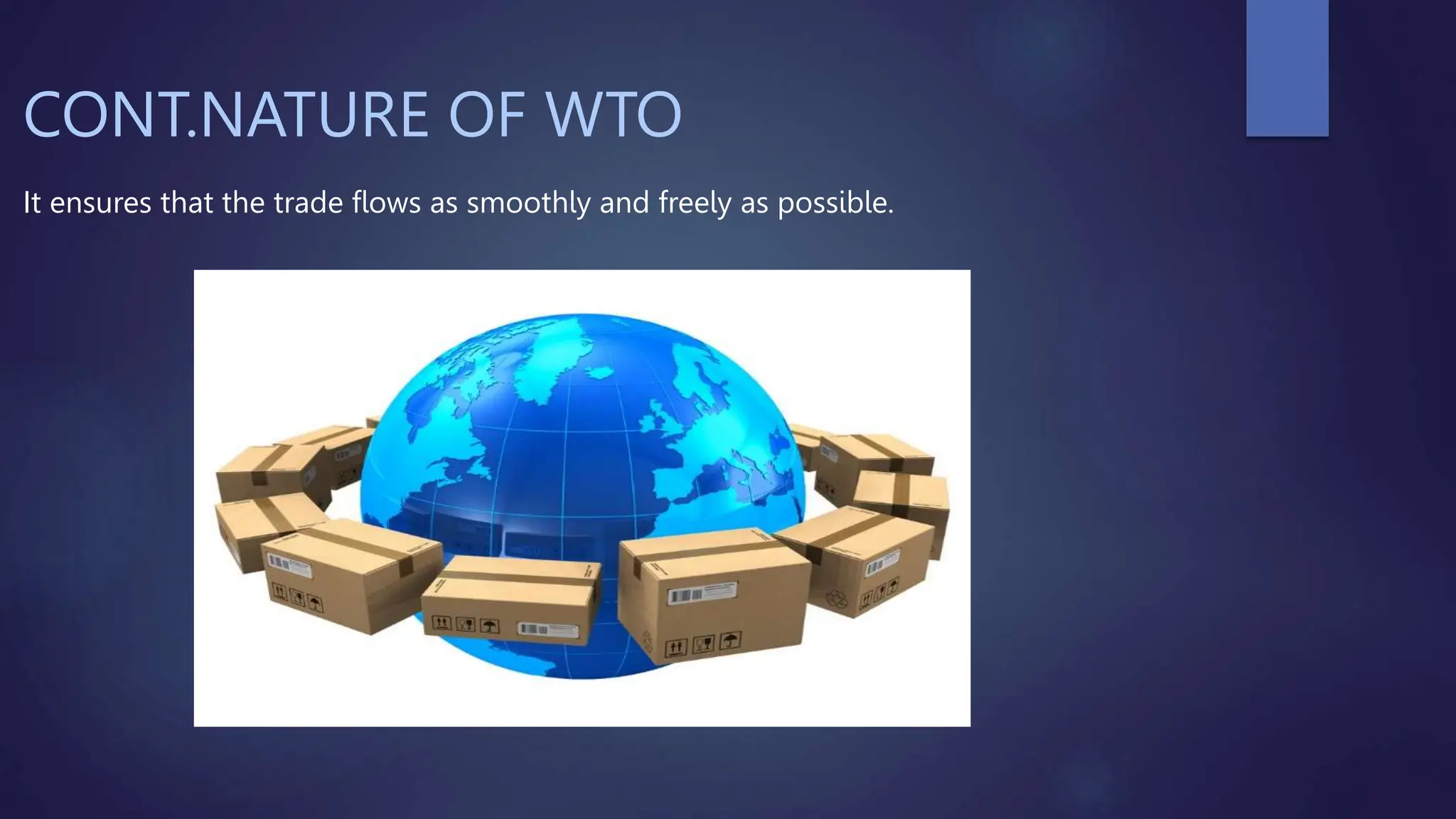
It ensures that the trade flows as smoothly and freely as possible.
BENEFITS OF THE WTO
 Promotes global trade: The WTO provides a platform for negotiations and
dispute settlements, facilitating global trade among member countries.
 Economic growth and development: By reducing trade barriers and
promoting free trade the WTO aims to stimulate economic growth and
development worldwide.
CONT.BENEFITS OF WTO
 Stability and predictability: The organization establishes transparent rules and
regulations , creating predictable trading environment for businesses.
 Disputes settlements mechanism: The WTO has a system for resolving trade
disputes, ensuring fair and impartial decisions.
Limitations of WTO
 Disparities between member countries: Developing countries like
Lesotho may face challenges in fully benefiting from WTO agreements due
to their limited resources and negotiation power.
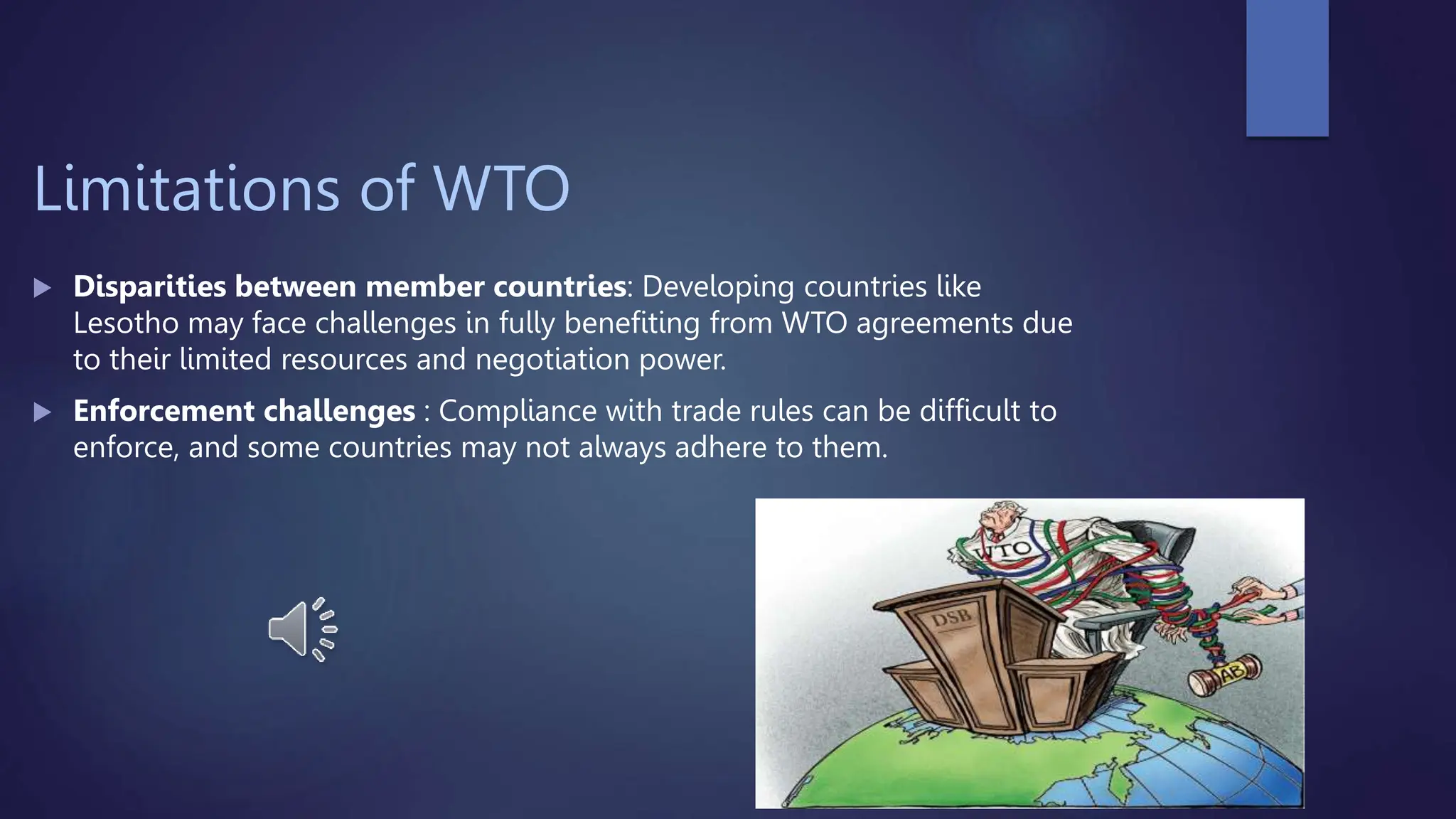
 Enforcement challenges : Compliance with trade rules can be difficult to
enforce, and some countries may not always adhere to them.
Cont. limitations of WTO
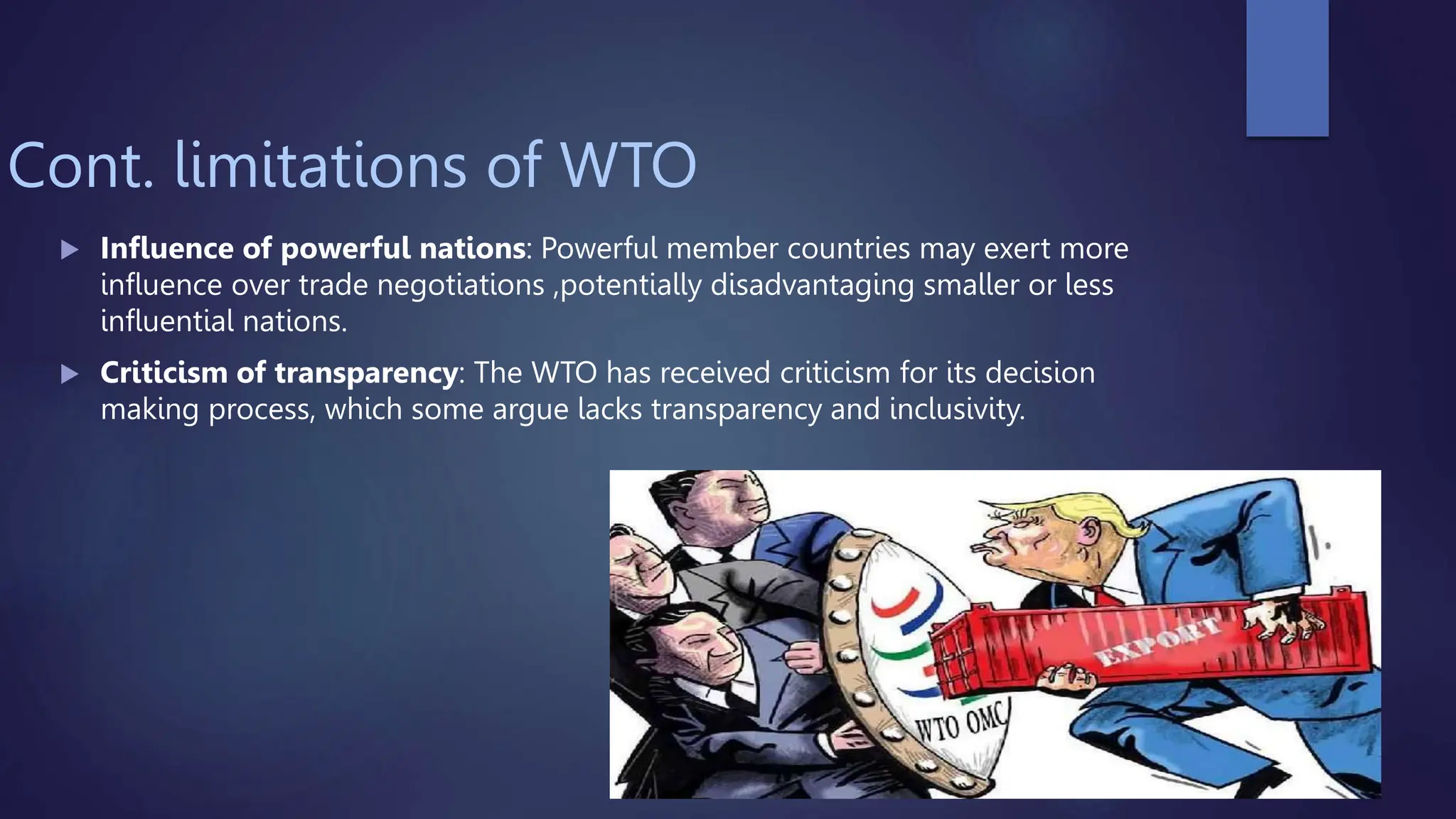
 Influence of powerful nations: Powerful member countries may exert more
influence over trade negotiations ,potentially disadvantaging smaller or less
influential nations.
 Criticism of transparency: The WTO has received criticism for its decision
making process, which some argue lacks transparency and inclusivity.
Suggestions on how to improve WTO.
It would better if WTO would settle disputes and reduce trade tensions as well
as favoritism, the organization can also encourage developed countries to
come together and help under developed countries like Lesotho to be on the
same level as others.
References
- ttps://mfa.gov.by/en/export/wto/cons_wto/
https://www.vedantu.com/commerce/dark-side-of-the-wto
https://www.wto.org/english/thewto_e/whatis_e/tif_e/org3_e.
htm

Information about WTO

  • 1.
  • 2.
    I AM TSʹOSANEPHELETO A 3RD YEAR STUDENT AT LESOTHO COLLEGE OF EDUCATION ( L C E ) EMAIL : tsosanepheleto07@gmail.com
  • 3.
    WHAT IS WTO? WTOstands for the World Trade Organization. It is an international organization that deals with global trade rules among nations .It is an intergovernmental organization that regulates and facilitates international trade.
  • 4.
    WTO headquarters andorigin The WTO’s headquarters is located in Geneva, Switzerland. The WTO was established on January 1,1995, based on the results of the Uruguay Round of trade negotiations conducted between 1986 and 1994.It replaced the General Agreement on Tariffs and TRADE (GATT), which had been in place since 1948.
  • 5.
    Members of WTO Allmembers have joined the system as a result of negotiation and therefore membership means balance of rights and obligations. They enjoy the privileges that other member countries give them and the security that the trading rules provide. In return , they had to make commitments to open their markets and to abide by the rules- those commitments were the results of the membership.
  • 6.
    Cont. members ofWTO Currently, the WTO has 164 members. Each member has an unique date of membership. FOR EXAMPLE: Lesotho is a member of WTO and have been a member since 31st May 1995.
  • 7.
    NATURE OF WTO To set and enforce rules for international trade.  To provide forum for negotiating and further trade liberalization.  To resolve trade disputes.  To increase transparency of decision making process.  It deals with sales of trade between nations at global level.
  • 8.
    CONT.NATURE OF WTO Itensures that the trade flows as smoothly and freely as possible.
  • 9.
    BENEFITS OF THEWTO  Promotes global trade: The WTO provides a platform for negotiations and dispute settlements, facilitating global trade among member countries.  Economic growth and development: By reducing trade barriers and promoting free trade the WTO aims to stimulate economic growth and development worldwide.
  • 10.
    CONT.BENEFITS OF WTO Stability and predictability: The organization establishes transparent rules and regulations , creating predictable trading environment for businesses.  Disputes settlements mechanism: The WTO has a system for resolving trade disputes, ensuring fair and impartial decisions.
  • 11.
    Limitations of WTO Disparities between member countries: Developing countries like Lesotho may face challenges in fully benefiting from WTO agreements due to their limited resources and negotiation power.  Enforcement challenges : Compliance with trade rules can be difficult to enforce, and some countries may not always adhere to them.
  • 12.
    Cont. limitations ofWTO  Influence of powerful nations: Powerful member countries may exert more influence over trade negotiations ,potentially disadvantaging smaller or less influential nations.  Criticism of transparency: The WTO has received criticism for its decision making process, which some argue lacks transparency and inclusivity.
  • 13.
    Suggestions on howto improve WTO. It would better if WTO would settle disputes and reduce trade tensions as well as favoritism, the organization can also encourage developed countries to come together and help under developed countries like Lesotho to be on the same level as others.
  • 14.