Collaboration
Business and IT should work together as
data governance initiatives require both to
ensure that processes and procedures can
be supported by technology. Ongoing
collaboration between groups ensures that
data governance initiatives will be more
effective over time.
Broader Information Entity Impact
Look at how each entity being managed
(customer, product, etc.) affects broader
business activities and what that means for
the organization. Identify gaps in
performance and note potential procedures
that have not been accounted for.
Other considerations include the following.
Data Quality
Your organization requires strong data
quality. Software and business processes
can be leveraged to ensure that quality
levels are measured and managed over
time using automated processes and
manual intervention, when needed.
Program Maintenance
and Management
Your organization needs to define how data
governance will be maintained over time.
This is where technology and process
converge to ensure that procedures apply to
ongoing program support.
Define
Your Key Data Challenges
In all projects, it becomes important
to start small and look at where your
data challenges exist. This requires
identifying gaps in performance,
negative customer experiences,
supply chain inefficiencies, etc.
Identify
Subject Matter Experts
Data governance requires business
experts who understand key data
entities and the tasks that link
business processes with technology.
For example, customers, projects,
supply chains, etc.
Develop
Business Rules for Data
Data entities have rules associated
with them. These may include the
flow of customer information and
how to ensure information quality
and reliability.
Select/Implement
a Solution to Support
Numbers 1 through 5
Many solutions exist that support
governance practices.
Organizations need to select a
solution that supports their overall
goals based on their business
needs, current infrastructure, and
overall goals.
Assign
Data Stewardship Roles
For data governance to succeed,
stewards need to take responsibility
for practices put in place. These
stewards ensure that data
governance practices are adhered
to and maintained over time.
Define
Practices and Policies to Deal with
Business Rule Deviations
This requires a collaborative
approach and holistic view of the
organization to identify how
business processes work and how to
handle exceptions.
1
2
3
4
5
6
DATA GOVERNANCE
BEST PRACTICESGOING FROM
CONCEPTION TO
REALITYHow to Start a Data Governance Initiative to Ensure Developing
Successful Frameworks by Leveraging Best Practices

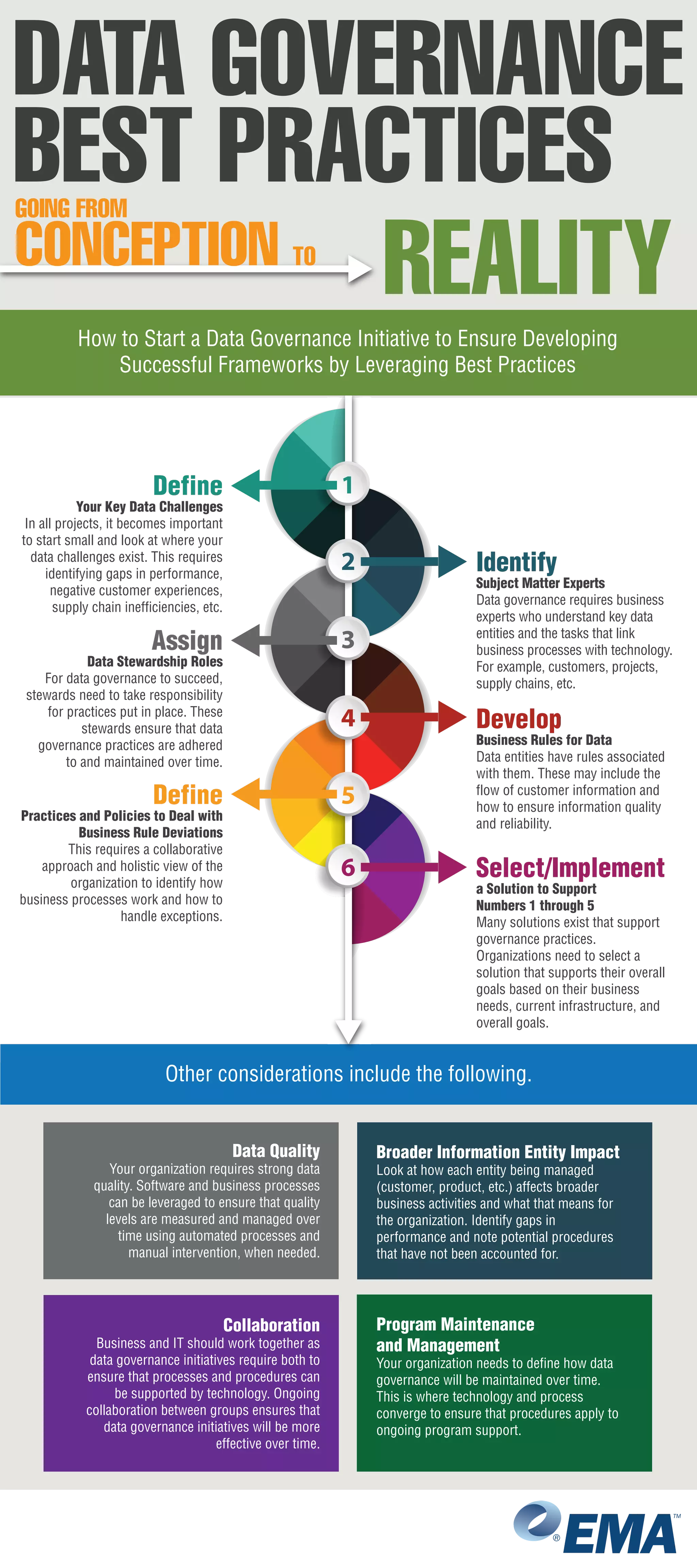
Infographic: Data Governance Best Practices

  • 1.
    Collaboration Business and ITshould work together as data governance initiatives require both to ensure that processes and procedures can be supported by technology. Ongoing collaboration between groups ensures that data governance initiatives will be more effective over time. Broader Information Entity Impact Look at how each entity being managed (customer, product, etc.) affects broader business activities and what that means for the organization. Identify gaps in performance and note potential procedures that have not been accounted for. Other considerations include the following. Data Quality Your organization requires strong data quality. Software and business processes can be leveraged to ensure that quality levels are measured and managed over time using automated processes and manual intervention, when needed. Program Maintenance and Management Your organization needs to define how data governance will be maintained over time. This is where technology and process converge to ensure that procedures apply to ongoing program support. Define Your Key Data Challenges In all projects, it becomes important to start small and look at where your data challenges exist. This requires identifying gaps in performance, negative customer experiences, supply chain inefficiencies, etc. Identify Subject Matter Experts Data governance requires business experts who understand key data entities and the tasks that link business processes with technology. For example, customers, projects, supply chains, etc. Develop Business Rules for Data Data entities have rules associated with them. These may include the flow of customer information and how to ensure information quality and reliability. Select/Implement a Solution to Support Numbers 1 through 5 Many solutions exist that support governance practices. Organizations need to select a solution that supports their overall goals based on their business needs, current infrastructure, and overall goals. Assign Data Stewardship Roles For data governance to succeed, stewards need to take responsibility for practices put in place. These stewards ensure that data governance practices are adhered to and maintained over time. Define Practices and Policies to Deal with Business Rule Deviations This requires a collaborative approach and holistic view of the organization to identify how business processes work and how to handle exceptions. 1 2 3 4 5 6 DATA GOVERNANCE BEST PRACTICESGOING FROM CONCEPTION TO REALITYHow to Start a Data Governance Initiative to Ensure Developing Successful Frameworks by Leveraging Best Practices