VET First Grade College
JP Nagar Bangalore-78
Indian Ethos & Culture : A tool for Global India 2025
By
Amar D.N
Chetan Babu P.V
Ranjith Kumar T R
“LOOK AT THE PROBLEM FROM THE POSITION
OF ANOTHER PERSON AFFECTED BY THE
DECISION AND TRY TO DETERMINE WHAT
RESPONSE THE OTHER PERSON WOULD
EXPECT AS THE MOST VIRTUOS”
- THE GOLDEN RULES
OBJECTIVE
• To highlight the various Indian ethos and
culture
• To extract the values of different religious
culture of India
• To raise the various issues of the present India
• To give necessary suggestions to build global
India 2025
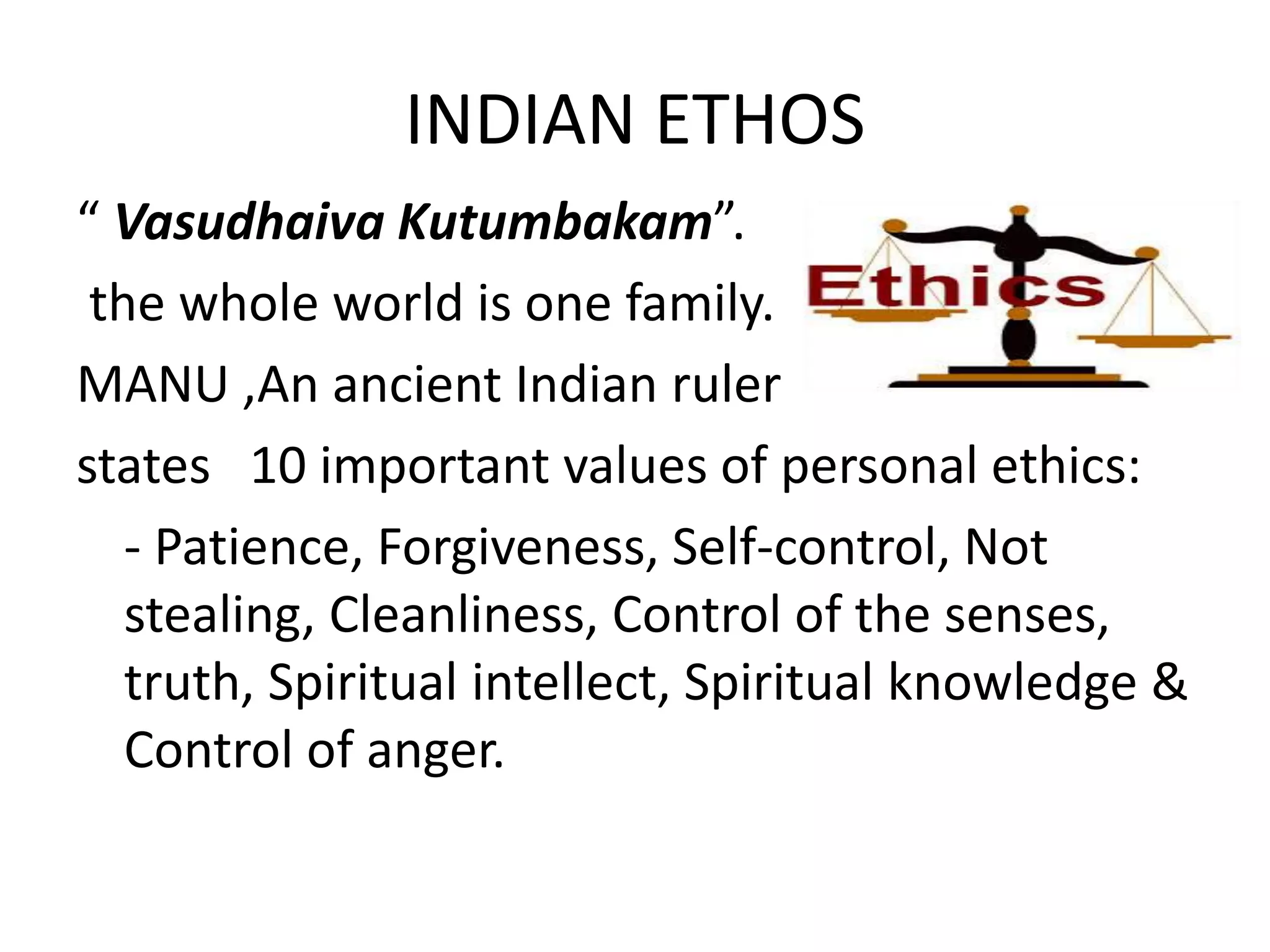
INDIAN ETHOS
“ Vasudhaiva Kutumbakam”.
the whole world is one family.
MANU ,An ancient Indian ruler
states 10 important values of personal ethics:
- Patience, Forgiveness, Self-control, Not
stealing, Cleanliness, Control of the senses,
truth, Spiritual intellect, Spiritual knowledge &
Control of anger.
• To builds India 2025 we need to incorporate
various components of Indian ethos.
- Value based education.
- Healthy society
- Right habits
- Refreshing Indian minds consisting of various
dharmas.
Culture
• Every thing is our surrounding
made by people,
both tangible and intangible.
• Language, religion, laws, policies, Technology,
education, social, Organization, general values
& ethical standards.
• Difference in speech and body language.
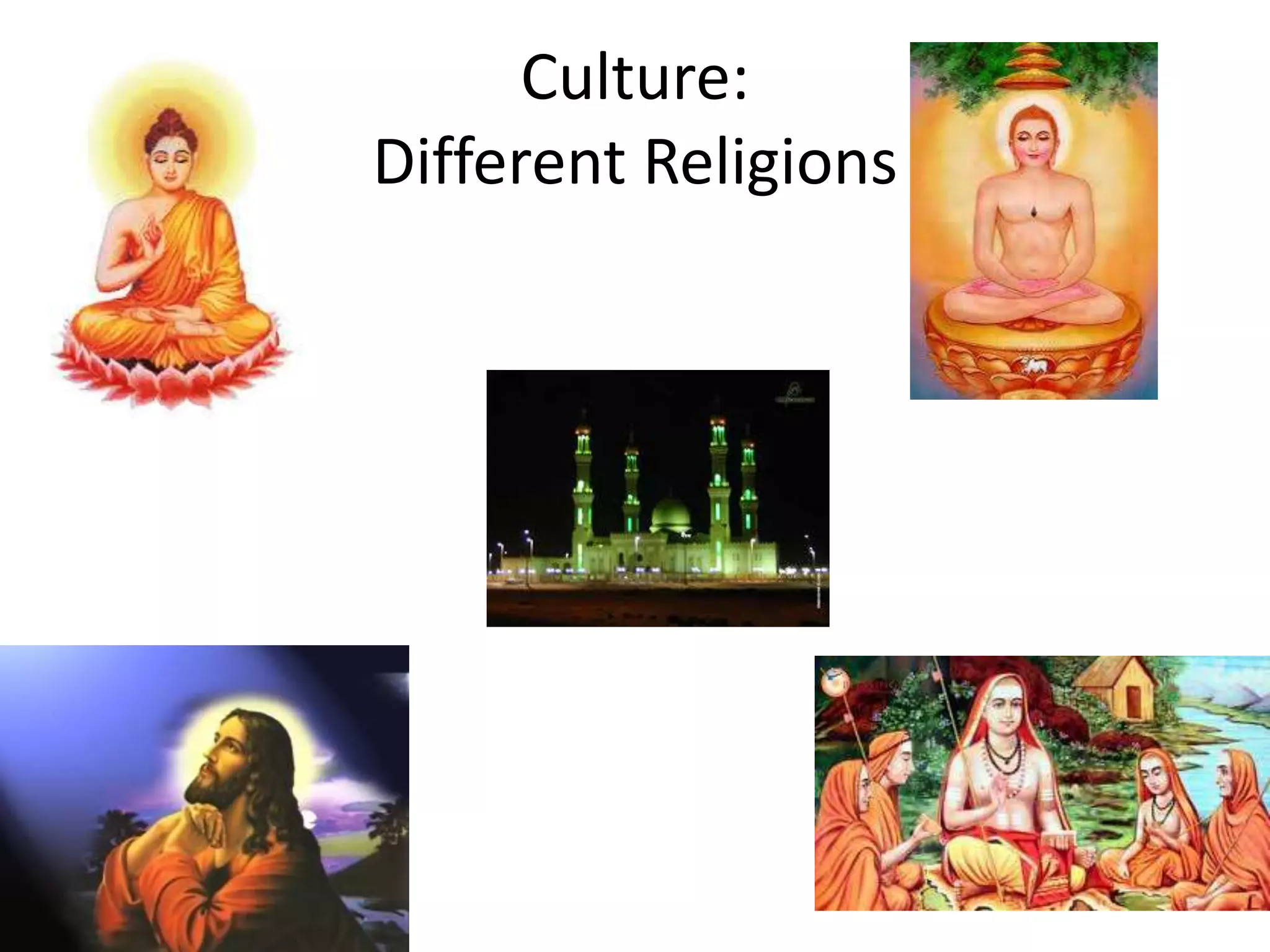
Culture:
Different Religions
COLLECTIVE CULTURE
Indian Ethos based on collective culture
a. Group activity.
b. Independent.
c. Value relationship.
d. Meeting the need of the group.
e. Support transformational leader efforts.
f. Community living
g. Emotional dependence and family values
Present issues faced by India
• Western culture
• Corruption
• Poverty & population
• Male domination
• Quality in education
• Ignorance
• Groupism
• Speed growth of urbanization
• Fading away the patriotism
SUGGESTIONS
• Inculcating values and culture
• Corruption free society
• Control on population
• Women empowerment
• Standard of living
• Skill based employable education
• Increase of R and D
• Continues improvement in all fields
• Sustainability growth
• Value based leadership
New Mantra- Humanity Religion.
“Reflecting on it fully, act as you will”
Bhagavad Gita, Chapter XVIII, shloka63
ACKNOWLEDGEMENT
• Sincere Thanks to our beloved Prof. Dr.
P.kamatchi Who has created and supported
for this Paper presentation.

Indian Ethos & Culture

  • 1.
    VET First GradeCollege JP Nagar Bangalore-78 Indian Ethos & Culture : A tool for Global India 2025 By Amar D.N Chetan Babu P.V Ranjith Kumar T R
  • 2.
    “LOOK AT THEPROBLEM FROM THE POSITION OF ANOTHER PERSON AFFECTED BY THE DECISION AND TRY TO DETERMINE WHAT RESPONSE THE OTHER PERSON WOULD EXPECT AS THE MOST VIRTUOS” - THE GOLDEN RULES
  • 3.
    OBJECTIVE • To highlightthe various Indian ethos and culture • To extract the values of different religious culture of India • To raise the various issues of the present India • To give necessary suggestions to build global India 2025
  • 4.
    INDIAN ETHOS “ VasudhaivaKutumbakam”. the whole world is one family. MANU ,An ancient Indian ruler states 10 important values of personal ethics: - Patience, Forgiveness, Self-control, Not stealing, Cleanliness, Control of the senses, truth, Spiritual intellect, Spiritual knowledge & Control of anger.
  • 5.
    • To buildsIndia 2025 we need to incorporate various components of Indian ethos. - Value based education. - Healthy society - Right habits - Refreshing Indian minds consisting of various dharmas.
  • 6.
    Culture • Every thingis our surrounding made by people, both tangible and intangible. • Language, religion, laws, policies, Technology, education, social, Organization, general values & ethical standards. • Difference in speech and body language.
  • 7.
  • 8.
    COLLECTIVE CULTURE Indian Ethosbased on collective culture a. Group activity. b. Independent. c. Value relationship. d. Meeting the need of the group. e. Support transformational leader efforts. f. Community living g. Emotional dependence and family values
  • 9.
    Present issues facedby India • Western culture • Corruption • Poverty & population • Male domination • Quality in education • Ignorance • Groupism • Speed growth of urbanization • Fading away the patriotism
  • 10.
    SUGGESTIONS • Inculcating valuesand culture • Corruption free society • Control on population • Women empowerment • Standard of living • Skill based employable education • Increase of R and D • Continues improvement in all fields • Sustainability growth • Value based leadership
  • 11.
  • 12.
    “Reflecting on itfully, act as you will” Bhagavad Gita, Chapter XVIII, shloka63
  • 13.
    ACKNOWLEDGEMENT • Sincere Thanksto our beloved Prof. Dr. P.kamatchi Who has created and supported for this Paper presentation.