Definition – No consensus
• Persistent cry, excessive cry and problem crying
• Excessive Crying – “Rule of 3”
>3 hours/day
>3 days/week
>3 week
• Paroxysmal, qualitatively different from normal cry,
associated with hypertonia and inconsolability
• Incidence - 1.5% to 11.9%
Wessel MA, et al Paroxysmal fussing in infancy, sometimes called colic. Pediatrics. 1954;14(5):421-435
Etiology
10
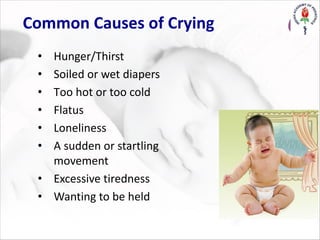
Common Causes of Crying
• Hunger/Thirst
• Soiled or wet diapers
• Too hot or too cold
• Flatus
• Loneliness
• A sudden or startling
movement
• Excessive tiredness
• Wanting to be held
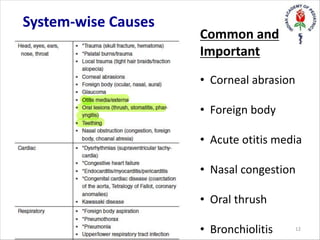
System-wise Causes
Common and
Important
• Corneal abrasion
• Foreign body
• Acute otitis media
• Nasal congestion
• Oral thrush
• Bronchiolitis 12
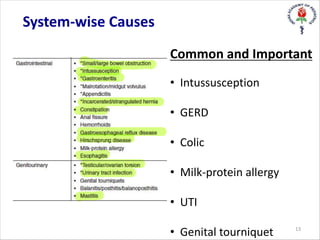
System-wise Causes
Common and Important
• Intussusception
• GERD
• Colic
• Milk-protein allergy
• UTI
• Genital tourniquet 13
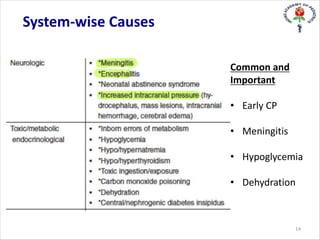
Common and
Important
• Early CP
• Meningitis
• Hypoglycemia
• Dehydration
System-wise Causes
14
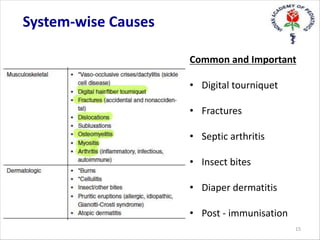
Common and Important
• Digital tourniquet
• Fractures
• Septic arthritis
• Insect bites
• Diaper dermatitis
• Post - immunisation
System-wise Causes
15
Approach to Diagnosis
and Management
16
Key aspects of Management
• Careful assessment to identify infants with a
serious illness
• Treatment of benign causes
• Parental guidance and counseling
Diagnosis
• History
• Physical examination
• Lab investigations
Key to
diagnosis
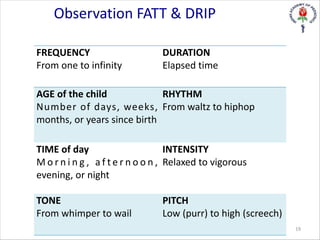
Observation FATT & DRIP
FREQUENCY
From one to infinity
DURATION
Elapsed time
AGE of the child
Number of days, weeks,
months, or years since birth
RHYTHM
From waltz to hiphop
TIME of day
M o r n i n g , a f t e r n o o n ,
evening, or night
INTENSITY
Relaxed to vigorous
TONE
From whimper to wail
PITCH
Low (purr) to high (screech)
19
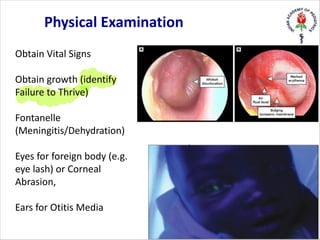
Obtain Vital Signs
Obtain growth (identify
Failure to Thrive)
Fontanelle
(Meningitis/Dehydration)
Eyes for foreign body (e.g.
eye lash) or Corneal
Abrasion,
Ears for Otitis Media
Physical Examination
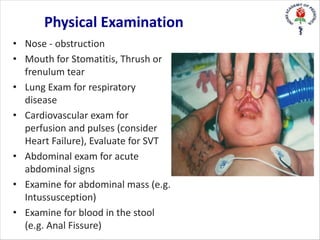
• Nose - obstruction
• Mouth for Stomatitis, Thrush or
frenulum tear
• Lung Exam for respiratory
disease
• Cardiovascular exam for
perfusion and pulses (consider
Heart Failure), Evaluate for SVT
• Abdominal exam for acute
abdominal signs
• Examine for abdominal mass (e.g.
Intussusception)
• Examine for blood in the stool
(e.g. Anal Fissure)
Physical Examination
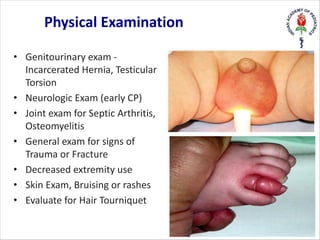
• Genitourinary exam -
Incarcerated Hernia, Testicular
Torsion
• Neurologic Exam (early CP)
• Joint exam for Septic Arthritis,
Osteomyelitis
• General exam for signs of
Trauma or Fracture
• Decreased extremity use
• Skin Exam, Bruising or rashes
• Evaluate for Hair Tourniquet
Physical Examination
Lab investigations
• Limited value
• X-ray chest – Pneumonia / Bronchiolitis/fractures
• US Abdomen – Intussusception
• Urine analysis – UTI
• Rest – according to clinical findings
Symptoms suggestive of
organic causes
• Extreme, prolonged and high-pitched cry
• Lack of a diurnal rhythm in crying
• Presence of abnormal symptoms
• Positive physical examination
• Persistence of crying past 4 months of age
Painful Surgical
conditions
• Strangulated Hernia
• Torsion testes
• Intussusception
• Malrotation
• Mid-gut Volvulus
Painful medical
conditions
• Insect bite
• Hair tourniquet
• Corneal abrasion
• Otitis media
• Diaper dermatitis
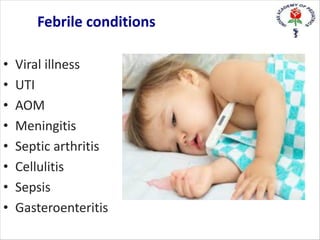
• Viral illness
• UTI
• AOM
• Meningitis
• Septic arthritis
• Cellulitis
• Sepsis
• Gasteroenteritis
Febrile conditions
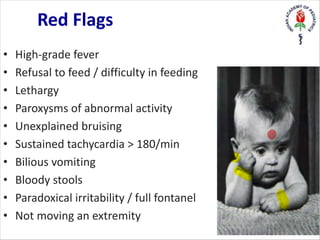
• High-grade fever
• Refusal to feed / difficulty in feeding
• Lethargy
• Paroxysms of abnormal activity
• Unexplained bruising
• Sustained tachycardia > 180/min
• Bilious vomiting
• Bloody stools
• Paradoxical irritability / full fontanel
• Not moving an extremity
Red Flags
Treatment
31
Medications – Commonly prescribed
Little role
• Pain relief – Paracetamol, ibuprofen
• Antipyretics – Paracetamol
• Saline nasal drops
• Antibiotics – according to the infection
• Anti-reflux medications
Medications – No strong evidence
• Dicyclomine – contraindicated (<6months) -
risk of serious adverse events
• Simethicone (Infacol Drops / Colic aid Drops)
has no beneficial effect over placebo
• Fennel oil/Dill oil – no proven benefit
• Enzymes (neopeptine drops ) – no evidence
• Hypoallergenic formula – some benefit (2 SRs)
– only after evidence
• Lactobacillus reuteri
• Meta-analysis of 6 RCTs
–Significant reduction in crying duration in
BF infants in 3 week treatment
• Not available in India
Probiotics
Parental Counseling
36
Explain Normal Patterns
• Explain the infant's cry / sleep / feeding patterns
• Encourage parents to recognize signs of tiredness
• Avoid excessive stimulation - noise, light, handling
• Aim to settle the baby for all sleep in a predictable way
• Darken the bedroom for daytime sleeps
• Respond before baby is too worked up
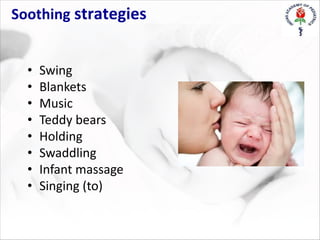
Soothing strategies
• Swing
• Blankets
• Music
• Teddy bears
• Holding
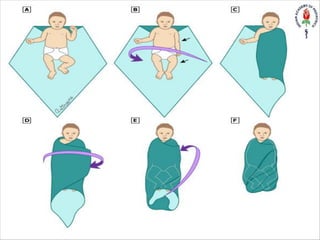
• Swaddling
• Infant massage
• Singing (to)
Coping strategies
• Identify the cry
• Try the obvious
• Speak softly, bring the pitch and volume down
• Hold his arms and body to avoid startles
• Swaddle him
• Pick him up to cuddle
• Try massaging his back and limbs gently
• Sing to him and Walk with him
• Use white noise or motion
Conclusion
• Commonly benign
• Can be the only presentation of a serious illness
• Key - detailed history and physical exam (head to toe)
• Identify ‘Red flags’
• Parental reassurance
• Avoid unnecessary investigations and medications
THANK YOU
43

Incessant-cry-in-neonates-infants presentation

  • 1.
    Definition – Noconsensus • Persistent cry, excessive cry and problem crying • Excessive Crying – “Rule of 3” >3 hours/day >3 days/week >3 week • Paroxysmal, qualitatively different from normal cry, associated with hypertonia and inconsolability • Incidence - 1.5% to 11.9% Wessel MA, et al Paroxysmal fussing in infancy, sometimes called colic. Pediatrics. 1954;14(5):421-435
  • 2.
  • 3.
    Common Causes ofCrying • Hunger/Thirst • Soiled or wet diapers • Too hot or too cold • Flatus • Loneliness • A sudden or startling movement • Excessive tiredness • Wanting to be held
  • 4.
    System-wise Causes Common and Important •Corneal abrasion • Foreign body • Acute otitis media • Nasal congestion • Oral thrush • Bronchiolitis 12
  • 5.
    System-wise Causes Common andImportant • Intussusception • GERD • Colic • Milk-protein allergy • UTI • Genital tourniquet 13
  • 6.
    Common and Important • EarlyCP • Meningitis • Hypoglycemia • Dehydration System-wise Causes 14
  • 7.
    Common and Important •Digital tourniquet • Fractures • Septic arthritis • Insect bites • Diaper dermatitis • Post - immunisation System-wise Causes 15
  • 8.
  • 9.
    Key aspects ofManagement • Careful assessment to identify infants with a serious illness • Treatment of benign causes • Parental guidance and counseling
  • 10.
    Diagnosis • History • Physicalexamination • Lab investigations Key to diagnosis
  • 11.
    Observation FATT &DRIP FREQUENCY From one to infinity DURATION Elapsed time AGE of the child Number of days, weeks, months, or years since birth RHYTHM From waltz to hiphop TIME of day M o r n i n g , a f t e r n o o n , evening, or night INTENSITY Relaxed to vigorous TONE From whimper to wail PITCH Low (purr) to high (screech) 19
  • 12.
    Obtain Vital Signs Obtaingrowth (identify Failure to Thrive) Fontanelle (Meningitis/Dehydration) Eyes for foreign body (e.g. eye lash) or Corneal Abrasion, Ears for Otitis Media Physical Examination
  • 13.
    • Nose -obstruction • Mouth for Stomatitis, Thrush or frenulum tear • Lung Exam for respiratory disease • Cardiovascular exam for perfusion and pulses (consider Heart Failure), Evaluate for SVT • Abdominal exam for acute abdominal signs • Examine for abdominal mass (e.g. Intussusception) • Examine for blood in the stool (e.g. Anal Fissure) Physical Examination
  • 14.
    • Genitourinary exam- Incarcerated Hernia, Testicular Torsion • Neurologic Exam (early CP) • Joint exam for Septic Arthritis, Osteomyelitis • General exam for signs of Trauma or Fracture • Decreased extremity use • Skin Exam, Bruising or rashes • Evaluate for Hair Tourniquet Physical Examination
  • 15.
    Lab investigations • Limitedvalue • X-ray chest – Pneumonia / Bronchiolitis/fractures • US Abdomen – Intussusception • Urine analysis – UTI • Rest – according to clinical findings
  • 16.
    Symptoms suggestive of organiccauses • Extreme, prolonged and high-pitched cry • Lack of a diurnal rhythm in crying • Presence of abnormal symptoms • Positive physical examination • Persistence of crying past 4 months of age
  • 17.
    Painful Surgical conditions • StrangulatedHernia • Torsion testes • Intussusception • Malrotation • Mid-gut Volvulus Painful medical conditions • Insect bite • Hair tourniquet • Corneal abrasion • Otitis media • Diaper dermatitis
  • 18.
    • Viral illness •UTI • AOM • Meningitis • Septic arthritis • Cellulitis • Sepsis • Gasteroenteritis Febrile conditions
  • 19.
    • High-grade fever •Refusal to feed / difficulty in feeding • Lethargy • Paroxysms of abnormal activity • Unexplained bruising • Sustained tachycardia > 180/min • Bilious vomiting • Bloody stools • Paradoxical irritability / full fontanel • Not moving an extremity Red Flags
  • 20.
  • 21.
    Medications – Commonlyprescribed Little role • Pain relief – Paracetamol, ibuprofen • Antipyretics – Paracetamol • Saline nasal drops • Antibiotics – according to the infection • Anti-reflux medications
  • 22.
    Medications – Nostrong evidence • Dicyclomine – contraindicated (<6months) - risk of serious adverse events • Simethicone (Infacol Drops / Colic aid Drops) has no beneficial effect over placebo • Fennel oil/Dill oil – no proven benefit • Enzymes (neopeptine drops ) – no evidence • Hypoallergenic formula – some benefit (2 SRs) – only after evidence
  • 23.
    • Lactobacillus reuteri •Meta-analysis of 6 RCTs –Significant reduction in crying duration in BF infants in 3 week treatment • Not available in India Probiotics
  • 24.
  • 25.
    Explain Normal Patterns •Explain the infant's cry / sleep / feeding patterns • Encourage parents to recognize signs of tiredness • Avoid excessive stimulation - noise, light, handling • Aim to settle the baby for all sleep in a predictable way • Darken the bedroom for daytime sleeps • Respond before baby is too worked up
  • 26.
    Soothing strategies • Swing •Blankets • Music • Teddy bears • Holding • Swaddling • Infant massage • Singing (to)
  • 28.
    Coping strategies • Identifythe cry • Try the obvious • Speak softly, bring the pitch and volume down • Hold his arms and body to avoid startles • Swaddle him • Pick him up to cuddle • Try massaging his back and limbs gently • Sing to him and Walk with him • Use white noise or motion
  • 29.
    Conclusion • Commonly benign •Can be the only presentation of a serious illness • Key - detailed history and physical exam (head to toe) • Identify ‘Red flags’ • Parental reassurance • Avoid unnecessary investigations and medications
  • 30.