The Future of the City
Improving city center experience
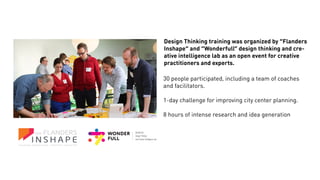
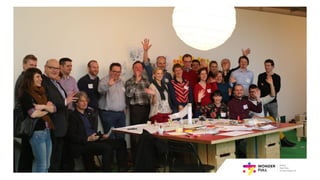
Design Thinking training was organized by “Flanders
Inshape” and “Wonderfull” design thinking and cre-
ative intelligence lab as an open event for creative
practitioners and experts.
30 people participated, including a team of coaches
and facilitators.
1-day challenge for improving city center planning.
8 hours of intense research and idea generation
The Challenge
“How might we improve people
experience at the Kortrijk city
center pedestrian zone?”
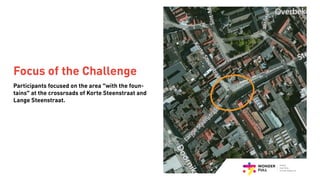
Participants focused on the area “with the foun-
tains” at the crossroads of Korte Steenstraat and
Lange Steenstraat.
Focus of the Challenge
Observation
During the workshop participants undertook several
research activities:
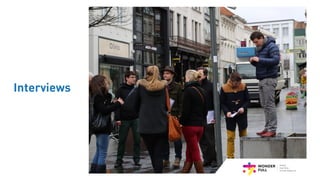
Interviews with Shop Owners, Citizens, Tourists and
City Administration representatives
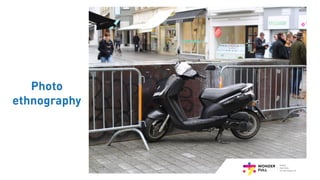
Photo-ethnography at the city center
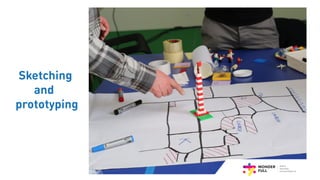
Sketching and prototyping of the final decisions
Interviews
Photo
ethnography
Sketching
and
prototyping
Key Findings
The “K” shopping center is the main point for attract-
ing city visitors for shopping (at the city center).
Satellite street shop owners are interested in a higher
number of potential clients visiting the shops.
Kortrijk tourists and visitors from other towns know
little about the Kortrijk city center, history and archi-
tecture.
The focus crossroads at Korte Steenstraat and Lange
Steenstraat is used as a place to meet up, leave a bike
or just to sit.
Problem formulation
Through the observation participants found several
problems in the area:
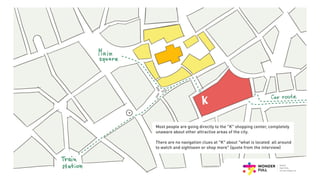
Most people are going directly to the “K” shopping center, completely
unaware about other attractive areas of the city.
There are no navigation clues at “K” about “what is located all around
to watch and sightseen or shop more” (quote from the interview)
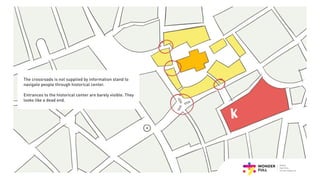
The crossroads is not supplied by information stand to
navigate people through historical center.
Entrances to the historical center are barely visible. They
looks like a dead end.
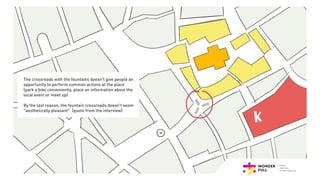
The crossroads with the fountains doesn’t give people an
opportunity to perform common actions at the place
(park a bike conveniently, place an information about the
local event or meet up)
By the last reason, the fountain crossroads doesn’t seem
“aesthetically pleasant” (quote from the interview)
Concept Development
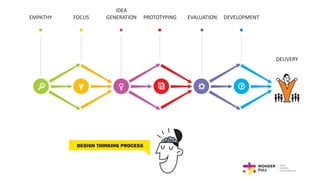
Through research and team working, using Design
Thinking approach, participants came to three deci-
sions:
Fortrijk concept
Pop-up to meet-up concept
Color navigation concept
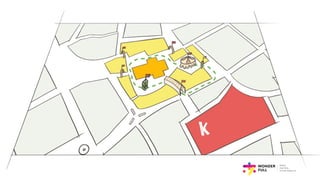
Fortrijk The Fortrijk concept was based on interviews with Kortrijk citizens. One of the
findings was, that they miss their “original” city and its typical small-town atmo-
sphere. We combined this with the effect of the K Mall, minimizing the city centre
into a flow of visitors hiking between the parking zone and the mall.
What we did was give the city back to its pedestrians, sending cars to an external
parking zone, create a small-town atmosphere by setting up city walls and medie-
val architectural elements. And most of all, create a Green Corridor that runs
through the city centre, spontaneously guiding visitors through the city and reveal
its hidden gems. By defining a specific start/end with an tourist information
counter located near the K Mall, the chance of catching the attention of all visitors
(shopping/cultural/Belgian/French/Dutch etc.) is high.
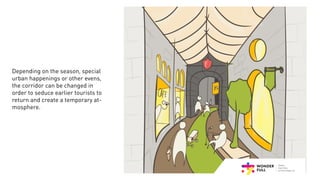
Depending on the season, special
urban happenings or other evens,
the corridor can be changed in
order to seduce earlier tourists to
return and create a temporary at-
mosphere.
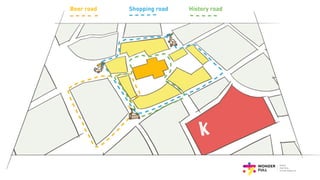
Kortrijk has a lot of attractive places, both modern and historical. But few visitors
are aware of it. Main goal of this concept is to help tourists and visitors to be
aware of what is going on in the city of Kortrijk.
There are several routes in Kortrijk visitors could take if they knew about it. It
could be history road, shopping road or, may be, restaurant or pub road. They all
worth spending a weekend there. And to help people find this routes we could take
several steps.
First, routes should be clearly marked in the city space. Second, visitors could use
app that lists those routes. And third, most important, mobile visitors information
points should be placed at the key points.
Pop-up to
meet-up
Beer road History roadShopping road
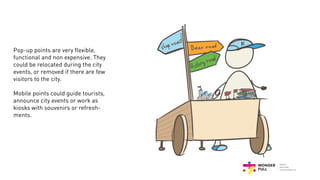
Pop-up points are very flexible,
functional and non expensive. They
could be relocated during the city
events, or removed if there are few
visitors to the city.
Mobile points could guide tourists,
announce city events or work as
kiosks with souvenirs or refresh-
ments.
Visible
points
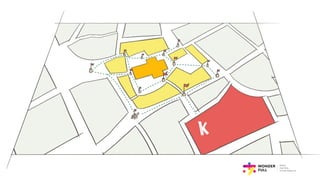
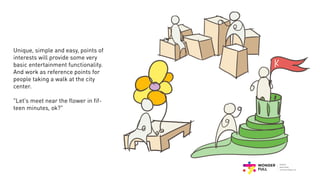
Main point of this concept is to create grid of simple attractive places an the city
center. Placed in direct visibility from one to another, those places will invite tour-
ist and citizens to explore. New visitors will never get lost as they will always be
able to navigate back to the visible points they passed. And using those points to
making appointments will be handy for citizens.
Unique, simple and easy, points of
interests will provide some very
basic entertainment functionality.
And work as reference points for
people taking a walk at the city
center.
"Let's meet near the flower in fif-
teen minutes, ok?"
And some ideas
from wonder-full team:
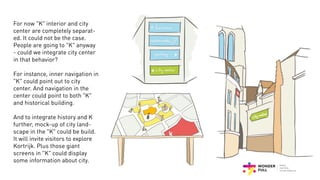
For now "K" interior and city
center are completely separat-
ed. It could not be the case.
People are going to "K" anyway
- could we integrate city center
in that behavior?
For instance, inner navigation in
"K" could point out to city
center. And navigation in the
center could point to both "K"
and historical building.
And to integrate history and K
further, mock-up of city land-
scape in the "K" could be build.
It will invite visitors to explore
Kortrijk. Plus those giant
screens in "K" could display
some information about city.
Thank you for your time!
Improving city centre experience. Kortrijk, Belgium.

Improving city centre experience. Kortrijk, Belgium.

  • 1.
    The Future ofthe City Improving city center experience
  • 2.
    Design Thinking trainingwas organized by “Flanders Inshape” and “Wonderfull” design thinking and cre- ative intelligence lab as an open event for creative practitioners and experts. 30 people participated, including a team of coaches and facilitators. 1-day challenge for improving city center planning. 8 hours of intense research and idea generation
  • 4.
    The Challenge “How mightwe improve people experience at the Kortrijk city center pedestrian zone?”
  • 5.
    Participants focused onthe area “with the foun- tains” at the crossroads of Korte Steenstraat and Lange Steenstraat. Focus of the Challenge
  • 6.
    Observation During the workshopparticipants undertook several research activities: Interviews with Shop Owners, Citizens, Tourists and City Administration representatives Photo-ethnography at the city center Sketching and prototyping of the final decisions
  • 7.
  • 8.
  • 9.
  • 10.
    Key Findings The “K”shopping center is the main point for attract- ing city visitors for shopping (at the city center). Satellite street shop owners are interested in a higher number of potential clients visiting the shops. Kortrijk tourists and visitors from other towns know little about the Kortrijk city center, history and archi- tecture. The focus crossroads at Korte Steenstraat and Lange Steenstraat is used as a place to meet up, leave a bike or just to sit.
  • 11.
    Problem formulation Through theobservation participants found several problems in the area:
  • 12.
    Most people aregoing directly to the “K” shopping center, completely unaware about other attractive areas of the city. There are no navigation clues at “K” about “what is located all around to watch and sightseen or shop more” (quote from the interview)
  • 13.
    The crossroads isnot supplied by information stand to navigate people through historical center. Entrances to the historical center are barely visible. They looks like a dead end.
  • 14.
    The crossroads withthe fountains doesn’t give people an opportunity to perform common actions at the place (park a bike conveniently, place an information about the local event or meet up) By the last reason, the fountain crossroads doesn’t seem “aesthetically pleasant” (quote from the interview)
  • 15.
    Concept Development Through researchand team working, using Design Thinking approach, participants came to three deci- sions: Fortrijk concept Pop-up to meet-up concept Color navigation concept
  • 16.
    Fortrijk The Fortrijkconcept was based on interviews with Kortrijk citizens. One of the findings was, that they miss their “original” city and its typical small-town atmo- sphere. We combined this with the effect of the K Mall, minimizing the city centre into a flow of visitors hiking between the parking zone and the mall. What we did was give the city back to its pedestrians, sending cars to an external parking zone, create a small-town atmosphere by setting up city walls and medie- val architectural elements. And most of all, create a Green Corridor that runs through the city centre, spontaneously guiding visitors through the city and reveal its hidden gems. By defining a specific start/end with an tourist information counter located near the K Mall, the chance of catching the attention of all visitors (shopping/cultural/Belgian/French/Dutch etc.) is high.
  • 18.
    Depending on theseason, special urban happenings or other evens, the corridor can be changed in order to seduce earlier tourists to return and create a temporary at- mosphere.
  • 19.
    Kortrijk has alot of attractive places, both modern and historical. But few visitors are aware of it. Main goal of this concept is to help tourists and visitors to be aware of what is going on in the city of Kortrijk. There are several routes in Kortrijk visitors could take if they knew about it. It could be history road, shopping road or, may be, restaurant or pub road. They all worth spending a weekend there. And to help people find this routes we could take several steps. First, routes should be clearly marked in the city space. Second, visitors could use app that lists those routes. And third, most important, mobile visitors information points should be placed at the key points. Pop-up to meet-up
  • 20.
    Beer road HistoryroadShopping road
  • 21.
    Pop-up points arevery flexible, functional and non expensive. They could be relocated during the city events, or removed if there are few visitors to the city. Mobile points could guide tourists, announce city events or work as kiosks with souvenirs or refresh- ments.
  • 22.
    Visible points Main point ofthis concept is to create grid of simple attractive places an the city center. Placed in direct visibility from one to another, those places will invite tour- ist and citizens to explore. New visitors will never get lost as they will always be able to navigate back to the visible points they passed. And using those points to making appointments will be handy for citizens.
  • 24.
    Unique, simple andeasy, points of interests will provide some very basic entertainment functionality. And work as reference points for people taking a walk at the city center. "Let's meet near the flower in fif- teen minutes, ok?"
  • 25.
    And some ideas fromwonder-full team:
  • 26.
    For now "K"interior and city center are completely separat- ed. It could not be the case. People are going to "K" anyway - could we integrate city center in that behavior? For instance, inner navigation in "K" could point out to city center. And navigation in the center could point to both "K" and historical building. And to integrate history and K further, mock-up of city land- scape in the "K" could be build. It will invite visitors to explore Kortrijk. Plus those giant screens in "K" could display some information about city.
  • 27.
    Thank you foryour time!