

Content
(10-5 points)
Appropriacy
(6- 5points)
Structure
(5- 5points)
Puzzled
Well/OK Satisfied
Shocked
Accuracy
(NO-5points)
Spelling
(No -4 points)
Angry
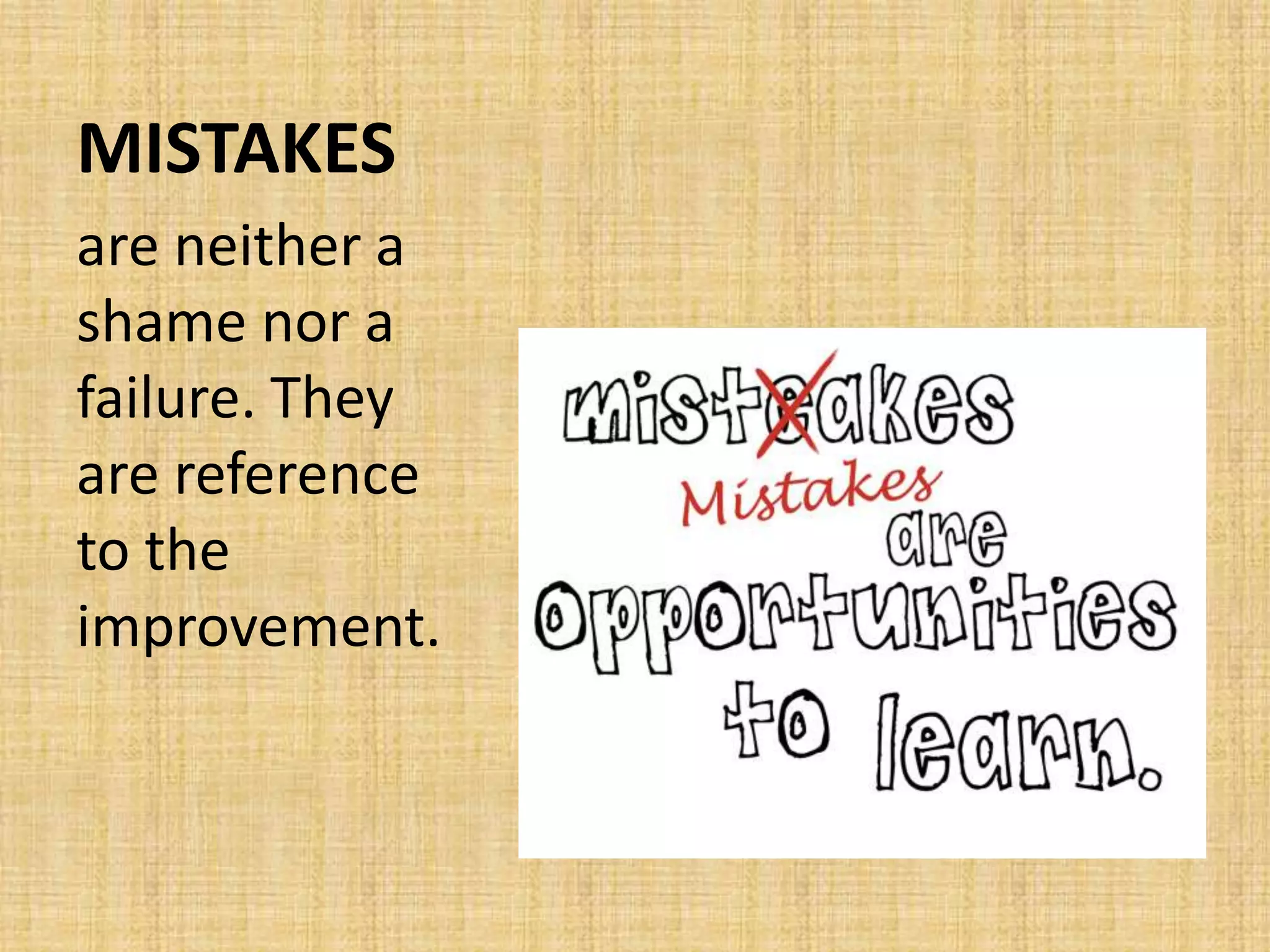
MISTAKES
are neither a
shame nor a
failure. They
are reference
to the
improvement.
Let’s see the best ways to
achieve and enjoy your
success.
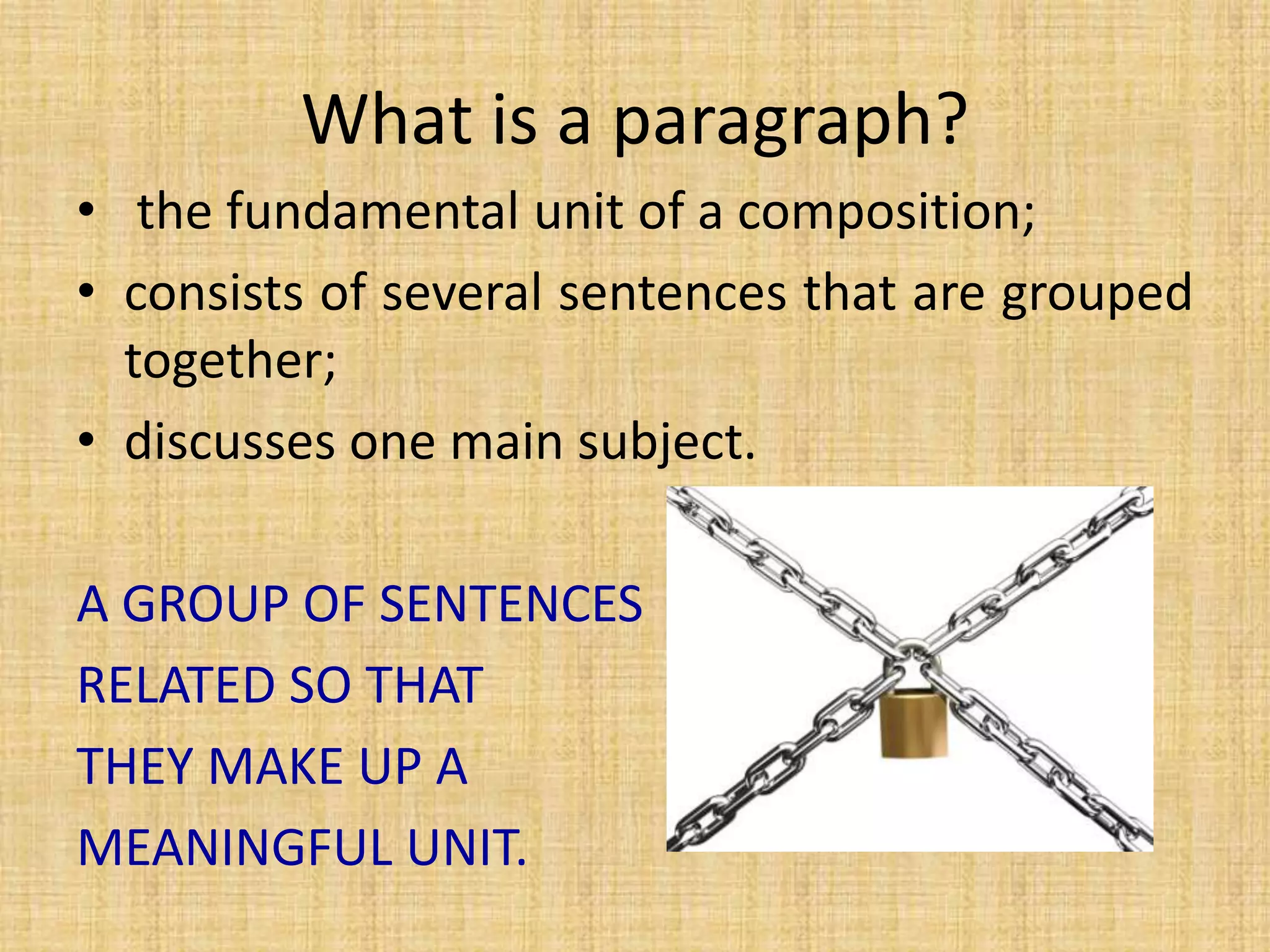
What is a paragraph?
• the fundamental unit of a composition;
• consists of several sentences that are grouped
together;
• discusses one main subject.
A GROUP OF SENTENCES
RELATED SO THAT
THEY MAKE UP A
MEANINGFUL UNIT.
What must a paragraph have?
• A TOPIC SENTENCE
introduces the topic of the paragraph
and the controlling idea
e.g.On the one hand,
there are some good
things about studies
abroad. (...)
On the other hand ,
Introductory & concluding paragraphs
…at least three arguments to support your
opinion
1. To state the topic and express your opinion.
2. To express your opinion and give (1) a
balanced consideration/to say (2) ‘what’s of
that?’
In conclusion, I would like
to say that studying
abroad has pluses and
minuses. When students
choose to study abroad
they have to think about
everything.
In the end, I believe that sometimes
studying abroad is good but also it is
dangerous. Nevertheless, studying abroad
You must not
mix the person.
Every year more and more
students go studying
abroad…Firstly, abroad you
can find a cheaper and a
better place to live…
It is not recommended to
use the second person (you).
The safest usage - the third
person plural.
Many
• In questions & negative sentences, and after
too/so/as (informal/formal)
e.g. Were there many people at the party?
He didn’t score many goals last season.
I have too/so many commitments already.
• In sentences that are not questions or
negative (in writing/formal speech)
e.g. Many politicians expressed concern about
the high level of defence spending.
A lot of/plenty of
They had a lot of good ideas.
There are plenty of reasons to change his
lifestyle.
Julie seems to have a lot of patience.
You don’t have to rush! We’ve got plenty
of time!
When do you use a lot of/plenty of?
In conversation* before plural nouns and
uncountable nouns mainly in affirmative
sentences
*Longman Exam Coach Dictionary
Much
• In informal English – in questions and
negatives
e.g. I don’t have much money with me.
Do you have much chance to travel in your
job?
• After too/so/as
e.g. We’ve wasted too much time.
She cried so much her head ached.
Schools should be given as much freedom as
possible.
A lot of/a great/good deal of
• In sentences that are not questions or
negatives
e.g. Kurama has a lot of/a great deal of snow.
He got into a great/good deal of trouble.
When do you use a lot of/a great/good deal of?
With uncountable nouns
Practice
1. ___ people have to use a car to travel to
work.
2. After ___ consideration we have finally
arrived at a decision.
3. She’s lived in Spain for ___ years.
4. Some of the houses have bathrooms but ___
do not.
5. ___ of our staff work part-time.
6. ___ of the city was destroyed.
7. There was too ___ work for one person.
8. She cried so ___ her head ached.
9. ___ people hate some aspects of their work.
10. I didn’t realise that I had so ___ friends.
Correct the sentences
1. There are more new technology and can go
deep into their specific subject areas.
There are more new technologies and students
can go deeper into the areas of their specific
subject.
2. In conclusion, studying abroad is greath
oportunnity for better future.
In conclusion, studying abroad is a great
opportunity for the better future.
3. First good thing about studies abroad is that
you meet other culture people and gain
cultural experience, next that at abroad
universities more chanses to get better
aducation, what helps you later to find the
best job.
The first good thing about studies abroad is that
you meet people of the other culture and gain
cultural experience. Second, foreign
universities provide more chances to get a
better education, that helps you to find the
best job later.
4. I think that worth to risk and go to the
abroad.
I think that it is worth risking and going abroad.
5. They can compare Lithuania people food,
hobbies, character with another country
people.
They can compare Lithuanian food, hobbies,
character with the same things of another
country.
6. Also students can lear a new languages. Every
student can a aquinted whit his lovely culture.
Also, students can learn new languages. Every
student can get acquainted with a lovely
culture.
7. However if you get free place in university you
will have a lot of another problems.
However, if you a get free place at university you
will have a lot of other problems.
8. Young people themselves deside where to
study better …
Young people decide themselves where it is
better to study…
9. The other possitive thing is that students can
earn money during their studies.
The other positive thing is that students can
earn money while studying.
10. Firstly, studies abroad can give you more
experience, because you can learn new
language, you can meet and communicate
with new people, also you going to new place
that is why everything for you can be new and
different from your country.
Firstly, studies abroad can give you more
experience, because you can learn a new
language, you can meet and communicate
with new people. Also, you go to a new place
that is why everything can be new and
different from your country for you .
Improve grammar

Improve grammar

  • 1.
    Content (10-5 points) Appropriacy (6- 5points) Structure (5-5points) Puzzled Well/OK Satisfied Shocked Accuracy (NO-5points) Spelling (No -4 points) Angry
  • 2.
    MISTAKES are neither a shamenor a failure. They are reference to the improvement.
  • 3.
    Let’s see thebest ways to achieve and enjoy your success.
  • 4.
    What is aparagraph? • the fundamental unit of a composition; • consists of several sentences that are grouped together; • discusses one main subject. A GROUP OF SENTENCES RELATED SO THAT THEY MAKE UP A MEANINGFUL UNIT.
  • 5.
    What must aparagraph have? • A TOPIC SENTENCE introduces the topic of the paragraph and the controlling idea e.g.On the one hand, there are some good things about studies abroad. (...) On the other hand ,
  • 6.
    Introductory & concludingparagraphs …at least three arguments to support your opinion 1. To state the topic and express your opinion. 2. To express your opinion and give (1) a balanced consideration/to say (2) ‘what’s of that?’
  • 7.
    In conclusion, Iwould like to say that studying abroad has pluses and minuses. When students choose to study abroad they have to think about everything. In the end, I believe that sometimes studying abroad is good but also it is dangerous. Nevertheless, studying abroad
  • 8.
    You must not mixthe person. Every year more and more students go studying abroad…Firstly, abroad you can find a cheaper and a better place to live… It is not recommended to use the second person (you). The safest usage - the third person plural.
  • 10.
    Many • In questions& negative sentences, and after too/so/as (informal/formal) e.g. Were there many people at the party? He didn’t score many goals last season. I have too/so many commitments already. • In sentences that are not questions or negative (in writing/formal speech) e.g. Many politicians expressed concern about the high level of defence spending.
  • 11.
    A lot of/plentyof They had a lot of good ideas. There are plenty of reasons to change his lifestyle. Julie seems to have a lot of patience. You don’t have to rush! We’ve got plenty of time! When do you use a lot of/plenty of? In conversation* before plural nouns and uncountable nouns mainly in affirmative sentences *Longman Exam Coach Dictionary
  • 12.
    Much • In informalEnglish – in questions and negatives e.g. I don’t have much money with me. Do you have much chance to travel in your job? • After too/so/as e.g. We’ve wasted too much time. She cried so much her head ached. Schools should be given as much freedom as possible.
  • 13.
    A lot of/agreat/good deal of • In sentences that are not questions or negatives e.g. Kurama has a lot of/a great deal of snow. He got into a great/good deal of trouble. When do you use a lot of/a great/good deal of? With uncountable nouns
  • 14.
    Practice 1. ___ peoplehave to use a car to travel to work. 2. After ___ consideration we have finally arrived at a decision. 3. She’s lived in Spain for ___ years. 4. Some of the houses have bathrooms but ___ do not. 5. ___ of our staff work part-time. 6. ___ of the city was destroyed.
  • 15.
    7. There wastoo ___ work for one person. 8. She cried so ___ her head ached. 9. ___ people hate some aspects of their work. 10. I didn’t realise that I had so ___ friends.
  • 16.
    Correct the sentences 1.There are more new technology and can go deep into their specific subject areas. There are more new technologies and students can go deeper into the areas of their specific subject. 2. In conclusion, studying abroad is greath oportunnity for better future. In conclusion, studying abroad is a great opportunity for the better future.
  • 17.
    3. First goodthing about studies abroad is that you meet other culture people and gain cultural experience, next that at abroad universities more chanses to get better aducation, what helps you later to find the best job. The first good thing about studies abroad is that you meet people of the other culture and gain cultural experience. Second, foreign universities provide more chances to get a better education, that helps you to find the best job later.
  • 18.
    4. I thinkthat worth to risk and go to the abroad. I think that it is worth risking and going abroad. 5. They can compare Lithuania people food, hobbies, character with another country people. They can compare Lithuanian food, hobbies, character with the same things of another country.
  • 19.
    6. Also studentscan lear a new languages. Every student can a aquinted whit his lovely culture. Also, students can learn new languages. Every student can get acquainted with a lovely culture. 7. However if you get free place in university you will have a lot of another problems. However, if you a get free place at university you will have a lot of other problems.
  • 20.
    8. Young peoplethemselves deside where to study better … Young people decide themselves where it is better to study… 9. The other possitive thing is that students can earn money during their studies. The other positive thing is that students can earn money while studying.
  • 21.
    10. Firstly, studiesabroad can give you more experience, because you can learn new language, you can meet and communicate with new people, also you going to new place that is why everything for you can be new and different from your country. Firstly, studies abroad can give you more experience, because you can learn a new language, you can meet and communicate with new people. Also, you go to a new place that is why everything can be new and different from your country for you .

Editor's Notes

  • #4 Mistakes can lead you whether to success or to failure
  • #8 1 – balanced consideration; 2- what’s of that?