Importance of
logistics and supply
chain
 Logistics centers around creating value: value for
customers and suppliers of the company, and
shareholder value of the company.
 The value in logistics is mainly expressed in terms of
time and place.
Cost is important
 Over the years, we have conducted several studies to
determine the cost of logistics for the economy in
general and businesses in particular. There are widely
differing estimates of cost levels.
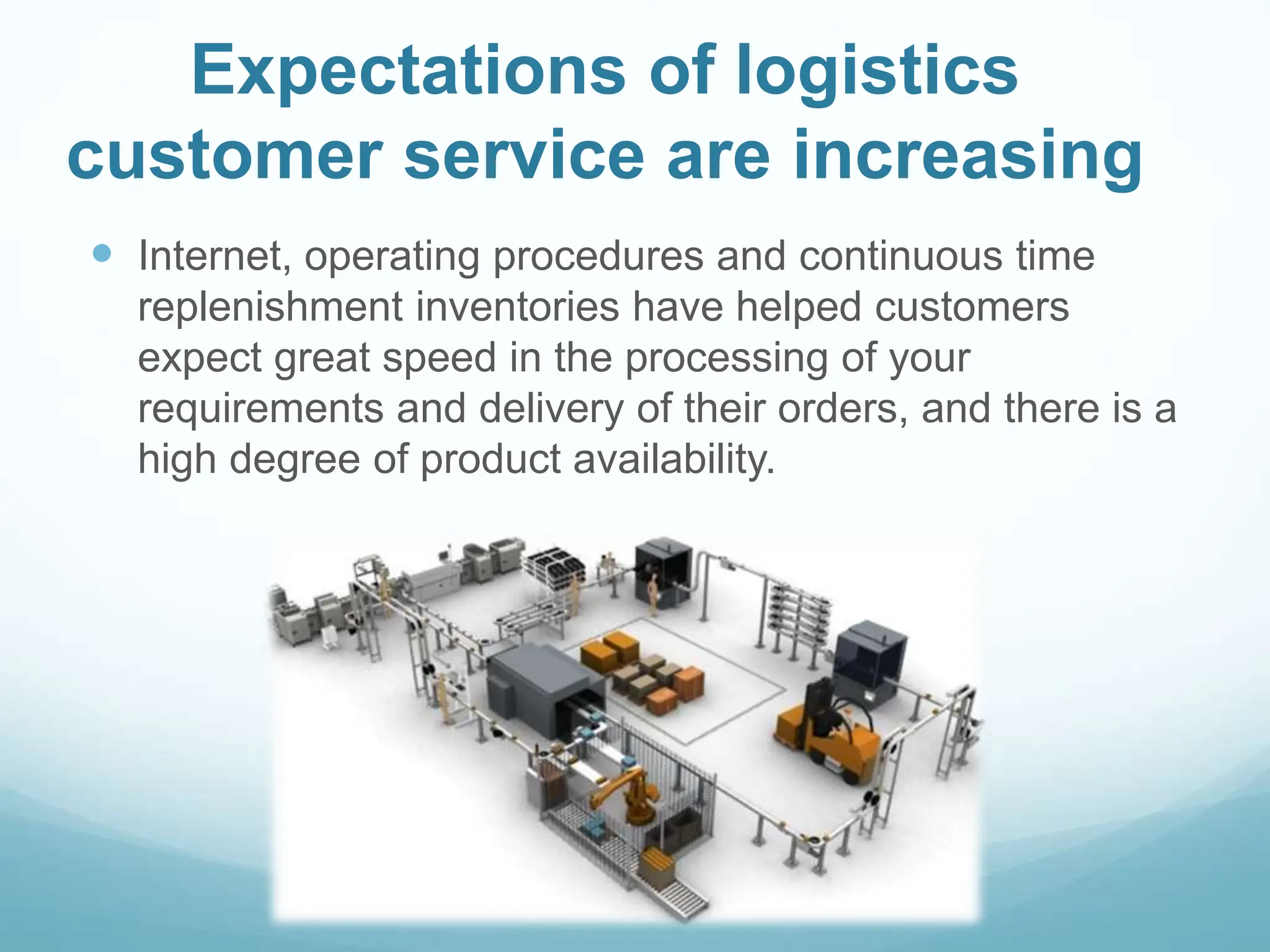
Expectations of logistics
customer service are increasing
 Internet, operating procedures and continuous time
replenishment inventories have helped customers
expect great speed in the processing of your
requirements and delivery of their orders, and there is a
high degree of product availability.
Supply lines and distribution are
growing in more complex
 The trend is towards an integrated world economy.
Companies are looking for or have developed
comprehensive strategies, designing their products for
a global market by producing where the raw material,
parts and labor may be found at low cost (eg, the Ford
Focus car), or simply produce sold locally and
internationally.
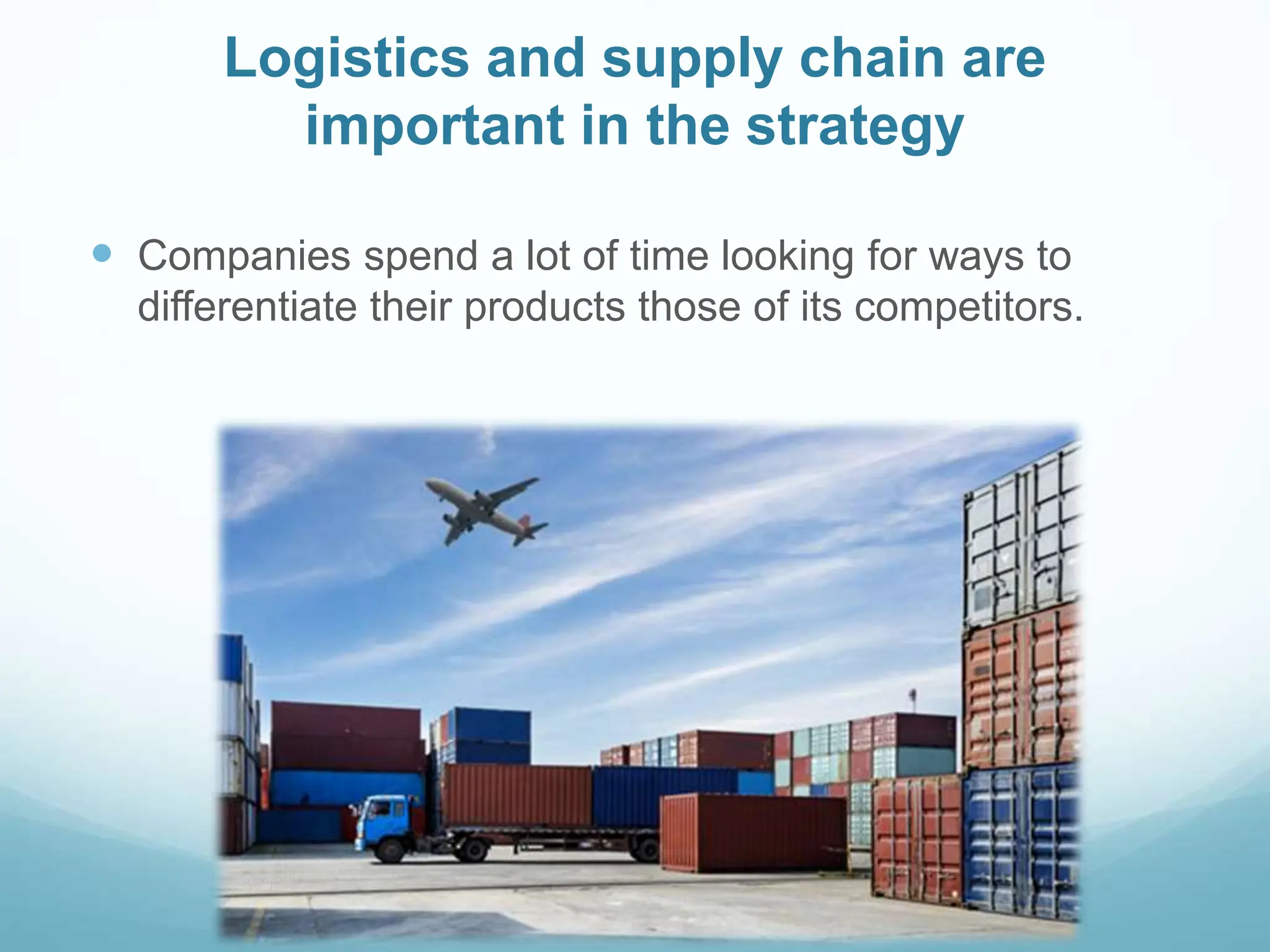
Logistics and supply chain are
important in the strategy
 Companies spend a lot of time looking for ways to
differentiate their products those of its competitors.
Logistics and supply chain add value
important to the customer
 A product or service is of little value if it is not available to
customers in the time and place in which they wish to consume.
When a company incurs the cost of moving the product to the
consumer or to have available inventory of timely manner, created
a customer value did not have before.
Customers increasingly want a quick
response and customized
 Retailers fast food, ATMs, sharing and overnight email
Internet have made consumers hope that the products
and services may be available in ever shorter times.
Service Industry
 The service sector in industrialized countries is large
and growing. United States, more than 70% of all jobs
are in what the federal government classified as the
services sector.

Importance of Logistics and Supply chain strategy .pptx

  • 1.
  • 2.
     Logistics centersaround creating value: value for customers and suppliers of the company, and shareholder value of the company.  The value in logistics is mainly expressed in terms of time and place.
  • 3.
    Cost is important Over the years, we have conducted several studies to determine the cost of logistics for the economy in general and businesses in particular. There are widely differing estimates of cost levels.
  • 4.
    Expectations of logistics customerservice are increasing  Internet, operating procedures and continuous time replenishment inventories have helped customers expect great speed in the processing of your requirements and delivery of their orders, and there is a high degree of product availability.
  • 5.
    Supply lines anddistribution are growing in more complex  The trend is towards an integrated world economy. Companies are looking for or have developed comprehensive strategies, designing their products for a global market by producing where the raw material, parts and labor may be found at low cost (eg, the Ford Focus car), or simply produce sold locally and internationally.
  • 6.
    Logistics and supplychain are important in the strategy  Companies spend a lot of time looking for ways to differentiate their products those of its competitors.
  • 7.
    Logistics and supplychain add value important to the customer  A product or service is of little value if it is not available to customers in the time and place in which they wish to consume. When a company incurs the cost of moving the product to the consumer or to have available inventory of timely manner, created a customer value did not have before.
  • 8.
    Customers increasingly wanta quick response and customized  Retailers fast food, ATMs, sharing and overnight email Internet have made consumers hope that the products and services may be available in ever shorter times.
  • 9.
    Service Industry  Theservice sector in industrialized countries is large and growing. United States, more than 70% of all jobs are in what the federal government classified as the services sector.