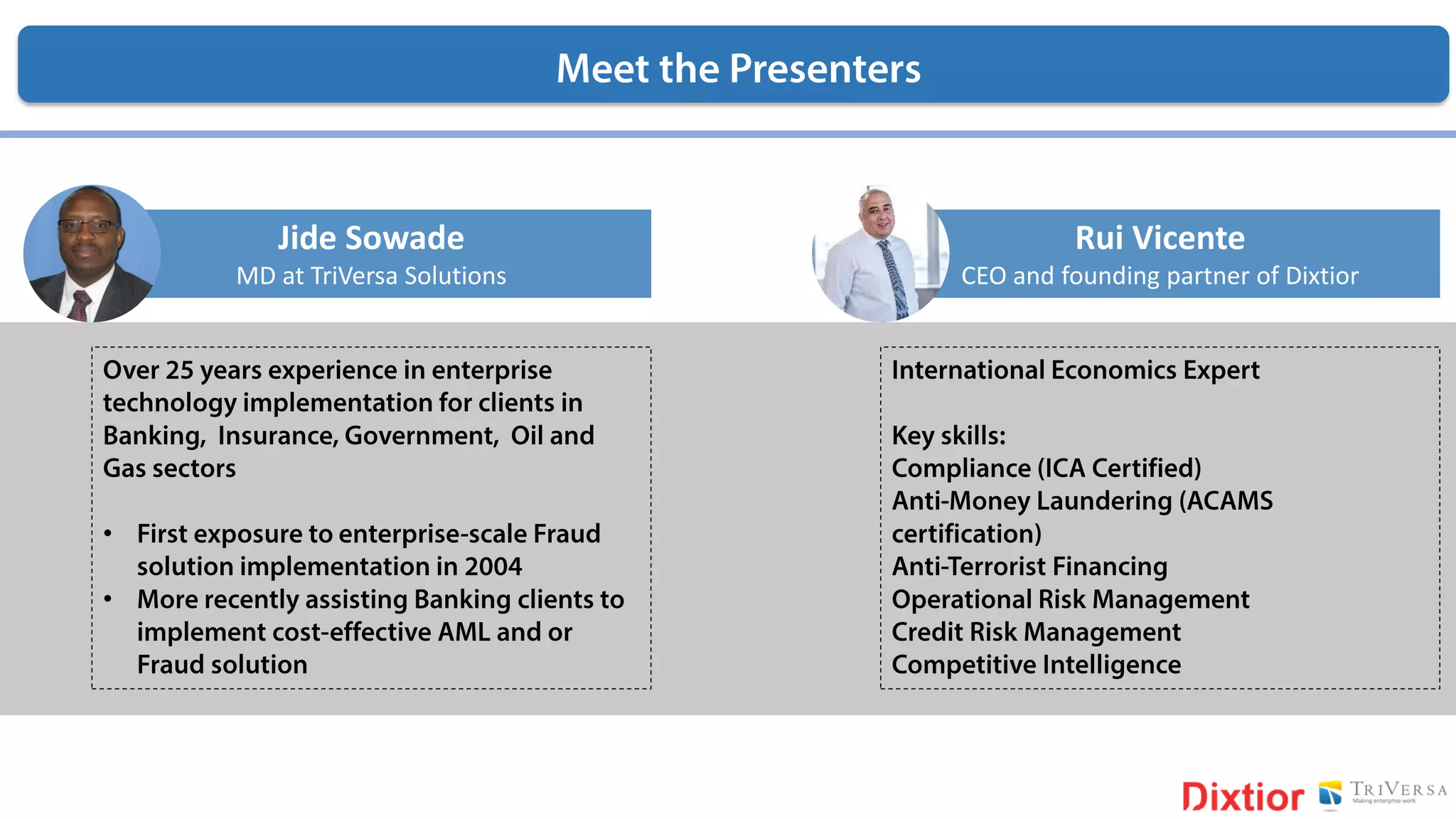
Rui Vicente
CEO and founding partner of Dixtior
Jide Sowade
MD at TriVersa Solutions
•
•
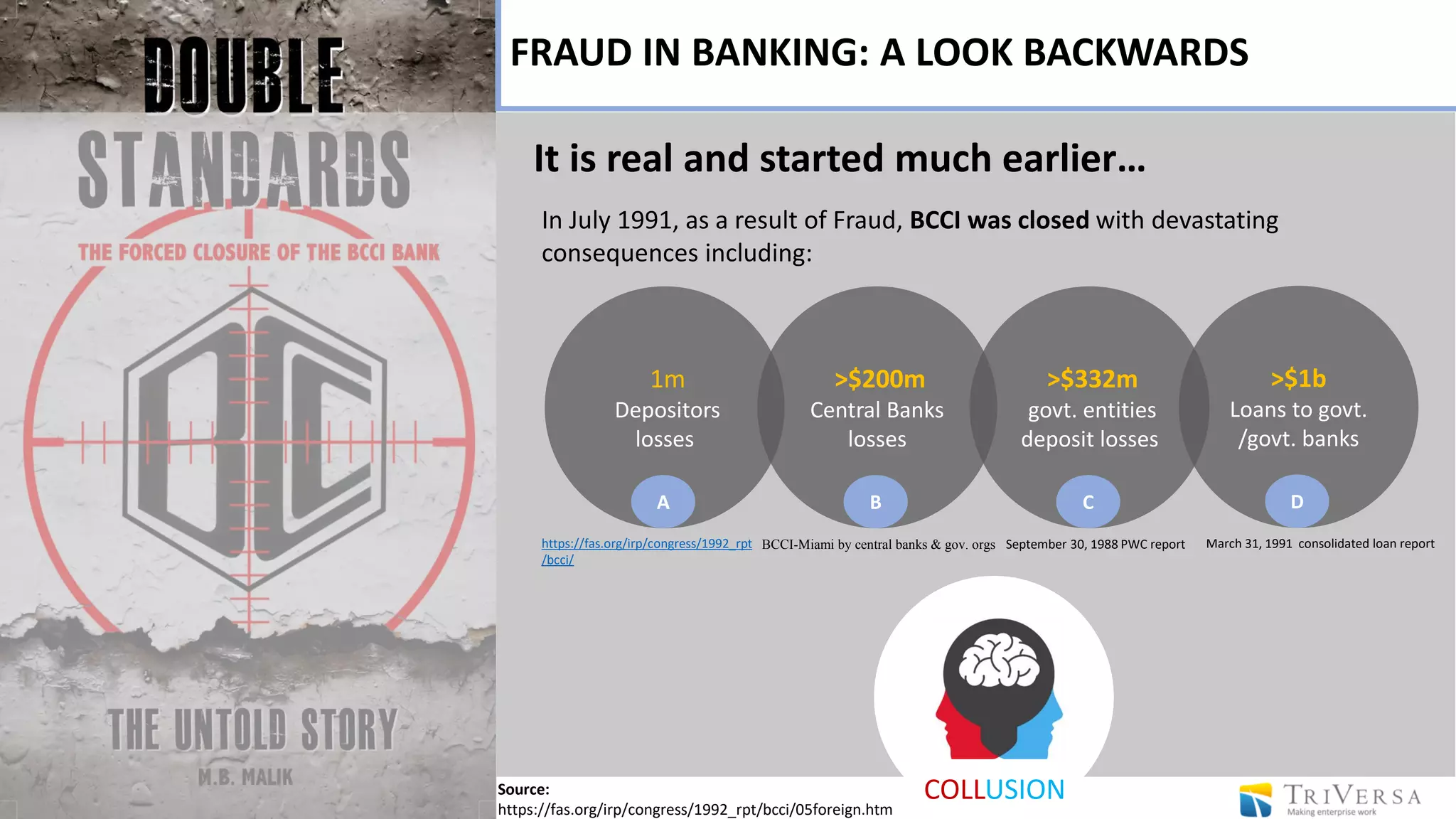
In July 1991, as a result of Fraud, BCCI was closed with devastating
consequences including:
Source:
https://fas.org/irp/congress/1992_rpt/bcci/05foreign.htm
It is real and started much earlier…
1m
Depositors
losses
A
>$200m
Central Banks
losses
B
>$332m
govt. entities
deposit losses
C
>$1b
Loans to govt.
/govt. banks
D
September 30, 1988 PWC reportBCCI-Miami by central banks & gov. orgs March 31, 1991 consolidated loan reporthttps://fas.org/irp/congress/1992_rpt
/bcci/
COLLUSION
FRAUD IN BANKING: A LOOK BACKWARDS
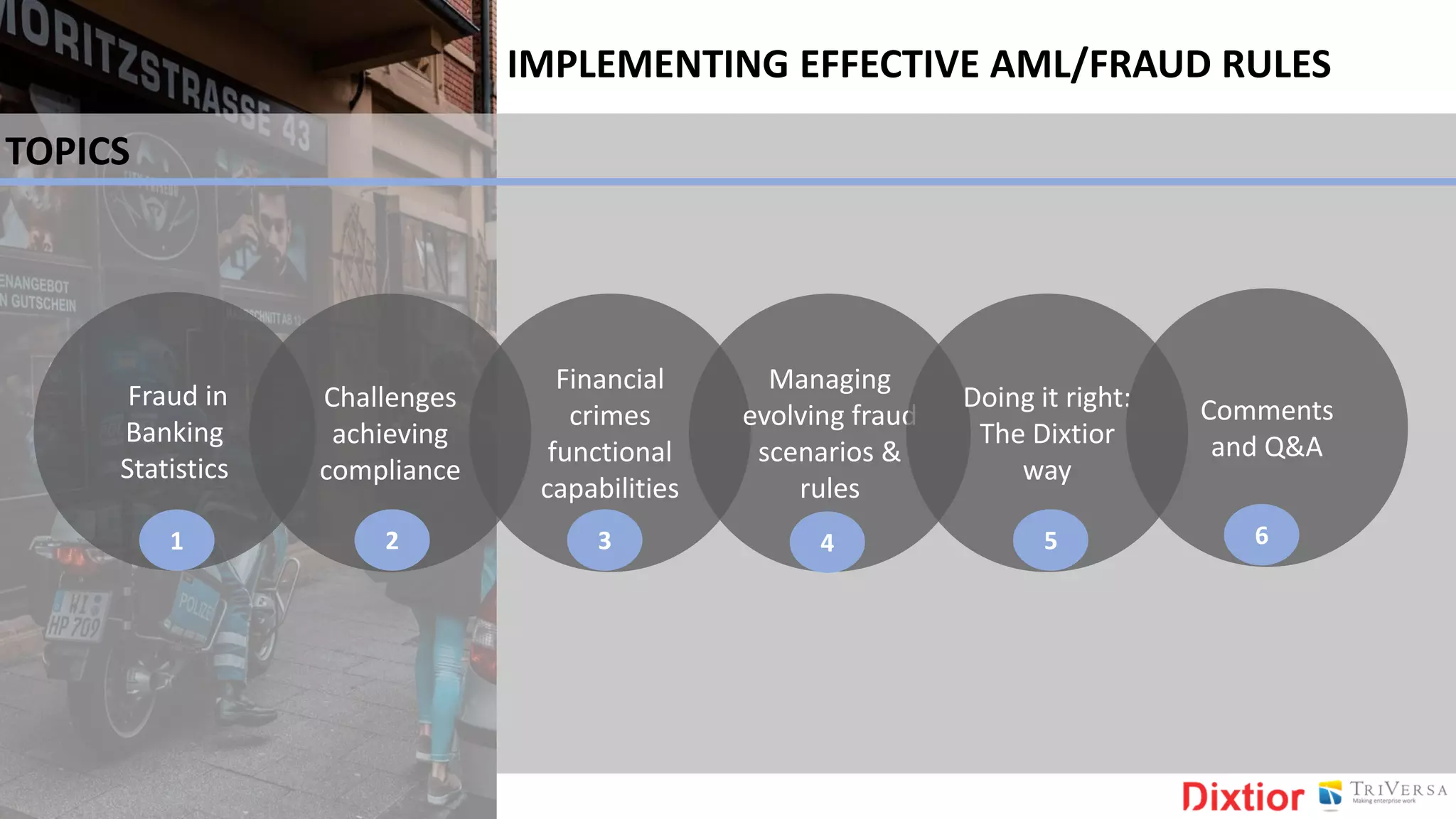
Fraud in
Banking
Statistics
Financial
crimes
functional
capabilities
Managing
evolving fraud
scenarios &
rules
Challenges
achieving
compliance
Doing it right:
The Dixtior
way
1 2 3 4 5
TOPICS
Comments
and Q&A
6
IMPLEMENTING EFFECTIVE AML/FRAUD RULES
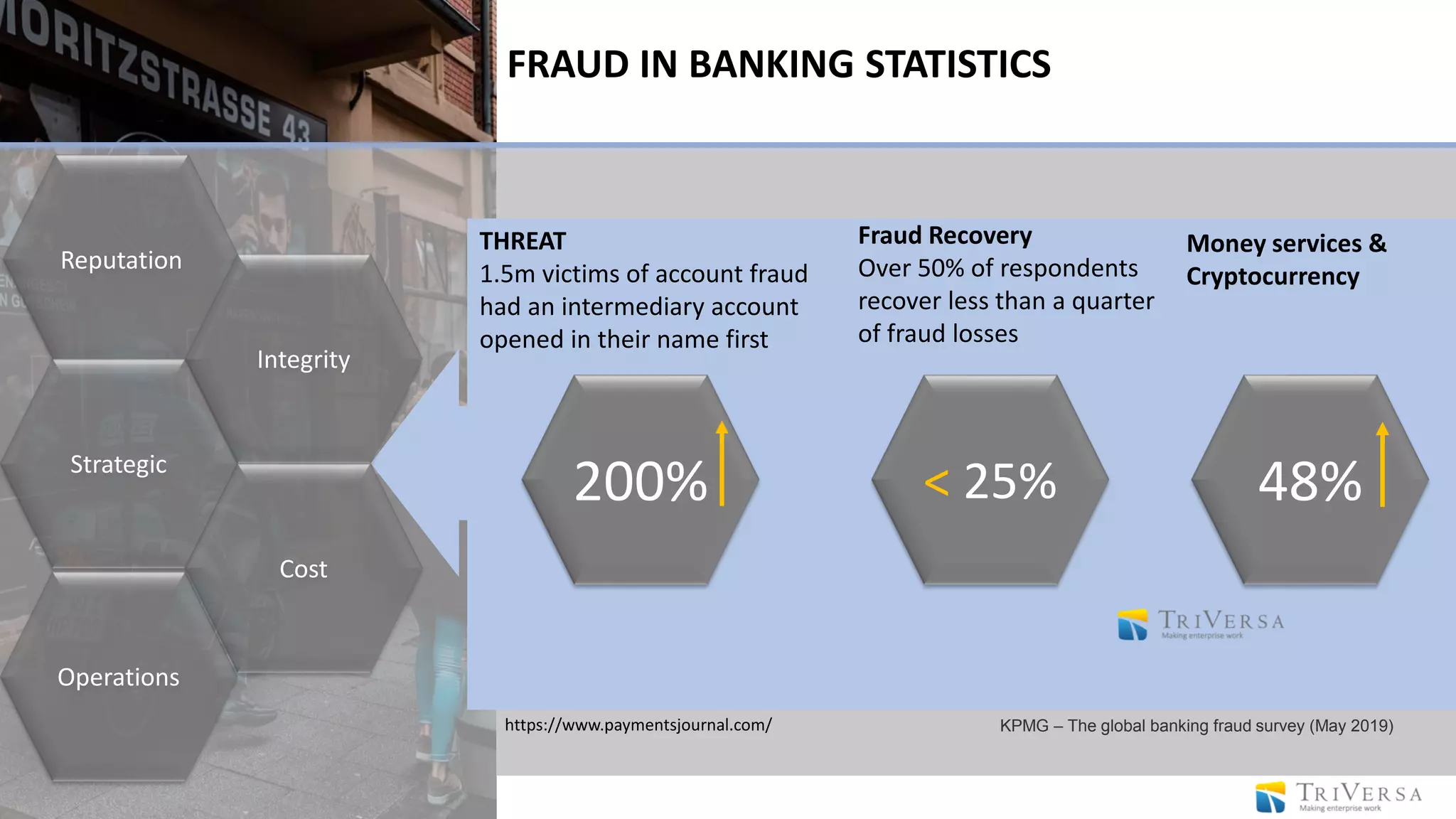
Reputation
Integrity
Strategic
Operations
Cost
THREAT
1.5m victims of account fraud
had an intermediary account
opened in their name first
200%
Fraud Recovery
Over 50% of respondents
recover less than a quarter
of fraud losses
< 25%
Money services &
Cryptocurrency
48%
https://www.paymentsjournal.com/ KPMG – The global banking fraud survey (May 2019)
FRAUD IN BANKING STATISTICS
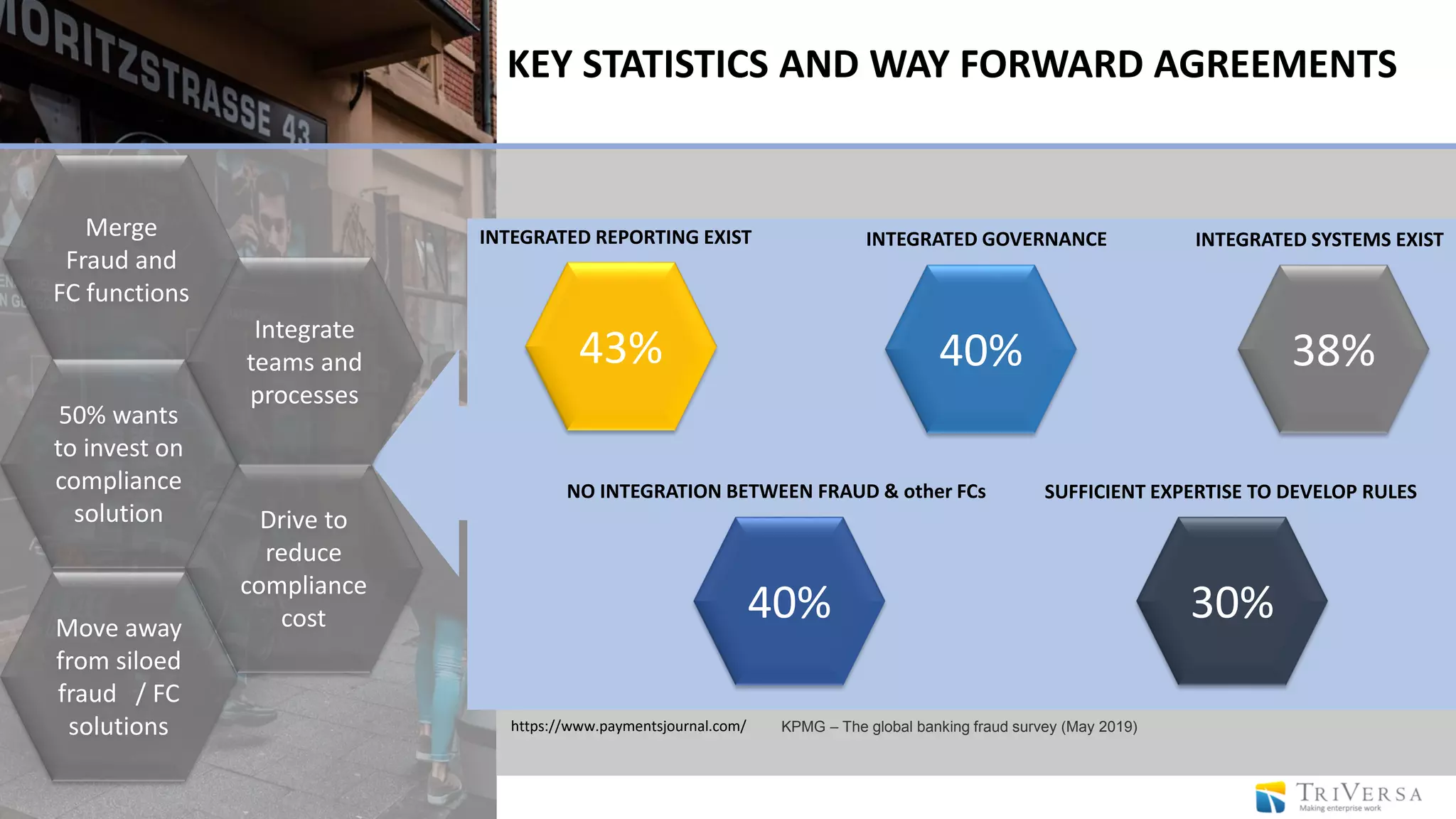
KEY STATISTICS AND WAY FORWARD AGREEMENTS
Merge
Fraud and
FC functions
50% wants
to invest on
compliance
solution
Move away
from siloed
fraud / FC
solutions
Drive to
reduce
compliance
cost
INTEGRATED REPORTING EXIST
43%
INTEGRATED GOVERNANCE INTEGRATED SYSTEMS EXIST
https://www.paymentsjournal.com/ KPMG – The global banking fraud survey (May 2019)
Integrate
teams and
processes
40% 38%
NO INTEGRATION BETWEEN FRAUD & other FCs SUFFICIENT EXPERTISE TO DEVELOP RULES
40% 30%
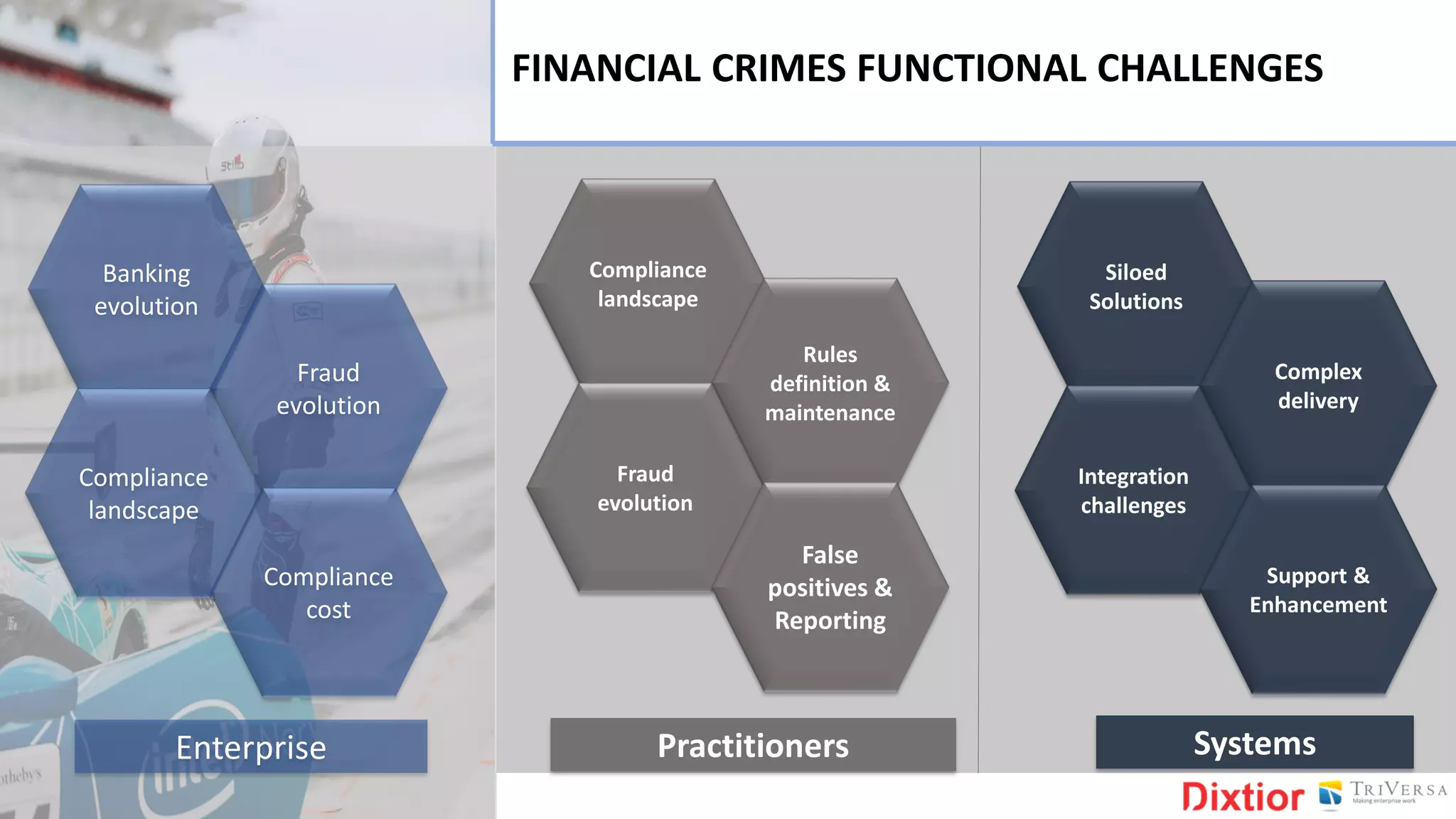
Banking
evolution
Fraud
evolution
Compliance
landscape
Compliance
cost
Enterprise
Compliance
landscape
Rules
definition &
maintenance
Fraud
evolution
False
positives &
Reporting
Practitioners
Siloed
Solutions
Complex
delivery
Integration
challenges
Support &
Enhancement
Systems
FINANCIAL CRIMES FUNCTIONAL CHALLENGES
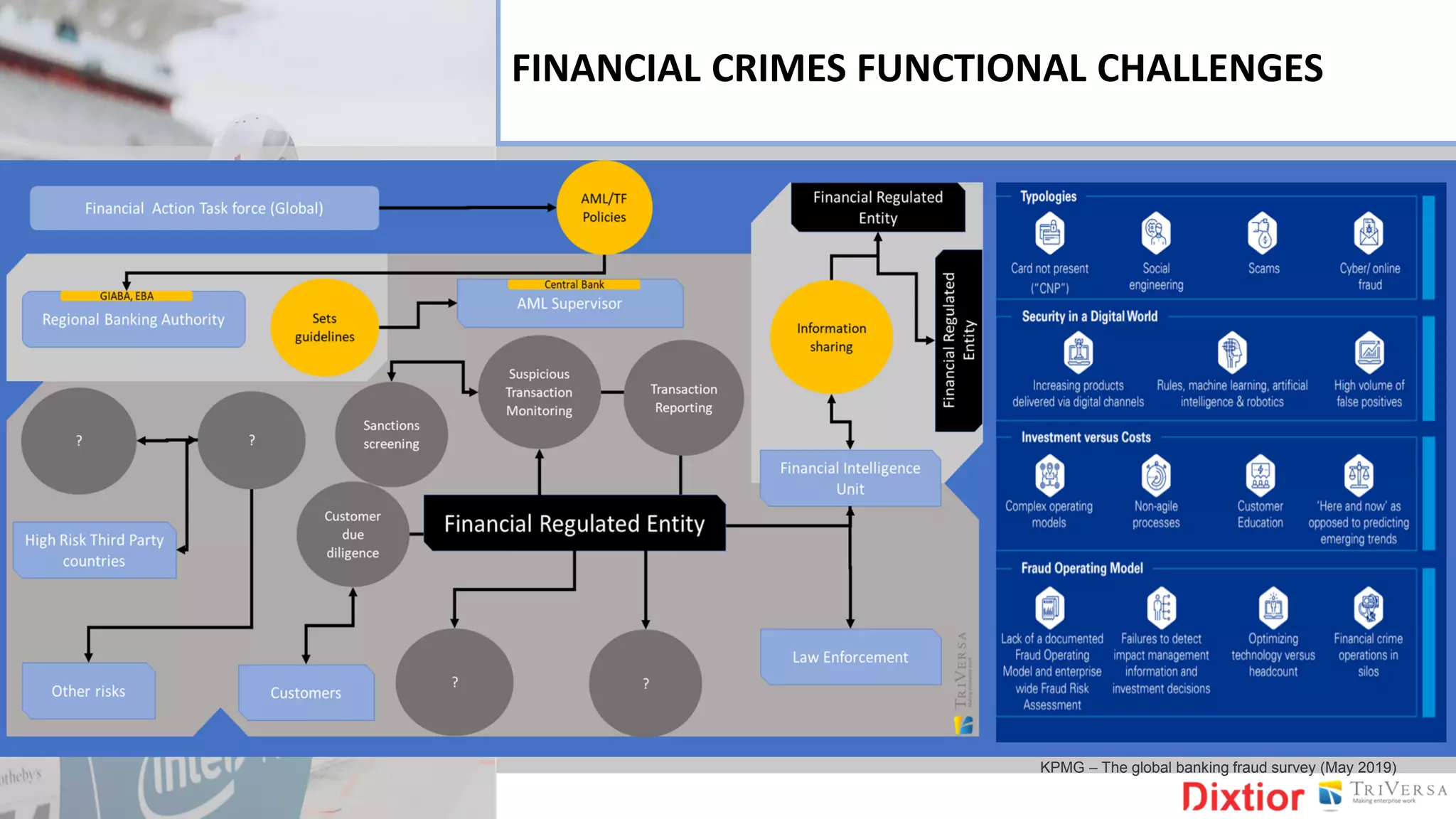
KPMG – The global banking fraud survey (May 2019)
FINANCIAL CRIMES FUNCTIONAL CHALLENGES
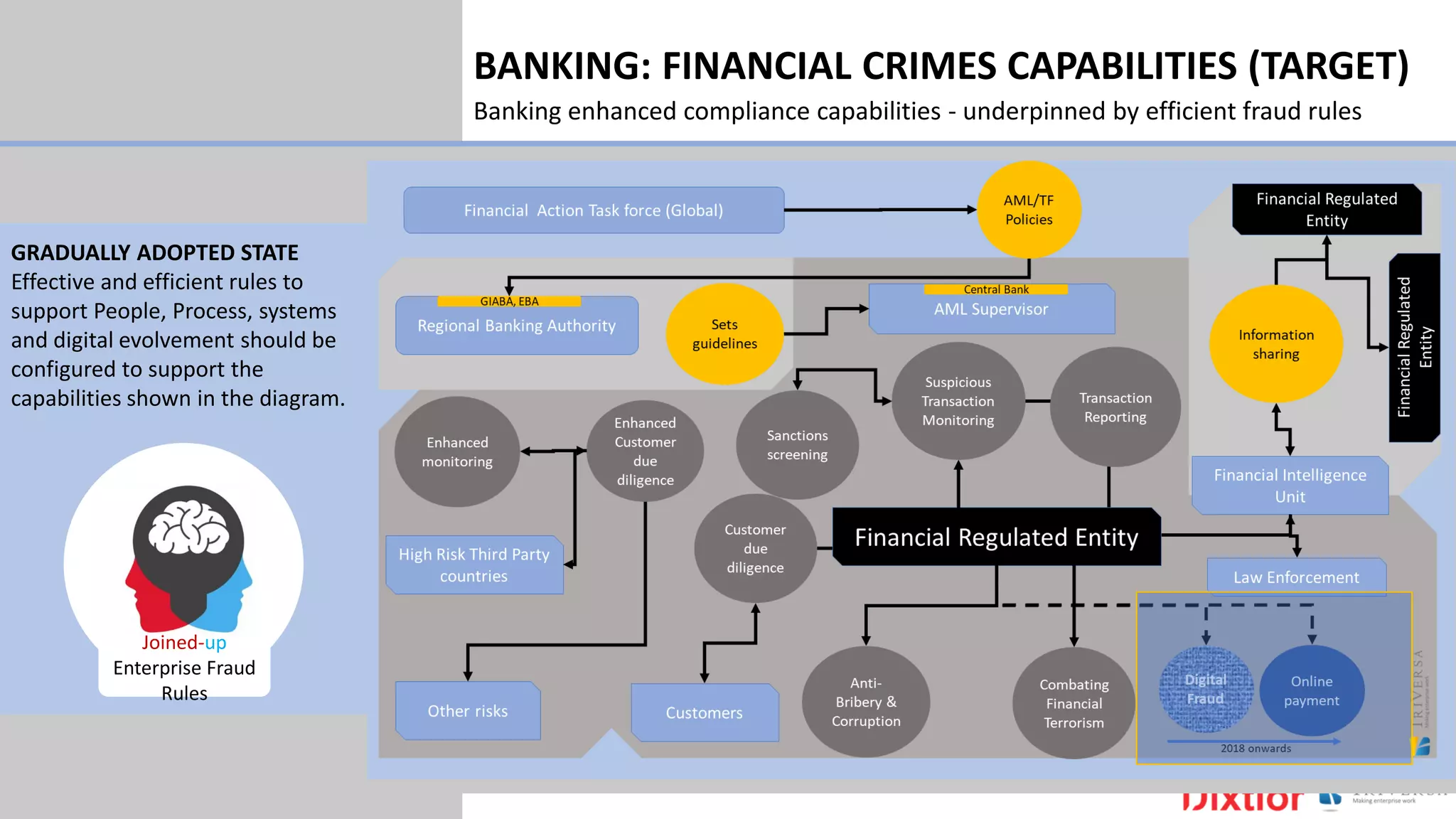
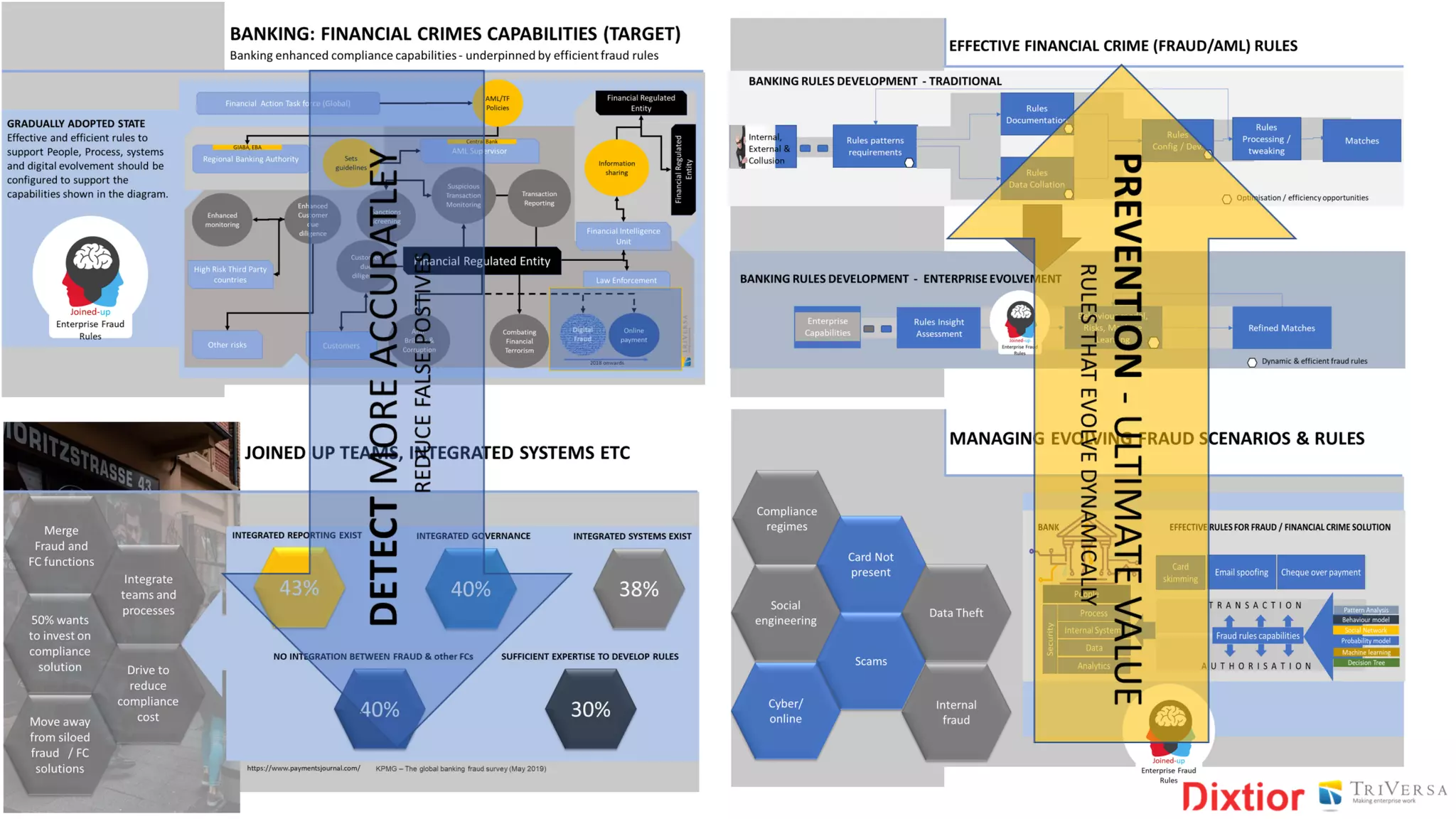
GRADUALLY ADOPTED STATE
Effective and efficient rules to
support People, Process, systems
and digital evolvement should be
configured to support the
capabilities shown in the diagram.
Banking enhanced compliance capabilities - underpinned by efficient fraud rules
BANKING: FINANCIAL CRIMES CAPABILITIES (TARGET)
Joined-up
Enterprise Fraud
Rules
Compliance
regimes
Card No
present
Social
engineering
Cyber/
online
Scams
Data Theft
Internal
fraud
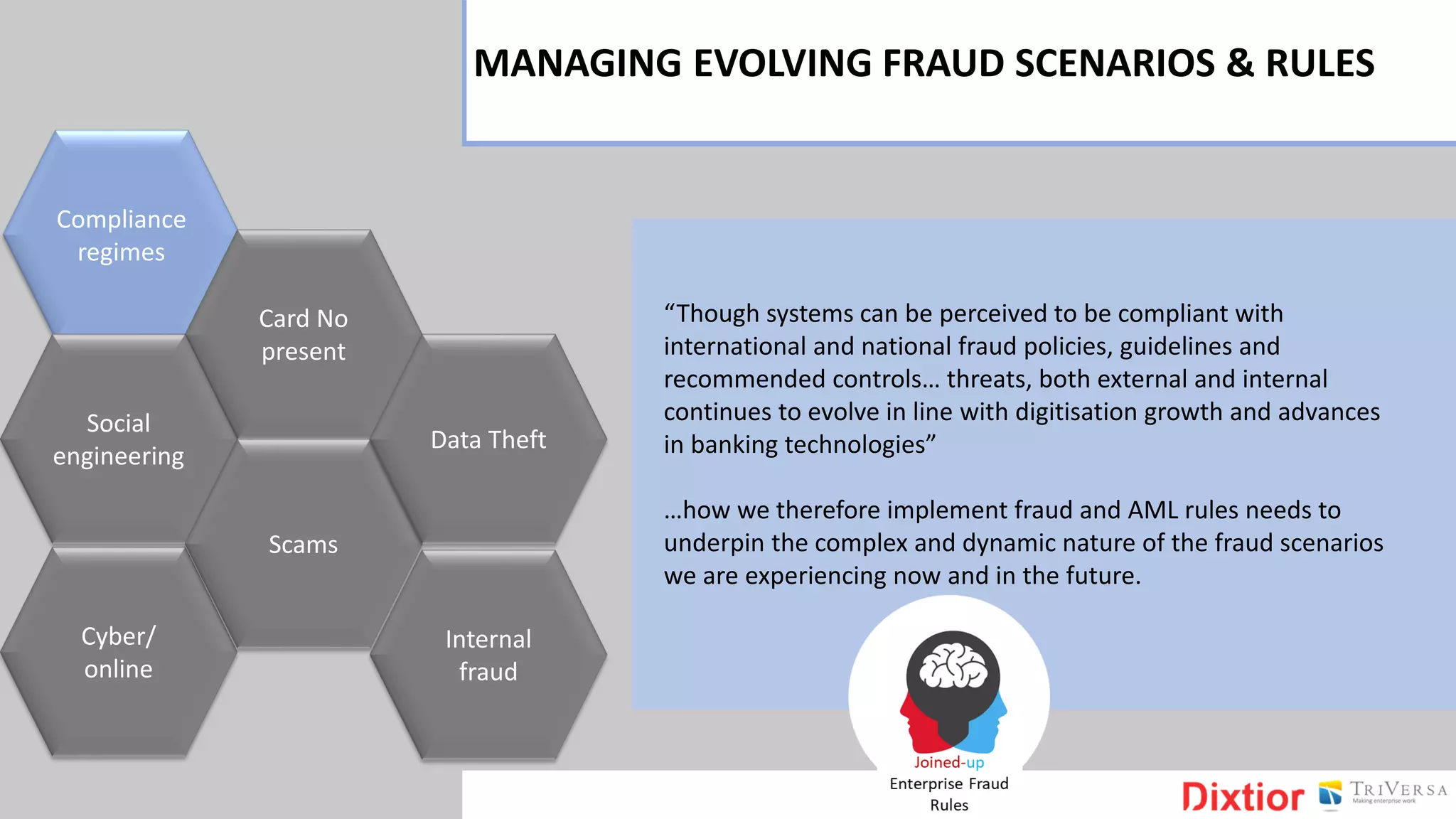
“Though systems can be perceived to be compliant with
international and national fraud policies, guidelines and
recommended controls… threats, both external and internal
continues to evolve in line with digitisation growth and advances
in banking technologies”
…how we therefore implement fraud and AML rules needs to
underpin the complex and dynamic nature of the fraud scenarios
we are experiencing now and in the future.
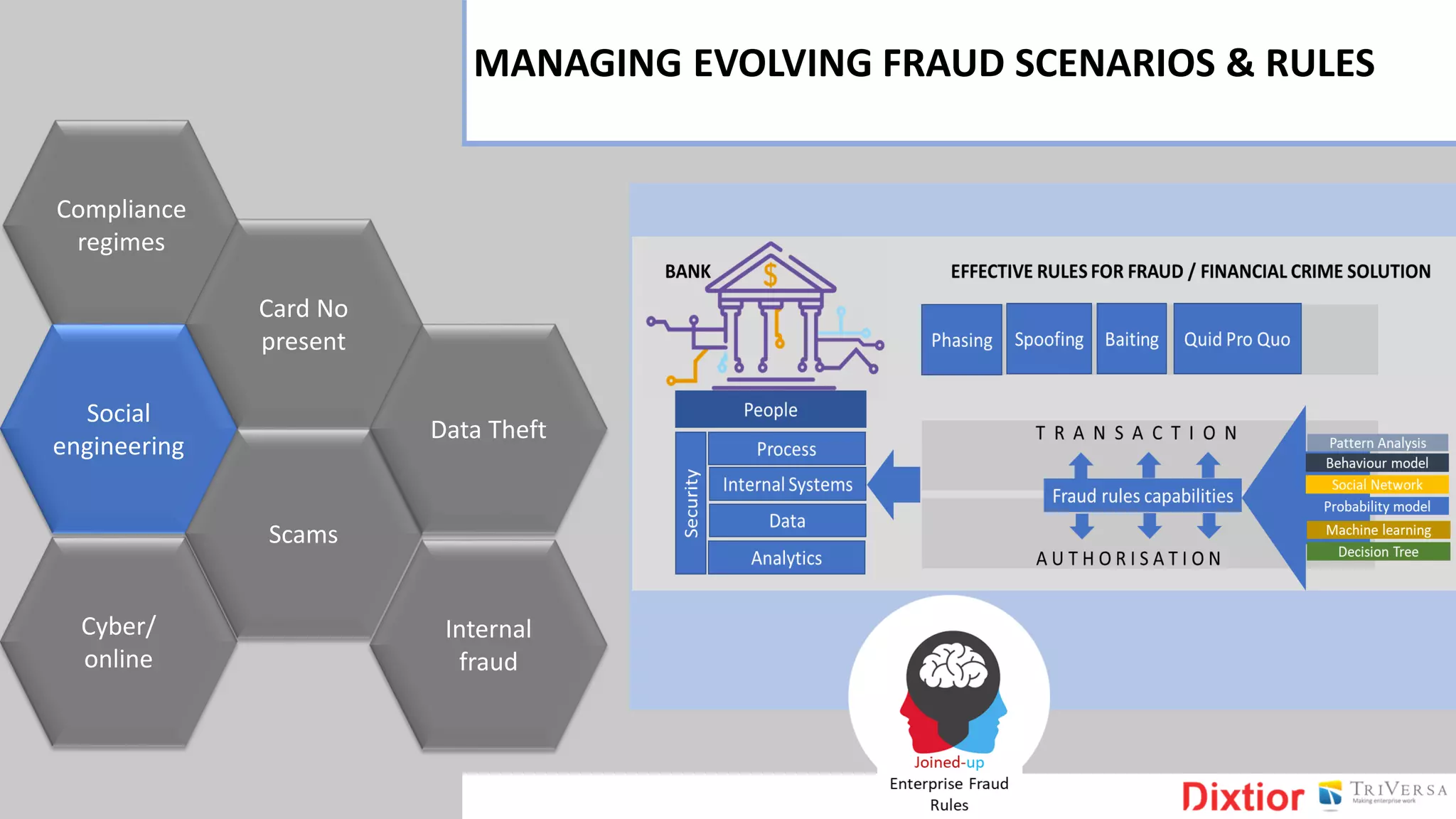
MANAGING EVOLVING FRAUD SCENARIOS & RULES
Compliance
regimes
Card No
present
Social
engineering
Cyber/
online
Scams
Data Theft
Internal
fraud
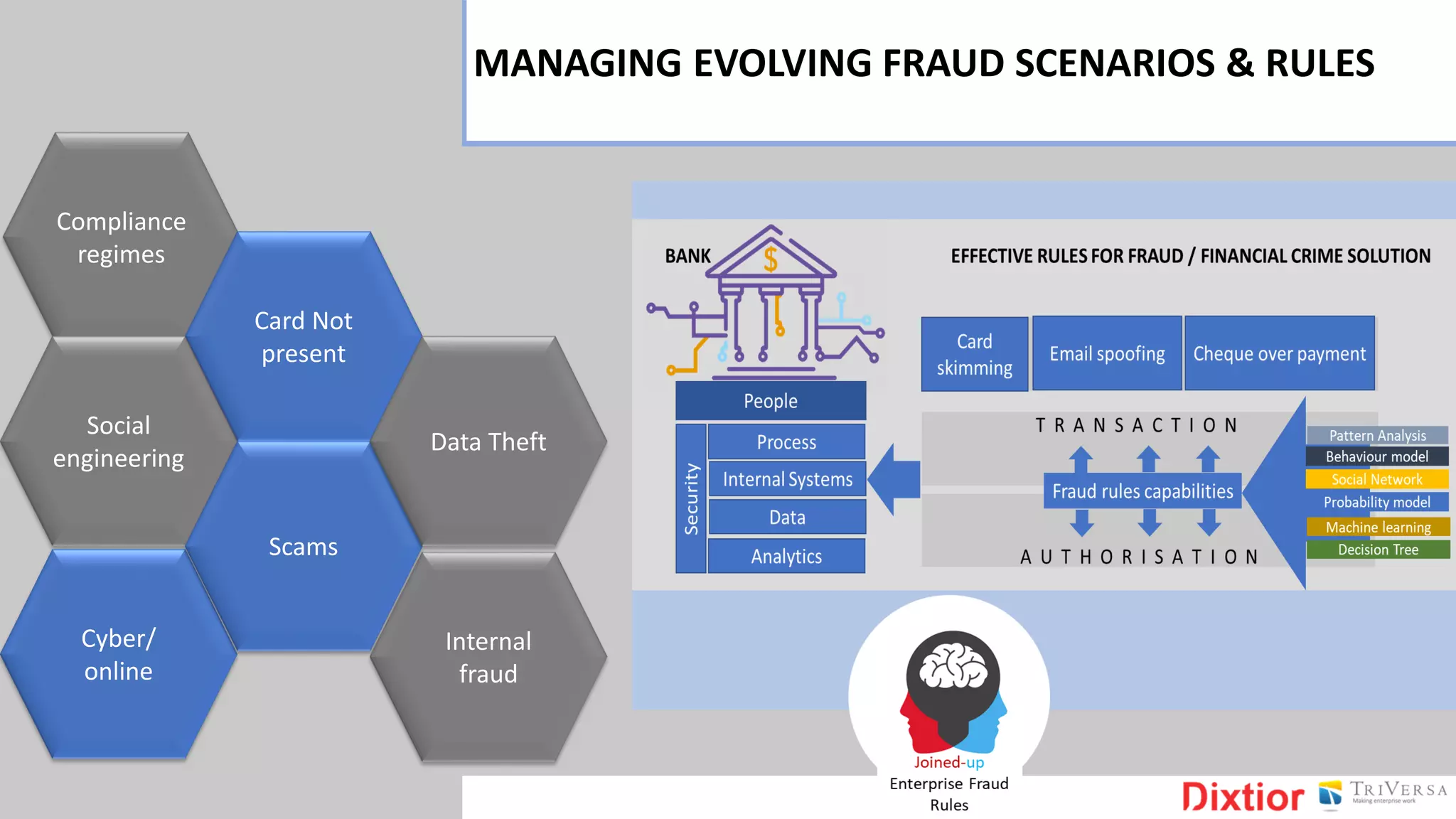
MANAGING EVOLVING FRAUD SCENARIOS & RULES
Compliance
regimes
Card Not
present
Social
engineering
Cyber/
online
Scams
Data Theft
Internal
fraud
MANAGING EVOLVING FRAUD SCENARIOS & RULES
Managing complexities in scenarios / rules processing and including flexibility4
When implementing an
effective system there
are some complexities
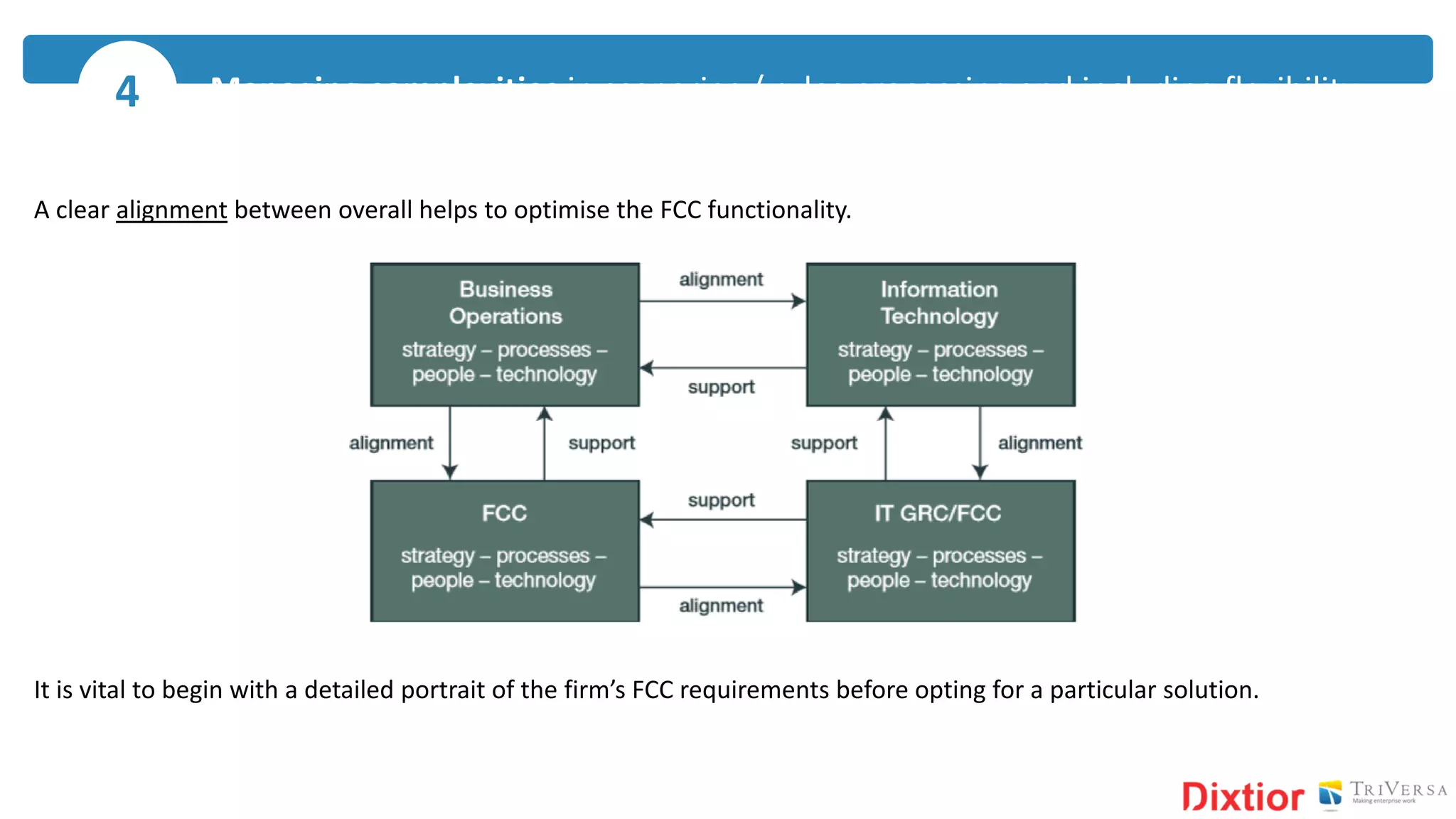
It is vital to begin with a detailed portrait of the firm’s FCC requirements before opting for a particular solution.
A clear alignment between overall helps to optimise the FCC functionality.
Managing complexities in scenarios / rules processing and including flexibility4
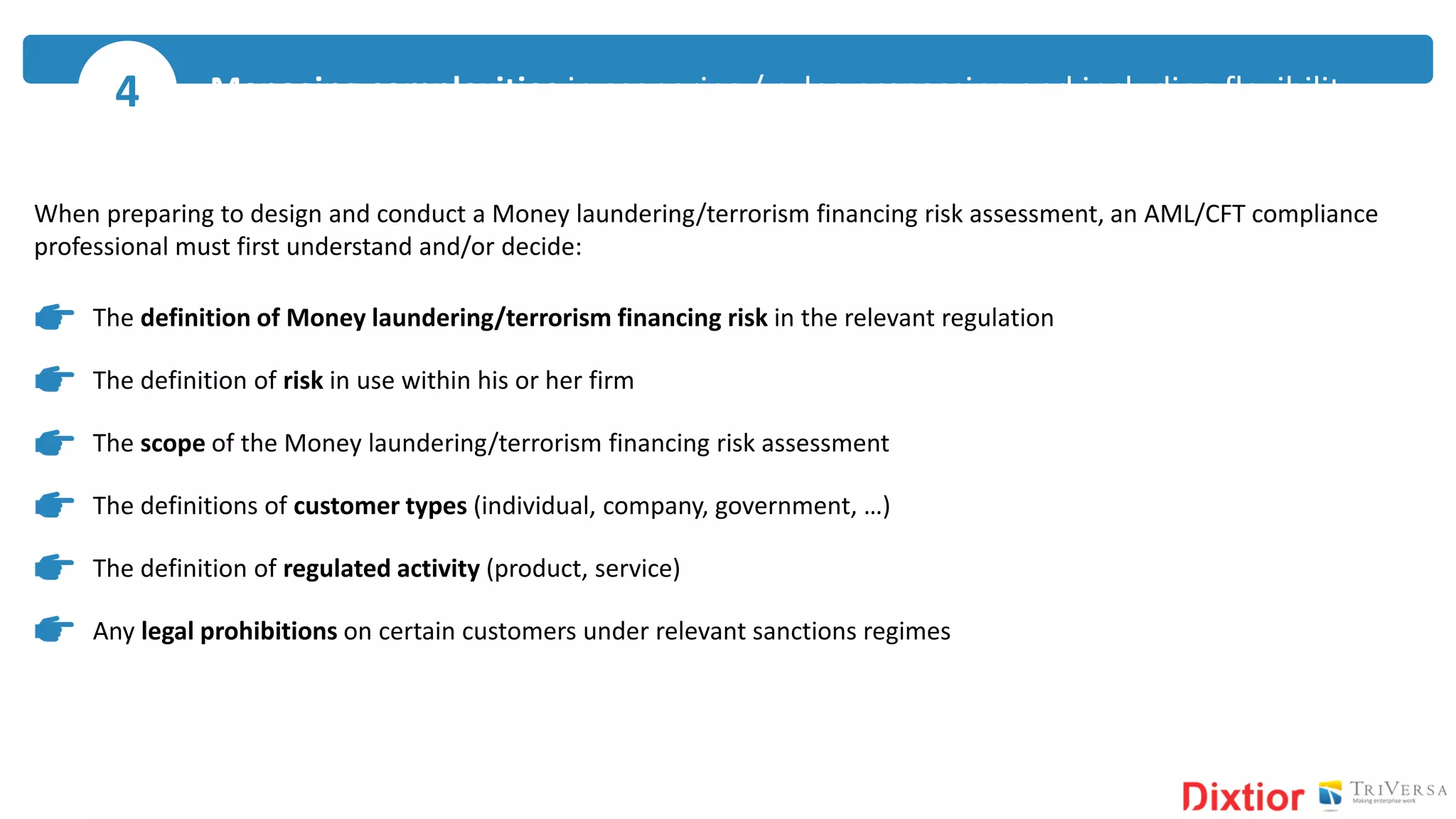
When preparing to design and conduct a Money laundering/terrorism financing risk assessment, an AML/CFT compliance
professional must first understand and/or decide:
The definition of Money laundering/terrorism financing risk in the relevant regulation
The definition of risk in use within his or her firm
The scope of the Money laundering/terrorism financing risk assessment
The definitions of customer types (individual, company, government, …)
The definition of regulated activity (product, service)
Any legal prohibitions on certain customers under relevant sanctions regimes
Managing complexities in scenarios / rules processing and including flexibility4
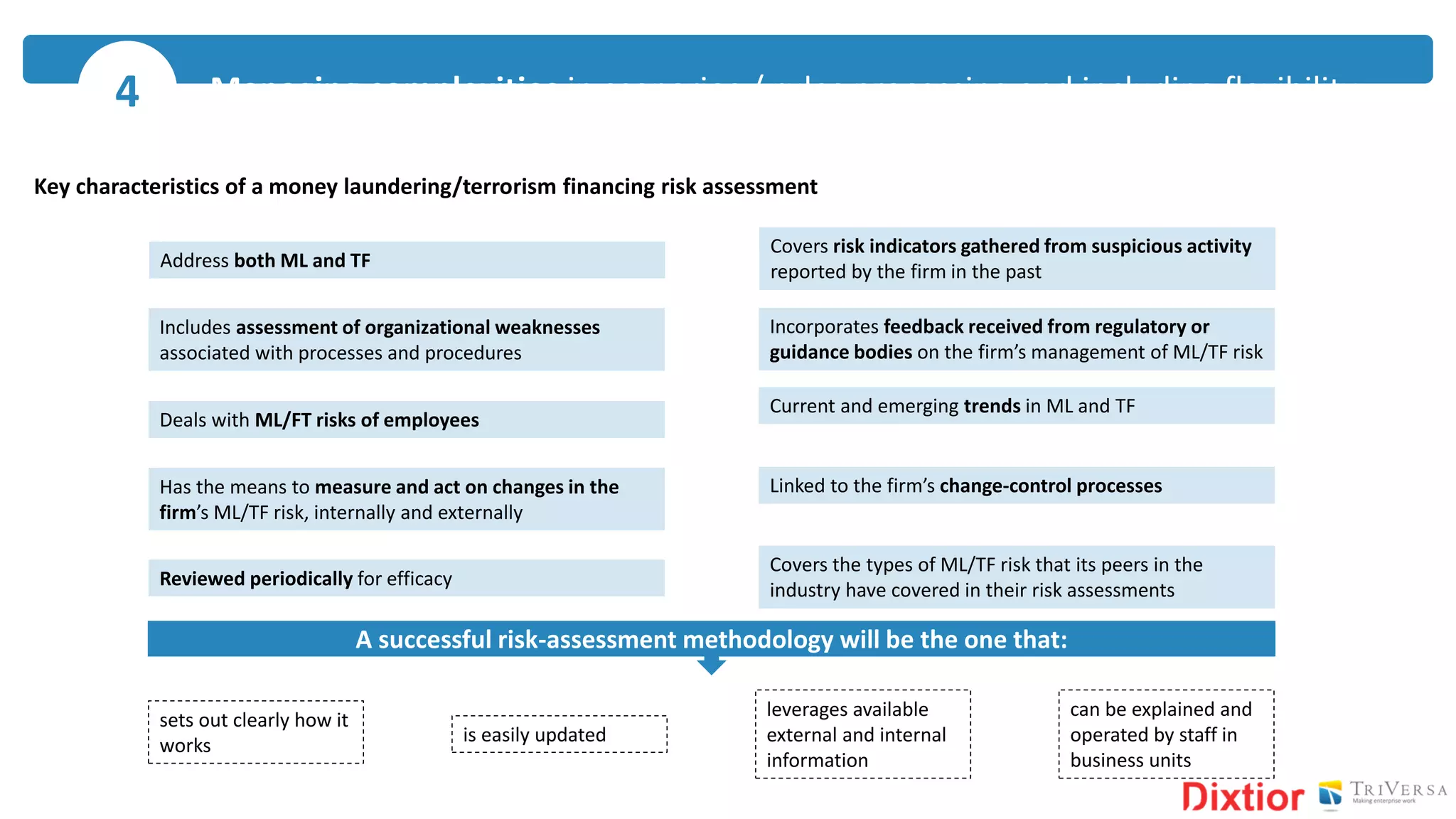
Key characteristics of a money laundering/terrorism financing risk assessment
Address both ML and TF
Includes assessment of organizational weaknesses
associated with processes and procedures
Deals with ML/FT risks of employees
Has the means to measure and act on changes in the
firm’s ML/TF risk, internally and externally
Covers risk indicators gathered from suspicious activity
reported by the firm in the past
Covers the types of ML/TF risk that its peers in the
industry have covered in their risk assessments
Incorporates feedback received from regulatory or
guidance bodies on the firm’s management of ML/TF risk
Current and emerging trends in ML and TF
Linked to the firm’s change-control processes
Reviewed periodically for efficacy
A successful risk-assessment methodology will be the one that:
sets out clearly how it
works
leverages available
external and internal
information
is easily updated
can be explained and
operated by staff in
business units
Managing complexities in scenarios / rules processing and including flexibility4
5
5
5
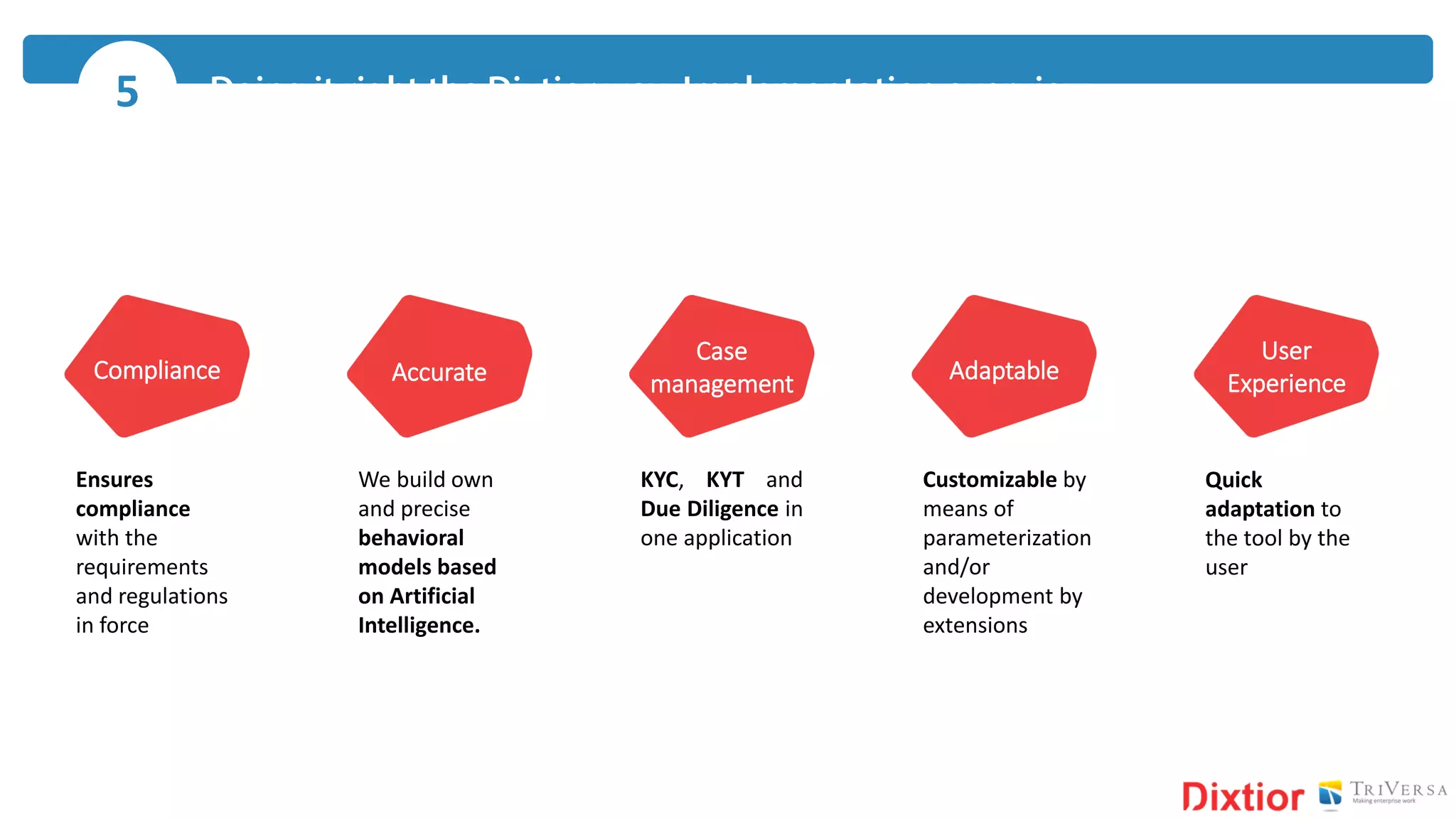
Compliance Accurate
Case
management
User
ExperienceAdaptable
Ensures
compliance
with the
requirements
and regulations
in force
We build own
and precise
behavioral
models based
on Artificial
Intelligence.
KYC, KYT and
Due Diligence in
one application
Customizable by
means of
parameterization
and/or
development by
extensions
Quick
adaptation to
the tool by the
user
5
5
6

Implementing Anti Money Laundering and Fraud Rules in Banking

  • 2.
    Rui Vicente CEO andfounding partner of Dixtior Jide Sowade MD at TriVersa Solutions • •
  • 3.
    In July 1991,as a result of Fraud, BCCI was closed with devastating consequences including: Source: https://fas.org/irp/congress/1992_rpt/bcci/05foreign.htm It is real and started much earlier… 1m Depositors losses A >$200m Central Banks losses B >$332m govt. entities deposit losses C >$1b Loans to govt. /govt. banks D September 30, 1988 PWC reportBCCI-Miami by central banks & gov. orgs March 31, 1991 consolidated loan reporthttps://fas.org/irp/congress/1992_rpt /bcci/ COLLUSION FRAUD IN BANKING: A LOOK BACKWARDS
  • 4.
    Fraud in Banking Statistics Financial crimes functional capabilities Managing evolving fraud scenarios& rules Challenges achieving compliance Doing it right: The Dixtior way 1 2 3 4 5 TOPICS Comments and Q&A 6 IMPLEMENTING EFFECTIVE AML/FRAUD RULES
  • 5.
    Reputation Integrity Strategic Operations Cost THREAT 1.5m victims ofaccount fraud had an intermediary account opened in their name first 200% Fraud Recovery Over 50% of respondents recover less than a quarter of fraud losses < 25% Money services & Cryptocurrency 48% https://www.paymentsjournal.com/ KPMG – The global banking fraud survey (May 2019) FRAUD IN BANKING STATISTICS
  • 6.
    KEY STATISTICS ANDWAY FORWARD AGREEMENTS Merge Fraud and FC functions 50% wants to invest on compliance solution Move away from siloed fraud / FC solutions Drive to reduce compliance cost INTEGRATED REPORTING EXIST 43% INTEGRATED GOVERNANCE INTEGRATED SYSTEMS EXIST https://www.paymentsjournal.com/ KPMG – The global banking fraud survey (May 2019) Integrate teams and processes 40% 38% NO INTEGRATION BETWEEN FRAUD & other FCs SUFFICIENT EXPERTISE TO DEVELOP RULES 40% 30%
  • 7.
  • 8.
    KPMG – Theglobal banking fraud survey (May 2019) FINANCIAL CRIMES FUNCTIONAL CHALLENGES
  • 9.
    GRADUALLY ADOPTED STATE Effectiveand efficient rules to support People, Process, systems and digital evolvement should be configured to support the capabilities shown in the diagram. Banking enhanced compliance capabilities - underpinned by efficient fraud rules BANKING: FINANCIAL CRIMES CAPABILITIES (TARGET) Joined-up Enterprise Fraud Rules
  • 10.
    Compliance regimes Card No present Social engineering Cyber/ online Scams Data Theft Internal fraud “Thoughsystems can be perceived to be compliant with international and national fraud policies, guidelines and recommended controls… threats, both external and internal continues to evolve in line with digitisation growth and advances in banking technologies” …how we therefore implement fraud and AML rules needs to underpin the complex and dynamic nature of the fraud scenarios we are experiencing now and in the future. MANAGING EVOLVING FRAUD SCENARIOS & RULES
  • 11.
  • 12.
  • 14.
    Managing complexities inscenarios / rules processing and including flexibility4 When implementing an effective system there are some complexities
  • 15.
    It is vitalto begin with a detailed portrait of the firm’s FCC requirements before opting for a particular solution. A clear alignment between overall helps to optimise the FCC functionality. Managing complexities in scenarios / rules processing and including flexibility4
  • 16.
    When preparing todesign and conduct a Money laundering/terrorism financing risk assessment, an AML/CFT compliance professional must first understand and/or decide: The definition of Money laundering/terrorism financing risk in the relevant regulation The definition of risk in use within his or her firm The scope of the Money laundering/terrorism financing risk assessment The definitions of customer types (individual, company, government, …) The definition of regulated activity (product, service) Any legal prohibitions on certain customers under relevant sanctions regimes Managing complexities in scenarios / rules processing and including flexibility4
  • 17.
    Key characteristics ofa money laundering/terrorism financing risk assessment Address both ML and TF Includes assessment of organizational weaknesses associated with processes and procedures Deals with ML/FT risks of employees Has the means to measure and act on changes in the firm’s ML/TF risk, internally and externally Covers risk indicators gathered from suspicious activity reported by the firm in the past Covers the types of ML/TF risk that its peers in the industry have covered in their risk assessments Incorporates feedback received from regulatory or guidance bodies on the firm’s management of ML/TF risk Current and emerging trends in ML and TF Linked to the firm’s change-control processes Reviewed periodically for efficacy A successful risk-assessment methodology will be the one that: sets out clearly how it works leverages available external and internal information is easily updated can be explained and operated by staff in business units Managing complexities in scenarios / rules processing and including flexibility4
  • 18.
  • 19.
  • 20.
    5 Compliance Accurate Case management User ExperienceAdaptable Ensures compliance with the requirements andregulations in force We build own and precise behavioral models based on Artificial Intelligence. KYC, KYT and Due Diligence in one application Customizable by means of parameterization and/or development by extensions Quick adaptation to the tool by the user
  • 21.
  • 22.
  • 23.