Version 1 | Confidential© Ipsos MORI
Basic Skills
Impact of Poor
The employer perspective
Trinh Tu
Version 1 | Confidential© Ipsos MORI
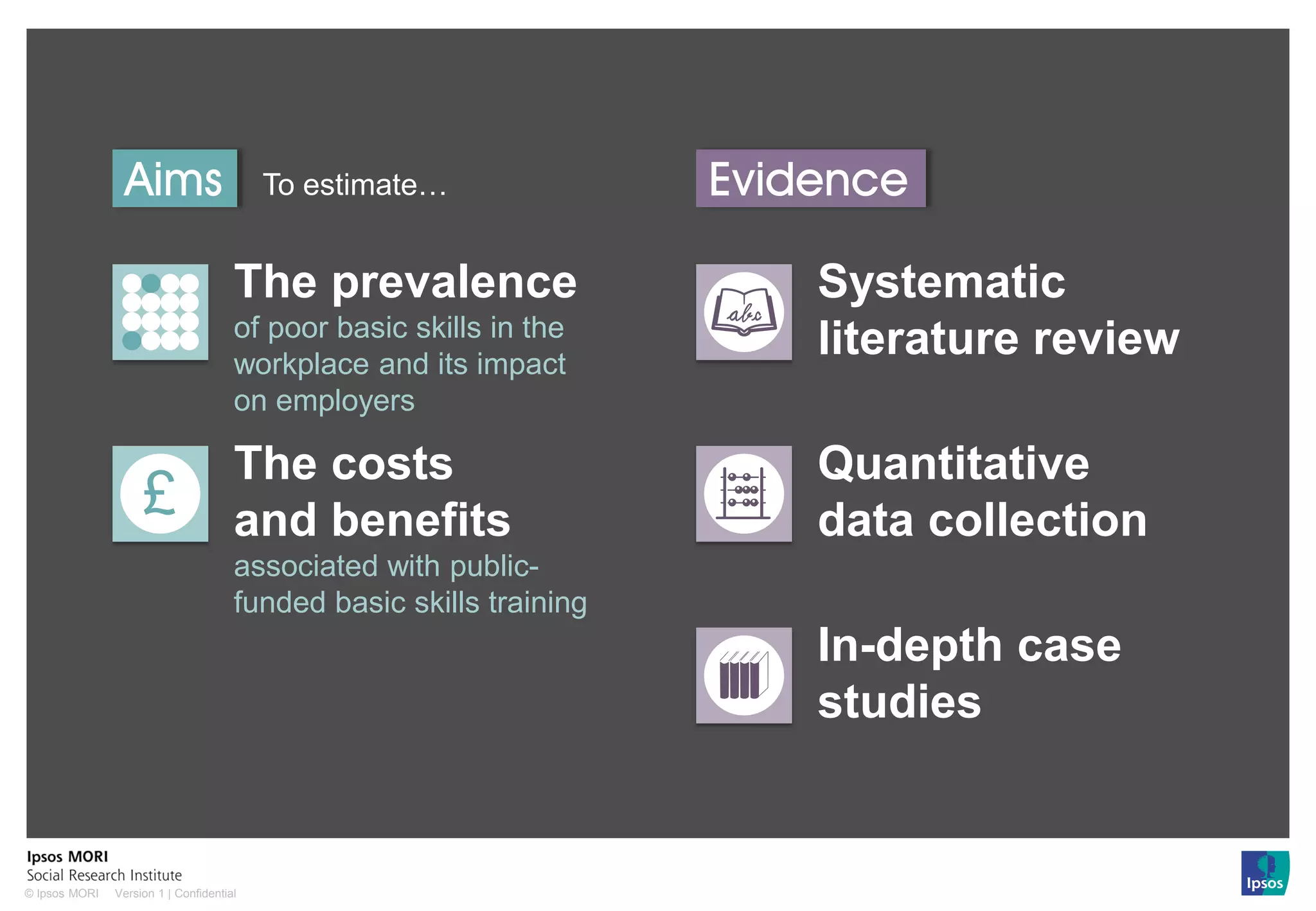
To estimate…Aims Evidence
The prevalence
of poor basic skills in the
workplace and its impact
on employers
The costs
and benefits
associated with public-
funded basic skills training
£
Systematic
literature review
Quantitative
data collection
In-depth case
studies
Version 1 | Confidential© Ipsos MORI
A minority of employers
perceive poor basic
skills to be an issue
Version 1 | Confidential© Ipsos MORI
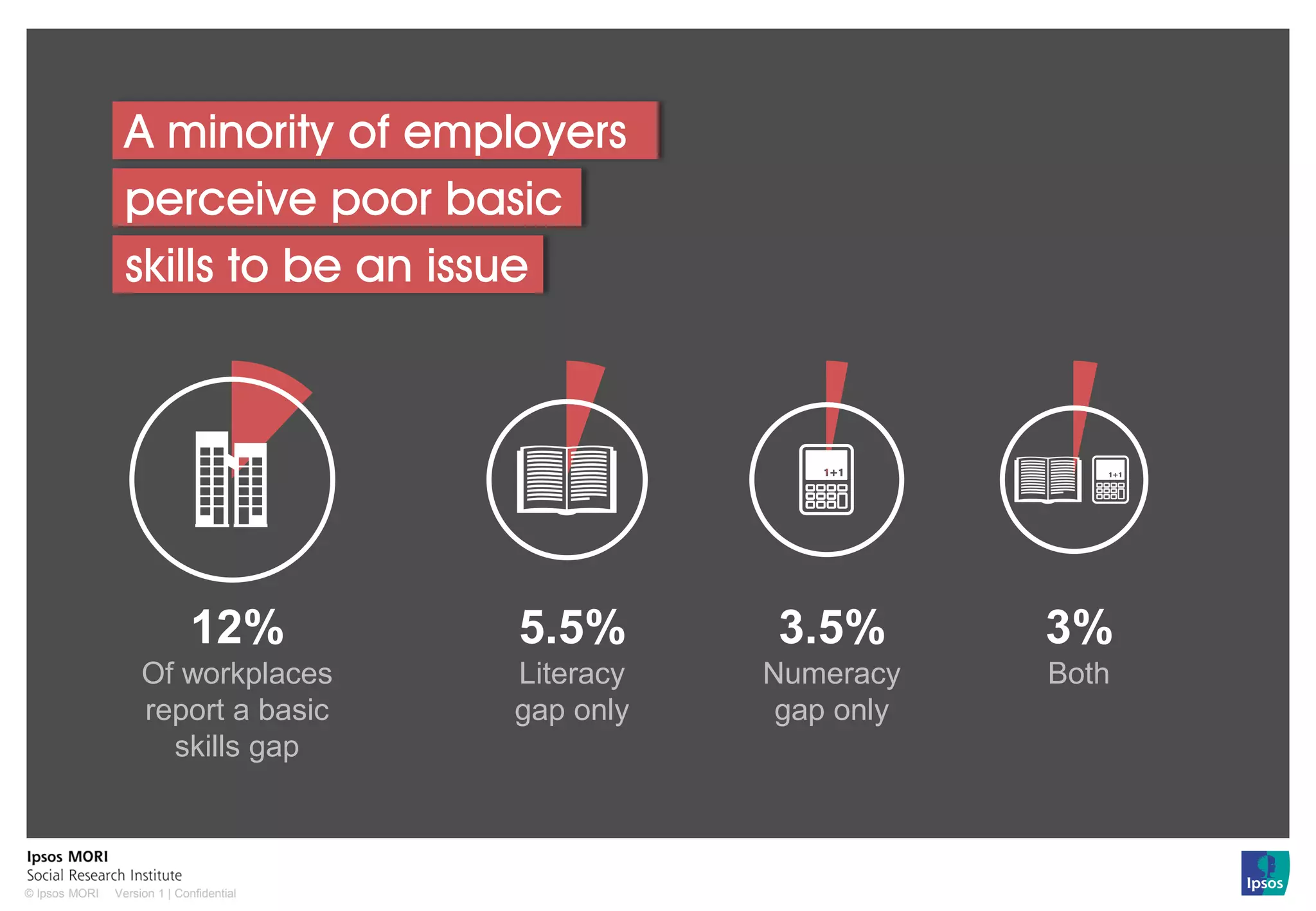
A minority of employers
perceive poor basic
skills to be an issue
5.5%
Literacy
gap only
3.5%
Numeracy
gap only
3%
Both
12%
Of workplaces
report a basic
skills gap
Version 1 | Confidential© Ipsos MORI
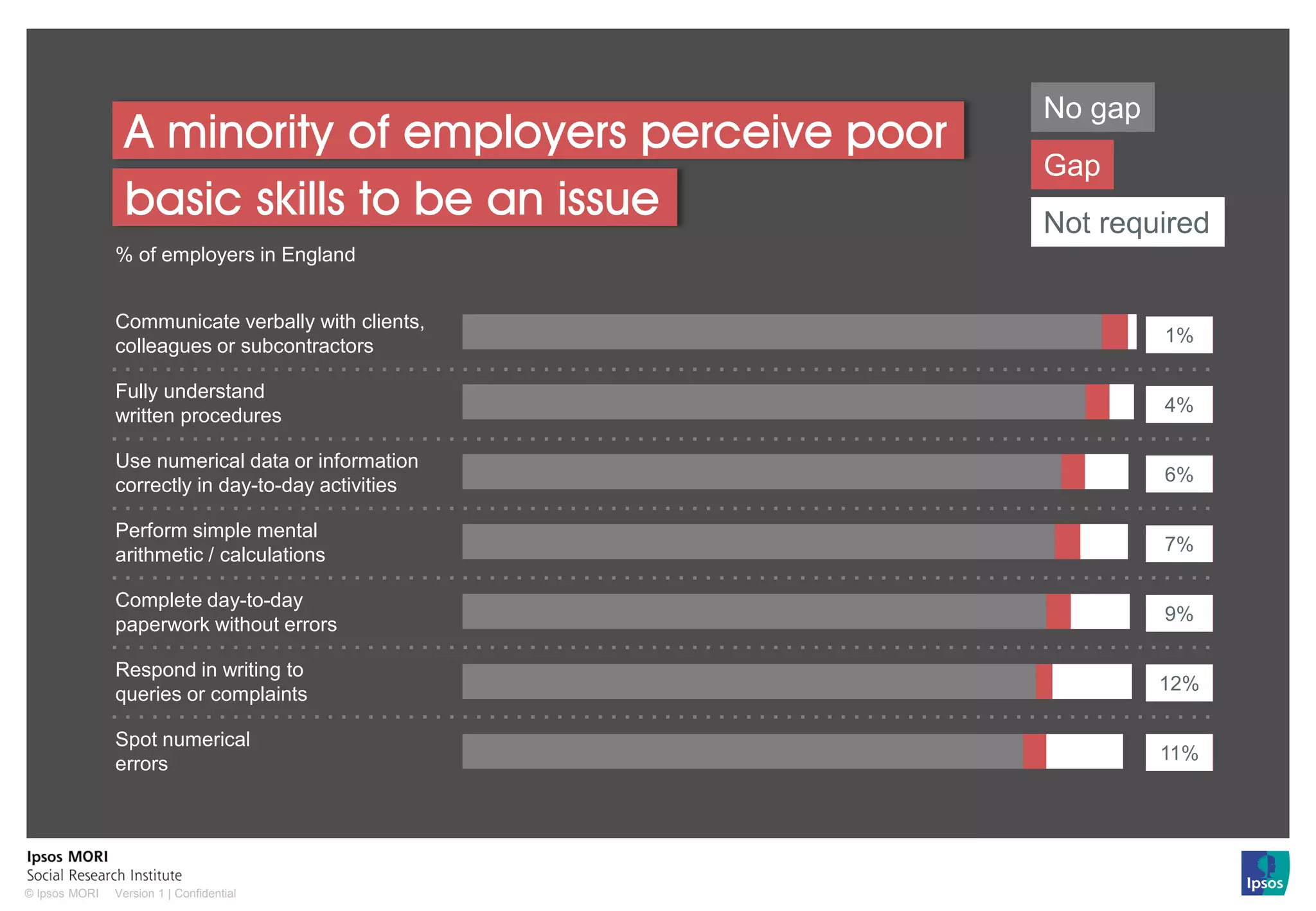
A minority of employers perceive poor
basic skills to be an issue
94%
92%
88%
87%
86%
84%
83%
No gap
Gap
Not required
4%
4%
4%
4%
4%
2%
3%
1%
4%
6%
7%
9%
12%
11%
% of employers in England
Communicate verbally with clients,
colleagues or subcontractors
Fully understand
written procedures
Use numerical data or information
correctly in day-to-day activities
Perform simple mental
arithmetic / calculations
Complete day-to-day
paperwork without errors
Respond in writing to
queries or complaints
Spot numerical
errors
Version 1 | Confidential© Ipsos MORI
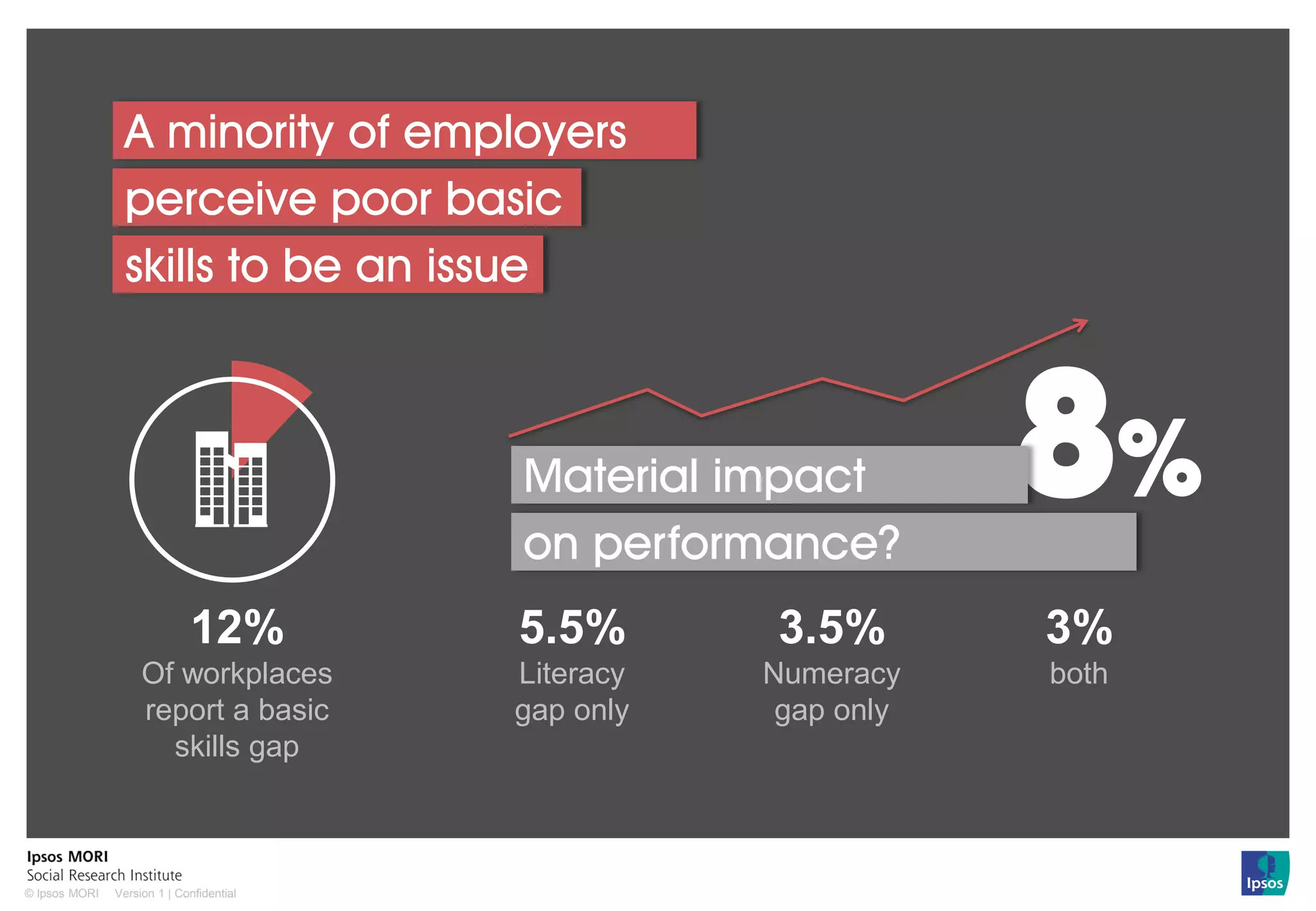
A minority of employers
perceive poor basic
skills to be an issue
5.5%
Literacy
gap only
3.5%
Numeracy
gap only
3%
both
8%
on performance?
Material impact
12%
Of workplaces
report a basic
skills gap
Version 1 | Confidential© Ipsos MORI
But there is evidence
of under-reporting
Version 1 | Confidential© Ipsos MORI
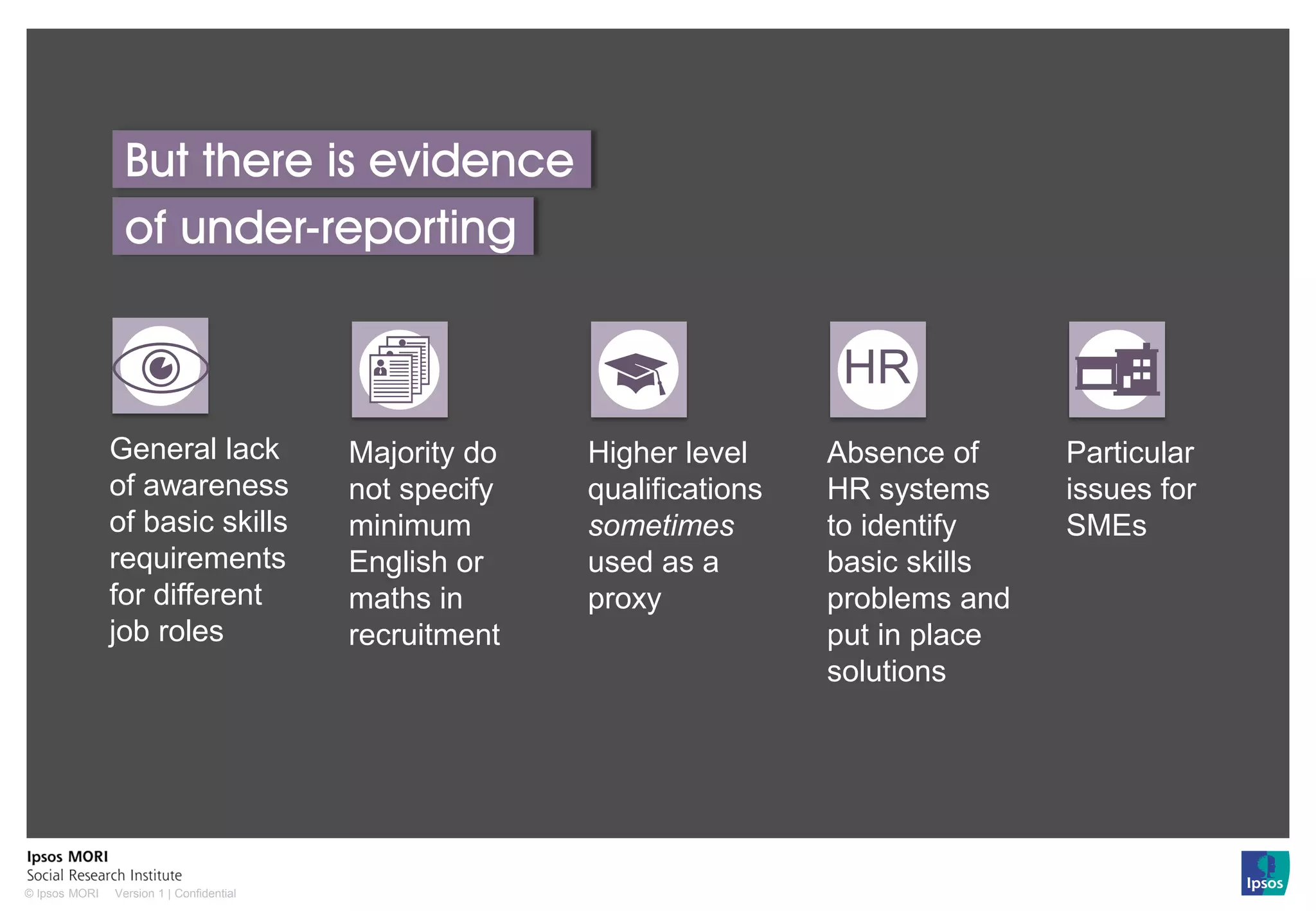
But there is evidence
of under-reporting
Particular
issues for
SMEs
Absence of
HR systems
to identify
basic skills
problems and
put in place
solutions
HR
Higher level
qualifications
sometimes
used as a
proxy
Majority do
not specify
minimum
English or
maths in
recruitment
General lack
of awareness
of basic skills
requirements
for different
job roles
Version 1 | Confidential© Ipsos MORI
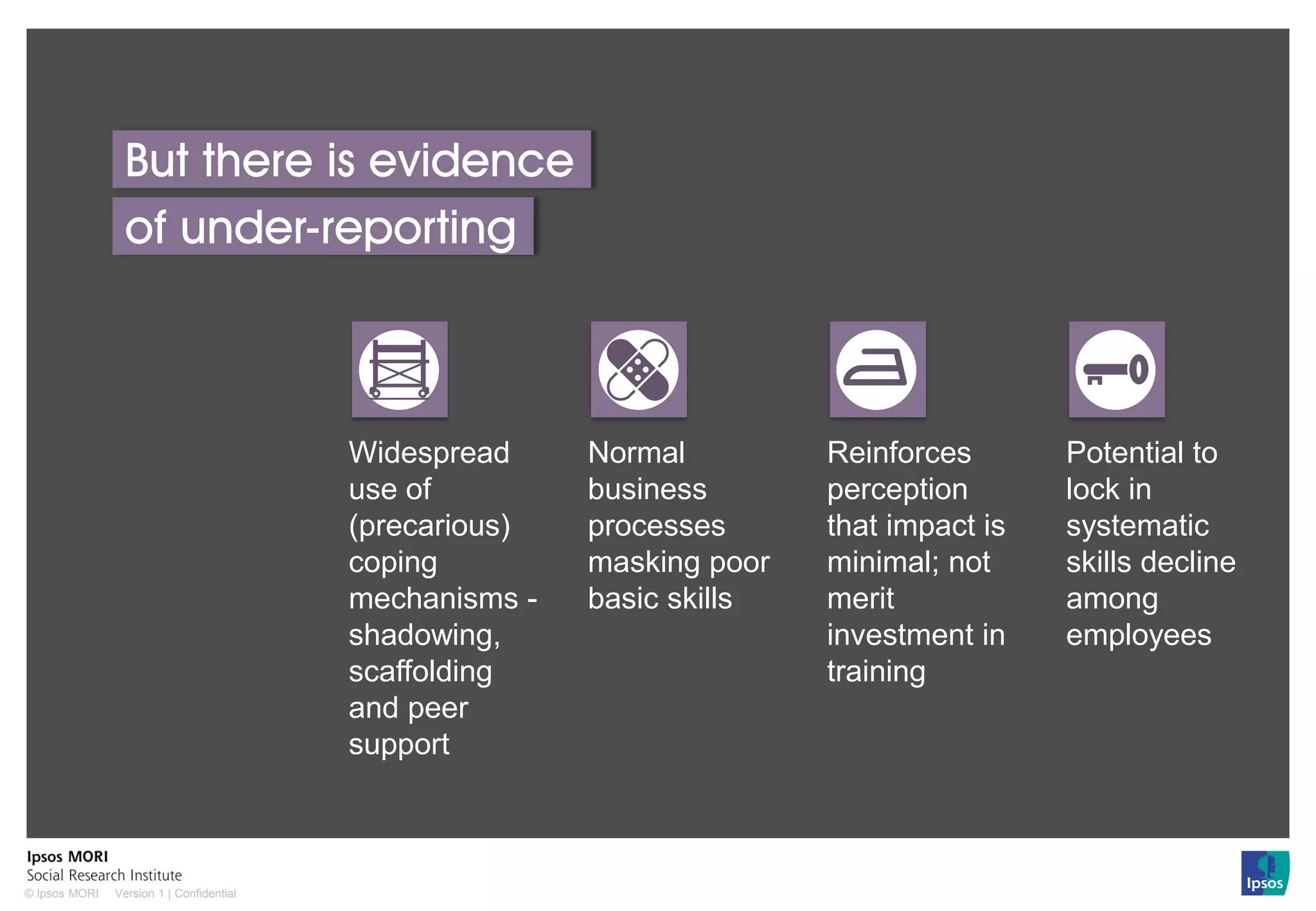
But there is evidence
of under-reporting
Normal
business
processes
masking poor
basic skills
Reinforces
perception
that impact is
minimal; not
merit
investment in
training
Potential to
lock in
systematic
skills decline
among
employees
Widespread
use of
(precarious)
coping
mechanisms -
shadowing,
scaffolding
and peer
support
Version 1 | Confidential© Ipsos MORI
There are costs to
poor basic skills
Version 1 | Confidential© Ipsos MORI
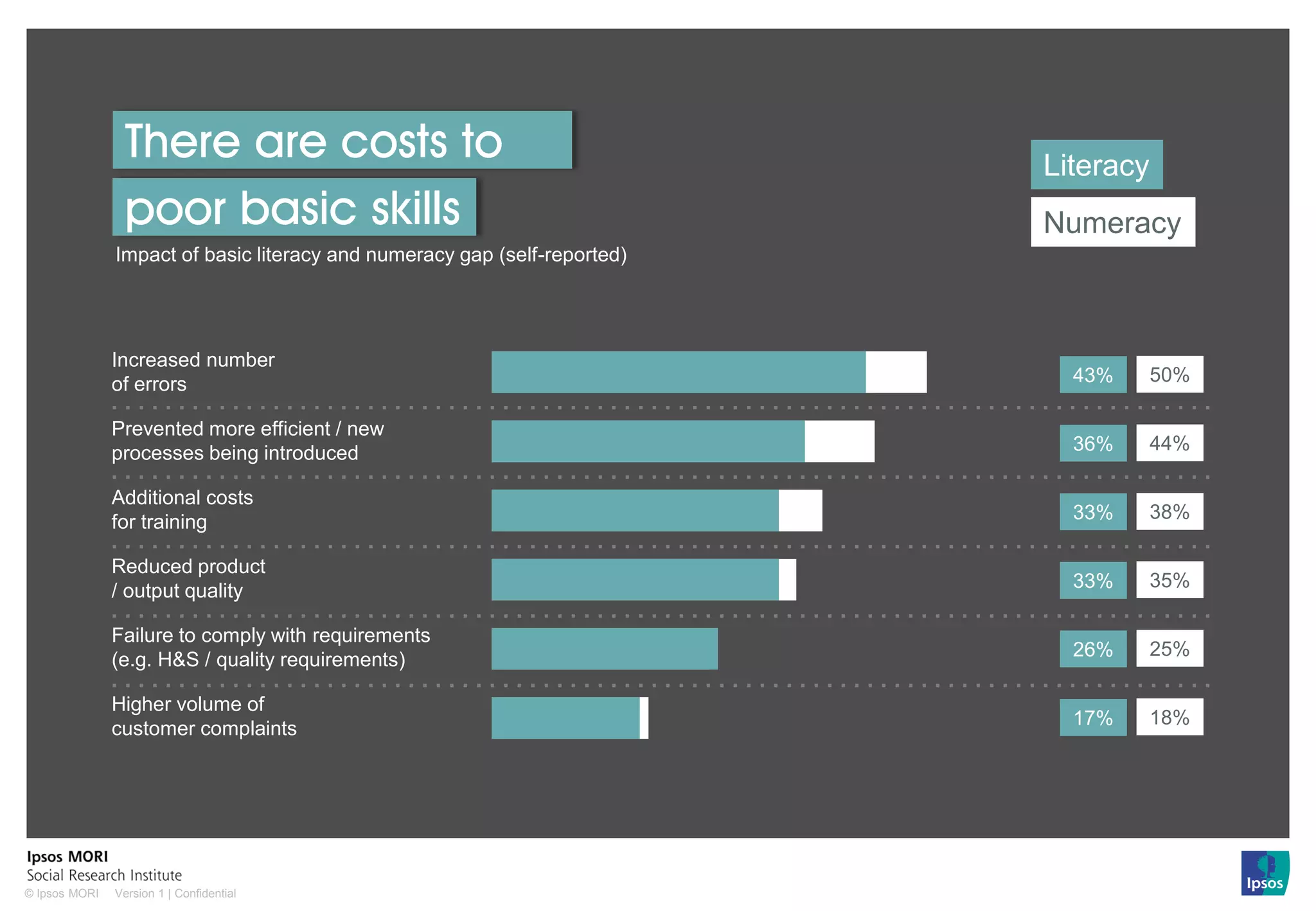
50%
44%
38%
35%
25%
18%
Increased number
of errors
Prevented more efficient / new
processes being introduced
Additional costs
for training
Reduced product
/ output quality
Failure to comply with requirements
(e.g. H&S / quality requirements)
Higher volume of
customer complaints
43%
36%
33%
33%
26%
17%
Literacy
Numeracy
There are costs to
poor basic skills
Impact of basic literacy and numeracy gap (self-reported)
Version 1 | Confidential© Ipsos MORI
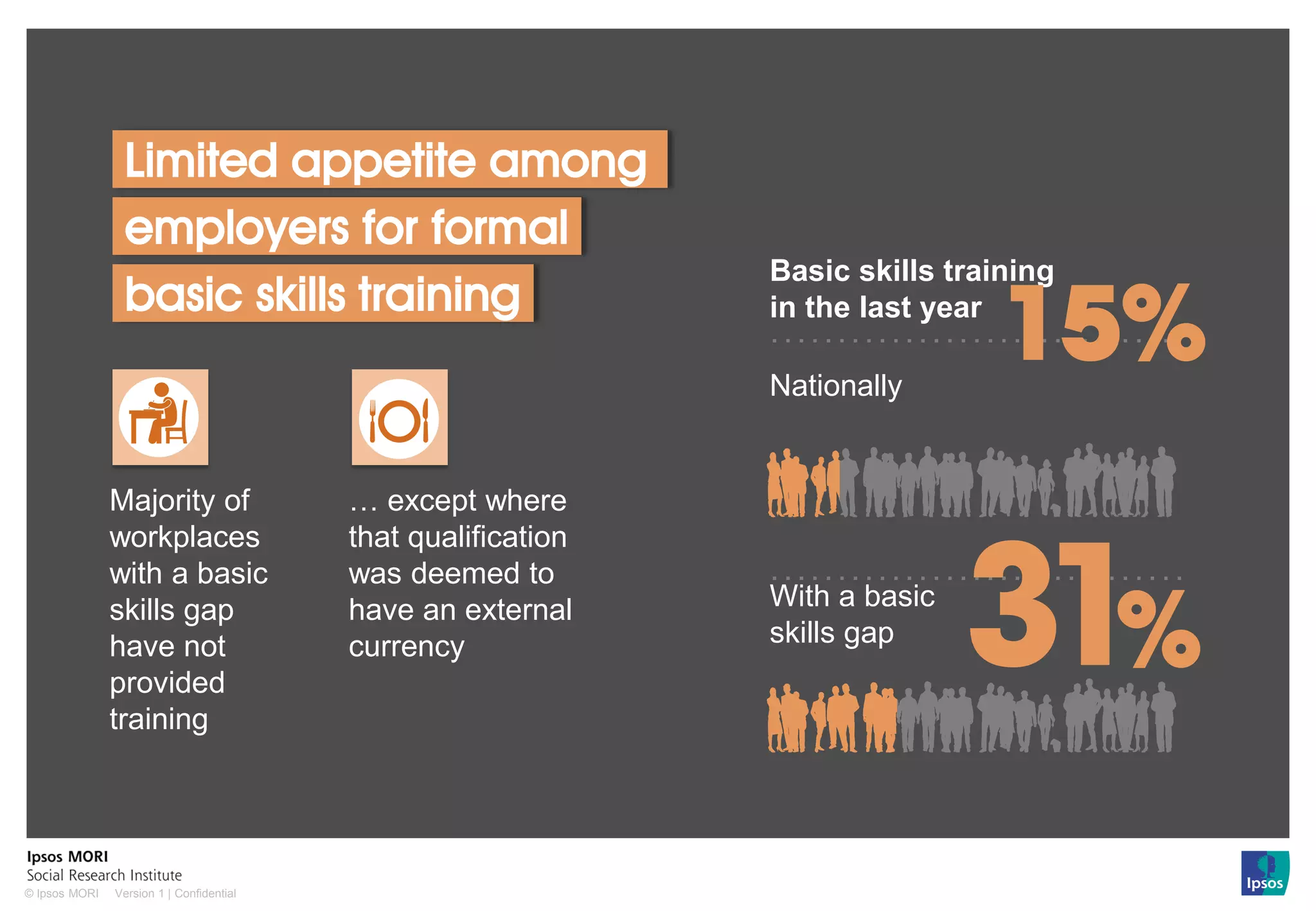
Limited appetite among
employers for formal
basic skills training
Version 1 | Confidential© Ipsos MORI
Limited appetite among
employers for formal
basic skills training
Basic skills training
in the last year
Nationally
15%
With a basic
skills gap
31%
Majority of
workplaces
with a basic
skills gap
have not
provided
training
… except where
that qualification
was deemed to
have an external
currency
Version 1 | Confidential© Ipsos MORI
Implications for
public-funded basic
skills provision
Version 1 | Confidential© Ipsos MORI
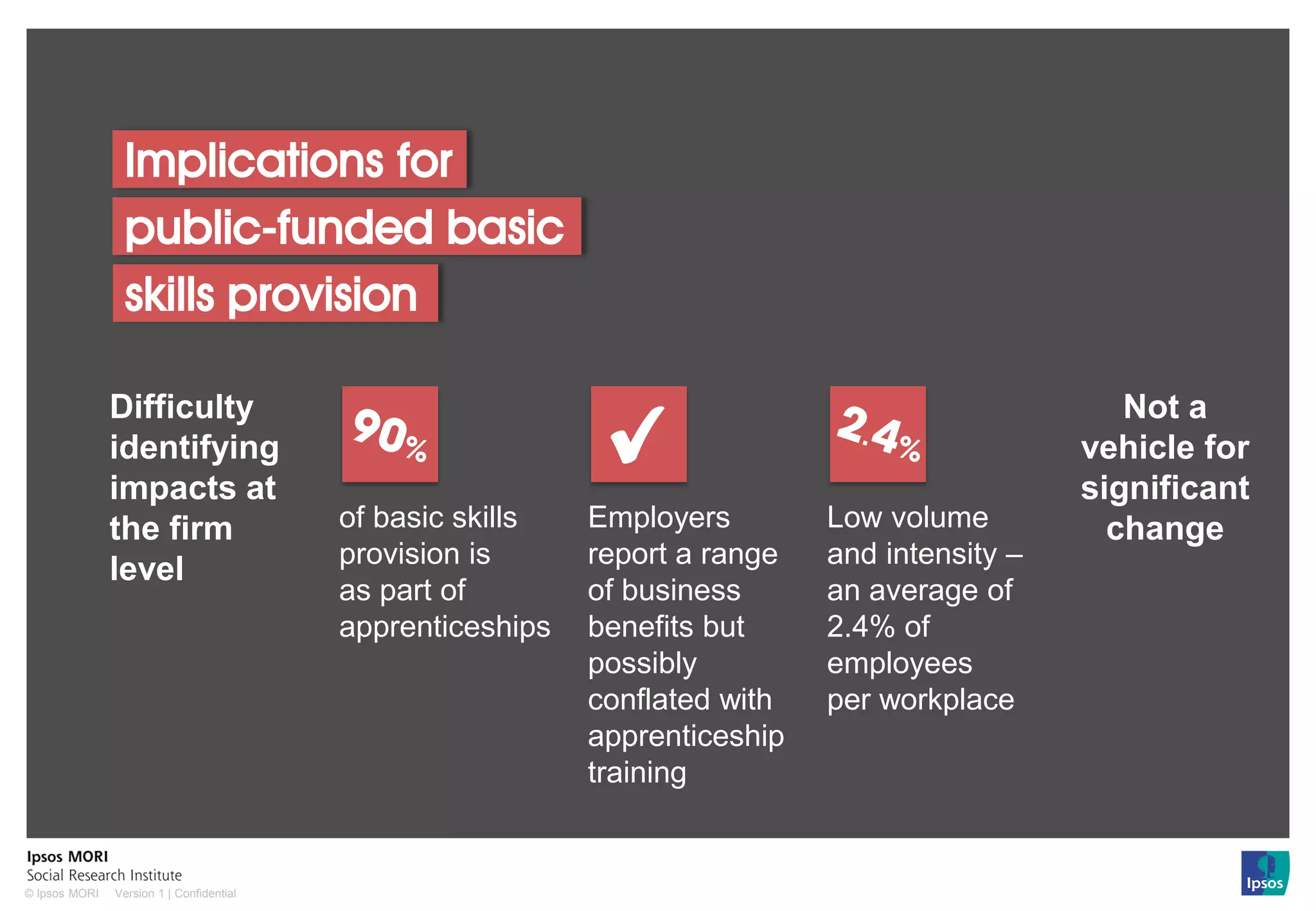
Implications for
public-funded basic
skills provision
Difficulty
identifying
impacts at
the firm
level
Not a
vehicle for
significant
changeof basic skills
provision is
as part of
apprenticeships
Employers
report a range
of business
benefits but
possibly
conflated with
apprenticeship
training
Low volume
and intensity –
an average of
2.4% of
employees
per workplace
Version 1 | Confidential© Ipsos MORI
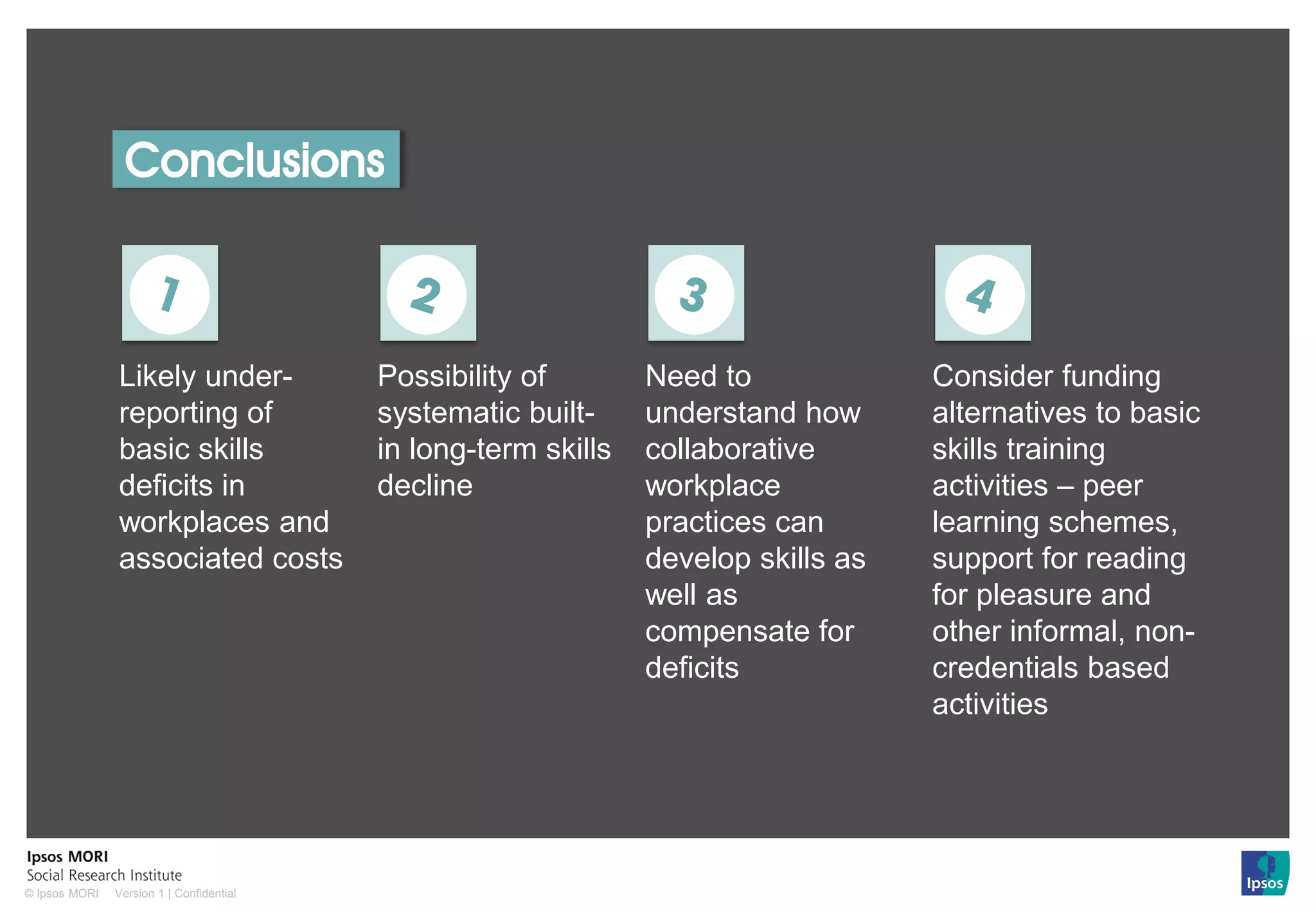
Conclusions
Likely under-
reporting of
basic skills
deficits in
workplaces and
associated costs
Possibility of
systematic built-
in long-term skills
decline
Need to
understand how
collaborative
workplace
practices can
develop skills as
well as
compensate for
deficits
Consider funding
alternatives to basic
skills training
activities – peer
learning schemes,
support for reading
for pleasure and
other informal, non-
credentials based
activities
Thank
trinh.tu@ipsos.com

Impact of Poor Basic Skills: The Employer Perspective

  • 1.
    Version 1 |Confidential© Ipsos MORI Basic Skills Impact of Poor The employer perspective Trinh Tu
  • 2.
    Version 1 |Confidential© Ipsos MORI To estimate…Aims Evidence The prevalence of poor basic skills in the workplace and its impact on employers The costs and benefits associated with public- funded basic skills training £ Systematic literature review Quantitative data collection In-depth case studies
  • 3.
    Version 1 |Confidential© Ipsos MORI A minority of employers perceive poor basic skills to be an issue
  • 4.
    Version 1 |Confidential© Ipsos MORI A minority of employers perceive poor basic skills to be an issue 5.5% Literacy gap only 3.5% Numeracy gap only 3% Both 12% Of workplaces report a basic skills gap
  • 5.
    Version 1 |Confidential© Ipsos MORI A minority of employers perceive poor basic skills to be an issue 94% 92% 88% 87% 86% 84% 83% No gap Gap Not required 4% 4% 4% 4% 4% 2% 3% 1% 4% 6% 7% 9% 12% 11% % of employers in England Communicate verbally with clients, colleagues or subcontractors Fully understand written procedures Use numerical data or information correctly in day-to-day activities Perform simple mental arithmetic / calculations Complete day-to-day paperwork without errors Respond in writing to queries or complaints Spot numerical errors
  • 6.
    Version 1 |Confidential© Ipsos MORI A minority of employers perceive poor basic skills to be an issue 5.5% Literacy gap only 3.5% Numeracy gap only 3% both 8% on performance? Material impact 12% Of workplaces report a basic skills gap
  • 7.
    Version 1 |Confidential© Ipsos MORI But there is evidence of under-reporting
  • 8.
    Version 1 |Confidential© Ipsos MORI But there is evidence of under-reporting Particular issues for SMEs Absence of HR systems to identify basic skills problems and put in place solutions HR Higher level qualifications sometimes used as a proxy Majority do not specify minimum English or maths in recruitment General lack of awareness of basic skills requirements for different job roles
  • 9.
    Version 1 |Confidential© Ipsos MORI But there is evidence of under-reporting Normal business processes masking poor basic skills Reinforces perception that impact is minimal; not merit investment in training Potential to lock in systematic skills decline among employees Widespread use of (precarious) coping mechanisms - shadowing, scaffolding and peer support
  • 10.
    Version 1 |Confidential© Ipsos MORI There are costs to poor basic skills
  • 11.
    Version 1 |Confidential© Ipsos MORI 50% 44% 38% 35% 25% 18% Increased number of errors Prevented more efficient / new processes being introduced Additional costs for training Reduced product / output quality Failure to comply with requirements (e.g. H&S / quality requirements) Higher volume of customer complaints 43% 36% 33% 33% 26% 17% Literacy Numeracy There are costs to poor basic skills Impact of basic literacy and numeracy gap (self-reported)
  • 12.
    Version 1 |Confidential© Ipsos MORI Limited appetite among employers for formal basic skills training
  • 13.
    Version 1 |Confidential© Ipsos MORI Limited appetite among employers for formal basic skills training Basic skills training in the last year Nationally 15% With a basic skills gap 31% Majority of workplaces with a basic skills gap have not provided training … except where that qualification was deemed to have an external currency
  • 14.
    Version 1 |Confidential© Ipsos MORI Implications for public-funded basic skills provision
  • 15.
    Version 1 |Confidential© Ipsos MORI Implications for public-funded basic skills provision Difficulty identifying impacts at the firm level Not a vehicle for significant changeof basic skills provision is as part of apprenticeships Employers report a range of business benefits but possibly conflated with apprenticeship training Low volume and intensity – an average of 2.4% of employees per workplace
  • 16.
    Version 1 |Confidential© Ipsos MORI Conclusions Likely under- reporting of basic skills deficits in workplaces and associated costs Possibility of systematic built- in long-term skills decline Need to understand how collaborative workplace practices can develop skills as well as compensate for deficits Consider funding alternatives to basic skills training activities – peer learning schemes, support for reading for pleasure and other informal, non- credentials based activities
  • 17.