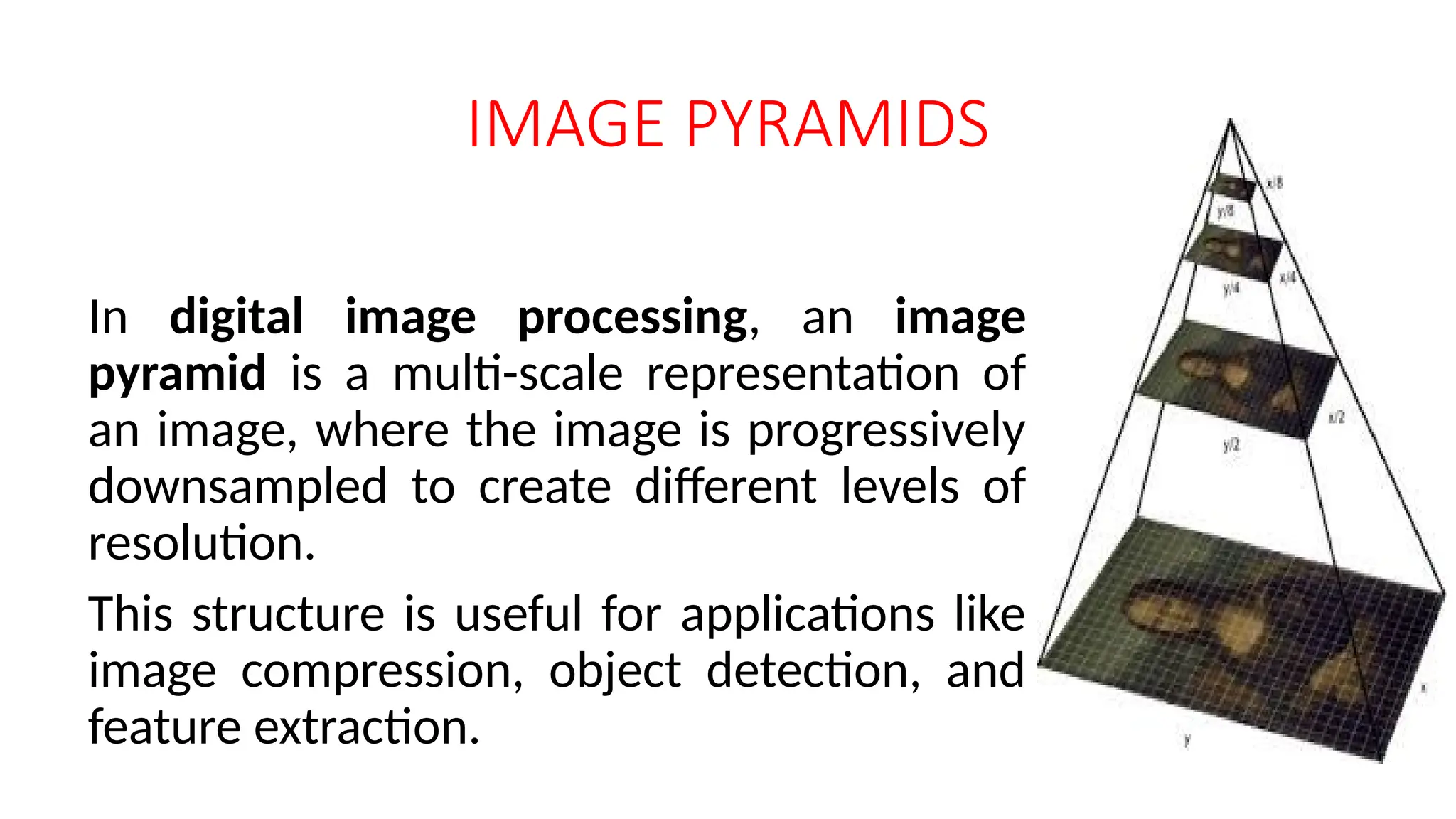
IMAGE PYRAMIDS
In digital image processing, an image
pyramid is a multi-scale representation of
an image, where the image is progressively
downsampled to create different levels of
resolution.
This structure is useful for applications like
image compression, object detection, and
feature extraction.
IMAGE PYRAMIDS
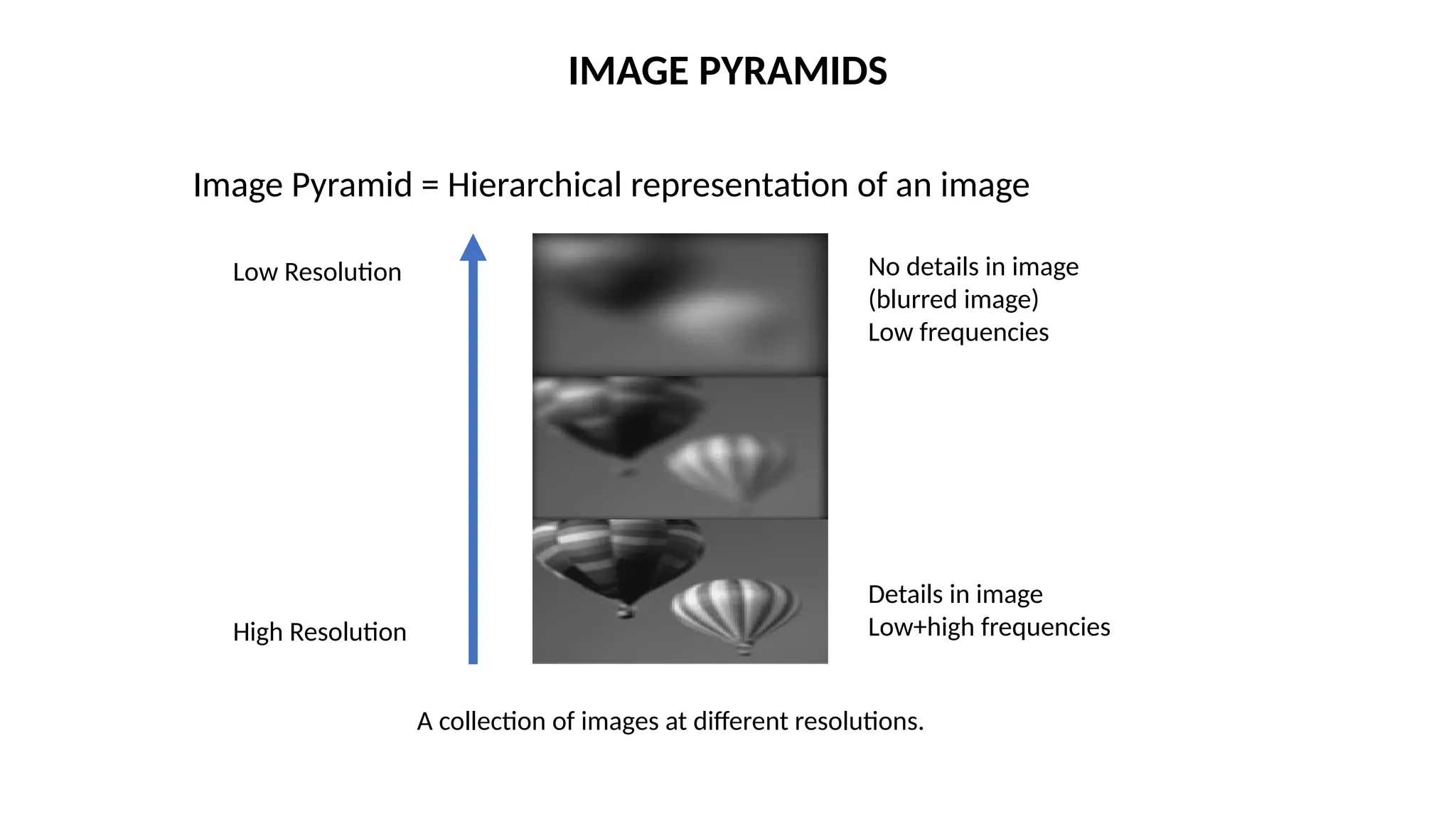
Image Pyramid = Hierarchical representation of an image
Low Resolution
High Resolution
No details in image
(blurred image)
Low frequencies
Details in image
Low+high frequencies
A collection of images at different resolutions.
Outlines :-
Gaussian Pyramid
 Laplacian Pyramid
 Applications
Gaussian Pyramid:
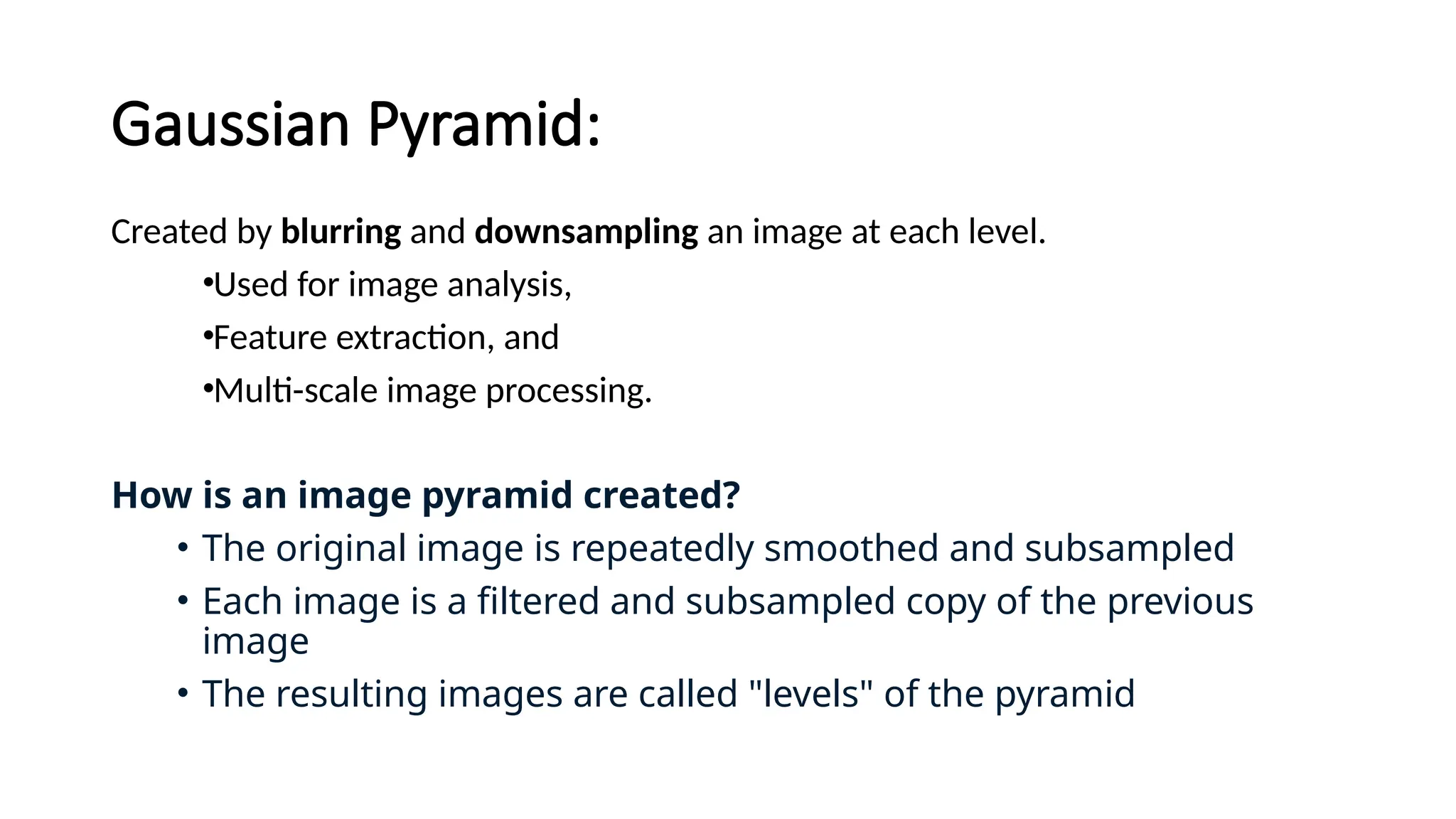
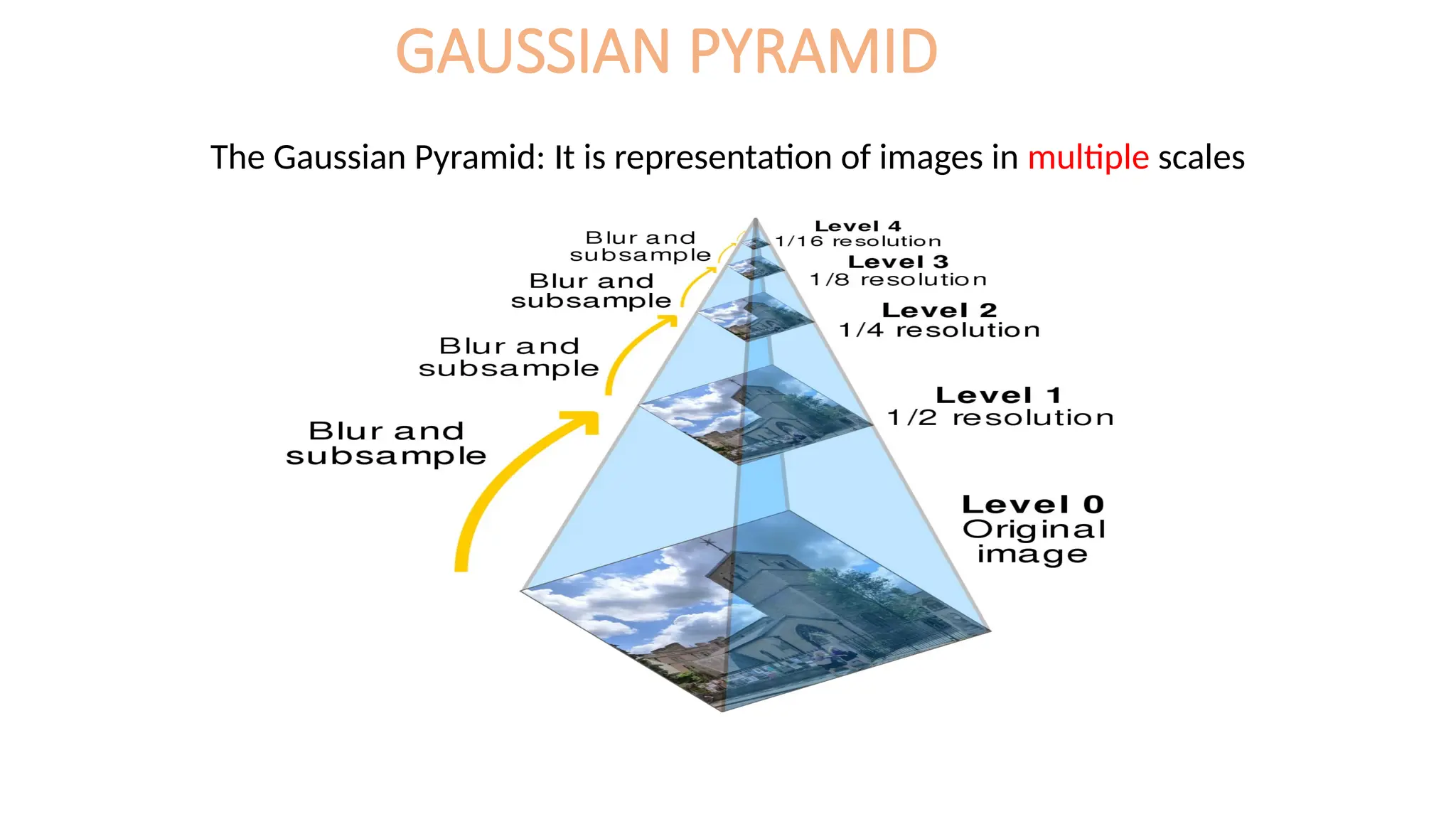
Created by blurring and downsampling an image at each level.
•Used for image analysis,
•Feature extraction, and
•Multi-scale image processing.
How is an image pyramid created?
• The original image is repeatedly smoothed and subsampled
• Each image is a filtered and subsampled copy of the previous
image
• The resulting images are called "levels" of the pyramid
GAUSSIAN PYRAMID
The Gaussian Pyramid: It is representation of images in multiple scales
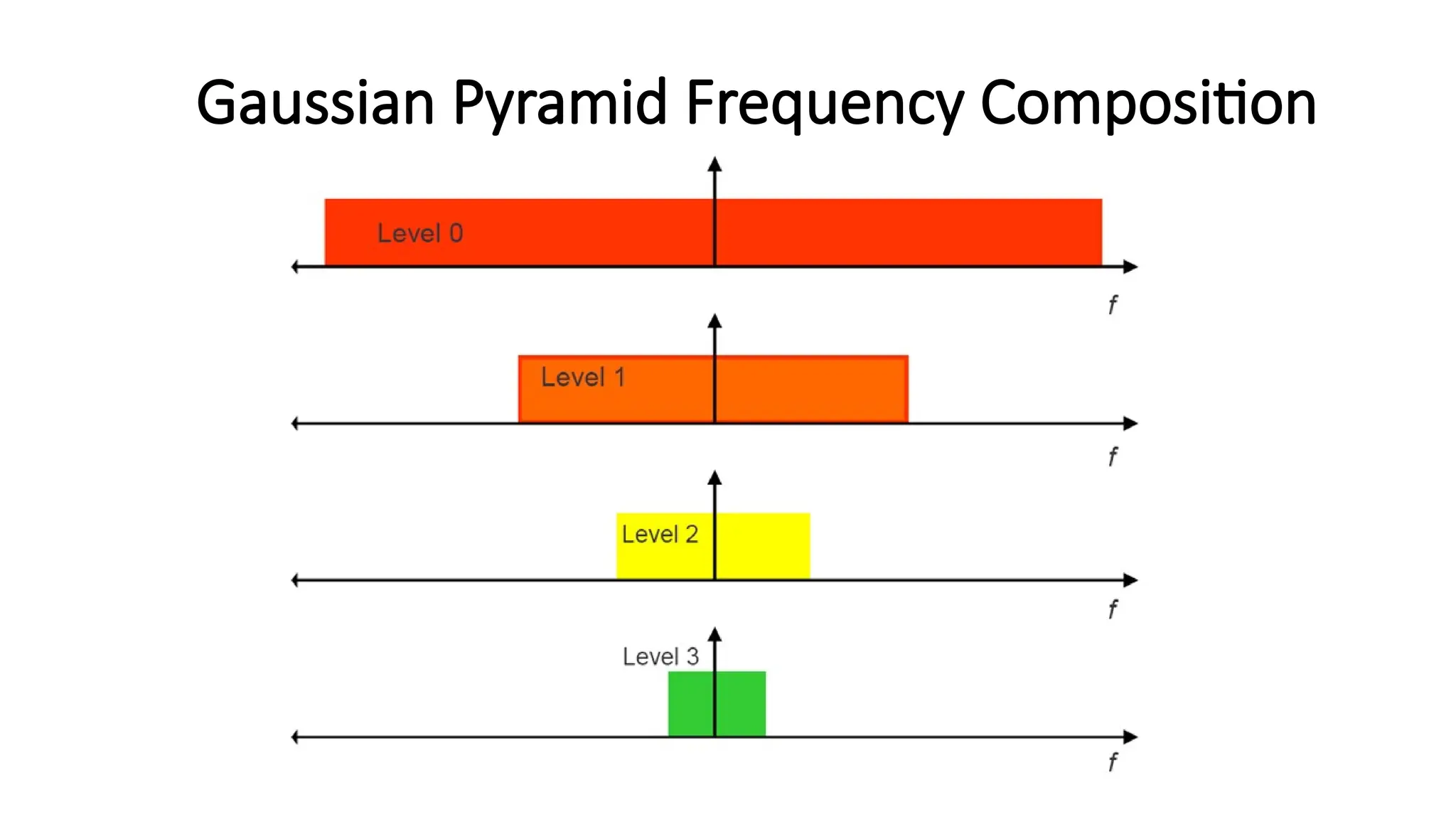
Gaussian Pyramid Frequency Composition
GAUSSIAN PYRAMID
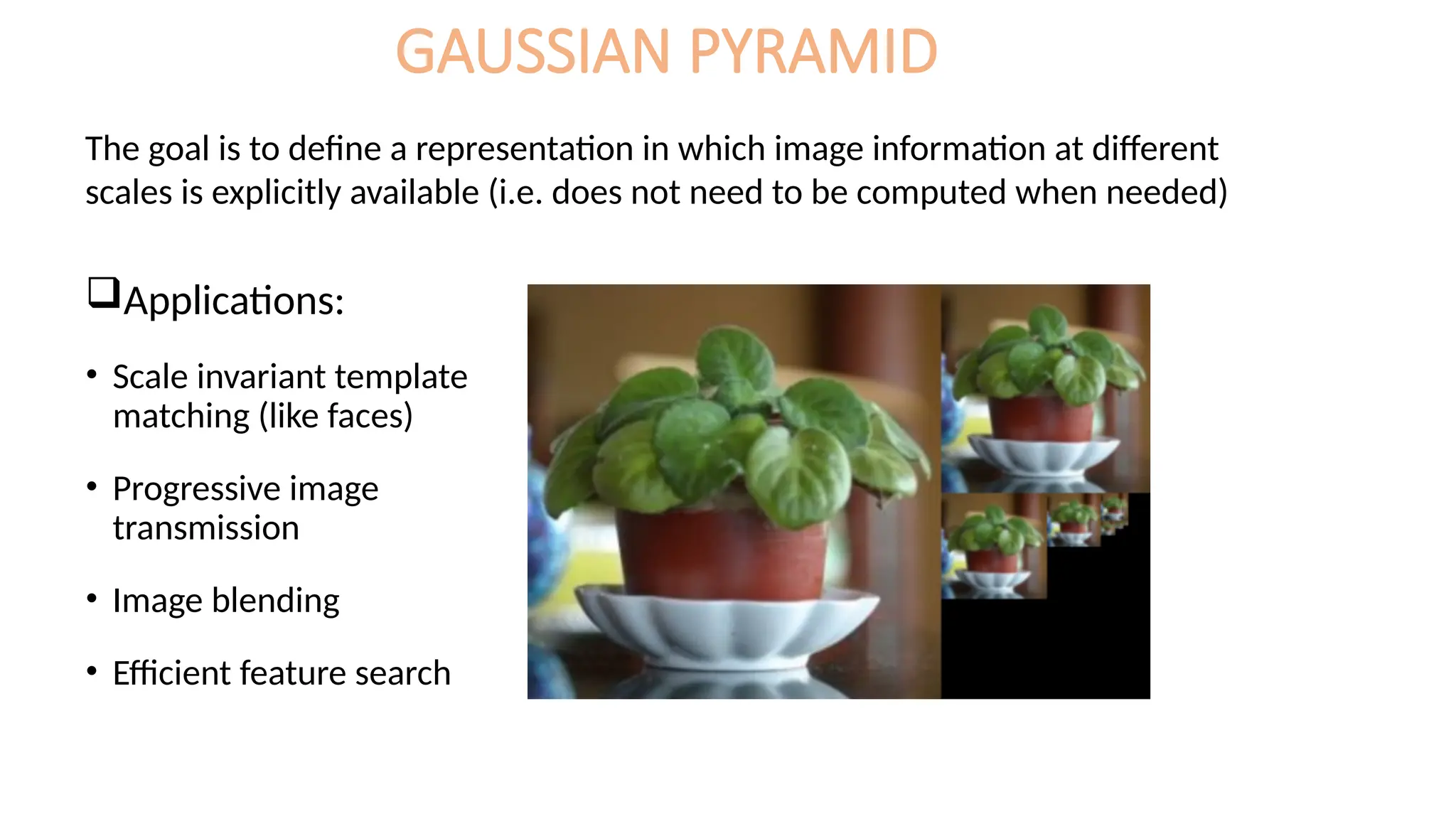
Applications:
• Scale invariant template
matching (like faces)
• Progressive image
transmission
• Image blending
• Efficient feature search
The goal is to define a representation in which image information at different
scales is explicitly available (i.e. does not need to be computed when needed)
GAUSSIAN PYRAMID
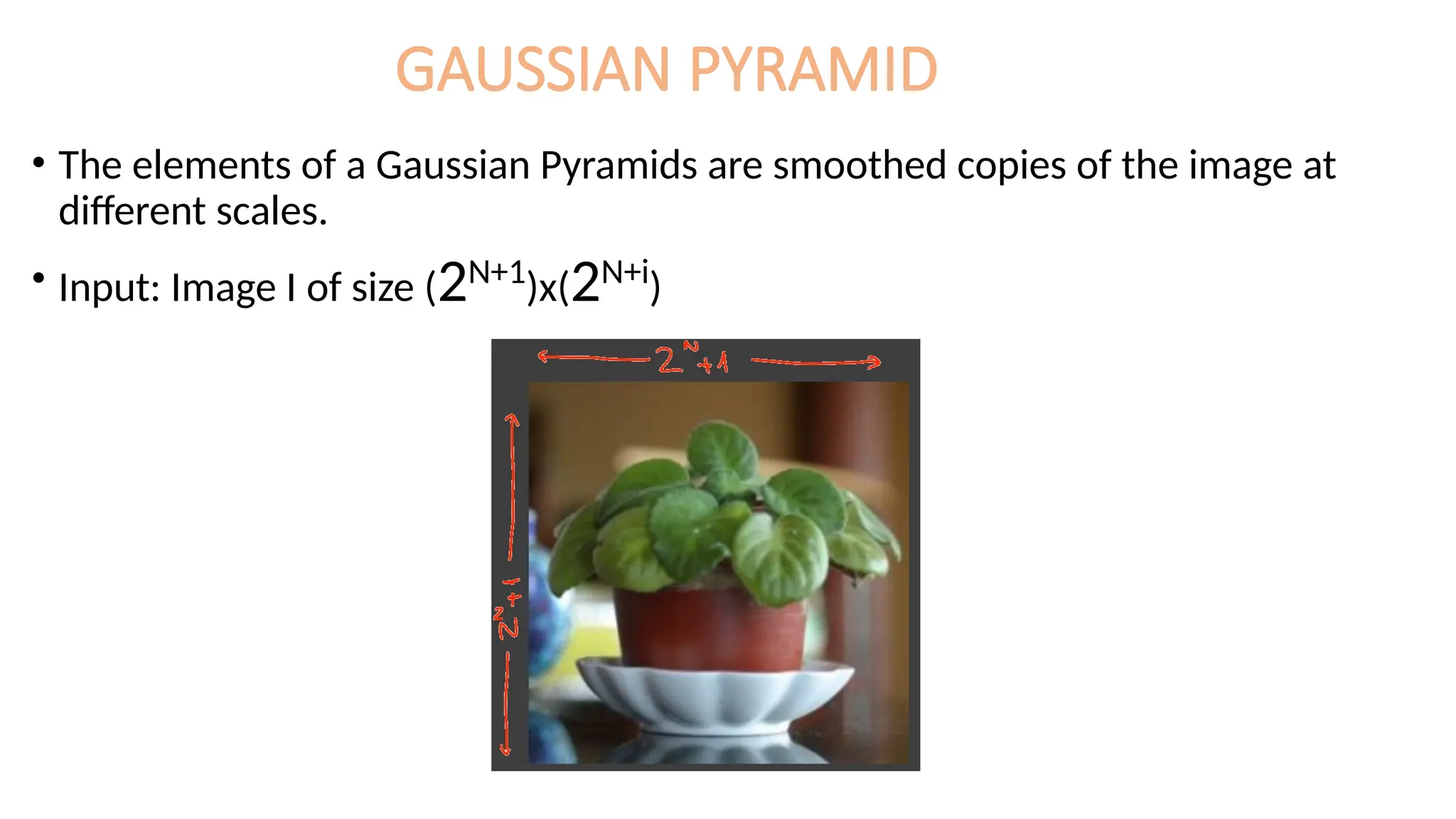
• The elements of a Gaussian Pyramids are smoothed copies of the image at
different scales.
• Input: Image I of size (2N+1
)x(2N+i
)
GAUSSIAN PYRAMID
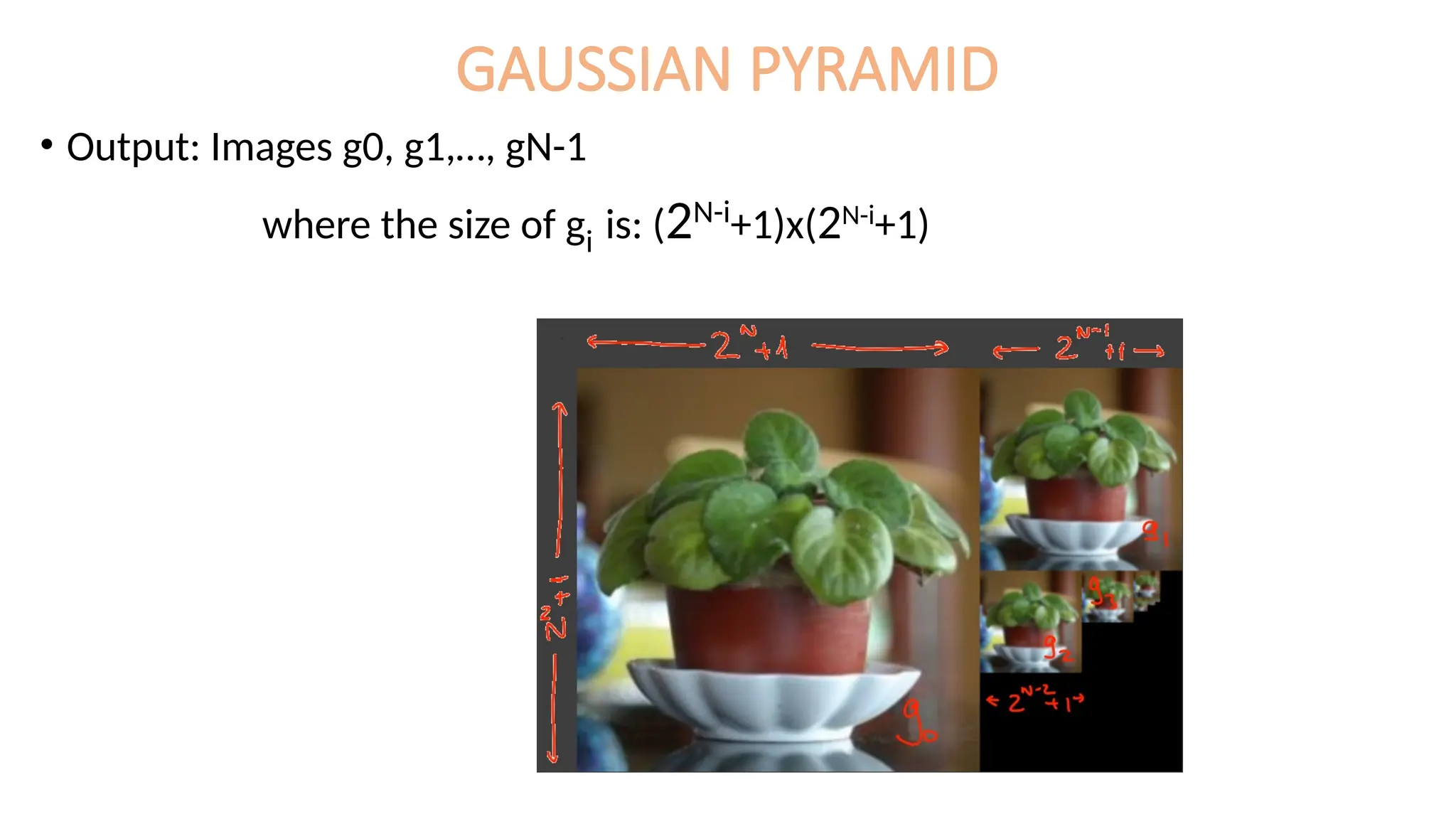
• Output: Images g0, g1,…, gN-1
where the size of gi is: (2N-i
+1)x(2N-i
+1)
Working:
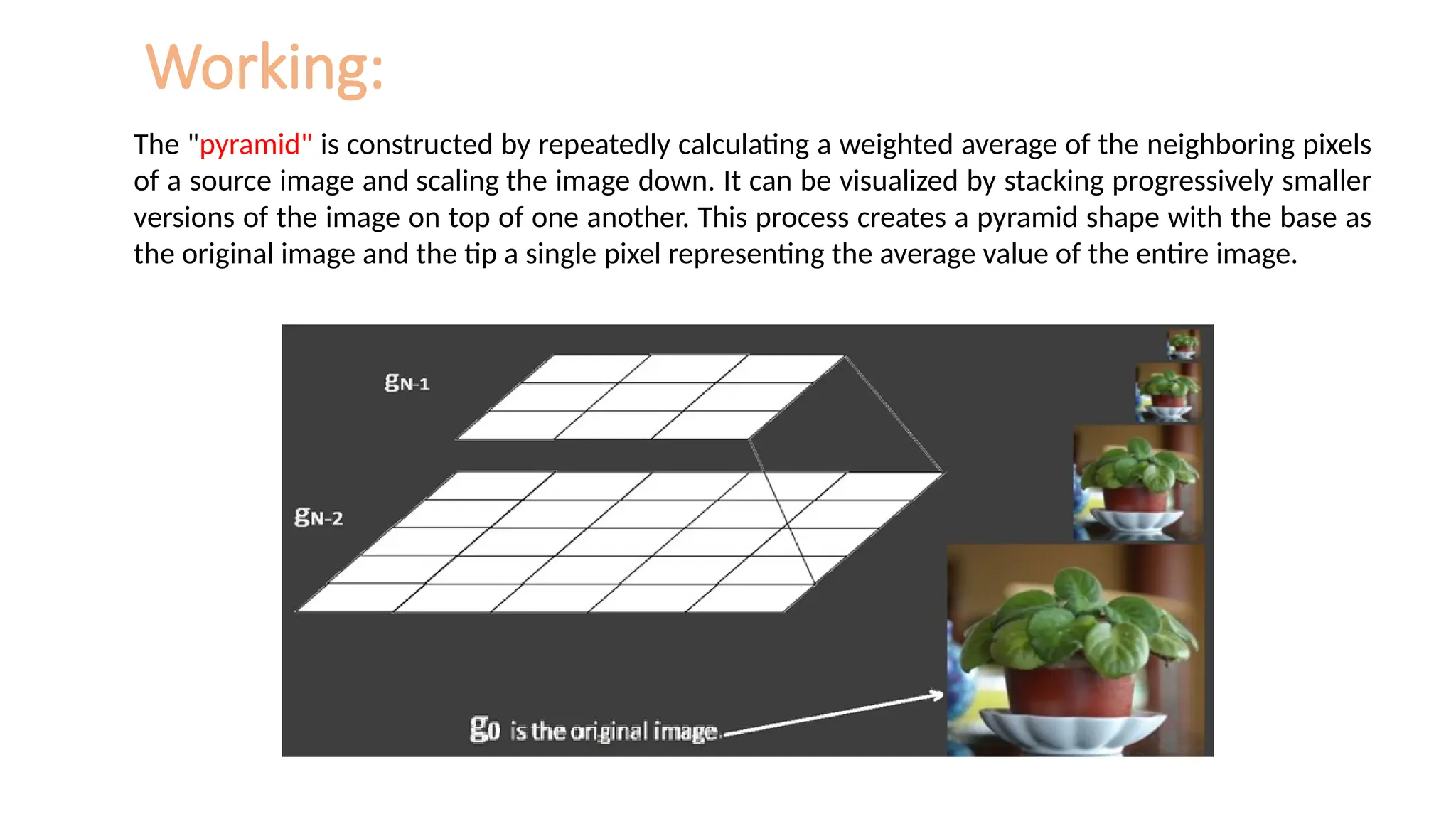
The "pyramid" is constructed by repeatedly calculating a weighted average of the neighboring pixels
of a source image and scaling the image down. It can be visualized by stacking progressively smaller
versions of the image on top of one another. This process creates a pyramid shape with the base as
the original image and the tip a single pixel representing the average value of the entire image.
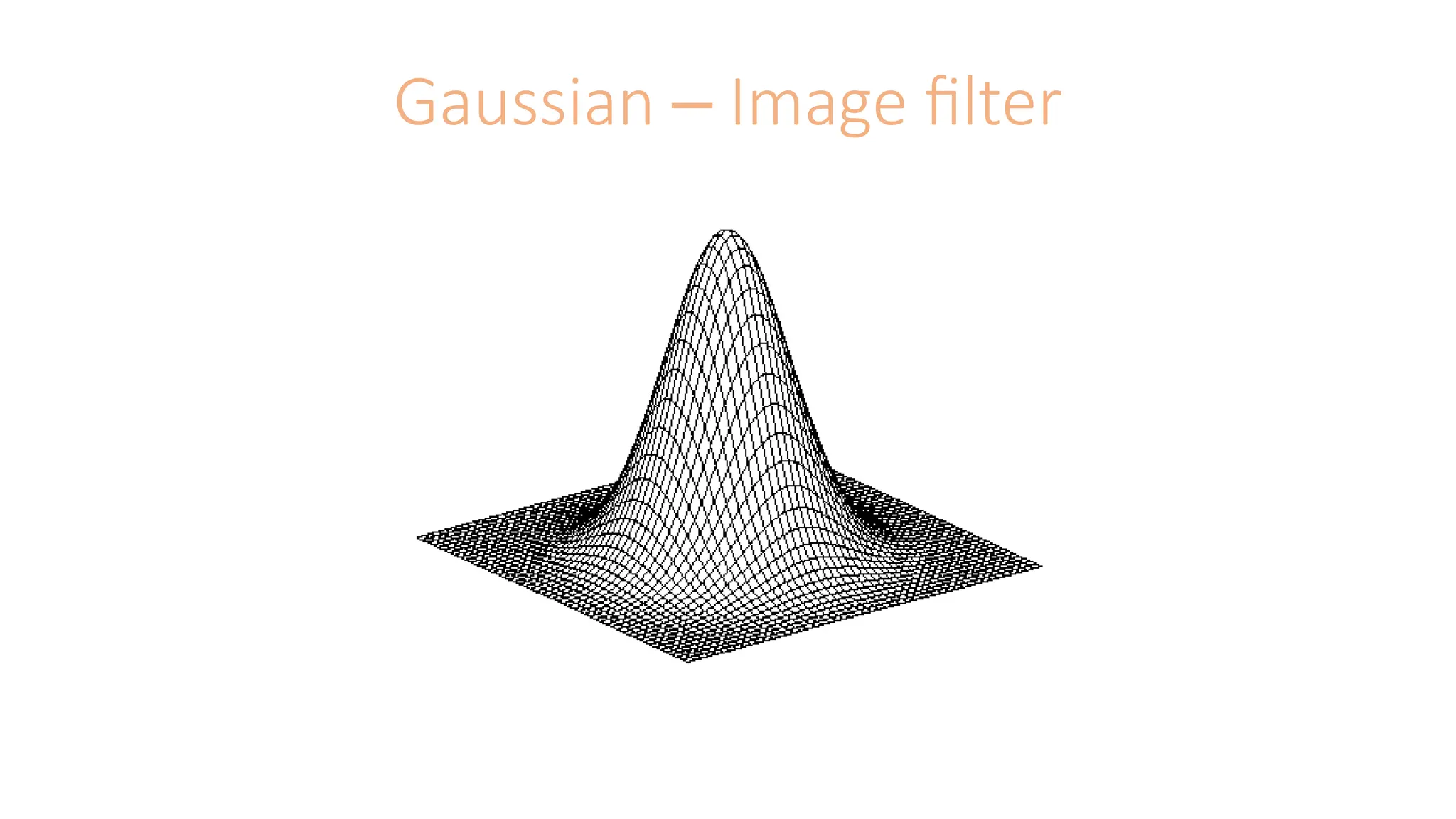
Gaussian – Image filter
LAPLACIAN PYRAMID
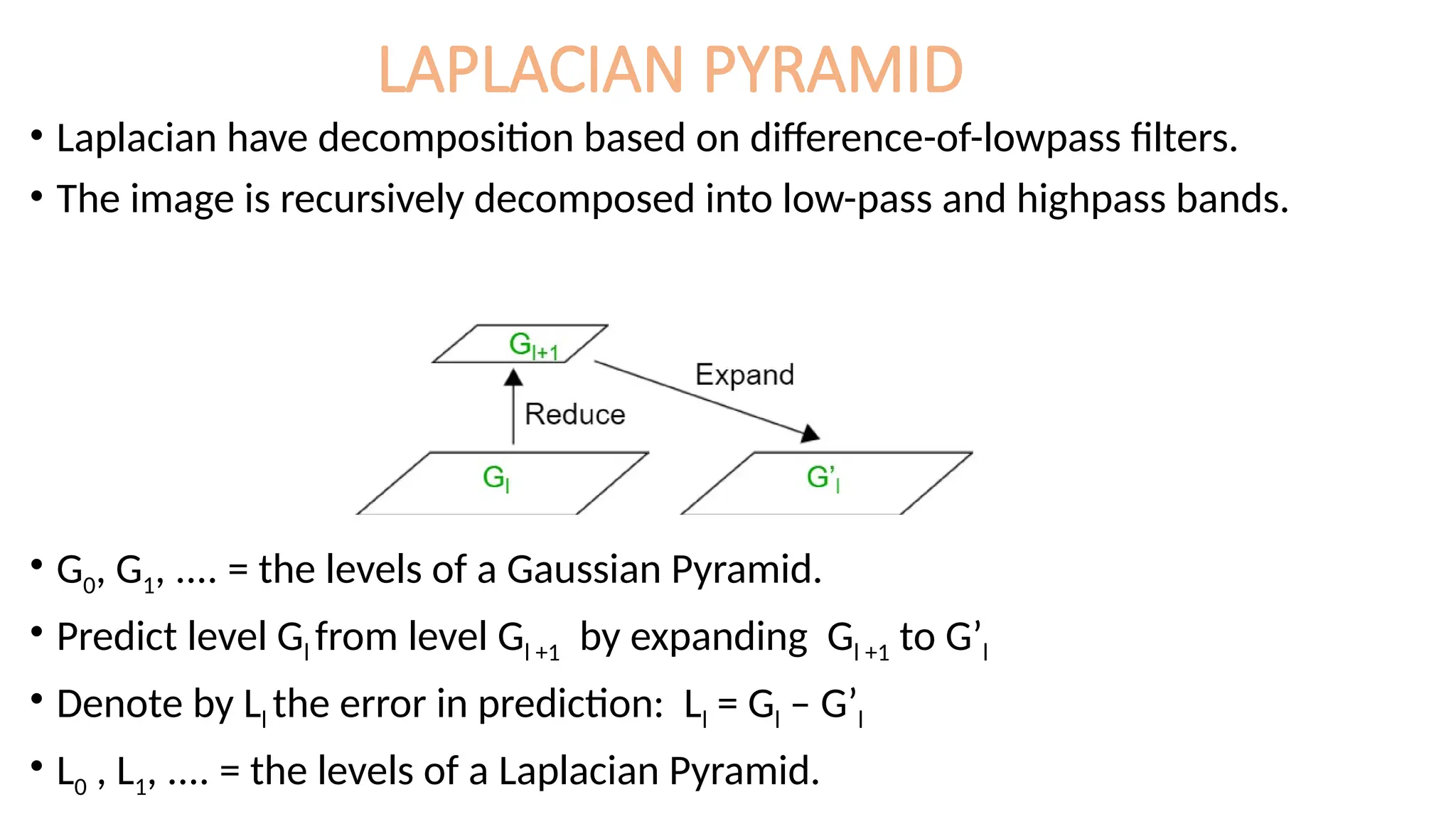
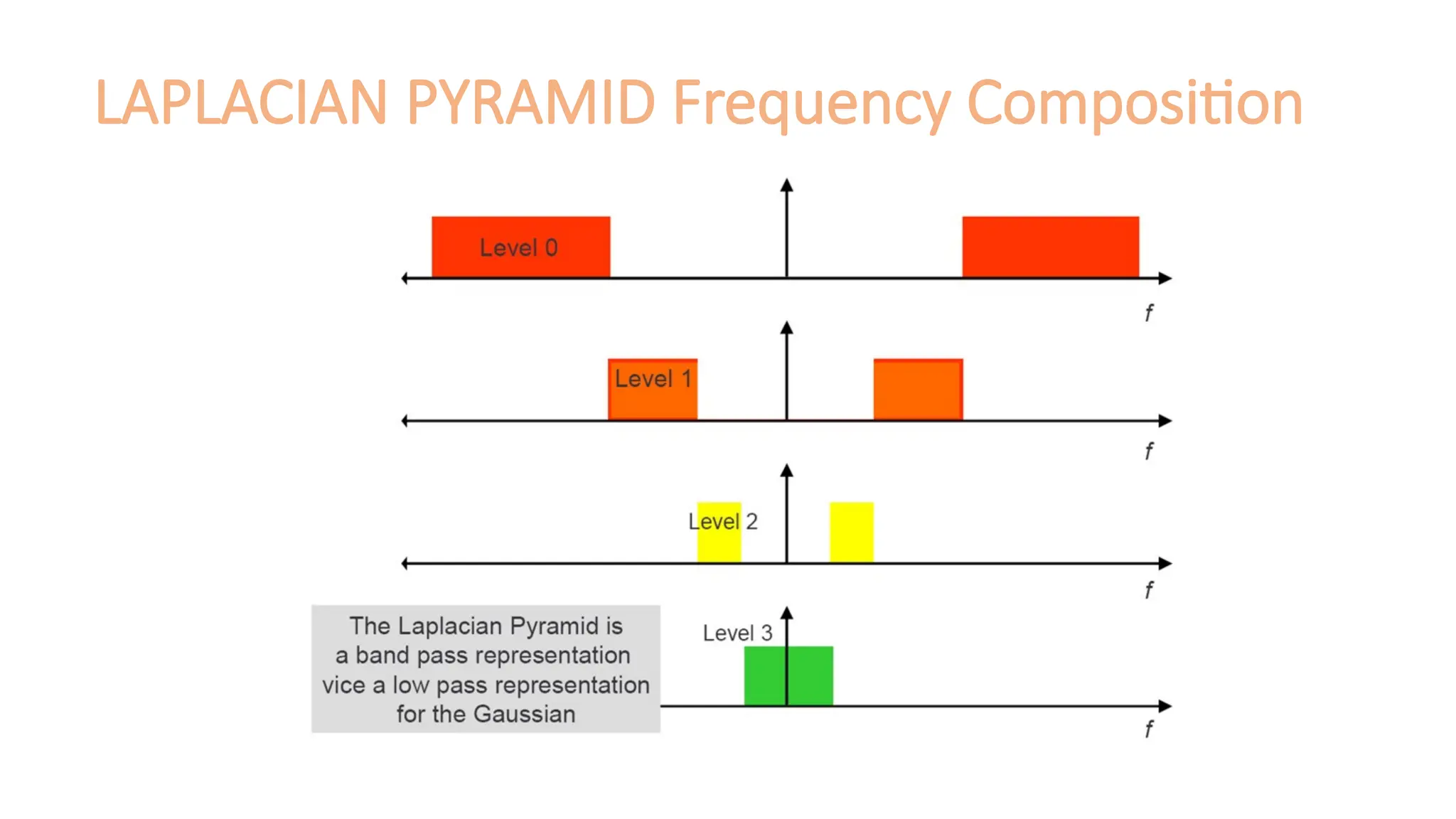
• Laplacian have decomposition based on difference-of-lowpass filters.
• The image is recursively decomposed into low-pass and highpass bands.
• G0, G1, .... = the levels of a Gaussian Pyramid.
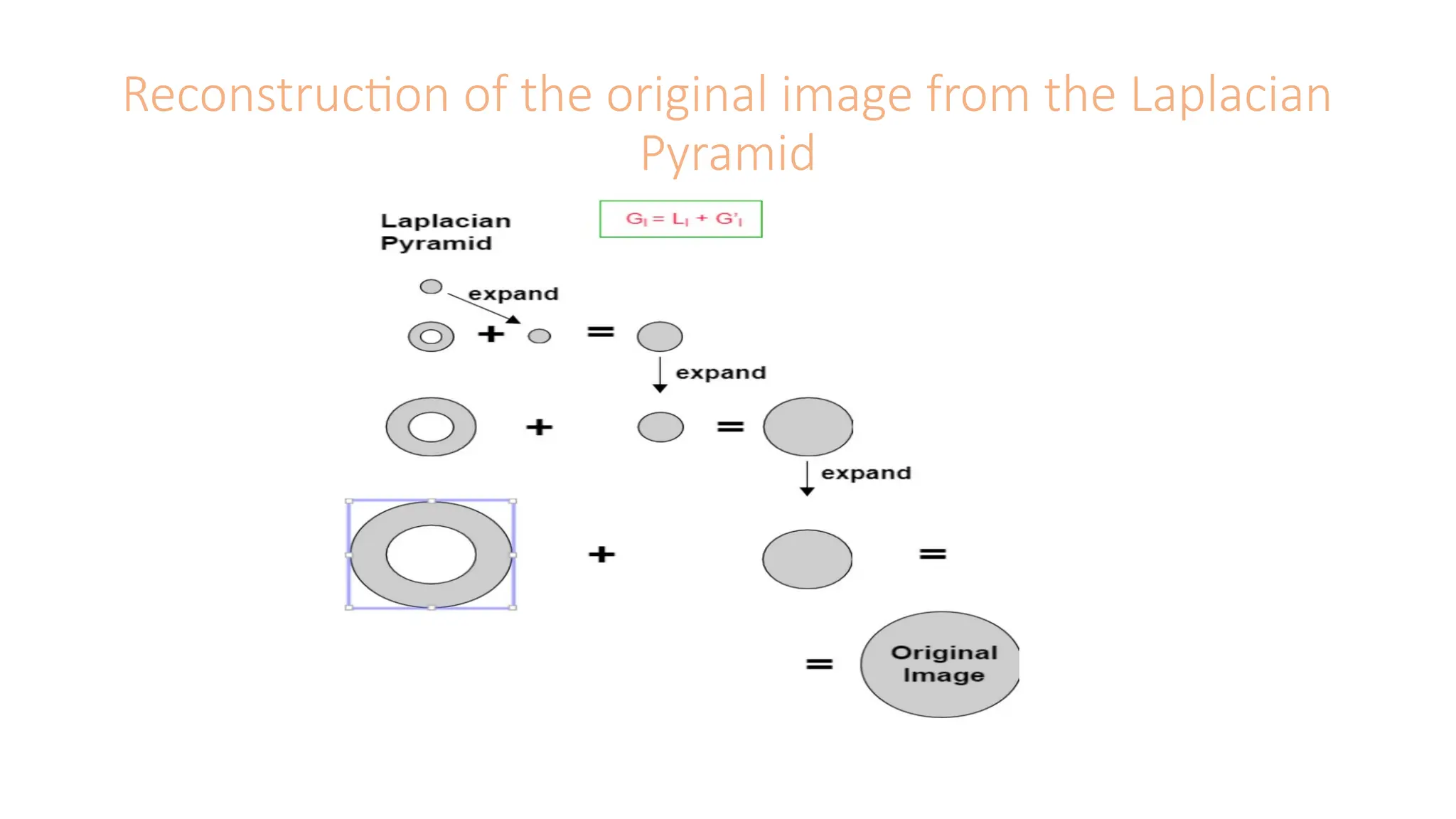
• Predict level Gl from level Gl +1 by expanding Gl +1 to G’l
• Denote by Ll the error in prediction: Ll = Gl – G’l
• L0 , L1, .... = the levels of a Laplacian Pyramid.
LAPLACIAN PYRAMID
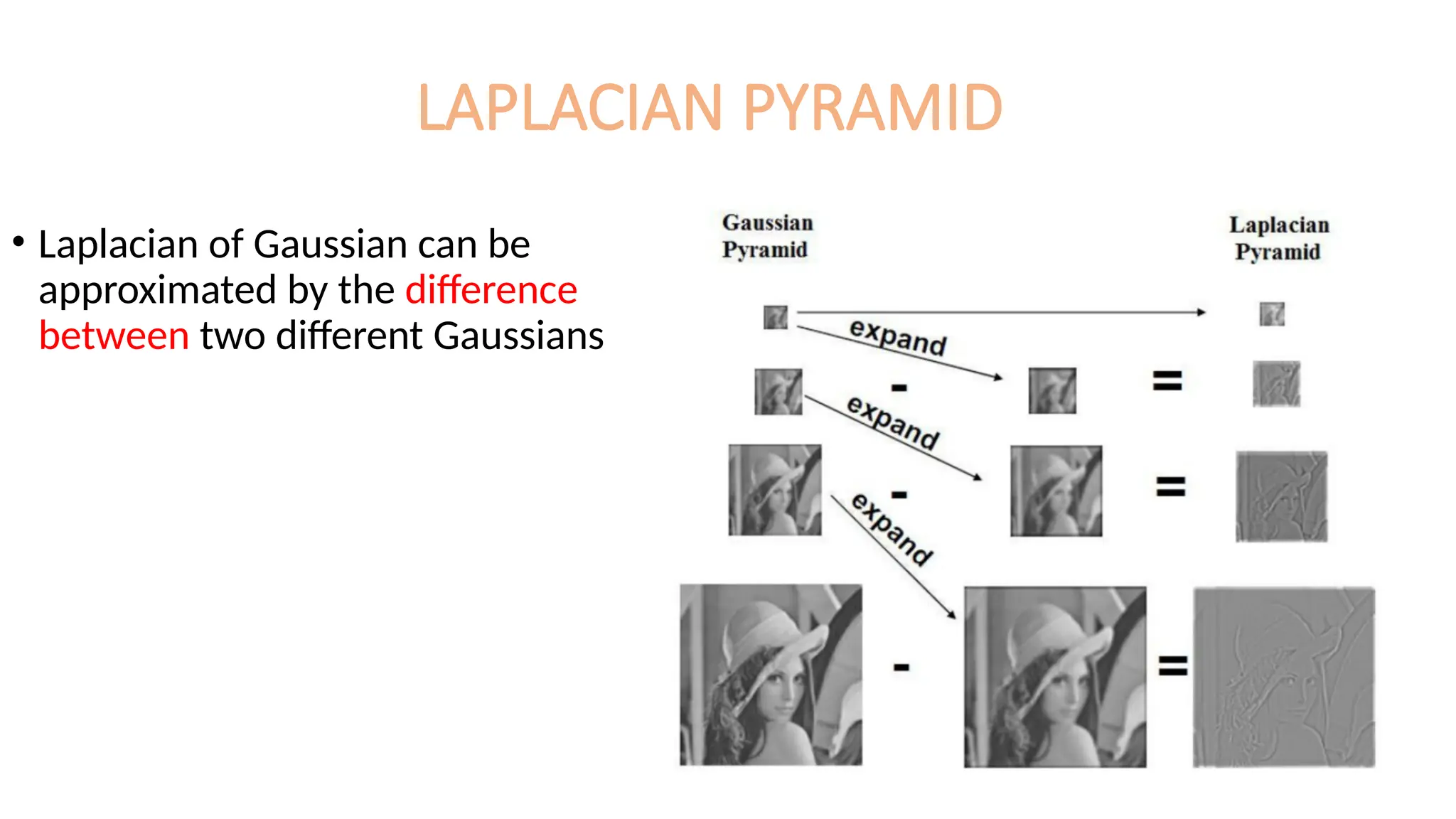
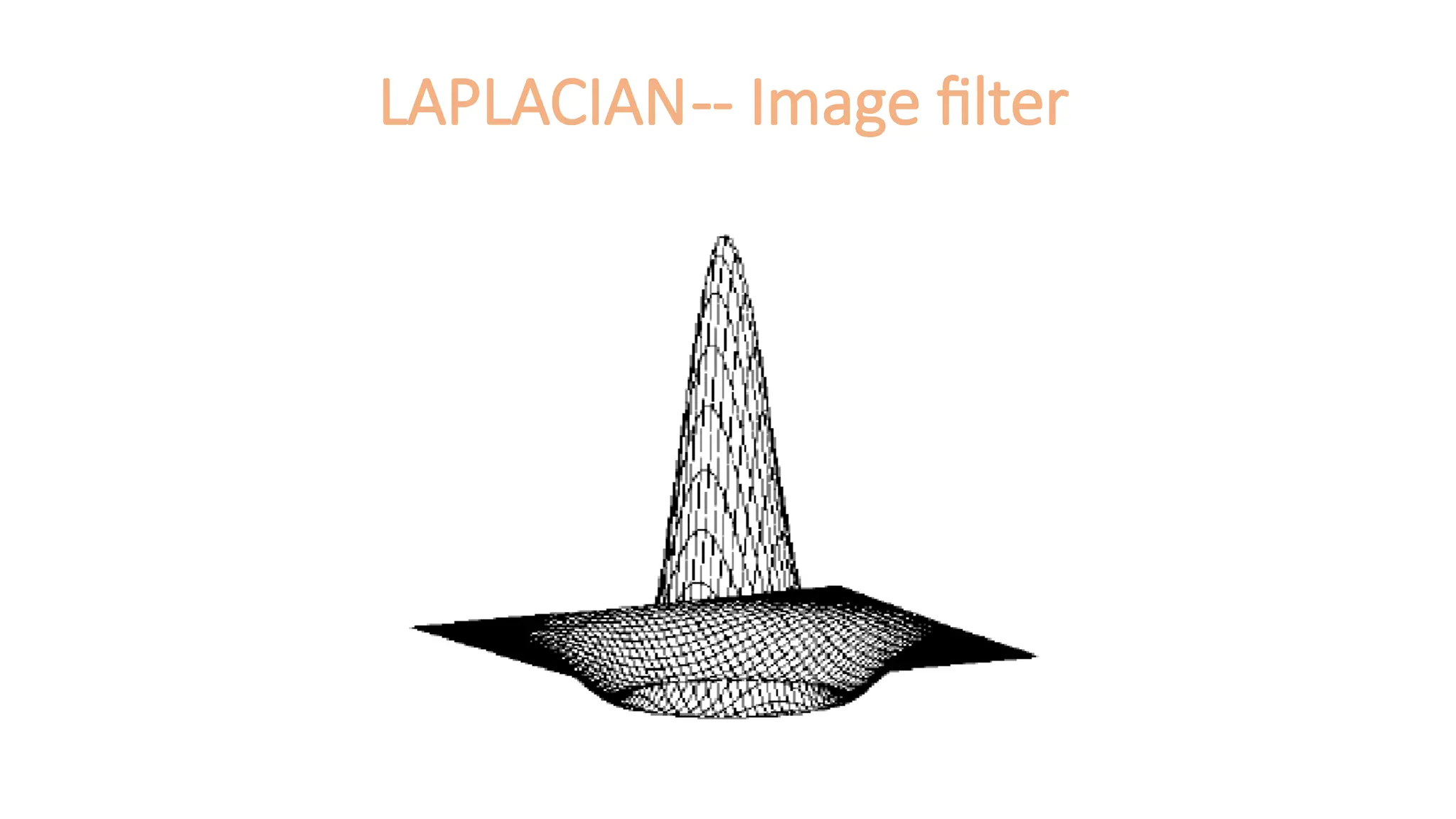
• Laplacian of Gaussian can be
approximated by the difference
between two different Gaussians
LAPLACIAN PYRAMID
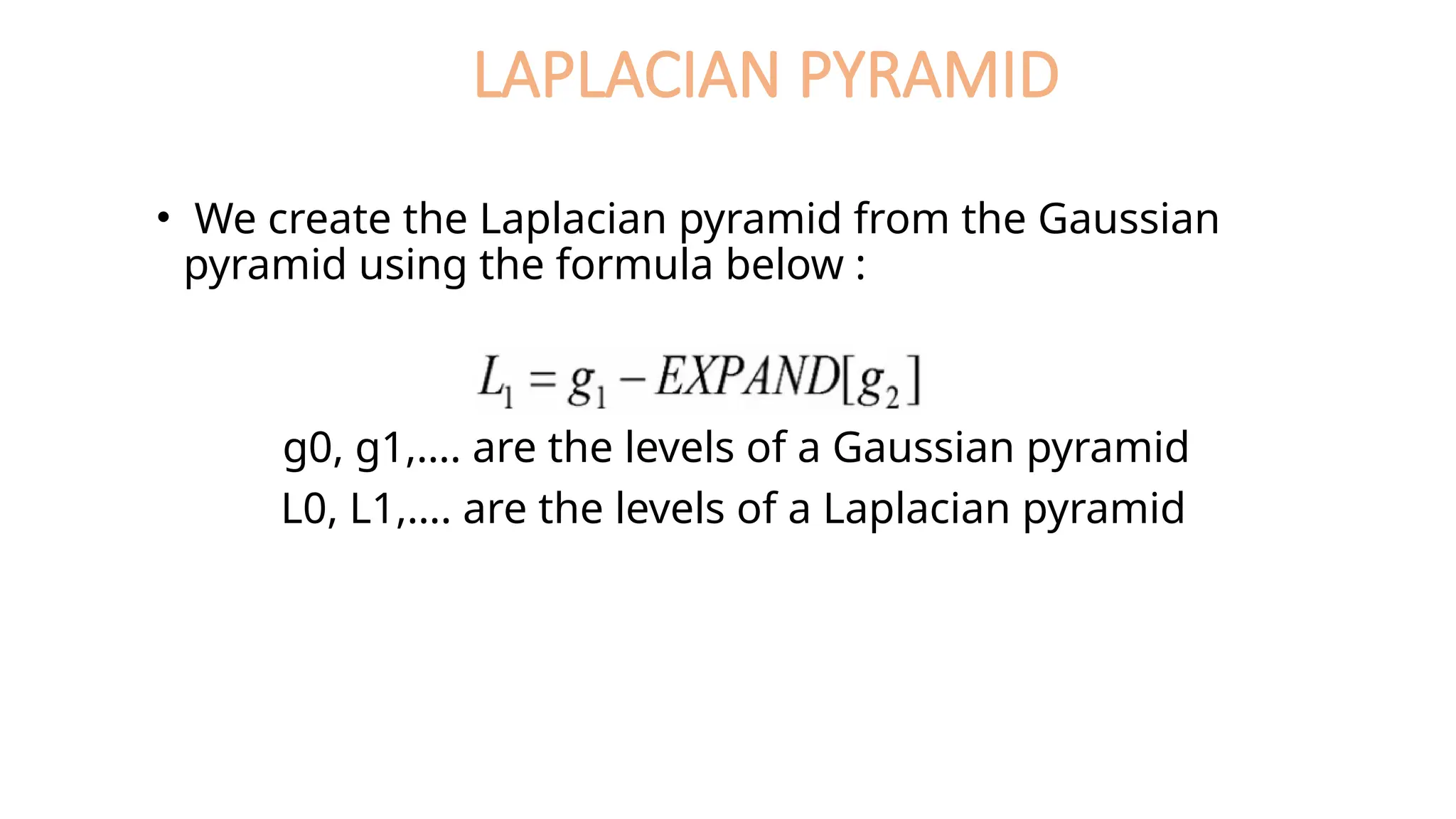
• We create the Laplacian pyramid from the Gaussian
pyramid using the formula below :
g0, g1,…. are the levels of a Gaussian pyramid
L0, L1,…. are the levels of a Laplacian pyramid
LAPLACIAN PYRAMID Frequency Composition
LAPLACIAN-- Image filter
Reconstruction of the original image from the Laplacian
Pyramid
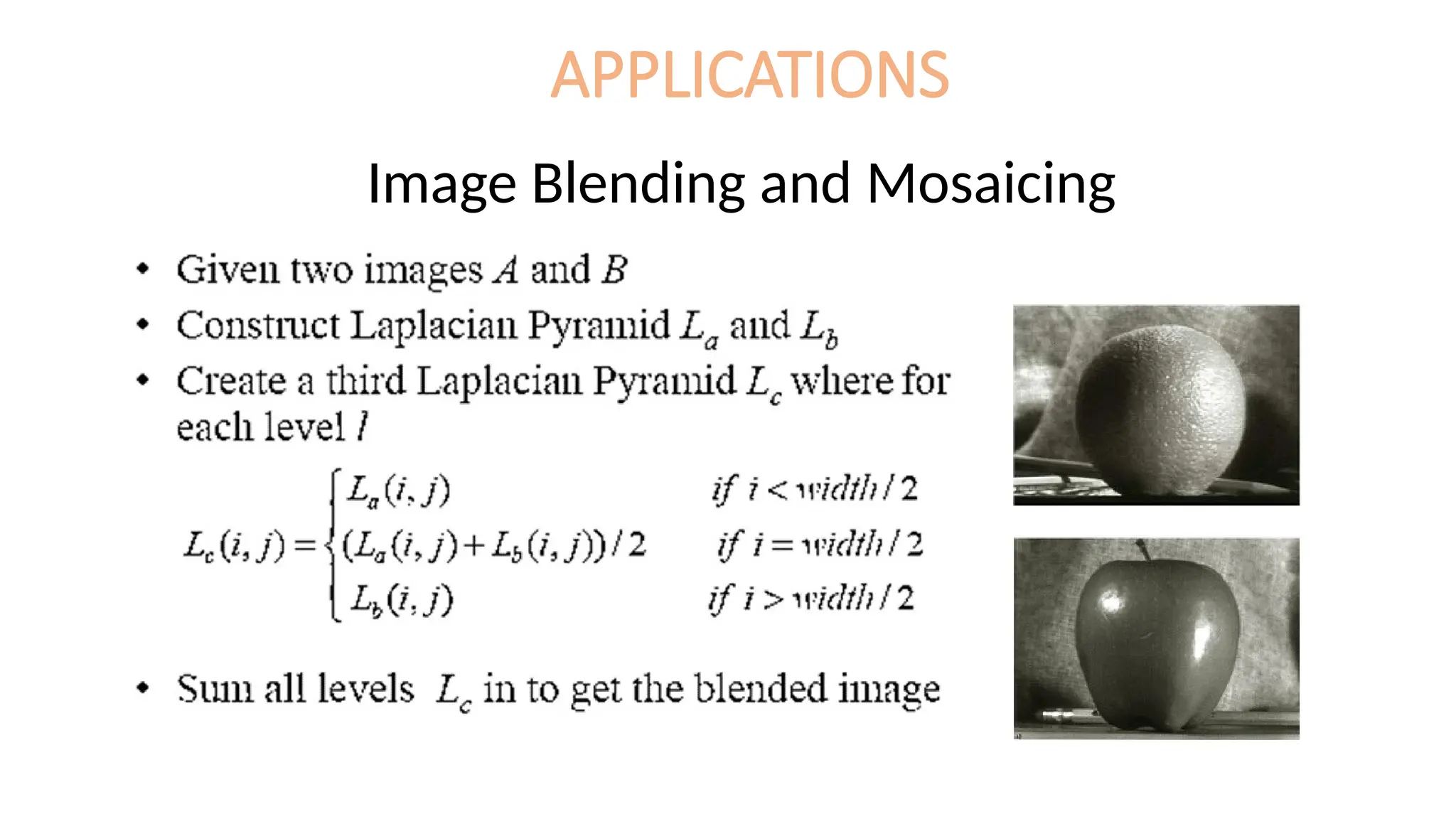
APPLICATIONS
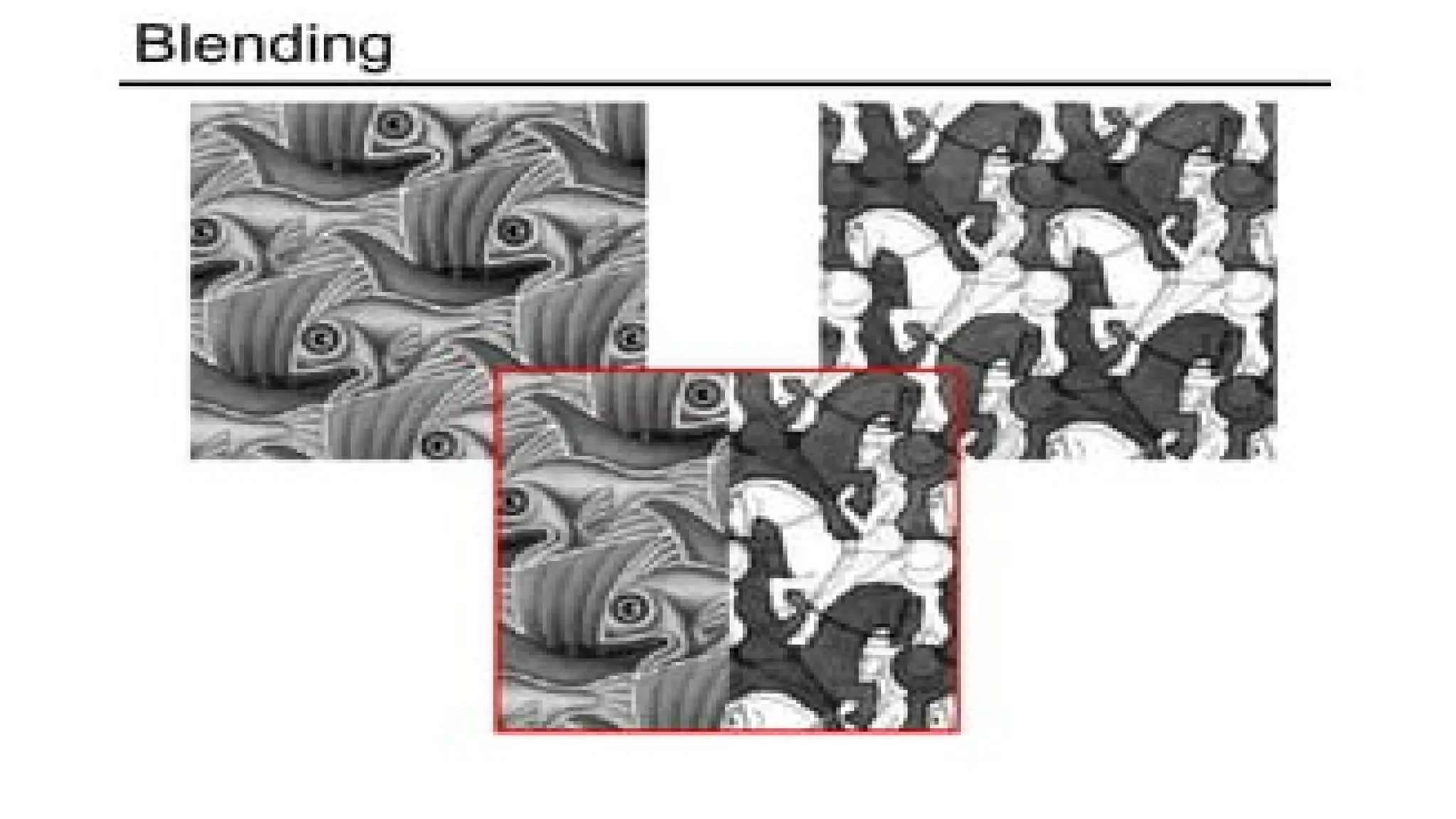
Image Blending and Mosaicing
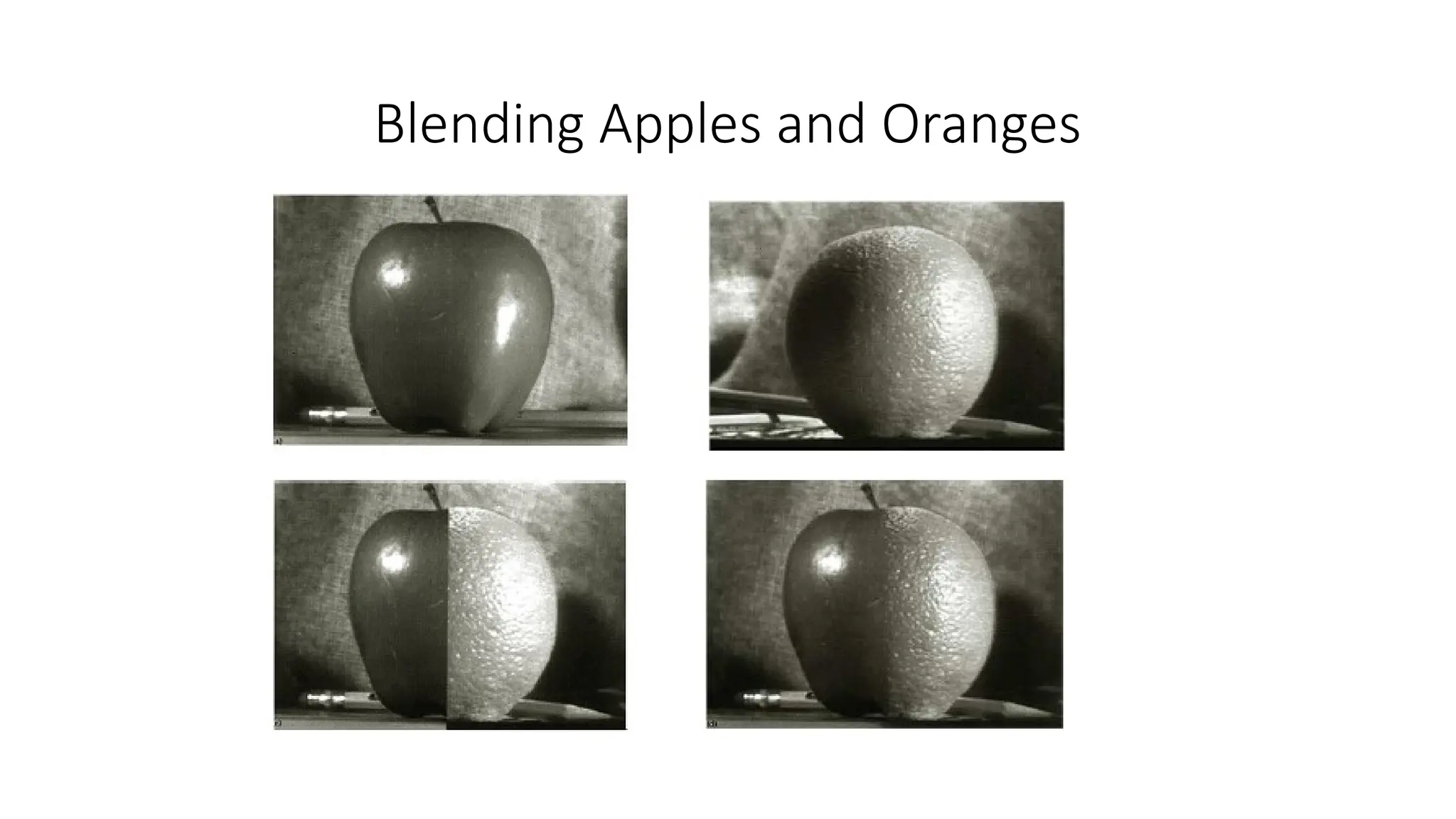
Blending Apples and Oranges
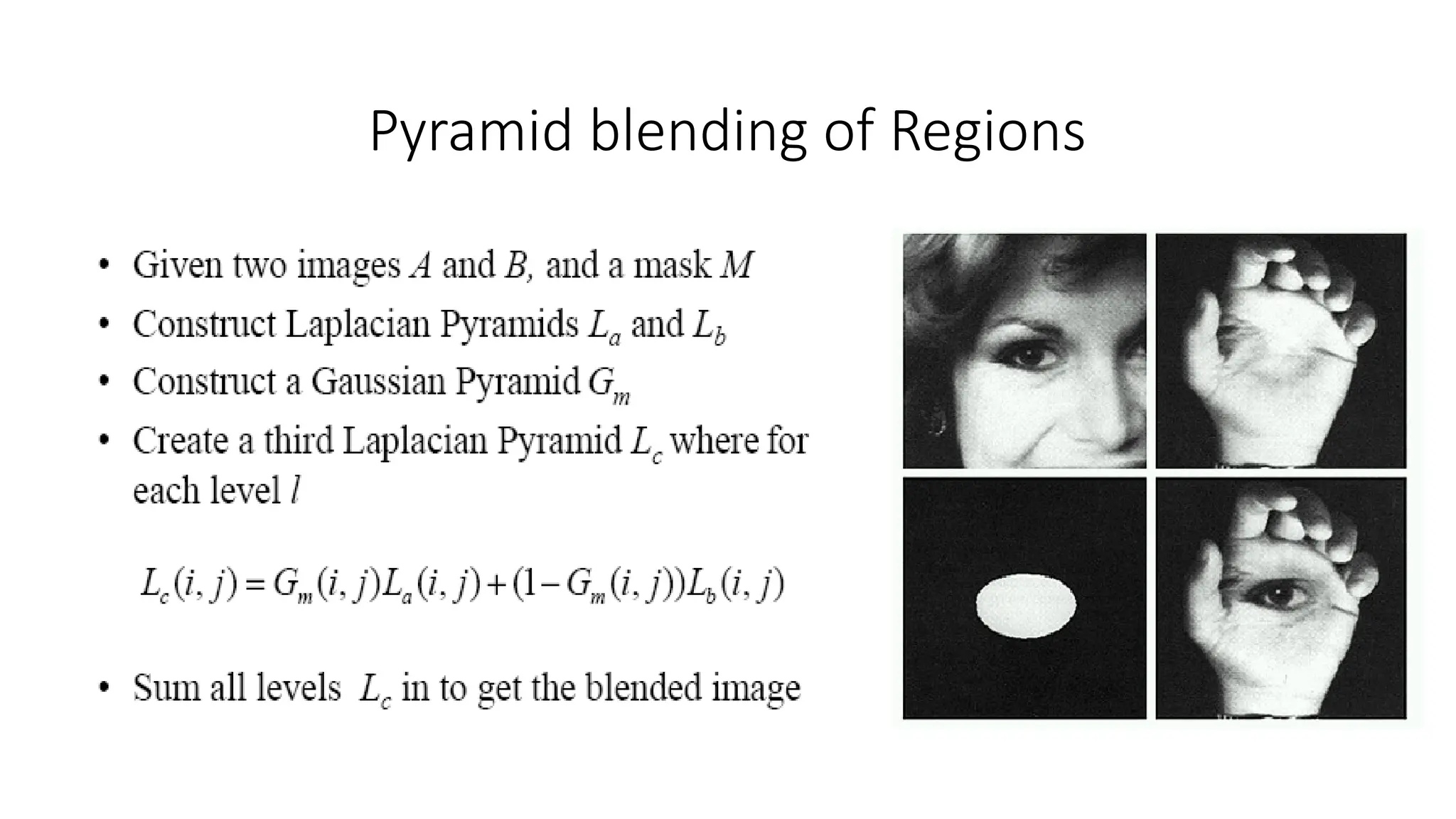
Pyramid blending of Regions
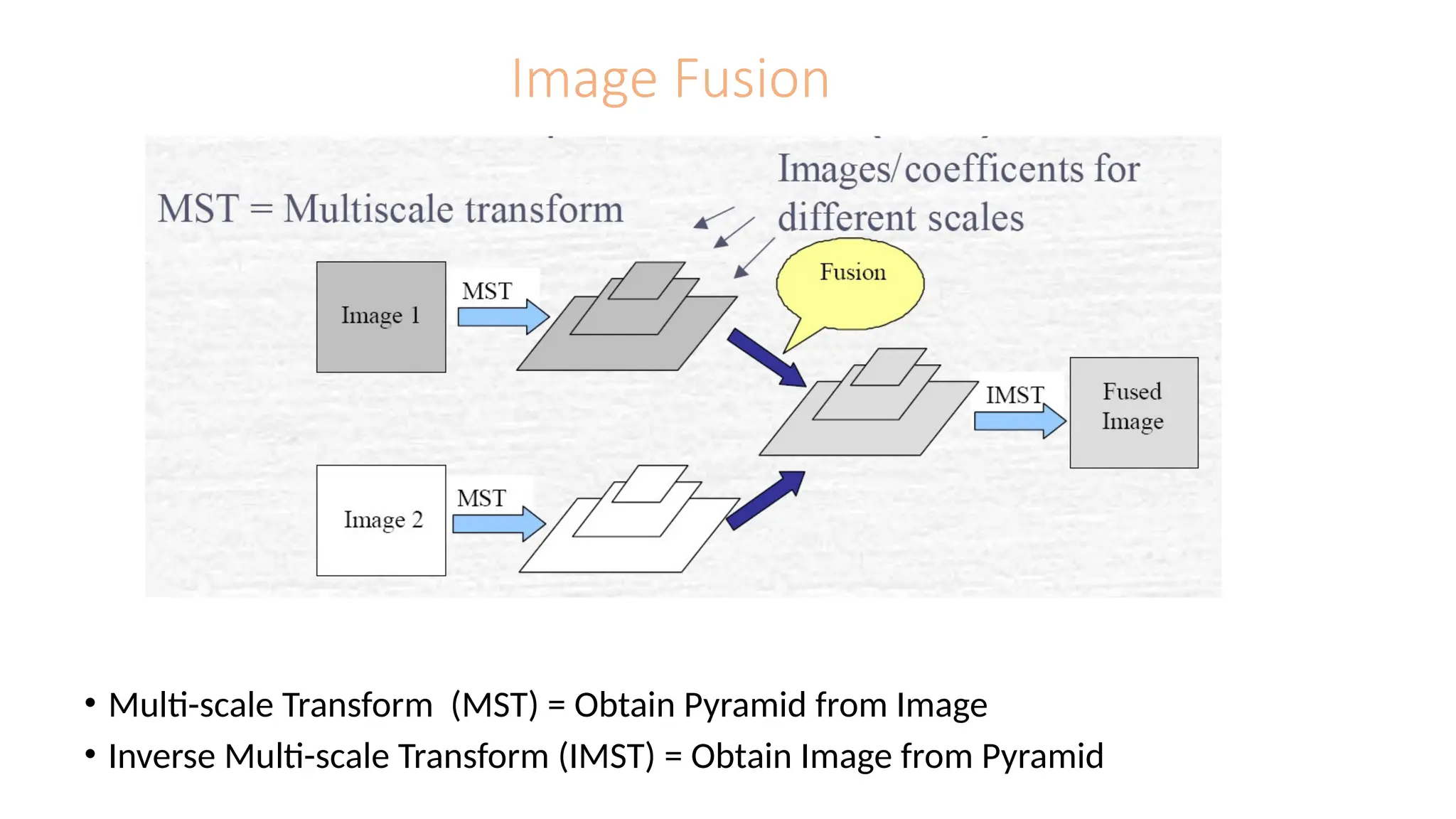
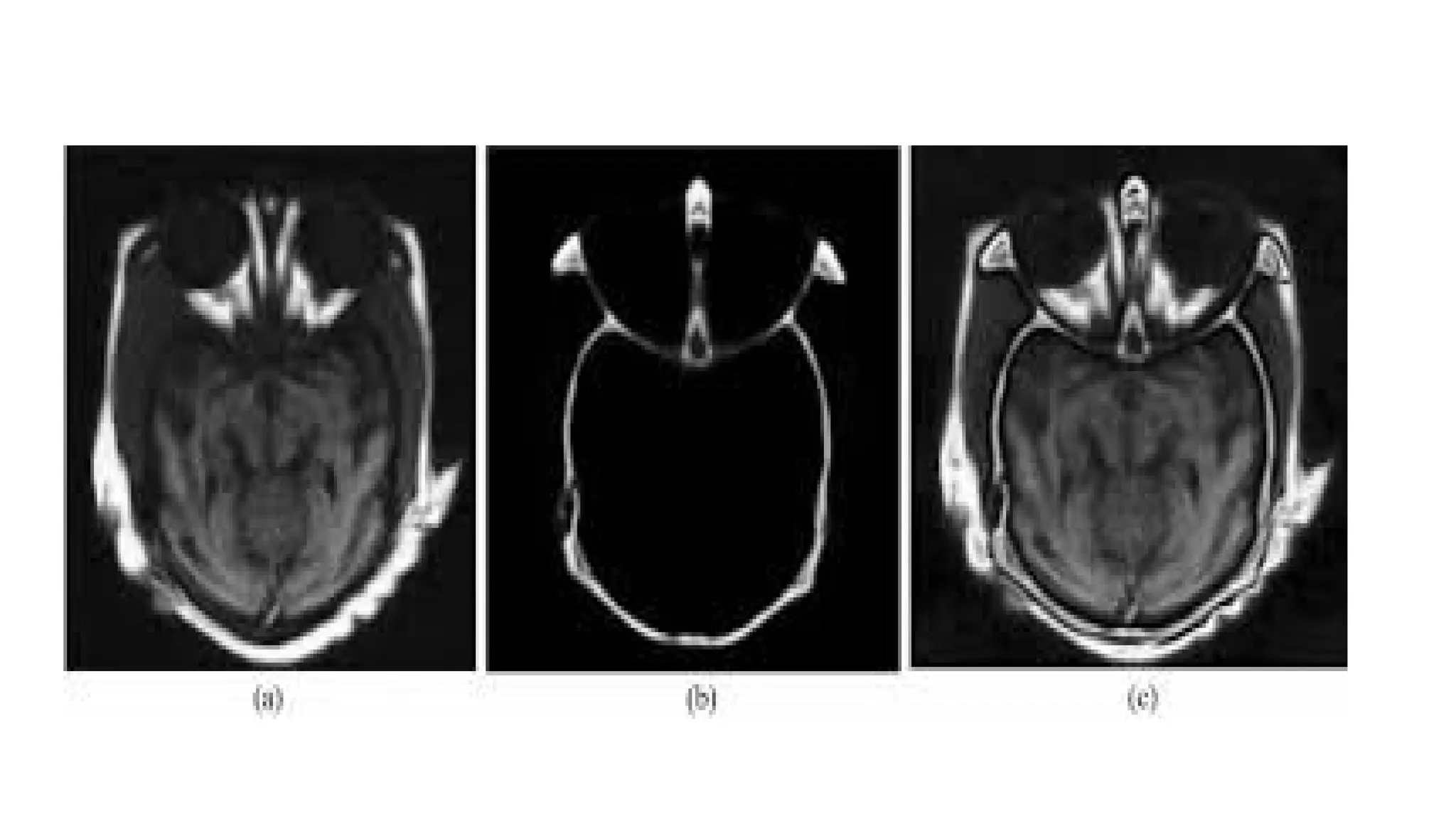
Image Fusion
• Multi-scale Transform (MST) = Obtain Pyramid from Image
• Inverse Multi-scale Transform (IMST) = Obtain Image from Pyramid
Thank You

Image Pyramid gaussian pyramid laplacian

  • 1.
    IMAGE PYRAMIDS In digitalimage processing, an image pyramid is a multi-scale representation of an image, where the image is progressively downsampled to create different levels of resolution. This structure is useful for applications like image compression, object detection, and feature extraction.
  • 2.
    IMAGE PYRAMIDS Image Pyramid= Hierarchical representation of an image Low Resolution High Resolution No details in image (blurred image) Low frequencies Details in image Low+high frequencies A collection of images at different resolutions.
  • 3.
    Outlines :- Gaussian Pyramid Laplacian Pyramid  Applications
  • 4.
    Gaussian Pyramid: Created byblurring and downsampling an image at each level. •Used for image analysis, •Feature extraction, and •Multi-scale image processing. How is an image pyramid created? • The original image is repeatedly smoothed and subsampled • Each image is a filtered and subsampled copy of the previous image • The resulting images are called "levels" of the pyramid
  • 5.
    GAUSSIAN PYRAMID The GaussianPyramid: It is representation of images in multiple scales
  • 6.
  • 7.
    GAUSSIAN PYRAMID Applications: • Scaleinvariant template matching (like faces) • Progressive image transmission • Image blending • Efficient feature search The goal is to define a representation in which image information at different scales is explicitly available (i.e. does not need to be computed when needed)
  • 9.
    GAUSSIAN PYRAMID • Theelements of a Gaussian Pyramids are smoothed copies of the image at different scales. • Input: Image I of size (2N+1 )x(2N+i )
  • 10.
    GAUSSIAN PYRAMID • Output:Images g0, g1,…, gN-1 where the size of gi is: (2N-i +1)x(2N-i +1)
  • 11.
    Working: The "pyramid" isconstructed by repeatedly calculating a weighted average of the neighboring pixels of a source image and scaling the image down. It can be visualized by stacking progressively smaller versions of the image on top of one another. This process creates a pyramid shape with the base as the original image and the tip a single pixel representing the average value of the entire image.
  • 12.
  • 13.
    LAPLACIAN PYRAMID • Laplacianhave decomposition based on difference-of-lowpass filters. • The image is recursively decomposed into low-pass and highpass bands. • G0, G1, .... = the levels of a Gaussian Pyramid. • Predict level Gl from level Gl +1 by expanding Gl +1 to G’l • Denote by Ll the error in prediction: Ll = Gl – G’l • L0 , L1, .... = the levels of a Laplacian Pyramid.
  • 14.
    LAPLACIAN PYRAMID • Laplacianof Gaussian can be approximated by the difference between two different Gaussians
  • 15.
    LAPLACIAN PYRAMID • Wecreate the Laplacian pyramid from the Gaussian pyramid using the formula below : g0, g1,…. are the levels of a Gaussian pyramid L0, L1,…. are the levels of a Laplacian pyramid
  • 16.
  • 17.
  • 18.
    Reconstruction of theoriginal image from the Laplacian Pyramid
  • 19.
  • 20.
  • 21.
  • 22.
    Image Fusion • Multi-scaleTransform (MST) = Obtain Pyramid from Image • Inverse Multi-scale Transform (IMST) = Obtain Image from Pyramid
  • 23.