










Session 6
General Revision and MOCK EXAM!
Prepared and presented by: Amr Saleh
eng.amrsaleh@gmail.com
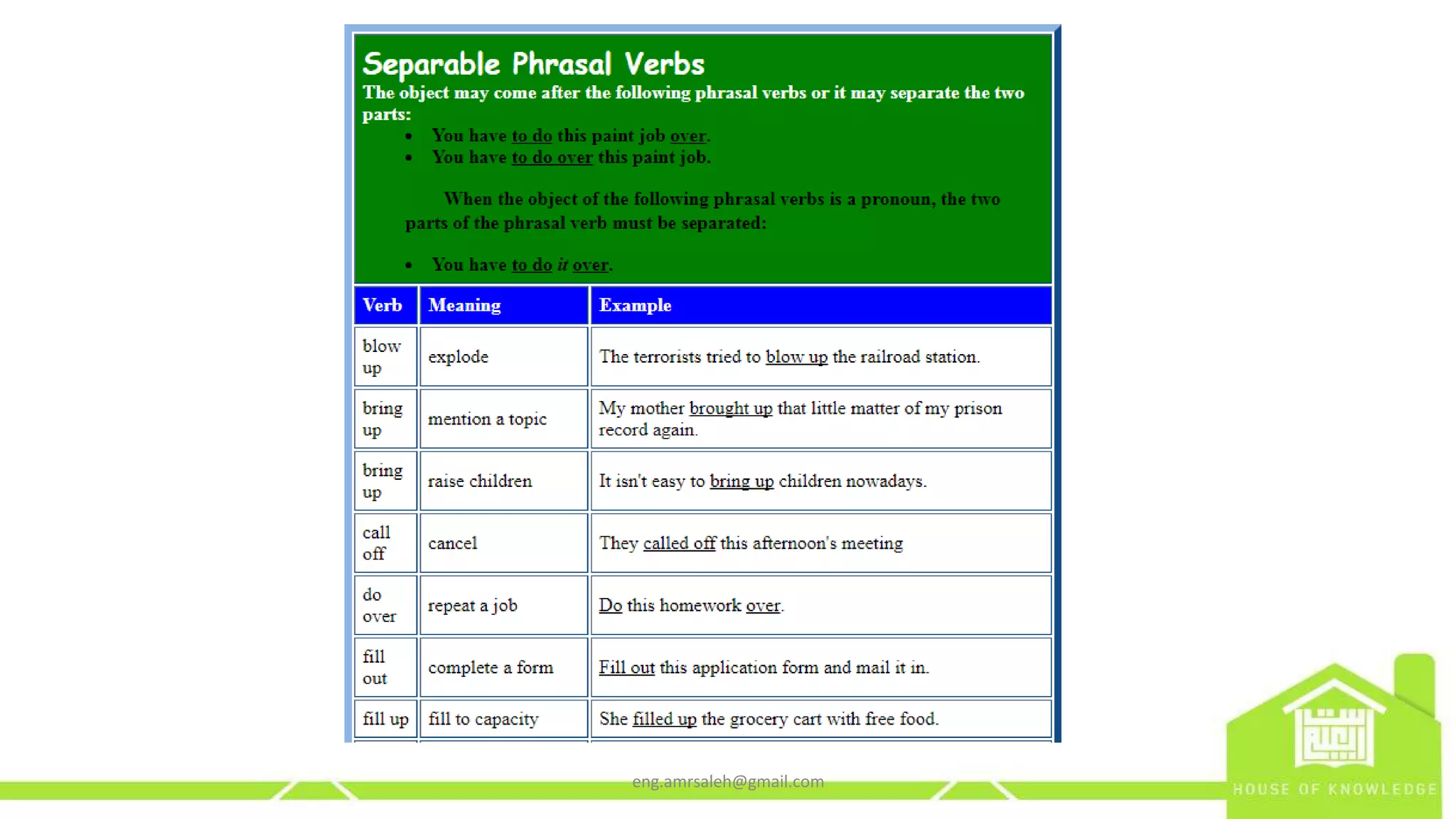
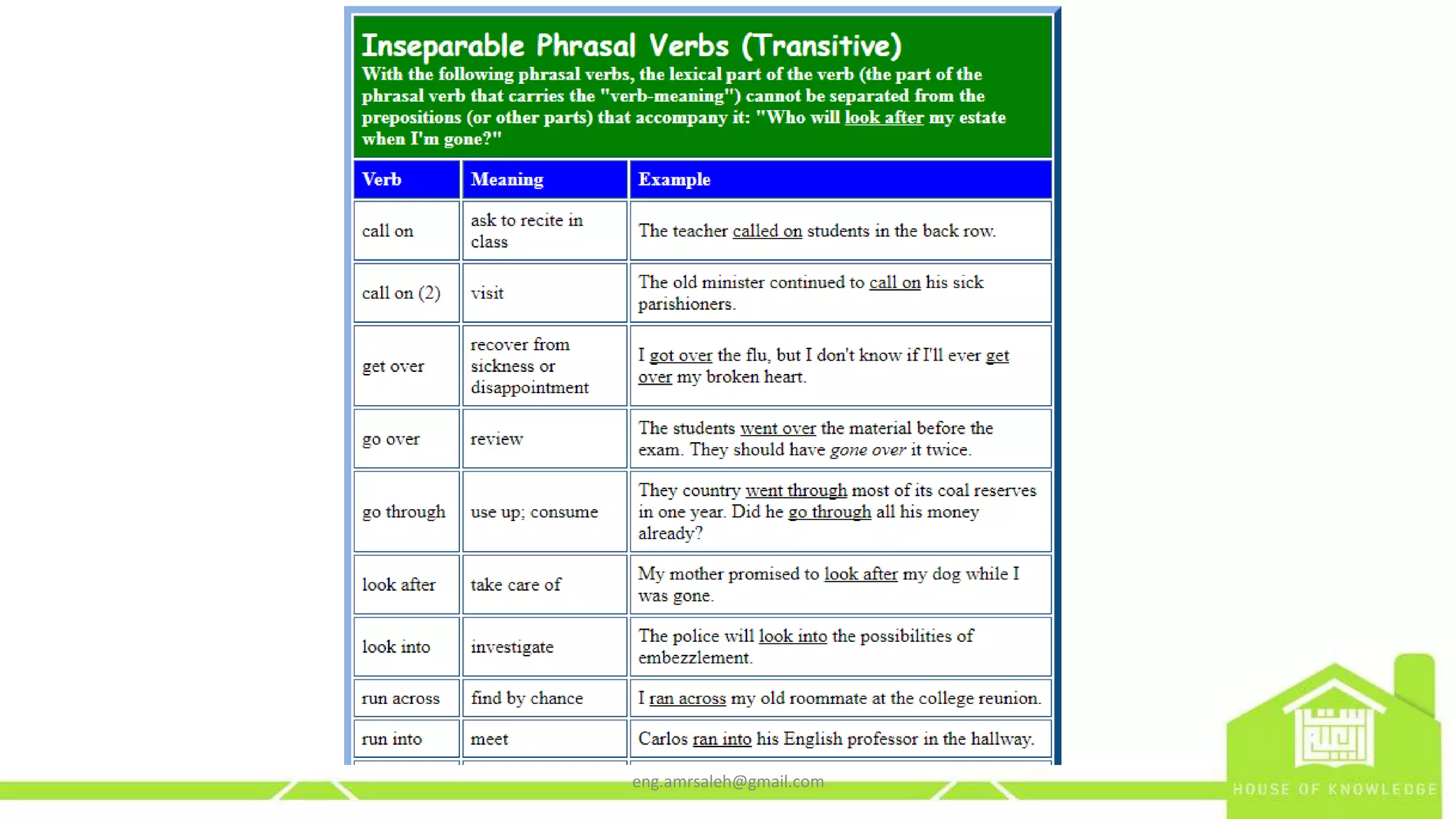
Phrasal Verbs
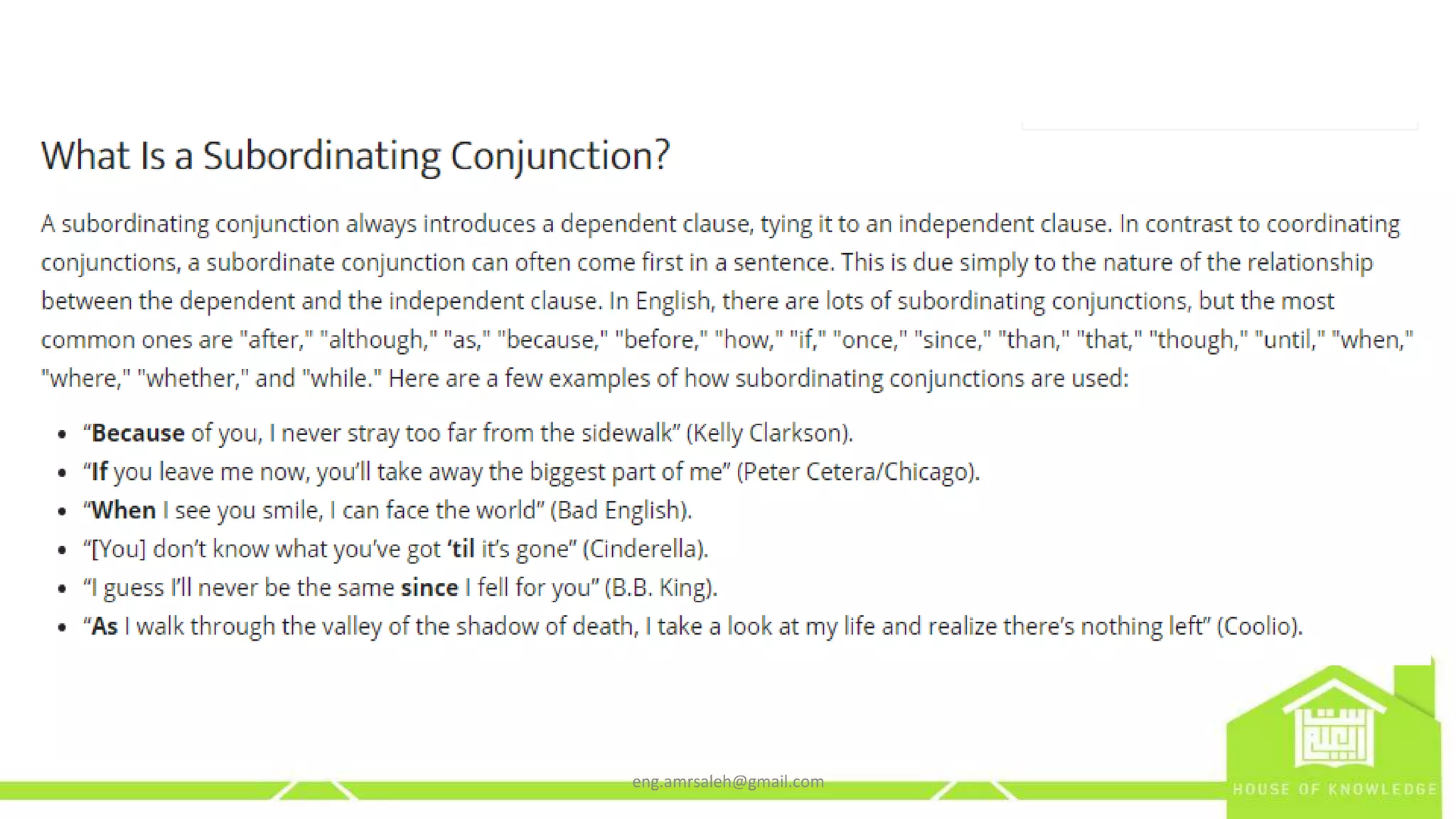
Conjunctions
Perfect Participle
eng.amrsaleh@gmail.com
Present Participle Vs Perfect Participle
Writing Task 2
(Drafting)
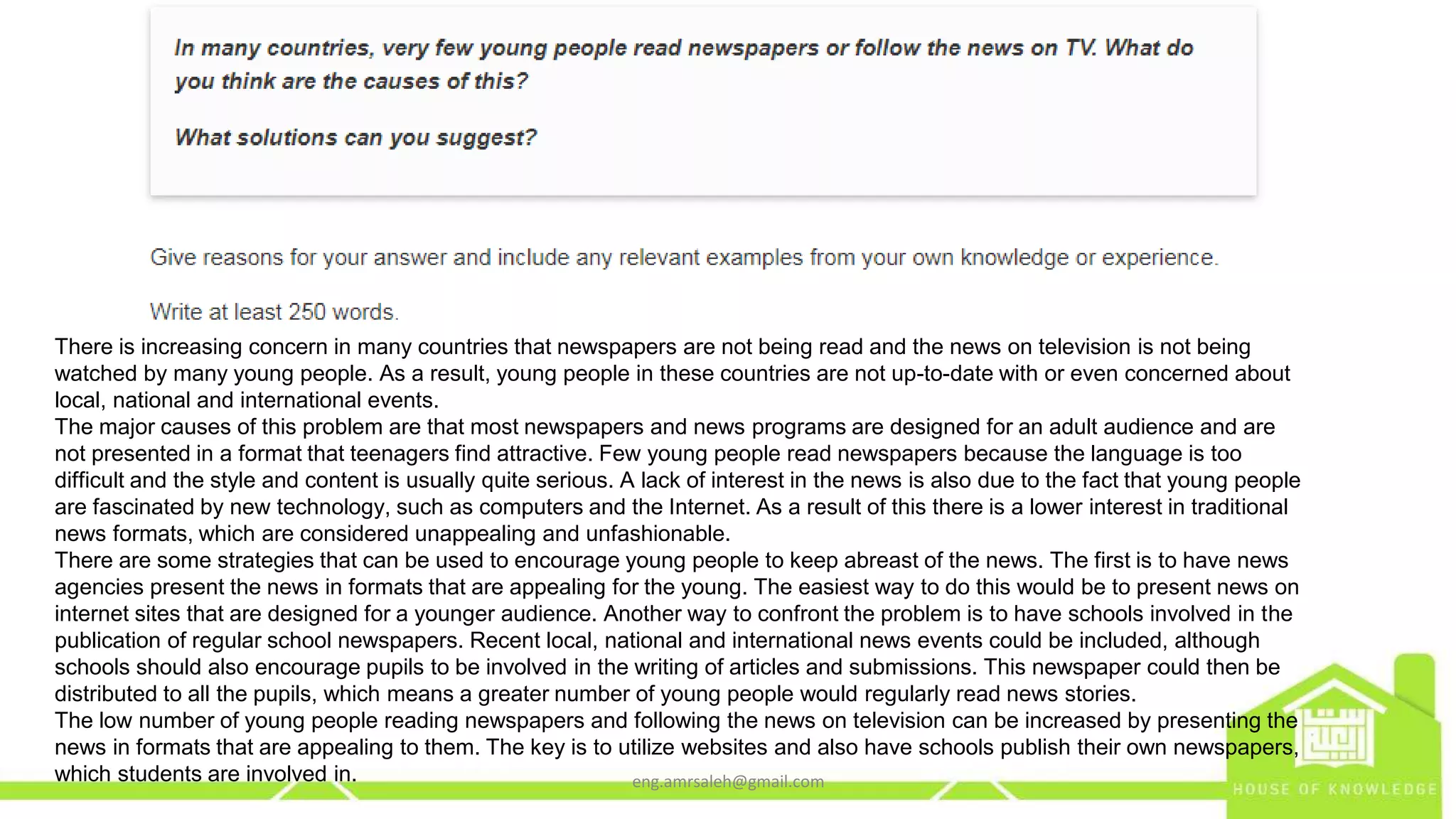
There is increasing concern in many countries that newspapers are not being read and the news on television is not being
watched by many young people. As a result, young people in these countries are not up-to-date with or even concerned about
local, national and international events.
The major causes of this problem are that most newspapers and news programs are designed for an adult audience and are
not presented in a format that teenagers find attractive. Few young people read newspapers because the language is too
difficult and the style and content is usually quite serious. A lack of interest in the news is also due to the fact that young people
are fascinated by new technology, such as computers and the Internet. As a result of this there is a lower interest in traditional
news formats, which are considered unappealing and unfashionable.
There are some strategies that can be used to encourage young people to keep abreast of the news. The first is to have news
agencies present the news in formats that are appealing for the young. The easiest way to do this would be to present news on
internet sites that are designed for a younger audience. Another way to confront the problem is to have schools involved in the
publication of regular school newspapers. Recent local, national and international news events could be included, although
schools should also encourage pupils to be involved in the writing of articles and submissions. This newspaper could then be
distributed to all the pupils, which means a greater number of young people would regularly read news stories.
The low number of young people reading newspapers and following the news on television can be increased by presenting the
news in formats that are appealing to them. The key is to utilize websites and also have schools publish their own newspapers,
which students are involved in. eng.amrsaleh@gmail.com
eng.amrsaleh@gmail.com
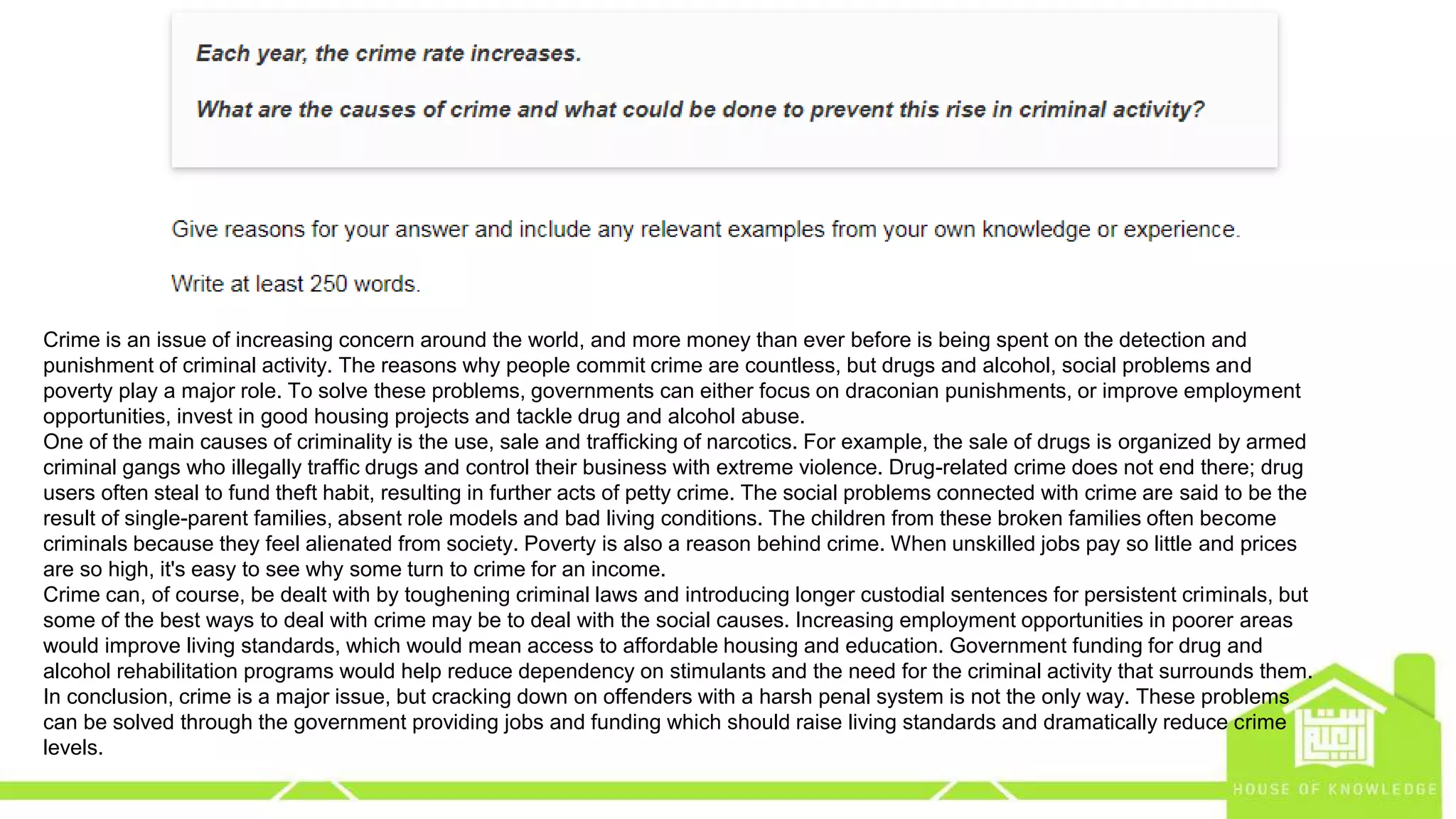
Crime is an issue of increasing concern around the world, and more money than ever before is being spent on the detection and
punishment of criminal activity. The reasons why people commit crime are countless, but drugs and alcohol, social problems and
poverty play a major role. To solve these problems, governments can either focus on draconian punishments, or improve employment
opportunities, invest in good housing projects and tackle drug and alcohol abuse.
One of the main causes of criminality is the use, sale and trafficking of narcotics. For example, the sale of drugs is organized by armed
criminal gangs who illegally traffic drugs and control their business with extreme violence. Drug-related crime does not end there; drug
users often steal to fund theft habit, resulting in further acts of petty crime. The social problems connected with crime are said to be the
result of single-parent families, absent role models and bad living conditions. The children from these broken families often become
criminals because they feel alienated from society. Poverty is also a reason behind crime. When unskilled jobs pay so little and prices
are so high, it's easy to see why some turn to crime for an income.
Crime can, of course, be dealt with by toughening criminal laws and introducing longer custodial sentences for persistent criminals, but
some of the best ways to deal with crime may be to deal with the social causes. Increasing employment opportunities in poorer areas
would improve living standards, which would mean access to affordable housing and education. Government funding for drug and
alcohol rehabilitation programs would help reduce dependency on stimulants and the need for the criminal activity that surrounds them.
In conclusion, crime is a major issue, but cracking down on offenders with a harsh penal system is not the only way. These problems
can be solved through the government providing jobs and funding which should raise living standards and dramatically reduce crime
levels.
eng.amrsaleh@gmail.com
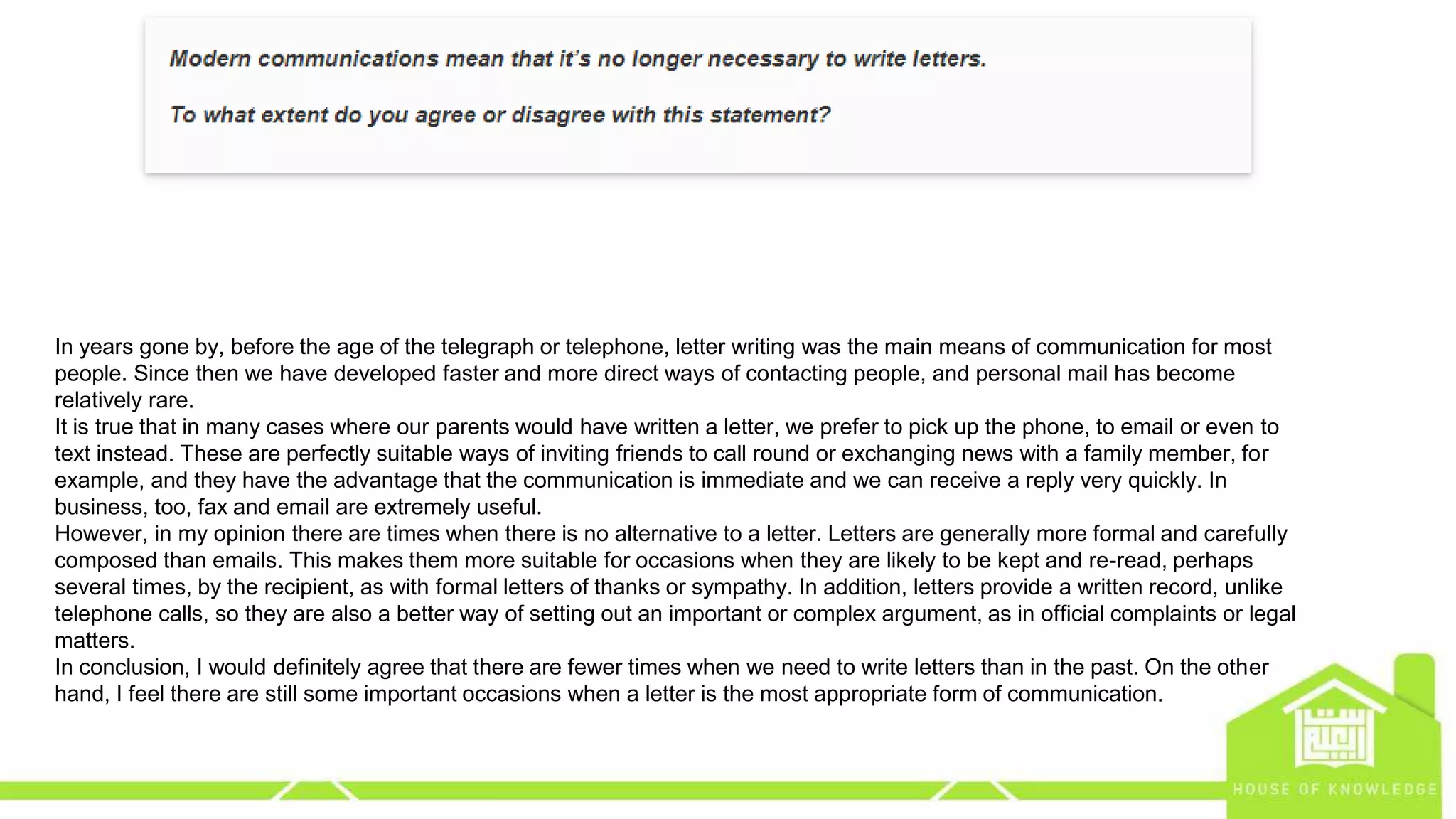
In years gone by, before the age of the telegraph or telephone, letter writing was the main means of communication for most
people. Since then we have developed faster and more direct ways of contacting people, and personal mail has become
relatively rare.
It is true that in many cases where our parents would have written a letter, we prefer to pick up the phone, to email or even to
text instead. These are perfectly suitable ways of inviting friends to call round or exchanging news with a family member, for
example, and they have the advantage that the communication is immediate and we can receive a reply very quickly. In
business, too, fax and email are extremely useful.
However, in my opinion there are times when there is no alternative to a letter. Letters are generally more formal and carefully
composed than emails. This makes them more suitable for occasions when they are likely to be kept and re-read, perhaps
several times, by the recipient, as with formal letters of thanks or sympathy. In addition, letters provide a written record, unlike
telephone calls, so they are also a better way of setting out an important or complex argument, as in official complaints or legal
matters.
In conclusion, I would definitely agree that there are fewer times when we need to write letters than in the past. On the other
hand, I feel there are still some important occasions when a letter is the most appropriate form of communication.
eng.amrsaleh@gmail.com
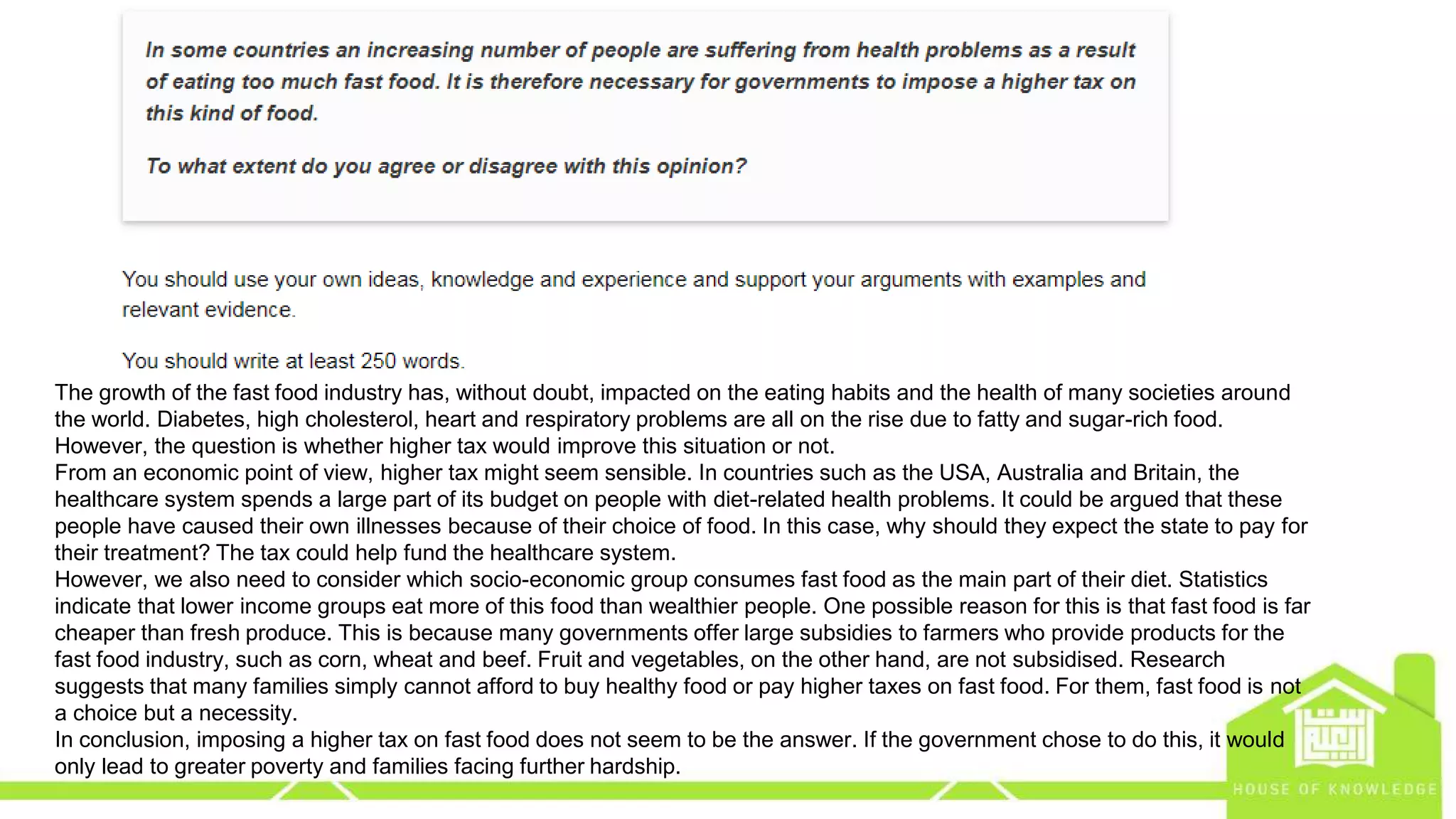
The growth of the fast food industry has, without doubt, impacted on the eating habits and the health of many societies around
the world. Diabetes, high cholesterol, heart and respiratory problems are all on the rise due to fatty and sugar-rich food.
However, the question is whether higher tax would improve this situation or not.
From an economic point of view, higher tax might seem sensible. In countries such as the USA, Australia and Britain, the
healthcare system spends a large part of its budget on people with diet-related health problems. It could be argued that these
people have caused their own illnesses because of their choice of food. In this case, why should they expect the state to pay for
their treatment? The tax could help fund the healthcare system.
However, we also need to consider which socio-economic group consumes fast food as the main part of their diet. Statistics
indicate that lower income groups eat more of this food than wealthier people. One possible reason for this is that fast food is far
cheaper than fresh produce. This is because many governments offer large subsidies to farmers who provide products for the
fast food industry, such as corn, wheat and beef. Fruit and vegetables, on the other hand, are not subsidised. Research
suggests that many families simply cannot afford to buy healthy food or pay higher taxes on fast food. For them, fast food is not
a choice but a necessity.
In conclusion, imposing a higher tax on fast food does not seem to be the answer. If the government chose to do this, it would
only lead to greater poverty and families facing further hardship.
eng.amrsaleh@gmail.com
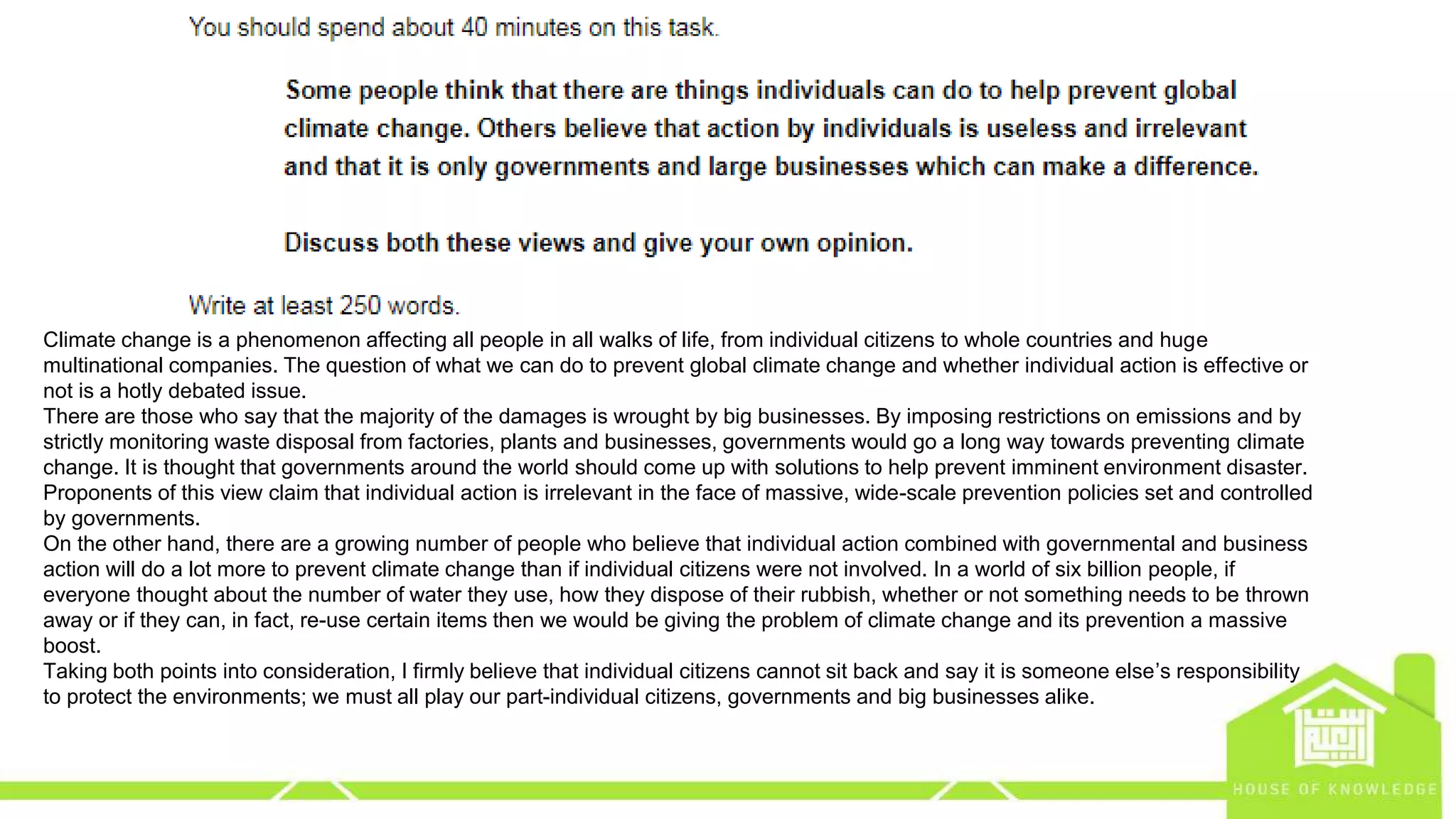
Climate change is a phenomenon affecting all people in all walks of life, from individual citizens to whole countries and huge
multinational companies. The question of what we can do to prevent global climate change and whether individual action is effective or
not is a hotly debated issue.
There are those who say that the majority of the damages is wrought by big businesses. By imposing restrictions on emissions and by
strictly monitoring waste disposal from factories, plants and businesses, governments would go a long way towards preventing climate
change. It is thought that governments around the world should come up with solutions to help prevent imminent environment disaster.
Proponents of this view claim that individual action is irrelevant in the face of massive, wide-scale prevention policies set and controlled
by governments.
On the other hand, there are a growing number of people who believe that individual action combined with governmental and business
action will do a lot more to prevent climate change than if individual citizens were not involved. In a world of six billion people, if
everyone thought about the number of water they use, how they dispose of their rubbish, whether or not something needs to be thrown
away or if they can, in fact, re-use certain items then we would be giving the problem of climate change and its prevention a massive
boost.
Taking both points into consideration, I firmly believe that individual citizens cannot sit back and say it is someone else’s responsibility
to protect the environments; we must all play our part-individual citizens, governments and big businesses alike.
Writing T1
(Practice)
eng.amrsaleh@gmail.com
A gas-cooled nuclear reactor consists of the reactor itself and a heat exchanger. The reactor contains uranium fuel elements
which are surrounded by graphite moderators and topped by charge tubes for loading fuel elements, and boron control rods.
The whole reactor is contained in a pressure vessel surrounded by a concrete shield.
From the reactor the hot gas flows through a duct into the heat exchanger which is outside the concrete radiation shielding. In
the heat exchanger, steam is generated in a secondary loop. There a pipe brings in water which is heated to steam, and this
then flows out to the turbo-alternator. Meanwhile the hot gas sinks to the bottom of the heat exchanger and passes through a
gas blower which pushes it into a cool gas duct and back to the reactor.
As can be seen, this is a continuous cycle that keeps the reactor from overheating, while carrying away the heat and steam,
which will power the turbines.
eng.amrsaleh@gmail.com
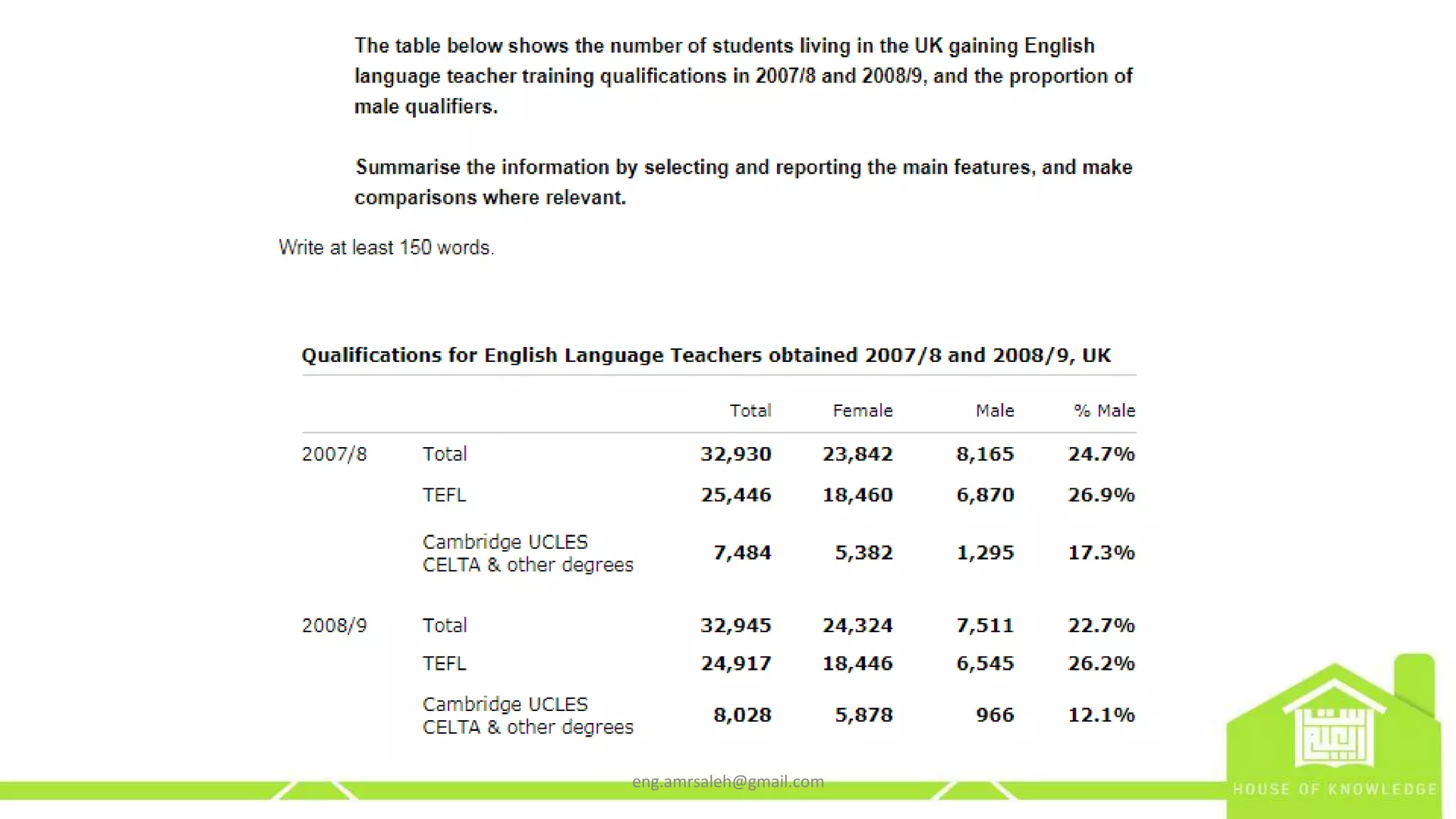
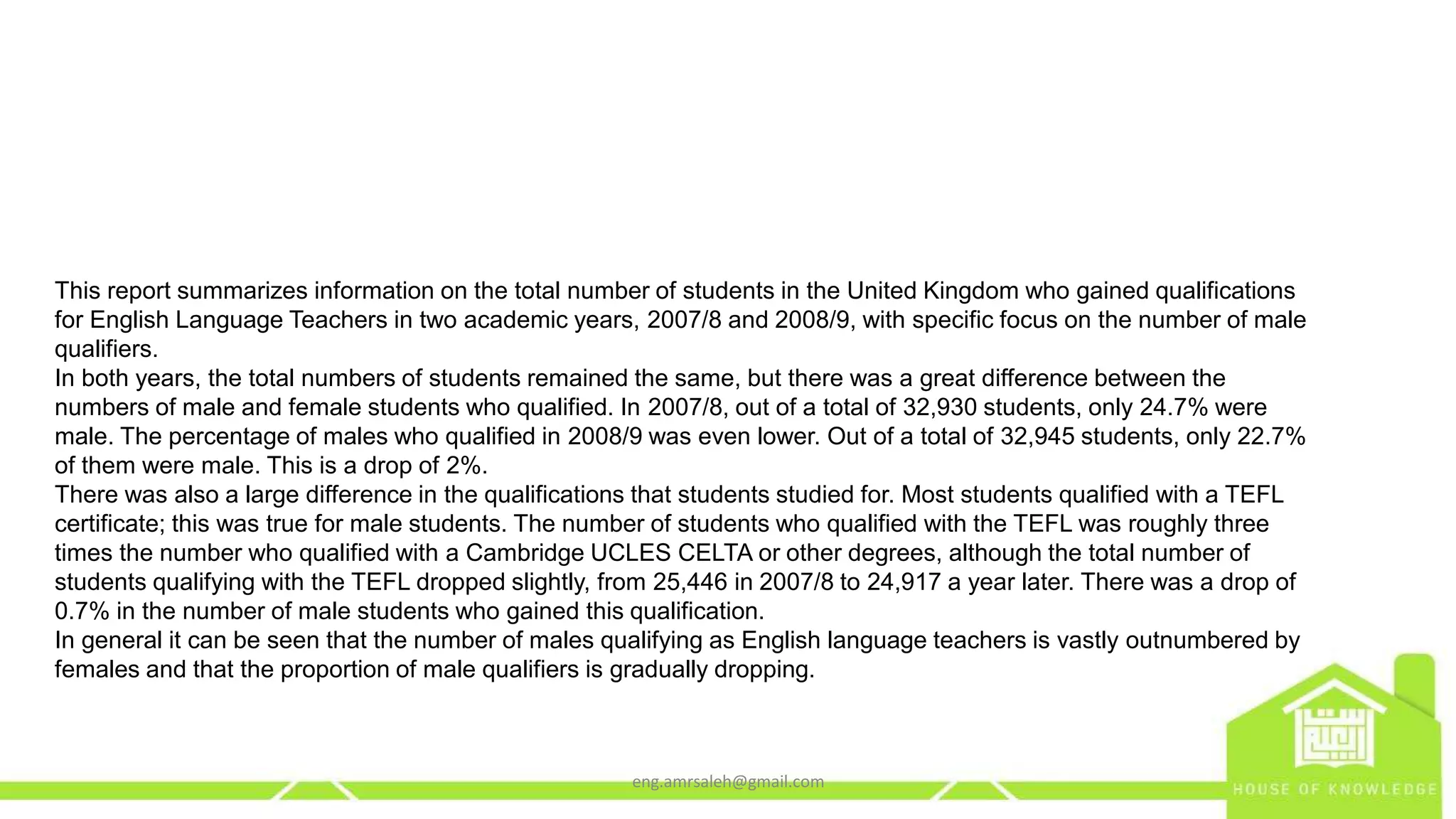
This report summarizes information on the total number of students in the United Kingdom who gained qualifications
for English Language Teachers in two academic years, 2007/8 and 2008/9, with specific focus on the number of male
qualifiers.
In both years, the total numbers of students remained the same, but there was a great difference between the
numbers of male and female students who qualified. In 2007/8, out of a total of 32,930 students, only 24.7% were
male. The percentage of males who qualified in 2008/9 was even lower. Out of a total of 32,945 students, only 22.7%
of them were male. This is a drop of 2%.
There was also a large difference in the qualifications that students studied for. Most students qualified with a TEFL
certificate; this was true for male students. The number of students who qualified with the TEFL was roughly three
times the number who qualified with a Cambridge UCLES CELTA or other degrees, although the total number of
students qualifying with the TEFL dropped slightly, from 25,446 in 2007/8 to 24,917 a year later. There was a drop of
0.7% in the number of male students who gained this qualification.
In general it can be seen that the number of males qualifying as English language teachers is vastly outnumbered by
females and that the proportion of male qualifiers is gradually dropping.
eng.amrsaleh@gmail.com
Dear Sir/Madam,
I’m writing to apply for the holiday job which you advertised recently in the newspaper. I am a twenty-one-year-old student and I
speak English quite well. At present I am in my second year studying History at Lincoln College and I am very keen to have a
holiday job this summer. I am extremely good at adding up, so I think I would be an asset to your shop.
My term finishes on 5th July and I am free until 20th September. Last year I worked in a restaurant serving tourists from all over
the world and I enjoyed it very much. I would like to have the opportunity to meet people and practise my English again.
I enjoy going to museums and am particularly keen on history. Last year I went to an exhibition of Ancient Greek objects which
was held in London. I have often been in your museum and am familiar with the items you have. I do hope you will be interested
in my application.
I look forward to hearing from you in the near future.
Yours faithfully,
Dimitris Boudramis eng.amrsaleh@gmail.com
eng.amrsaleh@gmail.com
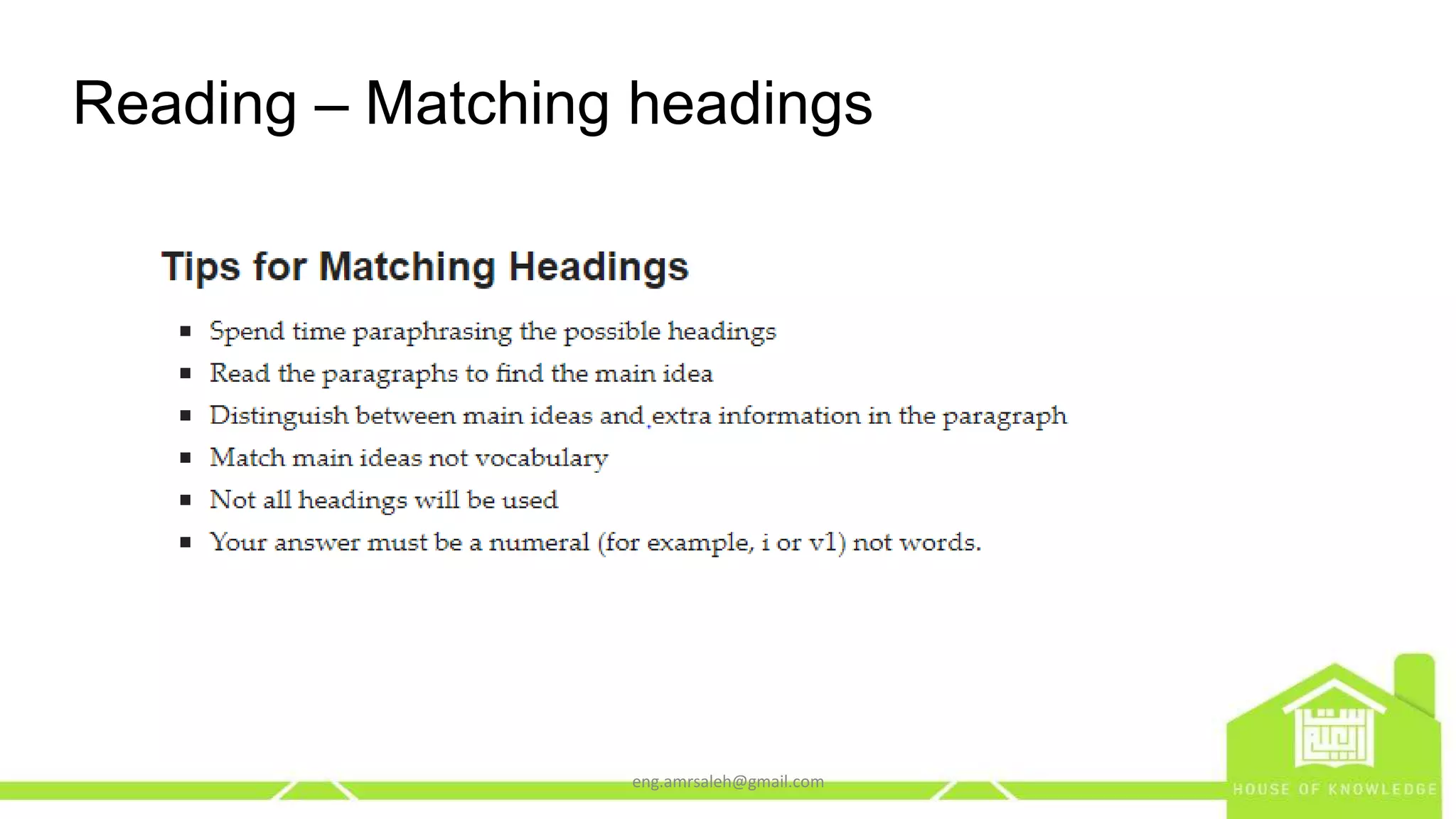
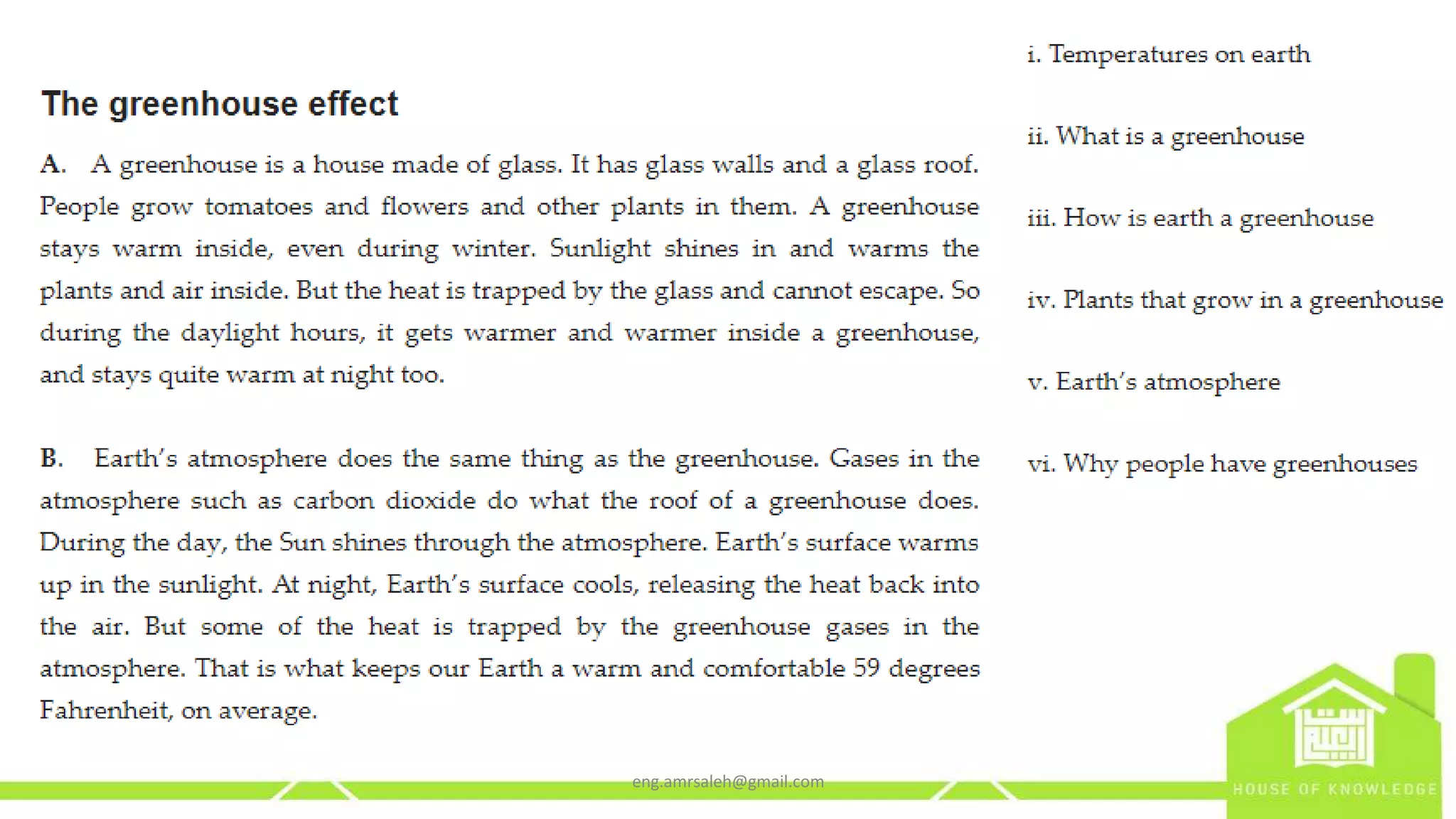
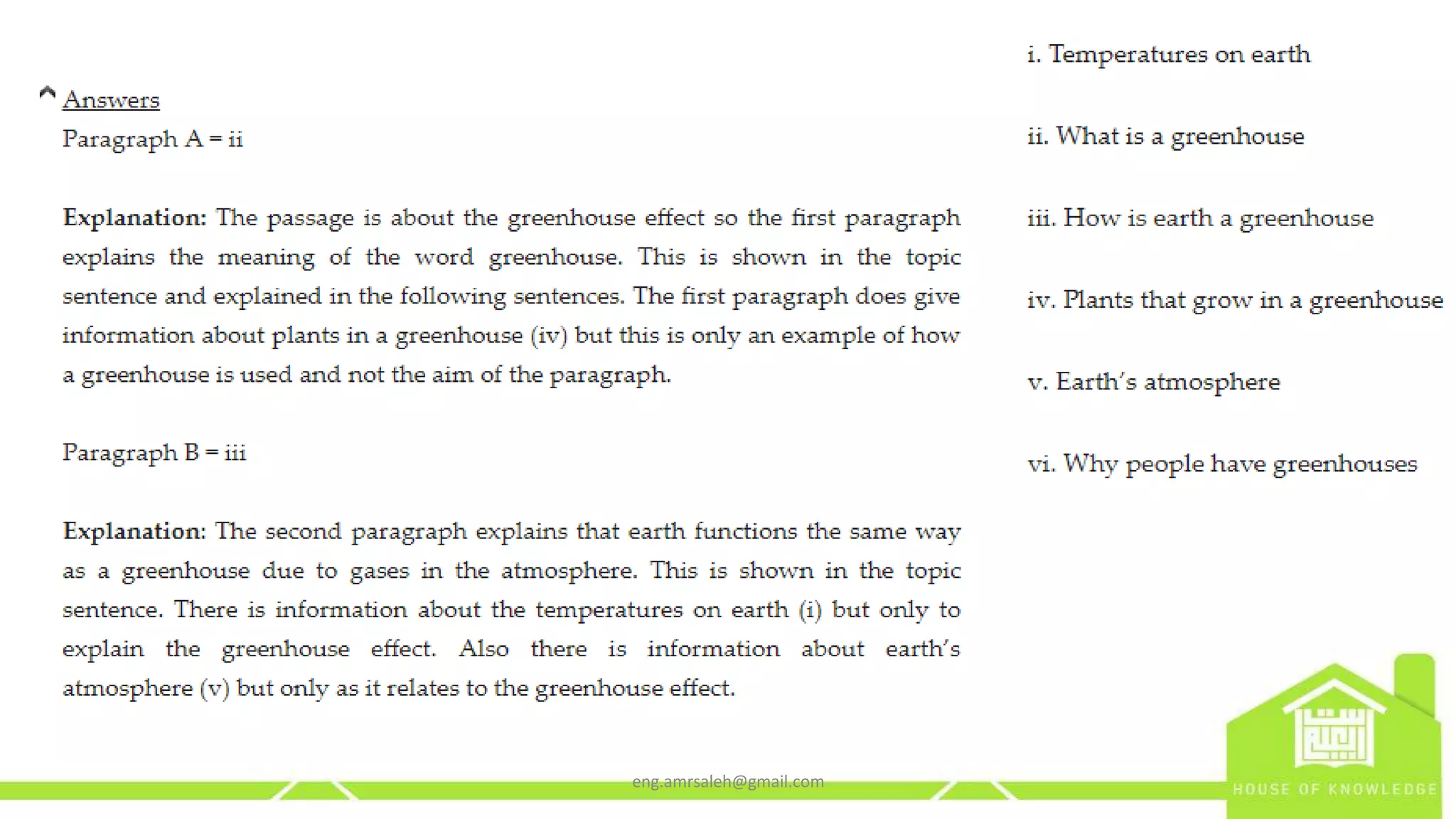
Reading – Matching headings
eng.amrsaleh@gmail.com
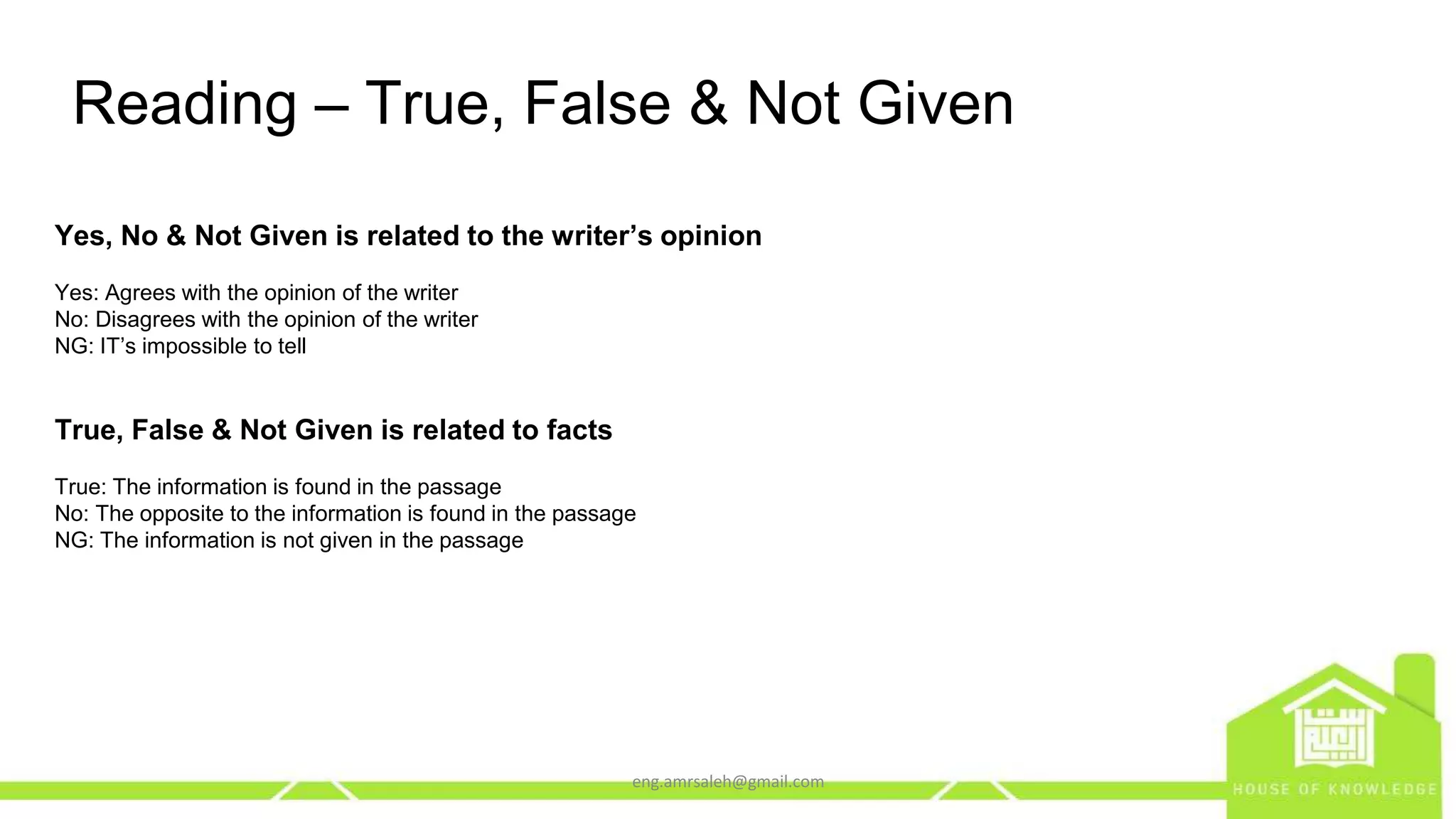
Reading – True, False & Not Given
Yes, No & Not Given is related to the writer’s opinion
Yes: Agrees with the opinion of the writer
No: Disagrees with the opinion of the writer
NG: IT’s impossible to tell
True, False & Not Given is related to facts
True: The information is found in the passage
No: The opposite to the information is found in the passage
NG: The information is not given in the passage
eng.amrsaleh@gmail.com
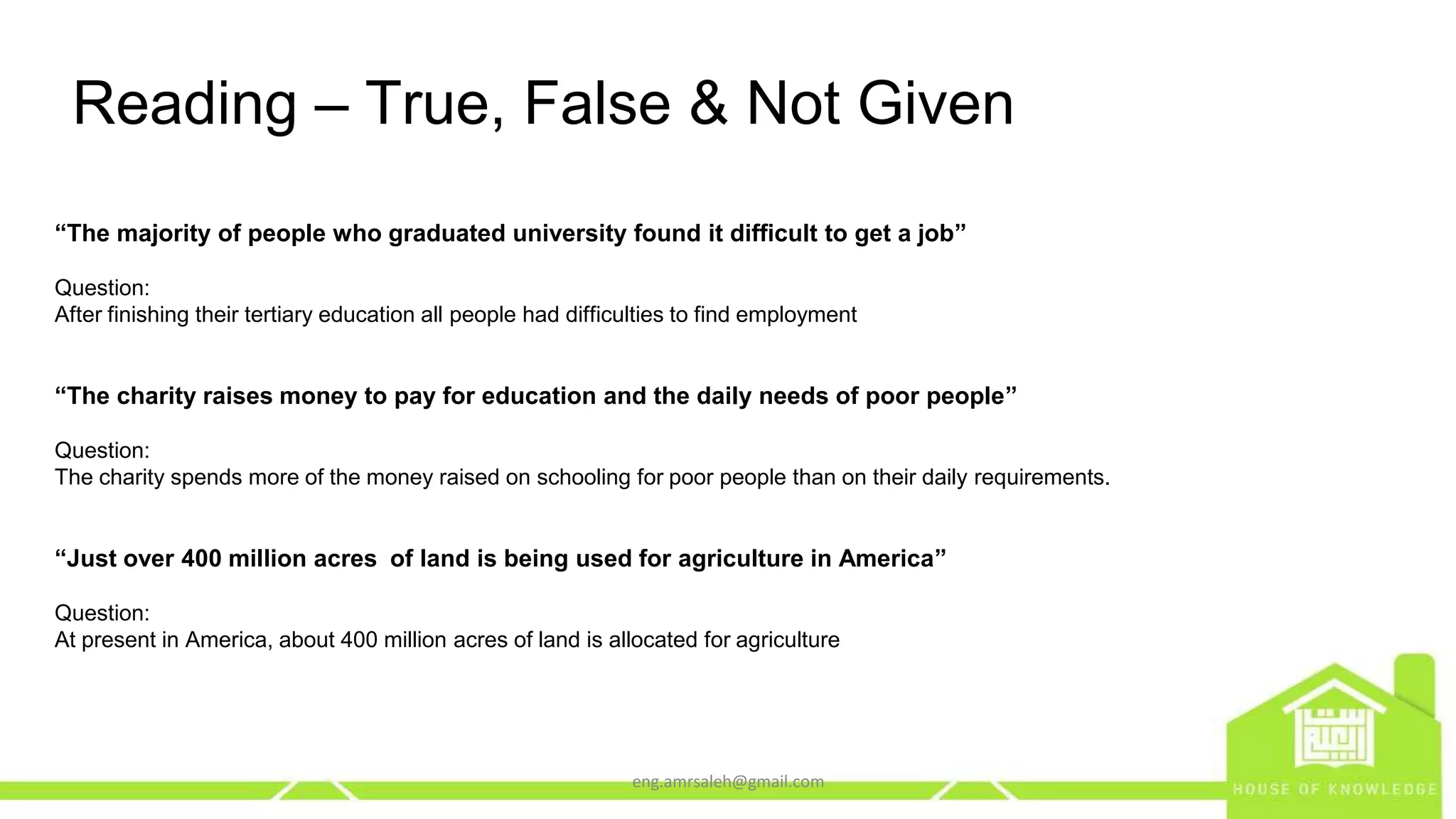
Reading – True, False & Not Given
“The majority of people who graduated university found it difficult to get a job”
Question:
After finishing their tertiary education all people had difficulties to find employment
“The charity raises money to pay for education and the daily needs of poor people”
Question:
The charity spends more of the money raised on schooling for poor people than on their daily requirements.
“Just over 400 million acres of land is being used for agriculture in America”
Question:
At present in America, about 400 million acres of land is allocated for agriculture
eng.amrsaleh@gmail.com
Reading – True, False & Not Given
Resources
Band 9 words per topic: http://www.ieltspodcast.com/ielts-vocabulary/lexical-resource/
Synonyms: www.thesaurus.com
Trial exams: www.ielts-exams.org
General notes: http://ieltsliz.com
Speaking practice: www.Verbling.com
General Tips:http://ielts-academic.com
British Council tips: http://takeielts.britishcouncil.org
General IELTS tips: www.ieltsessentials.com
Phrasal verbs: http://grammar.ccc.commnet.edu/grammar/phrasals.htm
Speaking topics: https://gijmaj.files.wordpress.com/2016/10/42-topics-for-ielts-
speaking-part-1-suggested-answers-2016.pdf
eng.amrsaleh@gmail.com

IELTS Preparation session 6 - General Revision

  • 1.
    Session 6 General Revisionand MOCK EXAM! Prepared and presented by: Amr Saleh
  • 2.
  • 3.
  • 4.
  • 5.
  • 6.
  • 7.
  • 8.
  • 9.
  • 10.
    There is increasingconcern in many countries that newspapers are not being read and the news on television is not being watched by many young people. As a result, young people in these countries are not up-to-date with or even concerned about local, national and international events. The major causes of this problem are that most newspapers and news programs are designed for an adult audience and are not presented in a format that teenagers find attractive. Few young people read newspapers because the language is too difficult and the style and content is usually quite serious. A lack of interest in the news is also due to the fact that young people are fascinated by new technology, such as computers and the Internet. As a result of this there is a lower interest in traditional news formats, which are considered unappealing and unfashionable. There are some strategies that can be used to encourage young people to keep abreast of the news. The first is to have news agencies present the news in formats that are appealing for the young. The easiest way to do this would be to present news on internet sites that are designed for a younger audience. Another way to confront the problem is to have schools involved in the publication of regular school newspapers. Recent local, national and international news events could be included, although schools should also encourage pupils to be involved in the writing of articles and submissions. This newspaper could then be distributed to all the pupils, which means a greater number of young people would regularly read news stories. The low number of young people reading newspapers and following the news on television can be increased by presenting the news in formats that are appealing to them. The key is to utilize websites and also have schools publish their own newspapers, which students are involved in. eng.amrsaleh@gmail.com
  • 11.
    eng.amrsaleh@gmail.com Crime is anissue of increasing concern around the world, and more money than ever before is being spent on the detection and punishment of criminal activity. The reasons why people commit crime are countless, but drugs and alcohol, social problems and poverty play a major role. To solve these problems, governments can either focus on draconian punishments, or improve employment opportunities, invest in good housing projects and tackle drug and alcohol abuse. One of the main causes of criminality is the use, sale and trafficking of narcotics. For example, the sale of drugs is organized by armed criminal gangs who illegally traffic drugs and control their business with extreme violence. Drug-related crime does not end there; drug users often steal to fund theft habit, resulting in further acts of petty crime. The social problems connected with crime are said to be the result of single-parent families, absent role models and bad living conditions. The children from these broken families often become criminals because they feel alienated from society. Poverty is also a reason behind crime. When unskilled jobs pay so little and prices are so high, it's easy to see why some turn to crime for an income. Crime can, of course, be dealt with by toughening criminal laws and introducing longer custodial sentences for persistent criminals, but some of the best ways to deal with crime may be to deal with the social causes. Increasing employment opportunities in poorer areas would improve living standards, which would mean access to affordable housing and education. Government funding for drug and alcohol rehabilitation programs would help reduce dependency on stimulants and the need for the criminal activity that surrounds them. In conclusion, crime is a major issue, but cracking down on offenders with a harsh penal system is not the only way. These problems can be solved through the government providing jobs and funding which should raise living standards and dramatically reduce crime levels.
  • 12.
    eng.amrsaleh@gmail.com In years goneby, before the age of the telegraph or telephone, letter writing was the main means of communication for most people. Since then we have developed faster and more direct ways of contacting people, and personal mail has become relatively rare. It is true that in many cases where our parents would have written a letter, we prefer to pick up the phone, to email or even to text instead. These are perfectly suitable ways of inviting friends to call round or exchanging news with a family member, for example, and they have the advantage that the communication is immediate and we can receive a reply very quickly. In business, too, fax and email are extremely useful. However, in my opinion there are times when there is no alternative to a letter. Letters are generally more formal and carefully composed than emails. This makes them more suitable for occasions when they are likely to be kept and re-read, perhaps several times, by the recipient, as with formal letters of thanks or sympathy. In addition, letters provide a written record, unlike telephone calls, so they are also a better way of setting out an important or complex argument, as in official complaints or legal matters. In conclusion, I would definitely agree that there are fewer times when we need to write letters than in the past. On the other hand, I feel there are still some important occasions when a letter is the most appropriate form of communication.
  • 13.
    eng.amrsaleh@gmail.com The growth ofthe fast food industry has, without doubt, impacted on the eating habits and the health of many societies around the world. Diabetes, high cholesterol, heart and respiratory problems are all on the rise due to fatty and sugar-rich food. However, the question is whether higher tax would improve this situation or not. From an economic point of view, higher tax might seem sensible. In countries such as the USA, Australia and Britain, the healthcare system spends a large part of its budget on people with diet-related health problems. It could be argued that these people have caused their own illnesses because of their choice of food. In this case, why should they expect the state to pay for their treatment? The tax could help fund the healthcare system. However, we also need to consider which socio-economic group consumes fast food as the main part of their diet. Statistics indicate that lower income groups eat more of this food than wealthier people. One possible reason for this is that fast food is far cheaper than fresh produce. This is because many governments offer large subsidies to farmers who provide products for the fast food industry, such as corn, wheat and beef. Fruit and vegetables, on the other hand, are not subsidised. Research suggests that many families simply cannot afford to buy healthy food or pay higher taxes on fast food. For them, fast food is not a choice but a necessity. In conclusion, imposing a higher tax on fast food does not seem to be the answer. If the government chose to do this, it would only lead to greater poverty and families facing further hardship.
  • 14.
    eng.amrsaleh@gmail.com Climate change isa phenomenon affecting all people in all walks of life, from individual citizens to whole countries and huge multinational companies. The question of what we can do to prevent global climate change and whether individual action is effective or not is a hotly debated issue. There are those who say that the majority of the damages is wrought by big businesses. By imposing restrictions on emissions and by strictly monitoring waste disposal from factories, plants and businesses, governments would go a long way towards preventing climate change. It is thought that governments around the world should come up with solutions to help prevent imminent environment disaster. Proponents of this view claim that individual action is irrelevant in the face of massive, wide-scale prevention policies set and controlled by governments. On the other hand, there are a growing number of people who believe that individual action combined with governmental and business action will do a lot more to prevent climate change than if individual citizens were not involved. In a world of six billion people, if everyone thought about the number of water they use, how they dispose of their rubbish, whether or not something needs to be thrown away or if they can, in fact, re-use certain items then we would be giving the problem of climate change and its prevention a massive boost. Taking both points into consideration, I firmly believe that individual citizens cannot sit back and say it is someone else’s responsibility to protect the environments; we must all play our part-individual citizens, governments and big businesses alike.
  • 15.
  • 16.
  • 17.
    A gas-cooled nuclearreactor consists of the reactor itself and a heat exchanger. The reactor contains uranium fuel elements which are surrounded by graphite moderators and topped by charge tubes for loading fuel elements, and boron control rods. The whole reactor is contained in a pressure vessel surrounded by a concrete shield. From the reactor the hot gas flows through a duct into the heat exchanger which is outside the concrete radiation shielding. In the heat exchanger, steam is generated in a secondary loop. There a pipe brings in water which is heated to steam, and this then flows out to the turbo-alternator. Meanwhile the hot gas sinks to the bottom of the heat exchanger and passes through a gas blower which pushes it into a cool gas duct and back to the reactor. As can be seen, this is a continuous cycle that keeps the reactor from overheating, while carrying away the heat and steam, which will power the turbines. eng.amrsaleh@gmail.com
  • 18.
  • 19.
    This report summarizesinformation on the total number of students in the United Kingdom who gained qualifications for English Language Teachers in two academic years, 2007/8 and 2008/9, with specific focus on the number of male qualifiers. In both years, the total numbers of students remained the same, but there was a great difference between the numbers of male and female students who qualified. In 2007/8, out of a total of 32,930 students, only 24.7% were male. The percentage of males who qualified in 2008/9 was even lower. Out of a total of 32,945 students, only 22.7% of them were male. This is a drop of 2%. There was also a large difference in the qualifications that students studied for. Most students qualified with a TEFL certificate; this was true for male students. The number of students who qualified with the TEFL was roughly three times the number who qualified with a Cambridge UCLES CELTA or other degrees, although the total number of students qualifying with the TEFL dropped slightly, from 25,446 in 2007/8 to 24,917 a year later. There was a drop of 0.7% in the number of male students who gained this qualification. In general it can be seen that the number of males qualifying as English language teachers is vastly outnumbered by females and that the proportion of male qualifiers is gradually dropping. eng.amrsaleh@gmail.com
  • 20.
    Dear Sir/Madam, I’m writingto apply for the holiday job which you advertised recently in the newspaper. I am a twenty-one-year-old student and I speak English quite well. At present I am in my second year studying History at Lincoln College and I am very keen to have a holiday job this summer. I am extremely good at adding up, so I think I would be an asset to your shop. My term finishes on 5th July and I am free until 20th September. Last year I worked in a restaurant serving tourists from all over the world and I enjoyed it very much. I would like to have the opportunity to meet people and practise my English again. I enjoy going to museums and am particularly keen on history. Last year I went to an exhibition of Ancient Greek objects which was held in London. I have often been in your museum and am familiar with the items you have. I do hope you will be interested in my application. I look forward to hearing from you in the near future. Yours faithfully, Dimitris Boudramis eng.amrsaleh@gmail.com
  • 21.
  • 22.
  • 23.
  • 24.
    eng.amrsaleh@gmail.com Reading – True,False & Not Given Yes, No & Not Given is related to the writer’s opinion Yes: Agrees with the opinion of the writer No: Disagrees with the opinion of the writer NG: IT’s impossible to tell True, False & Not Given is related to facts True: The information is found in the passage No: The opposite to the information is found in the passage NG: The information is not given in the passage
  • 25.
    eng.amrsaleh@gmail.com Reading – True,False & Not Given “The majority of people who graduated university found it difficult to get a job” Question: After finishing their tertiary education all people had difficulties to find employment “The charity raises money to pay for education and the daily needs of poor people” Question: The charity spends more of the money raised on schooling for poor people than on their daily requirements. “Just over 400 million acres of land is being used for agriculture in America” Question: At present in America, about 400 million acres of land is allocated for agriculture
  • 26.
  • 27.
    Resources Band 9 wordsper topic: http://www.ieltspodcast.com/ielts-vocabulary/lexical-resource/ Synonyms: www.thesaurus.com Trial exams: www.ielts-exams.org General notes: http://ieltsliz.com Speaking practice: www.Verbling.com General Tips:http://ielts-academic.com British Council tips: http://takeielts.britishcouncil.org General IELTS tips: www.ieltsessentials.com Phrasal verbs: http://grammar.ccc.commnet.edu/grammar/phrasals.htm Speaking topics: https://gijmaj.files.wordpress.com/2016/10/42-topics-for-ielts- speaking-part-1-suggested-answers-2016.pdf eng.amrsaleh@gmail.com
  • 28.