IDENTITY THEFT
IN
CYBERSECURITY
Introduction
Identity theft is one of the most significant threats
in the digital age, with consequences that can
affect individuals and organizations alike. As
cybercriminals become increasingly sophisticated,
the risks associated with identity theft are
growing.
Types of
Identity Theft:
Financial theft
Medical identity theft
Criminal identity theft
Synthetic identity theft
How Identity Theft
Happens in
Cybersecurity
Phishing Attacks: Cybercriminals use deceptive
emails or websites to steal sensitive information.
Data Breaches: Hackers gain unauthorized
access to databases containing personal and
financial information.
Social Engineering: Manipulating individuals into
revealing confidential information by exploiting
human behavior.
Malware & Ransomware: Infecting devices with
malicious software to harvest personal
information.
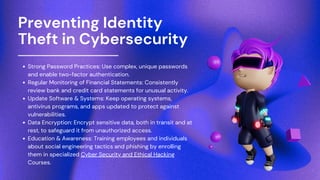
Preventing Identity
Theft in Cybersecurity
Strong Password Practices: Use complex, unique passwords
and enable two-factor authentication.
Regular Monitoring of Financial Statements: Consistently
review bank and credit card statements for unusual activity.
Update Software & Systems: Keep operating systems,
antivirus programs, and apps updated to protect against
vulnerabilities.
Data Encryption: Encrypt sensitive data, both in transit and at
rest, to safeguard it from unauthorized access.
Education & Awareness: Training employees and individuals
about social engineering tactics and phishing by enrolling
them in specialized Cyber Security and Ethical Hacking
Courses.
Tools and Techniques for Cybersecurity
Protection
01 Antivirus and Anti-malware Software:
Install and maintain reliable
antivirus software to detect and
block threats.
03 Identity Theft Protection Services:
Subscription-based services that
monitor personal information and
alert individuals of breaches.
02 Secure Wi-Fi Networks:
Use encryption and strong
passwords for Wi-Fi to prevent
unauthorized access.
04 Firewalls:
Protect your network by setting
up firewalls that filter out
malicious traffic.
Thank You

Identity Theft in Cybersecurity: Understanding Risks and Safeguarding Personal Data

  • 1.
  • 2.
    Introduction Identity theft isone of the most significant threats in the digital age, with consequences that can affect individuals and organizations alike. As cybercriminals become increasingly sophisticated, the risks associated with identity theft are growing.
  • 3.
    Types of Identity Theft: Financialtheft Medical identity theft Criminal identity theft Synthetic identity theft
  • 4.
    How Identity Theft Happensin Cybersecurity Phishing Attacks: Cybercriminals use deceptive emails or websites to steal sensitive information. Data Breaches: Hackers gain unauthorized access to databases containing personal and financial information. Social Engineering: Manipulating individuals into revealing confidential information by exploiting human behavior. Malware & Ransomware: Infecting devices with malicious software to harvest personal information.
  • 5.
    Preventing Identity Theft inCybersecurity Strong Password Practices: Use complex, unique passwords and enable two-factor authentication. Regular Monitoring of Financial Statements: Consistently review bank and credit card statements for unusual activity. Update Software & Systems: Keep operating systems, antivirus programs, and apps updated to protect against vulnerabilities. Data Encryption: Encrypt sensitive data, both in transit and at rest, to safeguard it from unauthorized access. Education & Awareness: Training employees and individuals about social engineering tactics and phishing by enrolling them in specialized Cyber Security and Ethical Hacking Courses.
  • 6.
    Tools and Techniquesfor Cybersecurity Protection 01 Antivirus and Anti-malware Software: Install and maintain reliable antivirus software to detect and block threats. 03 Identity Theft Protection Services: Subscription-based services that monitor personal information and alert individuals of breaches. 02 Secure Wi-Fi Networks: Use encryption and strong passwords for Wi-Fi to prevent unauthorized access. 04 Firewalls: Protect your network by setting up firewalls that filter out malicious traffic.
  • 7.