Explore the world of 3D animation — from modeling and texturing to lighting and motion. This presentation showcases the techniques and tools used to create lifelike digital worlds.
Introduction
This presentation exploresthe integration of 2D and 3D
animation, highlighting core techniques and their applications in
contemporary media production.
3.
Overview of Integrated
Animation
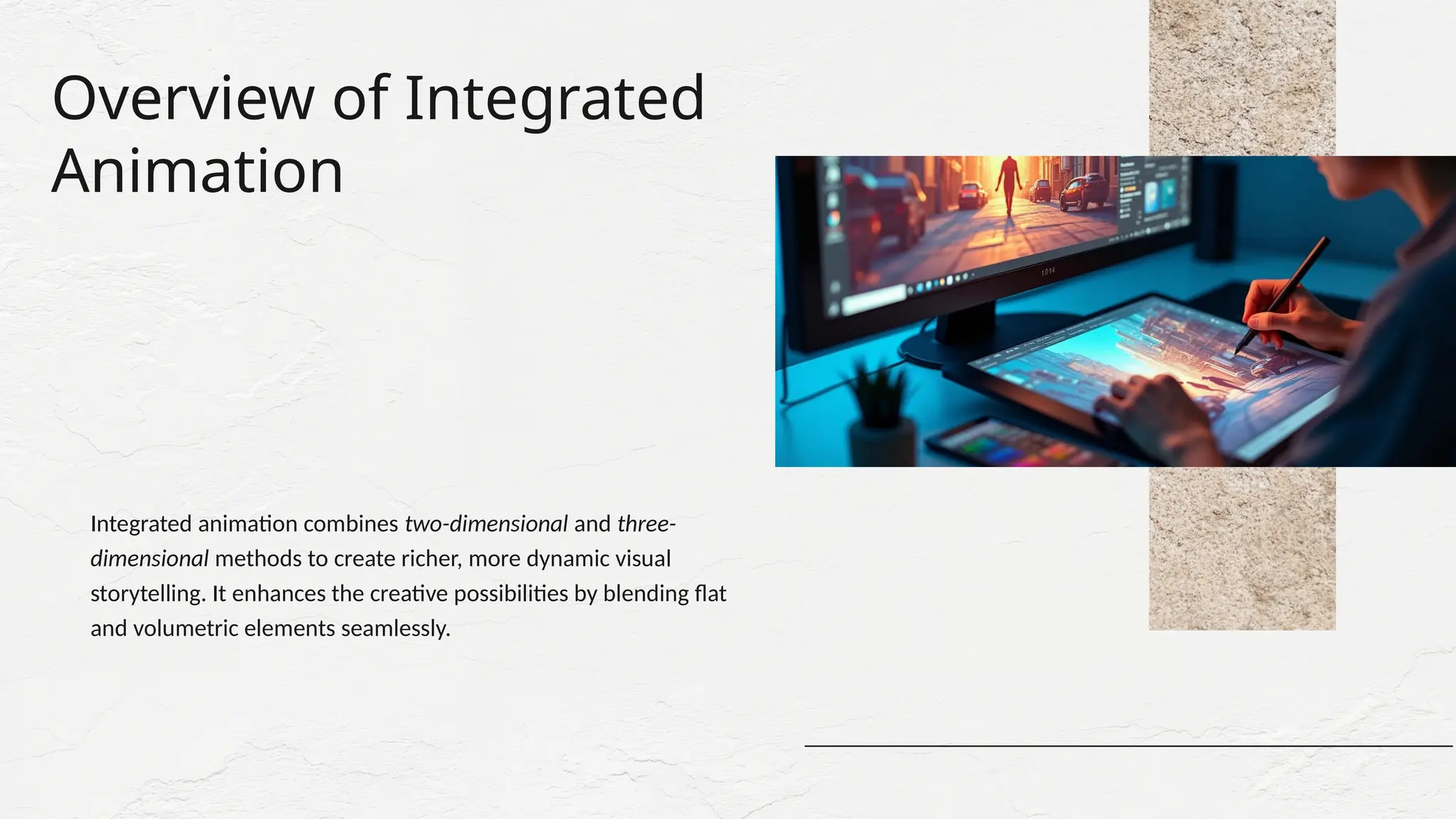
Integratedanimation combines two-dimensional and three-
dimensional methods to create richer, more dynamic visual
storytelling. It enhances the creative possibilities by blending flat
and volumetric elements seamlessly.
4.
Techniques in 2DAnimation
Key 2D animation techniques include hand-drawn frames, digital vector animation, and
rigging. These focus on creating movement in a flat plane with artistic control over style and
flow.
5.
Techniques in 3DAnimation
3D animation techniques include modeling, texturing, rigging, and rendering. These processes
build and animate lifelike objects in a three-dimensional space, offering depth and realism that
enhance visual storytelling.
6.
Curriculum and Skill
Development
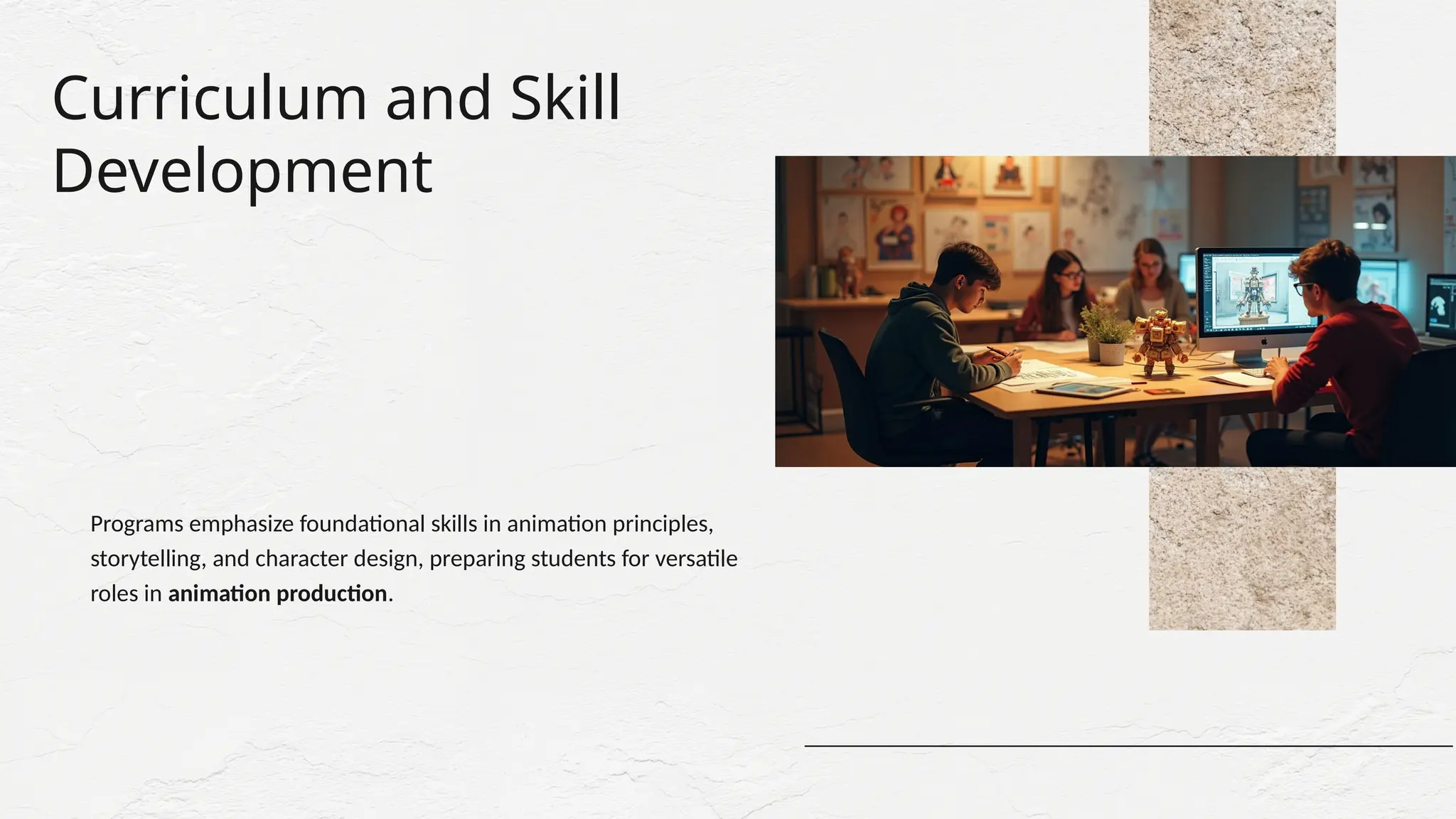
Programsemphasize foundational skills in animation principles,
storytelling, and character design, preparing students for versatile
roles in animation production.
7.
Tools and SoftwareTraining
Students gain hands-on experience with industry-standard software such as Autodesk Maya,
Adobe After Effects, and Blender to master technical proficiency.
8.
Career Opportunities inAnimation
Graduates can pursue careers in film, TV, gaming, advertising, and virtual reality, leveraging
their skills in both 2D and 3D animation sectors.
9.
Conclusions
Integrating 2D and3D animation expands creative possibilities and career pathways.
Comprehensive education and up-to-date training tools are crucial for success in this evolving
industry.