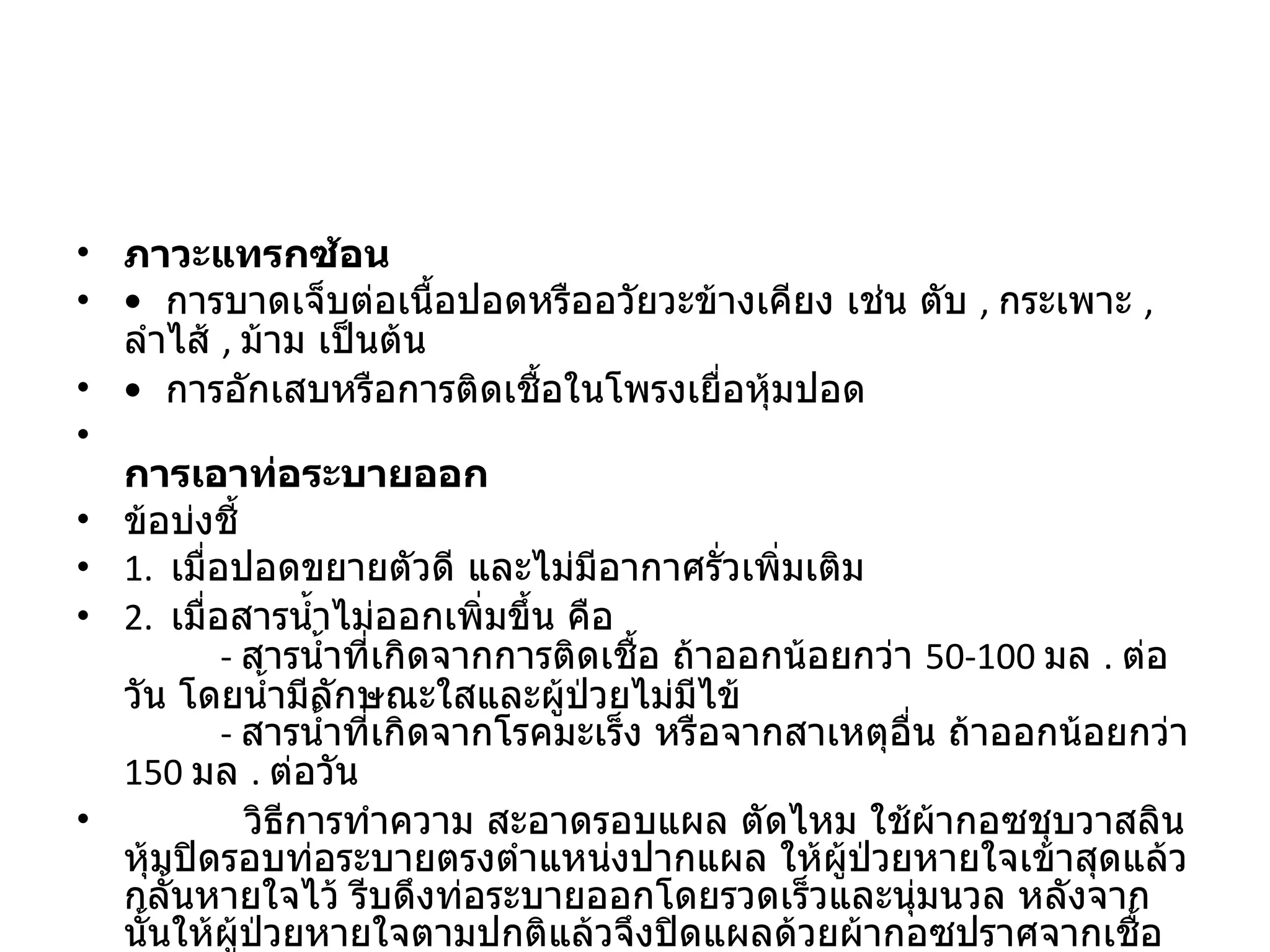
Indications Absolute IndicationsPneumothorax ( tension , open or simple ) Haemothorax Traumatic Arrest (bilateral) Relative Indications Rib fractures & Positive pressure ventilation Profound hypoxia / hypotension & penetrating chest injury Profound hypoxia / hypotension and unilateral signs to a hemithorax
3.
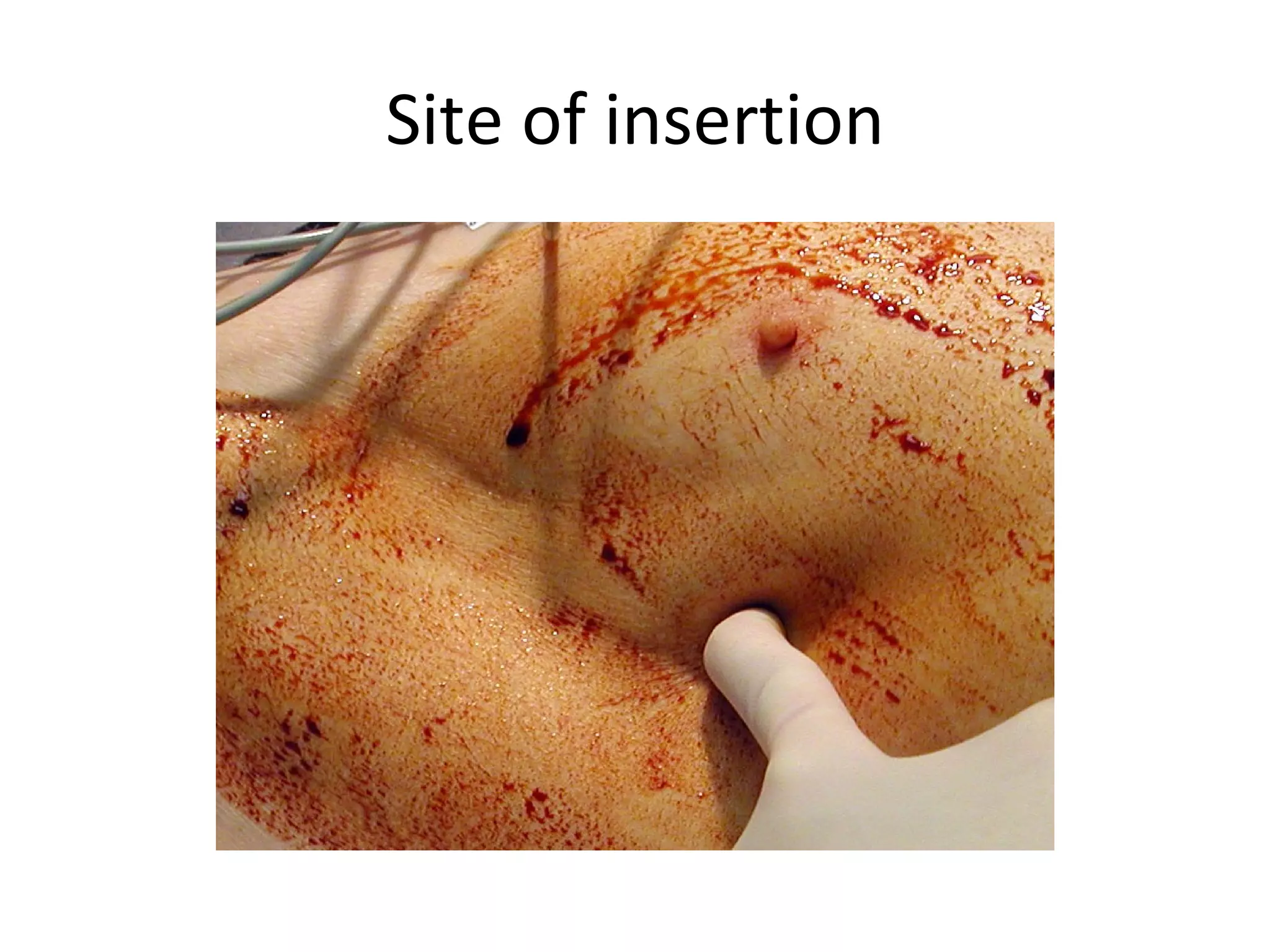
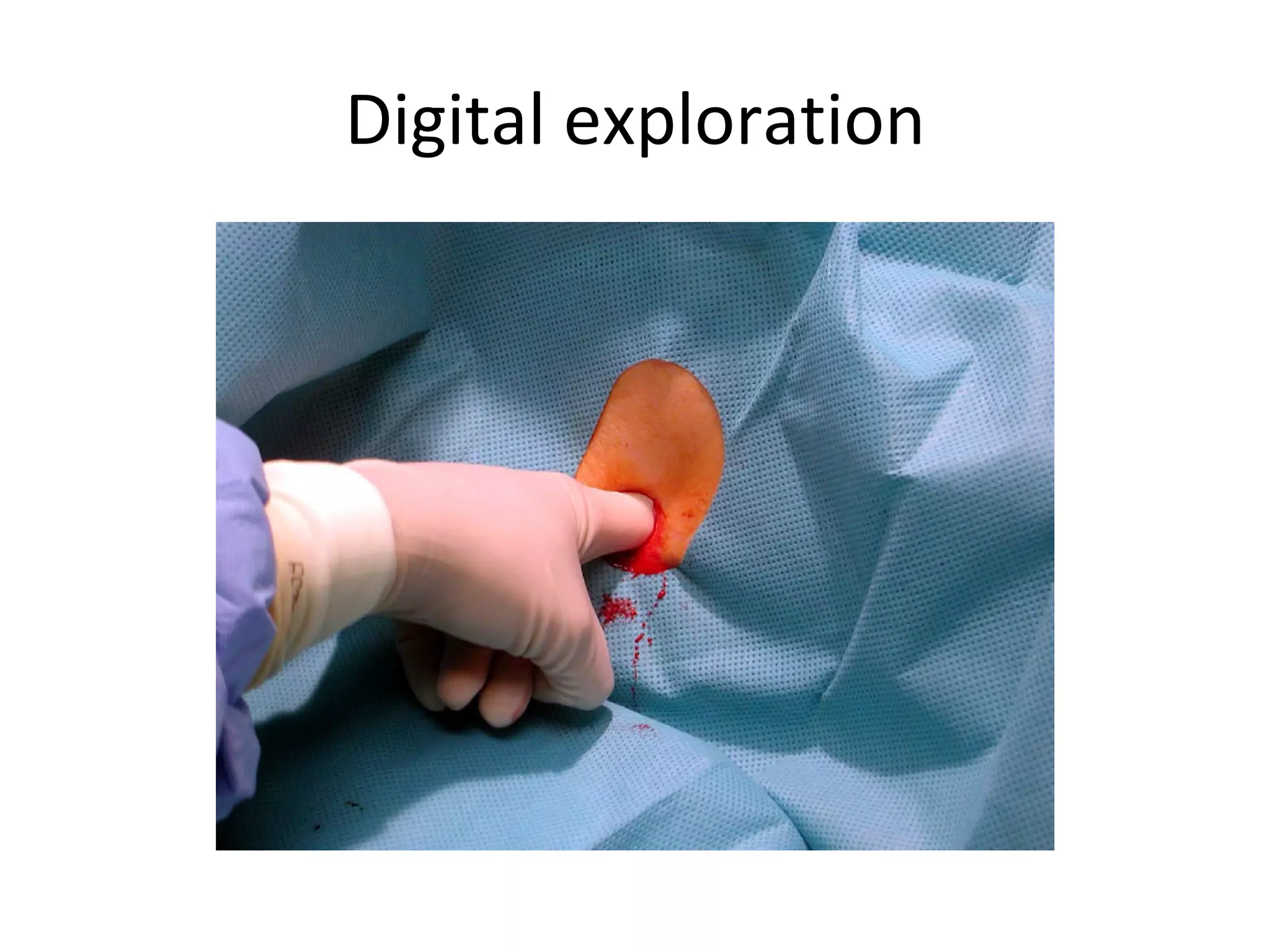
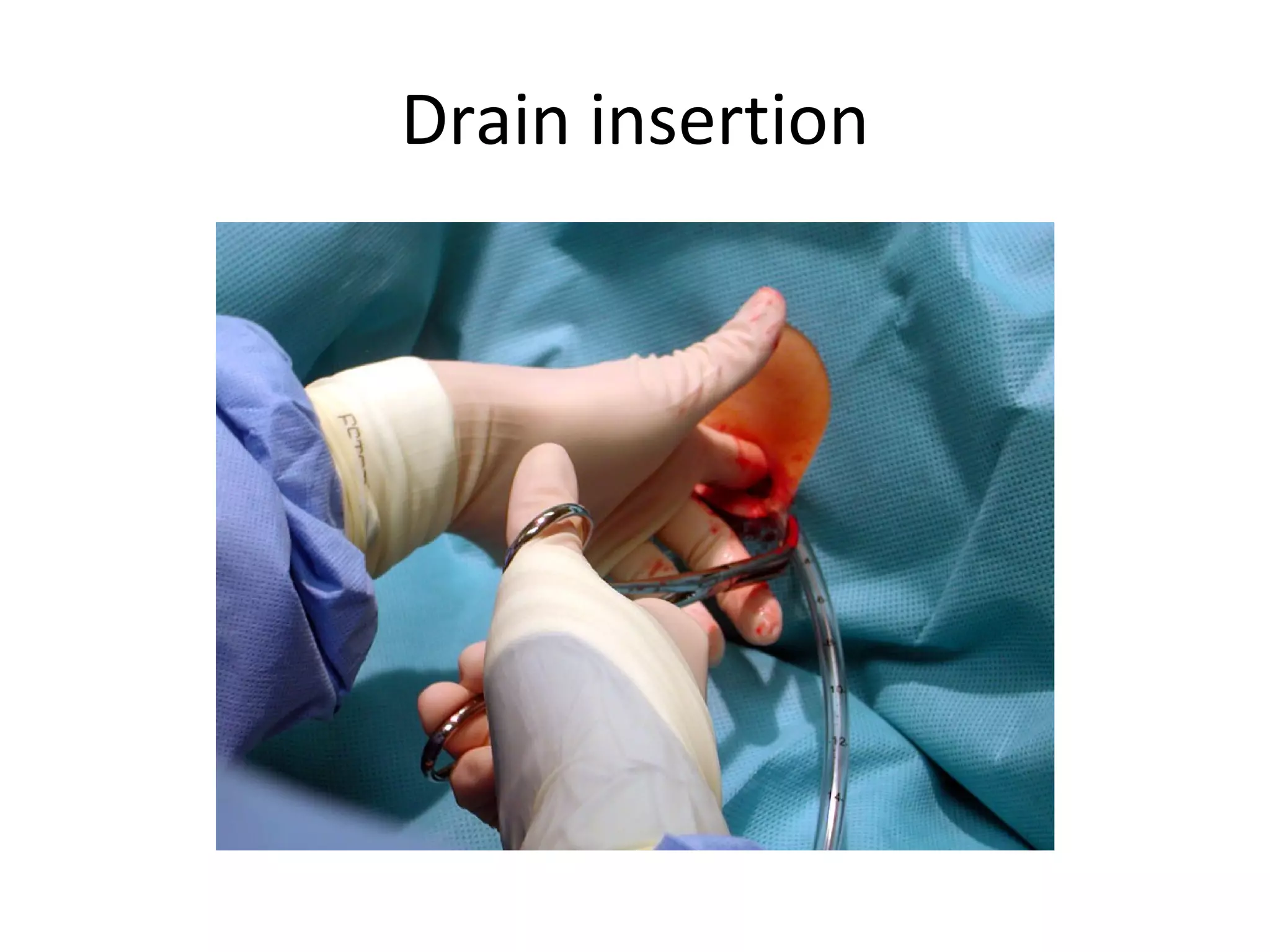
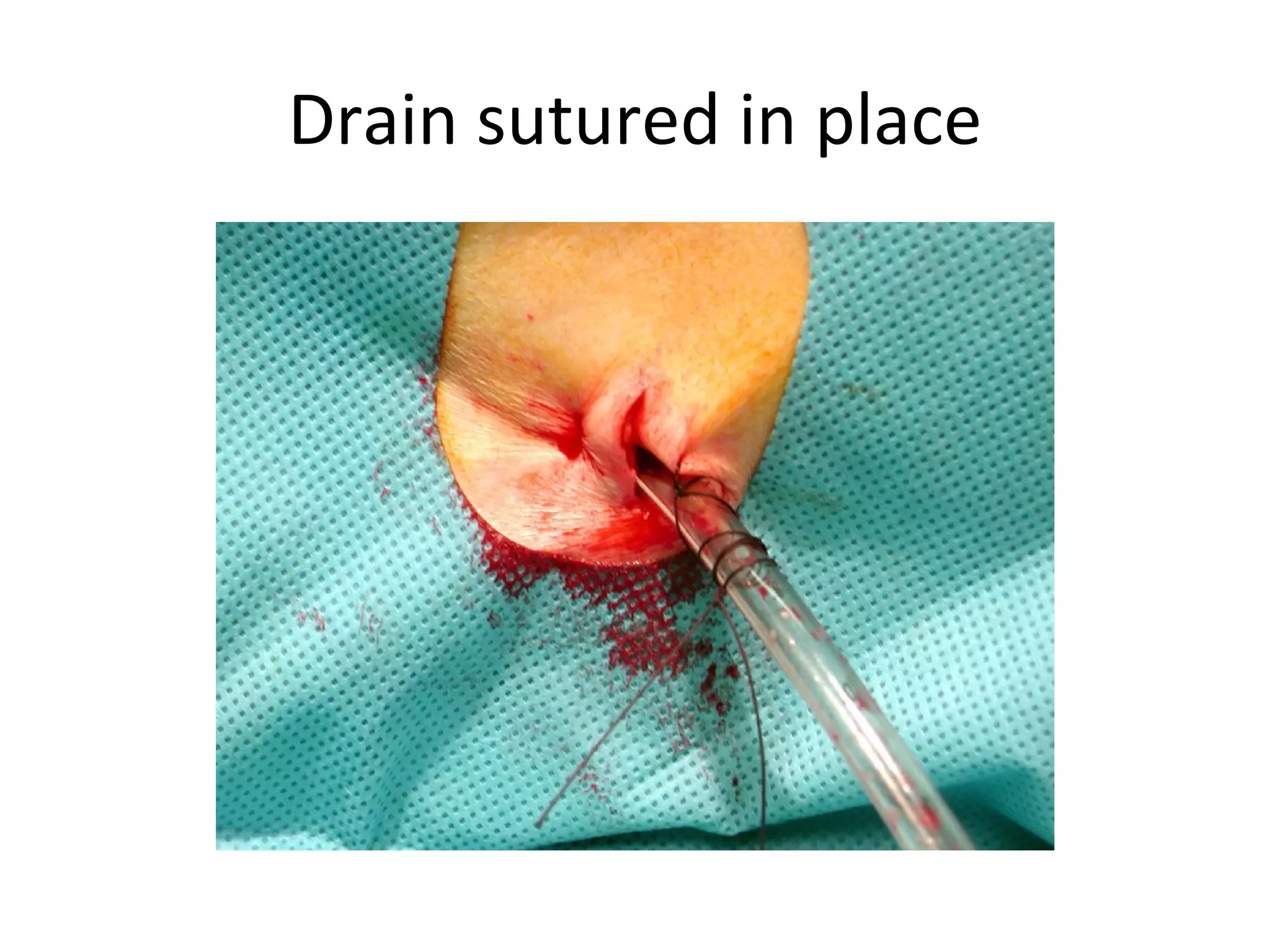
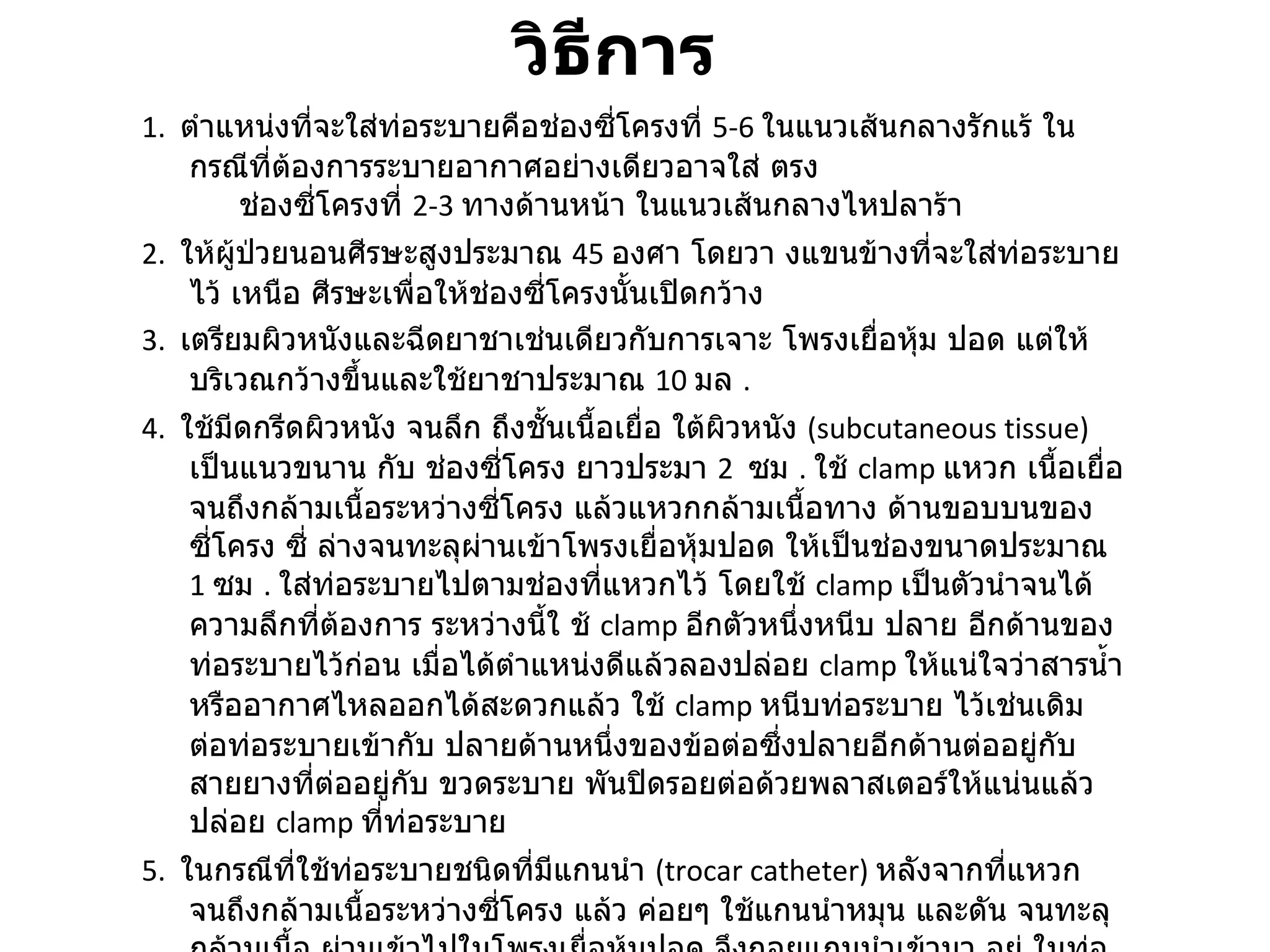
Procedure The stepsin insertion of a chest drain are as follows: The area is prepped and draped appropriately An incision is made along the upper border of the rib below the intercostal space to be used. The drain track will be directed over the top of the lower rib to avoid the intercostal vessels lying below each rib. The incision should easily accommodate the operator's finger. Using a curved clamp the track is developed by blunt dissection only. The clamp is inserted into muscle tissue and spread to split the fibres. The track is developed with the operator's finger. Once the track comes onto the rib, the clamp is angled just over the rib anddissection continued until the pleural is entered. A finger is inserted into the pleural cavity and the area explored for pleural adhesions. At this time the lung, diaphragm and heart may be felt, depending on position of the track. A large-bore (32 or 36F) chest tube is mounted on the clamp and passed along the track into the pleural cavity. The tube is connected to an underwater seal and sutured / secured in place. If desired, a U-stitch is placed for subsequent drain removal (see below). The chest is re-examined to confirm effect. A chest X-ray is taken to confirm placement & position.
4.
Complications Acute complications(technique) Haemothorax, usually from laceration of intercostal vessel (may require thoracotomy) Lung laceration (pleural adhesions not broken down) Diaphragm / Abdominal cavity penetration (placed too low) Stomach / colon injury (diaphragmatic hernia not recognised) Tube placed subcutaneously (not in thoracic cavity) Tube placed too far (pain) Tube falls out (not secured) Late complications Blocked tube (clot, lung) Retained haemothorax Empyema Pneumothorax after removal (poor technique)