Understanding Intercultural
Communication Second Edition
Chapter 1
Why Study Intercultural
Communication?
Stella Ting-Toomey & Leeva C. Chung
OXFORD UNIVERSITY PRESS
PowerPoint Slides Designed by Alex Flecky and Noorie Baig
TODAY’S MENU
I. Practical Reasons to Study
Intercultural Communication (ICC)
II. What is Culture?
I. Why Study Intercultural
Communication?
• Take a moment to think about why you
would like to study this subject. Jot down
your reasons.
•Then, move to the next slide to see if
your reasons match.
I. Some Practical Reasons to Study
ICC
A. Adjust to global workplace
heterogeneity
B. Adapt to domestic workforce diversity
C. Engage in creative multicultural
problem solving
D. Comprehend the role of technology
in global communication
I. Some Practical Reasons to Study ICC cont’d.
E. Facilitate better multicultural health
care communication
F. Enhance intercultural relationship
satisfaction
F. Foster global & intrapersonal
peace
G. Deepen cultural self-awareness
and other-awareness
II. What is Culture?
•Take a moment to think about what
culture is. Jot down your reasons.
•Then, move to the next slide.
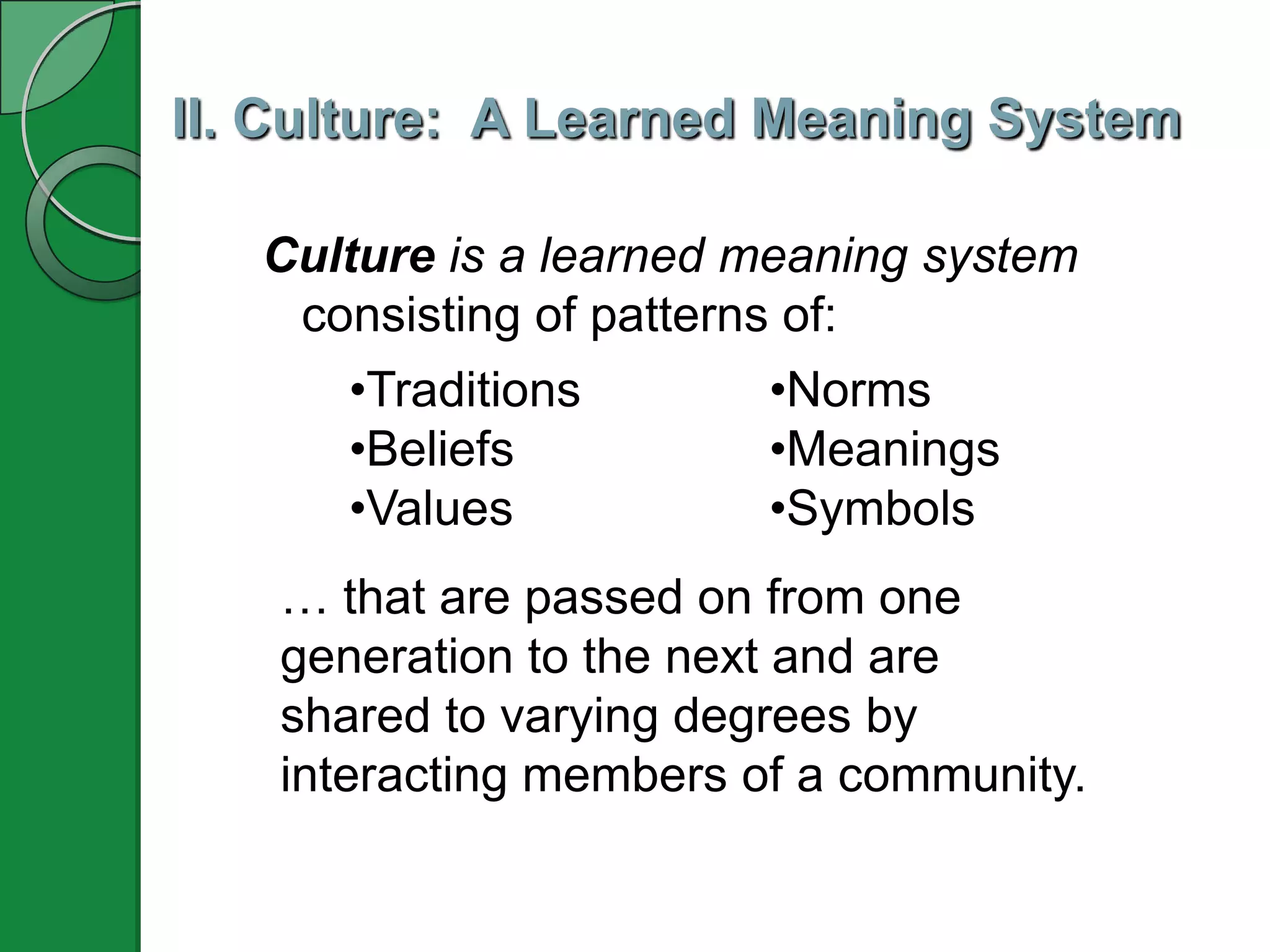
II. Culture: A Learned Meaning System
Culture is a learned meaning system
consisting of patterns of:
•Norms
•Meanings
•Symbols
… that are passed on from one
generation to the next and are
shared to varying degrees by
interacting members of a community.
•Traditions
•Beliefs
•Values
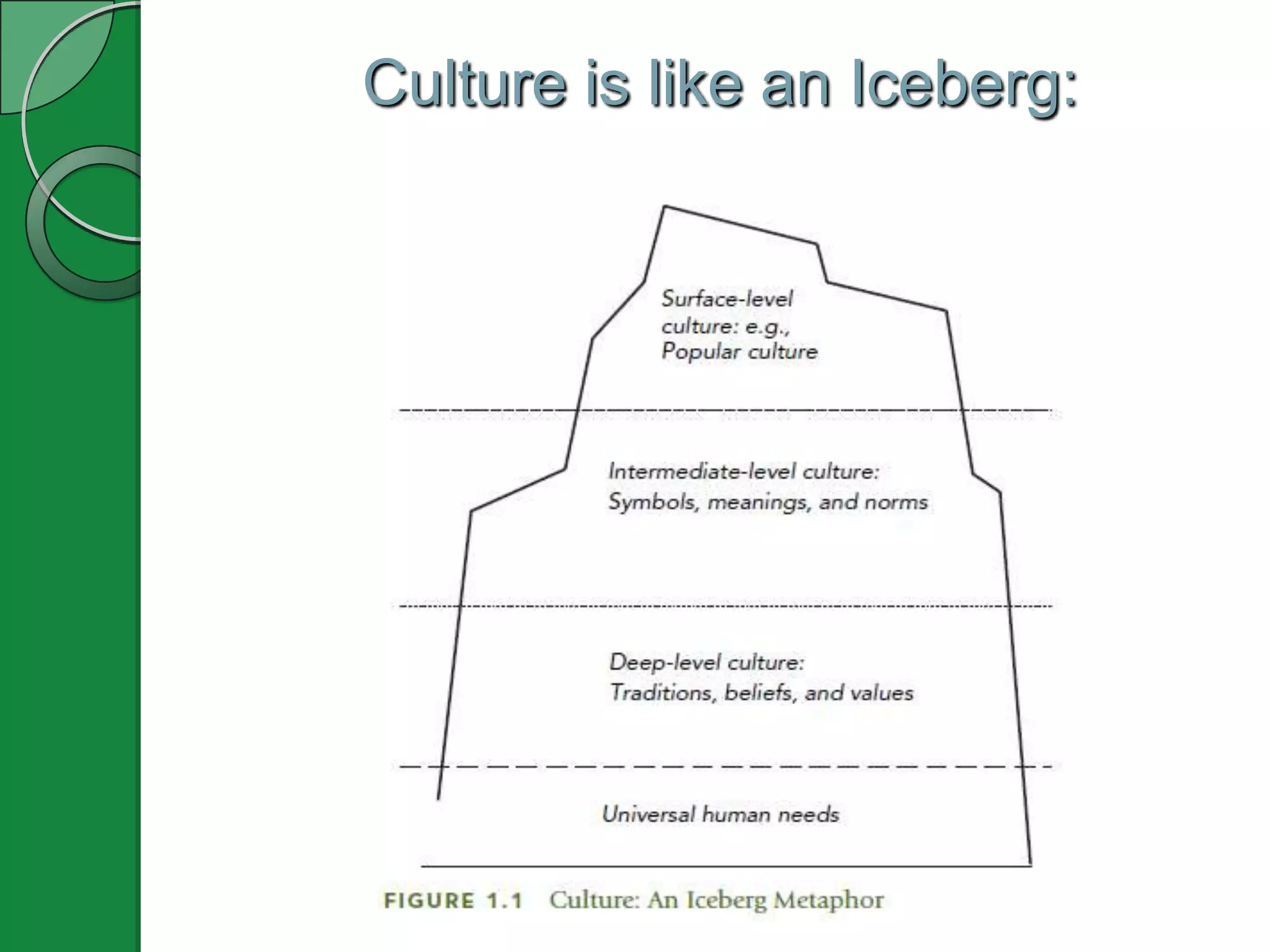
Culture is like an Iceberg:
Culture: An Iceberg
Metaphor
Surface-level culture: Popular culture
Can you give examples of current popular culture
icons that are different to the ones listed in the
textbook?
What are some Canadian popular culture icons?
Culture: An Iceberg Metaphor
Intermediate-level culture: Cultural norms
How would you introduce yourself:
To your professor?
To your romantic partner’s friends?
Deep-level culture: Culturally shared
traditions
How would you explain common Canadian
traditions to a visitor from another culture unfamiliar
with them?
Parting Thoughts…
Culture is the widening
of the mind and spirit.
~ Jawarhalal Nehru

IBS354 PP Chapter 1 Module 1

  • 1.
    Understanding Intercultural Communication SecondEdition Chapter 1 Why Study Intercultural Communication? Stella Ting-Toomey & Leeva C. Chung OXFORD UNIVERSITY PRESS PowerPoint Slides Designed by Alex Flecky and Noorie Baig
  • 2.
    TODAY’S MENU I. PracticalReasons to Study Intercultural Communication (ICC) II. What is Culture?
  • 3.
    I. Why StudyIntercultural Communication? • Take a moment to think about why you would like to study this subject. Jot down your reasons. •Then, move to the next slide to see if your reasons match.
  • 4.
    I. Some PracticalReasons to Study ICC A. Adjust to global workplace heterogeneity B. Adapt to domestic workforce diversity C. Engage in creative multicultural problem solving D. Comprehend the role of technology in global communication
  • 5.
    I. Some PracticalReasons to Study ICC cont’d. E. Facilitate better multicultural health care communication F. Enhance intercultural relationship satisfaction F. Foster global & intrapersonal peace G. Deepen cultural self-awareness and other-awareness
  • 6.
    II. What isCulture? •Take a moment to think about what culture is. Jot down your reasons. •Then, move to the next slide.
  • 7.
    II. Culture: ALearned Meaning System Culture is a learned meaning system consisting of patterns of: •Norms •Meanings •Symbols … that are passed on from one generation to the next and are shared to varying degrees by interacting members of a community. •Traditions •Beliefs •Values
  • 8.
    Culture is likean Iceberg:
  • 9.
    Culture: An Iceberg Metaphor Surface-levelculture: Popular culture Can you give examples of current popular culture icons that are different to the ones listed in the textbook? What are some Canadian popular culture icons?
  • 10.
    Culture: An IcebergMetaphor Intermediate-level culture: Cultural norms How would you introduce yourself: To your professor? To your romantic partner’s friends? Deep-level culture: Culturally shared traditions How would you explain common Canadian traditions to a visitor from another culture unfamiliar with them?
  • 11.
    Parting Thoughts… Culture isthe widening of the mind and spirit. ~ Jawarhalal Nehru

Editor's Notes