The future of web analytics: Inferring User Intent from Session Replays Dustin Chambers & Dick Horst UserWorks inc.
 
First source of web use data 86.42.132.114 - - [31/Oct/2005:18:15:16 -0500] "GET /styles/style.css HTTP/1.1" 200 5194 "http://www.example.com/links/links.php?cat=css" "Mozilla/5.0 (Windows; U; Windows NT 5.1; en-US; rv:1.7.12) Gecko/20050915 Firefox/1.0.7"
Early attempts to visualize data
Dashboard
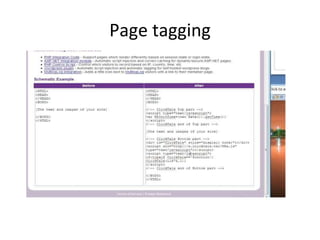
Page tagging
Google Analytics -Google Analytics
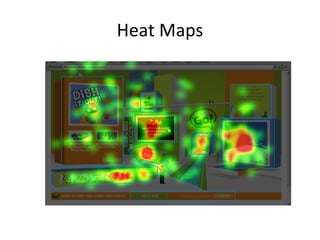
Heat Maps
Page Overlay -CrazyEgg
Hover Map
Session replay e.g.
Providers? Cost? RobotReplay – Free www.robotreplay.com ClickTale – Free - $99/month www.clicktale.com TeaLeaf - $20,000+ www.tealeaf.com
How is this any better? How do we use it?
Alternative to eye-tracking? “ The data suggest that there is a very strong relationship between gaze position and cursor position.” “ This implies that we can use an inexpensive and extremely popular tool as an alternative of eye-tracking systems, especially in web usability systems.” -Carnegie Mellon, 2001
Information Foraging Theory “ What information consumes is rather obvious: it consumes the attention of its recipients. Hence a wealth of information creates a poverty of attention, and a need to allocate that attention efficiently among the overabundance of information sources that might consume it.” -Herb Simon (Nobel Prize Winner)
Consider the anecdotal evidence “ Just by looking at the way a mouse moves, I can tell whether you are reading a webpage or not.” “I can tell because when you read a webpage, you do one of two things. You either shove the mouse off to the right so it is out of the way, or you will walk down the page with your mouse.” Dr. Ted Selker, MIT Media Lab
Ambiguity “ Slow and arched trajectories as users move their mouse would indicate an ambiguous state of mind.” -MIT Media Lab
Are you experienced? “ People are extremely good at remembering graphic design. So when you act like you know where you are going on a place where you have no reason to know, then we know you have been there before.” Dr. Ted Selker, MIT Media Lab
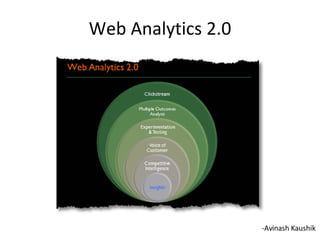
Web Analytics 2.0 -Avinash Kaushik
Web Analytics 2.0 Apply Context Segment Triangulate/Validate
Examples Inferring user intent using the latest web analytic technology with the latest theory
What’s next? Bleeding-edge technology Future Implications…
Integrated Triangulation Surveys Why are you here? Where you able to complete? Why not? How satisfied? Unmoderated remote usability testing
Enhanced Segmentation Filter by: Task completion Satisfaction rating User intent Problem encountered Time on task Search term
Thanks for listening! Dustin Chambers [email_address] Dr. Dick Horst dhorst@userworks.com

Ia Summit08 Wa Slides

  • 1.
    The future ofweb analytics: Inferring User Intent from Session Replays Dustin Chambers & Dick Horst UserWorks inc.
  • 2.
  • 3.
    First source ofweb use data 86.42.132.114 - - [31/Oct/2005:18:15:16 -0500] "GET /styles/style.css HTTP/1.1" 200 5194 "http://www.example.com/links/links.php?cat=css" "Mozilla/5.0 (Windows; U; Windows NT 5.1; en-US; rv:1.7.12) Gecko/20050915 Firefox/1.0.7"
  • 4.
    Early attempts tovisualize data
  • 5.
  • 6.
  • 7.
  • 8.
  • 9.
  • 10.
  • 11.
  • 12.
    Providers? Cost? RobotReplay– Free www.robotreplay.com ClickTale – Free - $99/month www.clicktale.com TeaLeaf - $20,000+ www.tealeaf.com
  • 13.
    How is thisany better? How do we use it?
  • 14.
    Alternative to eye-tracking?“ The data suggest that there is a very strong relationship between gaze position and cursor position.” “ This implies that we can use an inexpensive and extremely popular tool as an alternative of eye-tracking systems, especially in web usability systems.” -Carnegie Mellon, 2001
  • 15.
    Information Foraging Theory“ What information consumes is rather obvious: it consumes the attention of its recipients. Hence a wealth of information creates a poverty of attention, and a need to allocate that attention efficiently among the overabundance of information sources that might consume it.” -Herb Simon (Nobel Prize Winner)
  • 16.
    Consider the anecdotalevidence “ Just by looking at the way a mouse moves, I can tell whether you are reading a webpage or not.” “I can tell because when you read a webpage, you do one of two things. You either shove the mouse off to the right so it is out of the way, or you will walk down the page with your mouse.” Dr. Ted Selker, MIT Media Lab
  • 17.
    Ambiguity “ Slowand arched trajectories as users move their mouse would indicate an ambiguous state of mind.” -MIT Media Lab
  • 18.
    Are you experienced?“ People are extremely good at remembering graphic design. So when you act like you know where you are going on a place where you have no reason to know, then we know you have been there before.” Dr. Ted Selker, MIT Media Lab
  • 19.
    Web Analytics 2.0-Avinash Kaushik
  • 20.
    Web Analytics 2.0Apply Context Segment Triangulate/Validate
  • 21.
    Examples Inferring userintent using the latest web analytic technology with the latest theory
  • 22.
    What’s next? Bleeding-edgetechnology Future Implications…
  • 23.
    Integrated Triangulation SurveysWhy are you here? Where you able to complete? Why not? How satisfied? Unmoderated remote usability testing
  • 24.
    Enhanced Segmentation Filterby: Task completion Satisfaction rating User intent Problem encountered Time on task Search term
  • 25.
    Thanks for listening!Dustin Chambers [email_address] Dr. Dick Horst dhorst@userworks.com