Lodging operations are a core component of the hospitality industry. As travel, tourism, and business-related mobility have become more prevalent, the demand for places to stay has increased exponentially. Whether a traveler is seeking luxury, affordability, convenience, or a unique experience, lodging establishments play a significant role in delivering comfort, security, and service. The lodging industry spans various types of accommodations, such as hotels, motels, resorts, hostels, inns, bed-and-breakfasts, and serviced apartments, each tailored to different market segments.
This comprehensive discussion provides an in-depth look into the lodging operation, including its history, classifications, key departments, operational processes, guest cycle, management functions, and emerging trends. It serves as a foundational understanding for students, professionals, or anyone interested in the dynamic world of lodging management.
---
II. History and Evolution of Lodging
The concept of lodging can be traced back to ancient civilizations where travelers and merchants required places to rest during long journeys. Inns and taverns were among the earliest forms of accommodation. During the Roman Empire, waystations called “mansiones” were established along roads to support official and commercial travel.
The modern hotel industry began to develop in the 18th and 19th centuries, with the rise of grand hotels in Europe and America. By the 20th century, with the advent of railroads, automobiles, and airplanes, the hotel industry began to grow rapidly. Chains such as Hilton, Marriott, and InterContinental emerged and revolutionized lodging by introducing standardized service, franchising models, and global branding.
Today, the industry is a blend of tradition and innovation, offering diverse services from economy motels to high-end resorts, all driven by evolving customer expectations and technological advancements.
---
III. Classification of Lodging Establishments
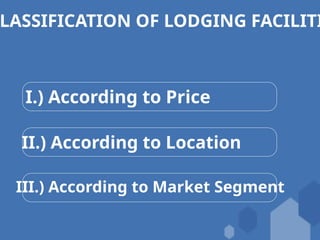
Lodging facilities can be classified based on various factors:
1. By Type of Accommodation:
Hotels: Full-service establishments offering a range of facilities.
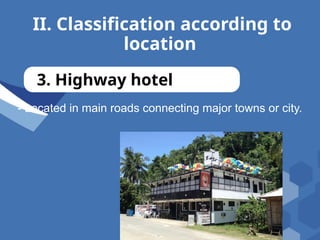
Motels: Typically located along highways; offer basic accommodation for motorists.
Resorts: Located in leisure destinations offering recreational activities.
Inns: Smaller accommodations with fewer rooms and personalized services.
Bed and Breakfast (B&B): Typically private homes offering overnight stays and breakfast.
Hostels: Budget-oriented lodgings with shared facilities, popular among backpackers.
Serviced Apartments: Apartment-style units offering hotel-like amenities for long stays.
2. By Service Level:
Luxury Hotels: Offer high-end amenities, personalized services, and elegant décor.
Mid-range Hotels: Provide comfort and convenience at moderate pricing.
Economy/Budget Hotels: Focus on basic needs and affordability.
3. By Ownership and Affiliation:
Independent Hotels: Operate on their own without brand aff