HYPERTRIGLYCEREDEMIA
INDUCED PANCREATITIS :
MECHANISMS &
MANAGEMENT
Dr. vijula
EPIDEMIOLOGY
Hypertriglyceridemia (HTG) is defined by fasting serum triglyceride level of >150
mg/dL (1.7mmol/L).
HTG is classified based on the degree of elevation as follows :
Mild (150 to 199 mg/dL 1.7 to 2.2 mmol/L)
Moderate (200 to 999 mg/dL, 2.3 to 11.2 mmol/L)
Severe HTG (1000 to 1999 mg/dL, 11.3 to 22.5 mmol/L)
Very severe HTG (≥2000 mg/dL, >22.6 mmol/L)
HTG is considered a significant risk for acute pancreatitis when levels are >1000 mg/dL
INCIDENCE
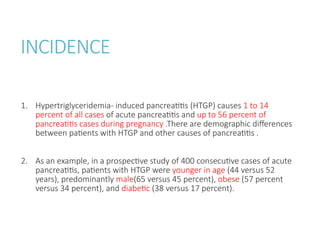
1. Hypertriglyceridemia- induced pancreatitis (HTGP) causes 1 to 14
percent of all cases of acute pancreatitis and up to 56 percent of
pancreatitis cases during pregnancy .There are demographic differences
between patients with HTGP and other causes of pancreatitis .
2. As an example, in a prospective study of 400 consecutive cases of acute
pancreatitis, patients with HTGP were younger in age (44 versus 52
years), predominantly male(65 versus 45 percent), obese (57 percent
versus 34 percent), and diabetic (38 versus 17 percent).
Risk of acute pancreatitis
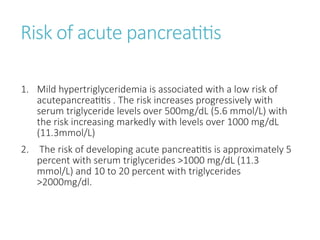
1. Mild hypertriglyceridemia is associated with a low risk of
acutepancreatitis . The risk increases progressively with
serum triglyceride levels over 500mg/dL (5.6 mmol/L) with
the risk increasing markedly with levels over 1000 mg/dL
(11.3mmol/L)
2. The risk of developing acute pancreatitis is approximately 5
percent with serum triglycerides >1000 mg/dL (11.3
mmol/L) and 10 to 20 percent with triglycerides
>2000mg/dl.
Types of hypertriglyceridemia
1. Both primary (genetic) and secondary disorders of
lipoprotein metabolism are associated with hyper-
triglyceridemia-induced pancreatitis (HTGP).
2. Primary hyper-triglyceridemia — Types I (high chylomicrons),
IV (high very low-density lipoprotein [VLDL]), and V (high
chylomicrons and VLDL) dys-lipidemias are associated with
severe hypertriglyceridemia (HTG) and an increased risk of
acute pancreatitis.
Type I dyslipidemia
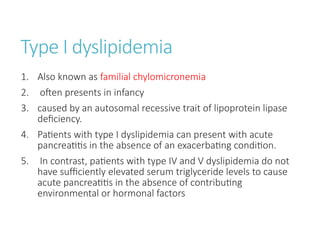
1. Also known as familial chylomicronemia
2. often presents in infancy
3. caused by an autosomal recessive trait of lipoprotein lipase
deficiency.
4. Patients with type I dyslipidemia can present with acute
pancreatitis in the absence of an exacerbating condition.
5. In contrast, patients with type IV and V dyslipidemia do not
have sufficiently elevated serum triglyceride levels to cause
acute pancreatitis in the absence of contributing
environmental or hormonal factors
Type IV dyslipidemia
1. Also known as familial htg or familial combined
hyperlipidemia
2. Is a complex genetic disorder in which the interaction of
multiple susceptibility genes with environmental
components contribute to the phenotype.
3. Patients usually present with acute pancreatitis in
adulthood.
Type V dyslipidemia
1. Known as primary mixed HTG, is similar to type I with a high
risk of acute pancreatitis.
2. However, it is a complex genetic disorder with a higher
prevalence, and generally presents in adulthood.
Secondary hypertriglyceridemia
Secondary hypertriglyceridemia — Various conditions can raise
triglycerides and lead to HTGP :
1. Diabetes mellitus – Poorly controlled diabetes mellitus (types 1 and 2) and
diabeti cketoacidosis can trigger HTGP .
2. Pancreatitis in diabetic ketoacidosis (DKA) usually occurs with severe
metabolic acidosis characterized by a low serum pH (<7.1) and high anion
gap .
3. Marked elevation of serum triglycerides occurs during episodes of DKA. Lack
of insulin results in lipolysis in adipose tissue with release of free fatty acids.
4. Increased delivery of free fatty acids to the liver leads to high output of very
low density lipoproteins, which coupled with the inhibition of lipoprotein
lipase in peripheral tissues, results in hypertriglyceridemia.
Medications
1. Hormone supplementation with Estrogen and Selective
Estrogen Receptor Modulator tamoxifen, can raise serum
triglyceride levels.
2. Other medications associated with elevated serum
triglyceride levels include :
3. Clomiphene, Protease inhibitors, Antiretroviral agents,
Propofol, Olanzapine, Mirtazapine, Retinoids, Thiazide
diuretics, and Beta-blockers.
Pregnancy
1. Pregnancy – Although pregnancy causes an increase in serum
triglycerides that peaks in the third trimester, the total serum
triglyceride level rarely exceeds 300 mg/dL ,a concentration
that is not sufficient to cause acute pancreatitis.
2. Cases of non-genetic,non-familial pregnancy-induced HTG have
been reported but are rare.
3. Most cases of HTGP that occurs during pregnancy are
attributable to underlying familial HTG.
Alcohol
1. It is unclear whether alcohol directly causes HTGP or exacerbates an
underlying genetic hyperlipidemia .
2. Alcohol increases serum triglyceride concentrations in a dose-
dependent manner.
3. In a study of approximately 8000 men and women, the prevalence
of serum triglyceride concentrations above 227 mg/dL increased
from 8% to 20 % with an increase in alcohol intake from three to
nine or more drinks per day .
4. In most cases, the triglyceride elevations with alcohol intake are
transient .
Hypothyroidism
Hypothyroidism is associated with hypertriglyceridemia, which
in rarecases can be severe enough to result in HTGP
PATHOGENESIS:
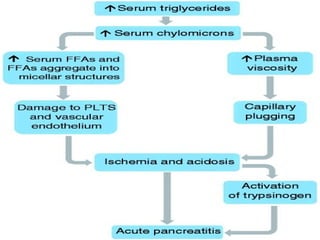
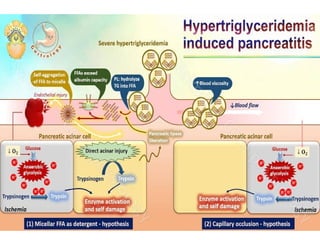
1. Two theories have been proposed to explain the patho-physiology of HTGP.
2. First, excess triglycerides are transported as triglyceride-rich lipoproteins
(chylomicrons), which are hydrolyzed in the vascular bed of the pancreas.
This releases high levels of FFAs that exceed the binding capacity of plasma
albumin, and unbound FFAs self-aggregate into micellar structures with
detergent properties.
3. These toxic structures can cause damage to platelets, the vascular
endothelium and acinar cells, which results in ischemia and acidosis.
Acidosis further increases FFA toxicity by activation of trypsinogen, which
triggers AP.
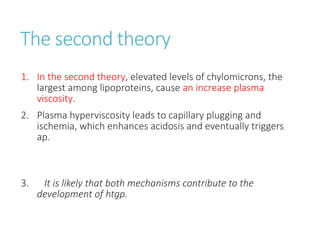
The second theory
1. In the second theory, elevated levels of chylomicrons, the
largest among lipoproteins, cause an increase plasma
viscosity.
2. Plasma hyperviscosity leads to capillary plugging and
ischemia, which enhances acidosis and eventually triggers
ap.
3. It is likely that both mechanisms contribute to the
development of htgp.
CONT..
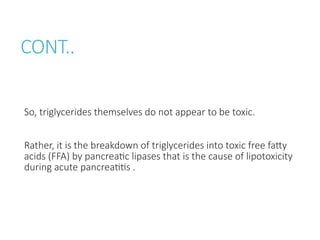
So, triglycerides themselves do not appear to be toxic.
Rather, it is the breakdown of triglycerides into toxic free fatty
acids (FFA) by pancreatic lipases that is the cause of lipotoxicity
during acute pancreatitis .
Cont..
1. In most cases, the HTG is transient and returns to near normal within
two to three days, depending on etiology .
2. However, severe or very severe HTG plus high lipase levels (>3 times the
upper limit of normal) are associated with very high FFA levels and can
further be complicated by systemic inflammation from acute
pancreatitis, direct activation of toll-likereceptor (TLR) 2 and TLR4 by
FFA, and direct lipotoxicity.
CLINICAL PRESENTATION:
1. The initial presentation of hypertriglyceridemia-induced
pancreatitis(HTGP) is similar to that of acute pancreatitis due
to other causes with persistent severe epigastric abdominal
pain, nausea, and vomiting.
2. Most adults with HTGP present with symptoms in the fifth
decade of life.
3. However, patients with some inherited disorders of HTG
(e.g. Type I hyperlipidemia) can develop attacks of acute
pancreatitis in early childhood or adolescence.
Physical examination
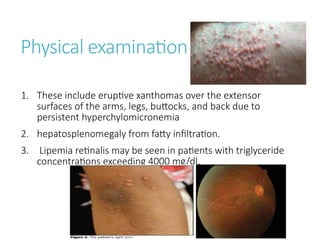
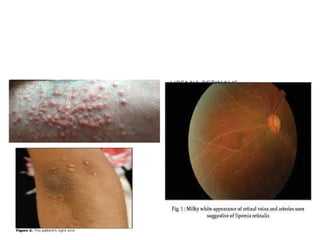
1. These include eruptive xanthomas over the extensor
surfaces of the arms, legs, buttocks, and back due to
persistent hyperchylomicronemia
2. hepatosplenomegaly from fatty infiltration.
3. Lipemia retinalis may be seen in patients with triglyceride
concentrations exceeding 4000 mg/dl.
ERUPTIVE XANTHOMAS LIPEMIA RETINALIS
cont
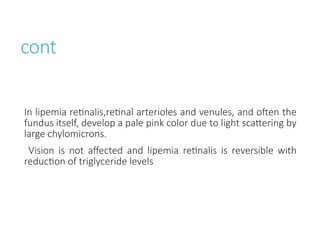
In lipemia retinalis,retinal arterioles and venules, and often the
fundus itself, develop a pale pink color due to light scattering by
large chylomicrons.
Vision is not affected and lipemia retinalis is reversible with
reduction of triglyceride levels
Patients with HTGP tend to have severe pancreatitis as
compared with patients with other causes of pancreatitis .
Patients with hypertriglyceridemia are more likely to have
persistent organ failure as compared with patients with normal
triglycerides (40 percent versus 17percent)
Lab findings:
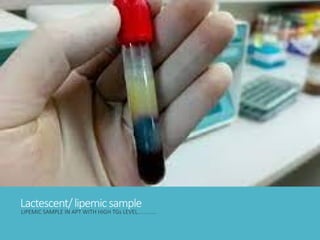
1. At high triglyceride levels, the serum becomes lactescent (milky
coloration) .
2. Elevated triglyceride levels can alter routine measurements of
sodium,amylase, and low-density lipoprotein.
3. The excess triglyceride in a serum sample can displace water
containing sodium and cause pseudo-hyponatremia .
4. Serum triglyceride levels >500mg/dL may cause a falsely normal
amylase level, likely from interference of the calorimetric reading.
Lactescent/lipemicsample
LIPEMIC SAMPLE IN APT WITH HIGH TGs LEVEL............
Diagnosis
1. Requires the presence of two of the following three criteria:
2. Acute onset of persistent, severe, epigastric pain often
radiating to the back,
3. Elevation in serum lipase or amylase to three times or greater
than the upper limit of normal,
4. Characteristic findings of acute pancreatitis on imaging
(contrast-enhanced computed tomography,
magneticresonance imaging, or transabdominal
ultrasonography).
MANAGEMENT:
1. Management of patients with hypertriglyceridemia-induced
pancreatitis (htgp) includes :
2. Treatment of acute pancreatitis and,
3. Reduction of serum triglyceride levels with the goal of
preventing necrotizing pancreatitis and organ failure.
cont
Treatment of acute pancreatitis — Initial management of a
patient with acute pancreatitis consists of supportive care with
fluid resuscitation, pain control, and nutritional support.
Initial therapy for hypertriglyceridemia
1. The main treatment modalities for initial management of
hypertriglyceridemia are APHERESIS and INSULIN.
2. However, randomized trials comparing their efficacy are lacking.
3. The approach to initial therapy for hypertriglyceridemia in patients
with HTGP is based on the severity of acute pancreatitis and the
presence of “worrisome” clinical features.
“worrisome” features
Suggest initial therapy with therapeutic plasma exchange (TPE) .
“worrisome” features in patients with HTGP include the following:
●Signs of hypocalcemia
●Lactic acidosis
●Signs of worsening systemic inflammation (two or more):
•Temperature >38.5°C or <35.0°c
•Heart rate of >90 beats/min
•Respiratory rate of >20 breaths/min or paco2 of <32 mmhg
•WBC count of >12,000 cells/ml, <4000 cells/ml, or >10 percent immature (band) forms
●Signs of worsening organ dysfunction or multi-organ failure as defined by modified marshall scoring
system for organ dysfunction.
We administer intravenous insulin if apheresis is unavailable or if the patient cannot tolerate apheresis.
‘’without worrisome” features
1. In patients with acute pancreatitis without worrisome
features, we administer intravenous insulin.
2. For management of hypertriglyceridemia, insulin is
continued until triglyceride levels are <500 mg/dL.
Apheresis — Apheresis is the process of passing blood through
a medical device to separate any components, and returning
the remaining components to the body.
TPE is the modality of choice for apheresis in patients with
HTGP. The process of TPE involves the removal of plasma and
replacement with a colloid solution (eg, albumin or plasma).
Apheresis is used only in selected patients with severe HTGP as
there are significant concerns surrounding apheresis including its
cost, availability, and efficacy.
The efficacy of TPE in reducing the severity of HTGP or other
clinical important endpoints such as mortality has not been
established. In addition, the evidence to support the use of
apheresis in patients with HTGP is from observational studies,
and randomized trials are lacking.
One study comparing outcomes in 20 TPE-treated patients with
historic controls found no difference between standard therapy
and TPE with regard to mortality or systemic complications.
Insulin
1. Insulin lowers triglyceride levels, but the goal of insulin
therapy in severe acute pancreatitis associated with severe
hypertriglyceridemia is to reverse the stress-associated
release of fatty acids from adipocytes,
2. to promote intracellular triglyceride generation within
adipocytes,
3. and to promote fatty acid metabolism in insulin sensitive
cells, often in the setting of diabetes and peripheral insulin
resistance.
cont
1. We typically initiate an intravenous (IV) infusion of
regular insulin at a rate of 0.1 to 0.3 units/kg/hour while
closely monitoring blood glucose levels.
2. In patients with blood glucose levels between 150 and 200
mg/dL, we administer a separate 5 percent dextrose infusion
to prevent hypoglycemia due to the insulin infusion.
cont
1. Insulin regimens have been reported to lower triglyceride
levels to less than 500 mg/dL over 3.5 to 4 days .
2. IV insulin may be more effective than subcutaneous insulin
in severe cases of HTGP and is easier to titrate than
subcutaneous administration of insulin.
3. IV insulin as a continuous infusion was found effective in
patients with severe HTGP with and without type 2 diabetes
mellitus
MECHANISM OF INSULIN
ACTION:
Insulin decreases serum triglyceride levels by enhancing lipoprotein
lipase activity, an enzyme that accelerates chylomicron and very
low-density lipoprotein metabolism to glycerol and fatty free acids .
Insulin also inhibits hormone-sensitive lipase in adipocytes, which
is the key enzyme for breaking down adipocyte triglyceride and
releasing free fatty acids (FFA) into the circulation.
Because HTGP often presents in patients with uncontrolled
diabetes, insulin can decrease both triglyceride and glucose levels.
MONITORING THE THERAPY.....
APHERESIS
In patients treated with apheresis,
triglycerides should be measured
after each cycle of apheresis. We
continue apheresis until triglyceride
levels are below <500 mg/dL (5.6
mmol/L).
One series of seven patients with an
average triglyceride level of 1407
mg/dL (15.8 mmol/L) reported a
decrease in mean triglyceride levels
to 683 mg/dL (51 percent) after one
plasma exchange session.
INSULIN
In patients treated with
intravenous insulin, triglyceride
levels should be monitored every
12 hours. Serum glucose should be
measured every hour and the
insulin/5 percent dextrose infusion
should be adjusted accordingly.
Intravenous insulin should be
stopped when triglyceride levels
are <500 mg/dL, which typically
occurs within a few days.
ALGORITHM
Long term management of HTG
Acute pancreatitis in patients with hypertriglyceridemia can be prevented by
lowering the serum triglyceride level to 200 mg/dL .
In patients with acute pancreatitis, maintenance of triglyceride levels below
500 mg/dL may expedite clinical improvement Once triglyceride levels are
<500 mg/dL patients with HTGP require long-term therapy to prevent
recurrent acute pancreatitis and to prevent other complications of HTG
This consists of both pharmacologic therapy and dietary fat restriction. Other
non pharmacologic interventions include weight loss in obese patients,
aerobic exercise, avoidance of concentrated sugars and medications that raise
serum triglyceride levels, and strict glycemic control in diabetics.
Fibrate
1. Fibrates used for the treatment of primary HTG, can lower
serum triglycerides via increased LPL and decreased hepatic
triglyceride synthesis.
2. However, these drugs are associated with adverse effects,
including myalgia, elevated liver enzymes and AP.
3. Furthermore, fibrates are ineffective in the management of
chylomicronemia in patients with LPLD,and given
that LPL gene mutations are associated with insulin
resistance,insulin therapy is also inappropriate in these
patients.
THERAPIES WITH UNCERTAIN
ROLE
1. Heparin – The role of heparin in patients with hypertriglyceridemia-induced pancreatitis is
controversial.
2. Heparin has been used alone and with insulin to lower triglycerides.
3. We usually do not use heparin due to the transient nature of reduction of triglyceride
levels, potential lipotoxicity from free fatty acids (FFA), and an increased risk of bleeding.
4. Heparin stimulates the release of endothelial lipoprotein lipase into the circulation .
5. However, the toxic agent in HTGP is FFA, and lowering triglycerides by stimulating their
conversion to FFAs is likely to worsen lipotoxicity
6. Heparin causes an initial rise in circulating lipoprotein lipase levels that is quickly followed
by increased hepatic degradation of lipoprotein lipase . This degradation contributes to
further depletion of plasma stores of lipoprotein lipase and results in an increase in the
level of chylomicrons
Hemofiltration
1. In a randomized trial, 66 patients with HTGP presenting
within three days after the onset of symptoms were
assigned to early high-volume hemofiltration or low
molecular-weight heparin combined with insulin .
2. Early high-volume hemofiltration resulted in reduced
triglyceride levels to <500 mg/dL faster as compared with
insulin therapy.
3. However, there were no differences in clinical outcomes,
including local pancreatic complications, or the requirement
of surgical intervention.
POST-DIAGNOSTICEVALUATION
1. Patients with hypertriglyceridemia-induced pancreatitis
should be evaluated for secondary causes of
hypertriglyceridemia
2. For patients with hypertriglyceridemia not clearly
associated with a secondary cause, family members should
be screened with a fasting triglyceride level.
NOVEL THERAPIES FOR HTG
1. Antisense oligonucleotides against messenger RNA (mrna) for
apolipoprotein B (mipomersen, genzyme, USA) and
2. C3 (volanesorsen, ISIS 304801, akcea therapeutics, cambridge, MA,
USA),
3. Small-molecule inhibitors of microsomal triglyceride transfer protein
(lomitapide, aegerion pharmaceuticals, cambridge, MA, USA) and
4. Diacylglycerol acyltransferase-1 (pradigastat, novartis, switzerland)
5. A monoclonal antibody against angiopoietin-like protein 3 (REGN1500,
regeneron pharmaceuticals, tarrytown, NY, USA),
6. Agonists of peroxisome proliferator-activated receptors and gene therapy
for LPLD (alipogene tiparvovec, uniqure N.V., Amsterdam, netherlands).
HYPERTRIGLYCEREDEMIA INDUCED PANCREATITIS.pptx

HYPERTRIGLYCEREDEMIA INDUCED PANCREATITIS.pptx

  • 1.
  • 2.
    EPIDEMIOLOGY Hypertriglyceridemia (HTG) isdefined by fasting serum triglyceride level of >150 mg/dL (1.7mmol/L). HTG is classified based on the degree of elevation as follows : Mild (150 to 199 mg/dL 1.7 to 2.2 mmol/L) Moderate (200 to 999 mg/dL, 2.3 to 11.2 mmol/L) Severe HTG (1000 to 1999 mg/dL, 11.3 to 22.5 mmol/L) Very severe HTG (≥2000 mg/dL, >22.6 mmol/L) HTG is considered a significant risk for acute pancreatitis when levels are >1000 mg/dL
  • 3.
    INCIDENCE 1. Hypertriglyceridemia- inducedpancreatitis (HTGP) causes 1 to 14 percent of all cases of acute pancreatitis and up to 56 percent of pancreatitis cases during pregnancy .There are demographic differences between patients with HTGP and other causes of pancreatitis . 2. As an example, in a prospective study of 400 consecutive cases of acute pancreatitis, patients with HTGP were younger in age (44 versus 52 years), predominantly male(65 versus 45 percent), obese (57 percent versus 34 percent), and diabetic (38 versus 17 percent).
  • 4.
    Risk of acutepancreatitis 1. Mild hypertriglyceridemia is associated with a low risk of acutepancreatitis . The risk increases progressively with serum triglyceride levels over 500mg/dL (5.6 mmol/L) with the risk increasing markedly with levels over 1000 mg/dL (11.3mmol/L) 2. The risk of developing acute pancreatitis is approximately 5 percent with serum triglycerides >1000 mg/dL (11.3 mmol/L) and 10 to 20 percent with triglycerides >2000mg/dl.
  • 5.
    Types of hypertriglyceridemia 1.Both primary (genetic) and secondary disorders of lipoprotein metabolism are associated with hyper- triglyceridemia-induced pancreatitis (HTGP). 2. Primary hyper-triglyceridemia — Types I (high chylomicrons), IV (high very low-density lipoprotein [VLDL]), and V (high chylomicrons and VLDL) dys-lipidemias are associated with severe hypertriglyceridemia (HTG) and an increased risk of acute pancreatitis.
  • 6.
    Type I dyslipidemia 1.Also known as familial chylomicronemia 2. often presents in infancy 3. caused by an autosomal recessive trait of lipoprotein lipase deficiency. 4. Patients with type I dyslipidemia can present with acute pancreatitis in the absence of an exacerbating condition. 5. In contrast, patients with type IV and V dyslipidemia do not have sufficiently elevated serum triglyceride levels to cause acute pancreatitis in the absence of contributing environmental or hormonal factors
  • 7.
    Type IV dyslipidemia 1.Also known as familial htg or familial combined hyperlipidemia 2. Is a complex genetic disorder in which the interaction of multiple susceptibility genes with environmental components contribute to the phenotype. 3. Patients usually present with acute pancreatitis in adulthood.
  • 8.
    Type V dyslipidemia 1.Known as primary mixed HTG, is similar to type I with a high risk of acute pancreatitis. 2. However, it is a complex genetic disorder with a higher prevalence, and generally presents in adulthood.
  • 9.
    Secondary hypertriglyceridemia Secondary hypertriglyceridemia— Various conditions can raise triglycerides and lead to HTGP : 1. Diabetes mellitus – Poorly controlled diabetes mellitus (types 1 and 2) and diabeti cketoacidosis can trigger HTGP . 2. Pancreatitis in diabetic ketoacidosis (DKA) usually occurs with severe metabolic acidosis characterized by a low serum pH (<7.1) and high anion gap . 3. Marked elevation of serum triglycerides occurs during episodes of DKA. Lack of insulin results in lipolysis in adipose tissue with release of free fatty acids. 4. Increased delivery of free fatty acids to the liver leads to high output of very low density lipoproteins, which coupled with the inhibition of lipoprotein lipase in peripheral tissues, results in hypertriglyceridemia.
  • 10.
    Medications 1. Hormone supplementationwith Estrogen and Selective Estrogen Receptor Modulator tamoxifen, can raise serum triglyceride levels. 2. Other medications associated with elevated serum triglyceride levels include : 3. Clomiphene, Protease inhibitors, Antiretroviral agents, Propofol, Olanzapine, Mirtazapine, Retinoids, Thiazide diuretics, and Beta-blockers.
  • 11.
    Pregnancy 1. Pregnancy –Although pregnancy causes an increase in serum triglycerides that peaks in the third trimester, the total serum triglyceride level rarely exceeds 300 mg/dL ,a concentration that is not sufficient to cause acute pancreatitis. 2. Cases of non-genetic,non-familial pregnancy-induced HTG have been reported but are rare. 3. Most cases of HTGP that occurs during pregnancy are attributable to underlying familial HTG.
  • 12.
    Alcohol 1. It isunclear whether alcohol directly causes HTGP or exacerbates an underlying genetic hyperlipidemia . 2. Alcohol increases serum triglyceride concentrations in a dose- dependent manner. 3. In a study of approximately 8000 men and women, the prevalence of serum triglyceride concentrations above 227 mg/dL increased from 8% to 20 % with an increase in alcohol intake from three to nine or more drinks per day . 4. In most cases, the triglyceride elevations with alcohol intake are transient .
  • 13.
    Hypothyroidism Hypothyroidism is associatedwith hypertriglyceridemia, which in rarecases can be severe enough to result in HTGP
  • 14.
    PATHOGENESIS: 1. Two theorieshave been proposed to explain the patho-physiology of HTGP. 2. First, excess triglycerides are transported as triglyceride-rich lipoproteins (chylomicrons), which are hydrolyzed in the vascular bed of the pancreas. This releases high levels of FFAs that exceed the binding capacity of plasma albumin, and unbound FFAs self-aggregate into micellar structures with detergent properties. 3. These toxic structures can cause damage to platelets, the vascular endothelium and acinar cells, which results in ischemia and acidosis. Acidosis further increases FFA toxicity by activation of trypsinogen, which triggers AP.
  • 15.
    The second theory 1.In the second theory, elevated levels of chylomicrons, the largest among lipoproteins, cause an increase plasma viscosity. 2. Plasma hyperviscosity leads to capillary plugging and ischemia, which enhances acidosis and eventually triggers ap. 3. It is likely that both mechanisms contribute to the development of htgp.
  • 18.
    CONT.. So, triglycerides themselvesdo not appear to be toxic. Rather, it is the breakdown of triglycerides into toxic free fatty acids (FFA) by pancreatic lipases that is the cause of lipotoxicity during acute pancreatitis .
  • 19.
    Cont.. 1. In mostcases, the HTG is transient and returns to near normal within two to three days, depending on etiology . 2. However, severe or very severe HTG plus high lipase levels (>3 times the upper limit of normal) are associated with very high FFA levels and can further be complicated by systemic inflammation from acute pancreatitis, direct activation of toll-likereceptor (TLR) 2 and TLR4 by FFA, and direct lipotoxicity.
  • 20.
    CLINICAL PRESENTATION: 1. Theinitial presentation of hypertriglyceridemia-induced pancreatitis(HTGP) is similar to that of acute pancreatitis due to other causes with persistent severe epigastric abdominal pain, nausea, and vomiting. 2. Most adults with HTGP present with symptoms in the fifth decade of life. 3. However, patients with some inherited disorders of HTG (e.g. Type I hyperlipidemia) can develop attacks of acute pancreatitis in early childhood or adolescence.
  • 21.
    Physical examination 1. Theseinclude eruptive xanthomas over the extensor surfaces of the arms, legs, buttocks, and back due to persistent hyperchylomicronemia 2. hepatosplenomegaly from fatty infiltration. 3. Lipemia retinalis may be seen in patients with triglyceride concentrations exceeding 4000 mg/dl.
  • 22.
  • 23.
    cont In lipemia retinalis,retinalarterioles and venules, and often the fundus itself, develop a pale pink color due to light scattering by large chylomicrons. Vision is not affected and lipemia retinalis is reversible with reduction of triglyceride levels
  • 24.
    Patients with HTGPtend to have severe pancreatitis as compared with patients with other causes of pancreatitis . Patients with hypertriglyceridemia are more likely to have persistent organ failure as compared with patients with normal triglycerides (40 percent versus 17percent)
  • 25.
    Lab findings: 1. Athigh triglyceride levels, the serum becomes lactescent (milky coloration) . 2. Elevated triglyceride levels can alter routine measurements of sodium,amylase, and low-density lipoprotein. 3. The excess triglyceride in a serum sample can displace water containing sodium and cause pseudo-hyponatremia . 4. Serum triglyceride levels >500mg/dL may cause a falsely normal amylase level, likely from interference of the calorimetric reading.
  • 26.
    Lactescent/lipemicsample LIPEMIC SAMPLE INAPT WITH HIGH TGs LEVEL............
  • 27.
    Diagnosis 1. Requires thepresence of two of the following three criteria: 2. Acute onset of persistent, severe, epigastric pain often radiating to the back, 3. Elevation in serum lipase or amylase to three times or greater than the upper limit of normal, 4. Characteristic findings of acute pancreatitis on imaging (contrast-enhanced computed tomography, magneticresonance imaging, or transabdominal ultrasonography).
  • 28.
    MANAGEMENT: 1. Management ofpatients with hypertriglyceridemia-induced pancreatitis (htgp) includes : 2. Treatment of acute pancreatitis and, 3. Reduction of serum triglyceride levels with the goal of preventing necrotizing pancreatitis and organ failure.
  • 29.
    cont Treatment of acutepancreatitis — Initial management of a patient with acute pancreatitis consists of supportive care with fluid resuscitation, pain control, and nutritional support.
  • 30.
    Initial therapy forhypertriglyceridemia 1. The main treatment modalities for initial management of hypertriglyceridemia are APHERESIS and INSULIN. 2. However, randomized trials comparing their efficacy are lacking. 3. The approach to initial therapy for hypertriglyceridemia in patients with HTGP is based on the severity of acute pancreatitis and the presence of “worrisome” clinical features.
  • 31.
    “worrisome” features Suggest initialtherapy with therapeutic plasma exchange (TPE) . “worrisome” features in patients with HTGP include the following: ●Signs of hypocalcemia ●Lactic acidosis ●Signs of worsening systemic inflammation (two or more): •Temperature >38.5°C or <35.0°c •Heart rate of >90 beats/min •Respiratory rate of >20 breaths/min or paco2 of <32 mmhg •WBC count of >12,000 cells/ml, <4000 cells/ml, or >10 percent immature (band) forms ●Signs of worsening organ dysfunction or multi-organ failure as defined by modified marshall scoring system for organ dysfunction. We administer intravenous insulin if apheresis is unavailable or if the patient cannot tolerate apheresis.
  • 32.
    ‘’without worrisome” features 1.In patients with acute pancreatitis without worrisome features, we administer intravenous insulin. 2. For management of hypertriglyceridemia, insulin is continued until triglyceride levels are <500 mg/dL.
  • 33.
    Apheresis — Apheresisis the process of passing blood through a medical device to separate any components, and returning the remaining components to the body. TPE is the modality of choice for apheresis in patients with HTGP. The process of TPE involves the removal of plasma and replacement with a colloid solution (eg, albumin or plasma).
  • 34.
    Apheresis is usedonly in selected patients with severe HTGP as there are significant concerns surrounding apheresis including its cost, availability, and efficacy. The efficacy of TPE in reducing the severity of HTGP or other clinical important endpoints such as mortality has not been established. In addition, the evidence to support the use of apheresis in patients with HTGP is from observational studies, and randomized trials are lacking. One study comparing outcomes in 20 TPE-treated patients with historic controls found no difference between standard therapy and TPE with regard to mortality or systemic complications.
  • 35.
    Insulin 1. Insulin lowerstriglyceride levels, but the goal of insulin therapy in severe acute pancreatitis associated with severe hypertriglyceridemia is to reverse the stress-associated release of fatty acids from adipocytes, 2. to promote intracellular triglyceride generation within adipocytes, 3. and to promote fatty acid metabolism in insulin sensitive cells, often in the setting of diabetes and peripheral insulin resistance.
  • 36.
    cont 1. We typicallyinitiate an intravenous (IV) infusion of regular insulin at a rate of 0.1 to 0.3 units/kg/hour while closely monitoring blood glucose levels. 2. In patients with blood glucose levels between 150 and 200 mg/dL, we administer a separate 5 percent dextrose infusion to prevent hypoglycemia due to the insulin infusion.
  • 37.
    cont 1. Insulin regimenshave been reported to lower triglyceride levels to less than 500 mg/dL over 3.5 to 4 days . 2. IV insulin may be more effective than subcutaneous insulin in severe cases of HTGP and is easier to titrate than subcutaneous administration of insulin. 3. IV insulin as a continuous infusion was found effective in patients with severe HTGP with and without type 2 diabetes mellitus
  • 38.
    MECHANISM OF INSULIN ACTION: Insulindecreases serum triglyceride levels by enhancing lipoprotein lipase activity, an enzyme that accelerates chylomicron and very low-density lipoprotein metabolism to glycerol and fatty free acids . Insulin also inhibits hormone-sensitive lipase in adipocytes, which is the key enzyme for breaking down adipocyte triglyceride and releasing free fatty acids (FFA) into the circulation. Because HTGP often presents in patients with uncontrolled diabetes, insulin can decrease both triglyceride and glucose levels.
  • 39.
    MONITORING THE THERAPY..... APHERESIS Inpatients treated with apheresis, triglycerides should be measured after each cycle of apheresis. We continue apheresis until triglyceride levels are below <500 mg/dL (5.6 mmol/L). One series of seven patients with an average triglyceride level of 1407 mg/dL (15.8 mmol/L) reported a decrease in mean triglyceride levels to 683 mg/dL (51 percent) after one plasma exchange session. INSULIN In patients treated with intravenous insulin, triglyceride levels should be monitored every 12 hours. Serum glucose should be measured every hour and the insulin/5 percent dextrose infusion should be adjusted accordingly. Intravenous insulin should be stopped when triglyceride levels are <500 mg/dL, which typically occurs within a few days.
  • 40.
  • 41.
    Long term managementof HTG Acute pancreatitis in patients with hypertriglyceridemia can be prevented by lowering the serum triglyceride level to 200 mg/dL . In patients with acute pancreatitis, maintenance of triglyceride levels below 500 mg/dL may expedite clinical improvement Once triglyceride levels are <500 mg/dL patients with HTGP require long-term therapy to prevent recurrent acute pancreatitis and to prevent other complications of HTG This consists of both pharmacologic therapy and dietary fat restriction. Other non pharmacologic interventions include weight loss in obese patients, aerobic exercise, avoidance of concentrated sugars and medications that raise serum triglyceride levels, and strict glycemic control in diabetics.
  • 42.
    Fibrate 1. Fibrates usedfor the treatment of primary HTG, can lower serum triglycerides via increased LPL and decreased hepatic triglyceride synthesis. 2. However, these drugs are associated with adverse effects, including myalgia, elevated liver enzymes and AP. 3. Furthermore, fibrates are ineffective in the management of chylomicronemia in patients with LPLD,and given that LPL gene mutations are associated with insulin resistance,insulin therapy is also inappropriate in these patients.
  • 43.
    THERAPIES WITH UNCERTAIN ROLE 1.Heparin – The role of heparin in patients with hypertriglyceridemia-induced pancreatitis is controversial. 2. Heparin has been used alone and with insulin to lower triglycerides. 3. We usually do not use heparin due to the transient nature of reduction of triglyceride levels, potential lipotoxicity from free fatty acids (FFA), and an increased risk of bleeding. 4. Heparin stimulates the release of endothelial lipoprotein lipase into the circulation . 5. However, the toxic agent in HTGP is FFA, and lowering triglycerides by stimulating their conversion to FFAs is likely to worsen lipotoxicity 6. Heparin causes an initial rise in circulating lipoprotein lipase levels that is quickly followed by increased hepatic degradation of lipoprotein lipase . This degradation contributes to further depletion of plasma stores of lipoprotein lipase and results in an increase in the level of chylomicrons
  • 44.
    Hemofiltration 1. In arandomized trial, 66 patients with HTGP presenting within three days after the onset of symptoms were assigned to early high-volume hemofiltration or low molecular-weight heparin combined with insulin . 2. Early high-volume hemofiltration resulted in reduced triglyceride levels to <500 mg/dL faster as compared with insulin therapy. 3. However, there were no differences in clinical outcomes, including local pancreatic complications, or the requirement of surgical intervention.
  • 45.
    POST-DIAGNOSTICEVALUATION 1. Patients withhypertriglyceridemia-induced pancreatitis should be evaluated for secondary causes of hypertriglyceridemia 2. For patients with hypertriglyceridemia not clearly associated with a secondary cause, family members should be screened with a fasting triglyceride level.
  • 46.
    NOVEL THERAPIES FORHTG 1. Antisense oligonucleotides against messenger RNA (mrna) for apolipoprotein B (mipomersen, genzyme, USA) and 2. C3 (volanesorsen, ISIS 304801, akcea therapeutics, cambridge, MA, USA), 3. Small-molecule inhibitors of microsomal triglyceride transfer protein (lomitapide, aegerion pharmaceuticals, cambridge, MA, USA) and 4. Diacylglycerol acyltransferase-1 (pradigastat, novartis, switzerland) 5. A monoclonal antibody against angiopoietin-like protein 3 (REGN1500, regeneron pharmaceuticals, tarrytown, NY, USA), 6. Agonists of peroxisome proliferator-activated receptors and gene therapy for LPLD (alipogene tiparvovec, uniqure N.V., Amsterdam, netherlands).