Hyperkalemia and Its
Management
Dr Sheraz Hamayun
PGR Urology Department
SGRH
DEFINITION
It is defined as serum potassium concenteration
of greater than 5.5 mEq/L.
The normal concenteration of serum potassium
range from 3.5-5.o mEq/L.
Classification
Mild hyperkalemia 5.5-6.0 mEq/L.
 Moderate hyperkalemia 6.1-6.9 mEq/L.
 Severe hyperkalemia greater than 7.
Etiology of Hyperkalemia
 Increased intake (rare)
 Impaired renal excretion (CKD,ARF,
Medications, Diseases)
 Cellular redistribution (acidosis,
rhabdomyolysis, Insulin deficiency)
Tubular unresponsiveness to Aldosterone.
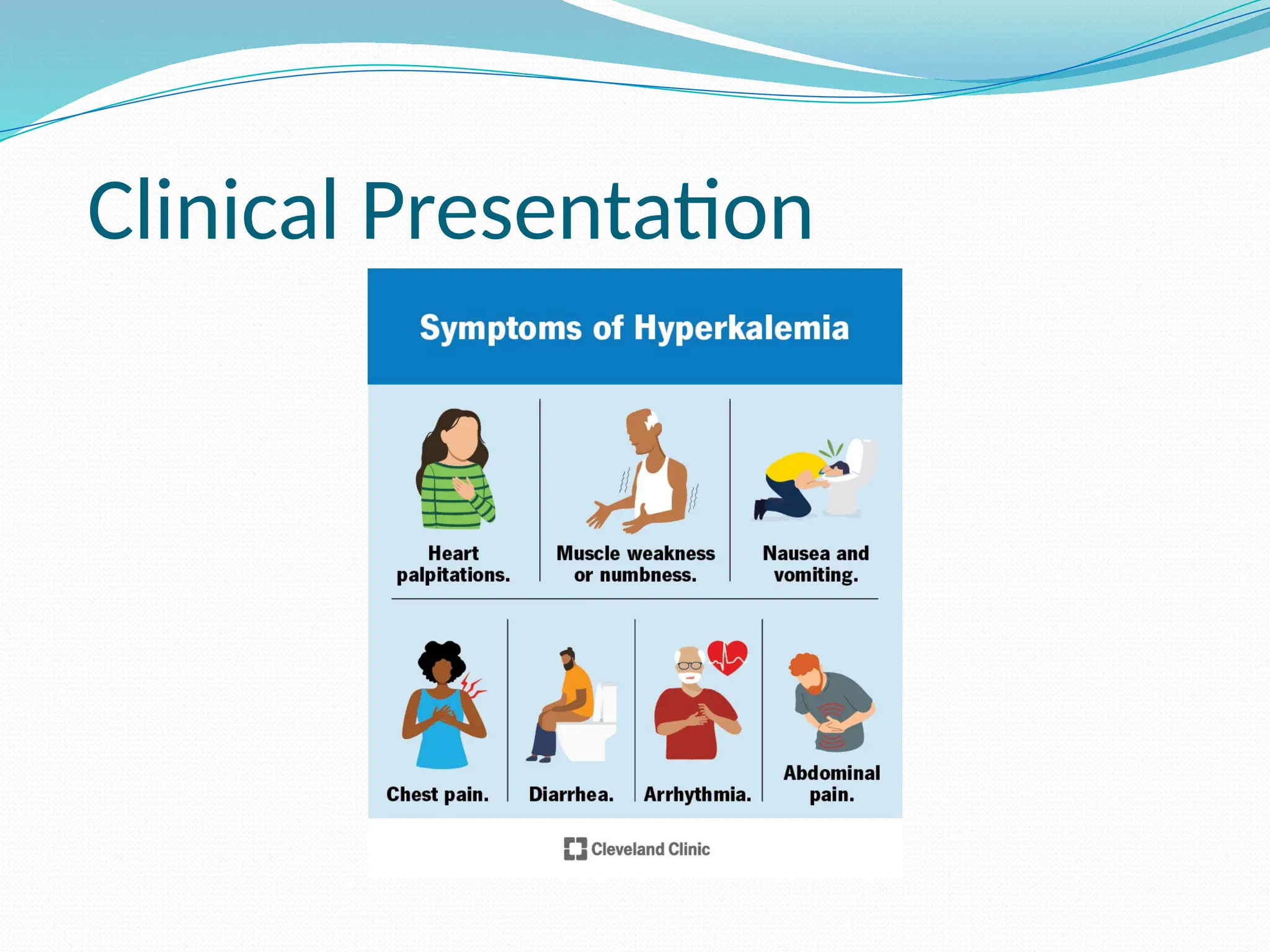
Clinical Presentation
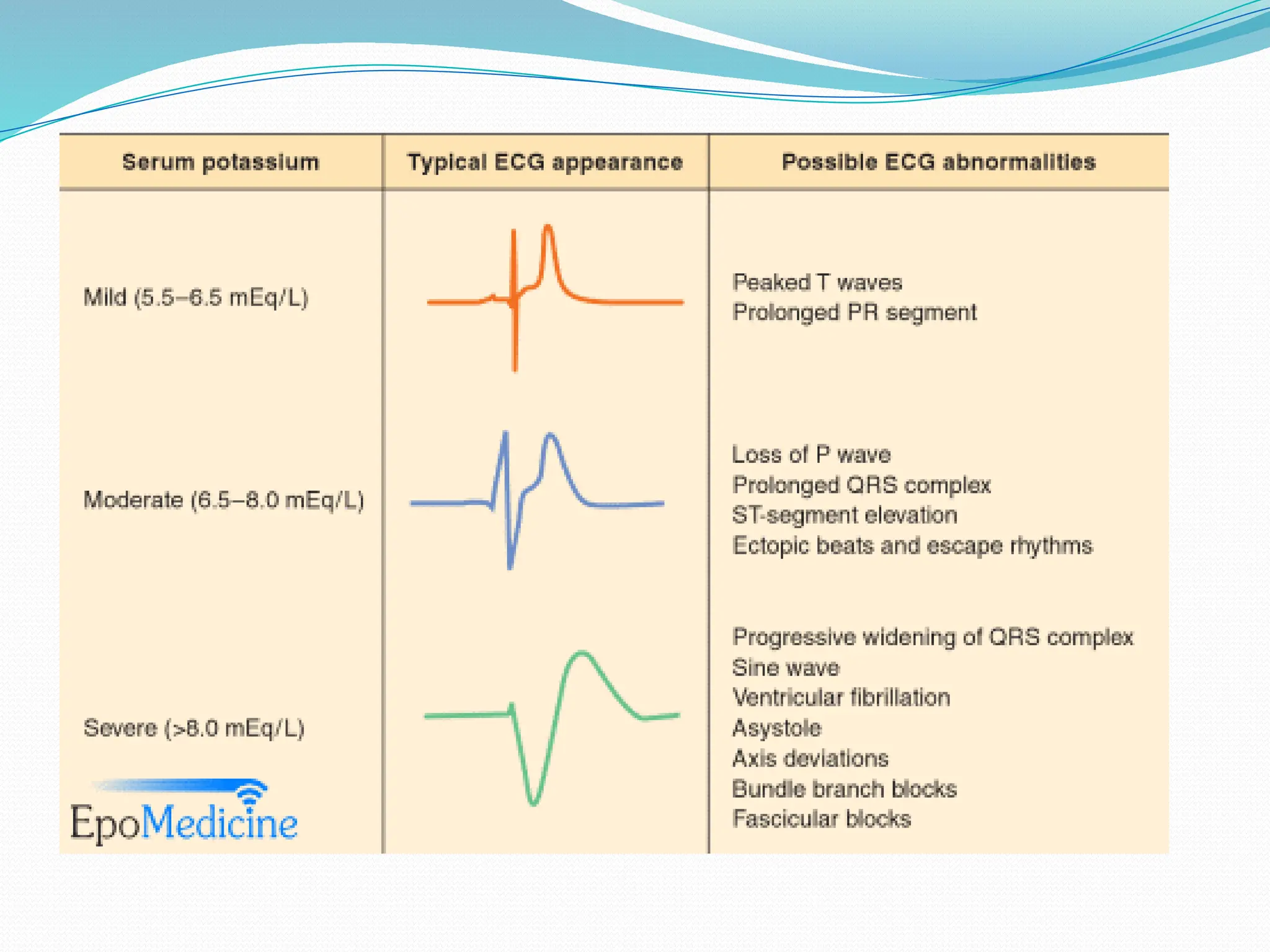
ECG Changes in Hyperkalemia
 Tall peaked T waves
 Widened QRS
 Prolonged PR
 Sine wave pattern in severe cases
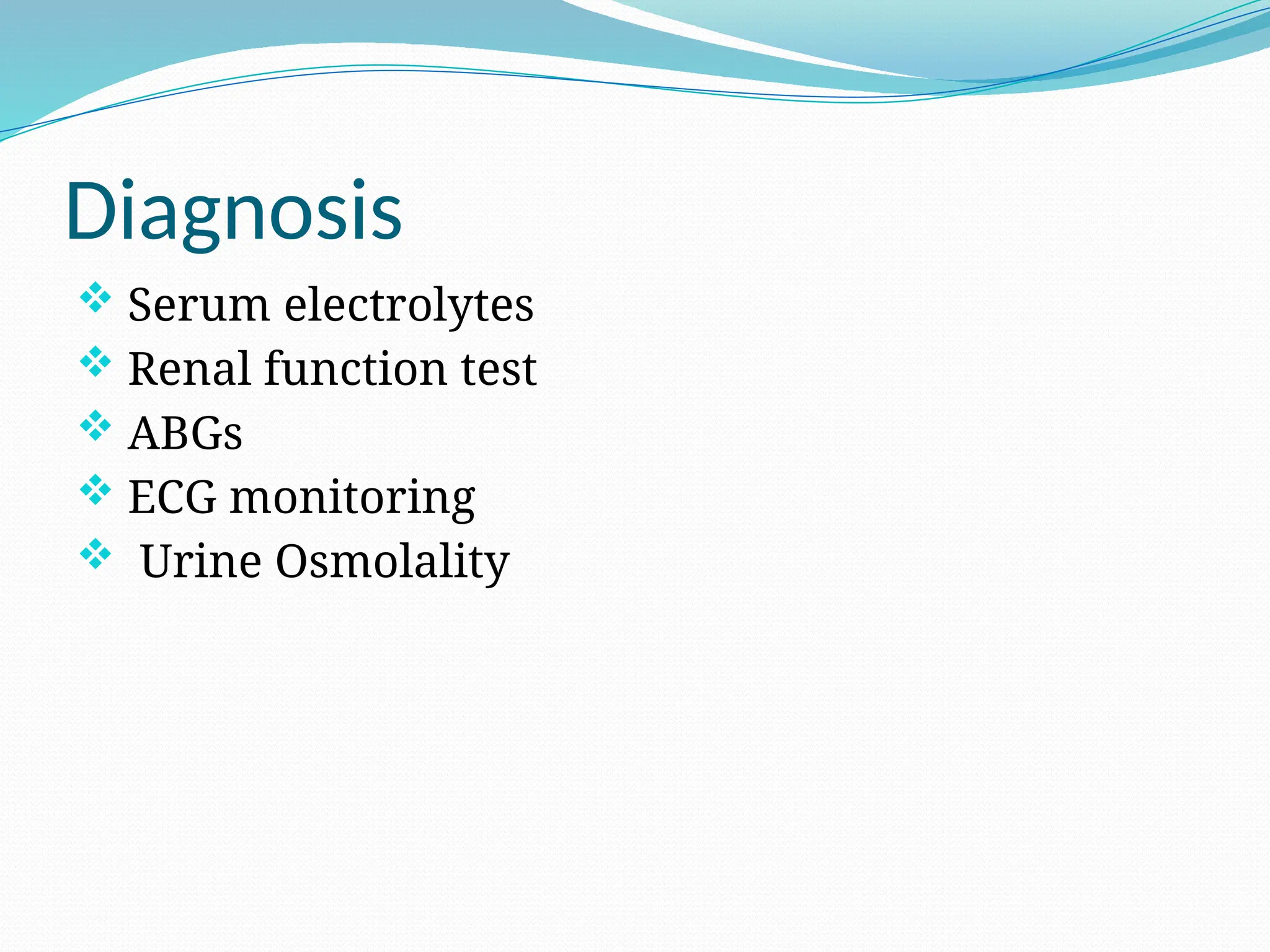
Diagnosis
 Serum electrolytes
 Renal function test
 ABGs
 ECG monitoring
 Urine Osmolality
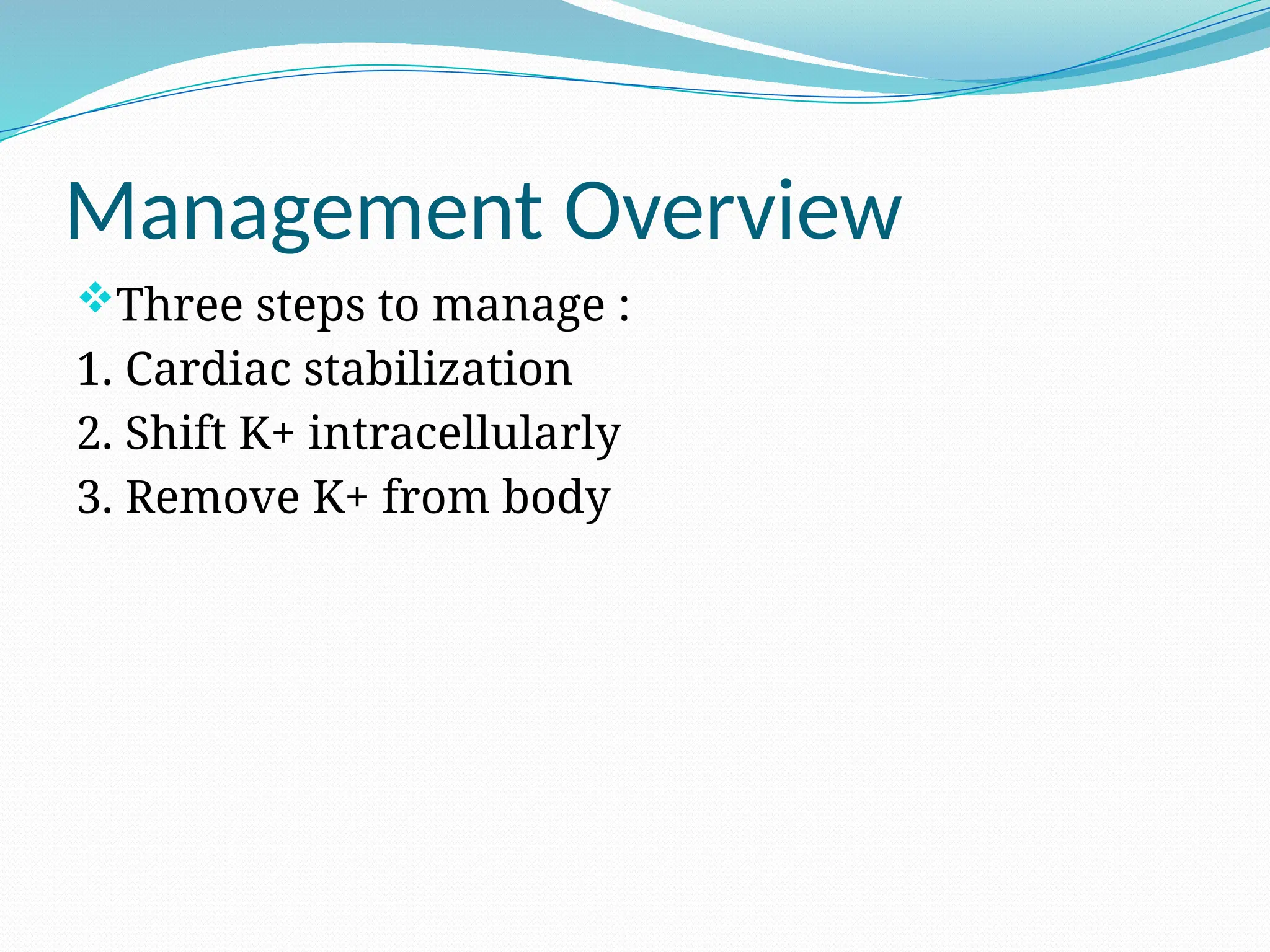
Management Overview
Three steps to manage :
1. Cardiac stabilization
2. Shift K+ intracellularly
3. Remove K+ from body
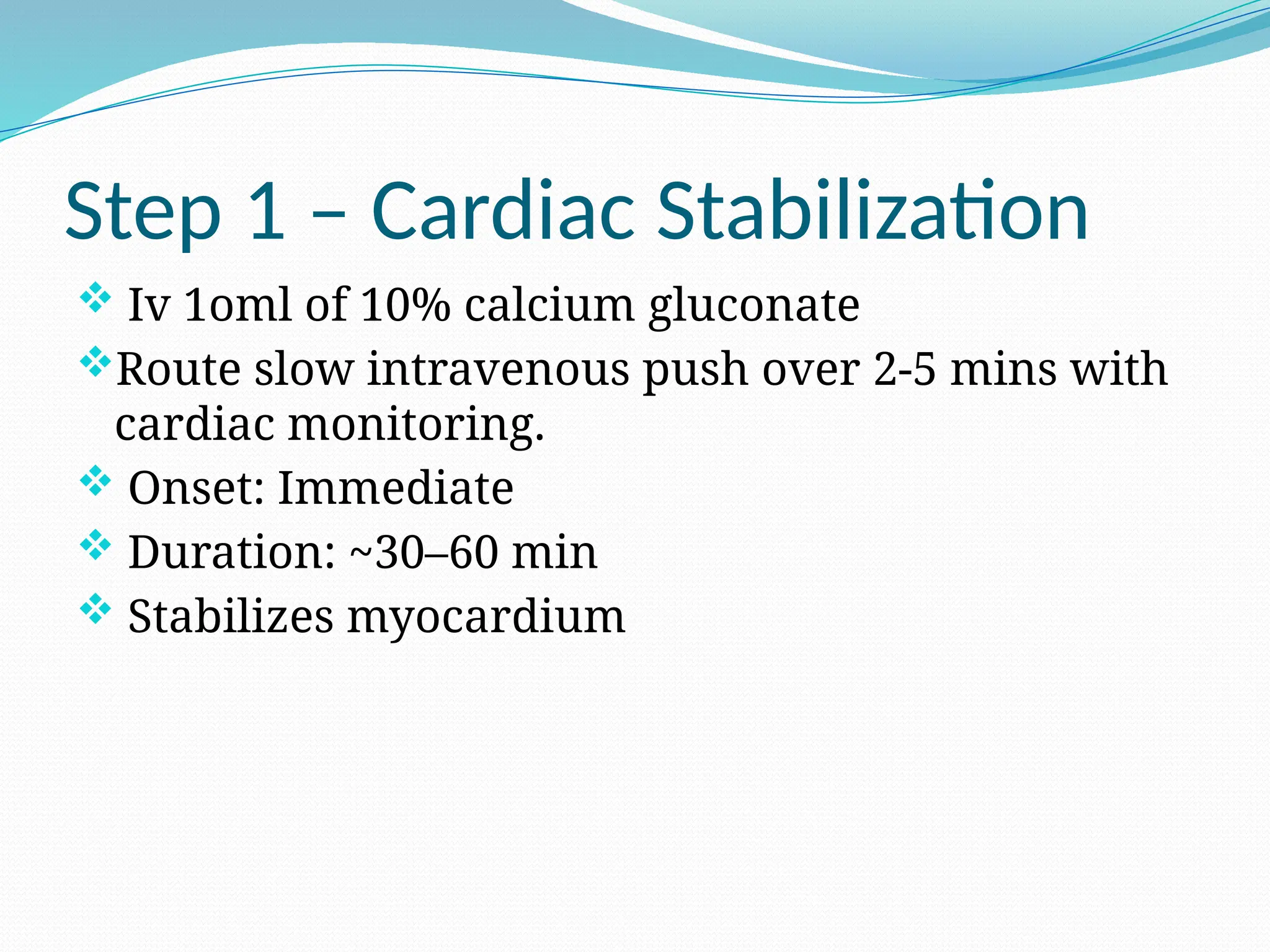
Step 1 – Cardiac Stabilization
 Iv 1oml of 10% calcium gluconate
Route slow intravenous push over 2-5 mins with
cardiac monitoring.
 Onset: Immediate
 Duration: ~30–60 min
 Stabilizes myocardium
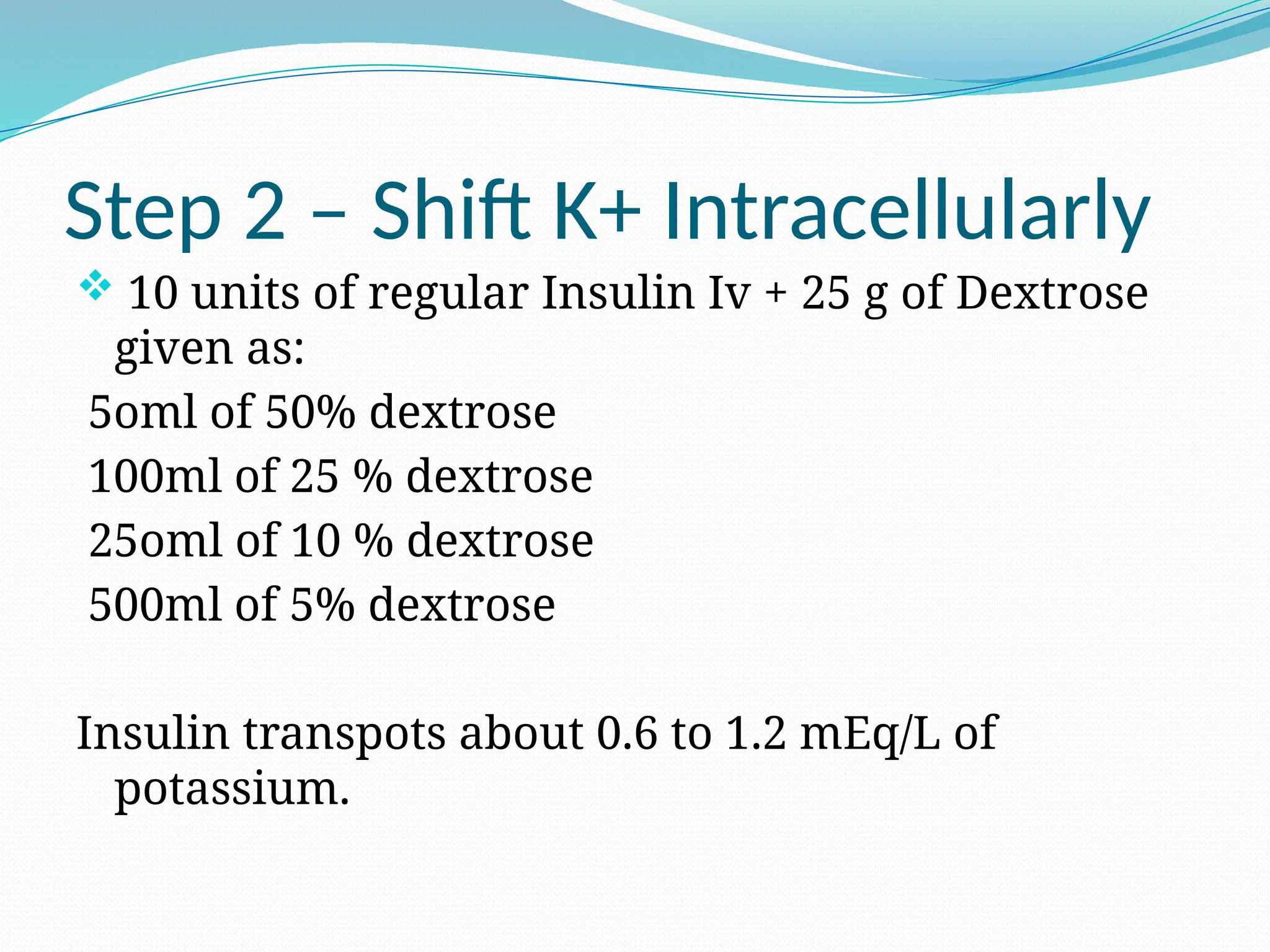
Step 2 – Shift K+ Intracellularly
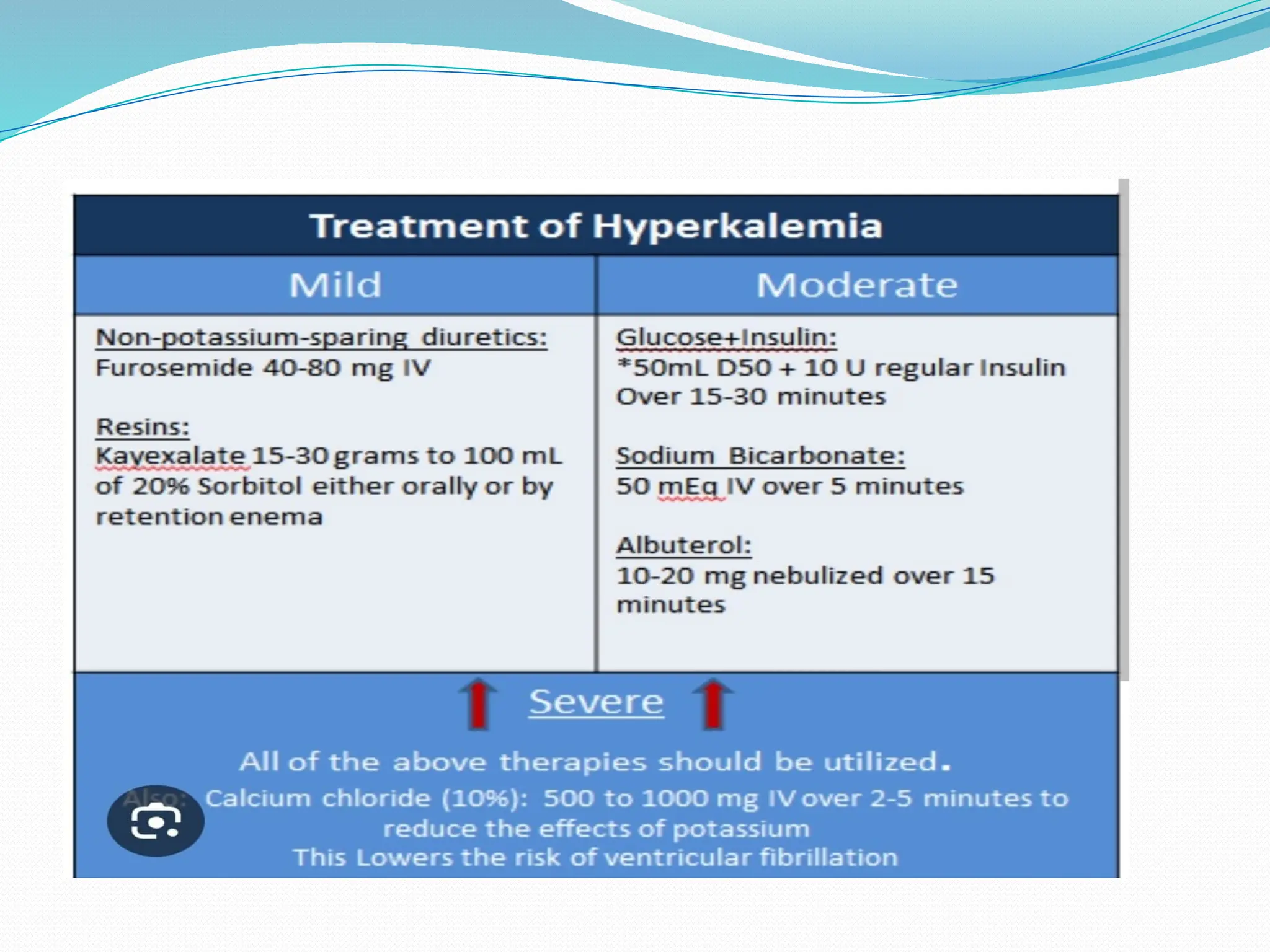
 10 units of regular Insulin Iv + 25 g of Dextrose
given as:
5oml of 50% dextrose
100ml of 25 % dextrose
25oml of 10 % dextrose
500ml of 5% dextrose
Insulin transpots about 0.6 to 1.2 mEq/L of
potassium.
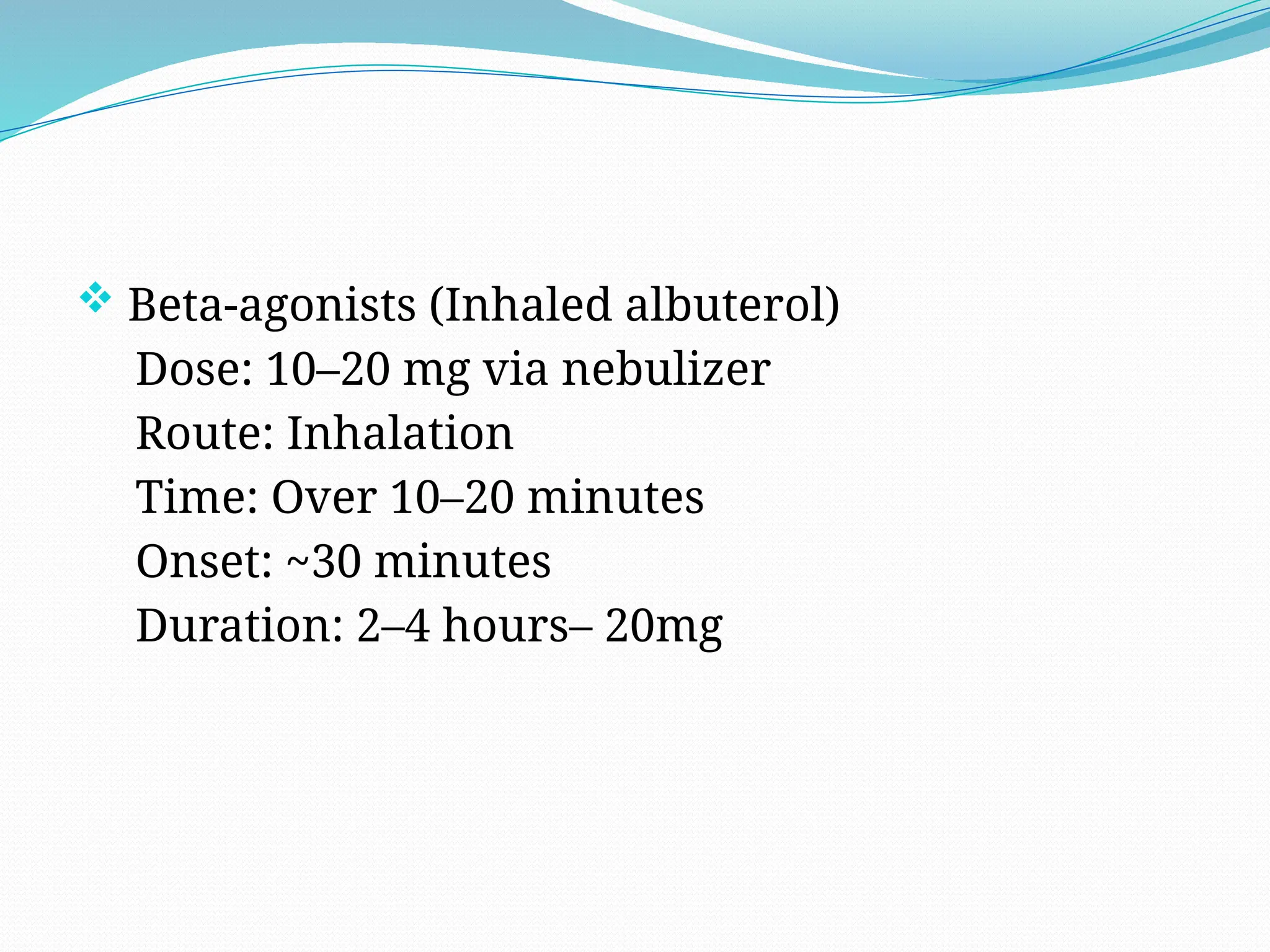
 Beta-agonists (Inhaled albuterol)
Dose: 10–20 mg via nebulizer
Route: Inhalation
Time: Over 10–20 minutes
Onset: ~30 minutes
Duration: 2–4 hours– 20mg
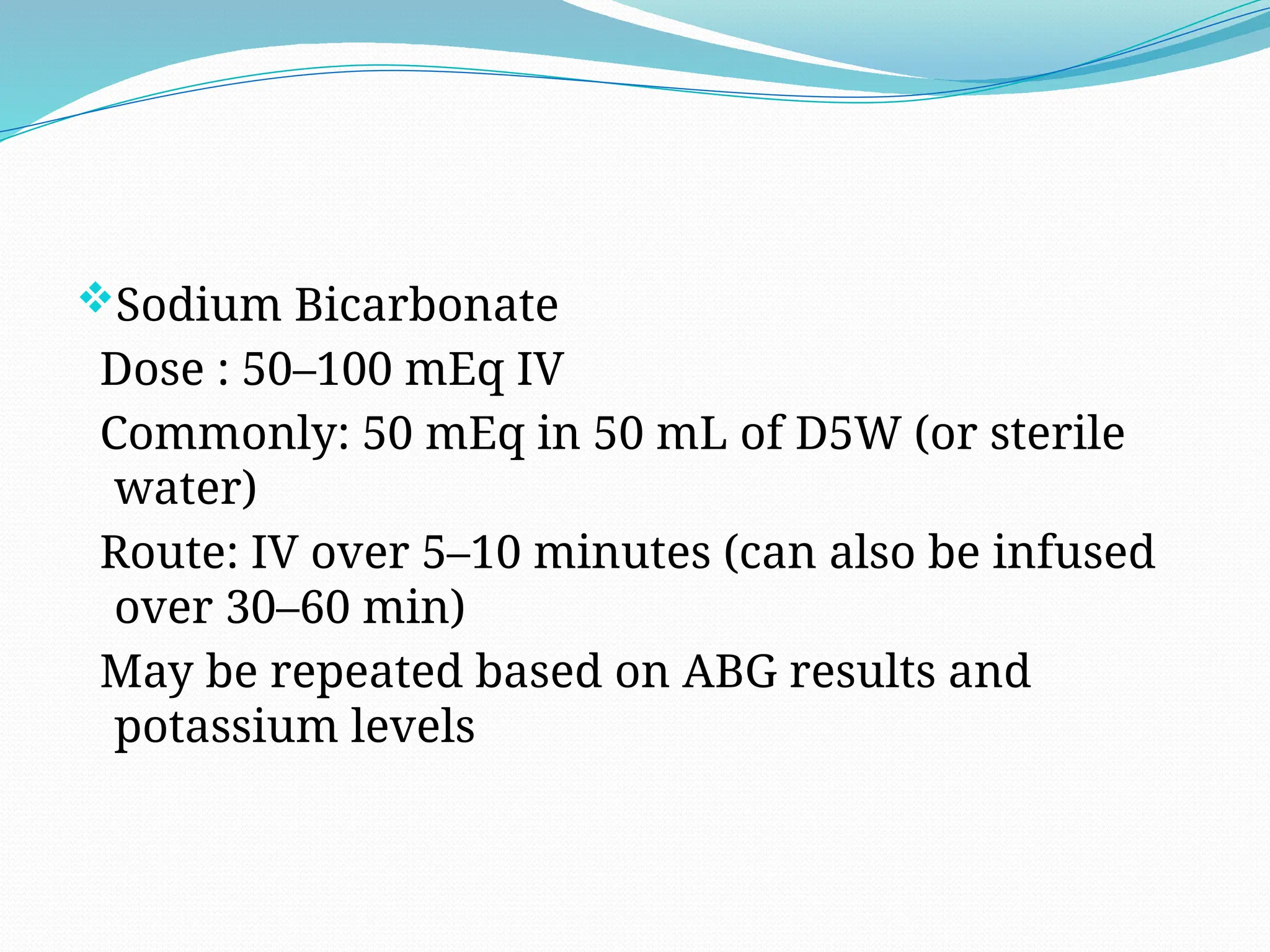
Sodium Bicarbonate
Dose : 50–100 mEq IV
Commonly: 50 mEq in 50 mL of D5W (or sterile
water)
Route: IV over 5–10 minutes (can also be infused
over 30–60 min)
May be repeated based on ABG results and
potassium levels
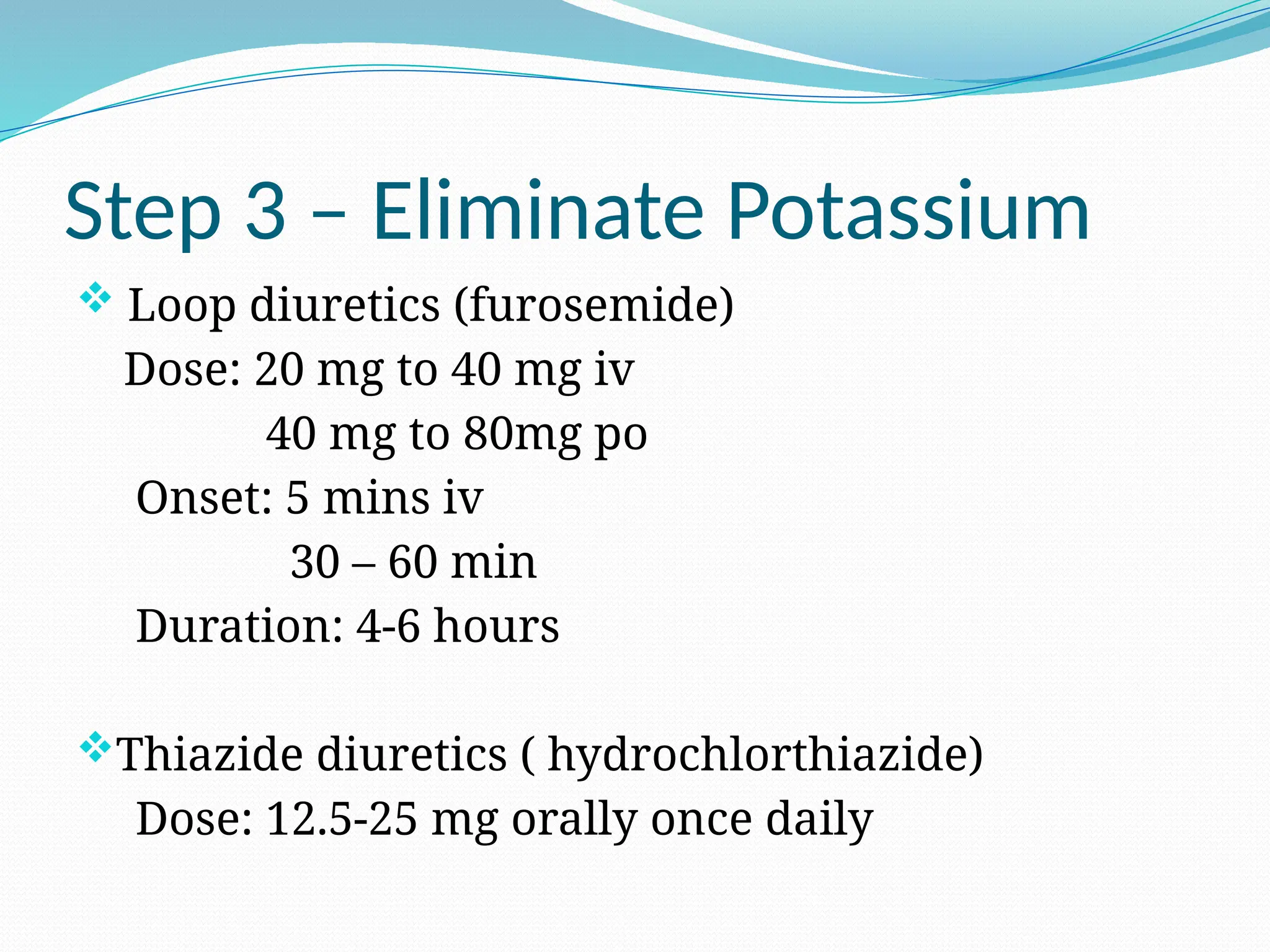
Step 3 – Eliminate Potassium
 Loop diuretics (furosemide)
Dose: 20 mg to 40 mg iv
40 mg to 80mg po
Onset: 5 mins iv
30 – 60 min
Duration: 4-6 hours
Thiazide diuretics ( hydrochlorthiazide)
Dose: 12.5-25 mg orally once daily
 Cation exchange resins ( sodium polyesterene
sulfonate)
Dose: 15 – 60 g orally four times a day
30 – 50 g per rectal every six hourly
Onset: 2-6 hours
Duration: 4-6 hours
 Hemodialysis
Hyperkalemia more than 6.5 with Ecg changes
not responding to medical therapy.
Prevention Strategies
 Monitor K+ in at-risk patients
 Avoid high-K+ foods in CKD
 Educate on warning signs
Summary
 Hyperkalemia = emergency
 Requires prompt diagnosis and treatment
 Focus on stabilization, shift, elimination
THANK
YOU

Hyperkalemia_Management_Presentation.pptx

  • 1.
    Hyperkalemia and Its Management DrSheraz Hamayun PGR Urology Department SGRH
  • 2.
    DEFINITION It is definedas serum potassium concenteration of greater than 5.5 mEq/L. The normal concenteration of serum potassium range from 3.5-5.o mEq/L.
  • 3.
    Classification Mild hyperkalemia 5.5-6.0mEq/L.  Moderate hyperkalemia 6.1-6.9 mEq/L.  Severe hyperkalemia greater than 7.
  • 4.
    Etiology of Hyperkalemia Increased intake (rare)  Impaired renal excretion (CKD,ARF, Medications, Diseases)  Cellular redistribution (acidosis, rhabdomyolysis, Insulin deficiency) Tubular unresponsiveness to Aldosterone.
  • 5.
  • 6.
    ECG Changes inHyperkalemia  Tall peaked T waves  Widened QRS  Prolonged PR  Sine wave pattern in severe cases
  • 8.
    Diagnosis  Serum electrolytes Renal function test  ABGs  ECG monitoring  Urine Osmolality
  • 9.
    Management Overview Three stepsto manage : 1. Cardiac stabilization 2. Shift K+ intracellularly 3. Remove K+ from body
  • 10.
    Step 1 –Cardiac Stabilization  Iv 1oml of 10% calcium gluconate Route slow intravenous push over 2-5 mins with cardiac monitoring.  Onset: Immediate  Duration: ~30–60 min  Stabilizes myocardium
  • 11.
    Step 2 –Shift K+ Intracellularly  10 units of regular Insulin Iv + 25 g of Dextrose given as: 5oml of 50% dextrose 100ml of 25 % dextrose 25oml of 10 % dextrose 500ml of 5% dextrose Insulin transpots about 0.6 to 1.2 mEq/L of potassium.
  • 12.
     Beta-agonists (Inhaledalbuterol) Dose: 10–20 mg via nebulizer Route: Inhalation Time: Over 10–20 minutes Onset: ~30 minutes Duration: 2–4 hours– 20mg
  • 13.
    Sodium Bicarbonate Dose :50–100 mEq IV Commonly: 50 mEq in 50 mL of D5W (or sterile water) Route: IV over 5–10 minutes (can also be infused over 30–60 min) May be repeated based on ABG results and potassium levels
  • 14.
    Step 3 –Eliminate Potassium  Loop diuretics (furosemide) Dose: 20 mg to 40 mg iv 40 mg to 80mg po Onset: 5 mins iv 30 – 60 min Duration: 4-6 hours Thiazide diuretics ( hydrochlorthiazide) Dose: 12.5-25 mg orally once daily
  • 15.
     Cation exchangeresins ( sodium polyesterene sulfonate) Dose: 15 – 60 g orally four times a day 30 – 50 g per rectal every six hourly Onset: 2-6 hours Duration: 4-6 hours  Hemodialysis Hyperkalemia more than 6.5 with Ecg changes not responding to medical therapy.
  • 17.
    Prevention Strategies  MonitorK+ in at-risk patients  Avoid high-K+ foods in CKD  Educate on warning signs
  • 18.
    Summary  Hyperkalemia =emergency  Requires prompt diagnosis and treatment  Focus on stabilization, shift, elimination
  • 19.