Hyperconverged Systems for Digital
Transformation
Chris Gugger
Director – Infrastructure Solutions Marketing
Agenda
Hyperconverged Decision – Key Customer Considerations
Introductions
Hyperconverged Market – An Industry Analyst Perspective
New UCP Family
Q & A
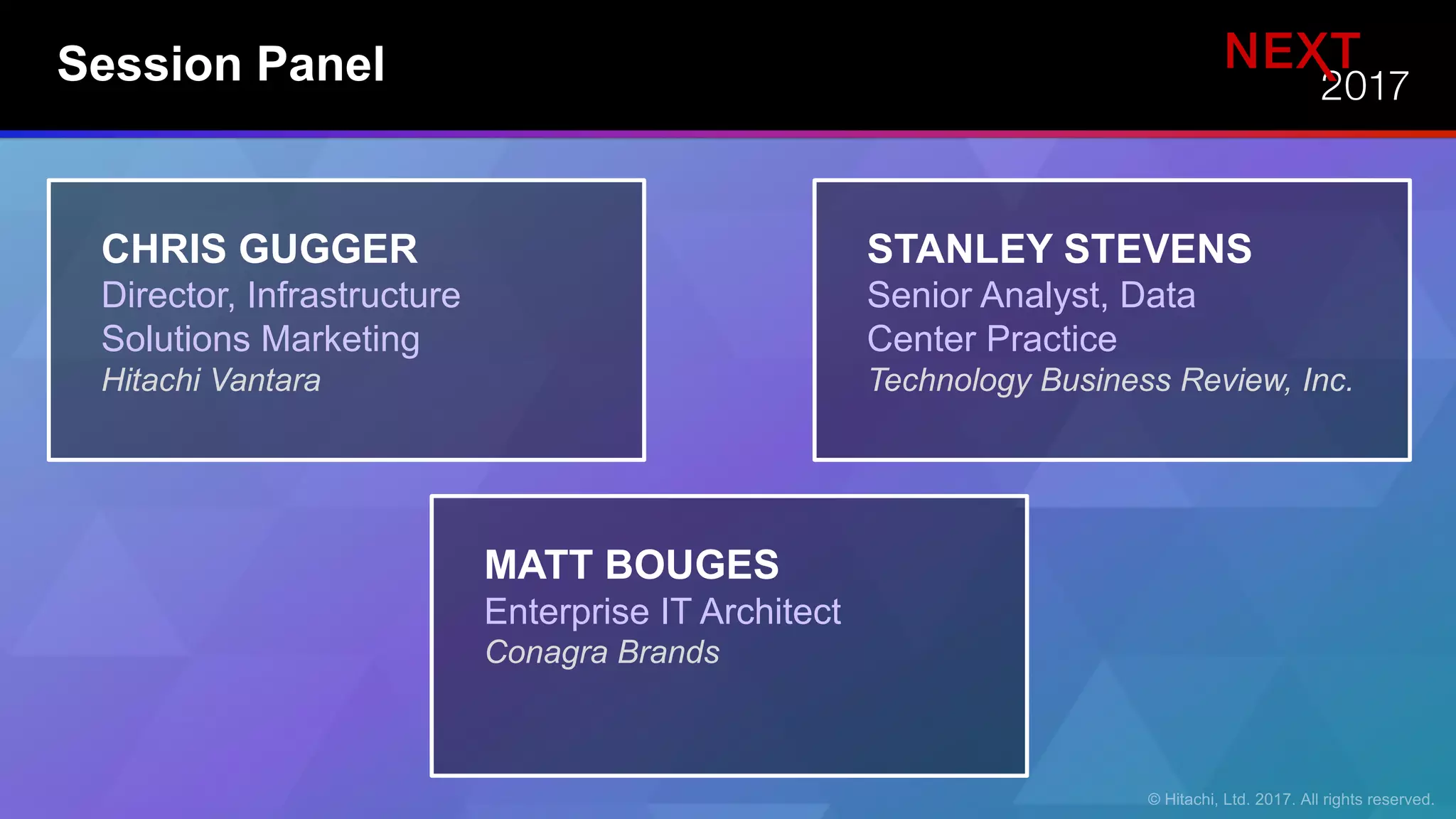
Session Panel
CHRIS GUGGER
Director, Infrastructure
Solutions Marketing
Hitachi Vantara
STANLEY STEVENS
Senior Analyst, Data
Center Practice
Technology Business Review, Inc.
MATT BOUGES
Enterprise IT Architect
Conagra Brands
Hyperconverged Market - An Industry
Analyst Perspective
Stanley Stevens - TBRI
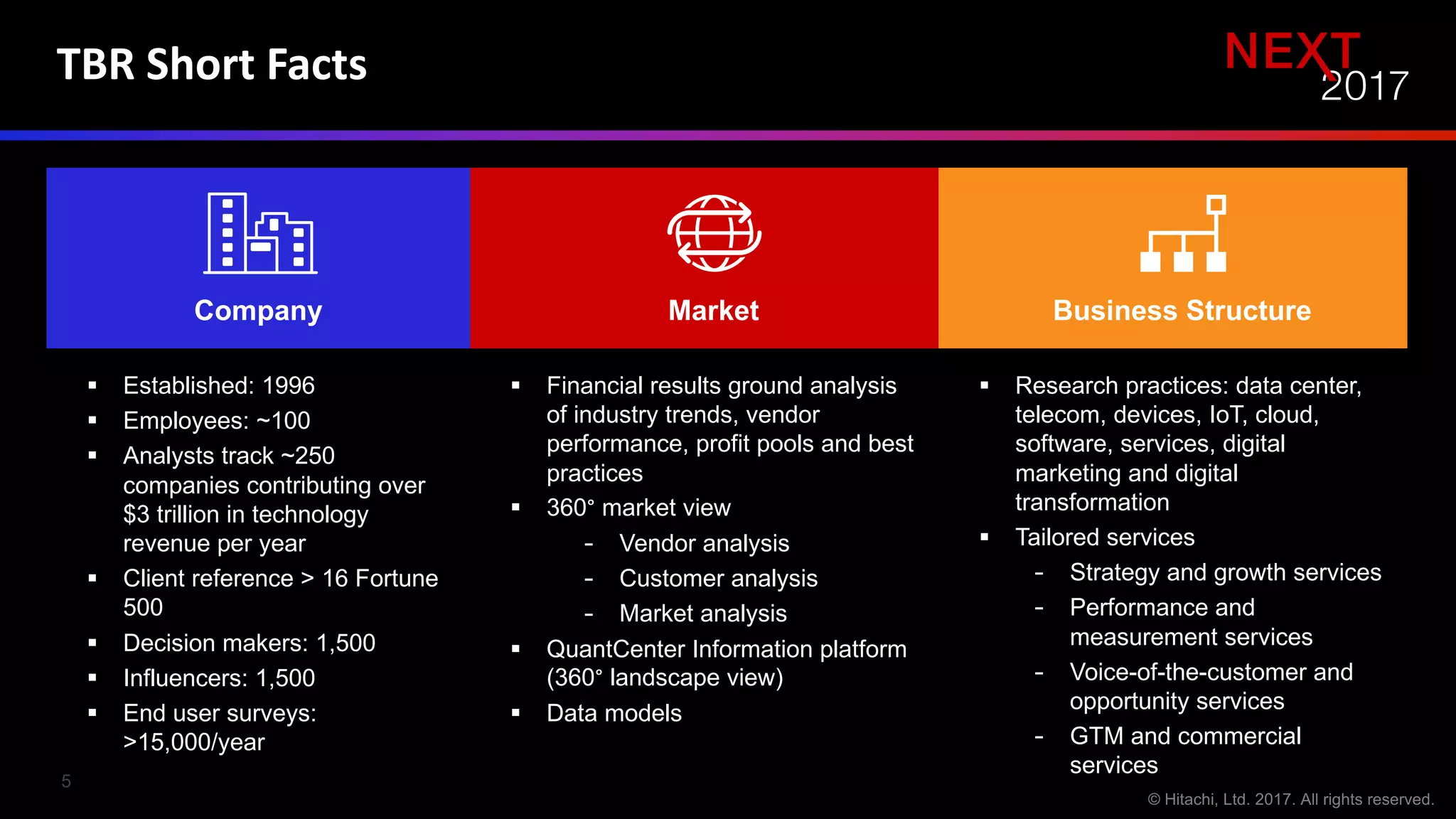
Company Market Business Structure
§ Established: 1996
§ Employees: ~100
§ Analysts track ~250
companies contributing over
$3 trillion in technology
revenue per year
§ Client reference > 16 Fortune
500
§ Decision makers: 1,500
§ Influencers: 1,500
§ End user surveys:
>15,000/year
§ Financial results ground analysis
of industry trends, vendor
performance, profit pools and best
practices
§ 360° market view
- Vendor analysis
- Customer analysis
- Market analysis
§ QuantCenter Information platform
(360° landscape view)
§ Data models
§ Research practices: data center,
telecom, devices, IoT, cloud,
software, services, digital
marketing and digital
transformation
§ Tailored services
- Strategy and growth services
- Performance and
measurement services
- Voice-of-the-customer and
opportunity services
- GTM and commercial
services
5
TBR	Short	Facts
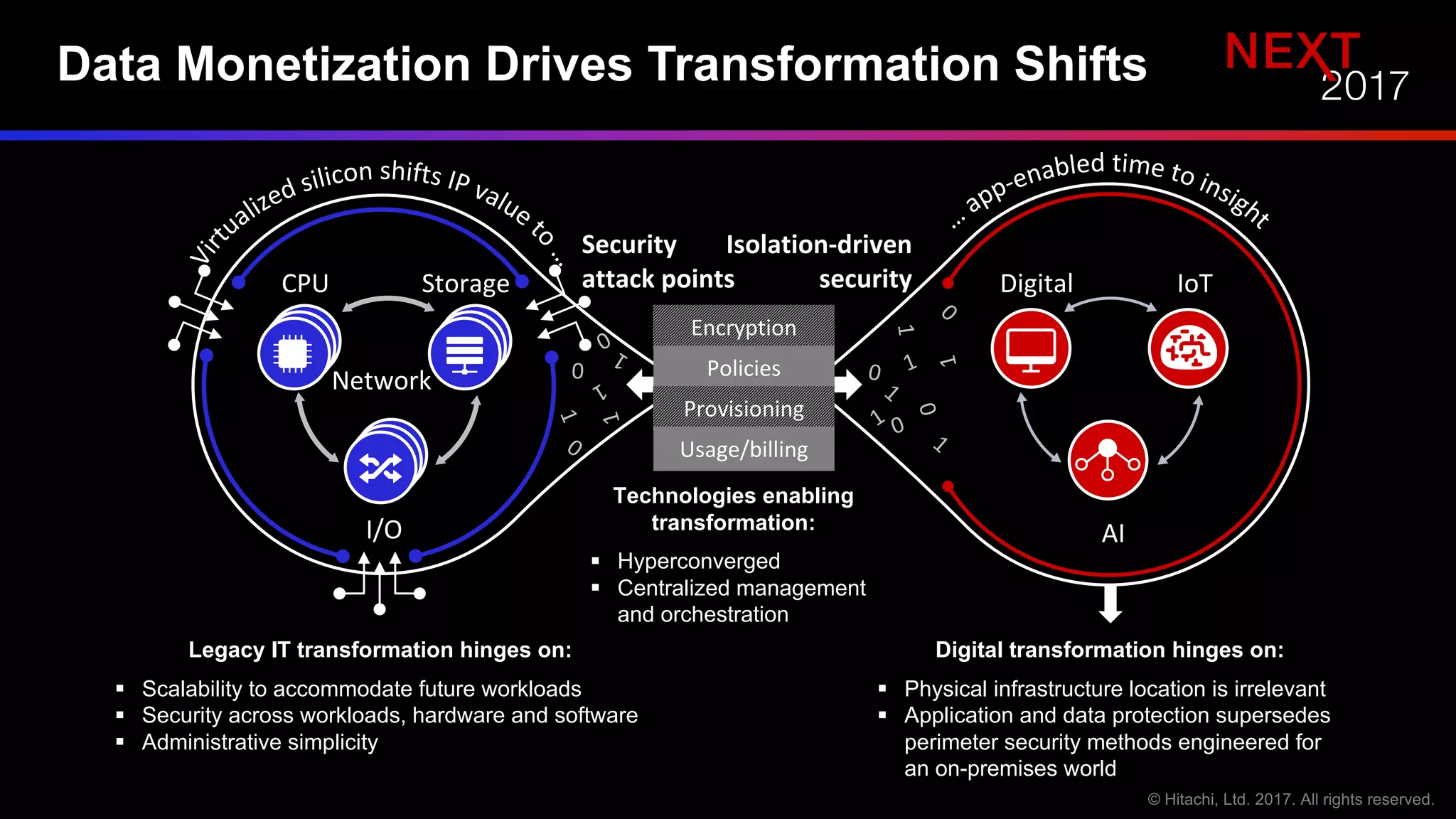
Legacy IT transformation hinges on:
§ Scalability to accommodate future workloads
§ Security across workloads, hardware and software
§ Administrative simplicity
Digital transformation hinges on:
§ Physical infrastructure location is irrelevant
§ Application and data protection supersedes
perimeter security methods engineered for
an on-premises world
Technologies enabling
transformation:
§ Hyperconverged
§ Centralized management
and orchestration
Encryption
Policies
Provisioning
Usage/billing
I/O
StorageCPU
AI
IoTDigital
Security	
attack	points
Isolation-driven	
security
Network
Data Monetization Drives Transformation Shifts
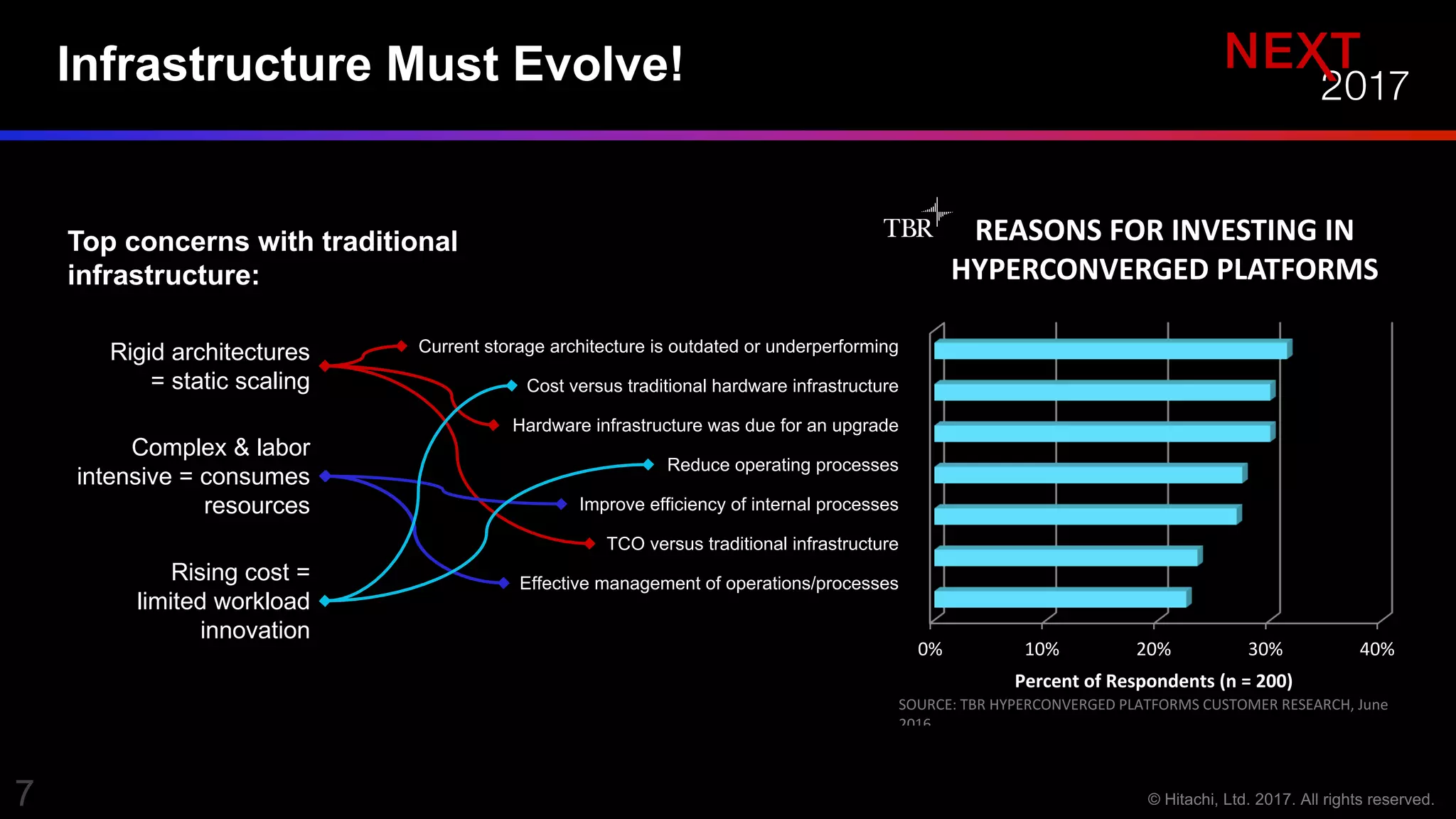
Infrastructure Must Evolve!
7
Top concerns with traditional
infrastructure:
0% 10% 20% 30% 40%
Percent	of	Respondents	(n	=	200)
REASONS	FOR	INVESTING	IN	
HYPERCONVERGED	PLATFORMS	
SOURCE: TBR	HYPERCONVERGED	PLATFORMS	CUSTOMER	RESEARCH,	June	
2016
Rigid architectures
= static scaling
Complex & labor
intensive = consumes
resources
Rising cost =
limited workload
innovation
Current storage architecture is outdated or underperforming
Cost versus traditional hardware infrastructure
Hardware infrastructure was due for an upgrade
Reduce operating processes
Improve efficiency of internal processes
TCO versus traditional infrastructure
Effective management of operations/processes
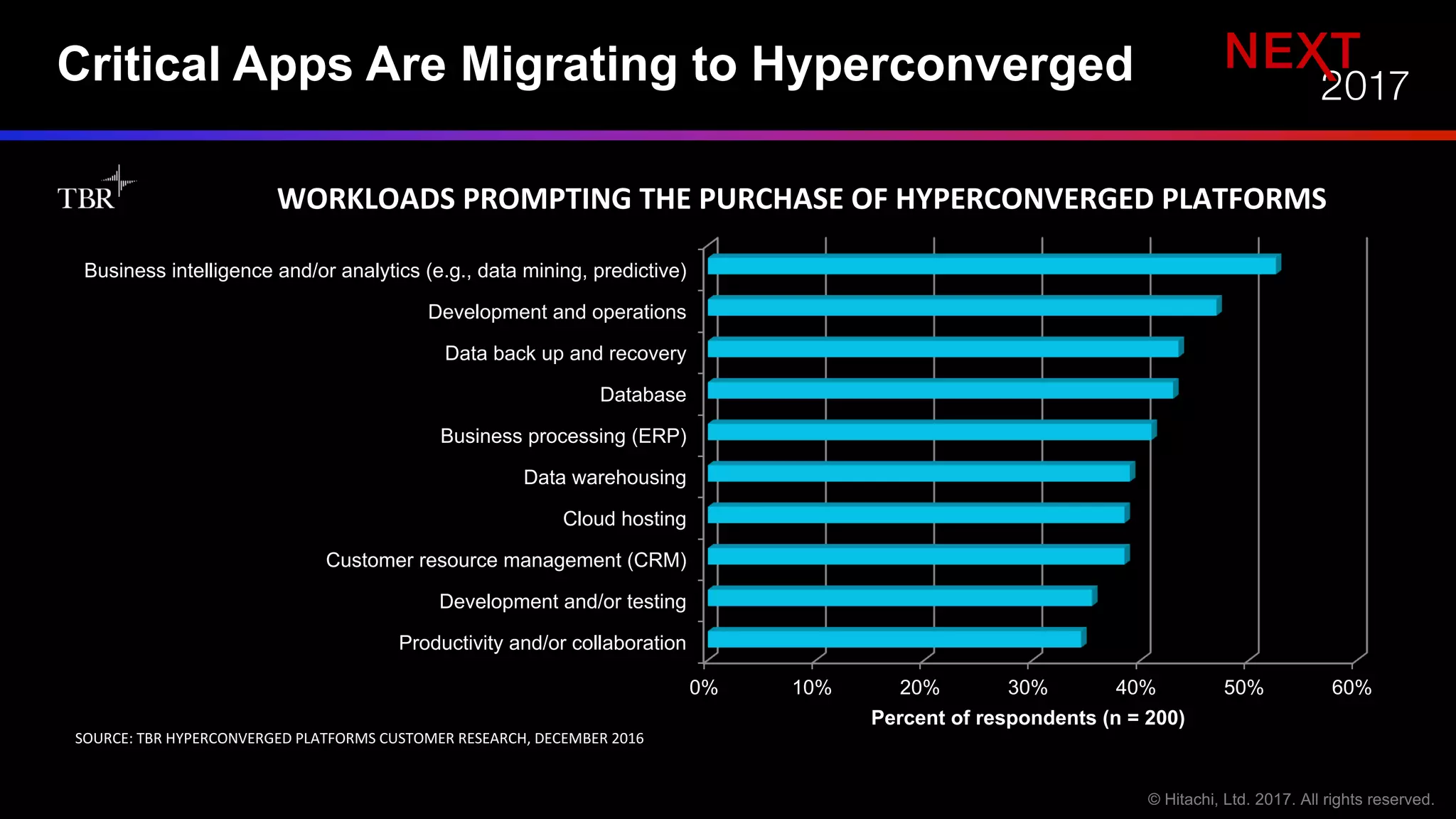
Critical Apps Are Migrating to Hyperconverged
0% 10% 20% 30% 40% 50% 60%
Productivity and/or collaboration
Development and/or testing
Customer resource management (CRM)
Cloud hosting
Data warehousing
Business processing (ERP)
Database
Data back up and recovery
Development and operations
Business intelligence and/or analytics (e.g., data mining, predictive)
Percent of respondents (n = 200)
SOURCE:	TBR	HYPERCONVERGED	PLATFORMS	CUSTOMER	RESEARCH,	DECEMBER	2016
WORKLOADS	PROMPTING	THE	PURCHASE	OF	HYPERCONVERGED	PLATFORMS
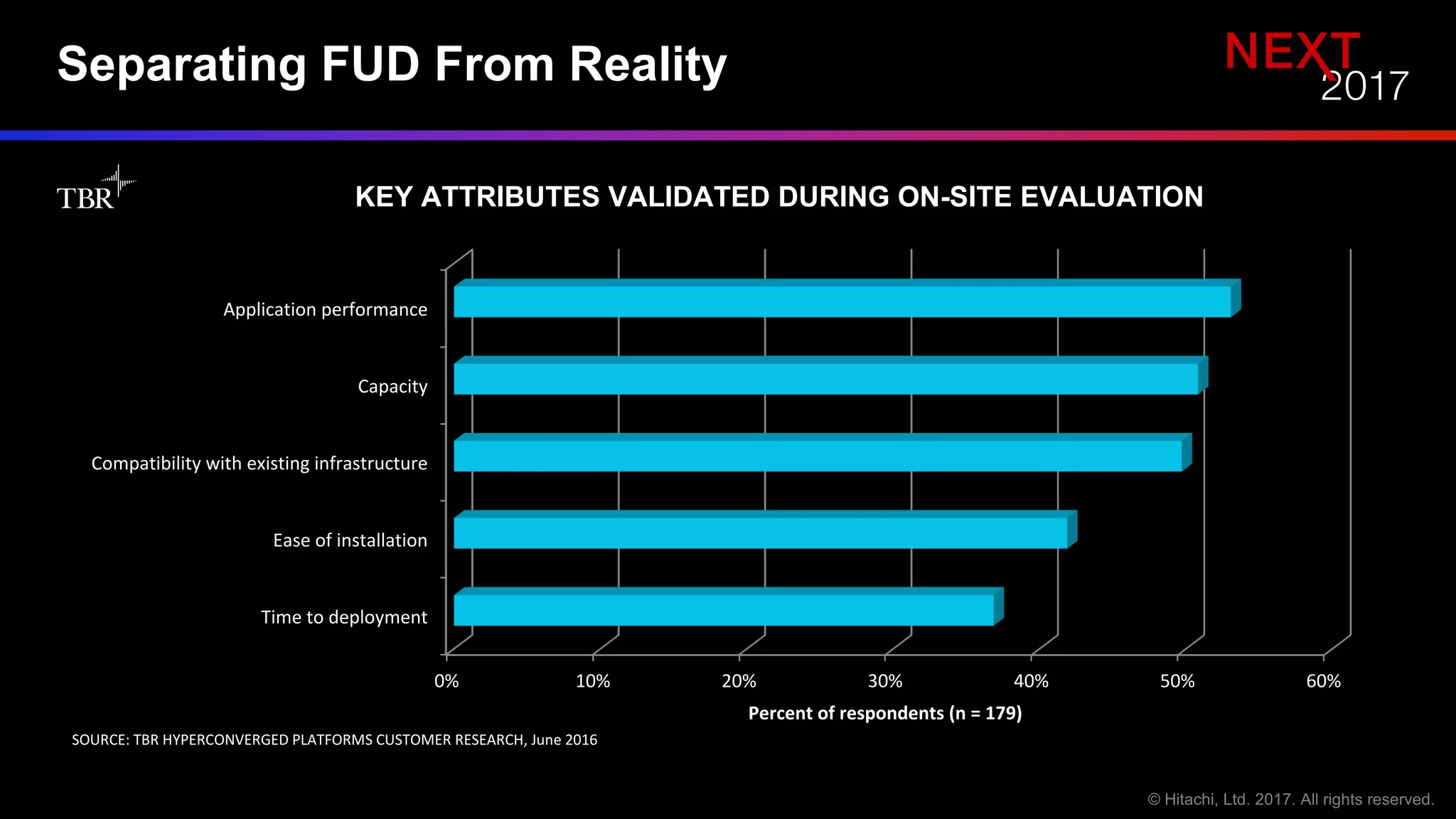
Separating FUD From Reality
0% 10% 20% 30% 40% 50% 60%
Time	to	deployment
Ease	of	installation
Compatibility	with	existing	infrastructure
Capacity
Application	performance
Percent	of	respondents	(n	=	179)
SOURCE: TBR	HYPERCONVERGED	PLATFORMS	CUSTOMER	RESEARCH,	June	2016
KEY ATTRIBUTES VALIDATED DURING ON-SITE EVALUATION
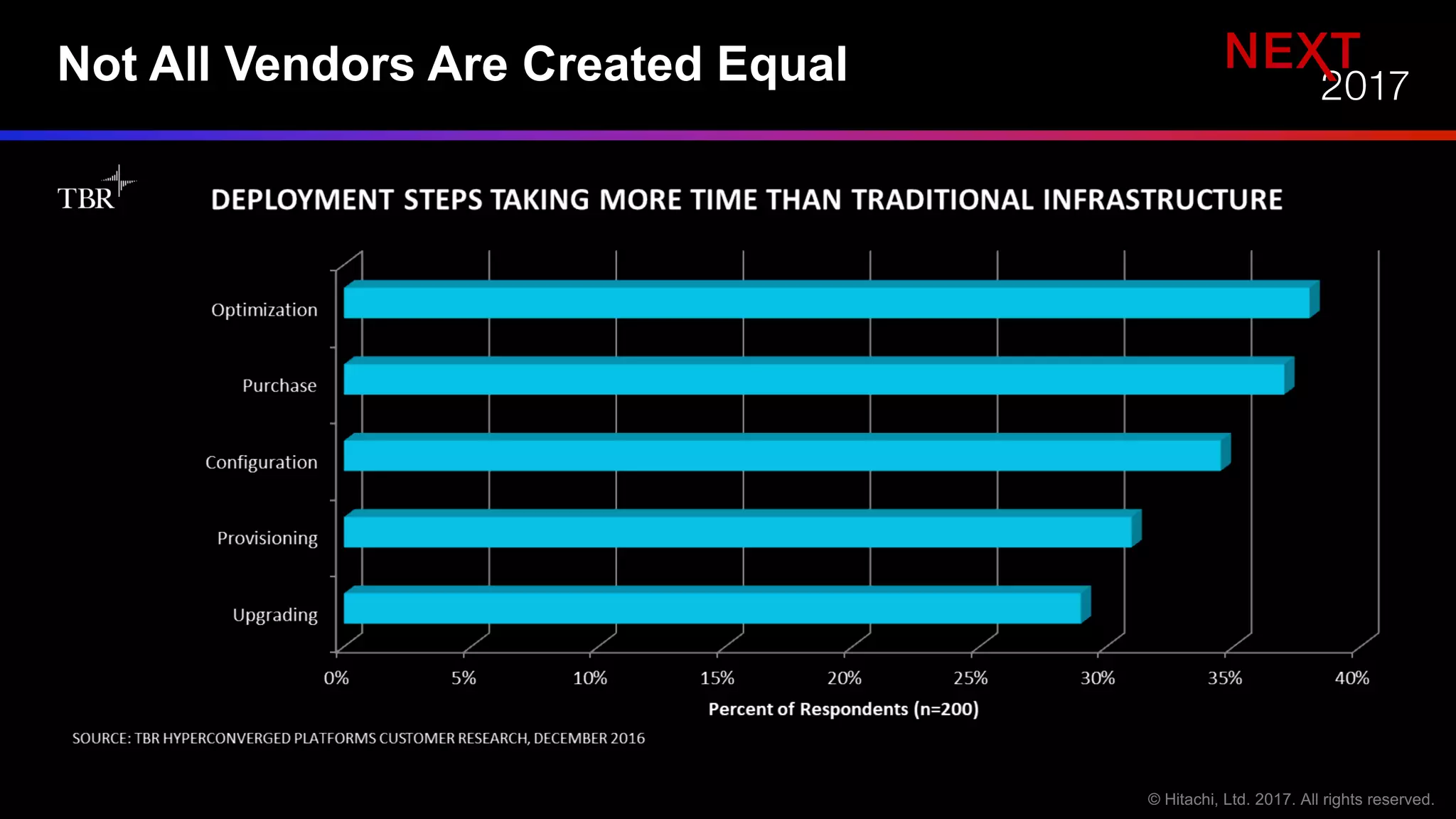
Not All Vendors Are Created Equal
Hyperconverged Decision – Key Customer
Considerations
Matt Bouges, Conagra
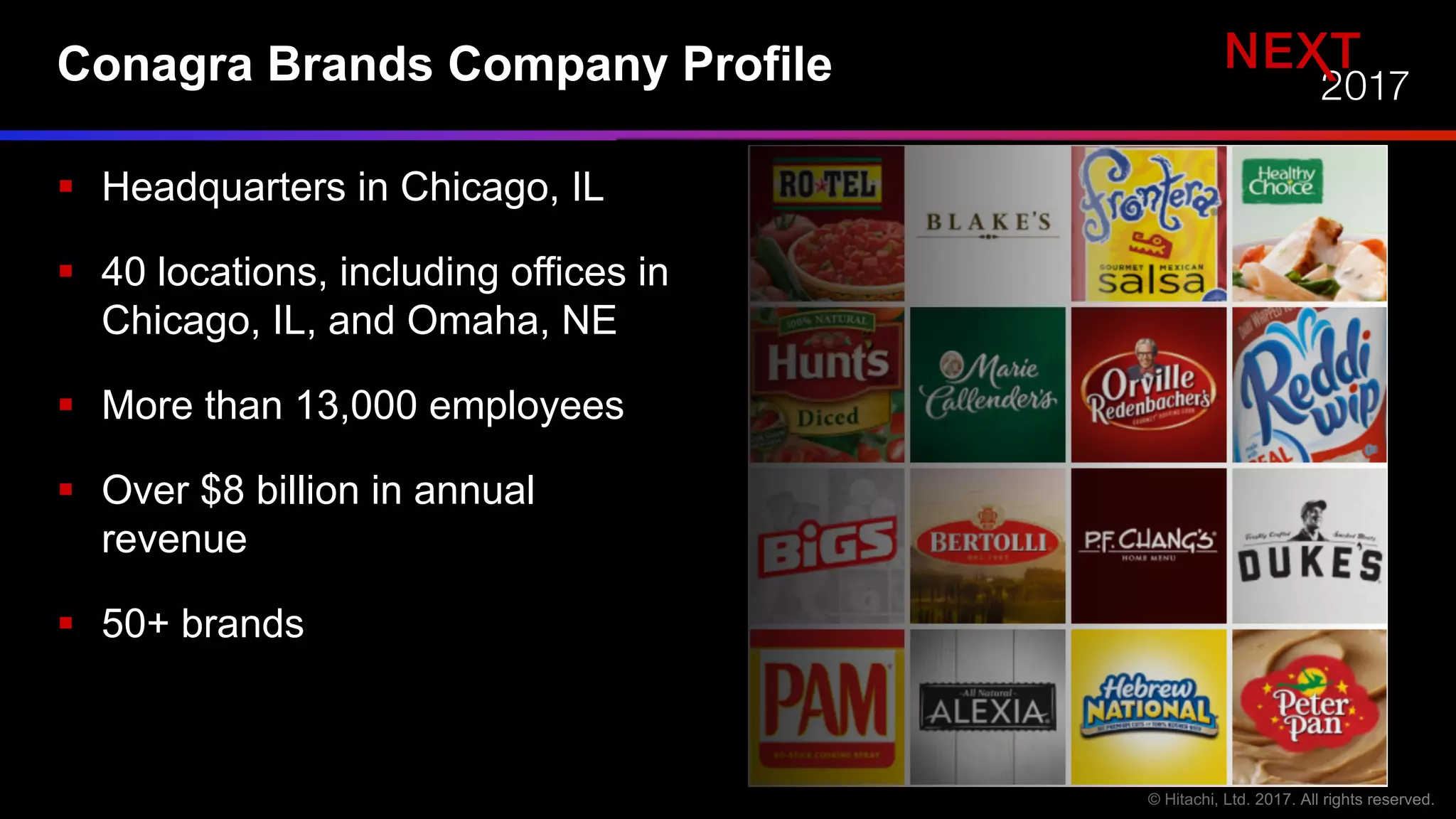
Conagra Brands Company Profile
§ Headquarters in Chicago, IL
§ 40 locations, including offices in
Chicago, IL, and Omaha, NE
§ More than 13,000 employees
§ Over $8 billion in annual
revenue
§ 50+ brands
§ Aging infrastructure
§ Converged architecture using
Cisco UCS, NetApp and HDS
– 1,500 desktops
§ Expensive and complex
§ Difficult to grow
§ New requirements due to IT
and business outsourcing –
mission critical
VDI Infrastructure Problem
Converged or Hypercovnerged?
§ Initially only looked at
converged
§ Did not believe HCI was ready
for mission-critical workloads
§ Concerned about new skill sets
for a new architecture
Why HCI, What Changed?
§ Rapid HCI maturity – all flash,
VSAN 6, etc.
§ Moving to a solo data center
with 1,000 sq. feet – size
matters!
§ Developed comfort with the
technology through POCs
§ Great fit for VDI workloads
HCI Solutions Considered
§ Nutanix – not already in our DC
§ Dell/EMC VxRail – complex and
constraining
§ Cisco Hyperflex – maturity level
and size
§ Hitachi UCP HC – the right fit!
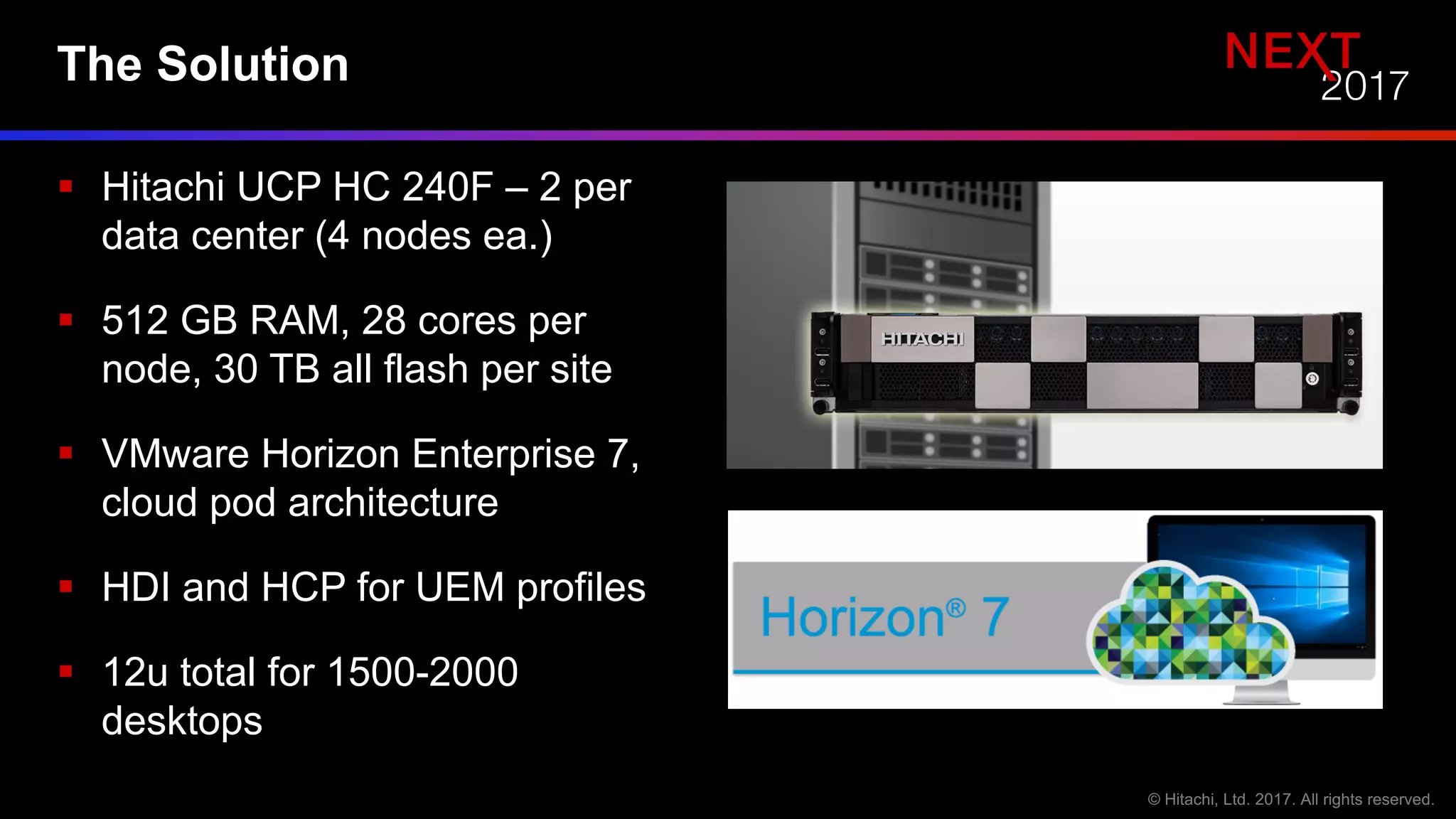
§ Hitachi UCP HC 240F – 2 per
data center (4 nodes ea.)
§ 512 GB RAM, 28 cores per
node, 30 TB all flash per site
§ VMware Horizon Enterprise 7,
cloud pod architecture
§ HDI and HCP for UEM profiles
§ 12u total for 1500-2000
desktops
The Solution
New UCP Family
Chris Gugger, Hitachi Vantara
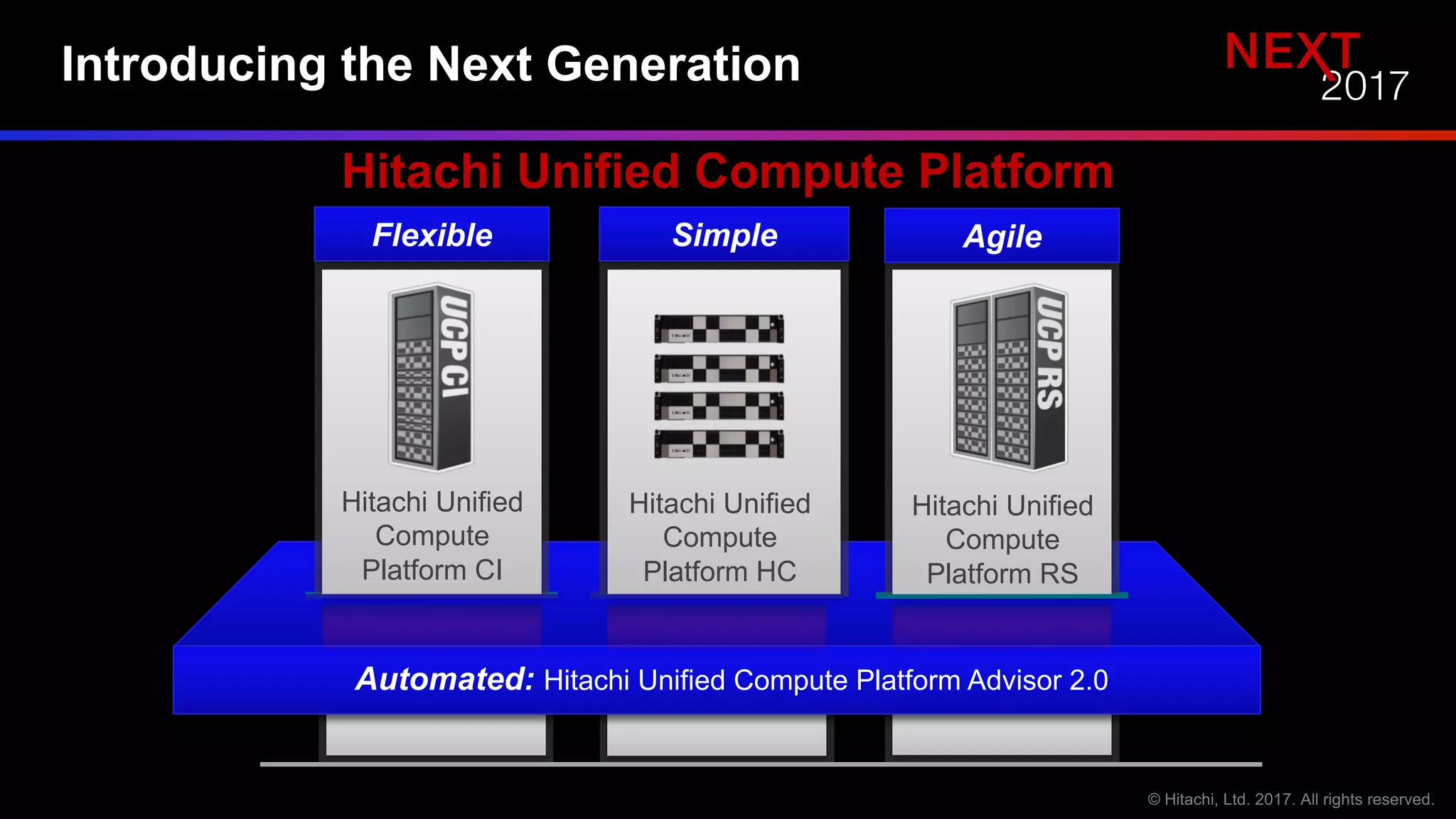
Introducing the Next Generation
Hitachi Unified
Compute
Platform HC
Automated: Hitachi Unified Compute Platform Advisor 2.0
Hitachi Unified
Compute
Platform CI
Hitachi Unified
Compute
Platform RS
Flexible Simple Agile
Hitachi Unified Compute Platform
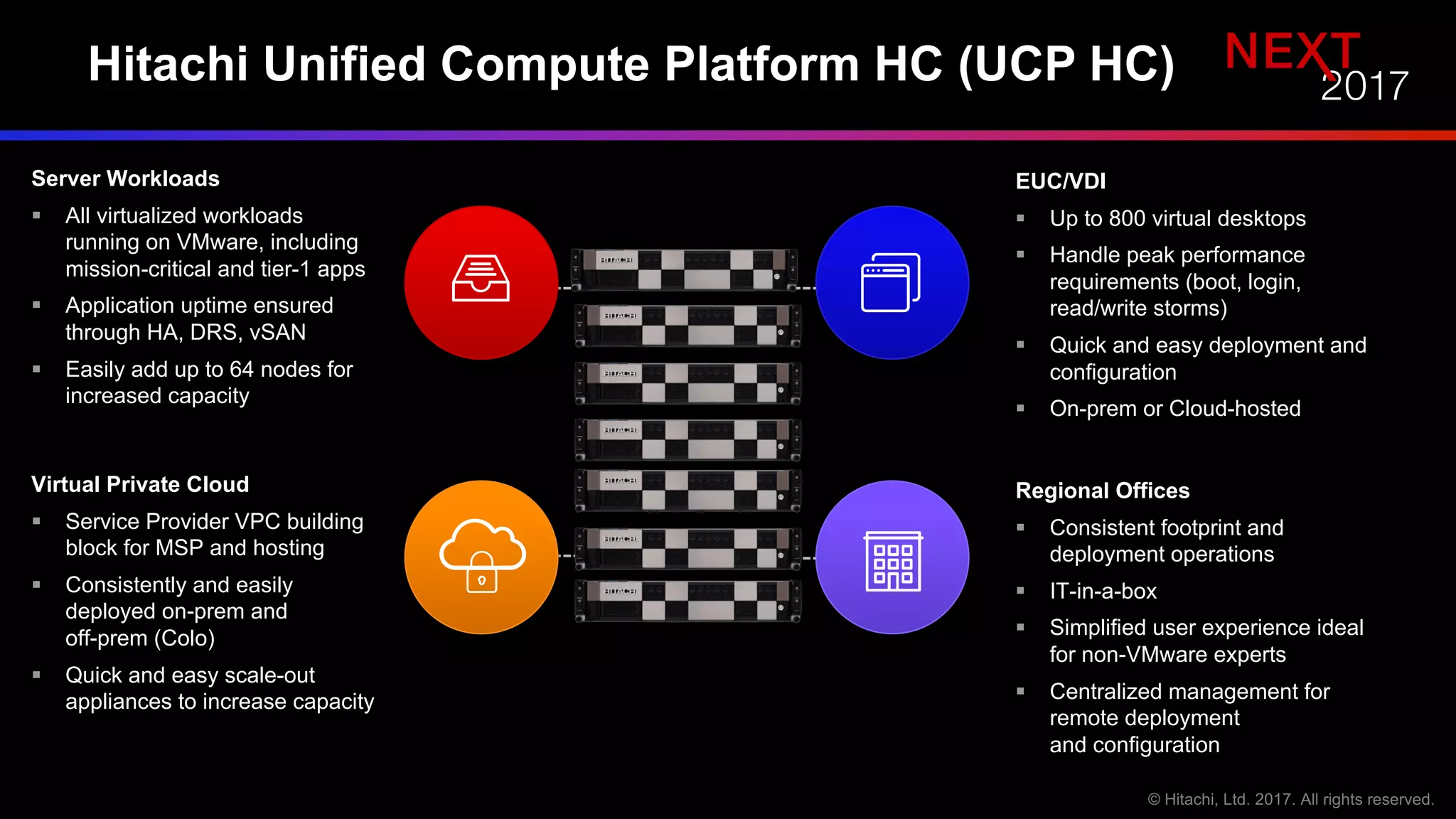
Hitachi Unified Compute Platform HC (UCP HC)
Server Workloads
§ All virtualized workloads
running on VMware, including
mission-critical and tier-1 apps
§ Application uptime ensured
through HA, DRS, vSAN
§ Easily add up to 64 nodes for
increased capacity
Virtual Private Cloud
§ Service Provider VPC building
block for MSP and hosting
§ Consistently and easily
deployed on-prem and
off-prem (Colo)
§ Quick and easy scale-out
appliances to increase capacity
EUC/VDI
§ Up to 800 virtual desktops
§ Handle peak performance
requirements (boot, login,
read/write storms)
§ Quick and easy deployment and
configuration
§ On-prem or Cloud-hosted
Regional Offices
§ Consistent footprint and
deployment operations
§ IT-in-a-box
§ Simplified user experience ideal
for non-VMware experts
§ Centralized management for
remote deployment
and configuration
Q & A
Thank You

Hyperconverged Systems for Digital Transformation

  • 1.
    Hyperconverged Systems forDigital Transformation Chris Gugger Director – Infrastructure Solutions Marketing
  • 2.
    Agenda Hyperconverged Decision –Key Customer Considerations Introductions Hyperconverged Market – An Industry Analyst Perspective New UCP Family Q & A
  • 3.
    Session Panel CHRIS GUGGER Director,Infrastructure Solutions Marketing Hitachi Vantara STANLEY STEVENS Senior Analyst, Data Center Practice Technology Business Review, Inc. MATT BOUGES Enterprise IT Architect Conagra Brands
  • 4.
    Hyperconverged Market -An Industry Analyst Perspective Stanley Stevens - TBRI
  • 5.
    Company Market BusinessStructure § Established: 1996 § Employees: ~100 § Analysts track ~250 companies contributing over $3 trillion in technology revenue per year § Client reference > 16 Fortune 500 § Decision makers: 1,500 § Influencers: 1,500 § End user surveys: >15,000/year § Financial results ground analysis of industry trends, vendor performance, profit pools and best practices § 360° market view - Vendor analysis - Customer analysis - Market analysis § QuantCenter Information platform (360° landscape view) § Data models § Research practices: data center, telecom, devices, IoT, cloud, software, services, digital marketing and digital transformation § Tailored services - Strategy and growth services - Performance and measurement services - Voice-of-the-customer and opportunity services - GTM and commercial services 5 TBR Short Facts
  • 6.
    Legacy IT transformationhinges on: § Scalability to accommodate future workloads § Security across workloads, hardware and software § Administrative simplicity Digital transformation hinges on: § Physical infrastructure location is irrelevant § Application and data protection supersedes perimeter security methods engineered for an on-premises world Technologies enabling transformation: § Hyperconverged § Centralized management and orchestration Encryption Policies Provisioning Usage/billing I/O StorageCPU AI IoTDigital Security attack points Isolation-driven security Network Data Monetization Drives Transformation Shifts
  • 7.
    Infrastructure Must Evolve! 7 Topconcerns with traditional infrastructure: 0% 10% 20% 30% 40% Percent of Respondents (n = 200) REASONS FOR INVESTING IN HYPERCONVERGED PLATFORMS SOURCE: TBR HYPERCONVERGED PLATFORMS CUSTOMER RESEARCH, June 2016 Rigid architectures = static scaling Complex & labor intensive = consumes resources Rising cost = limited workload innovation Current storage architecture is outdated or underperforming Cost versus traditional hardware infrastructure Hardware infrastructure was due for an upgrade Reduce operating processes Improve efficiency of internal processes TCO versus traditional infrastructure Effective management of operations/processes
  • 8.
    Critical Apps AreMigrating to Hyperconverged 0% 10% 20% 30% 40% 50% 60% Productivity and/or collaboration Development and/or testing Customer resource management (CRM) Cloud hosting Data warehousing Business processing (ERP) Database Data back up and recovery Development and operations Business intelligence and/or analytics (e.g., data mining, predictive) Percent of respondents (n = 200) SOURCE: TBR HYPERCONVERGED PLATFORMS CUSTOMER RESEARCH, DECEMBER 2016 WORKLOADS PROMPTING THE PURCHASE OF HYPERCONVERGED PLATFORMS
  • 9.
    Separating FUD FromReality 0% 10% 20% 30% 40% 50% 60% Time to deployment Ease of installation Compatibility with existing infrastructure Capacity Application performance Percent of respondents (n = 179) SOURCE: TBR HYPERCONVERGED PLATFORMS CUSTOMER RESEARCH, June 2016 KEY ATTRIBUTES VALIDATED DURING ON-SITE EVALUATION
  • 10.
    Not All VendorsAre Created Equal
  • 11.
    Hyperconverged Decision –Key Customer Considerations Matt Bouges, Conagra
  • 12.
    Conagra Brands CompanyProfile § Headquarters in Chicago, IL § 40 locations, including offices in Chicago, IL, and Omaha, NE § More than 13,000 employees § Over $8 billion in annual revenue § 50+ brands
  • 13.
    § Aging infrastructure §Converged architecture using Cisco UCS, NetApp and HDS – 1,500 desktops § Expensive and complex § Difficult to grow § New requirements due to IT and business outsourcing – mission critical VDI Infrastructure Problem
  • 14.
    Converged or Hypercovnerged? §Initially only looked at converged § Did not believe HCI was ready for mission-critical workloads § Concerned about new skill sets for a new architecture
  • 15.
    Why HCI, WhatChanged? § Rapid HCI maturity – all flash, VSAN 6, etc. § Moving to a solo data center with 1,000 sq. feet – size matters! § Developed comfort with the technology through POCs § Great fit for VDI workloads
  • 16.
    HCI Solutions Considered §Nutanix – not already in our DC § Dell/EMC VxRail – complex and constraining § Cisco Hyperflex – maturity level and size § Hitachi UCP HC – the right fit!
  • 17.
    § Hitachi UCPHC 240F – 2 per data center (4 nodes ea.) § 512 GB RAM, 28 cores per node, 30 TB all flash per site § VMware Horizon Enterprise 7, cloud pod architecture § HDI and HCP for UEM profiles § 12u total for 1500-2000 desktops The Solution
  • 18.
    New UCP Family ChrisGugger, Hitachi Vantara
  • 19.
    Introducing the NextGeneration Hitachi Unified Compute Platform HC Automated: Hitachi Unified Compute Platform Advisor 2.0 Hitachi Unified Compute Platform CI Hitachi Unified Compute Platform RS Flexible Simple Agile Hitachi Unified Compute Platform
  • 20.
    Hitachi Unified ComputePlatform HC (UCP HC) Server Workloads § All virtualized workloads running on VMware, including mission-critical and tier-1 apps § Application uptime ensured through HA, DRS, vSAN § Easily add up to 64 nodes for increased capacity Virtual Private Cloud § Service Provider VPC building block for MSP and hosting § Consistently and easily deployed on-prem and off-prem (Colo) § Quick and easy scale-out appliances to increase capacity EUC/VDI § Up to 800 virtual desktops § Handle peak performance requirements (boot, login, read/write storms) § Quick and easy deployment and configuration § On-prem or Cloud-hosted Regional Offices § Consistent footprint and deployment operations § IT-in-a-box § Simplified user experience ideal for non-VMware experts § Centralized management for remote deployment and configuration
  • 21.
  • 22.