In the name of
God
1
2
Institute for Advanced Studies in Basic Sciences
Human-level concept learning through probabilistic program induction
Mohammad Amid Abbasi
Teacher: Dr.P.Razzaghi
Winter 2018
3
v2015
v378 citation
vScience journal
About paper
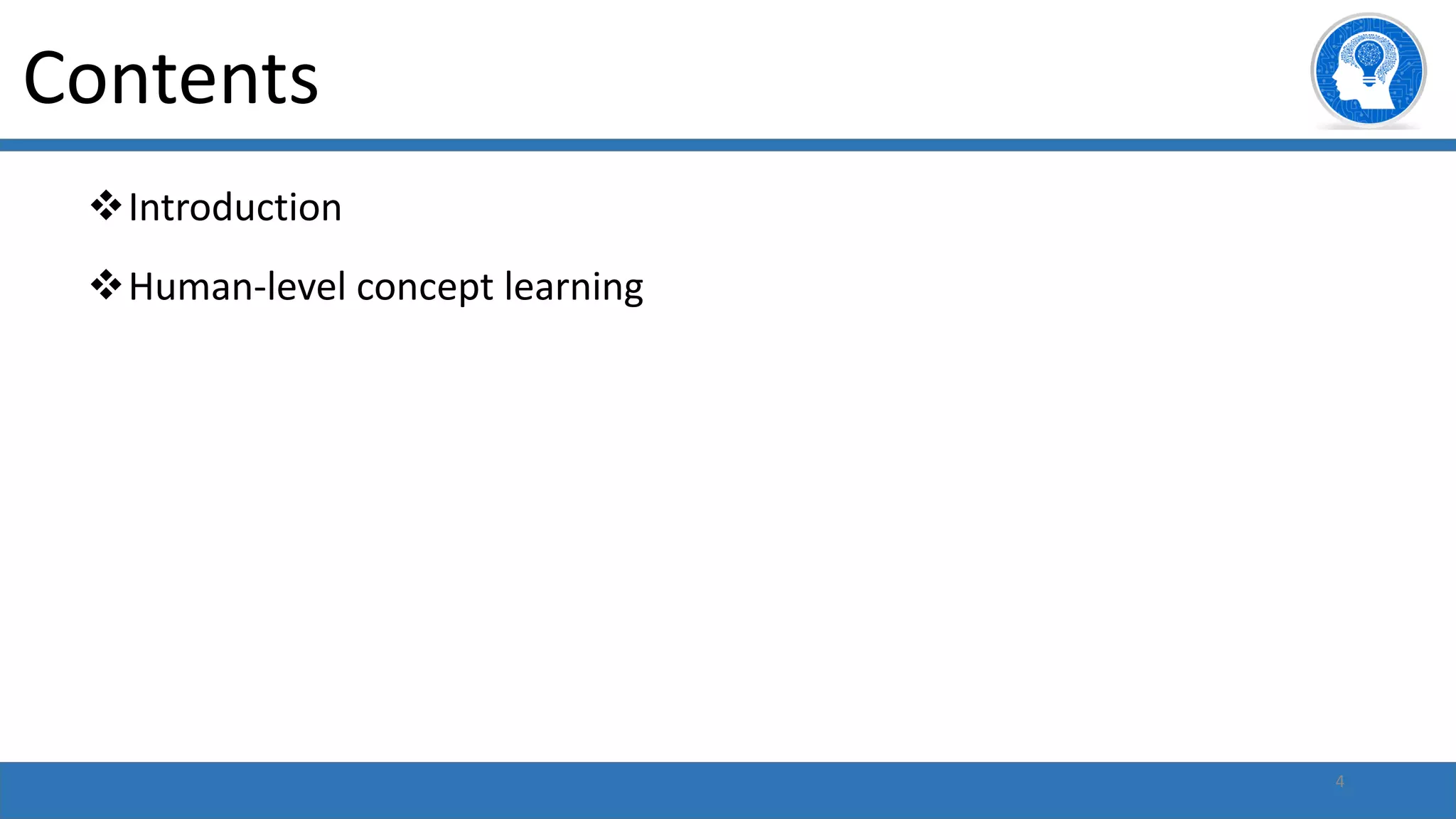
Joshua B. Tenenbaum
Brenden Lake
Ruslan Salakhutdinov
4
vIntroduction
vHuman-level concept learning
Contents
5
1) Learn from as much data as
possible
2) Learning simple models often
works
3) Aim for prediction not
understanding
Introduction
Principles of Big Data Principles of Human Learning
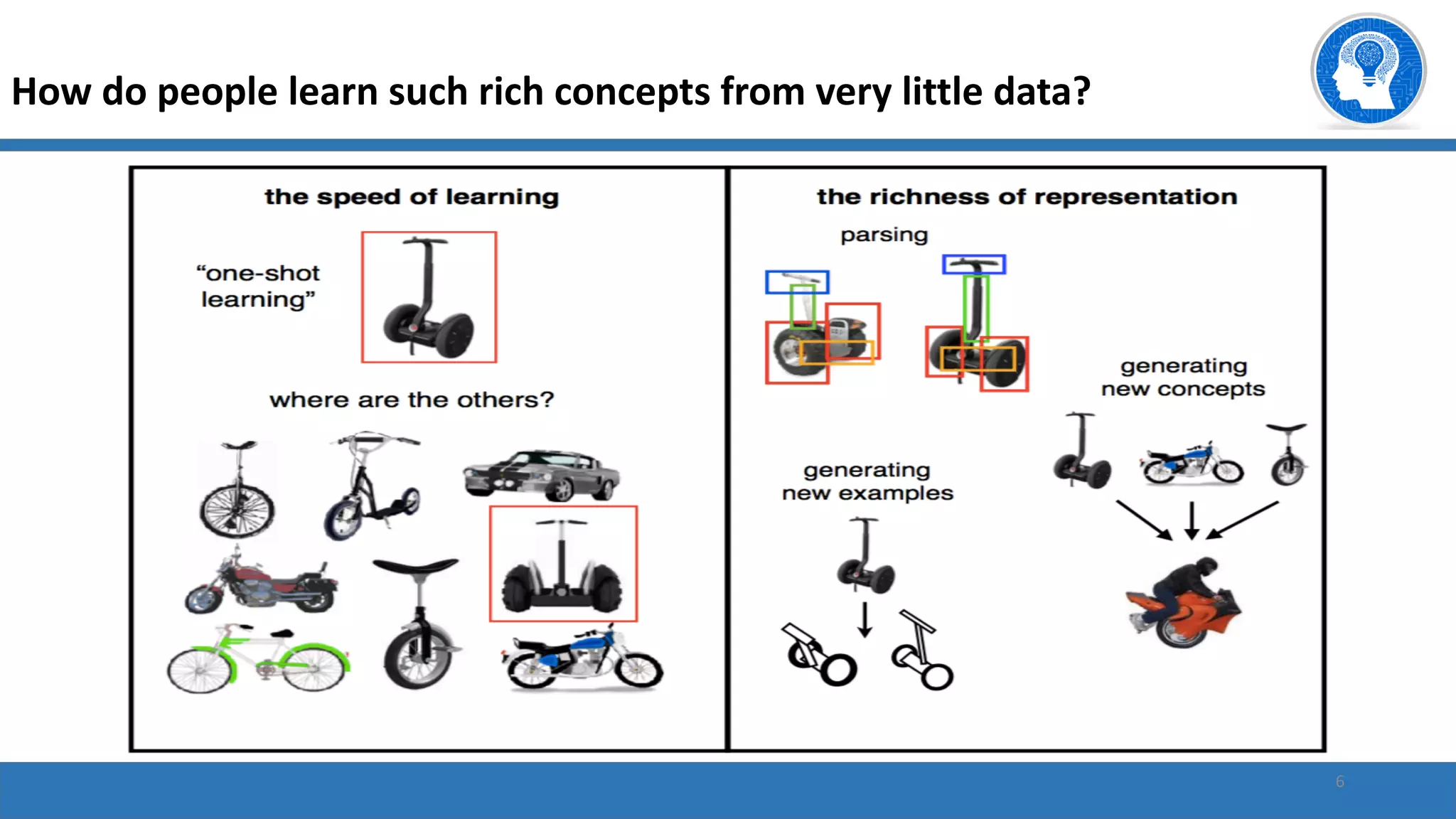
1) Learn from just one or a few
examples
2) Learning complex,
compositional models that
support many abilities
3) Aim for rich causal
understanding
6
How do people learn such rich concepts from very little data?
7
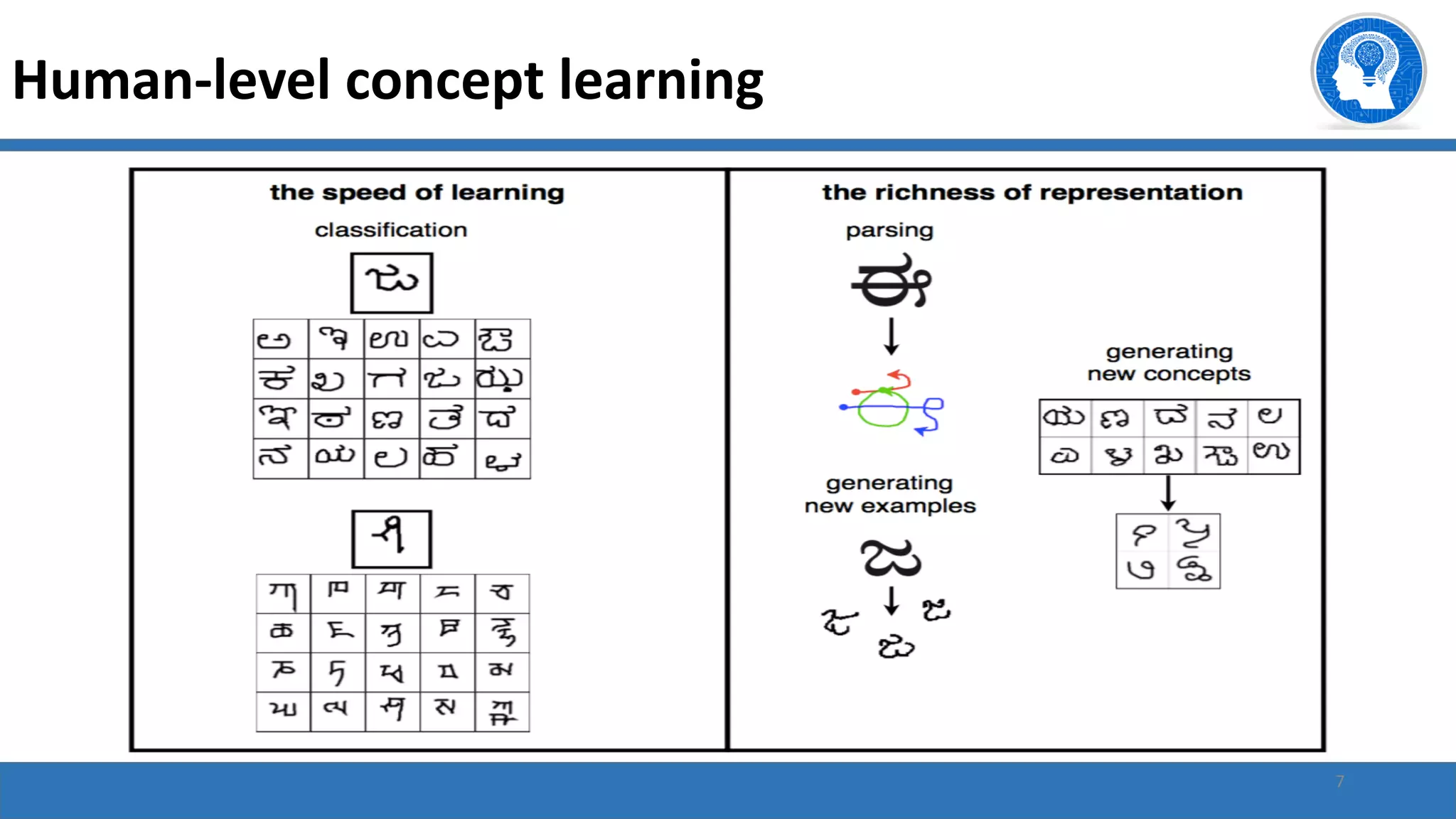
Human-level concept learning
8
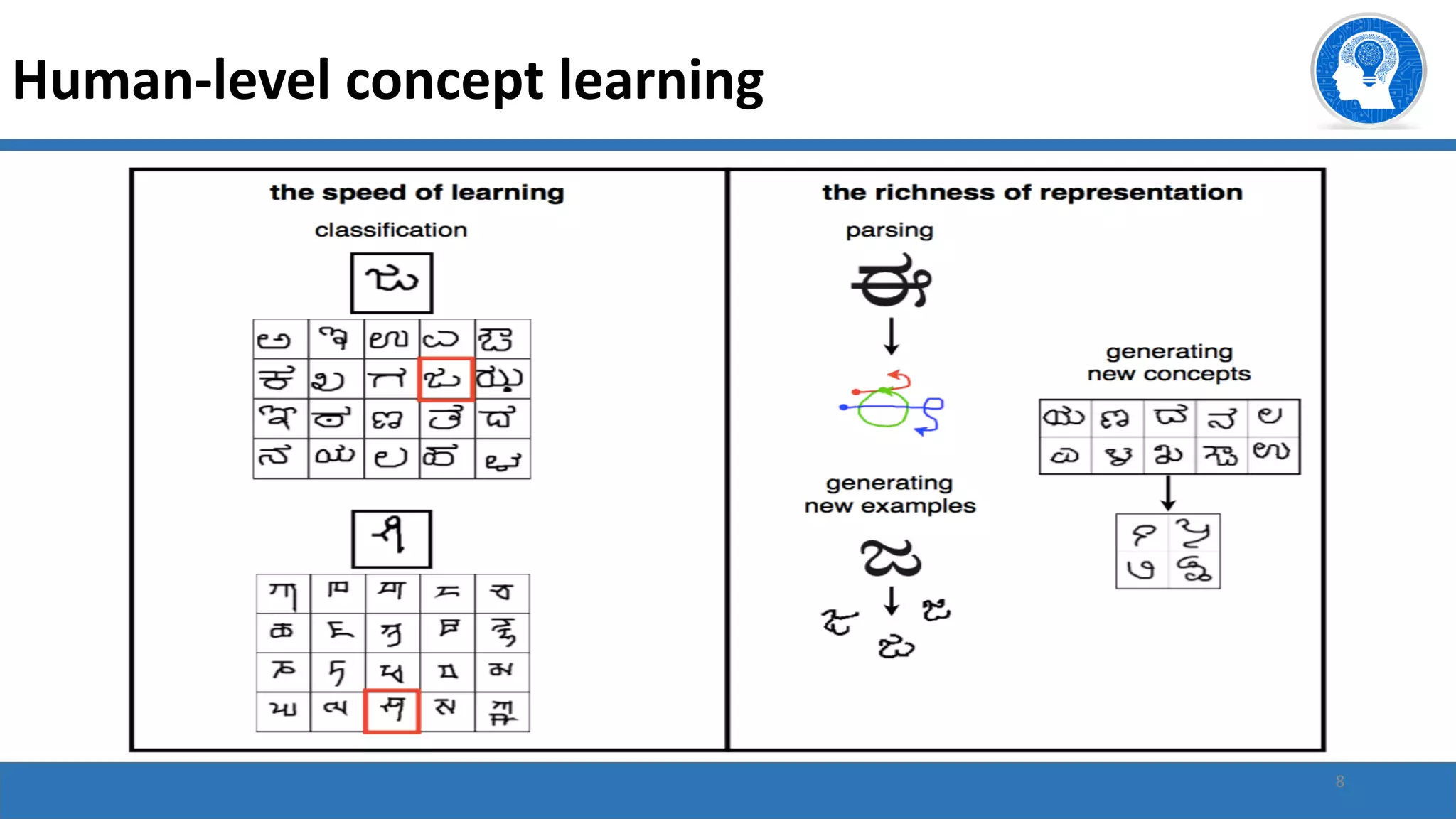
Human-level concept learning
9
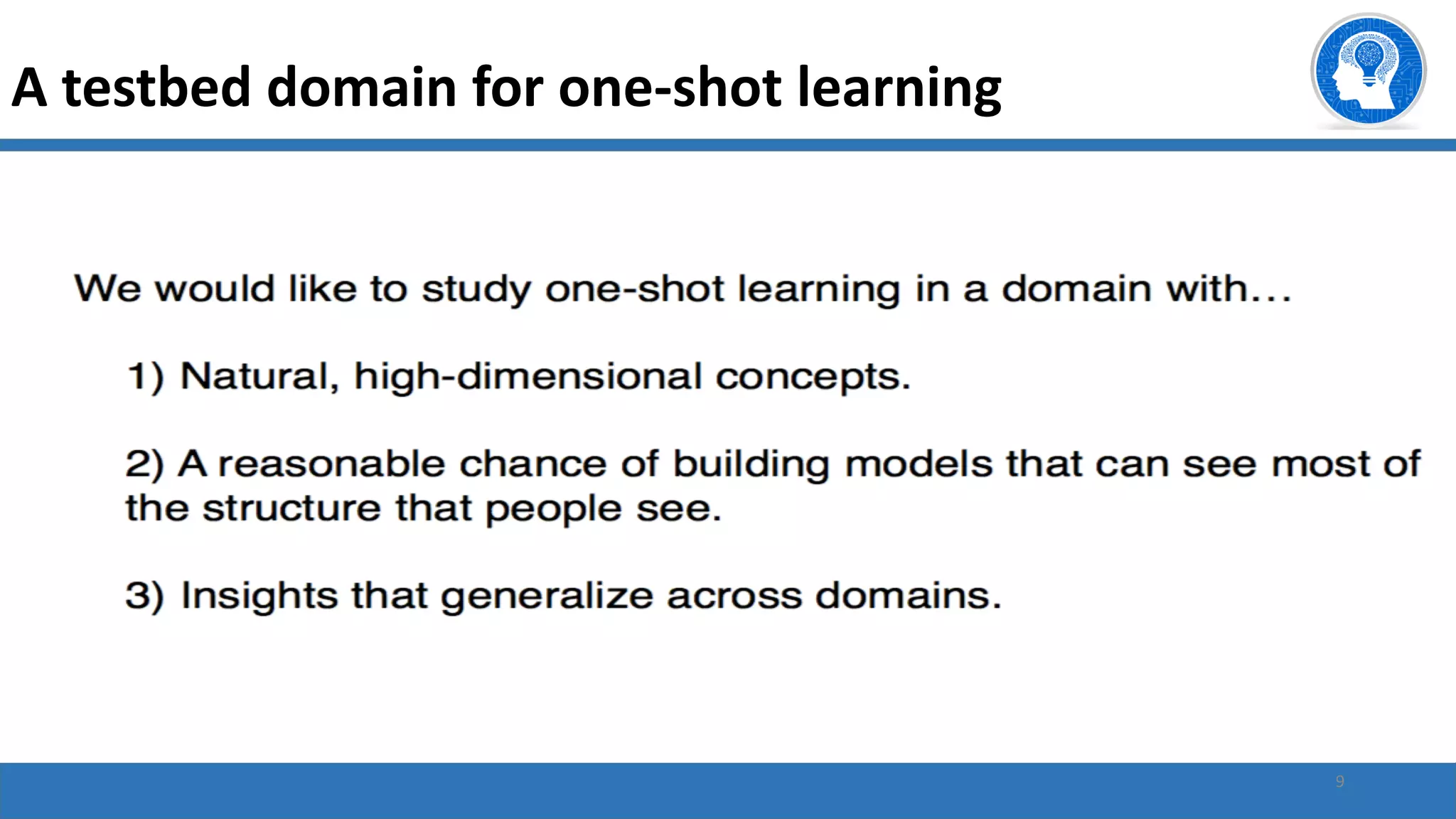
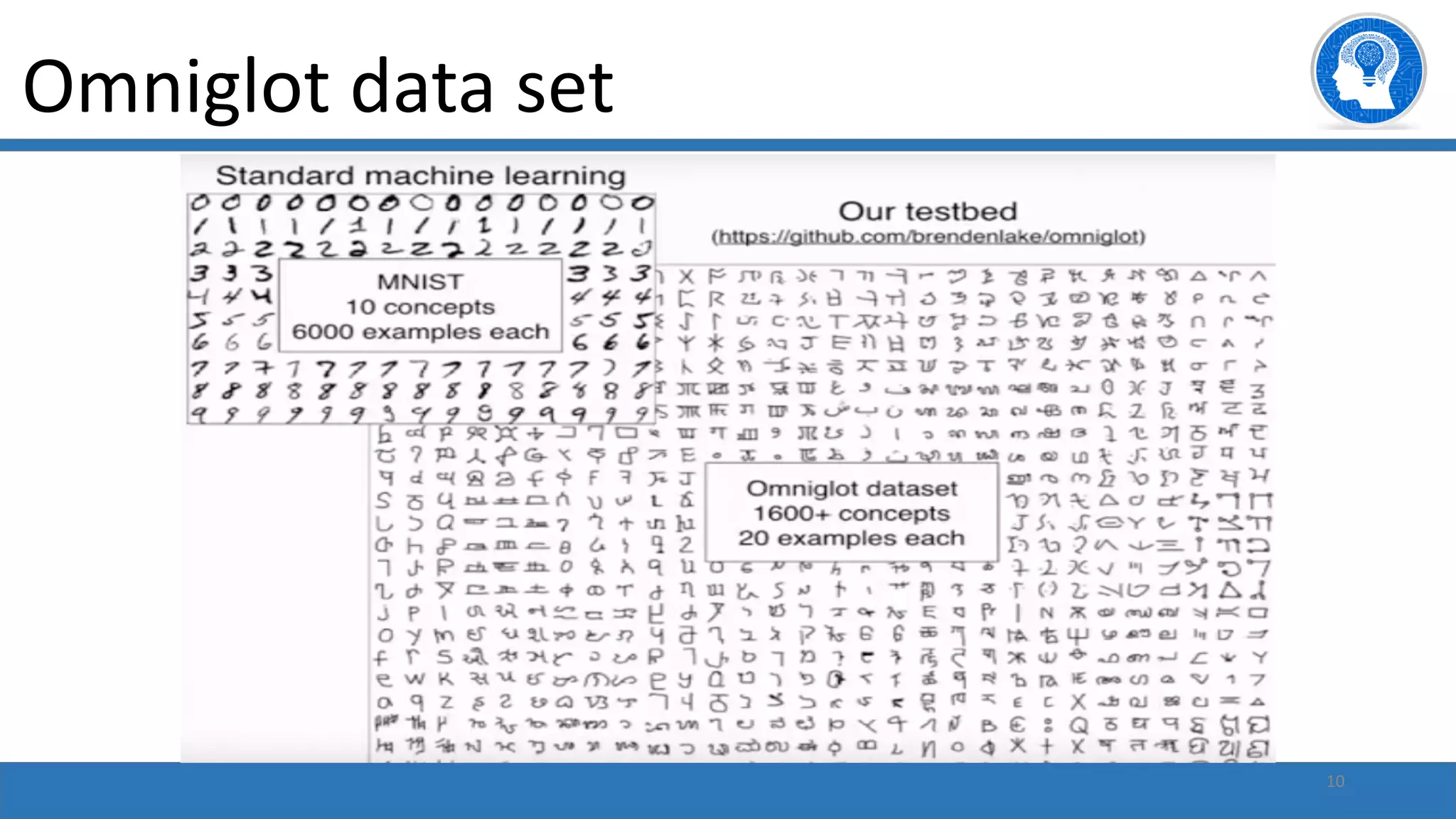
A testbed domain for one-shot learning
10
Omniglot data set
11
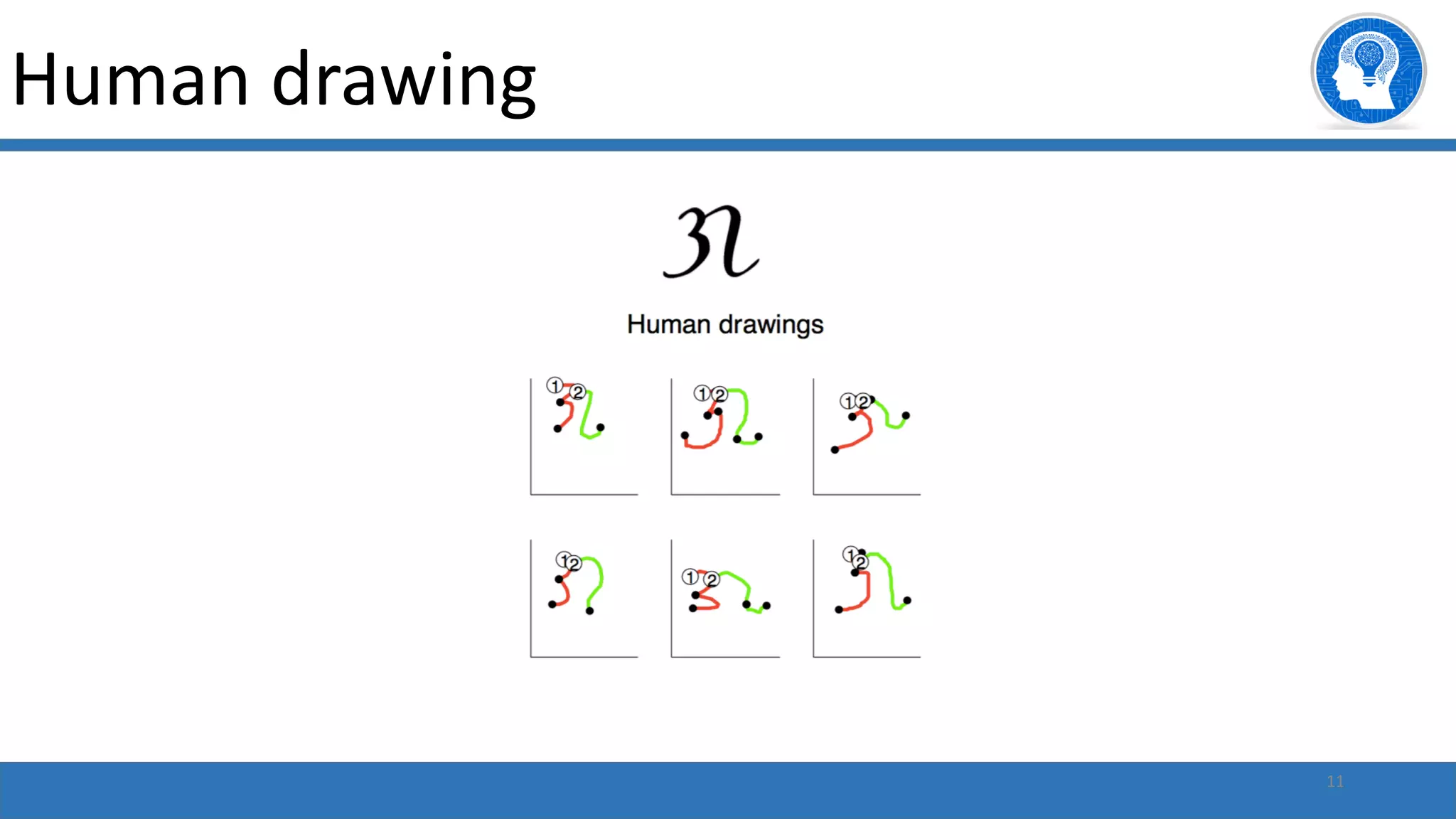
Human drawing
12
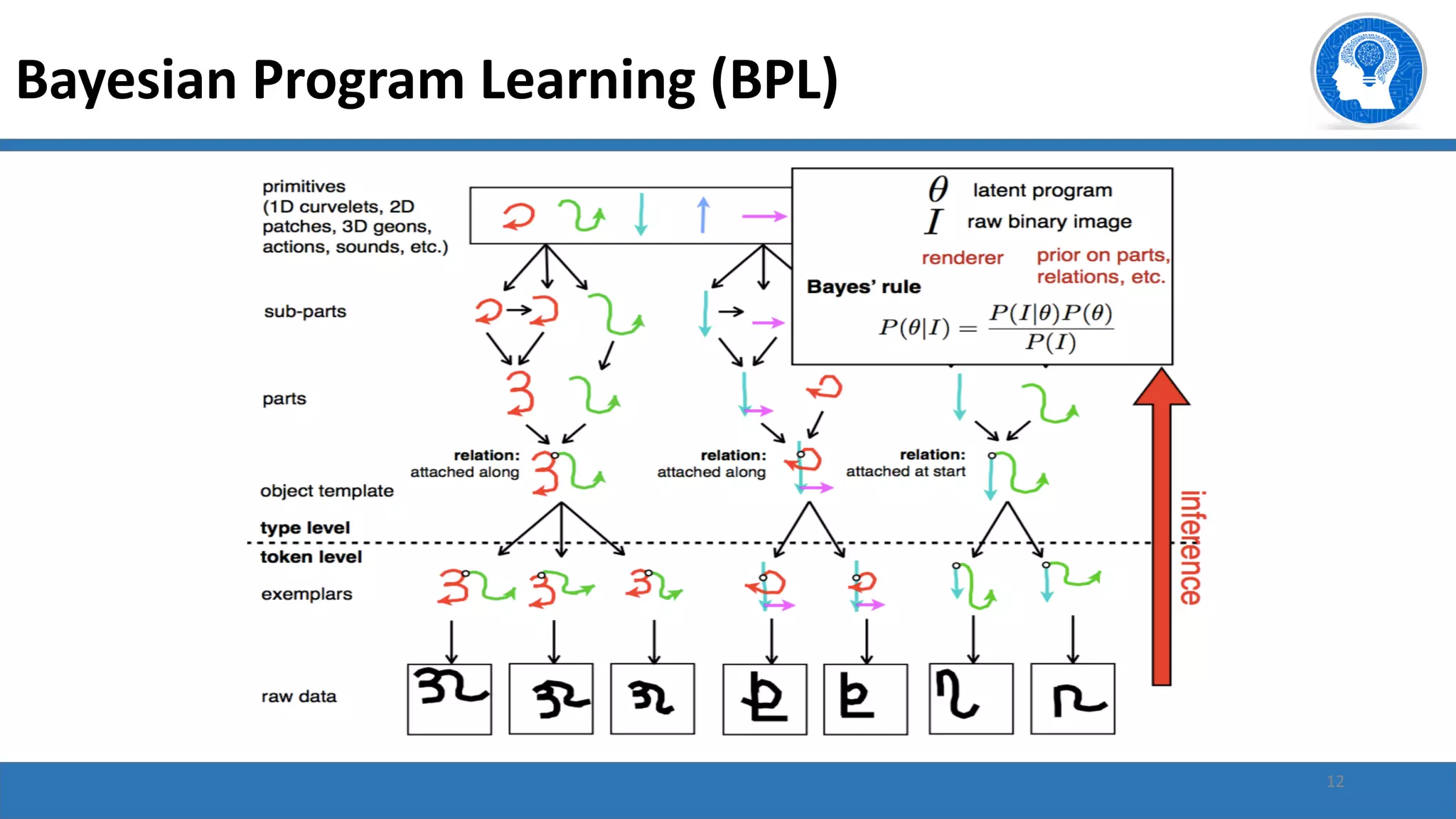
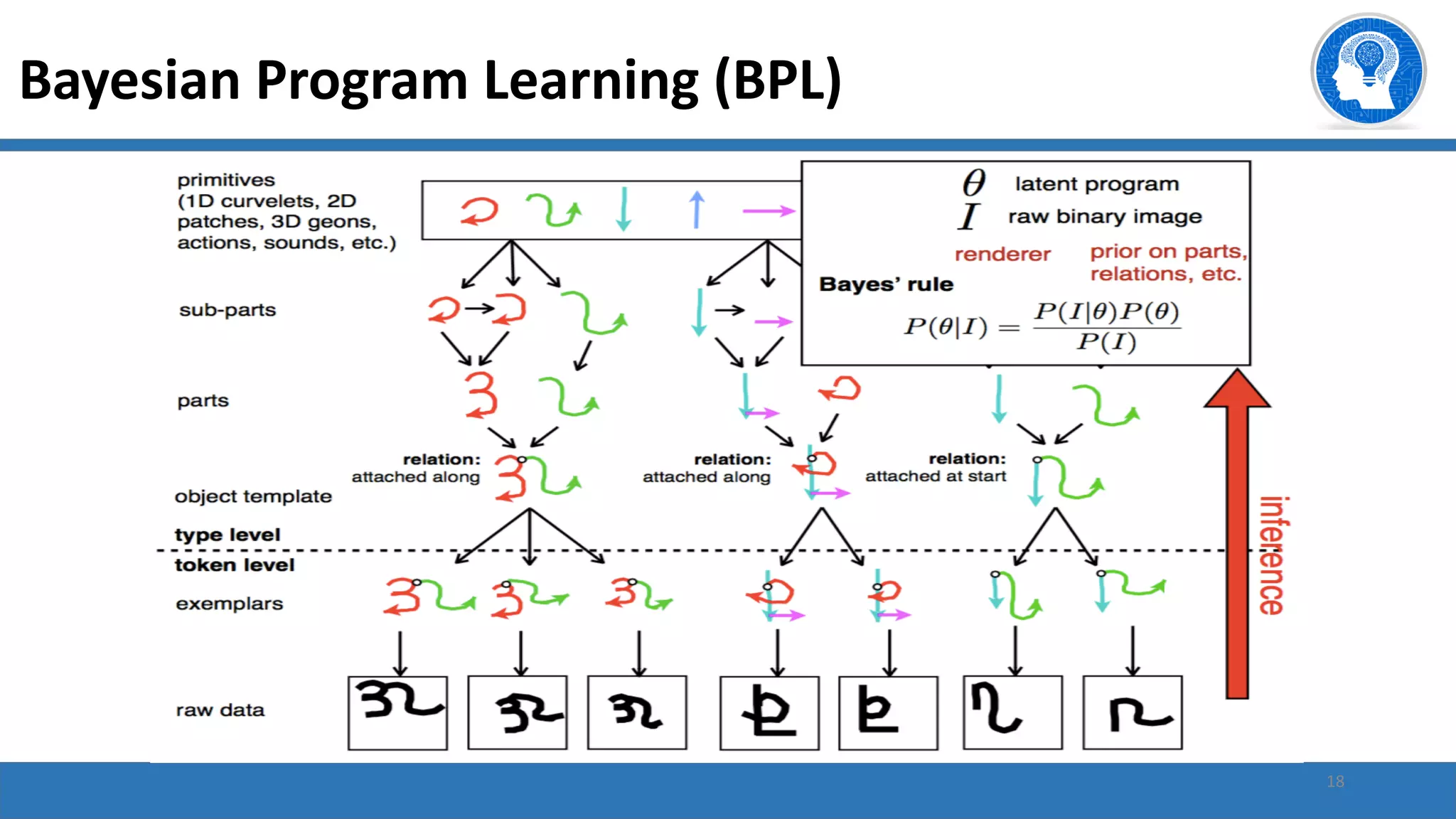
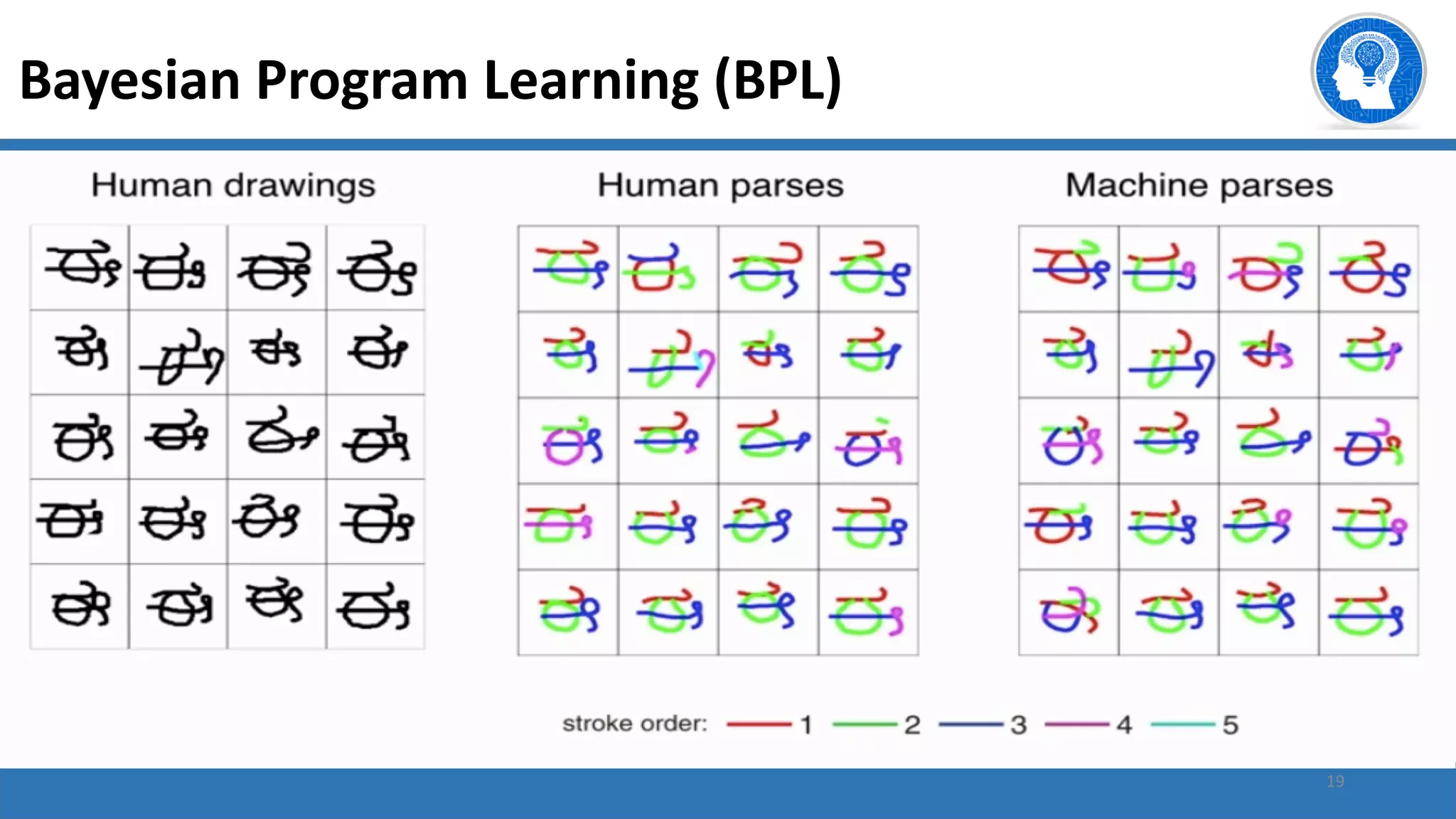
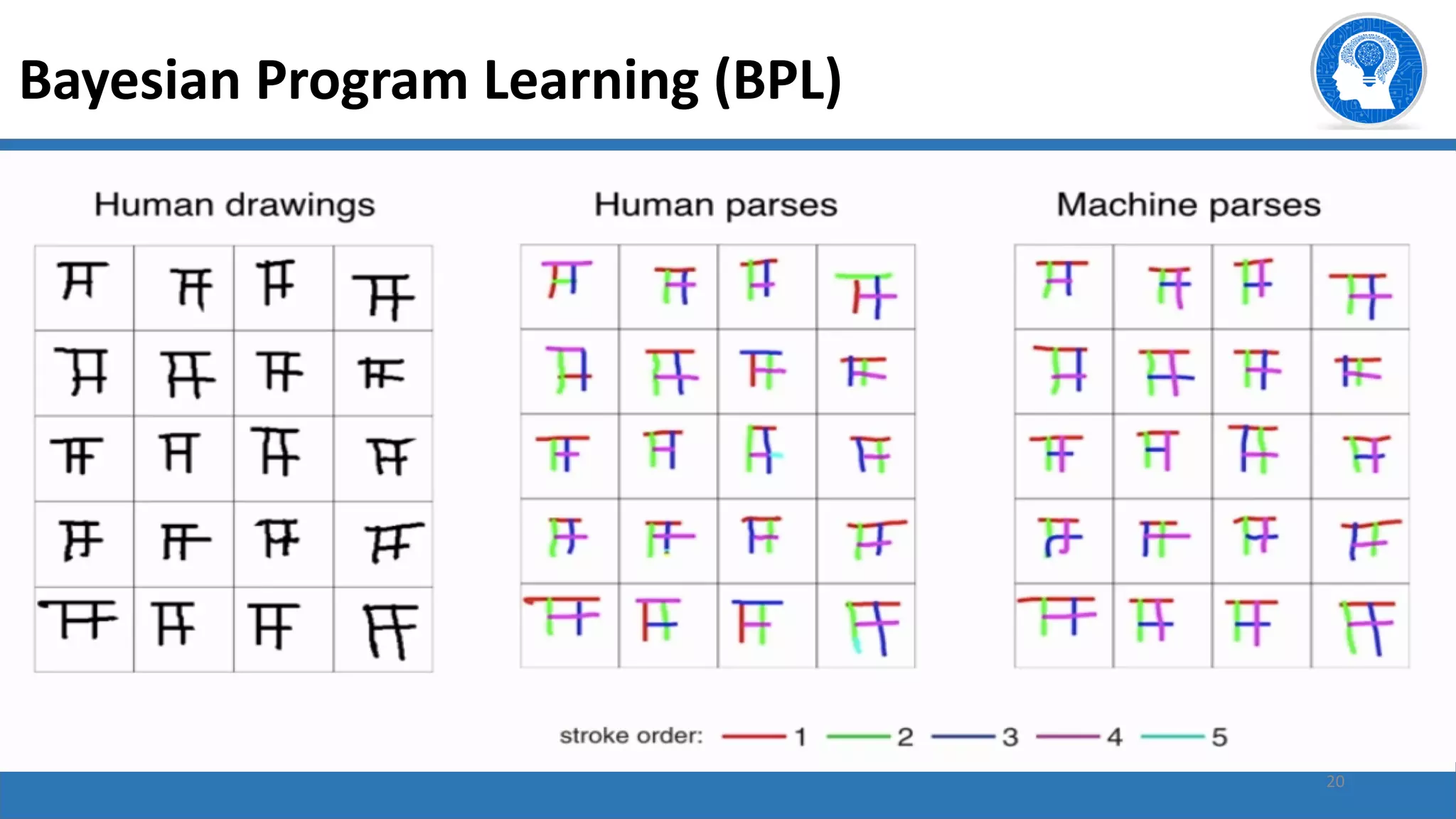
Bayesian Program Learning (BPL)
13
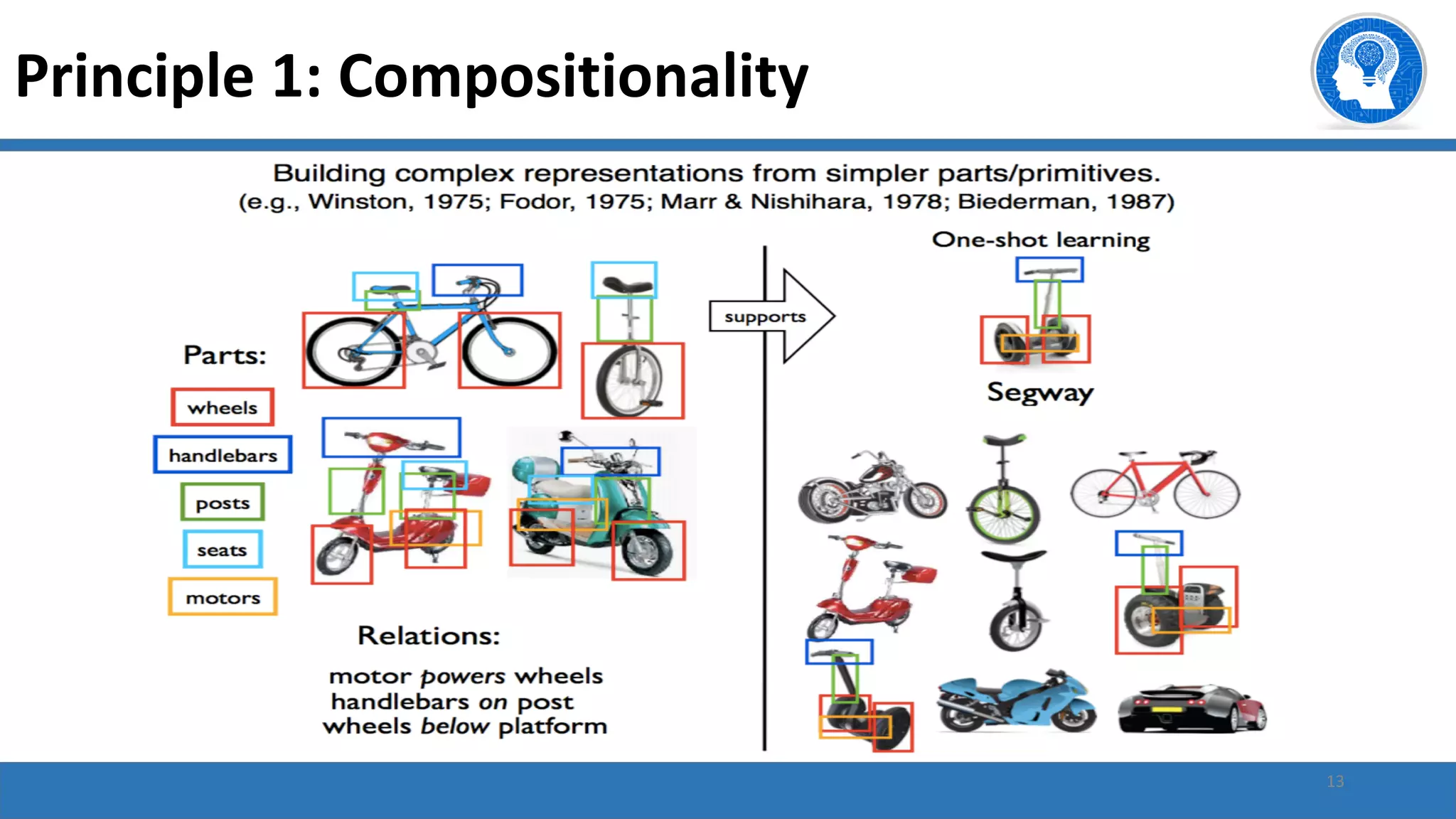
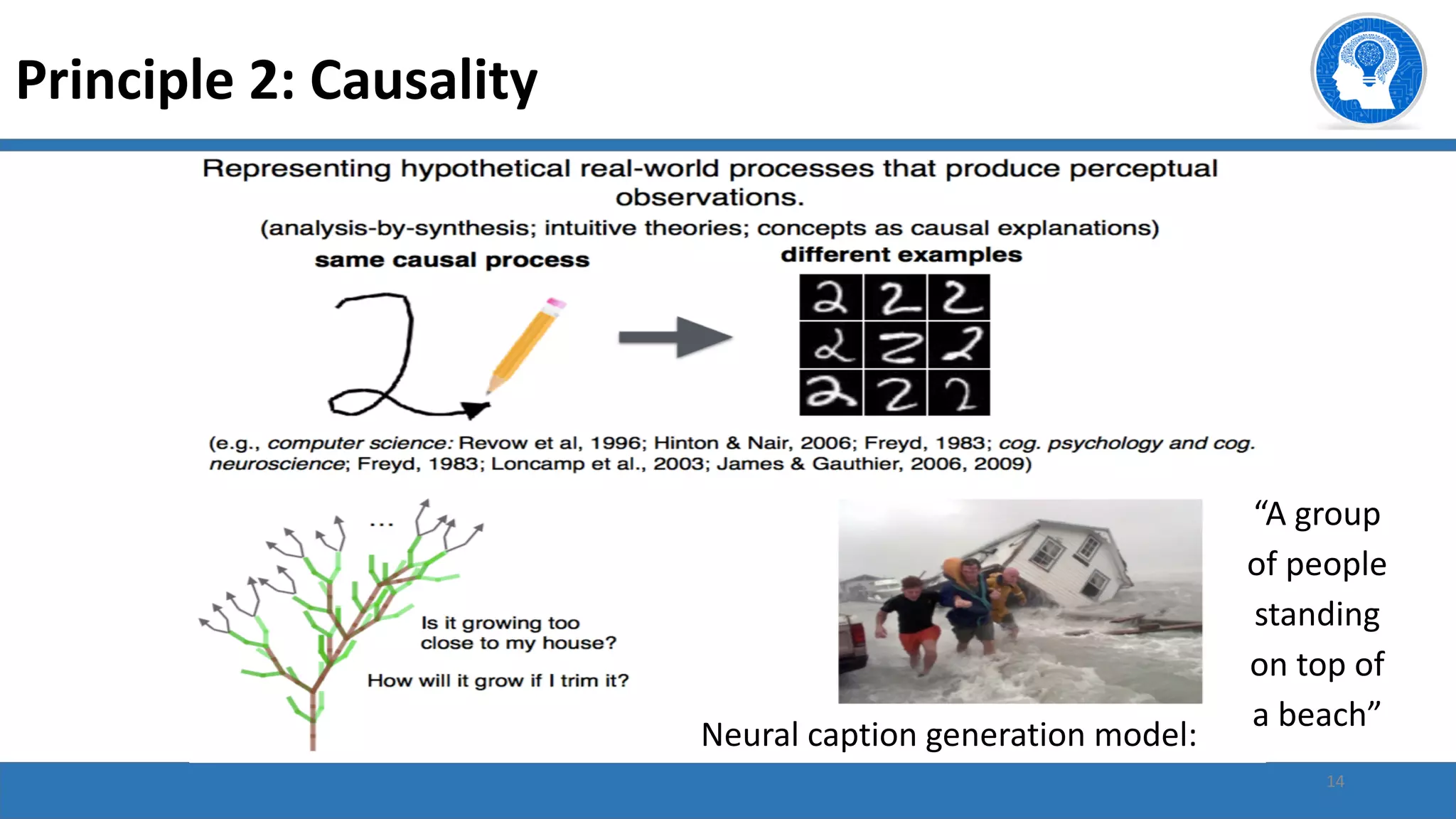
Principle 1: Compositionality
14
Principle 2: Causality
Neural caption generation model:
“A group
of people
standing
on top of
a beach”
15
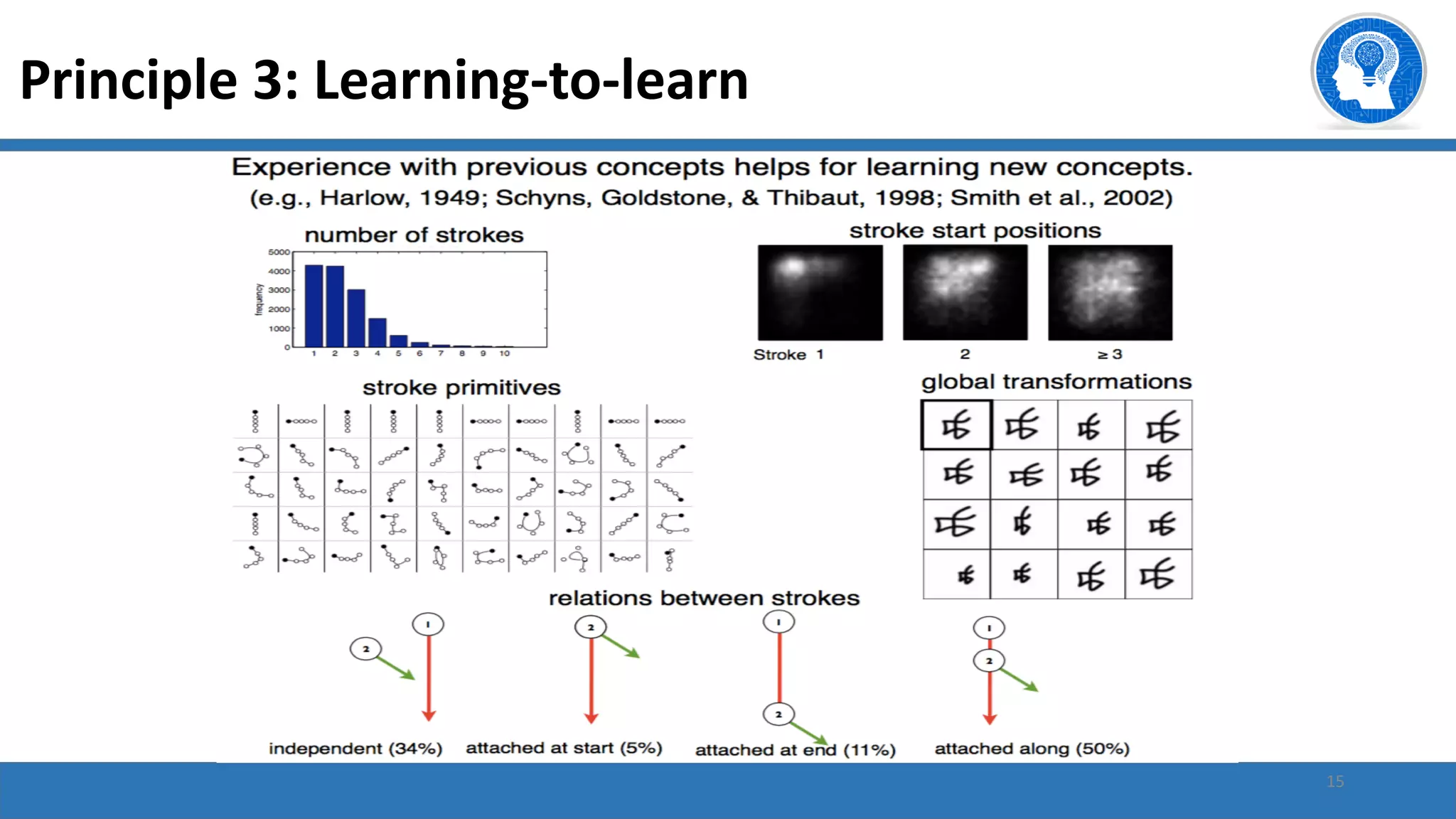
Principle 3: Learning-to-learn
16
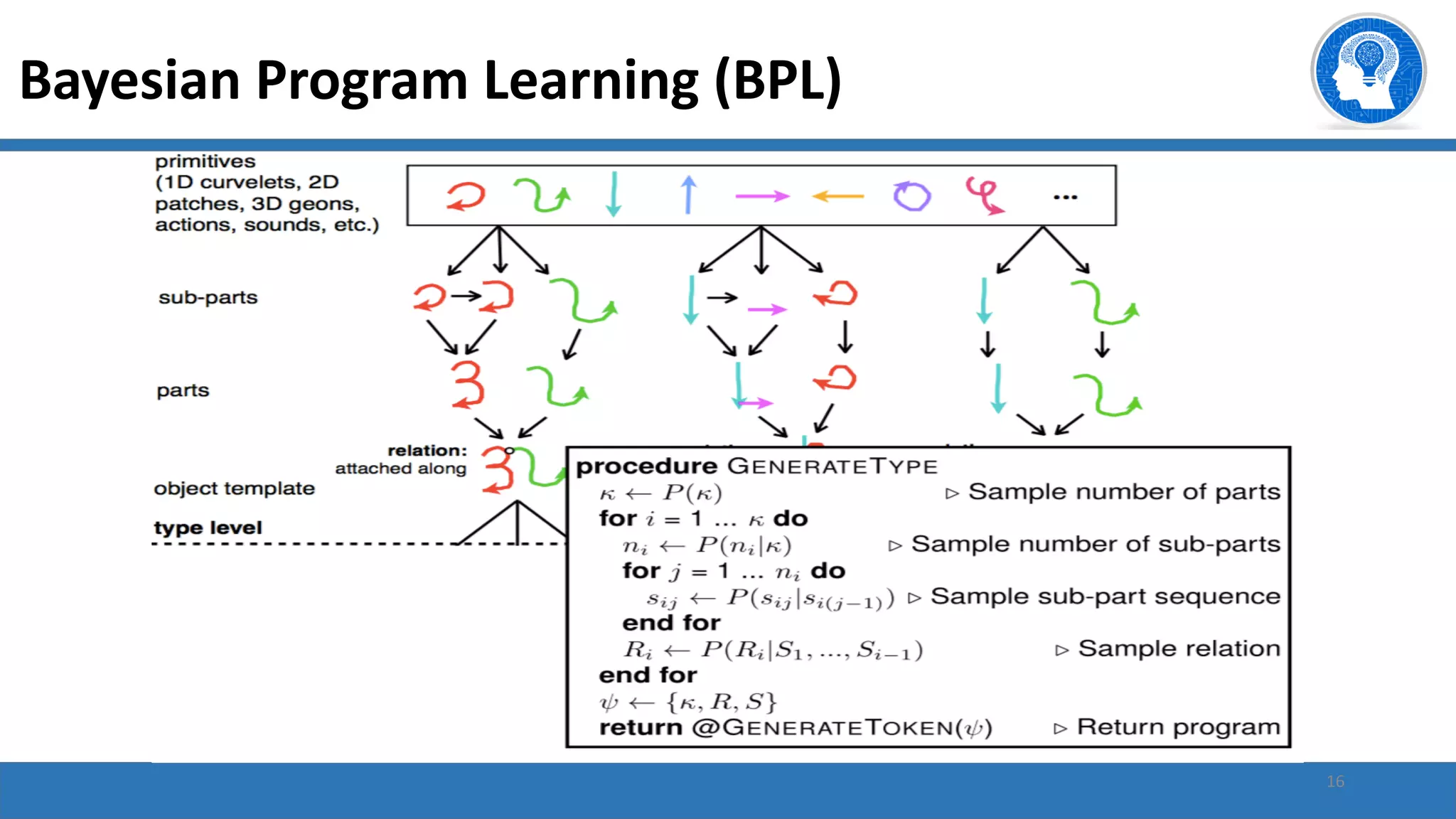
Bayesian Program Learning (BPL)
17
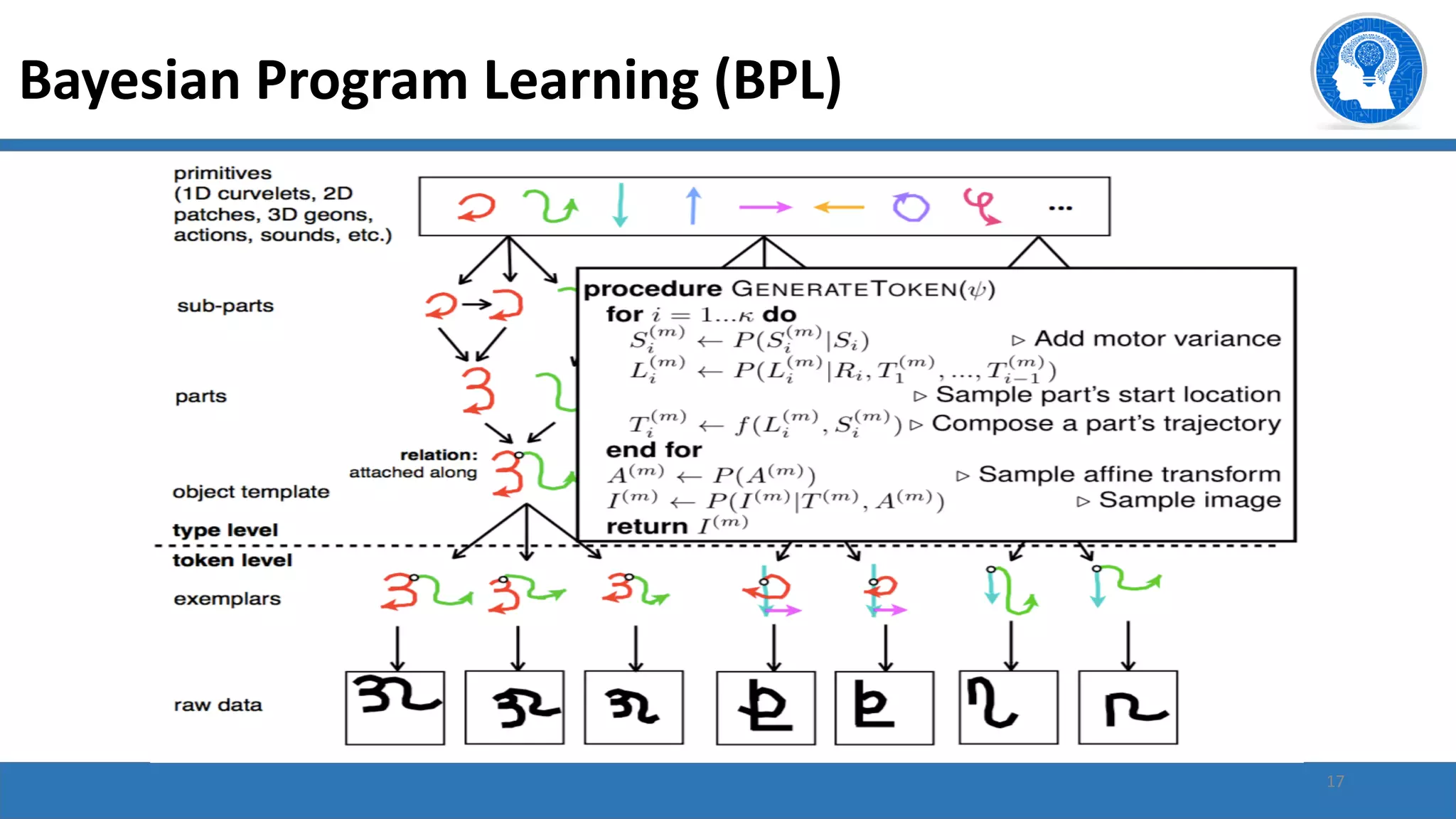
Bayesian Program Learning (BPL)
18
Bayesian Program Learning (BPL)
19
Bayesian Program Learning (BPL)
20
Bayesian Program Learning (BPL)
21
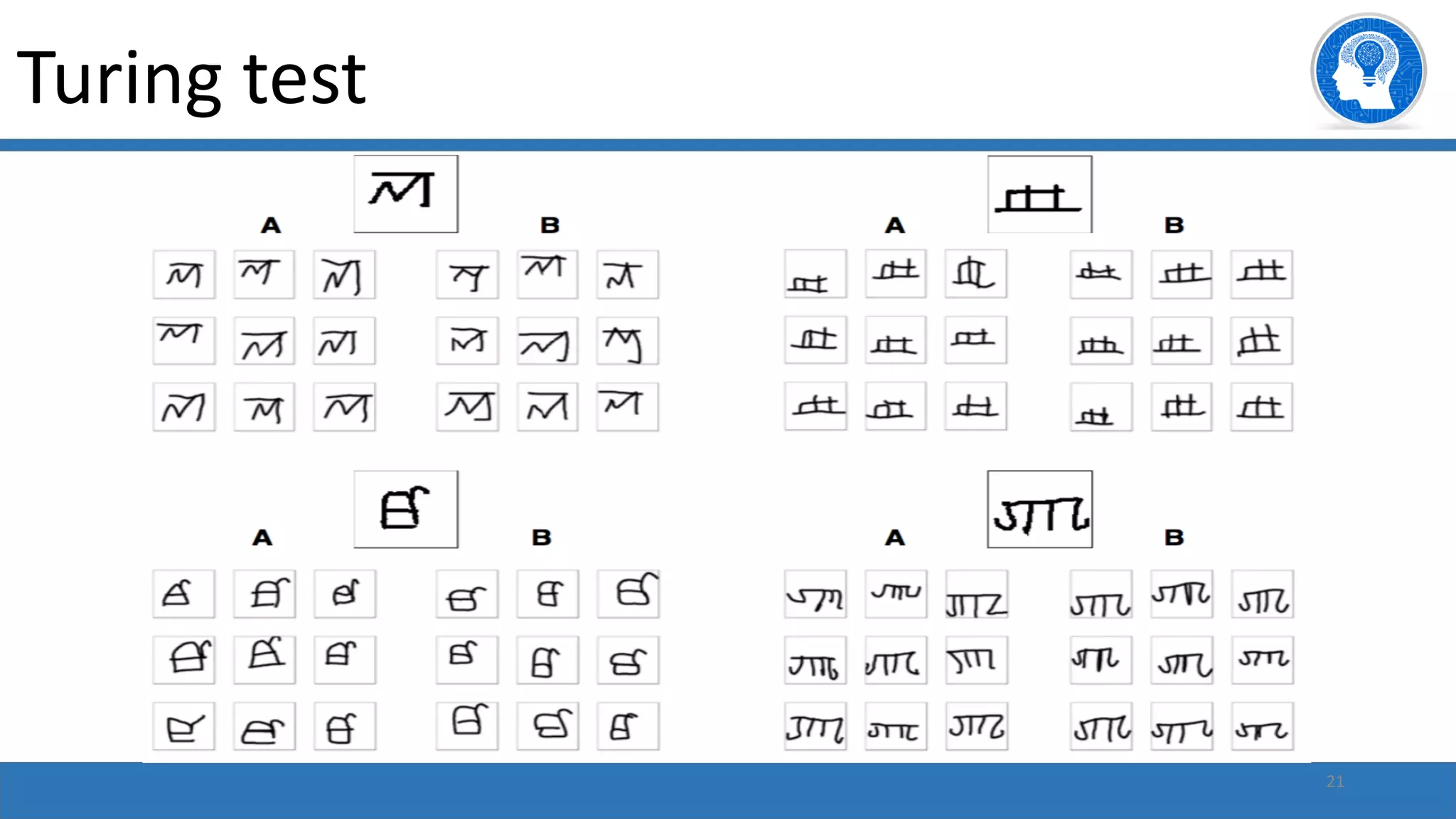
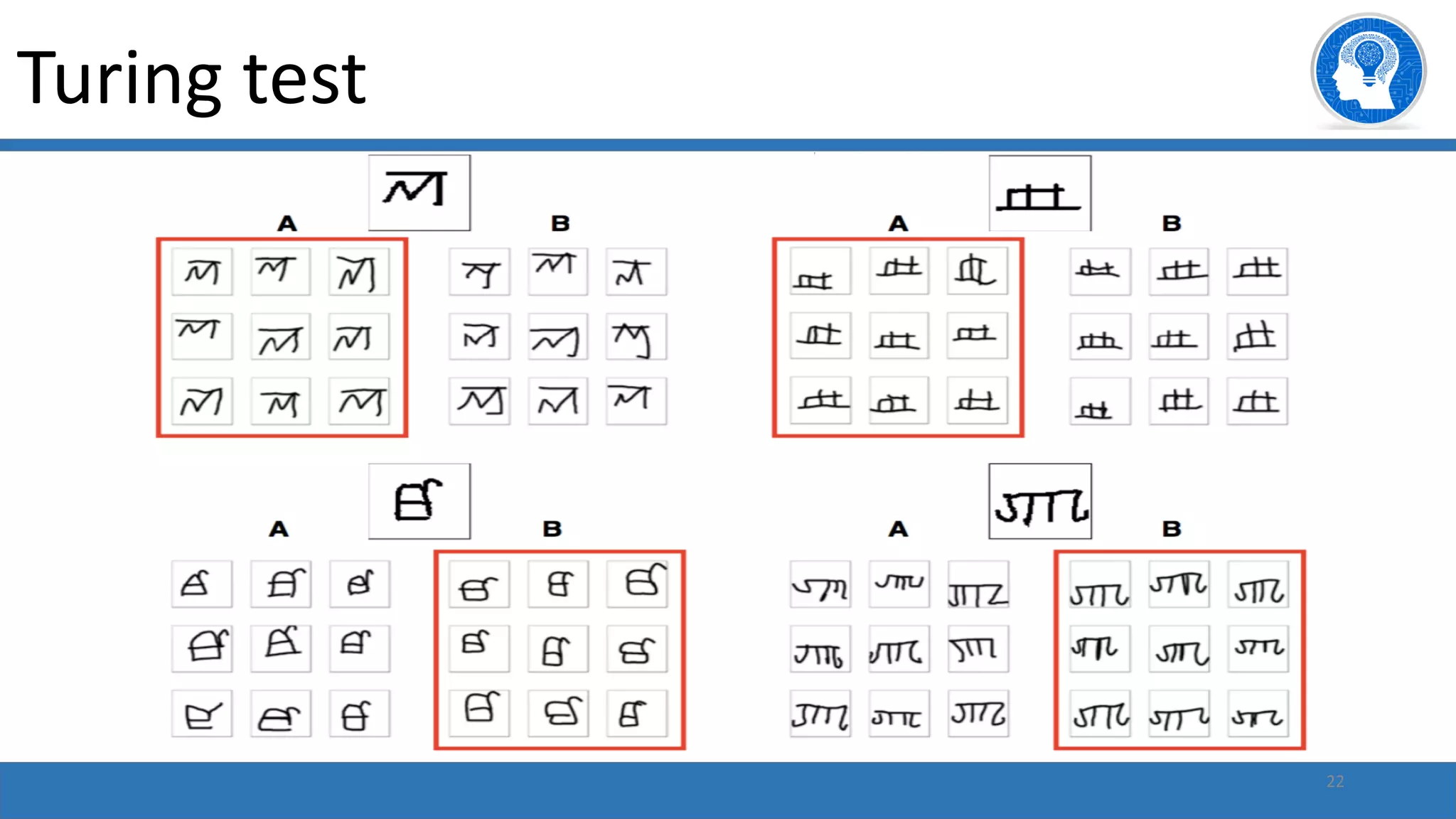
Turing test
22
Turing test
23
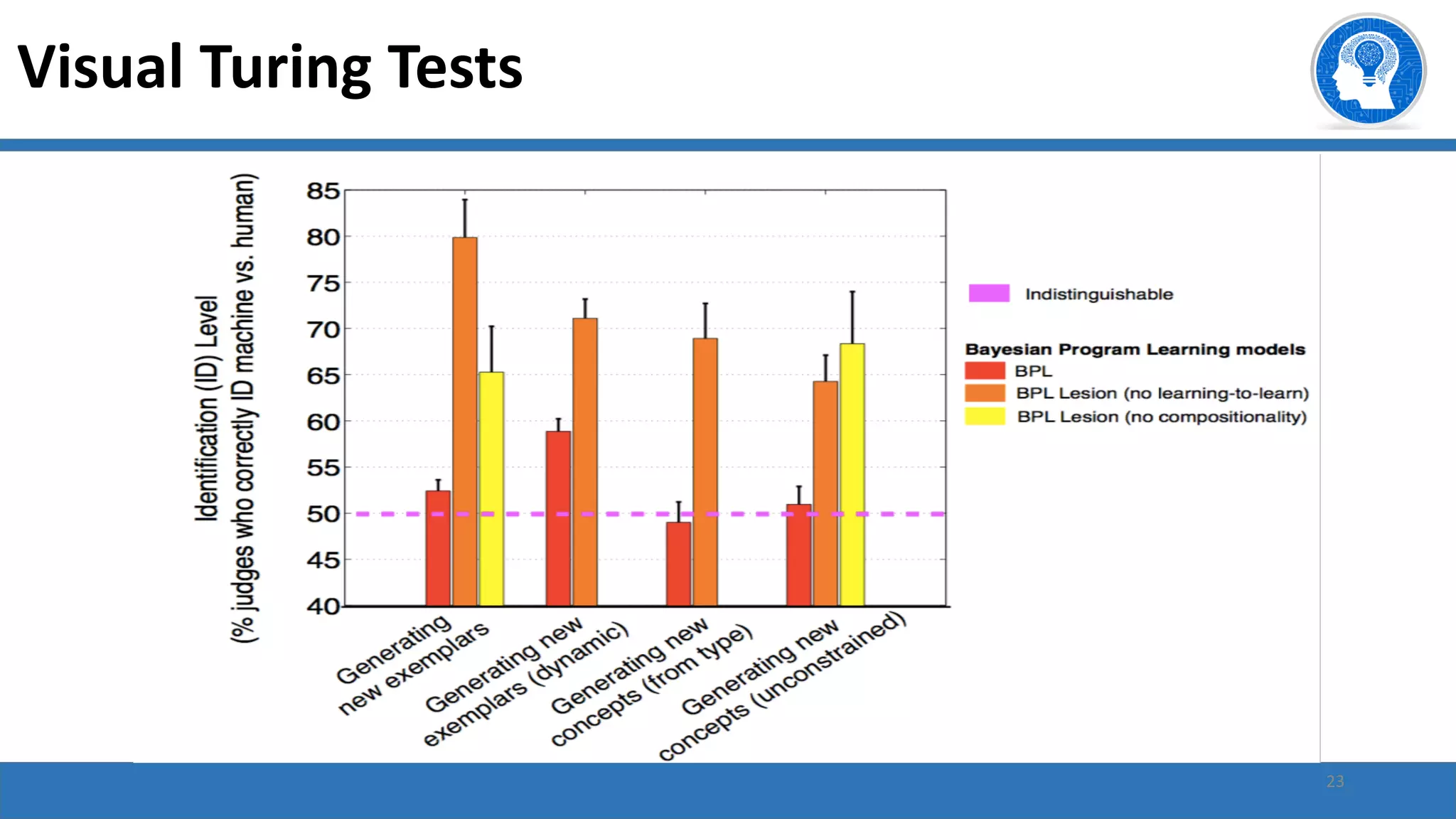
Visual Turing Tests
24
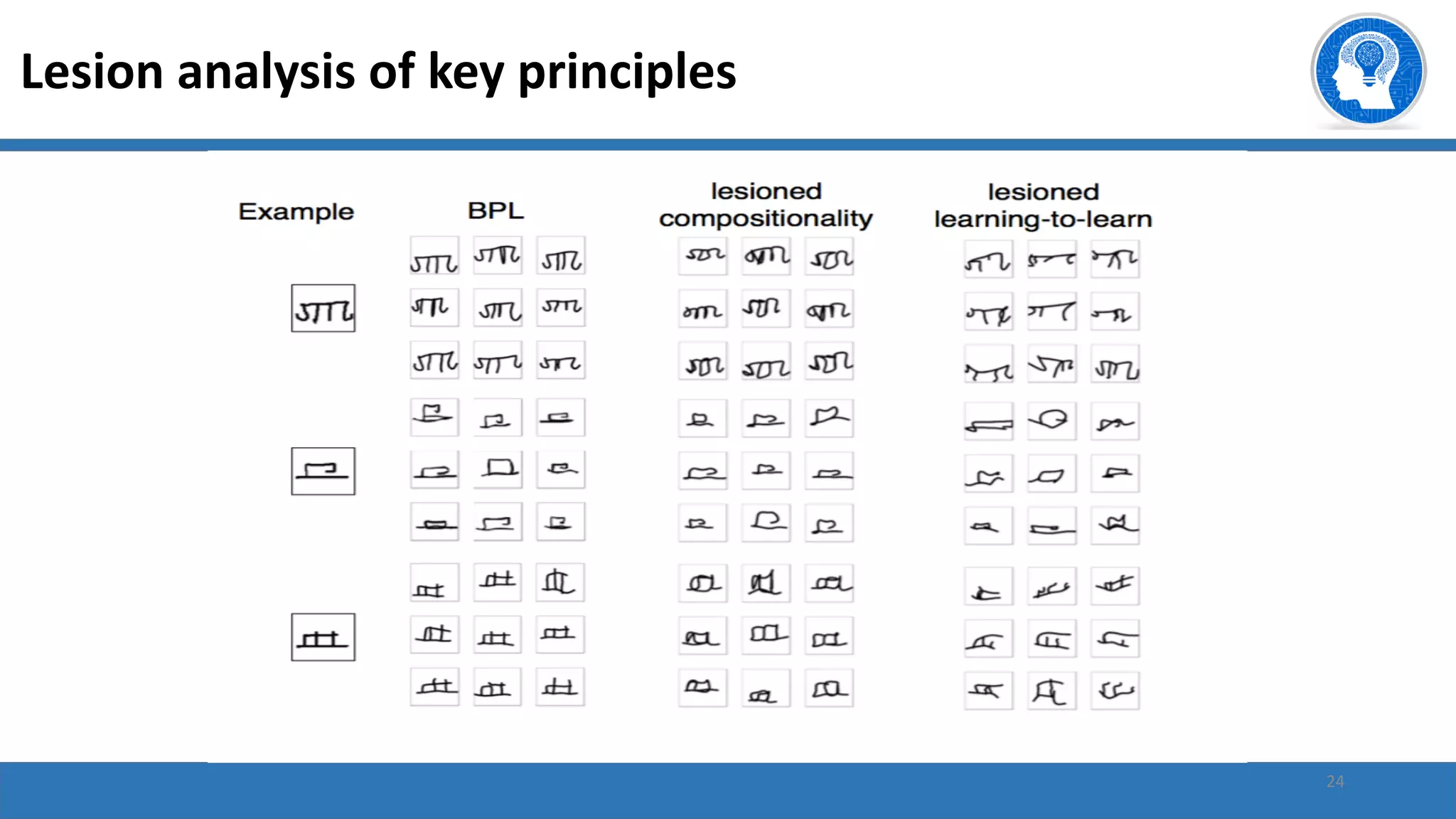
Lesion analysis of key principles
25
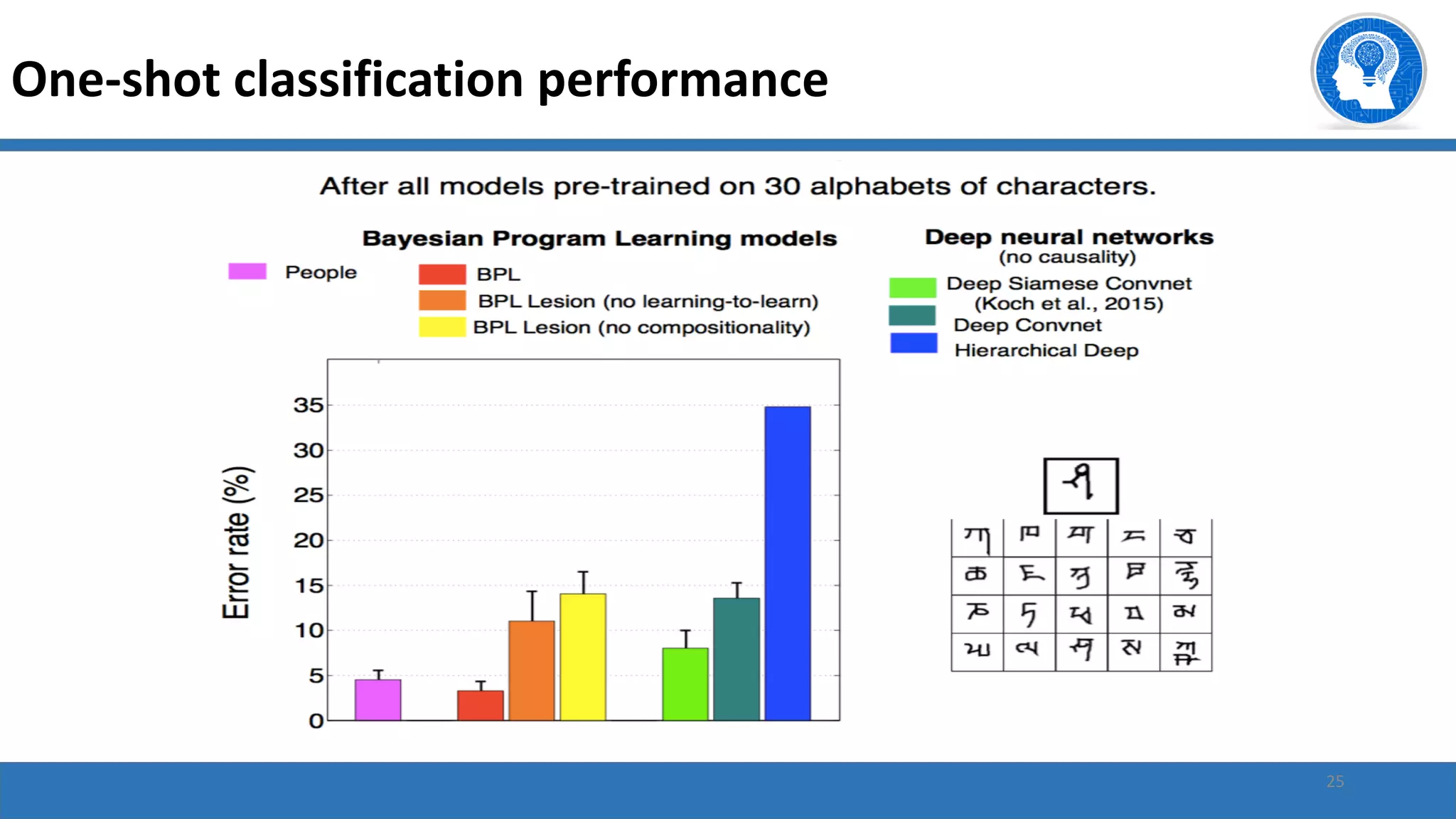
One-shot classification performance
26
vhttps://cims.nyu.edu/~brenden/LakeEtAl2015Science.pdf
vhttps://github.com/brendenlake/omniglot
vhttps://www.youtube.com/watch?v=7tJsrILeti0&t=390s
vhttps://www.youtube.com/watch?v=wkWNfyocwQ8&t=9s
vhttps://www.youtube.com/watch?v=p1VpvOFJg6A&t=3s
vhttps://www.youtube.com/watch?v=orAylPDk6fQ&t=1s
Resources
27
Thanks for your attention

Human-level concept learning through probabilistic program induction